
 Published on and written by Cyril Jarnias
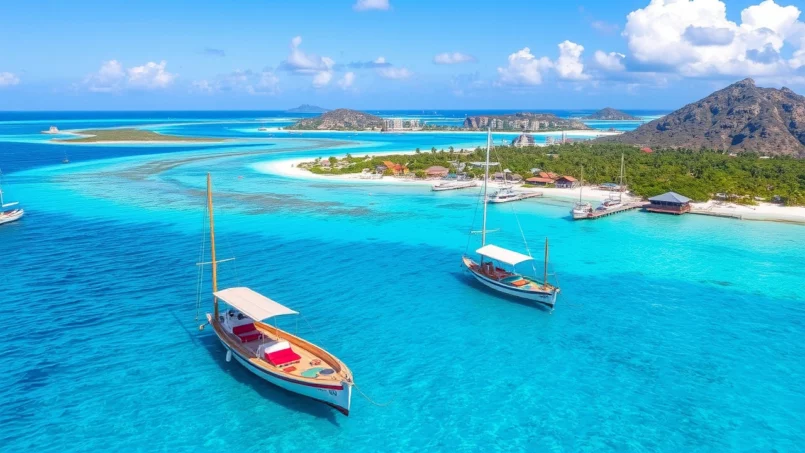
Moving to the Turks and Caicos Islands is choosing a postcard setting: white sand beaches, turquoise water, sunny climate, and a rather relaxed island vibe. But behind this paradise image lie realities that a future expat cannot ignore: a recent rise in crime, limited public services, natural hazards, a strict legal framework, and a healthcare system that is effective but limited in case of major emergencies.
The Turks and Caicos Islands are considered one of the safest tourist destinations in the Caribbean-Atlantic region. However, expatriation involves daily life there, moving outside resorts, working, schooling children, and investing, which demands a higher security requirement.
This article provides a comprehensive and very practical overview of safety in the Turks and Caicos Islands, focusing on what directly concerns a foreign resident: crime, neighborhoods, transportation, health, natural hazards, legal framework, insurance, emergency services… The goal: to give you the information to make an informed decision, and then to organize a truly serene expatriation rather than a blindly confident one.
Understanding the Security Context: A Paradise Under Pressure
The Turks and Caicos Islands are regularly presented as a safe haven compared to many other Caribbean destinations. Statistically, tourists staying in popular beach areas are less exposed than in many major North American cities or some neighboring islands. However, the local reality is more nuanced.
A Safe Territory for Visitors, but Affected by Rising Violence
Regionally, the Caribbean–Central America–South America area has crime rates significantly higher than those in Europe, Asia, or North America. The Turks and Caicos Islands rank rather in the upper tier of the region in terms of quality of life and safety for visitors, but they have seen a rise in gun violence over several years, mainly linked to gang conflicts and drug trafficking.
Number of homicides recorded in 2023 and again in 2024 across the territory, for a population of less than 50,000.
Local authorities and the United Kingdom have increased security resources: presence of the Royal Turks and Caicos Islands Regiment, targeted operations in some informal neighborhoods, tightening of firearms laws, British investment in security (coastal patrols, armed teams, video surveillance). Simultaneously, the Ministry of Tourism emphasizes that the islands remain safe for visitors who follow basic guidelines.
What the Main Sending Countries for Expats Say
Several Western governments nonetheless call for increased caution:
| Country / Agency | Alert Level for the Turks and Caicos Islands | Main Reason Cited |
|---|---|---|
| U.S. Department of State | Level 2: “Exercise Increased Caution” | Crime (indicator “Crime C”) |
| Government of Canada | “Exercise a high degree of caution” | Crime, particularly in Providenciales |
| UK FCDO | Risk of crime increasing in Providenciales and Grand Turk | Violent crime and theft |
The United States classifies the country as “high risk” on the criminal aspect, while not reporting any specific threat of terrorism, kidnapping, or civil unrest. The terrorism risk is considered low, and there is no particular anti-Western sentiment.
For an expat, daily safety depends mainly on the choice of where to live, the adopted lifestyle, and preparation. It is not a war zone, but the region is not immune to Caribbean crime either.
Where Expats Live, and Which Areas to Avoid?
Almost all foreign residents and the vast majority of tourists pass through Providenciales, nicknamed “Provo.” This is where the population, real estate development, employment, and also the vast majority of criminal incidents are concentrated.
The Generally Safe Areas to Live
For an expat, three areas stand out as particularly attractive and relatively safe:
Overview of the main sectors on the island, their characteristics, and their safety environment.
Tourist epicenter with beach, luxury hotels, rental villas, and restaurants. Security enhanced by visible police, improved lighting, police tents on the beach, and foot or bike patrols.
High-end residential neighborhood, often in gated communities with private security. Environment highly sought after by families and long-term expats.
Area featuring a marina, small residences, and villas, with a fairly quiet atmosphere and a good reputation for safety.
These sectors benefit from both police presence and the vigilance of the tourism industry, concerned with protecting the country’s image and thus incentivized to invest in private security measures (guards, cameras, lighting, fences).
Areas to Approach with Much More Caution
At the other end of the spectrum, some neighborhoods in Providenciales are more marked by poverty, trafficking, gangs, and precarious housing. They generally hold no interest for an expat, either residentially or touristically, and should be avoided, especially at night:
– Back areas of Five Cays and Kew Town
– Industrial areas around the airport, especially behind it and towards Wheeland
– Certain neighborhoods of Downtown / Back Road
These areas experience higher delinquency rates, less maintained infrastructure, few tourist services, and are the scene of some armed clashes. Moving through them without a valid reason, especially after dark, needlessly increases your exposure to risk.
Outside Providenciales, the other inhabited islands (North Caicos, Middle Caicos, Grand Turk) experience more opportunistic thefts (items left in an open car, unlocked villa) and far fewer violent assaults. Grand Turk is, however, proportionally to its size, the second island most affected by crime.
Crime: What Does the Risk Look Like for an Expat?
For a foreign resident, it is necessary to distinguish two types of risks: major crime linked to gangs (from which one can largely stay away) and petty crime/opportunism, closer to what is observed in any tourist destination.
Most Common Crimes: Opportunistic Theft and Assault
The acts that most concern non-residents are:
In the Turks and Caicos Islands, be vigilant against crime risks. Pickpocketing and bag snatching are common on beaches and in tourist areas. Never leave your belongings unattended. Avoid leaving valuables in your rental vehicle, even locked, and never leave it open. Burglaries of unoccupied homes, targeting jewelry, cash, and electronics, are common; use hotel safes. Home invasions occur in occupied villas, especially in Providenciales, targeting affluent properties. Armed robberies for theft can occur, particularly at night in certain sectors of Provo; avoid displaying signs of wealth. Finally, beware of sexual assault: use only official taxis and watch your drink in social settings.
This overview may seem concerning, but it is important to highlight two essential elements for an expat:
1. The majority of violent crimes are linked to internal gang conflicts and drugs, in targeted areas, at known times. 2. The vast majority of incidents affecting foreigners or tourists involve predictable negligence: unattended drink, unofficial taxi taken after leaving a bar, unlocked villa, isolated night walk on the fringes of Grace Bay, etc.
It is possible to greatly reduce your exposure to risk by adopting a few simple and consistent habits.
Gangs, Drugs, and Weapons: A Background Not to Underestimate
The rise in violence is closely linked to the islands’ role as a transit zone for drugs from South America, combined with a relatively easy circulation of firearms in the region. Local gangs clash for control of routes and neighborhoods, hence an explosion in the number of murders in a small territory.
For an expat, the practical conclusion is clear: never approach anything related to narcotics, near or far. Places where drugs circulate or are sold inherently concentrate more violence (settling scores, robberies, shootings). Several tourists have been injured or killed simply trying to buy narcotics “for the vacation.”
Daily Life: How to Protect Yourself Intelligently
It’s not about living barricaded, but establishing a basic security routine, exactly as one would in a major metropolis.
Housing: Securing Your Home or Villa
Choosing a well-secured home is probably the most impactful decision for a serene expatriation. Most modern villas and recent residences in Providenciales, especially in high-end areas, are already designed with security in mind: sturdy doors and windows, fences, cameras, alarm systems, guards.
A few habits to systematize:
To effectively protect your home, always lock doors and windows, even during short absences. Store valuables (passports, jewelry, cash) in a safe or secure cabinet. In a single-family house, installing a modern alarm with sensors and remote video surveillance is recommended. Prefer, if possible, a subdivision or residence with private security. Finally, avoid leaving valuables visible from outside and be discreet about your absences or lifestyle on social media.
Summary table of basic measures to implement in a home:
| Area | Good Habit to Adopt |
|---|---|
| Access | Quality locks, reinforced doors, lockable windows |
| Presence | Exterior lighting, timers, impression of occupied home |
| Valuables | Safe for passports, cash, jewelry, digital media |
| Alarm | Connected system with phone notifications and local siren |
| Neighborhood | Exchange numbers with neighbors, keep an eye on nearby houses |
| Social Media | Do not announce absences or show interior of home in detail |
Transportation: Day, Night, and Transit
The Turks and Caicos Islands have no public transportation. Most residents drive personal vehicles, and visitors rent a vehicle or use taxis.
Key points:
Driving is on the left, but the presence of many left-hand drive vehicles reduces visibility. The Leeward Highway, although decent, is the site of serious accidents, especially at night. Secondary roads are often in poor condition (potholes, poor lighting and markings, stray animals). Use of scooters and bicycles is strongly discouraged outside Grace Bay. For taxis (mainly vans), rates are often per person and in cash: it is essential to negotiate the price before departure.
In this context, for an expat:
– Prefer daytime travel for trips outside tourist areas.
– Limit nighttime car travel to well-lit and known routes.
– Avoid “jitneys” absolutely, these unofficial, unmarked taxis, regularly implicated in cases of assault, extortion, and sexual assault.
– When walking, especially in the evening, stay in busy, well-lit, and central areas (Grace Bay). Walking alone at night outside these areas is not recommended.
Money, Cards, and Valuables
Providenciales is very well equipped with payment terminals, and most upscale businesses accept credit and debit cards. The need to carry large amounts of cash is therefore limited, except for taxis and some small services.
Best practices:
To secure your belongings and transactions, limit cash on your person. Never leave your belongings unattended. Avoid ATMs at night or in isolated locations; prefer those in secure locations like banks. Before any withdrawal, inspect the ATM for any signs of skimming (such as a suspicious card reader or ill-fitting parts). If in doubt, use another machine and report it.
Risky Behaviors to Avoid
Three situations are very common in accounts of serious incidents:
1. Drinks left unattended in bars, clubs, and lounges. Cases of drugs being slipped into drinks have been reported, sometimes followed by theft or sexual assault. 2. Use of illegal taxis late at night, for convenience or to avoid walking. A very bad calculation given the number of reported cases. 3. Resisting during an assault. Authorities and embassies are clear: in case of an attack, do not resist, do not try to play the hero. The goal is to limit the risk of serious or fatal injury.
Health and the Medical System: A Crucial Point for an Expat
This isn’t just about criminal safety. A successful expatriation also depends on the ability to handle a road accident, a heart problem, or a drowning.
Medical Infrastructure: Good, but Limited
The Turks and Caicos Islands have a modern hospital system for a territory of this size, largely managed by a private international operator (InterHealth Canada) and accredited to the highest level by Accreditation Canada.
Main facilities:
| Establishment | Location | Main Role and Services |
|---|---|---|
| Cheshire Hall Medical Centre | Providenciales | Main hospital: 24/7 emergency, surgery, maternity, imaging, intensive care |
| Cockburn Town Medical Centre | Grand Turk | Smaller hospital: emergency, maternity, basic surgery |
| Private clinics (Associated Medical Practices, Grace Bay Medical Centre…) | Providenciales | Daily medicine, imaging, specialized care, decompression chamber |
Together they form a rather solid network for common emergencies (fractures, injuries, acute crises). On the other hand, for serious conditions (complex cancers, neurosurgery, major burns, etc.), care very quickly relies on medical evacuation by air, often to Miami, Nassau, or other regional centers.
Ambulance response times remain limited, particularly outside tourist areas. In some situations, the fastest solution is to drive oneself to the hospital or clinic.
Health Insurance, NHIP, and International Coverage
Residents employed locally are in principle enrolled in the National Health Insurance Plan (NHIP), a mandatory scheme funded by contributions shared between employer and employee. This plan covers a wide range of care (consultations, imaging, emergencies, maternity, hospitalization) without exclusions for pre-existing conditions, with a small co-payment for each visit.
But this system has two major limitations for an expat:
1. It only covers care within the islands, or marginally some care abroad when not available locally. 2. It does not systematically include medical evacuation costs or heavy and prolonged care in a major foreign hospital center.
Result: it is strongly recommended for expats to subscribe to an international health insurance combined with medical evacuation coverage. Several specialized brokers offer solutions tailored for international workers, covering care on the islands, but also repatriation and heavy treatment abroad.
Main Risks for Daily Health
For a resident, the main dangers are not necessarily spectacular:
The main causes of serious accidents for visitors are drownings (fatigue, currents, overconfidence), heatstroke (temperatures >99°F), injuries during water activities (collisions, falls), and dangerous contact with wildlife/flora (toxic plants, jellyfish, corals). To protect yourself: always swim with a buddy, hydrate abundantly, protect yourself from the sun, be vigilant near shorelines, and inquire about local risks.
Legal Framework: Weapons, Drugs, Morals… What an Expat Cannot Ignore
Several laws are enforced with great severity and regularly lead to unexpected arrests, notably among North American travelers.
Drugs: Zero Tolerance, Even for a Few Grams
Cannabis is classified as a Category A substance, the same rank as hard drugs. It is completely illegal, even for medical use, and this applies to all forms of products containing THC or CBD.
Penalties are heavy:
– Up to 2 years in prison and several thousand dollars in fines for simple possession.
– Up to 5 years in prison and $75,000 USD in fines for importation.
Controls now include detector dogs, tests on suspicious luggage, and random searches. For an expat, the safest rule is not to touch narcotics and to keep your distance from all drug-related environments.
Weapons and Ammunition: Minimum Penalties of 12 Years
Importation of firearms, ammunition, or certain spearfishing equipment (Hawaiian slings): strictly prohibited without prior authorization from the Police Commissioner. Minimum penalties are particularly dissuasive – at least 12 years in prison if convicted.
Several travelers have been detained for forgetting one or two bullets in a bag, coat, or pocket. Even if the situation is eventually resolved, the procedures are long and pretrial detention is very real. For expats who travel frequently, the only effective strategy is to completely empty and inspect all pockets, hunting bags, shooting or hiking bags before each departure.
Other Aspects to Know
– Dual citizenship: recognized by the country.
– Same-sex relationships: legal, but marriage and civil partnerships are not provided for by law. Society remains generally tolerant but conservative; discretion is recommended for overt displays of affection in public.
– The judicial system is that of a British Overseas Territory, with a Governor representing the Crown and a national police force under UK authority.
Transportation, Sea, and Climate: Managing Environmental Risks
Living on islands exposed to the tropical Atlantic requires dealing with some realities: hurricane season, sometimes dangerous seas, imperfect roads, limited rescue means outside main centers.
Natural Hazards: Hurricanes, Floods, and Water Shortages
Hurricane season runs from June to November, peaking between August and October. The Turks and Caicos Islands have already faced several major storms and, overall, have recovered well thanks to increasingly wind-resistant buildings and good emergency organization. Nevertheless, power outages, water shortages, and prolonged transportation disruptions can occur.
For an expat, it is necessary to have a hurricane preparedness plan:
To prepare effectively, stock up on non-perishable food and drinking water for one to two weeks, as well as a supply of medicines and essential items. Identify in advance a backup accommodation solution in case of evacuation (sturdier housing or a floor not exposed to flooding). Verify that your home insurance includes water and wind damage. Finally, make sure to know and follow the instructions of the local disaster management authorities.
The islands also experience water shortages and may impose rationing. Tap water in Providenciales hotels is generally desalinated, drinkable but sometimes not pleasant tasting. On other islands, there are often cisterns collecting rainwater, of more variable quality.
Sea Safety and Water Activities
The sea is part of daily life in the Turks and Caicos Islands: swimming, diving, snorkeling, boat trips, kitesurfing… But these activities, very attractive for expats and tourists alike, come with their share of dangers.
Points to watch for:
For sea activities, it is imperative to choose licensed and insured operators, as informal vendors do not guarantee safety standards (life jackets, guidance, equipment). Beware of reckless boating and jet-ski driving, common near some beaches due to lack of controls. Avoid jumping off cliffs or wrecks, a major risk for spinal fractures. Finally, inquire about areas with currents or sharks, and avoid swimming where bait is being used.
The basic rule: enjoy the sea, yes, but never underestimate the power of the ocean nor rely too much on rescue services, which are limited in personnel and equipment.
Police, Emergency Services, and Consular Aid: Who to Call in Case of Trouble?
One point that often surprises expats from North America or Europe is the relative weakness of police and emergency resources compared to what they know at home.
Emergency Numbers and Operation
The single emergency number is 911 (or 999 in some documents). It connects you to police, fire, and ambulance services via a 24/7 communication center. Operators are trained to provide basic first aid advice (CPR, for example) while waiting for emergency services.
In parallel, there are direct numbers for the police, ambulances, maritime rescue, hospitals, the local Red Cross. But, in practice:
– Response times can be significantly longer than what residents of Western Europe or North America are used to, especially in outlying areas and on other islands.
– Geographic constraints (imperfect roads, poorly numbered houses and streets, traffic) complicate the task of first responders.
– It is not uncommon for victims to have to go to the police station or hospital themselves to expedite administrative or medical care.
Consular Aid: A Remote Network
The Turks and Caicos Islands do not have a U.S. or Canadian embassy or consulate on site. Nationals must turn to:
For North American nationals in distress in the Turks and Caicos Islands, the nearest diplomatic representations are located in other countries in the region. U.S. citizens can turn to the U.S. Embassy in Nassau, Bahamas. Canadian citizens, on the other hand, fall under the High Commission of Canada in Kingston, Jamaica. For on-the-ground assistance, the latter can also contact the Canadian Honorary Consul based in Providenciales.
Concretely, in case of a serious incident (accident, assault, arrest), consular aid can be of great support for:
– Providing a list of local lawyers.
– Alerting the family.
– Helping to organize medical repatriation (in addition to insurance).
– Intervening with authorities within the limits of local law.
On the other hand, these services cannot get a person released if lawfully arrested under local law, nor prevent a judicial proceeding.
Insurance, Assets, and Investments: Also Securing Your Financial Future
Beyond physical safety, expatriating to the Turks and Caicos Islands requires thinking about the financial and legal security of one’s projects.
Essential Insurances for a Serene Expatriation
For an executive or entrepreneur moving there, several types of coverage are particularly important:
– International health insurance with medical evacuation.
– Home/villa insurance including hurricane risks, theft, water damage.
– Liability insurance (personal and possibly professional).
– Supplementary coverages such as international life and disability insurance to protect spouse and children in case of death or incapacity.
It is crucial to read the clauses of your insurance contract carefully regarding storm and flood-related claims, applicable geographic exclusions, as well as coverage conditions for stays outside your country of residence, especially if you travel frequently.
Real Estate Property and Disputes
The country attracts many foreign real estate investors: luxury villas, vacation homes, seasonal rental projects. Such projects can be profitable, but not without risks:
– Legal procedures in case of land or commercial disputes can be lengthy and costly.
– Dependence on a high-end tourism market exposes one to shocks (health crises, economic shocks, security incidents massively covered by media).
Prudence recommends:
– Always using an independent local lawyer for any acquisition.
– Never committing to a project that is “too good to be true” without thorough due diligence.
– Considering real estate investment not as an absolute security, but as an asset exposed to regional hazards (climate, economy, security).
Local Culture, Integration, and Reputation: An Underestimated Safety Factor
Safety isn’t just walls and locks. In a small territory where everyone ends up knowing each other, personal reputation counts enormously.
By respecting local customs, maintaining good relationships with neighbors, being polite, discreet, and respectful, an expat naturally increases their level of informal protection:
Maintaining good neighborly relations has several concrete benefits: your neighbors will naturally watch your house in your absence, local merchants will be quicker to alert you in case of trouble, and the community will be generally more inclined to integrate and support you in difficult situations.
Conversely, by behaving like a permanent tourist – flaunting wealth, disrespecting local norms, participating in illegal activities – one becomes doubly vulnerable: to criminals but also to authorities and the community.
In Summary: A Serene Expatriation is Possible, Provided You Are Clear-Eyed and Prepared
The Turks and Caicos Islands are neither a violent hell nor a world-isolated paradise. It is a privileged Caribbean territory touristically, but caught up by the issues of its region: gangs, drugs, weapons, inequalities, institutions undersized relative to criminal pressure.
For an expat, the key to a serene expatriation lies in a few major principles:
For a serene stay, it is crucial to choose your neighborhood well (Grace Bay, Leeward…), secure your home, and adopt vigilance habits (locked doors, official taxis, limited nighttime travel). Plan for international health insurance with evacuation, appropriate home coverage, a hurricane plan, and an emergency fund. Strictly respect local laws on drugs and weapons. Finally, building ties with the local community provides a valuable informal safety net.
By following these guidelines, it is entirely possible to fully enjoy what the Turks and Caicos Islands have best to offer – sublime beaches, mild climate, relaxed pace of life – without being caught off guard by the less photogenic realities of the territory. Serenity, here as elsewhere, does not come from the absence of risks, but from clear-eyed preparation and lifestyle choices consistent with the local context.
Disclaimer: The information provided on this website is for informational purposes only and does not constitute financial, legal, or professional advice. We encourage you to consult qualified experts before making any investment, real estate, or expatriation decisions. Although we strive to maintain up-to-date and accurate information, we do not guarantee the completeness, accuracy, or timeliness of the proposed content. As investment and expatriation involve risks, we disclaim any liability for potential losses or damages arising from the use of this site. Your use of this site confirms your acceptance of these terms and your understanding of the associated risks.

Cyril Jarnias is an independent expert in international wealth management with over 20 years of experience. As an expatriate himself, he is dedicated to helping individuals and business leaders build, protect, and pass on their wealth with complete peace of mind.
On his website, cyriljarnias.com, he shares his expertise on international real estate, offshore company formation, and expatriation.
Thanks to his expertise, he offers sound advice to optimize his clients' wealth management. Cyril Jarnias is also recognized for his appearances in many prestigious media outlets such as BFM Business, les Français de l’étranger, Le Figaro, Les Echos, and Mieux vivre votre argent, where he shares his knowledge and know-how in wealth management.





