
 Published on and written by Cyril Jarnias
In the Turks and Caicos Islands, the picture-postcard setting hides a surprisingly sophisticated business environment: US dollar currency, common law, no income or corporate taxes, a fast-growing economy, and a government open to foreign investment. For an expatriate entrepreneur, the destination combines major advantages, but also very specific constraints, particularly regarding work permits, licenses, and the cost of living.
This article provides a comprehensive, practical, and data-driven guide for expatriates looking to establish and run a business in this archipelago, highlighting common pitfalls to avoid.
A Tropical, Pro-Business, and Stable British Territory
The Turks and Caicos Islands are a British Overseas Territory, located southeast of Miami and southeast of the Bahamas, comprising approximately 40 islands and cays, with only a handful inhabited. The political capital is Cockburn Town on Grand Turk, but the economic engine is Providenciales, often nicknamed “Provo.”
The official language is English, the currency is the US dollar, and the legal system is based on English common law, supplemented by legislation derived from the Bahamas and Jamaica. The judicial hierarchy runs from the Magistrate’s Courts to the Supreme Court and a Court of Appeal, with the final appeal being to the Judicial Committee of the Privy Council in London. For a foreign investor, this means a familiar, predictable, and internationally recognized legal environment.
On the macroeconomic level, the territory shows sustained growth, a public budget surplus, and investment-grade credit ratings (BBB+ or A- depending on the source). The economy is open, with few restrictions on foreign investment, and the government is very favorable towards international capital, notably through its agency Invest Turks and Caicos.
Why the Turks and Caicos Islands Attract Expatriate Entrepreneurs
The headline argument, the one that immediately grabs the attention of entrepreneurs and tax nomads, is the taxation model: there is no personal income tax, no corporate tax, no capital gains tax, no wealth tax, no inheritance tax, and no annual property tax. The majority of public revenue comes from indirect taxes (customs duties, tourism taxes, stamp duty on real estate, work permits, etc.).
Proper structuring of the business and the entrepreneur’s presence can lead to almost no tax on profits and dividends. This optimization is achievable in a regulated jurisdiction, compliant with OECD, FATF, and FATCA standards, and is not considered a “pirate” tax practice.
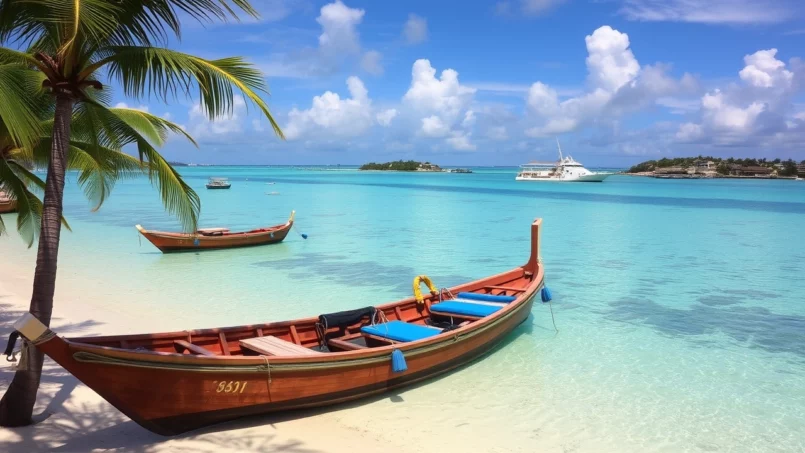
The quality of life is obviously another major argument: sunny climate year-round, beaches ranked among the world’s most beautiful (Grace Bay regularly tops the charts), spectacular coral reefs, turquoise sea. The combination of lifestyle + British legal environment + no direct tax explains the destination’s positioning as a “boutique” location for a wealthy clientele and international entrepreneurs.
But behind these advantages, there are also significant constraints: a very high cost of living, sometimes slow bureaucracy, heavy reliance on tourism, strict work permit processes, and sky-high real estate prices in Providenciales. Moving and starting a business without preparation can quickly become a headache.
Understanding the Local Economy to Target the Right Sectors
Before launching a project, it is crucial to understand the structure of the Turks and Caicos Islands’ economy. GDP rests mainly on three pillars: tourism, offshore financial services, and real estate, supplemented by fishing and still marginal agriculture.
Luxury Tourism: The Main Engine
Tourism is the beating heart of the economy. The territory welcomes over a million visitors annually, mostly from North America. The offering is clearly positioned in the luxury segment: high-end resorts, private villas, beachfront condominiums, exceptional yachting, and diving.
This dynamic creates two types of opportunities:
1. Direct investments in accommodation and tourism services
There is an identified need for additional hotel rooms, villas, managed condos, and private residences for rent. Major developments are announced for $500 to $750 million US in the coming years. Major hotel brands present (Amanyara, Beaches Resort Villages and Spa, etc.) are already expanding their capacity.
The growth in tourist flow stimulates a vast secondary market comprising restaurants, bars, retail shops, water excursions, diving and kitesurfing services, wellness spas, concierge services, transportation, as well as cultural and event activities.
Data from the Providenciales Airbnb market well illustrates the potential of the short-term rental sector.
| Indicator (Airbnb Providenciales) | Top 10% | Top 25% | Median | Bottom 25% |
|---|---|---|---|---|
| Estimated Monthly Revenue | ≥ $29,779 | ≥ $16,481 | ≈ $7,295 | ≈ $3,450 |
| Occupancy Rate | ≥ 79% | ≥ 66% | 44% | 24% |
| Average Daily Rate (ADR) | ≥ $2,332 | ≥ $1,183 | $556 | $274 |
The sector is however cyclical: the high season (January-March) concentrates the best occupancy rates and prices, while September-October are significantly slower.
Niche Tourism: Diving, Eco-Tourism, Health, Conferences
Beyond luxury beach holidays, several niches are still underexploited:
– Diving, Sailing, and Adventure: coral walls dropping 7,000 feet near Grand Turk, kitesurfing and sport fishing spots, day cruises.
– Eco-Tourism: many islands and cays are nearly pristine, ideal for low-impact eco-lodges.
– Marinas and Yachting: Providenciales already has several marinas, but other islands offer land for resorts integrated with marinas.
– Medical Tourism: thanks to a modern hospital system, opportunities exist for surgical stays (hip/knee replacements, arthroscopies, plastic surgery).
– Conference Center: there is not yet a large-scale conference center, even though Providenciales would be well-suited for one.
For an expatriate, specialized tourism segments (like health, diving, or MICE) are interesting. They often require specific expertise that the local workforce may not always possess, which can facilitate obtaining a work permit for skilled positions.
Real Estate: Strong Appreciation and Cost Constraints
The real estate market has exploded over the last two decades, especially in Providenciales, where demand for second homes and rental villas soared after the COVID-19 pandemic. The result: skyrocketing prices and an affordability crisis for residents.
Some order-of-magnitude figures from recent data:
| Type of Property (Providenciales) | Estimated Median Price |
|---|---|
| Non-Waterfront Land (1 acre) | ≈ $584,000 |
| Waterfront / Beachfront Land (1 acre) | ≈ $3,048,000 |
| 2-Bedroom House (non-waterfront) | ≈ $783,000 |
| 2-Bedroom Condo (non-waterfront) | ≈ $795,000 |
| 2-Bedroom Waterfront House | ≈ $2,388,000 |
For investors, the absence of property tax and capital gains tax is a considerable advantage, but acquisition is subject to stamp duty that can reach 10% of the price, and very high construction costs (all materials imported, scarce labor).
Agriculture, Fishing, and Aquaculture: An Underexploited Potential
Over 90% of food consumed locally is imported. However, some islands (North and Middle Caicos) have fertile land and a climate suitable for agriculture, even organic production. The state estimates the arable land area at about 1,000 hectares and supports small farmers with subsidies, high-tech equipment, and technical assistance.
The Turks and Caicos Islands conch farm has demonstrated the viability of exporting to the United States.
For an expatriate, these sectors can be interesting in partnership with local residents, particularly through support programs for Micro, Small, and Medium Enterprises (MSMEs), which primarily target agriculture, fishing, agri-food processing, and tourism.
Financial Services and Technology: A “Boutique” Hub
The territory is a niche financial center, more modest than major competitors like the Cayman Islands, but with a modern legal framework for banks, insurance, trusts, investment funds, and management companies. International banks like Scotiabank, CIBC, and Royal Bank of Canada are present, alongside local players like Turks & Caicos Banking Company or British Caribbean Bank.
Technology and telecommunications are well developed: 4G coverage, providers like LIME, Digicel, Islandcom, fiber optic expansion projects, and consideration of green data centers. The government aims to position the Turks and Caicos Islands as a tech hub and destination for remote workers.
Choosing the Right Legal Structure for Your Business
Company law is governed by the Companies Ordinance (most recent version 2017, with amendments). For a foreign entrepreneur, several forms exist, but the most commonly used remains the company limited by shares.
Types of Companies Available
The main options are:
– Domestic Company: a company registered and operating commercially within the Turks and Caicos Islands.
– International or “Exempt Company” (often akin to an IBC): registered in the Turks and Caicos Islands, but conducting its business primarily outside the territory.
– Foreign Company: already incorporated in another country but registered to do business or hold property in the Turks and Caicos Islands.
– Other vehicles: unlimited liability companies, companies limited by guarantee (with or without share capital), protected cell companies (PCC, mainly for insurance), hybrid companies, limited partnerships, non-profit entities.
For an expatriate wishing to operate a local business (restaurant, tourism, consultancy, retail), the relevant legal form is generally a domestic company limited by shares. For an investment or holding vehicle intended to operate outside the territory, an exempt company is preferred, as it benefits from a guarantee of tax exemption for up to 20 years.
Basic Requirements
The framework is deliberately flexible and attractive:
A minimum of one shareholder and one director (can be the same person), with no nationality or residency restrictions. No legal minimum capital, but an authorized capital of $5,000 US is common to minimize fees. Bearer shares are prohibited. No obligation to hold an annual general meeting at a specific location. Internal registers are mandatory but private. Exempt companies must file an annual compliance declaration.
Confidentiality and Register of Beneficial Owners
The names of directors can be obtained upon payment of a fee, but information on shareholders and beneficial owners is held by the Financial Services Commission (FSC) and is not publicly available. However, as part of international transparency commitments, a public register of beneficial owners is being considered for the future.
The Confidential Relationships Ordinance also imposes a duty of confidentiality on professionals (bankers, lawyers, agents), with criminal penalties for unauthorized disclosure.
Costs and Incorporation Timeframes
The law requires using a licensed service provider (local lawyer, corporate manager, company manager). Self-incorporation is prohibited.
The approximate costs are as follows:
| Cost Item | Indicative Range |
|---|---|
| Company Formation (1st year) | ≈ $1,350 to $3,500 |
| Annual Fees (registered agent, etc.) | ≈ $1,500 to $1,900 |
| Annual Government License Fee | ≈ $300–$350 |
In practice, with complete documents, incorporation can be completed in a few business days (often 1 to 5 days), but the entire setup (licenses, bank account, work permit) generally takes several weeks to a few months.
Business Licenses: A Mandatory and Sometimes Tricky Step
Once the company is created, the next step is obtaining a business license. Any person or company carrying on a business for profit “in or from” the Turks and Caicos Islands needs one, with few exceptions (banks, insurers, and certain managers are regulated by specific legislation).
Categories, Reserved and Restricted Activities
The regulation distinguishes:
Business investments in the Turks and Caicos Islands are divided into three distinct categories: open categories, accessible to all; restricted categories (R), subject to approval from the Ministry of Finance or the Cabinet, often with a business plan; and reserved categories (X), which must be at least 51% owned by persons with Turks and Caicos Islander (Belonger) status.
The number of reserved activities exceeds eighty, including, for example, many retail businesses, certain restaurants, taxi services, small construction businesses, etc. In theory, a non-Belonger can obtain a license for a reserved activity by demonstrating substantial benefit to the community, but this remains the exception rather than the rule.
Certain sectors, such as taxi licenses, alcohol sales, gambling, accommodation, or nautical activities, may be subject to temporary moratoriums or specific regulations.
Cost and Renewal of Licenses
The annual fees vary considerably depending on the nature and size of the activity:
| Type of Activity (examples) | Approximate Annual Cost |
|---|---|
| Agriculture / small farm | ≈ $300 |
| Small service business | ≈ $150–$1,500 |
| Architectural firm | ≈ $2,700 |
| Large hotel | up to $13,500 |
The license cycle is generally annual, with a fixed deadline of March 31. Late payment penalties (often 10% per month) apply from May onwards. The original license must be displayed visibly at the place of business.
Any change in the company’s characteristics (address, shareholding, nature of activity) must be notified to the revenue department within 30 days, and cessation of business within the same timeframe.
Taxation: A Direct Tax Paradise, an Indirect Tax Maze
For an expatriate, the promise is clear: no tax on personal income or corporate profits, no capital gains or inheritance tax, no wealth tax or annual property tax. But public revenue is recouped elsewhere.
Main Taxes and Duties to Anticipate
Among the main levies:
Overview of the main fiscal contributions and applicable fees for businesses and individuals in the archipelago.
The core of public revenue. The standard rate is about 30%, with variations depending on the type of goods.
Also called Customs Processing Fee, it applies at about 5 to 7.5% on all imports.
From 0 to 10% of the price, depending on location and value. Transfers between parents and children may be exempt.
Accommodation tax of about 12% on tourist services. Mandatory 10% service charge in hospitality, paid to employees.
Approximately 12% on services (internet, mobile, television).
A significant portion of revenue. Annual amounts can exceed $9,000 for some positions.
There is, however, no VAT or general sales tax, which simplifies daily management, but the very high level of customs duties strongly impacts retail prices, whether for construction materials, vehicles, or food products.
Mandatory Social Contributions
The absence of income tax does not exempt from mandatory contributions:
The National Insurance Board (NIB) contribution rate in Jamaica, shared between employer and employee.
Every employer must enroll its employees in these schemes as soon as the work permit is approved.
Work Permits and Residency: The Crux of the Matter for the Expatriate
Creating a company in the Turks and Caicos Islands is relatively straightforward legally. Being able to work there personally is another story. The country protects local employment through a strict work permit system, similar in some aspects to sponsorship systems like kafala.
Who Can Work Without a Permit?
Certain categories of persons do not need a work permit:
– nationals with Turks and Caicos Islander (Belonger) status,
– British Overseas Territories Citizens (BOTC) linked to the Turks and Caicos Islands,
– holders of a Permanent Residence Certificate with the right to work,
– spouses of Belongers with a specific residency permit,
– a few categories of diplomats and official agents.
For a typical expatriate, a work permit is required, and for an entrepreneur, often a self-employed work permit.
Types of Permits
The main categories are:
Overview of the different categories of work permits available in Mauritius, each tailored to a specific professional situation.
For employees, with a distinction between skilled and unskilled positions.
For professionals operating as self-employed individuals.
A special and limited category, historically intended for certain young people without legal status, now almost obsolete.
Allows work for a maximum period of 10 days.
For business visits, with a stay limited to 7 days.
Permits for employees tie the holder to a specific employer. Changing employers requires a new procedure and new fees.
Recruitment Process and Labour Clearance
To hire a foreigner for a salaried position, the employer must demonstrate the absence of a qualified local candidate. This involves:
1. Publishing advertisements in the local press (two consecutive issues), detailing the position, salary, conditions, and inviting Belongers to apply, with a copy to the Work Permit Board. 2. Applying for Labour Clearance, which certifies the absence of an eligible candidate locally.
This obligation does not apply to self-employed permit applications, but in practice, any local activity requires a business license, often subject to local preference depending on the sector.
Work Permit Application File: A Cumbersome Procedure
Commonly required documents include: the application form, valid identification, a recent passport photo, and proof of address.
– official application form,
– passport photos,
– certified copy of passport,
– recent police certificate (with restrictions on acceptance of certificates from Haiti or the Dominican Republic),
– health certificate (full medical exam: X-rays, tests, HIV, Hepatitis B, syphilis, up-to-date vaccinations), validated by a local doctor,
– for renewals: up-to-date NHIP and NIB contribution certificates,
– for employees: employment contract, job description, copies of advertisements and Labour Clearance, employer’s business license,
– for self-employed: business license, business plan, bank statements, proof of company ownership, staffing plan, certificate of incorporation.
Applications are processed by regional Work Permit Boards (Zone 1 for Grand Turk, South Caicos, Salt Cay; Zone 2 for Providenciales, North and Middle Caicos). An online portal has been set up to digitize part of the process, but processing times often remain lengthy.
Processing Times, Costs, and Validity Period
In theory, the target processing time is 30 days from payment of fees. A Fast Track option promises processing within one week for an additional fee. In practice, many cases exceed 2 to 4 months, sometimes 6, especially for first-time applications.
The fees break down into:
Detail of the main administrative and government costs to anticipate for obtaining a work permit in Canada.
Non-refundable fees of at least $150 or 10% of the permit cost.
Fees of about $100 for the labor market assessment.
Approximately $500 for a first application or change of employer.
Highly variable: from $150 for some low-skilled positions to $9,500/year for management, doctors, engineers, etc.
| Position Category (examples) | Approximate Annual Permit Cost |
|---|---|
| Domestic Worker | ≈ $1,000 or less |
| Bartender, Artist | ≈ $1,350 |
| Nurse, Pharmacist | ≈ $3,500 |
| Secretary, Head Chef | ≈ $4,700 |
| Manager, Doctor, Engineer, etc. | ≈ $9,500 |
Maximum durations vary: up to 5 years for a skilled or self-employed permit, but, in practice, most are issued for one year, with renewal never guaranteed. For unskilled workers, renewal caps are applied (e.g., up to 3 times).
Work Permits and Investment
There is an “investment” pathway to access permanent residence (Permanent Residence Certificate) provided significant amounts are invested and a majority of local workers are employed (at least 60%):
– Starting from $750,000 investment in a business or property on islands like Grand Turk, Salt Cay, North, Middle, or South Caicos.
– Starting from $1,500,000 for Providenciales and other more sought-after islands/cays.
For a foreign entrepreneur wishing to run their business themselves, they must therefore choose between:
– obtaining a self-employed work permit,
– or a large-scale investment strategy aimed at permanent residence with the right to work, which assumes high initial capital.
Note that a Permanent Residence Certificate does not automatically give voting rights or Belonger status, which is difficult to obtain.
Cost of Living and Business Costs: Anticipating a Very High Budget
The Turks and Caicos Islands are among the most expensive destinations in the Caribbean. Providenciales, in particular, has a cost of living about 30% higher than the US average, and significantly higher than Nassau (Bahamas) or many European cities.
Daily Life: Housing, Food, Services
For an expatriate, the following approximate figures help calibrate the budget:
| Expense Item (Providenciales) | Indicative Monthly Range |
|---|---|
| Studio / 1 bedroom outside center | ≈ $1,250 ($800–$1,600) |
| 1 bedroom in center | ≈ $1,700 ($1,500–$1,800) |
| 3 bedrooms in center | ≈ $3,750 ($3,500–$4,000) |
| 3 bedrooms outside center | ≈ $3,250 ($2,500–$4,000) |
| Electricity, Water, Waste (apartment ~915 sq ft) | ≈ $300–$400 |
| High-speed Internet | ≈ $100–$175 |
| Mobile Phone Plan | ≈ $70–$120 |
Food prices reflect the high customs duties:
– a gallon of milk can exceed $17,
– fruits and vegetables often twice as expensive as in North America,
– a meal for two in a mid-range restaurant easily exceeds $120.
A realistic monthly budget for a family of four, including housing.
Specific Costs for a Business
Beyond licenses and work permits, several items weigh heavily in a company’s cost structure:
Commercial real estate varies significantly by location (from $1,250 to over $1,650/month for 500 sq ft), with land often inaccessible. Electricity is expensive, impacting energy-intensive sectors. All imports incur high customs duties and logistical fees. Finally, the tight labor market and associated costs (permits, housing, insurance) lead to significant payroll expenses.
The absence of tax on profits, however, leaves more net margin once the business model is established.
Financing, Banks, and Confidentiality
The local banking sector is well-regulated, notably by the Financial Services Commission, but it is not always easy to access for foreigners.
Opening a Corporate Bank Account
The major international banks (Scotiabank, CIBC, RBC) coexist with local entities (Turks & Caicos Banking Company, British Caribbean Bank). All are connected to the SWIFT network.
In practice:
– a corporate account can take 2 to 6 months to open,
– it is almost essential to use a local lawyer or corporate manager to prepare the file,
– KYC/AML requirements are strict: articles of association, certificate of incorporation, registers of directors and shareholders, proof of address and identity, bank reference letters, detailed documentation on source of funds and intended activity.
Some banks, particularly in private banking, may require a significant minimum deposit, often $50,000 or more. Furthermore, account maintenance and transaction fees can be higher than those in North America or Europe.
Confidential, But Not Opaque
Thanks to the Confidential Relationships Ordinance, banking and professional information is protected, but the Turks and Caicos Islands adhere to tax transparency standards: FATCA for Americans, OECD’s CRS for automatic exchange of information, information exchange agreements on request with several states.
For an entrepreneur, this means one cannot rely on the jurisdiction to conceal income from one’s country of tax residence, but one benefits from a local tax-free environment on that income, subject to complying with the rules of one’s home country.
Public Support, Incentives, and Sector Priorities
The government has structured its economic diversification policy in a National Physical Development Plan and an Investment Policy. The agency Invest Turks and Caicos acts as a one-stop shop for investors.
Role of Invest Turks and Caicos
This public agency, headed by Angela Musgrove, offers free:
– sector information and market studies,
– support in regulatory procedures and applications for work permits or residency,
– assistance in negotiating development agreements with the government,
– technical and marketing support, especially for Micro, Small, and Medium Enterprises (MSMEs).
Maximum grant provided for by the ordinance for the development of Micro, Small, and Medium Enterprises in the Turks and Caicos Islands.
Development Agreements and Incentives for Major Projects
For large-scale projects (hotels, marinas, real estate complexes, major agricultural or aquaculture projects, light manufacturing, green energy), customized concessions can be negotiated:
– reductions or exemptions from customs duties on equipment and materials,
– exemption or reduction of stamp duty on land acquisition,
– privileged access to public land (Crown land),
– assistance with environmental and planning procedures.
In exchange, the investor commits to performance criteria (amount invested, timeline, number of jobs created, proportion of local employees, compliance with environmental standards, etc.).
Business Real Estate and Location Strategy
For an expatriate entrepreneur, the choice of location and mode of occupancy (rental or ownership) is strategic.
The majority of businesses, professional service offices (lawyers, real estate agencies, banks), and infrastructure are concentrated in Providenciales. The main hubs:
The island of Providenciales in Turks and Caicos offers different commercial zone profiles. The **Grace Bay Strip** is the main tourist front, concentrating resorts, restaurants, and luxury boutiques, ideal for B2C tourism but with high rents. **Downtown Providenciales and Leeward Highway** present a more mixed environment (shops, offices, warehouses), with lower rent, better suited for B2B activities or those targeting residents. Finally, **Turtle Cove**, an area organized around a marina, lends itself to concepts related to nautical leisure or the clientele of surrounding villas and hotels.
Parking is a practical issue: some shopping centers have poorly sized parking lots, which can deter customers.
Offices and commercial spaces are sometimes offered for sale, but the acquisition cost, including stamp duty, is often prohibitive for SMEs. Moreover, with construction prices 50 to 100% higher than in the United States, renting generally appears as a more viable solution, at least initially.
Other Islands: Cheaper Land, Smaller Market
Islands like North Caicos, Middle Caicos, South Caicos, Parrot Cay, or Grand Turk offer:
– land much cheaper than in Providenciales,
– opportunities in agriculture, fishing, eco-tourism, or niche projects,
– but a limited local clientele, more difficult logistics, and higher costs for some inputs (transport, energy, skilled labor).
For an entrepreneur, this can make sense for targeted projects benefiting from public concessions (agribusiness, mariculture, eco-tourist resorts) rather than for traditional retail.
Challenges Not to Be Underestimated
Behind the image of a beachside tax haven, the Turks and Caicos Islands present concrete challenges that must be integrated from the business plan stage.
Bureaucracy and Administrative Slowness
Even though online portals have been introduced, many procedures (work permits, licenses, company registration, visas) can take months. This slowness can delay the opening of a business, the arrival of key personnel, or the signing of contracts.
It is prudent to:
– include generous buffer periods in the project timeline,
– budget for fees of a local lawyer or agent to monitor and follow up on files,
– avoid relying entirely on a single critical work permit whose renewal is never guaranteed.
Dependence on Tourism and External Vulnerability
The economy largely relies on luxury tourism and massive imports. Shocks like hurricanes (Maria in 2017) or the COVID-19 pandemic have shown the model’s vulnerability. The National Development Plan emphasizes diversification (agriculture, ICT, blue economy), but these initiatives will take time.
Entrepreneurs must:
– integrate a marked low season (September-November) into their cash flow forecasts,
– consider models combining tourist and local clientele,
– remain attentive to climate risks (insurance, construction standards, business continuity plans).
Land Costs and Social Tensions
The boom in luxury real estate, mostly driven by foreign investors, has contributed to soaring housing prices, creating social unease and difficulty in accessing affordable housing for residents. For businesses, this translates into:
Project developers must now anticipate higher salary demands, the potential need to subsidize employee housing, and increased scrutiny from authorities on social contribution (local employment, training, community support).
Banks and Financing
Access to local credit is limited, with banks being cautious and often requiring very high equity contributions (e.g., 50% down payment for a mortgage). Many investors therefore finance their projects with equity or credit obtained abroad.
The financial structuring must take into account: projected costs, funding sources, project profitability, associated risks, and implementation timelines.
– the absence of double taxation treaties,
– the ability to transfer funds freely (no exchange controls),
– but also the obligation to comply with the economic substance and transparency rules of one’s home jurisdiction.
In Conclusion: An Exceptional, Demanding, and Selective Environment
Creating one’s business in the Turks and Caicos Islands as an expatriate means entering an ecosystem that is both ultra-attractive fiscally and legally, but also costly, regulated, and, in many ways, fragile. The keys to a viable project are:
To succeed in establishing oneself in the Turks and Caicos Islands, it is crucial to finely analyze the local economic structure to identify underexploited niches (eco-tourism, aquaculture, agriculture, specialized services, technology, health, training). One must also anticipate administrative constraints (work permits, local preferences, reserved job categories) and realistically model the cost of living and labor, in a context of massive imports and expensive land. Surrounding oneself with competent local advisors (lawyers, corporate service providers, permit agents, bankers, consultants) is essential. Finally, it is advisable to utilize public support programs (Invest Turks and Caicos, incentives for major projects, MSME support for local partners) and build a legal and banking structure compatible with international compliance standards.
For the entrepreneur ready to work with these constraints, in the Turks and Caicos Islands, it is possible to combine a tropical lifestyle, British legal security, and advanced tax optimization, at the heart of one of the Caribbean’s most dynamic economies.
Disclaimer: The information provided on this website is for informational purposes only and does not constitute financial, legal, or professional advice. We encourage you to consult qualified experts before making any investment, real estate, or expatriation decisions. Although we strive to maintain up-to-date and accurate information, we do not guarantee the completeness, accuracy, or timeliness of the proposed content. As investment and expatriation involve risks, we disclaim any liability for potential losses or damages arising from the use of this site. Your use of this site confirms your acceptance of these terms and your understanding of the associated risks.

Cyril Jarnias is an independent expert in international wealth management with over 20 years of experience. As an expatriate himself, he is dedicated to helping individuals and business leaders build, protect, and pass on their wealth with complete peace of mind.
On his website, cyriljarnias.com, he shares his expertise on international real estate, offshore company formation, and expatriation.
Thanks to his expertise, he offers sound advice to optimize his clients' wealth management. Cyril Jarnias is also recognized for his appearances in many prestigious media outlets such as BFM Business, les Français de l’étranger, Le Figaro, Les Echos, and Mieux vivre votre argent, where he shares his knowledge and know-how in wealth management.





