
 Published on and written by Cyril Jarnias
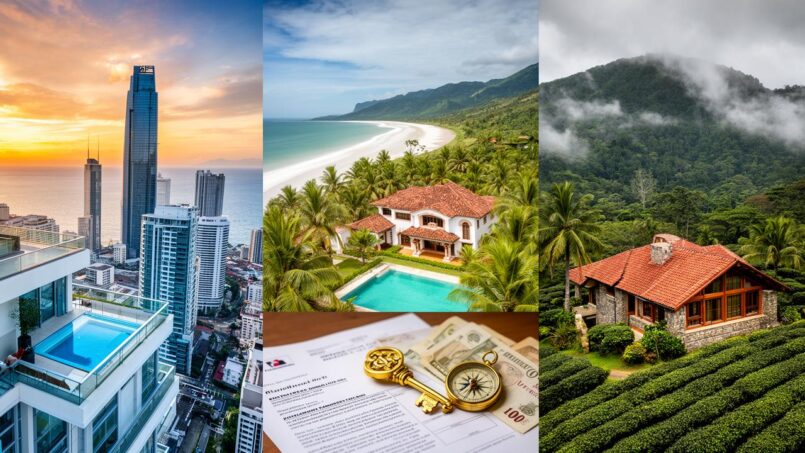
Panama has established itself as one of the most attractive real estate markets in Latin America, thanks to a rare combination of economic stability, favorable taxation, quality of life, and residency programs for foreigners. Three destinations concentrate the bulk of international interest: the capital Panama City, the classic beach resort of Coronado on the Pacific coast, and the mountain village of Boquete in the highlands of Chiriquí.
Before signing a purchase agreement, a foreign investor must understand how the three main Panamanian markets work, their real costs, and their rules, based on the latest available analyses.
Overall panorama: why Panama attracts foreign investors
Panama combines several structural advantages that explain the appeal of its real estate to non‑residents. The economy is dollarized, growth remains solid, and the state has established a very favorable framework for foreign capital. On the real estate front, three factors are decisive for an international investor.
Panamanian law grants foreigners the same property rights as nationals, except within a 10 km strip near borders and certain indigenous areas. Foreign buyers can therefore acquire full ownership in Panama City, Coronado, or Boquete, with a title registered at the Public Registry.
Furthermore, Panama applies a territorial tax system: only income generated within Panamanian territory is taxed locally. Rents collected on an apartment in Panama City or a villa in Coronado are taxable in Panama, but an investor living elsewhere will not be taxed in Panama on their foreign income. Effective rates on rental income typically range from around 10 to 20% of net profit, with a progressive schedule for individuals.
The Qualified Investor Program and the Friendly Nations Visa allow you to obtain permanent residency and potential access to citizenship via a real estate purchase of at least USD 300,000.
The three markets we focus on each occupy a different segment: Panama City for urban yield and liquidity, Coronado for beach rental and seaside retirement, and Boquete for retirement in a temperate climate and green mountain residences. A single portfolio can combine these approaches, diversifying rental income streams and capital appreciation profiles.
Panama City: financial heart, condo market, and urban yield
Panama City concentrates the majority of the country’s condominiums. It features a strong preponderance of high‑rise apartments, townhouses in gated communities, and, on the outskirts, some single‑family home areas. For a foreign investor, this is the most liquid, deepest market with the most quantitative data.
Average prices remain modest compared to major U.S. or European cities. In 2026, the average price is around USD 2,050/m² for condos, with a wide range by neighborhood: from roughly USD 1,100/m² for lower‑tier areas like Bella Vista or Marbella, up to USD 3,500/m² for the most prestigious waterfront apartments in Punta Pacífica. Well‑located studios and small one‑bedroom units often offer the most attractive rental yields, especially in areas like El Cangrejo, San Francisco, or Obarrio, where demand from the local middle class, expatriates, and digital nomads is particularly dense.
Despite a long period of oversupply, the capital’s market has entered a rebalancing phase. The overall condo inventory (planned, under construction, and recently delivered) stands at around 16,300 units, the lowest level seen in nearly a decade. Rents have risen continuously for more than twelve months, narrowing the gap between resale prices and launch prices of new developments. Vacancy rates have declined, and investors who buy selectively today can target gross yields in the 5 to 7.5% range, depending on the neighborhood and property quality.
Recent trends also show that prices, while not skyrocketing, are rising again. The annual increase is often between 3 and 5% in the most sought‑after neighborhoods, such as Costa del Este or parts of Bella Vista, with an even stronger dynamic in recent mixed‑use developments (residential + retail + offices). Rising construction costs – materials and labor up about 15% – are mechanically pushing new projects to higher levels, which also supports the value of existing stock in good locations.
In 2026, some segments of older oversupplied luxury high‑rises remain under pressure: sellers sometimes have to reduce prices by 10 to 15% to close a sale. The market is favorable to foreign buyers, provided they negotiate seriously and focus on the most liquid buildings.
Yield typology in Panama City
One of the main advantages of Panama City for an investor is the diversity of rental strategies. Between traditional long‑term rental, furnished “corporate” rental for executives on assignment, and short‑term Airbnb (heavily regulated depending on the building), yield profiles vary.
The orders of magnitude can be summarized as follows, for well‑located and properly managed properties:
| Strategy in Panama City | Target Property Type | Indicative Gross Yield | Indicative Net Yield |
|---|---|---|---|
| Traditional rental | 2–3‑bedroom in standard building | 5.0–7.0% | 4.5–6.0% |
| Corporate rental | High‑end furnished condo | 6.0–8.0% | 5.8–7.3% |
| Short‑term (limited) | Studios / 1‑bedroom in authorized buildings | 7.0–8.5% | 5.0–6.5% |
Net yields account for condominium fees (often high in luxury towers), management, vacancy, and local property income tax. The key is to target buildings where the condominium regulations do not severely restrict furnished rentals and where HOA fees remain proportionate to the rent the market can support.
Even though this guide does not detail every building, the trends are clear: recent waterfront towers or those in oversupplied high‑end neighborhoods often offer lower yields, while slightly older, well‑located, and well‑maintained buildings perform better.
Coronado: beach resort, seaside retirement, and rental cash flow
About 85 km from Panama City, a one‑ to one‑and‑a‑half‑hour drive via expressway, Coronado has long been the favored weekend beach destination for capital residents and a primary anchor point for foreign retirees. It offers beaches with sand blending white and veins of shiny black sand, generally calm seas on the Pacific side, and above all, a complete infrastructure that spares residents from constantly returning to the capital.
The town features several large supermarkets, a shopping center, pharmacies, numerous restaurants, a hospital, and continuous services (24‑hour supermarkets for some imported goods), all structured around a network of gated communities and beachfront residences. The climate is hot and dry: temperatures hover around 29 °C most of the year, with one of the lowest precipitation levels in the country, making it the “driest beach area in Panama.”
Properties are fully titled and registered in the national land registry. There is no issue of possessory rights (ROP) as encountered in some rural or island areas. For a foreign investor, this is a key point: acquisition in Coronado is based on a clear legal framework, similar to that of Panama City or Boquete.
The coastal real estate market offers a wide variety of properties, ranging from luxurious villas to more affordable condos and houses.
On the waterfront or in high‑end subdivisions, villas can exceed one million dollars, with unobstructed ocean views and premium amenities: infinity pool, large lot, private beach access.
The market remains highly segmented, with a wide range of condos and houses offered at much more accessible budgets.
Price ranges in Coronado
Recent market data allows a relatively precise picture of the price ranges observed in the resort:
| Property Type in Coronado | Typical Budget (USD) | Main Remarks |
|---|---|---|
| Studio / small condo set back | 75,000 – 120,000 | Often in condominium with shared pool |
| 2‑bedroom condo (interior, gated) | 175,000 – 200,000 | Pool, security, sometimes indirect beach access |
| 1–2‑bedroom beachfront condo | 150,000 – 200,000 (entry) | Ocean view, common areas (pool, gym, sauna…) |
| Modest house in town | 120,000 – 160,000 | Smaller lot, sometimes needs renovation |
| House with pool in subdivision | 200,000 – 450,000 | Gated communities, shared amenities |
| High‑end villa with ocean view | 500,000 and up | Luxury features, large lots |
| Very high‑end beachfront villa | > 1,000,000 | Premium locations, top‑quality finishes |
| Interior lot | 70,000 and up | Price varies by size and proximity to services |
| Beachfront / prime lot | 500,000 and up | Rare, highly sought after |
Beyond the purchase price, the fee structure heavily impacts yield calculations. In many complexes, condominium fees generally range from 200 to 500 USD per month for residences with pool, security, and green spaces. Some condos have more modest fees (e.g., USD 135/month for an approximately 90 m² apartment with pools, gym, and two shared terraces), while more luxurious beachfront towers can exceed USD 300 per month.
Another specific feature of Coronado: many properties within the “Coronado Es Vida” development come with a membership to the Coronado Golf & Beach Resort. This membership involves an initial entry fee and about USD 200 in monthly dues, but provides unlimited access to the Robert von Hagge‑designed golf course, the beach club, hotel restaurants and bars, tennis, spa, etc. For golfing tenants, affluent retirees, or year‑round residents, this type of membership can enhance the rental appeal of the property.
Rental and yields in Coronado
The Coronado rental market is divided into two main segments: on one hand, Panamanians who come on weekends or during vacations (especially January through April, including Carnival and Holy Week), and on the other, a growing flow of North American or Canadian “snowbirds” who stay 3 to 6 months during the northern hemisphere winter. There is also long‑term demand from retirees who wish to live year‑round or nearly so in the resort.
This amount corresponds to the estimated annual revenue for a two‑bedroom purchased for USD 240,000 and rented short‑term in Coronado.
For “prime” properties (panoramic view, infinity pool, direct access to a highly sought‑after beach), nightly rates can climb to USD 200–280, with occupancy rates reaching 60–65%. Under these conditions, net yields approaching 9–10% are conceivable, but at the cost of a higher initial investment.
On standard long‑term rentals, rental levels translate to gross yields around 5 to 7%, and net yields around 4.5 to 5.8%, depending on fee levels and vacancy. Nevertheless, Coronado’s strength lies in the combination of good potential cash flow and capital appreciation driven by continuous infrastructure improvements (expressway extension, road projects aimed at further reducing travel time to the capital).
Cost of living and buyer profile in Coronado
For retirees or semi‑residents, Coronado’s cost of living is significantly lower than in most North American or Western European countries. A couple can cover most of their monthly expenses with a budget ranging between approximately USD 1,750 and 3,000, depending on the housing standard chosen and the frequency of outings.
A typical monthly budget breakdown might look like this:
| Expense Item (couple) | Monthly Range (USD) |
|---|---|
| Rent (or equivalent utilities included) | 1,100 – 1,800 |
| Electricity | 60 – 120 |
| Water | 12 – 20 |
| Gas | 0 – 10 |
| Grocery shopping | 350 – 450 |
| Dining out / leisure | 120 – 250 |
| Phone | 10 – 40 |
| Internet | 20 – 35 |
| TV / cable | 35 – 50 |
| Transportation | 50 – 200 |
| Estimated total | 1,757 – 2,975 |
Some expenses can be reduced by taking advantage of the benefits of the Pensionado Visa, which offers retirees who meet the conditions (a lifetime monthly pension of at least USD 1,000, or USD 750 with a real estate purchase) lifetime discounts on transportation (airline tickets, buses, boats, trains), medical care, restaurants, and items such as leisure or certain bills.
From a demand perspective, Coronado primarily attracts North American and European retirees and pre‑retirees, “remote workers” who enjoy golf and the beach, and an affluent Panamanian middle class seeking second homes. The growth of the population benefiting from the Pensionado Visa, combined with improved accessibility due to road construction, has driven price increases estimated at 8 to 12% per year in recent years, although a slightly more moderate pace is expected as new projects come to market.
Boquete: mountains, “eternal spring” climate, and retirement market
Boquete, in the province of Chiriquí, is the exact opposite of Coronado in terms of climate and atmosphere, but equally central to the strategy of many foreign investors. Perched at about 1,200 meters altitude on the slopes of Volcán Barú, this mountain village is surrounded by cloud forests, renowned coffee plantations, rivers, and lush green peaks. It is accessible in less than an hour from the city of David, which has an international airport with connections from Panama City.
The feature that has made Boquete famous is its climate, often called “eternal spring.” Temperatures are stable year‑round, generally ranging between 15 and 27 °C depending on micro‑zones, with daytime highs around 24–25 °C and nights at 15–16 °C. Humidity is significantly more manageable than in coastal areas, at levels of 65 to 75%, and rainfall is concentrated mainly from May to November. The rest of the year, especially December to April, mornings are very sunny and showers are limited.
This climatic context has very concrete consequences on the operating costs of a house: neither air conditioning nor heating is necessary. Most homes are designed for natural ventilation, with large openings, ceiling fans, and good orientation. The electricity bill for a mountain house with 2 or 3 bedrooms typically ranges between 40 and 80 USD per month, a level incomparable to that of an equivalent home in Panama City or a beach resort where air conditioning runs for many hours. Over a ten‑year holding period, this cumulative difference in energy costs becomes a significant economic advantage.
Cost of living and resident profile in Boquete
Boquete is often described as Panama’s number one retirement center, and has long appeared in global rankings of retirement destinations. About 20% of the roughly 20,000 residents of its district are expatriates, mostly North Americans, creating a very tight‑knit international, English‑speaking community with support networks, clubs, and activities (markets, hiking, painting or photography classes, etc.).
An individual can live in Boquete from USD 1,500 per month, including housing, with a simple lifestyle.
Regarding housing, one can find furnished one‑bedroom rentals around USD 800 per month, and North American‑style houses at significantly higher rents. Purchasing a “modest” two‑bedroom house costs around USD 150,000, while high‑end properties in prestigious gated communities (e.g., Valle Escondido) start at USD 350,000 and easily go higher.
Food expenses are moderate thanks to the abundance of local and fresh products. Markets like the Tuesday Market or the Mercado Artesanal, as well as numerous producers’ stalls, sell fruits, vegetables, honey, coffee, and farm products at prices well below those in North America. Meals at local restaurants average between USD 5 and 15 per person. Private health insurance and medical costs are also more affordable: a basic general practitioner consultation often costs between USD 20 and 40, generic medications are widely available, and high‑level private hospitals in the city of David are less than an hour away.
Real estate in Boquete: climate, taxation, and diversity of supply
What distinguishes Boquete from comparable mountain markets in Central America, such as Costa Rica’s Central Valley, is both the price level and taxation. Comparisons show that similar properties are often 40 to 50% cheaper than in Escazú, with an additional significant tax advantage: the possibility of a property tax exemption for up to 20 years on new constructions, an advantage Costa Rica does not offer under equivalent conditions.
Prices in Boquete range from under USD 100,000 (simple homes) to over one million (large estates). The market is stable with annual appreciation of 2 to 5%, suited to a long‑term purchase rather than speculation.
The product range is broad: traditional Panamanian‑style houses, modern villas, condos in residential complexes, gated neighborhoods with clubhouses, and increasingly, “green” properties emphasizing energy efficiency and sustainable materials. Several high‑end projects incorporate solar panels, rainwater harvesting, ecological garden management, and certified materials to meet demand from eco‑conscious investors.
A concrete example illustrates this segment: a house fully powered by solar energy in a prestigious gated community, with two bedrooms, two bathrooms, large bay windows to maximize natural light and ventilation, covered terrace, modern equipped kitchen, backup water filtration, internet via Starlink at 150 Mbps for about USD 50 per month, and an electricity bill reduced to USD 8 per month (excluding water heater). Such properties combine very low operating costs, appeal to digital nomads and eco‑tourists, and long‑term appreciation potential.
The entry price in USD for a studio or one‑bedroom of approximately 56 m² in the Pinoalto project at the Boquete Country Club
Yields, liquidity, and investment strategy in Boquete
Unlike Panama City or Coronado, Boquete is a smaller, less liquid market. Market studies show that reselling a property can take an average of 9 to 12 months, sometimes longer for very high‑end or overly specific products. Gross rental yields generally range between 4 and 6%, with net yields around 3.5 to 5% depending on management quality, fee levels, and taxation.
This apparent moderation in numbers is balanced by several factors: an overall cost of living 40 to 50% lower than comparable retirement locations in North America, very low ongoing housing expenses (energy, maintenance), remarkably stable demand due to the destination’s constant appeal to retirees and eco‑tourists, and limited climate risk (no major hurricanes, few severe events). For investors targeting a “Plan B residence” combining quality of life, pleasant climate, and reasonable rental yield, Boquete is a consistent choice.
From a portfolio perspective, many investors who own more than three properties in Panama adopt a diversification pattern such as: a “core” property in Panama City (Costa del Este or Punta Pacífica), a second in an emerging neighborhood of the capital (San Francisco, Obarrio, Bella Vista), and a third in Coronado or Boquete depending on their preference for sea or mountains. This type of allocation often produces a weighted net yield of around 6 to 7.5%, combining higher cash flow on the coast with slower but more stable appreciation in the mountains.
Legal framework, taxation, and purchase process for foreigners
Beyond the specifics of each local market, a foreign investor must master the general legal framework of Panama. The good news is that this framework is relatively simple and predictable, provided one works with a competent local lawyer and follows a few basic rules.
Regarding property rights, a foreigner can purchase in their own name, through a Panamanian corporation, or through a Panamanian foundation. Most mid‑sized residential investments are made in the buyer’s own name, with a registered title. Using a structure (corporation or foundation) may be relevant for more complex assets or estate planning strategies, but it adds maintenance costs (accounting, annual fees) and complicates exit.
Total closing costs for a buyer on a USD 200,000 apartment range from USD 8,000 to 14,000.
Over the long term, the annual property tax is determined by a progressive schedule based on the assessed value (land plus improvements). Declared primary residences benefit from exemptions and reduced rates, while investment properties follow a standard schedule (exemption up to USD 30,000, then brackets at 0.6%, 0.8%, and 1%). Many new constructions enjoy a partial or total exemption from property tax on improvements (i.e., the building) for up to 20 years, leaving only a modest tax on the land value to pay.
Rental income is subject to Panamanian income tax under a progressive schedule for individuals (0% up to USD 11,000 net income, 15% between USD 11,001 and 50,000, 25% above), or a flat rate for corporations. In practice, after deducting allowed expenses (maintenance, management, loan interest, property tax, depreciation), the effective rate paid by most landlords falls between 10 and 15% of net profit.
Panamanian banks grant mortgages to foreigners with specific conditions: minimum down payment of 30%, interest rates of 5 to 7%, terms of 15 to 30 years, and monthly payments not exceeding 30–35% of income. Panama’s dollarization protects against exchange rate risk relative to the U.S. dollar, but not against the investor’s home currency.
The purchase process, whether in Panama City, Coronado, or Boquete, generally follows the same steps: defining the budget and area, selecting a licensed real estate agent, visiting and selecting the property, written offer, signing a purchase agreement (Promesa de Compraventa) with a deposit (about 10% of the price), lawyer’s due diligence (title, absence of debts, cadastral compliance, condominium fees, etc.), preparation of the deed of sale, signing of the Escritura Pública before a notary, payment of the balance, and registration at the Public Registry. The total time from the purchase agreement to title registration in the buyer’s name is most often between 6 and 8 weeks, sometimes longer if bank financing is involved.
How to choose between Panama City, Coronado, and Boquete according to your profile
For a foreign investor, the essential question is not which of these three destinations is “the best,” but rather which best matches their risk profile, strategy, and holding horizon.
Panama City primarily suits those seeking urban exposure, a deep market, better resale liquidity, and diversified rental demand (professionals, families, expatriates, digital nomads). Yields are reasonable by international standards, often in a moderate range of 5 to 7.5% gross, with expected capital appreciation of 3 to 5% per year in quality neighborhoods. It is also the market where one can most easily exit their position if quick liquidity is needed.
Net yields for well‑managed vacation rentals in Coronado easily exceed 7 to 8%.
Boquete, finally, is the choice for those who prioritize stability, climate, and quality of life above all. The market is slower, with gradual but steady appreciation, and a clientele consisting mainly of retirees, eco‑conscious individuals, and long‑term residents. Rental yields remain moderate, but are largely offset by a very low cost of living and operating expenses. For someone seeking a retirement residence or a “Plan B” in the mountains, with a structured social environment and a village feel, Boquete is hard to beat.
For many foreign investors, the optimal pattern consists of diversifying their exposure: one property in Panama City for liquidity and regular rental income, a second in Coronado for seasonal cash flow and leisure value, and a third in Boquete, little or not rented, as a retirement or semi‑retirement base, taking advantage of the Pensionado Visa and low property tax on new constructions.
—
In any case, successful real estate investment in Panama City, Coronado, or Boquete rests on the same fundamentals: rigorous selection of the neighborhood and building, thorough legal verification of the title and fees, a deep understanding of local rental demand and its evolution, anticipation of total costs (purchase fees, expenses, renovations, taxes), and, finally, a long‑term vision. Panama is not a market for quick speculative gains, but an environment where a patient, well‑informed investor can build, over ten or fifteen years, a solid portfolio combining yield, geographic diversification, and genuine quality of life.
Have a wealth project or a question? Contact us now to speak with a wealth management expert.
Disclaimer: The information provided on this website is for informational purposes only and does not constitute financial, legal, or professional advice. We encourage you to consult qualified experts before making any investment, real estate, or expatriation decisions. Although we strive to maintain up-to-date and accurate information, we do not guarantee the completeness, accuracy, or timeliness of the proposed content. As investment and expatriation involve risks, we disclaim any liability for potential losses or damages arising from the use of this site. Your use of this site confirms your acceptance of these terms and your understanding of the associated risks.

Cyril Jarnias is an independent expert in international wealth management with over 20 years of experience. As an expatriate himself, he is dedicated to helping individuals and business leaders build, protect, and pass on their wealth with complete peace of mind.
On his website, cyriljarnias.com, he shares his expertise on international real estate, offshore company formation, and expatriation.
Thanks to his expertise, he offers sound advice to optimize his clients' wealth management. Cyril Jarnias is also recognized for his appearances in many prestigious media outlets such as BFM Business, les Français de l’étranger, Le Figaro, Les Echos, and Mieux vivre votre argent, where he shares his knowledge and know-how in wealth management.





