
 Published on and written by Cyril Jarnias
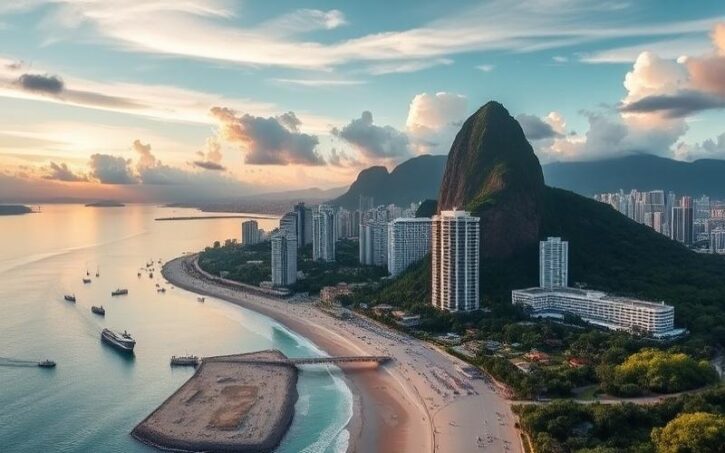
In Panama’s dynamic and growing real estate market, it is essential for potential buyers and investors to navigate the many available listings with caution. One of the major challenges they face is retouched photos, a practice that, while intended to attract, can often hide significant property flaws, creating misleading expectations.
This article explores in depth the risks associated with the digital manipulation of real estate images and provides practical tips to help identify these practices and make informed purchasing decisions in this tropical paradise that has become a global real estate hotspot.
Good to Know:
Retouched photos can artificially enhance a property by hiding structural defects, moisture issues, or small dimensions. Always request virtual or in-person tours before making a purchase decision.
How to Avoid Real Estate Scams in Panama
Verifying information before any real estate purchase is essential to avoid scams, especially in an international context like Panama. Even a small oversight can lead to significant financial losses, acquiring non-existent properties, or complex legal disputes.
Common Strategies Used by Scammers in Panama:
- Using retouched or stolen photos to enhance a property’s presentation and hide its flaws.
- Posting fake real estate listings on unverified platforms, often with prices well below market reality.
- Impersonating the legitimate owner or creating fake real estate agents.
- Providing forged documents, such as property titles, cadastral certificates, and bank statements.
| Fraudulent Technique | Main Risk | Warning Sign |
|---|---|---|
| Altered Photos | Buying a non-conforming property | Overly perfect images/inconsistencies |
| Fake Listing | Payment without return | Price too low/lack of information |
| Fake Agent/Owner | Financial loss/impersonation | Refuses in-person meeting/vague details |
| Forged Documents | Legal dispute/fraud | Missing official seals/inconsistencies |
Practical Tips for Potential Buyers:
- Always consult a licensed local professional, recognized by official bodies.
- Always conduct an in-person visit of the property before any transaction.
- Request and verify the authenticity of legal documents: land title, cadastral certificate, tax history, and bank proofs.
- Compare the offered price with local market prices to identify unusually attractive deals.
- Never transfer money without formal guarantees (contract signed before a notary/public official).
Essential Checklist for Securing a Transaction:
- Verify the real identity of the seller or agent
- Demand recent, unretouched photos
- Check the physical and cadastral existence of the property
- Request local professional references
- Only use recognized platforms
It is imperative to conduct a thorough due diligence, meaning a comprehensive check including an investigation of the seller/agency, a complete document analysis, and consultation with independent experts. This preventive approach significantly limits risks: it protects against common fraud (impersonation, fake listings), avoids post-purchase disappointment, and guarantees legal and financial security during a real estate transaction in Panama.
Constant vigilance and reliance on certified professionals are your best defenses against real estate scams.
Good to Know:
To avoid real estate scams in Panama, it is crucial to carefully verify all information before buying a property. Scammers often use retouched photos or post fake listings to attract potential buyers. Therefore, it is essential to consult a local real estate professional who knows the market well and can spot anomalies. Make sure to conduct physical visits to properties rather than relying solely on online images. Also, ask to see all legal documents and ensure property certificates are authentic and up-to-date. Due diligence, the careful evaluation of information and documents, is an indispensable step to avoid disappointment and financial loss in this process. Following these tips and taking the necessary precautions will allow you to navigate the Panamanian real estate market more serenely.
Deciphering Real Estate Listings to Detect Retouched Photos
Common Photo Retouching Techniques in Panama Real Estate Listings:
- Adjusting brightness, contrast, and saturation using software like Adobe Lightroom or Photoshop to create more attractive and brighter images.
- Color correction to make spaces feel warmer or more natural.
- Removing unwanted objects, cleaning walls, floors, and ceilings, even erasing cables or cracks.
- Replacing the outdoor sky with a uniform blue sky, even if the weather was bad during the original shots.
- Adding or removing shadows to homogenize lighting.
- Perspective correction and vertical/horizontal straightening to give the impression of better-proportioned space.
| Type of Intervention | Intended Effect |
|---|---|
| Increased Brightness | Spaces appear larger/more inviting |
| Contrast/Saturation | Vibrant colors attract the eye |
| Object/Defect Removal | Clean/perfect appearance |
| Sky Replacement | Enhanced outdoor environment |
Virtual Transformation of Spaces:
Some tools go beyond basic enhancement:
- Virtual modification of dimensions (apparent widening through wide-angle correction).
- Virtual home staging: digital addition of designer furniture, modern wallpaper, plants, or decorative elements that do not exist on site.
Example:
An empty living room can be shown furnished with a modern sofa and coffee table added virtually; a terrace can appear full of flowers when it is actually bare.
Practical Tips for Identifying Manipulations:
- Observe if certain straight lines (walls, frames) seem curved: possible excessive use of wide-angle or distorting correction.
- Spot inconsistent shadows (different direction/brightness between objects), a likely sign of digital additions.
- Complete absence of natural flaws: walls that are too white without marks or texture may betray intensive digital smoothing.
Quick checklist:
- Abnormal architectural lines
- “Floating” objects without shadows
- Impossible reflections in mirrors/windows
- Suspicious uniformity on floor/ceiling
⧉ It is essential to physically visit any property before purchase. Heavily retouched photos can mislead you about the true appearance or condition of the property. A visit also allows you to verify the real environment (natural light, outdoor view) often digitally altered in listings.
⧉ Potential impact on credibility:
Excessive practices harm local reputation:
- If a buyer discovers the property does not match the enhanced images after a visit, it durably erodes their trust in the agency involved—or even the entire local sector if it is a widespread trend.
- In the medium term, this can negatively affect word-of-mouth and the actual rate of closed sales.
Honest but professional use of graphic tools is therefore essential to preserve trust between sellers/agencies and buyers.
Good to Know:
In Panama, photo retouching is common in real estate listings to enhance the visual appeal of properties, often using software that increases brightness, contrast, and saturation. These tools can also deceive spatial perception by modifying dimensions, adding virtual elements like furniture or plants, creating a seductive virtual reality. To detect these modifications, look for signs such as straight lines that appear curved, inconsistent shadows, or a complete absence of imperfections. A physical visit to the properties is essential to avoid being fooled by enhanced appearances. The impact is notable on the credibility of local agencies and buyer trust, highlighting the importance of transparency in real estate transactions.
The Importance of Verifying Every Listing Before Visiting
The importance of verifying the truthfulness of real estate listings before traveling for a visit is crucial to avoid wasted time, unnecessary trips, disappointment, and even significant financial risks. Photo retouching technologies are now widely used in real estate marketing: they allow modifying brightness, visually enlarging rooms, correcting colors, or removing apparent defects. These techniques often make the property online much more attractive than it is in reality.
Frequent Examples of Falsification or Misleading Presentation Encountered in Panama Real Estate:
- Digital enhancement of spaces: adding virtual furniture, removing unsightly elements, unrealistic 3D rendering.
- Color alteration: modifying hues to make a space look brighter or more modern.
- Dimension manipulation: using wide-angle lenses or montages to make rooms appear larger.
- Using photos of other properties or non-contractual images.
- Presenting a clear view that does not exist or will be obstructed by future construction.
| Type of Manipulation | Consequence for the Buyer |
|---|---|
| Photo Retouching | Deception about the property’s actual condition |
| Dimension Modification | Overestimation of living space |
| Color/Light Change | Artificial impression of cleanliness or modernity |
| Photos of Other Properties | Unrealistic expectations, disappointment during visit |
Ways to Protect Yourself Against Misleading Presentations:
- Request a live video of the property (real-time virtual tour via video conference).
- Carefully read reviews of the real estate agent or the publishing platform.
- Compare photos from multiple listings to detect potential duplicates or inconsistencies.
- Thoroughly question the seller or agent about the actual condition, history, and exact location of the property.
- Demand official documents before traveling (cadastral plan, inspection reports, property title).
- Refuse any payment or transmission of personal documents before the physical visit and verification of the property.
Verifying a Listing in Advance Allows You To:
- Avoid unnecessary and costly trips, especially for international buyers.
- Limit the investment of energy and money in properties that do not match reality.
- Guard against scams and false promises, common in attractive real estate markets.
- Reduce the risk of disappointment during the physical visit by having a realistic view of the property.
Taking the time to verify the truthfulness of a real estate listing, especially in Panama, is an indispensable investment to avoid losses, disappointment, and unpleasant surprises.
Good to Know:
In Panama real estate, it is crucial to verify every listing to avoid the pitfalls of retouched photos. These technologies can enhance spaces, alter colors, and even manipulate dimensions, making a property more attractive than it really is. For example, a spacious living room online might appear much smaller during the physical visit, or walls with warm tones could turn out to be dull and dilapidated. To protect yourself, it is advisable to request live videos, which show the property without filters, and to read reviews of the agency or publishing platform. Questioning the seller about the property’s actual condition before the visit can also prevent many disappointments. Rigorous verification saves time and avoids unnecessary investments in the face of potential disappointment upon physically discovering the premises.
Tips for a Realistic and Effective Virtual Tour
Honesty and transparency in descriptions are essential for building trust during virtual tours of properties in Panama. Accurate information about the property’s condition, any defects, the exact size, or location prevents unpleasant surprises and strengthens the listing’s credibility.
To avoid the pitfalls of retouched or misleading photos:
- Always request a real-time tour via video communication platforms (Zoom, WhatsApp, Google Meet).
- Insist that the agent do a complete live walkthrough of the property, without cuts, to verify the premises match the published photos.
Obtaining multiple angles and detailed views is crucial:
- Request 360° panoramas for each room, including hallways and exteriors.
- Ask for images or videos from different angles to assess the lighting, layout, and actual size of the spaces.
Comparing the virtual tour to the written descriptions helps identify potential inconsistencies or exaggerations:
| Element to Compare | Example Question or Analysis |
| Advertised size vs. actual feel | Does the room seem as large as described? |
| General condition of the property | Are defects visible or hidden by the photos? |
| View and surroundings | Does the panorama reflect the described environment? |
Strategies for Asking the Right Questions to Real Estate Agents
- What is the date of the last renovations?
- Are there any defects not visible on the virtual tour?
- What are the HOA fees or taxes associated with the property?
- Does the neighborhood have noise issues or specific risks?
- Is the property free of any mortgage or legal dispute?
Verifying Information
- Consult other reliable sources: cadastre, land registries, reviews from other buyers, government websites.
- Use geolocation tools to verify the exact location of the property.
- Search for reviews of the agency or agent to assess their reliability.
Important Tip
Always insist on a real-time tour and multiply your sources of information before any commitment.
Good to Know:
For a realistic and effective virtual tour when buying real estate in Panama, prioritize transparency by ensuring descriptions are honest and detailed. Avoid the pitfalls of retouched photos by requesting real-time tours using platforms like Zoom or Skype, which will allow you to examine the property from multiple angles. Compare virtual tours with written descriptions to detect any inconsistencies and ask agents specific questions about the property’s dimensions or renovations. Also, consult other reliable sources to confirm the information obtained. Make sure to request detailed views of essential elements like plumbing or electrical systems, and remain vigilant about the property’s immediate surroundings to get a comprehensive picture that goes beyond appearances.
Disclaimer: The information provided on this website is for informational purposes only and does not constitute financial, legal, or professional advice. We encourage you to consult qualified experts before making any investment, real estate, or expatriation decisions. Although we strive to maintain up-to-date and accurate information, we do not guarantee the completeness, accuracy, or timeliness of the proposed content. As investment and expatriation involve risks, we disclaim any liability for potential losses or damages arising from the use of this site. Your use of this site confirms your acceptance of these terms and your understanding of the associated risks.

Cyril Jarnias is an independent expert in international wealth management with over 20 years of experience. As an expatriate himself, he is dedicated to helping individuals and business leaders build, protect, and pass on their wealth with complete peace of mind.
On his website, cyriljarnias.com, he shares his expertise on international real estate, offshore company formation, and expatriation.
Thanks to his expertise, he offers sound advice to optimize his clients' wealth management. Cyril Jarnias is also recognized for his appearances in many prestigious media outlets such as BFM Business, les Français de l’étranger, Le Figaro, Les Echos, and Mieux vivre votre argent, where he shares his knowledge and know-how in wealth management.





