
 Published on and written by Cyril Jarnias
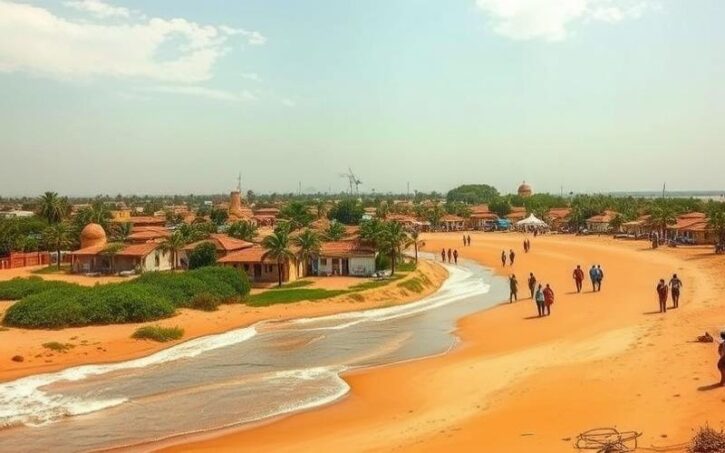
Fascinating Exploration of Senegal
Senegal, a vibrant and culturally rich country, is attracting a growing number of French people who choose not only to live there but also to invest. Through testimonials from expatriates who have become homeowners, this article reveals how they are turning their dream of a new life into reality, while navigating between economic opportunities and local challenges.
From the warmth of local communities to breathtaking landscapes, discover why these French expats have dropped anchor in Senegal and how their lives have been transformed by their bold decision.
Good to know:
Senegal offers an exceptional living environment with sunny weather almost year-round and a warm, welcoming culture.
Expatriate Journeys: Settling in Senegal
Testimonials from French expatriates living in Senegal
Every year, many French people choose to settle in Senegal, drawn by the mild climate, quality of life, and a certain cultural proximity to France. Their paths vary, but some key points often stand out.
Administrative Procedures
- Obtaining a long-stay visa or residence card
- Opening a local bank account
- Registering with the French Embassy to access consular services
- Searching for schools for children (most often private or international schools)
- Subscribing to international or local health insurance
Preferred Neighborhoods and Cities
| City/Neighborhood | Main Features |
|---|---|
| Dakar (Plateau) | Lively city center, proximity to government offices, neighborhoods popular with expats |
| Almadies | High-end residential area with direct beach access |
| Mermoz/Sacré-Cœur | Quiet residential zones appreciated by French families |
| Saly M’bour | Seaside town renowned for its peaceful, family-friendly setting |
Faramata, a French expatriate originally from Senegal, chose Saly M’bour to offer her children a calm environment away from the hustle and bustle of Paris. She emphasizes that “it’s an ideal town for family life” where her children feel “freer” and better integrated thanks to local private schools.
Aude also shares her experience settling in Dakar with her family: she appreciates the cultural dynamism but notes that integration requires being open to change.
Main Motivations for Choosing Senegal
- Desire to provide a peaceful living environment for children
- Willingness to reconnect with cultural or family roots
- Professional opportunities in education, social development, or local entrepreneurship
- Interest in investing in an attractive real estate market along the Atlantic coast
Challenges Encountered During Settlement
List of frequently mentioned challenges:
- Cultural adaptation: slower pace (“you have to learn patience”), different time management, and the importance of relationships.
- Language barrier: although French is the official language, understanding local codes can take time to adjust.
- Infrastructure: frequent power/water outages outside major cities; sometimes poor road conditions.
- Local bureaucracy sometimes perceived as cumbersome (lengthy administrative paperwork).
To overcome these obstacles:
- Seek advice from other expats already settled via social networks or local French associations.
- Use specialized services (French-speaking real estate agencies).
- Learning some basic Wolof greatly facilitates daily interactions.
Perceived Advantages of Living in Senegal
- Welcoming community – a common feeling among newcomers.
- Strong human quality and social solidarity.
- Pleasant climate year-round; mild winters appreciated by those from northern France.
- Geographic proximity (less than six hours from Paris).
- Relatively lower cost for certain budget items (household help/domestic assistance).
- Attractive real estate opportunities, especially in seaside resorts like Saly M’bour where many invest in property.
“Despite some initial difficulties related to administrative organization and culture shock, we have never regretted our choice. Our children found their place quickly; they live outdoors all year round!”, says Faramata after two years on the ground.
Most agree that beyond the initial minor hassles inherent to any expatriation – especially cultural adaptation – the Senegalese lifestyle offers a balance between family quality and personal fulfillment that is hard to match elsewhere.
Good to know:
For French expatriates settling in Senegal, like Marc and Sophie, it is essential to quickly obtain a residence visa and register with the French consulate. Many choose popular neighborhoods like Almadies in Dakar for their pleasant and secure environment, or Saly for its proximity to the sea and relaxed atmosphere. Attracted by the sunny climate and local hospitality, some also appreciate the ease of integration thanks to the widely spoken French language. However, cultural and professional challenges, such as the more laid-back Senegalese lifestyle or administrative slowness, require patience and flexibility. Expatriates often praise the quality of life offered by the less stressful pace and enriching cultural diversity, while also enjoying interesting investment opportunities in real estate, often more affordable than in France.
Investing in Senegalese Real Estate: Authentic Experiences
Several French expatriates who have invested in real estate in Senegal share their journeys, revealing both their motivations and the challenges encountered during their settlement.
“I chose Senegal for the quality of life in Dakar, the dynamism of the real estate market, and the stable economic prospects. The population is welcoming, and there is a real expat community, which makes integration easier.”
— Nicolas, real estate investor in Dakar
Main Motivations Cited:
- Search for a pleasant living environment (mild climate, proximity to France)
- High rental potential in cities like Dakar or Saly
- Desire to invest in a French-speaking country with a growing real estate sector
- Opportunities offered by the tourism and high-end residential sectors
Frequently Encountered Challenges:
- Legal aspects: difficulty verifying actual property ownership, absolute necessity to use a notary to avoid disputes.
- Cultural: importance of local networking; some practices differ greatly from European standards.
- Logistical: administrative slowness during transactions; need to be present on-site or represented by a trusted person.
“To avoid common real estate scams in Senegal, I made sure to visit the country several times before investing. You should never rely solely on online listings or unverified recommendations. Always check with the land registry or notary that you are dealing with the real owner!”
— Valérie, retiree settled in Casamance
Growing Real Estate Sectors & Attractive Types for Investors
| Sector | Main Strengths |
|---|---|
| Dakar | High rental demand (expatriates) |
| Saly | Seaside tourism |
| Casamance | Peaceful residential area |
| Saint-Louis | Historical heritage |
Sought-after properties include:
- Modern apartments in central neighborhoods
- Villas with gardens or pools for seasonal rental
- Buildable land near beaches
Observed Successes
Some expatriates report rapid appreciation of their property due to the steady rise in prices in certain segments (seafront near Dakar). Others have successfully developed a stable rental portfolio catering to both locals and international tourists.
- Travel regularly yourself to visit and better understand each neighborhood
- Contact several reputable agencies but always do your own administrative checks via land registry/notary
- Avoid any rush: be wary of offers that are too good to be true or urgent requests for a deposit
- Plan for solid financing: few local options for bank credit without strong guarantees; self-financing is often necessary
- Understand that some charges remain tied to the property (water/electricity debts) and not to the outgoing tenant
Key takeaway:
“Two years before my final purchase, I multiplied my exploratory trips to avoid any cultural or legal misunderstandings. In real estate here, more than elsewhere: patience and vigilance are essential!”
This collective feedback shows that getting information directly from the field remains crucial for a successful real estate investment in Senegal.
Good to know:
French expatriates who have invested in real estate in Senegal share their experiences to help future investors avoid pitfalls. Many were attracted by the promising growth prospects of urban sectors like Dakar and Saly, where rental supply and luxury properties are in high demand. However, they emphasize the importance of familiarizing oneself with local laws and cultural nuances by working with experienced notaries and reliable real estate agents. Some encountered logistical challenges, such as obtaining clear property titles or financing through local banks, but ultimately succeeded thanks to careful planning and a good understanding of the market. They advise visiting multiple properties, being patient in negotiations, and using local platforms to stay informed about new opportunities. These testimonials highlight the importance of an informed and respectful approach to the local context for a successful investment in Senegal.
Tips for a Successful Expatriation in Senegal
Cultural Preparation
- Learn about Senegal’s history, traditions, and cultural diversity, especially the importance of the extended family, respect for elders, and conviviality (“teranga”, Senegalese hospitality).
- Understand social codes like the traditional greeting (handshake followed by an exchange of news) or the central role of communal meals.
- Get introduced to local languages (mainly Wolof), even though French is widely used in administration and business.
Challenges to Anticipate
- Adapting eating habits: discovering typical dishes based on rice or millet accompanied by fish.
- Managing potential culture shock regarding a different organization of time (more flexible punctuality) and an administration sometimes perceived as slow.
- Taking into account certain regional differences in access to public or private services.
Essential Administrative Steps
List of essential steps:
- Obtain a long-stay visa or residence card depending on your settlement project
- Register your arrival with local authorities
- Open a bank account in Senegal to facilitate daily transactions
- Inquire about local tax rules applicable to expatriate homeowners
Tips for Finding Suitable Housing
- Prioritize neighborhoods with reliable infrastructure (water, electricity, security), especially in Dakar or major coastal cities.
- Use a locally recognized real estate agency to avoid frequent scams in private rentals/purchases.
- Visit several properties before any decision: beware that the advertised standard does not always match reality.
Recommendations on Local Services
Practical list:
- Quickly identify a French-speaking general practitioner recommended by other expats
- Opt for a reliable internet connection via fiber optic if professional needs are significant
- Inquire about the local and international school system to enroll your children
Experiences of French Expatriate Homeowners
“We bought our house near the city center. At first, we had to adapt to the Senegalese administrative pace: you have to follow up often. But we were pleasantly surprised by the warm welcome from the neighborhood, which didn’t hesitate to include us in religious festivals” — Jean-Marc L., settled for three years.
“Daily management is really different: here, everything is often resolved face-to-face rather than by phone or email. You have to be physically present, but it also allows you to build your network quickly” — Claire D., homeowner for five years.
Importance of Social Networks and Expatriate Associations
| Network/Association | Main Advantages |
|---|---|
| Local Facebook groups | Quick sharing of housing/job ads and advice |
| French associations | Regular cultural activities, administrative support |
| Specialized forums | Detailed experience feedback |
Integrating through networks allows you to:
- Access good housing deals/reliable services more easily,
- Share experiences among peers,
- Quickly participate in cultural events that foster local immersion.
In summary: Thorough cultural preparation combined with rigorous administrative anticipation greatly facilitates your settlement in Senegal. Exchanging with those already settled via social networks and associations remains the best way to adapt serenely while fully enjoying the local human richness.
Good to know:
For a successful expatriation in Senegal, thorough cultural preparation is crucial, as it allows for a better understanding and respect of local traditions. Administrative procedures, especially the residence visa, can be complex, so consult advice from expats, some of whom emphasize the importance of hiring a local lawyer. When searching for housing, opt for neighborhoods like Almadies or Ngor, popular among French expatriates, and consider testimonials from homeowners highlighting challenges, such as managing humidity. Participating in community events and joining expatriate associations will help you build a support network; for example, the Sénégal Accueil association provides valuable resources. Finally, use social networks to get recommendations and practical tips on local services like markets and public transportation, which are often shared by established expats.
Disclaimer: The information provided on this website is for informational purposes only and does not constitute financial, legal, or professional advice. We encourage you to consult qualified experts before making any investment, real estate, or expatriation decisions. Although we strive to maintain up-to-date and accurate information, we do not guarantee the completeness, accuracy, or timeliness of the proposed content. As investment and expatriation involve risks, we disclaim any liability for potential losses or damages arising from the use of this site. Your use of this site confirms your acceptance of these terms and your understanding of the associated risks.

Cyril Jarnias is an independent expert in international wealth management with over 20 years of experience. As an expatriate himself, he is dedicated to helping individuals and business leaders build, protect, and pass on their wealth with complete peace of mind.
On his website, cyriljarnias.com, he shares his expertise on international real estate, offshore company formation, and expatriation.
Thanks to his expertise, he offers sound advice to optimize his clients' wealth management. Cyril Jarnias is also recognized for his appearances in many prestigious media outlets such as BFM Business, les Français de l’étranger, Le Figaro, Les Echos, and Mieux vivre votre argent, where he shares his knowledge and know-how in wealth management.





