
 Published on and written by Cyril Jarnias
In just a few years, Turkey has become an open-air laboratory of what tourism can do to a real estate market. Between a Mediterranean riviera saturated with hotels, an explosion of seasonal rentals like Airbnb, mega-infrastructure projects, and citizenship-by-investment programs, the country illustrates both the potential and the excesses of a development model driven by foreign visitors. Understanding these mechanisms has become essential for anyone interested in real estate in Turkey—whether investors, policymakers, or ordinary residents.
When Tourism Becomes a Structural Driver of Real Estate
Tourism is no longer just another sector in the Turkish economy. It now plays the role of an invisible export, bringing in foreign currency, supporting employment, and, above all, steering capital flows toward real estate. The accelerated tourism boom since the 1980s has helped transform entire stretches of the Mediterranean and Aegean coastlines into highly specific real estate markets, largely oriented toward foreign buyers.
Turkey’s tourism revenues reached an all-time high of approximately $61 billion in 2024.
This windfall has a direct effect on property. On one hand, it supports demand for tourist accommodation (hotels, aparthotels, holiday residences, villas) and short-term rentals. On the other, it shapes the image of destinations and triggers a second wave of arrivals—not as tourists, but as “tourist residents” or real estate investors.
The impact is also visible at the macroeconomic level. The Turkish residential market is valued at just over $110 billion in 2025 and is expected to approach $187 billion by 2030, representing a compound annual growth rate of over 11%. This rise cannot be explained solely by demography or urbanization: tourism clearly acts as a catalyst, especially in coastal regions.
Antalya: The Showcase of a Tourism-Driven Real Estate Market
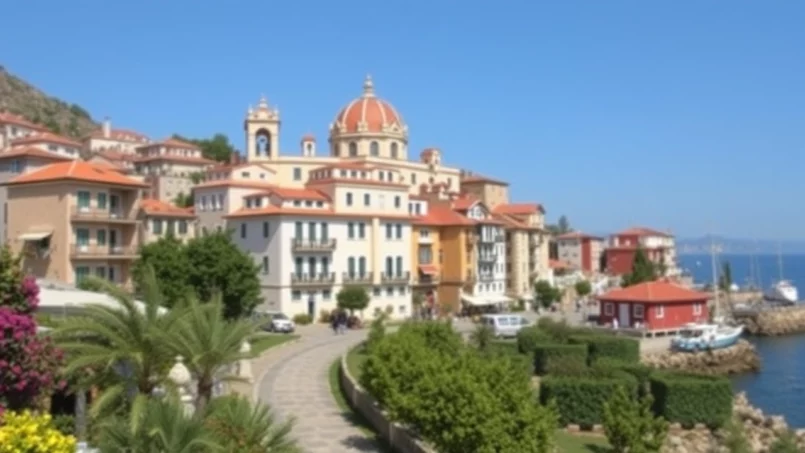
Antalya, nicknamed Turkey’s “tourism capital” and sometimes the “Turkish Riviera,” is the most striking example of this intertwining of tourism and real estate. With over 300 days of sunshine a year, nearly 200 kilometers of Blue Flag beaches, a busy international airport, and a massive hotel supply, it creates an environment where tourism shapes virtually the entire local economy.
On the real estate front, this dynamic translates into a market of steady growth, largely driven by tourist and para-tourist demand. The region’s appeal to investors lies in several factors: prices still below those in Istanbul, relative stability, potential for capital gains, and high rental yields through seasonal letting.
Prices, Affordability, and Buyer Profiles
Average price per square meter in Antalya remains below that of major metropolises while being well above the national average, a sign of the tourism premium. In 2025, the average price in Antalya is around $2,500 to $3,500 per square meter, compared to approximately $1,025 for the national average. In practice, ranges vary widely by neighborhood and view.
The order of magnitude can be summarized as follows:
| Area / Property Type in Antalya | Approximate Price Range (USD) |
|---|---|
| Seafront apartments (developing areas) | 80,000 – 200,000 |
| Quality apartments in Lara / Konyaaltı | 150,000 – 400,000 |
| Luxury villas with sea view | 400,000 – 1,200,000 |
| Average price per m² in 2025 | 2,500 – 3,500 |
Detailed data on certain transactions also illustrate the internal hierarchy of the market. In Konyaaltı, a two-room apartment without a sea view could be offered around 2.4 to 2.5 million Turkish lira, while the same type with a sea view reached nearly 4.7 million lira. In Lara, a duplex without a view was around 2.2 million lira, while an apartment with a sea view climbed to 9.5 million lira, or about $650,000 in the example cited.
Foreign buyers are numerous. In 2023 alone, more than 10,000 properties were sold to non-residents in the Antalya region. In 2024, the city even topped sales to foreigners, with approximately 5,990 transactions, ahead of Istanbul. Dominant nationalities reflect the tourist clientele profile: Russians, Iranians, Germans, but also British, Poles, and buyers from the Gulf.
Rental Yields Boosted by the High Season
The core of the local economic model lies in short-term rentals. Antalya welcomes 12 million annual visitors, more than two-thirds of whom come between May and September. This pronounced seasonality structures the entire rental calendar.
Holiday rentals on the coast, especially in neighborhoods like Lara or Konyaaltı, can offer very attractive annual gross rental yields, estimated between 8% and 15% for well-managed properties. The average yield on the coast is about 6.2%, but it can exceed 8 to 10% in the most touristy areas.
Daily rents for properties suited to platforms like Airbnb frequently range between $80 and $200 in high season, with the bulk (60–70%) of annual revenue concentrated in the months from May to October. Rents and sale prices have also risen significantly: in 2023, prices in Antalya’s coastal districts reportedly increased by nearly 60% year-on-year.
The flip side is greater volatility. Activity depends heavily on tourist flows, geopolitical uncertainties, health crises, and regulations on short-term rentals. But in normal times, the combination of exceptional climate, tourist infrastructure, and international renown makes Antalya the archetype of a tourism-driven real estate market.
Istanbul: When Tourism Reinforces an Already Strained Market
Istanbul is in a different configuration. The city is simultaneously the country’s financial, industrial, cultural, and tourist center. It concentrates a large share of national GDP, a constantly growing population, a diversified economic fabric, and a continuous flow of business and leisure visitors. Tourism thus acts as an accelerator of an already structurally strong real estate demand.
High Prices, Sustained Demand, and a Highly Segmented Market
Istanbul has the highest prices in the country. In 2025, the average price per square meter ranges between $3,500 and $5,000, more than three times the national average. Some estimates in Turkish lira cite an average price around 55,500 TRY/m² (about $1,500) in aggregated data, with wide disparities between neighborhoods.
The price scale can be summarized as follows:
| Type of Location in Istanbul | Approximate Price for a 1-2 Bedroom (USD) |
|---|---|
| “Classic” central districts (Fatih, Üsküdar…) | 100,000 – 300,000 |
| Premium districts (Beşiktaş, Levent, Bebek…) | 300,000 – 800,000 |
| Penthouses / ultra-high-end waterfront | > 1,000,000 |
| Average price of a “decent” non-luxury apartment | ~ 2,000,000 TRY (≈ $136,000) |
Prestige neighborhoods like Beşiktaş or Kadıköy command a premium of 40 to 60% above the city average. In affluent districts such as Beşiktaş, Şişli, or Sarıyer, it is not uncommon to see starting prices of $200,000 and transactions well exceeding $1 million for the best-located properties.
The rise in real estate prices is mainly due to local demand, but tourism strongly amplifies this pressure in neighborhoods close to iconic sites (Hagia Sophia, Sultanahmet, Grand Bazaar), nightlife areas (Beyoğlu, Karaköy), and sectors well served by public transport.
The Role of Tourism in Rents and Yields
Istanbul’s rental market is structurally tight, with strong demand from executives, students, families, and increasingly from expatriates and remote workers attracted by the city’s dynamism. The influx of tourists overlaps with this solid base and alters the supply structure, notably through the rise of short-term rentals.
The gross residential rental yield in Istanbul as of summer 2025, above the national average of 7.7% and higher than most European capitals.
The growth of urban tourism—city breaks, cultural tourism, evenings out in over 16,000 bars and clubs—has fueled strong demand for studios and small apartments in central districts like Beyoğlu, Şişli, or Kadıköy, both for daily rentals and stays of a few months. This phenomenon has helped reduce the supply available for long-term residents and pushed rents upward, in a context already marked by high inflation.
At the same time, some investors are betting on hybrid formats (aparthotels, serviced residences, co-living) that capitalize on both tourist and professional demand, with relatively stable occupancy rates year-round, unlike purely seaside destinations.
Short-Term Rentals: The Airbnb Effect and the Regulatory Response
The rise of short-term rental platforms has profoundly reshaped the links between tourism and real estate in Turkey. In cities like Istanbul, Antalya, Izmir, and Bodrum, tens of thousands of homes are listed on Airbnb and similar platforms. For owners, the prospect of revenues 30% higher than from a conventional lease, as highlighted in a report cited by Forbes, has acted as a powerful incentive to switch to seasonal rentals.
This rapid expansion has, however, sparked a series of reactions. On one hand, the state saw a significant portion of tax revenues slip away, and tourism authorities worried about unfair competition with traditional hotels. On the other hand, residents in some neighborhoods began to decry rising rents, a scarcity of long-term housing, and nuisances linked to the constant flow of visitors.
This law, which entered into force on January 1, 2024, strictly regulates the rental of housing for tourism purposes for periods of less than 100 consecutive days.
Law No. 7464, known as the “Airbnb law”
Key Provisions of the Law on Tourist Rentals
The central principle is simple: any rental of fewer than 100 days is presumed to be a tourist rental and requires a specific permit issued by the Ministry of Culture and Tourism. This permit, called the “authorization to rent housing for tourism purposes”, must be applied for online via the e-government system and is subject to a technical inspection (safety, equipment, capacity).
The regulatory framework is characterized by several strong requirements:
– obligation to display an official plate at the entrance of the property, showing the permit number and the holder’s contact details;
– obligation to notify the police of occupants’ identities within 24 hours, as for hotels, under the identity notification law;
– capacity limit (two people per bedroom, plus two additional, with a cap of 12 people);
– obligation to comply with safety standards (smoke detectors, fire extinguisher, evacuation plans) and hygiene.
The law makes the tourist rental permit in conventional buildings conditional on a unanimous decision by the condominium association, giving permanent residents a veto right. Additionally, in buildings with more than three units, an owner cannot obtain a permit for more than 25% of the units, to prevent entire buildings from being turned into quasi-hotels.
Penalties are deterrent: renting without a permit carries a first fine of 100,000 TRY per property, then 500,000, and finally 1,000,000 TRY for repeated offenses. Platforms like Airbnb may also be targeted and ordered to remove listings of unauthorized properties, subject to repeat fines.
The expected outcome of this reform is a reduction in undeclared rentals, better tax collection, and a rebalancing between hotels and short-term rentals. In the short term, this law risks reducing the supply available on platforms and lowering the net returns of some investors, while potentially improving conditions for long-term tenants in the most touristified neighborhoods.
Foreign Investment, Citizenship, and Tourism: A Triangle of Influences
The gradual opening of the Turkish real estate market to foreigners plays a central role in how tourism shapes property ownership. Since 2003, non-nationals have been able to buy homes in Turkey, and a major reform in 2012 abolished the principle of reciprocity, allowing citizens of over 180 countries to acquire property without a reciprocal requirement.
Turkey then went further by explicitly linking real estate investment and obtaining citizenship. After several adjustments, the entry threshold for the citizenship-by-investment program is now set at $400,000 in real estate, to be held for at least three years. A real estate investment of $200,000 entitles the investor to a renewable residence permit.
Link Between Foreign Investments and Tourism
Econometric studies conducted over the period 2013–2016 show a unidirectional causal relationship from foreign real estate investments to tourism revenues and visitor numbers, not the reverse. In other words, an increase in home purchases by foreigners tends to precede and fuel the rise in tourism revenue and arrivals, but an increase in tourist numbers does not automatically translate into more foreign property purchases.
Some tourists—such as retirees, remote workers, families, or entrepreneurs—may decide to settle permanently in a destination they enjoy. This movement, known as “residential tourism,” depends not only on tourist flows but also on attraction policies related to citizenship, taxation, cost of living, climate, and infrastructure.
Recent data confirms this: a record year was recorded in 2022 with nearly 67,500 homes sold to foreigners. In detail, Russians were the top buyers (over 16,000 units), followed by Iranians (over 8,000), Iraqis, and Germans. Antalya and Istanbul accounted for the majority of these sales, joined by cities like Izmir, Bodrum, and Alanya.
That’s the number of homes sold to foreigners in 2024, the lowest level in seven years.
Comparative Weight of Foreign Investors
In overall volume, foreign buyers represent only a small portion of the market: on average 3–5% of annual home sales, falling to about 1.6% in 2024, then 1.3% of sales in July 2025. But these national averages mask strong geographic concentration: in some new projects in tourist areas, 60–70% of units are said to be sold to non-residents.
This geographic bias has contrasting effects. On one hand, foreign investments bring in foreign currency, support the construction sector, finance urban renovation, and contribute to infrastructure funding. On the other hand, they can accelerate price increases in already tight local markets, price out Turkish households from the most sought-after areas, and fuel latent resentment in places with a high density of seasonal residences.
High Yields, a Weak Currency, and Very Real Risks
One of the major paradoxes of the Turkish market lies in the coexistence of seemingly very high yields for foreign investors and growing difficulties for local buyers. The sharp depreciation of the Turkish lira—losing over 70% of its value against the dollar in five years, more than 80% over ten years—has mechanically reduced real estate prices in hard currency, even as nominal values in TRY increased.
Average residential rental yield in Turkey as of summer 2025, significantly higher than the 3-5% in European capitals.
The following table provides an overview of average gross yields by major city, all categories combined:
| City / Region | Estimated Gross Rental Yield |
|---|---|
| Adana | ≈ 8.9% |
| Ankara | ≈ 8.7% |
| Istanbul | ≈ 8.1% |
| Antalya | ≈ 6.3% |
| National average | ≈ 7.7% |
These levels appeal to income-oriented investors, especially those targeting apartments for long-term rentals in metropolises or properties structured for seasonal rentals in tourist areas. Aparthotels, for example, can show annual yields of 8 to 12%, while off-plan purchases sometimes allow capturing 30 to 45% capital gains upon delivery.
The profitability of the Turkish real estate market is offset by several significant risks: currency volatility complicates projecting hard-currency flows, inflation erodes the real value of local income, and very high mortgage rates (sometimes exceeding 40% in 2025) hinder access to homeownership for local demand. Moreover, regulatory changes—for example, on tourist rentals—can upend business models in a short time. In the medium term, the main challenge is whether Turkey can stabilize its macroeconomic framework while maintaining its tourist appeal.
Pressures on Residents, Gentrification, and Risks of Saturation
As in many global destinations experiencing rapid tourism growth, Turkey is seeing tensions emerge between visitor-oriented real estate development and the residential needs of local populations. The pattern is well known: a destination gains popularity, property prices soar, short-term rentals multiply, the supply for residents shrinks, and rents rise, leading to gentrification and sometimes displacement of populations.
The Mediterranean coastal areas (Kaş, Alanya, Kemer, Belek, Side) and historic neighborhoods of Istanbul (Karaköy, Galata, Sultanahmet, Balat) illustrate a process of tourism-driven gentrification. Although national average prices are lower than in Greece, Bulgaria, or Cyprus, the local gap between residents’ incomes and housing costs can become problematic.
The risk of real estate saturation also exists. Before the 2018 crisis, very expansionary policies had encouraged construction, leaving up to two million unsold homes in 2018—about three times the average annual sales volume. The most sought-after resort towns—Bodrum or certain parts of Antalya—can experience waves of real estate development that exceed resident demand and rely almost entirely on foreign buyers and tourist clientele.
In this context, urban planning and public incentives become crucial to prevent tourism from turning into a machine that produces property bubbles or excludes residents from their own cities.
Tourism Infrastructure and Land Value Appreciation
One of the most powerful mechanisms through which tourism affects real estate lies in infrastructure. Roads, bridges, airports, metro lines, trams, marinas, coastal promenades: each investment of this type reshapes the geography of accessibility and, with it, the map of land values.
In Turkey, Istanbul Airport has become the busiest hub in Europe, strengthening the city’s role as a gateway and increasing the appeal of well-connected neighborhoods. Meanwhile, Antalya Airport benefits from tourism growth, spurring real estate demand in areas near access routes.
The pattern repeats in other cities: the AntRay tram in Antalya, metro extensions in Istanbul, development of new tourist and technology zones, urban projects like the Istanbul Canal or the Ataşehir financial center. Each of these projects acts as a signal for investors: the mere announcement of new infrastructure can trigger anticipated price increases on nearby land and homes.
The creation of a new highway or a large tourism project can lead to a significant rise in real estate prices along its corridor, sometimes doubling within a few years. This phenomenon, observed in several countries, holds true in Turkey in developing coastal areas like Antalya, Fethiye, Bodrum, or Mersin, where new roads and tourism facilities generate similar dynamics.
However, these infrastructure projects come with an environmental and social cost, especially when located in fragile natural areas or densely populated historic districts. Questions of sustainability, long relegated to the background, are beginning to emerge more urgently, notably after the devastating 2023 earthquakes reminded everyone of the importance of rigorous building standards and long-term planning.
Toward a More Sustainable Model: Reconciling Tourism, Real Estate, and Residents
All available research and studies converge on one conclusion: tourism is a tremendous growth driver for the Turkish real estate market, but it can no longer develop without considering the environmental, social, and economic limits of the areas involved.
Several pathways are already emerging.
Law 7464 strengthens the regulation of short-term rentals. Its goal is to rebalance the market between hotels, owners, and permanent residents, and to secure tax revenues. Consistent enforcement of this law could limit the conversion of residential buildings into tourist accommodations, thus preserving more housing for long-term rentals.
Next, implementing targeted public policies on homeownership and affordable housing in areas with high tourism pressure could mitigate the effects of gentrification. Instruments such as tourist taxes, contributions from tourism projects to fund social housing, or quotas for permanent housing in certain zones could be mobilized, following models already applied in other countries.
Promoting more sustainable forms of tourism—such as ecotourism, off-season cultural tourism, and tours of the Anatolian hinterland—helps diversify tourist flows and reduce pressure on saturated seaside resorts. This approach spreads the economic benefits of tourism to less developed regions and reduces the over-dependence of certain cities on the summer months alone.
Finally, involving local communities in planning tourism and real estate projects appears essential for sustainability. Without participation mechanisms, residents risk being mere spectators of transformations in their neighborhoods, with a sense of symbolic or even material dispossession. Conversely, shared governance can foster better-integrated, more accepted projects that respect local identities.
A Still-Unstable Balance, but Considerable Potential
The impact of tourism on the real estate market in Turkey is massive, multifaceted, and sometimes contradictory. It translates into remarkable opportunities for investors—high yields, still-competitive prices internationally, citizenship programs—alongside an upscaling of infrastructure and increased global visibility for once-marginal cities and regions.
But it also brings tensions: local real estate inflation, housing issues for residents, risks of saturation or bubbles, dependence on geopolitical and macroeconomic uncertainties, and climate and environmental challenges, particularly acute along coastlines.
To transform the tourism engine into a sustainable lever, three conditions are decisive: economic and monetary stabilization to reassure investors and households; fine-tuned regulation of tourist rentals and foreign investment, balancing control and predictability; and genuine integration of residents into the benefits of growth through balanced housing, employment, and planning policies.
If these conditions are met, Turkey could continue to capitalize on its status as a bridge between Europe and Asia, a major tourism power, and a rapidly developing real estate market, without sacrificing the balance of its cities and coasts. Otherwise, the country risks joining the list of destinations where tourism, by disrupting the real estate market, ultimately threatens the very attractiveness that gave rise to it.
Disclaimer: The information provided on this website is for informational purposes only and does not constitute financial, legal, or professional advice. We encourage you to consult qualified experts before making any investment, real estate, or expatriation decisions. Although we strive to maintain up-to-date and accurate information, we do not guarantee the completeness, accuracy, or timeliness of the proposed content. As investment and expatriation involve risks, we disclaim any liability for potential losses or damages arising from the use of this site. Your use of this site confirms your acceptance of these terms and your understanding of the associated risks.

Cyril Jarnias is an independent expert in international wealth management with over 20 years of experience. As an expatriate himself, he is dedicated to helping individuals and business leaders build, protect, and pass on their wealth with complete peace of mind.
On his website, cyriljarnias.com, he shares his expertise on international real estate, offshore company formation, and expatriation.
Thanks to his expertise, he offers sound advice to optimize his clients' wealth management. Cyril Jarnias is also recognized for his appearances in many prestigious media outlets such as BFM Business, les Français de l’étranger, Le Figaro, Les Echos, and Mieux vivre votre argent, where he shares his knowledge and know-how in wealth management.





