
 Published on and written by Cyril Jarnias
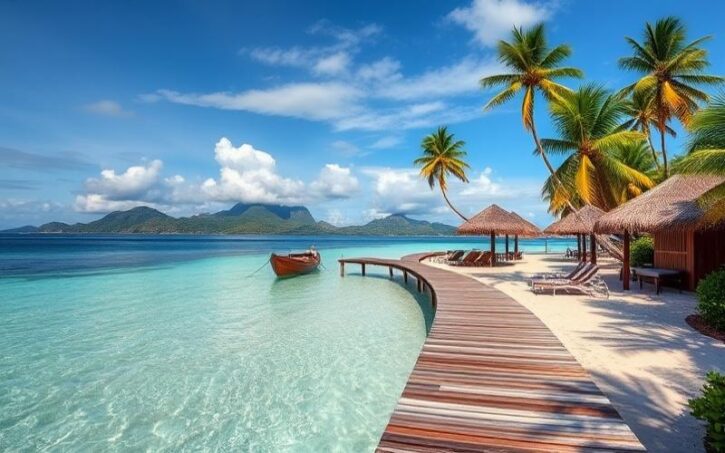
The Paradise Islands of Seychelles
The paradise islands of Seychelles are not only famous for their pristine beaches and breathtaking landscapes but also for their artist villages, which captivate the imagination of travelers and investors alike.
While some see them as a cradle of creativity, where painters, sculptors, and local artisans thrive in harmony with nature, others wonder if these artistic communities might also represent a lucrative investment opportunity.
By exploring the balance between promoting local culture and pursuing economic profitability, this article delves into the dynamics at the heart of these artistic havens and reveals the challenges and potentials they harbor.
Inspiring Alternative Projects in Seychelles’ Artist Villages
Seychelles’ artist villages stand out through innovative initiatives that combine creativity, community engagement, and environmental sustainability. Several pilot projects have emerged in recent years, transforming the local art scene and delivering real economic and social benefits.
Concrete Examples of Alternative Projects:
- Art installations made from recycled materials: The UP! Seychelles project, led by the Seychelles Art Projects Foundation, involves creating major works—sculptures, public installations, murals—primarily using reclaimed materials. These creations are installed on the main islands to raise awareness about the fragility of the local environment while enhancing residents’ artistic capabilities.
- Biomimetic architecture: International collaborations like that of Architects of Invention studio with several European partners have resulted in a hotel concept inspired by marine coral on Mahé Island. This project aims to integrate natural principles of sustainable development into modern architecture designed as an organic extension of the island landscape.
Impact on Local Cultural and Economic Life:
- Strengthening community bonds through direct involvement of residents in designing and installing collective works.
- Creating new economic opportunities via cultural tourism (public workshops, local craft sales) and increased appeal to foreign investors sensitive to ecological issues.
- Enhancing Seychellois heritage through an artistic approach that merges traditions (local motifs, craft techniques) with contemporary innovations (interactive environmental art).
| Project/Initiative | Materials Used | International Collaborations | Economic/Cultural Benefits |
|---|---|---|---|
| UP! Seychelles | Recycling (plastic/metal) | Yes | Ecological awareness; workshops |
| Biomimetic Hotel | Sustainable construction | Yes | Eco-responsible tourism development |
Hybrid Artistic Approaches Tradition/Modernity:
Artists draw inspiration from both traditional Seychellois motifs and contemporary international trends: murals depicting local wildlife created with the help of foreign street artists; monumental sculptures resulting from exchanges with European creators; integration of ancestral craft practices reinterpreted through modern design.
Notable Testimonials:
“The fact that our community can exhibit works in public space transforms our relationship with natural heritage. Tourists stop at our installations – it creates immediate dialogue between cultures.”
— George Camille, President of Seychelles Art Projects Foundation
“Using exclusively recycled materials gives deep meaning to my artistic practice here in Seychelles… Our art becomes a living message for every resident or visitor conscious of local climate challenges.”
— Ally Souris, Visual Artist
These initiatives demonstrate how Seychelles’ artist villages are becoming drivers not only for cultural influence but also for economic development respectful of their unique island identity.
Good to Know:
Seychelles’ artist villages host innovative projects such as the Atelier des Palettes where creators transform driftwood into unique art pieces, uniting sustainability and artistic expression, and foster collaborative workshops with international artists. These initiatives nourish the local art scene, as noted by Julie, a local artist, who emphasizes that these multidimensional exchanges enrich their practice and attract creative cultural tourism. Additionally, Synergie Fest, an annual celebration blending tradition and innovation, embodies the fusion of contemporary artistic practices with Seychellois craftsmanship, strengthening the local economy by attracting visitors and supporting village artisans through sales of their works.
Artistic Communities in Seychelles: A Real Estate or Cultural Lever?
Seychelles’ artistic communities stand out through their diversity, mixed heritage, and growing engagement in the archipelago’s social and urban life. Their influence extends far beyond mere artistic creation, impacting both national cultural identity and economic dynamics related to tourist real estate.
Main Artistic Communities: History, Development, and Impact
- The Seychellois art scene developed around African, European (French and British), Indian, and Chinese influences. The result is a specific Creole identity that permeates all forms of local art.
- Early beginnings were marked by traditional craft objects incorporating motifs inspired by island nature, followed in the 20th century by an opening toward contemporary expressions: abstract painting, monumental sculpture, or in-situ installations inspired by the landscape.
- Iconic artists such as Michael Adams or George Camille have enabled international recognition while anchoring their works in Seychellois heritage.
- Today, several structured collectives (e.g., Seychelles Art Projects Foundation) energize the local scene through public exhibitions on Mahé, Praslin, or La Digue; they also promote art outside galleries to reach a broader audience.
Dynamics Between Artistic Communities and Tourist Real Estate Market
| Observed Dynamic | Effect on Real Estate | Effect on Tourism |
|---|---|---|
| Establishment of workshops/galleries in certain coastal neighborhoods | Relative rise in real estate prices due to new attractiveness | Increase in visitor flow seeking authentic/artisanal experience |
| Urban rehabilitation driven by cultural projects | Enhancement of old buildings | Creation of new “art & heritage” tourist circuits |
| Outdoor public works (sculptures/murals) | Urban beautification enhancing neglected neighborhoods | Strengthening territorial marketing around creative image |
- Artist settlements tend to revitalize certain urban or rural spaces experiencing economic decline—this sometimes generates a gradual but measured increase in local property values.
- Galleries open to tourists become assets for diversifying tourism offerings beyond classic beaches.
Cultural Benefits Brought by These Communities
- Active promotion of tangible (traditional crafts) and intangible (Creole dances) heritage.
- Environmental awareness through collaborative projects associating local/international artists—traveling exhibitions addressing sustainability or biodiversity.
- Regular organization of unifying festivals/events involving younger generations; intergenerational transmission ensured through nationally supported educational programs.
- Increased openness toward intercultural dialogue with foreign visitors and Seychellois diaspora.
Case Studies / Local Testimonials
“The UP! project has not only beautified our public spaces with monumental sculptures but also mobilized an entire generation around environmental issues”
– George Camille, President Seychelles Art Projects Foundation
Notable examples:
- Neighborhoods rehabilitated through joint initiatives between municipality/local artists: temporary then permanent transformation via murals visible on Mahé.
- Projects conducted with local NGOs promoting professional integration through heritage restoration or cultural event organization.
Comparative Summary: Cultural vs Real Estate Lever
| Aspect | Cultural Lever | Real Estate Lever |
|---|---|---|
| Identity/national impact | Very strong | Moderate |
| Urban revitalization | Strong involvement | Indirect consequence |
| Tourist attraction | Essential | Enhances land value |
| Economic development | New opportunities | Relative/localized |
⟦Artistic communities appear primarily as a powerful cultural lever for Seychelles. While they sometimes indirectly contribute to real estate dynamism—particularly in certain tourist areas—their main role remains that of major vectors for promoting island identity, urban social renewal, and the country’s international influence⟧.
Good to Know:
In Seychelles, artistic communities, such as those in Mahé and Praslin, have played a central role for decades, enriching the cultural landscape and significantly influencing the tourist real estate market. Historically, these groups have revitalized areas through the establishment of workshops and galleries, thereby increasing appeal for visitors and, consequently, real estate prices. Seychellois art, thanks to these communities, has gained increased recognition, promoting cultural exchange with tourists and strengthening local identity. A notable example is the transformation of old structures into dynamic cultural spaces, attracting diverse investments and audiences. These initiatives have not only economically revitalized certain regions but also consolidated links between art and tourism, proving that artistic communities can be both cultural and real estate levers.
Renovate to Create: Seychelles’ Artistic Farms
The transformation of old farms into artistic and cultural spaces in Seychelles embodies a movement to revalue built heritage, combined with a contemporary creative dynamic. These renovation projects rely on methods that value both architectural authenticity and artistic innovation.
Renovation Process and Architectural Preservation
- Conservation of original structures: Renovations prioritize restoration of local wood frames (takamaka, black wood) and reuse of traditional elements like thatched or corrugated iron roofs.
- Highlighting Creole style: Emphasis is placed on verandas surrounding buildings, symmetrical staircases, and natural materials to preserve historical charm.
- Addition of contemporary spaces adapted to artistic needs while respecting original silhouette.
Iconic Examples
| Farm/Location | Transformation | Artists/Collectives Hosted | Events Organized |
|---|---|---|---|
| Domaine de Val des Près | Complete renovation of Creole village; restored colorful kiosks; antique furniture displayed in main house. | Local artisans; visual art collectives | Exhibitions, workshops, craft market |
| La Digue Plantation House (Union Estate) | Conservation of thatched roof and interior restoration for temporary exhibitions. | Seychellois painters, sculptors | Artist residencies, guided tours |
| Maison Dauban (Silhouette Island) | Faithful restoration to Creole architecture with large veranda adapted for cultural events. | Interdisciplinary collectives | Intimate concerts, literary meetings |
Inspiration for Artistic Community & Collaborations
- Renovated spaces offer local artists a privileged place to express themselves and exhibit their works in an authentic setting.
- These venues foster collaborations between Seychellois and international artists through workshops or cross-residencies.
- They also serve as educational platforms for young audiences through practical workshops blending traditional craftsmanship and contemporary creations.
Economic Diversification & Tourist Impact
Artistic farms play a key role in:
- Local economic diversification through cultural tourism: they attract clients seeking an immersive experience combining architectural heritage and living creation.
- Valuation of traditional know-how finding new profitability through direct sales (artisanal souvenirs), paid workshops, or event ticketing.
Cultural Nature versus Economic Potential
Although these investments are primarily driven by cultural ambition—preserving built heritage while supporting local artistic dynamism—they also present certain profitability potential:
Domaine de Val des Près now offers not only a journey into the past but also generates revenue through its on-site craft shops and typical Creole culinary offerings.
In conclusion:
These renovations are motivated as much by strong cultural will as by their ability to generate sustainable economic benefits through the joint development of cultural and tourist sectors.
Good to Know:
In Seychelles, old farms are transforming into artistic farms, marrying heritage preservation and cultural innovation. Renovations, which maintain the integrity of Creole architecture, often use sustainable local materials, reflecting deep respect for the past. Places like La Plaine St. André farm now host artisans and organize exhibitions and workshops that stimulate the local creative economy. These renovated spaces generate artistic synergies, offering a unique setting for collaborations, while amplifying the archipelago’s tourist appeal. By combining cultural success and economic potential, these initiatives illustrate how art and tradition can create a profitable dynamic.
Creative Eco-Villages: A Sustainability Model in Seychelles
A creative eco-village is an intentional community that integrates artistic creation and ecological practices into a collective lifestyle. These villages aim for self-sufficiency, resting on three pillars: an alternative economic model, strong ecological concern, and active community life. Their main objective is to restore balance between humans and their environment, respecting local ecosystems while fostering artistic creativity.
Creative eco-villages distinguish themselves from other artist villages in Seychelles through their holistic approach to ecological integration. Unlike classic artist clusters mainly focused on cultural production, these communities actively adopt:
- Use of renewable energy (solar panels, wind turbines)
- Responsible management of natural resources (rainwater harvesting, composting)
- Sustainable architecture (use of local or recycled materials)
- Alternative agricultural techniques like permaculture and agroecology
Comparative Table
| Criteria | Creative Eco-Village | Traditional Artist Village |
|---|---|---|
| Ecological Practices | Integrated into all aspects | Accessory or absent |
| Energy | Renewable | Conventional |
| Architecture | Sustainable/local | Variable |
| Resource Management | Responsible | Poorly structured |
| Collective Dimension | Strong | Moderate to strong |
Concrete initiatives illustrate this commitment in Seychelles: some hotels or art centers already use solar panels to supply their energy and collect rainwater to reduce water consumption. Open artistic workshops also integrate recycling of local materials into their creations.
These communities inspire both residents and visitors through:
- Pooling knowledge related to sustainability
- Regular organization of participatory workshops around artistic recycling or organic gardening
- A framework conducive to dialogue between art, nature, and ecology
List of Observed Positive Impacts:
- Increased awareness of environmental issues
- Gradual adoption by general public of more responsible actions
- Valuation of Seychellois natural heritage through artistic means
Nevertheless, several challenges remain:
- Difficulty maintaining collective dynamics long-term (internal divergences)
- High initial cost to establish sustainable infrastructure
- Constant need to innovate so model remains attractive to artists and tourists sensitive to ecotourism
Economic impact translates into:
- Local creation of green jobs
- Development of sustainable tourism
- Enhanced attractiveness for international artists seeking inspiring settings
Socially,
- Strengthened cohesion through daily sharing
- Facilitated intergenerational transmission around common values
From a future perspective, these villages could become living laboratories for cultural sustainable development in Seychelles. They not only offer a reproducible model elsewhere but also embody economic driver potential based on creative ecotourism—capable of combining environmental protection, cultural valuation, and social innovation.
Good to Know:
Creative eco-villages in Seychelles distinguish themselves through their innovative approach to environmental sustainability, combining art and ecology. By emphasizing renewable energy use, responsible resource management, and ecological architecture, these communities differ from other artist villages, positioning themselves as true sustainability models. Notable initiatives include collective solar production projects and rainwater harvesting systems. These eco-villages inspire not only their residents but also visitors to adopt more sustainable lifestyles. However, the path to their creation and maintenance is not without challenges, particularly financial and logistical. Despite this, these villages possess significant economic potential, attracting audiences composed of artists and ecotourists, and playing a key role in harmonizing future cultural and economic sustainable development in Seychelles.
Disclaimer: The information provided on this website is for informational purposes only and does not constitute financial, legal, or professional advice. We encourage you to consult qualified experts before making any investment, real estate, or expatriation decisions. Although we strive to maintain up-to-date and accurate information, we do not guarantee the completeness, accuracy, or timeliness of the proposed content. As investment and expatriation involve risks, we disclaim any liability for potential losses or damages arising from the use of this site. Your use of this site confirms your acceptance of these terms and your understanding of the associated risks.

Cyril Jarnias is an independent expert in international wealth management with over 20 years of experience. As an expatriate himself, he is dedicated to helping individuals and business leaders build, protect, and pass on their wealth with complete peace of mind.
On his website, cyriljarnias.com, he shares his expertise on international real estate, offshore company formation, and expatriation.
Thanks to his expertise, he offers sound advice to optimize his clients' wealth management. Cyril Jarnias is also recognized for his appearances in many prestigious media outlets such as BFM Business, les Français de l’étranger, Le Figaro, Les Echos, and Mieux vivre votre argent, where he shares his knowledge and know-how in wealth management.





