
 Published on and written by Cyril Jarnias
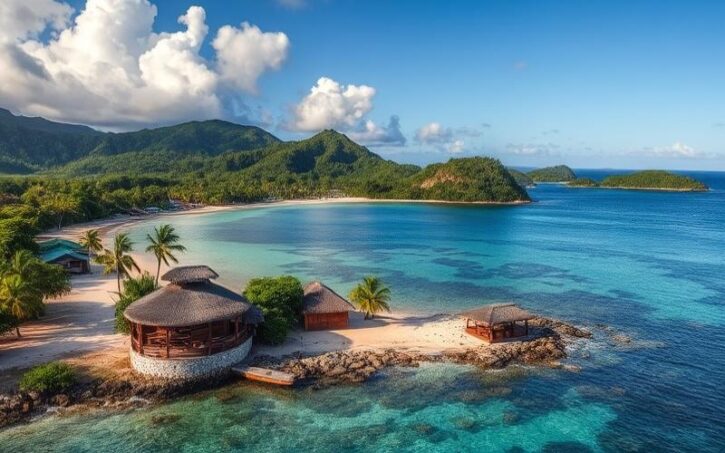
Nestled in the heart of the Indian Ocean, the Seychelles offer far more than white sand beaches and coconut palms: they harbor authentic villages steeped in culture and tradition, creating unique investment opportunities for 2025.
As the world shifts toward more authentic travel experiences, investing in these preserved gems represents a golden opportunity for visionaries ready to contribute to preserving local heritage while benefiting from sustainable returns on investment.
With a focus on harmonious and environmentally respectful development, the Seychelles are opening up to innovative projects that promise to transform these sleepy villages into must-visit destinations for travelers seeking novel discoveries.
Immersion in local crafts, vibrant Creole culture, breathtaking landscapes: investment opportunities in these authentic villages don’t just promise financial returns; they invite you on an exciting human and environmental adventure.
Highlighting Underestimated Rural Areas in the Seychelles
Investing in underestimated rural areas of the Seychelles offers numerous economic and social benefits. Valuing these territories not only promotes economic diversification but also strengthens the social fabric around an authentic identity and rich cultural heritage.
Economic and Social Benefits
- Creation of local jobs, especially for youth, through developing agricultural, fishing, or craft activities.
- Generation of stable income through direct sales to local markets or integration of products into the tourism sector.
- Improvement of national food security through increased consumption of local products.
- Strengthening of community spirit through the transmission of traditional know-how and preservation of unique cultural practices in each village.
Potential Initiatives to Boost the Local Economy
- Targeted development of ecotourism highlighting natural landscapes, culinary traditions, and village festivals.
- Promotion of sustainable agriculture (climate-resilient techniques, modernized irrigation) enabling efficient resource management while maintaining biodiversity.
- Support for local crafts: workshops open to the public, creation of cooperatives to better value artisanal products (coco de mer carvings, traditional weaving…).
| Initiative | Expected Impact |
|---|---|
| Ecotourism | New revenue sources; cultural enhancement |
| Sustainable Agriculture | Food security; rural employment |
| Local Crafts | Heritage preservation; fair trade |
Current Challenges Faced by These Regions
- Underinvestment in rural infrastructure (secondary roads, internet access).
- Vulnerability to climate changes affecting agricultural and fishing yields.
- Rural exodus due to lack of diverse professional opportunities.
Proposed Practical Solutions
- Gradual modernization of irrigation systems and improved drainage to support perennial vegetable production even during significant climate events.
- Implementation of accessible technical training for young rural entrepreneurs to quickly adopt agricultural innovations or modern tourism strategies.
- Logistical facilitation through better access to urban markets (adapted transport) as well as digital platforms dedicated to regional promotion.
Local Testimonials
“Here you truly feel at home. Thanks to the agroecological project launched two years ago with my neighbors, I was able to hire three people from the village. Visitors appreciate our simple but sincere welcome.” — Marie-Ange D., farmer on Praslin
“I pass on the traditional weaving I learned from my grandmother to the younger generation; today our baskets are sold as far as Mahé!” — Denis L., artisan on La Digue
Infrastructure Needed for Sustainable Development
Priority list:
- Reliable secondary road networks
- Widespread access to high-speed internet
- Multipurpose centers dedicated to rural vocational training
- Modern collective systems for water/sanitation management
These structural investments directly contribute to:
- Significantly improving the local standard of living
- Attracting responsible investors sensitive to environmental values
- Ensuring a dynamic future rooted in Seychellois authenticity
Positive implication: local population better equipped to face contemporary challenges; enhanced appeal to ethical investors seeking social innovation as much as economic return.
Good to Know:
Investing in underestimated rural areas in the Seychelles offers considerable benefits both economically and socially, thanks to highlighting their authenticity and cultural richness. The development of ecotourism, which capitalizes on exceptional landscapes and biodiversity, and the encouragement of sustainable agriculture can stimulate these local economies. Local crafts, often overlooked, also represent an opportunity for cultural enhancement and job creation. However, these regions face challenges such as limited access to modern infrastructure and resources. A solution could lie in implementing incentive policies to attract investments in basic infrastructure and vocational training related to new projects. Testimonials from residents, like that of Patrice, a local farmer, highlight the positive impact such initiatives can have on daily life and community spirit. Supporting sustainable development in these villages requires ongoing collaboration between the government, residents, and investors, thus ensuring a prosperous future for all.
Real Estate Investment Opportunities in Authentic Villages
Authentic villages in the Seychelles now offer attractive real estate investment opportunities, driven by growing demand for preserved environments and the enhancement of local heritage.
Current Real Estate Market Trends
- The Seychellois residential real estate market shows positive momentum, with expected growth over the 2025-2031 period.
- Average prices in rural areas (€807.22/m²) are competitive compared to urban zones (€617.71/m²), but vary according to exact location and the evolution of the Seychellois rupee.
- Authentic villages attract with their tranquility, low density, and the change of scenery they offer compared to the increasing urbanization of centers like Victoria or Eden Island.
Price Per Square Meter Comparison (2025)
| Location | Average Price/m² (€) | Range (€) |
|---|---|---|
| City | 617.71 | 139 – 1,064.14 |
| Countryside/Village | 807.22 | 532.07 – 1,082.38 |
Government Policies and Incentives
- The Seychellois government encourages foreign investment through a stable legal framework allowing non-residents to acquire certain real estate properties under conditions.
- Tax incentives exist for projects promoting sustainable tourism or heritage restoration; temporary exemptions or property tax reductions may be offered case by case.
Recent Examples and Positive Outcomes
Investments in eco-friendly guesthouses in Anse Royale or Baie Lazare have enabled:
- Creation of local jobs
- Development of artisanal micro-enterprises
- A return on investment higher than that observed in some urban neighborhoods thanks to high tourist occupancy rates
These projects enhance local know-how while generating direct economic impact for village communities.
Distinctive Assets of Authentic Villages
List of major attractions:
- Living Creole heritage: traditional architecture, cultural festivals
- Natural beauty: preserved beaches, accessible tropical forests without massive tourist influx
- Local activities: artisanal fishing, guided hikes by local inhabitants
The peaceful lifestyle is a strong argument for a clientele seeking authenticity and cultural immersion.
Potential Challenges & Associated Strategies
Main obstacles:
- Sometimes limited access to modern infrastructure (healthcare/connectivity)
- Administrative complexity for certain land procedures
Recommended strategies:
- Surround yourself with experienced local partners to streamline administrative procedures
- Invest in autonomous solutions (water/solar energy)
2025 Outlook
Rural real estate attractiveness is expected to continue growing thanks to:
- A national policy oriented toward sustainable tourism
- Maintenance of a stable political environment
- Growing interest in active or semi-permanent retirements in natural settings
Qualitative upscaling should accompany a gradual slight increase in land values in these sought-after villages while maintaining their attractive differential compared to urban poles around Mahé or Praslin.
Good to Know:
Authentic villages in the Seychelles offer excellent investment opportunities, due to current trends favoring distance from urbanized areas to enjoy a picturesque setting and rich local life. The Seychellois government actively supports foreign investment in real estate through attractive tax incentives, thereby enhancing the appeal of these areas. Recent projects, such as sustainable development in the village of La Digue, have demonstrated a positive impact on both the local community and financial returns, illustrating the potential for lucrative profits. These villages stand out for their cultural heritage, preserved natural beauty, and artisanal activities, elements that are increasingly attracting investors. However, it is crucial to navigate effectively through challenges such as limited access to infrastructure and the complexity of local regulations; partnerships with local developers can mitigate these obstacles. By 2025, trends indicate continued growth in investments, supported by positive economic developments and initiatives to strengthen investor welcome, promising stable and sustainable growth.
Profitability and Authenticity of Rural Heritage in the Seychelles
Economic factors influencing the profitability of investments in rural heritage in the Seychelles mainly include location, property quality, tourist seasonality, and services offered. Properties by the sea or with ocean views generally command higher prices and attract a clientele willing to pay more for an authentic experience. The high-end market is particularly dynamic, especially during high season when rates can double or even triple. Professional rental management, often charged between 20% and 30% of rental income, optimizes yield while ensuring regular maintenance of the heritage.
| Factor | Impact on Profitability |
| Location | ↑ For coastal sites/sea views |
| Quality | ↑ For faithful restoration |
| Seasonality | Rates x2/x3 during high season |
| Services | Added value (pool, concierge) |
| Rental Management | Optimization of occupancy/maintenance |
Regarding recent statistics on the return on investment (ROI) rate related to the conservation and rehabilitation of Seychellois rural heritage:
- Average net profitability ranges between 5% and 7% per year for classic real estate projects.
- For rural properties restored with respect for authentic character (traditional Creole architecture), it’s not uncommon to achieve net profitability exceeding 9%, particularly in the high-end seasonal rental segment.
Cultural and architectural authenticity constitutes a powerful asset for attracting private or institutional investors. Rural villages that have preserved their vernacular Creole architecture generate strong tourist appeal sought by an international clientele eager for unique experiences. This authenticity translates into:
- Enhanced heritage valuation,
- Extended average stay durations,
- Positive word-of-mouth reinforcing local attractiveness.
Concrete Examples:
- Several former agricultural estates transformed into guesthouses have seen their occupancy rates exceed those of standard accommodations thanks to their historical charm.
- Faithful renovation of traditional buildings has allowed obtaining the “Heritage Property” label, granting access to public subsidies or targeted tax advantages that further improve overall returns.
Major Challenges Encountered:
- High cost of traditional materials and skilled labor
- Risk of distortion related to modern tourist requirements
- Difficulty balancing intensive economic use (short-term rental) with long-term preservation
Possible Solutions:
- Implementation of tax incentives conditioned on strict compliance with heritage standards,
- Public/private partnerships to share technical costs related to complex restorations,
- Awareness/information for investors regarding the strategic importance of maintaining authenticity as a key differentiating factor against standardized international tourism.
For 2025, despite an expected slight global slowdown in the Seychellois tourism sector (+0.5% only this year), it is anticipated that investments specifically targeting authentic rural heritage will maintain an ROI higher than the rest of the local real estate market thanks to:
- Growing demand for immersive experiences;
- The relative but precious scarcity of well-preserved traditional buildings;
- Increased support announced via public policies focused on sustainable development integrating local cultural enhancement.
Authentically preserved rural heritage thus establishes itself as a major strategic lever both for ensuring identity permanence and high economic performance.
Good to Know:
Investing in rural heritage in the Seychelles presents interesting opportunities, boosted by increased profitability through conservation and rehabilitation initiatives, which offer an average return rate of 7% according to recent data. The cultural and architectural authenticity of villages, like Baie Lazare and Anse Royale, is a lever that attracts investors eager to combine profit and preservation. The example of the restoration project in La Digue shows how highlighting Creole architecture doubled tourist attendance, thereby boosting local revenues. However, authentic preservation requires innovative solutions to high costs and legal restrictions. For 2025, forecasts indicate a rise in yield thanks to government policies favoring sustainable development and heritage enhancement, promising an even more favorable framework for investment in these authentic villages.
Disclaimer: The information provided on this website is for informational purposes only and does not constitute financial, legal, or professional advice. We encourage you to consult qualified experts before making any investment, real estate, or expatriation decisions. Although we strive to maintain up-to-date and accurate information, we do not guarantee the completeness, accuracy, or timeliness of the proposed content. As investment and expatriation involve risks, we disclaim any liability for potential losses or damages arising from the use of this site. Your use of this site confirms your acceptance of these terms and your understanding of the associated risks.

Cyril Jarnias is an independent expert in international wealth management with over 20 years of experience. As an expatriate himself, he is dedicated to helping individuals and business leaders build, protect, and pass on their wealth with complete peace of mind.
On his website, cyriljarnias.com, he shares his expertise on international real estate, offshore company formation, and expatriation.
Thanks to his expertise, he offers sound advice to optimize his clients' wealth management. Cyril Jarnias is also recognized for his appearances in many prestigious media outlets such as BFM Business, les Français de l’étranger, Le Figaro, Les Echos, and Mieux vivre votre argent, where he shares his knowledge and know-how in wealth management.





