
 Published on and written by Cyril Jarnias
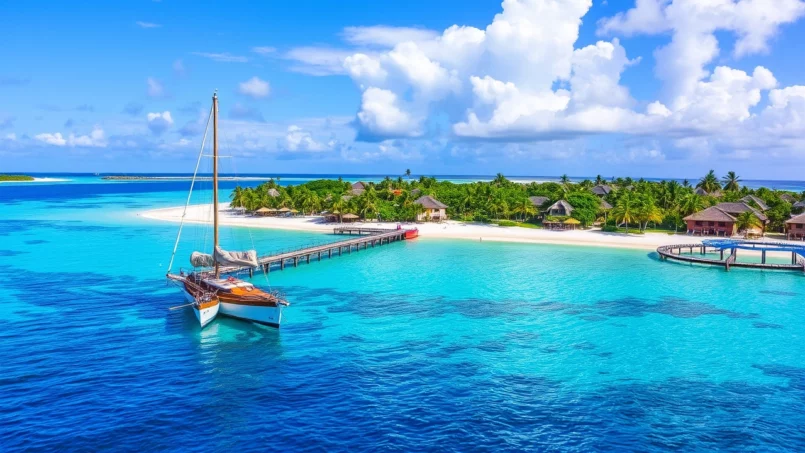
Moving to the Turks and Caicos Islands is a dream for many: beaches ranked among the world’s most beautiful, turquoise waters, warm weather year-round, and an almost non-existent tax regime. But behind the postcard image, daily reality is much more nuanced. Sky-high cost of living, complex immigration procedures, a limited healthcare system, rising crime on some islands: relocating there is a project that requires meticulous planning.
This article provides a detailed analysis of expatriation to the Turks and Caicos Islands, covering the economy, taxation, immigration, healthcare, education, safety, and cost of living. It aims to offer a realistic perspective for working professionals, retirees, or investors considering this move.
Understanding the Territory Before Packing Your Bags
Before discussing taxation or visas, it’s essential to understand what the Turks and Caicos Islands really are. It’s neither a sovereign state nor a single large island, but a fragmented archipelago, with very uneven levels of development from one island to another.
The Turks and Caicos Islands are a British Overseas Territory located in the western Atlantic, southeast of the Bahamas and north of the Dominican Republic. The archipelago comprises over forty islands and cays, but only a handful are permanently inhabited. The island of Providenciales is home to over three-quarters of the population and the majority of modern infrastructure, while the administrative capital, Cockburn Town, is on the island of Grand Turk.
The population is small but growing rapidly, estimated at around 45,000 to 57,000 residents according to recent figures. It is very cosmopolitan: a majority of residents were born abroad, with communities from North America, Europe, the Caribbean (Haiti, Jamaica, Dominican Republic), and Asia. English is the official language, but you’ll also hear Haitian Creole, Spanish, and Tagalog.
The climate is tropical with temperatures between 68°F and 86°F, plenty of sunshine, and a rainy season. However, the archipelago is exposed to Atlantic hurricanes from June to November, a crucial factor to consider when planning your move.
Finally, the islands remain a developing country. The environment is generally well-preserved, without significant industrial pollution, but some public services, infrastructure, and administrative procedures fall below the standards of major developed nations.
Taxation and Economic Environment: A Magnet for Affluent Expatriates
One of the major draws of the Turks and Caicos Islands can be summed up in one word: taxation. For high-income expatriates, investors, and certain retirees, the local tax framework is particularly attractive.
A Near Absence of Direct Taxes
Residents of the Turks and Caicos Islands pay no income tax, no corporate tax, no wealth tax, no capital gains tax, no inheritance tax, and no property tax based on real estate value. There is also no generalized Value-Added Tax (VAT).
Government revenue comes mainly from customs duties (about 30% of public income), stamp duties on real estate transactions (around 22%), tourism accommodation taxes (22%), as well as sector-specific taxes (telecoms, insurance, money transfers) and immigration fees (work permits, residence).
This is the approximate monthly amount of social contributions for an employee earning $5,000 per month in Singapore.
An Offshore Financial Center and a Tourism-Driven Economy
The economy rests on two pillars: luxury tourism and offshore financial services. The islands welcome over a million visitors a year, mostly North Americans, drawn by the resorts of Providenciales and postcard-perfect beaches like Grace Bay. The hospitality sector, restaurants, yachting, diving, and water sports fuel a large part of the local economy.
Simultaneously, the territory has positioned itself as an international financial center, with a range of management companies, funds, captive insurance companies, trust structures, and holding companies. There are no capital controls, the currency is the US dollar, and regulations allow for 100% foreign ownership of companies, with no minimum capital or local director requirement, for many “non-reserved” activities.
For finance, law, wealth management, or family office professionals, the Turks and Caicos Islands can offer interesting ground. However, it’s imperative to understand the constraints of economic substance, international reporting regimes (CRS, FATCA, BEPS), and local market access rules, knowing that some licenses are reserved for local residents (“Islanders”).
Attractive Salaries… But Eaten Up by the Cost of Living
Local salaries may seem high on paper. On Providenciales, average salaries for some profiles are around $44,000 per year, with net monthly take-home pay ranging from $2,800 to over $4,700 depending on the sector. But these figures must be weighed against a cost of living considered “very high”, often 50% to 70% more expensive than in many Western cities, and significantly costlier than metropolises like Toronto, Sydney, or Lisbon.
In other words, the tax advantage can be partly neutralized for modest expatriates or those who remain salaried employees locally. On the other hand, for individuals with substantial external income (dividends, investment income, international activities) or for affluent retirees, the total absence of direct tax remains a considerable advantage.
Cost of Living: The Real Shock of Expatriation
Among the major drawbacks of life in the Turks and Caicos Islands, the cost of living tops the list. The archipelago imports almost all its consumer goods, subject to high customs duties (up to 35% on many products). The result: food, fuel, services, and real estate reach levels rarely seen, even for expatriates accustomed to expensive destinations.
Typical Budgets: Single Person, Couple, Family
Estimated monthly budgets, including housing, to live “comfortably” give a good idea of the financial leap required. They can be summarized as follows:
| Household Profile | Estimated Monthly Budget (USD) | Annual Budget (USD) |
|---|---|---|
| Single Person | 3,535 – 5,440 | ≈ 65,000 |
| Couple (2 adults) | 7,630 – 9,940 | ≈ 90,000 – 120,000 |
| Family of 4 (2 adults, 2 children) | 7,289 – 10,717 | Up to ≈ 128,600 |
These ranges include rent but not exceptional expenses (frequent travel off-island, major medical care outside the territory, etc.). Expatriate accounts mention first-year expenses exceeding $90,000 once housing, international schooling, healthcare, transportation, and leisure are factored in.
For a single person, the math is quick: an average salary can cover a reasonable standard of living, but leaves little room for savings, especially if aiming for comfort comparable to that in North America or Europe.
Housing: Scarce, Expensive, and Tourism-Oriented
The real estate market is one of the tightest in the region. Tourist demand drives prices up, especially on Providenciales, where a large portion of the rental supply is absorbed by short-term vacation rentals.
In terms of renting, the ballpark figures are as follows:
| Type of Accommodation & Location | Typical Monthly Rent (USD) |
|---|---|
| Studio / 1 bedroom outside center | 800 – 1,600 |
| 1 bedroom in central area | 1,000 – 1,800 |
| 2 bedrooms (concrete example) | ≈ 2,850 (excluding utilities) |
| 3 bedrooms in center | 2,500 – 4,000 |
| 3 bedrooms outside center | 2,500 – 4,500 |
| 3-bedroom house with pool (Providenciales) | 3,000 – 6,000+, sometimes more |
| Luxury waterfront villa | 10,000+ |
| 1 bedroom on Grand Turk or smaller islands | ≈ 800 – 1,500 (generally cheaper) |
Leases are generally signed for one year, with a security deposit of one to two months’ rent. On Providenciales, finding decent long-term accommodation can be challenging: many landlords prefer renting nightly or weekly to tourists, which is far more profitable. On the other islands, supply is more limited but often cheaper.
A family home in Singapore can cost around 1.4 million dollars, illustrating the high-end positioning of the real estate market.
Note a not insignificant advantage for new residents: moving goods and personal effects can benefit from a reduced customs duty rate (about 5%), compared to 35% on many other imported goods. This boost doesn’t cover everything, but it slightly eases the setup costs.
Food, Fuel, Services: Everything Costs (Very) Dearly
Grocery bills surprise even seasoned expatriates. A gallon of milk can reach $10, a basic chicken around $14 per kilogram, eggs can approach or exceed $10 a dozen depending on shipments. Bread, tomatoes, dairy, beverages… everything is marked up by maritime transport and customs duties.
The maximum cost of dinner per person at a mid to upscale restaurant in Singapore.
Fuel also suffers from island surcharges. Gasoline per liter runs around $2 to $2.5, sometimes more. Electricity is notoriously expensive, especially with intensive air conditioning use: a family can see energy bills ranging from $250 to $800 per month. Access to high-speed internet, still uneven across islands, often costs between $80 and $150 per month. A mobile plan with a few gigabytes can exceed $40.
The most palpable consequence of this cost of living is that many reputedly expensive destinations (Zurich, London, major North American cities) are not far behind, or even surpassed, when comparing at an equivalent consumption level. For a family of four with children in international school, the $10,000 per month mark is quickly crossed.
Immigration, Residence Statuses, and Work Permits: A Legal Labyrinth
Another crucial aspect of expatriation to the Turks and Caicos Islands: the right to stay, work, invest, and access political rights. The immigration and residence system is complex, hierarchical, and for a foreigner, rarely quick or automatic.
Major Status Types: From Work Permit to Islander Status
Broadly speaking, there are five major status categories for an expatriate:
| Primary Status | General Characteristics |
|---|---|
| Work Permit | Authorization to work for a specific employer, 1-2 years renewable, costly and not guaranteed |
| Temporary Residence Permit (TRP) | For individuals with financial means and a real estate or business investment |
| Permanent Residence Certificate (PRC) | Long-term right of residence, with or without right to work, via duration of stay or investment |
| British Overseas Territory Citizenship (BOTC) | British Overseas Territory nationality, after residency, via the UK Home Office |
| Turks and Caicos Islander Status (Belongership) | Highest status: voting rights, ownership of certain reserved businesses, full market access |
For a “standard” employee, entry is almost always via a work permit sponsored by a local employer. For a retiree or investor, the most common path is a temporary residence permit tied to a real estate or business investment. Permanent residence and, later, territory nationality and Islander Status only come after a long journey of several years, even a decade or more.
Working On-Site: A Selective and Sometimes Uncertain Process
The work permit is the most common entry point for foreigners wishing to engage in local activity. The basic principle is clear: local labor has priority. Before hiring an expatriate, an employer must advertise the position in the local press (in publications like the TC Weekly News or TCI Sun). Only in the absence of a qualified local candidate can a work permit be considered.
The permit fees, which should in theory be covered by the employer, vary significantly by profession:
| Profession Category | Typical Permit Fee Range (USD/year) |
|---|---|
| Agricultural work, low-skilled trades | 150 – 1,750 |
| Technical / intermediate professions (e.g., divers, mechanics, nurses) | 2,000 – 3,500 |
| Managerial profiles, business owners, self-employed | Up to 9,500 |
The standard duration of a permit is one to two years. Processing times, although theoretically targeted at 30 days, in practice range from two to six months. Renewal is also not systematically guaranteed: after several years, some expatriates are denied extension, as the official policy remains to favor local nationals’ employment whenever possible.
Specific requirements and procedures for self-employed individuals and entrepreneurs looking to establish themselves on the island.
A dedicated permit is mandatory for self-employed foreign workers and entrepreneurs.
Obtaining a professional license is also required to operate.
Certain categories of activities (retail trade, some services) are reserved for holders of Islander Status.
The administrative process to obtain these authorizations is rigorous and complex.
The costs associated with these permits and licenses are significant.
Note that there is currently no specific visa for “digital nomads”. A visitor can stay about 90 days visa-free (for many countries), with the possibility of extension through immigration, but this does not confer the right to work locally. Working remotely for a foreign company from the islands exists in a gray area, generally tolerated but not officially provided for.
Temporary Residence, Permanent Residence, and Naturalization
For those with their own resources who are not necessarily seeking to work locally, investment-based residence regimes exist.
This permit is for persons of “independent means” or investors. It requires a minimum investment of $500,000 in real estate or a business on Providenciales or West Caicos, or $250,000 on the other islands. The permit cost is $1,500 and must be renewed annually. It does not grant the right to work on the territory.
The Permanent Residence Certificate (PRC) represents the higher step. It can be accessed via two routes:
– the duration of stay route: ten years of continuous legal residence, with fees around $10,000;
– the investment route: property purchase of at least $1,000,000 on Providenciales ($300,000 on the other islands), or investment of at least $1,500,000 in a business on Providenciales ($750,000 elsewhere), or a contribution of at least $1,000,000 to a public project.
This investment option involves significant additional fees (on the order of $25,000 for just the application processing), and generally does not automatically grant the right to work. A separate permit is still required to engage in any activity, which sometimes surprises investors who imagined they could combine residence and employment without a separate formality.
After five years of legal residence, and provided one is “free from immigration control” (typically via a PRC), it is possible to apply for British Overseas Territory Citizenship, managed by the UK Home Office. This nationality provides access to a British Overseas Territory passport, but does not in itself confer full local political rights.
The Turks and Caicos Islander Status, formerly Belongership, is the most comprehensive status. It confers voting rights, eligibility for office, the right to own businesses in reserved sectors, and unlimited access to the job market. Its acquisition is strictly regulated: it generally requires at least ten years of legal residence (five years if married to a status holder) and meeting rigorous criteria. Acquisition by a foreigner remains rare and should not be considered automatic.
A Demanding System, Both an Asset and a Barrier
For the expatriate, this complex architecture has a dual face. On one hand, it provides certainty for serious investors and long-term residents who align their project with local objectives (job creation for residents, community integration, environmental respect). On the other hand, it constitutes a real barrier for those seeking an “easy” expatriation, especially for intermediate durations (several years without a massive investment project).
For an employee, the dependence on the employer is strong: a job change or layoff often means starting over. For a retiree or a person living on passive income, the residence + investment formula can be attractive, but one must accept tying up several hundred thousand dollars in a local asset, with the liquidity risks that implies on an island market.
Healthcare System: Adequate for Everyday Needs, Limited for Serious Conditions
Regarding healthcare, the Turks and Caicos Islands are in an intermediate zone. The country does not present major health risks (no large-scale endemic tropical diseases, tap water is generally drinkable, little pollution), but it remains a small island territory, with limited medical infrastructure in volume and specialties.
Mandatory Health Coverage for Residents
Care is managed by a mandatory health insurance system, the National Health Insurance Plan (NHIP). All legal residents, including expatriates holding a work permit, must contribute. The standard contribution is 6% of income, shared equally between employee and employer (3% each), up to a certain monthly salary cap.
The NHIP is presented as offering a fairly broad basket of care: general medicine, basic specialties, hospitalization, emergency care, prevention, and in some cases medical evacuations abroad for treatments unavailable locally. There is no waiting period for pre-existing conditions, nor a deductible. In return, small co-payments per service are required to limit overconsumption.
Many expatriates and companies subscribe to international private health insurance as a supplement. This notably guarantees coverage for care if transferred to leading hospitals in the United States or elsewhere in the Caribbean.
Modern but Limited Infrastructure
The core of the hospital system rests on two main centers: Cheshire Hall Medical Centre on Providenciales (about twenty beds) and Cockburn Town Medical Centre on Grand Turk (approximately ten beds). These facilities, managed under a public-private partnership by InterHealth Canada, are modern, well-equipped, and benefit from recognized international accreditations. They provide essential secondary care: general surgery and obstetrics, internal medicine, pediatrics, imaging, emergency services, maternity, and basic intensive care.
Around these hospitals orbit several private clinics on Providenciales (general medicine, imaging, specialized services), dental offices, and well-stocked pharmacies. On the other islands, medical presence is often limited to small public clinics or nurses, with restricted hours.
For common problems, the system generally works well: waiting times are sometimes shorter than in some neighboring countries, the quality of main infrastructure is good, and local hospital charges remain below those in the United States for comparable services.
The Limits of a Micro Island System
Where constraints appear very quickly is when dealing with serious or highly specialized pathologies: cancers requiring complex protocols, neurosurgery, transplants, major trauma, certain cardiac surgeries… The Turks and Caicos Islands lack the critical mass and technical facilities to cover the full spectrum of advanced medicine. In serious cases, the rule is evacuation to referral centers, often in Miami, Nassau, or Jamaica.
Medical evacuations are very costly without insurance. The NHIP only covers them if treatment is impossible locally. The archipelago’s geography complicates access to comprehensive hospitals, often requiring a ferry or plane, with extra costs and delays, especially in bad weather.
For an expatriate, the conclusion is twofold: daily life does not pose a major health problem, but it is imperative to have good international health insurance including medical evacuation and off-island care, and to accept that for a truly serious problem, the solution will almost always be found abroad.
Education: Adequate for Primary, Selective and Costly for International
Families with children must look very closely at the schooling issue before settling in. The public education system, of British tradition, offers a solid foundation, but quality varies across islands and institutions, and private international education – often preferred by expatriates – comes at a significant cost.
A Public System Based on the British Model
Education is free and compulsory from ages 5 to 15 for permanent residents and work permit holders. Public schools generally follow the British system (primary cycle, secondary cycle, exams like CSEC, IGCSE, etc.). There are several public primary schools and a few state high schools, mainly on Providenciales and Grand Turk, where resources are most abundant.
For expatriates with limited resources, enrolling children in the public school system can be a realistic option. Teaching is in English and this route can facilitate children’s integration into the local community.
Private International Schools: An Investment to Budget For
For many foreign families, especially those with frequent mobility or aiming for North American, British, or international curricula, private international schools remain the preferred choice. They are concentrated on Providenciales and often offer American or British programs, with extracurricular activities and modern facilities (pool, science labs, art rooms, etc.).
Annual tuition fees can reach $15,000 or more for secondary education.
To illustrate the ballpark figures:
| School Level | Typical Annual Fees (USD) |
|---|---|
| Private kindergarten / preschool | ≈ 500 / month (i.e., 6,000 / year) |
| International primary | 8,000 – 12,000 |
| International middle / high school | Up to 15,000, or more |
These fees naturally add to an already high cost of living. Many international companies that post staff on-site cover part, if not all, of the tuition, which can make the difference between a viable project and an untenable budget for a family.
On secondary islands (North Caicos, Middle Caicos, South Caicos, Salt Cay), private offerings are almost non-existent. Families rely on the local public system or consider alternative solutions: distance learning, boarding schools abroad, or even moving to Providenciales once children reach secondary school age.
Daily Life, Transportation, and Services: Between Comfort and Frustrations
Beyond the major topics (taxation, immigration, health, school), the success of an expatriation also depends on daily life: getting around, shopping, dealing with administration, building connections.
An Outdoor Life, Between Beach, Sea, and Sports
In terms of quality of life, the Turks and Caicos Islands have arguments hard to beat. The beaches – notably Grace Bay – regularly feature in world rankings. Scuba diving and snorkeling are among the best in the world, with a vast reef system, spectacular walls (like the Grand Turk Wall), abundant marine life, and crystal-clear waters.
The list of outdoor activities is long: kitesurfing, sailing, kayaking, paddleboarding, sport fishing (with trips costing over $1,200 a day for those who can afford it), golf, tennis, coastal hikes, humpback whale watching in season, cave exploration (Conch Bar Caves), discovery of historical sites (old plantations, salt ponds). Social life largely revolves around brunches, BBQs, boat days, poolside parties, and water sports.
The nightlife remains relatively quiet: no big nightclubs, rather bars and restaurants closing around 10-11 PM, though some establishments extend the evenings with music.
Transportation: The (Almost) Mandatory Car
The lack of structured public transport is a frequent downside. There is no public bus network. Getting around relies on private cars, taxis, some inter-island ferries, and small domestic flights. On very small islands or private cays, golf carts and bicycles may suffice, but these are exceptions.
For an expatriate, buying a car is almost essential on Providenciales. Distances are significant and many neighborhoods are not walkable. Official taxis are expensive (often charged per person, with ten-minute rides easily exceeding $10 to $30 depending on the island), and informal “jitney” taxis are not recommended for safety reasons. No ride-hailing services like Uber or Lyft are available in the archipelago.
Driving is on the left, but many vehicles are left-hand drive, which can complicate maneuvers for some. Main roads on Providenciales and Grand Turk are generally in good condition, but secondary roads frequently have potholes, poor markings, insufficient lighting, and stray animals. Local driving is reputed to be reckless, with a high rate of fatal accidents.
Importing a vehicle is allowed but subject to customs duties that vary by engine size and fuel type. Small diesel vehicles are generally less taxed and more fuel-efficient, making them a rational choice for long-term residents.
Services, Banks, and Administration: Slowness and Improvisation
The archipelago is a developing country: one must accept a certain slowness in administrative services and public procedures. Obtaining a simple license or opening a bank account can take several weeks, even months in the case of a business account, with frequent lines at agencies.
High-speed internet is good in some areas of Providenciales, more erratic elsewhere. Power outages are not unknown. Freight, postal, and international courier services function, but at costs and delivery times well above those residents from North America or Europe are used to.
The banking system is dominated by a few major brands (Scotiabank, CIBC FirstCaribbean, RBC), with a presence essentially concentrated on Providenciales and Grand Turk. ATMs can be out of service, card payment terminals sometimes have issues, and some merchants set minimum amounts for electronic payments. Keeping cash on hand therefore remains a basic precaution.
Safety, Crime, and Natural Risks: A Paradise That Isn’t Out of This World
Long perceived as very safe, the Turks and Caicos Islands have seen rising concerns related to crime in recent years, especially on Providenciales. Statistics should be handled with care (the police do not always publish detailed data), but recent trends have led to heightened warnings from US and Canadian diplomatic offices.
Concentrated but Real Crime
Foreign authorities generally classify the islands at a level of “increased caution” rather than “extreme danger”, but the signals should not be ignored. Most serious crimes (homicides, armed assaults, home invasions) are concentrated among the local population and occur within gang dynamics. However, residents and visitors can find themselves “in the wrong place at the wrong time,” with cases of tourists being victims of violent robberies, even gunshot wounds.
Safety varies greatly by island. Providenciales accounts for the majority of incidents, especially on the outskirts and in certain isolated residential areas. The Grace Bay tourist center is safer if basic precautions are followed. Grand Turk also has issues, but less than Providenciales. The other islands are generally much calmer.
The most common offenses remain petty theft, vehicle break-ins, residential burglaries, and opportunistic crime (bags left unattended on the beach, phones left on a bar table…). Drug use and trafficking also generate risky situations around certain bars or informal sales areas.
Strict Laws on Firearms and Narcotics
A crucial point for expatriates, particularly North Americans: local legislation on firearms and ammunition is extremely severe. Unauthorized importation of a firearm, a single bullet, or even certain spearfishing equipment can lead to minimum prison sentences of about twelve years. Travelers have been jailed for forgetting a bullet in the bottom of a bag. Attempts to bribe police officers further aggravate the situation and are prosecuted rigorously.
In Qatar, cannabis (including for therapeutic use) and all products containing THC or CBD are strictly illegal. Possession or importation can lead to heavy penalties, such as fines and years in prison. Checks are rigorous, especially at airports where sniffer dogs and rapid tests may be used.
Hurricanes, Sea, and Sun: Other Risks to Consider
Regarding natural risks, the main ones are related to climate and the sea. Hurricane season (June–November) can cause temporary closures, power outages, infrastructure damage, even preventive evacuations. Recent constructions are generally designed to withstand strong winds, and authorities have gained some crisis management experience, but living in the Turks and Caicos means accepting this recurring risk.
Drowning is a major cause of accidental death. Risks include currents, lack of supervision on some beaches, overestimation of one’s abilities, use of unsuitable snorkeling gear, and dangerous behavior by some motorized vessels near swimmers.
The sun, finally, demands discipline and caution. Heatstroke, dehydration, and severe sunburns are not uncommon among newcomers or tourists who underestimate the intensity of the radiation. Prolonged exposure without adequate protection can quickly ruin the first weeks of settling in.
For Which Profiles Does Expatriation to the Turks and Caicos Islands Make Sense?
In light of these elements, it’s clear that the Turks and Caicos Islands are not a “universal” expatriation destination. The paradise touted in brochures certainly exists – clear waters, relaxed atmosphere, light taxation – but it is de facto reserved for those who possess financial means, a solid project, and a strong capacity for adaptation.
We can outline several profiles for whom the project is most likely to succeed:
The island mainly attracts four profiles: wealthy investors ready to commit $500,000 to $1 million, drawn by the absence of direct tax and stability; retirees with comfortable incomes, seeking a peaceful and tax-advantageous setting despite a high cost of living; qualified professionals (healthcare, finance, etc.) recruited locally with comprehensive packages; and families willing to invest in international schooling, while accepting relative isolation and high costs.
Conversely, for profiles seeking an affordable expatriation, a low-cost “digital nomad” lifestyle, or a professional opportunity without startup capital or highly specialized skills, the Turks and Caicos Islands risk being disappointing – or even financially untenable.
The best advice is to spend several extended stays on different islands (within the limits of authorized tourist stays) before making any decision. It’s crucial to live outside resorts, speak with residents from all walks of life, and meet professionals like lawyers, accountants, and real estate agents. The goal is to concretely test daily life. Paradise comes at a high price and only yields to those who arrive with their eyes wide open and a well-considered project.
Disclaimer: The information provided on this website is for informational purposes only and does not constitute financial, legal, or professional advice. We encourage you to consult qualified experts before making any investment, real estate, or expatriation decisions. Although we strive to maintain up-to-date and accurate information, we do not guarantee the completeness, accuracy, or timeliness of the proposed content. As investment and expatriation involve risks, we disclaim any liability for potential losses or damages arising from the use of this site. Your use of this site confirms your acceptance of these terms and your understanding of the associated risks.

Cyril Jarnias is an independent expert in international wealth management with over 20 years of experience. As an expatriate himself, he is dedicated to helping individuals and business leaders build, protect, and pass on their wealth with complete peace of mind.
On his website, cyriljarnias.com, he shares his expertise on international real estate, offshore company formation, and expatriation.
Thanks to his expertise, he offers sound advice to optimize his clients' wealth management. Cyril Jarnias is also recognized for his appearances in many prestigious media outlets such as BFM Business, les Français de l’étranger, Le Figaro, Les Echos, and Mieux vivre votre argent, where he shares his knowledge and know-how in wealth management.





