
 Published on and written by Cyril Jarnias
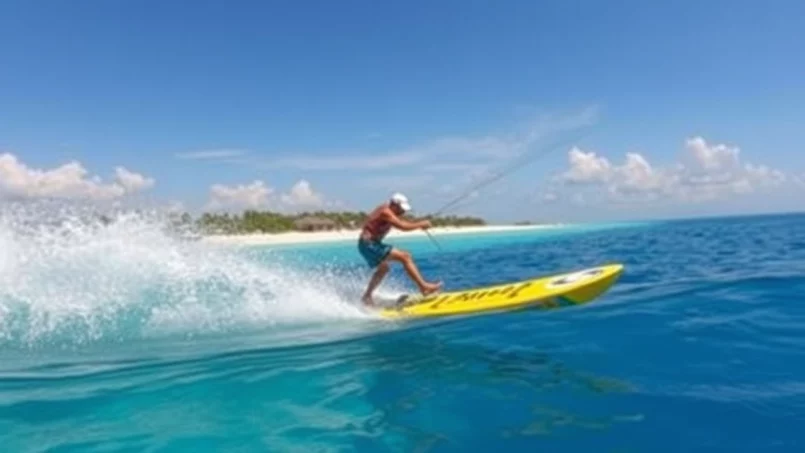
An archipelago of over forty islands situated between the Bahamas and the Dominican Republic, the Turks and Caicos Islands are often sold as a tropical postcard: white sand, turquoise water, almost permanent sunshine. But behind the image of leisure and relaxation lies a veritable sports playground, shaped by a massive coral reef, steady trade winds, shallow lagoons, and a vibrant maritime culture. Here, people come as much to get wet with water sports as to kick a ball, run on the sand, or sail on a traditional sloop.
The archipelago is divided into two groups: the Turks Islands and the Caicos Islands, separated by a deep channel. Providenciales (Provo) concentrates tourism and activities, Grand Turk welcomes cruise ships, while North, Middle, and South Caicos offer a wild ambiance with mangroves and deserted beaches. This diversity is reflected in the sports you can practice.
Water Sports: An Open-Air Paradise
It’s impossible to talk about the Turks and Caicos Islands without starting with the water. The coral reef – one of the largest in the Caribbean – stretches over 150 to 300 miles depending on the section. The waters are warm (approximately 73°F to 84°F year-round), extremely clear, with visibility often exceeding 100 feet. Add to this regular east-southeast trade winds, a limestone plateau with dramatic drop-offs, and hundreds of miles of lagoons and mangroves. The aquatic playground is immense.
Diving and Snorkeling: Exploring the Coral Reef
Scuba diving is one of the great classics of the archipelago. The country sits on a vast limestone plateau whose edges plunge abruptly into the abyss: this is what divers call “the walls”, where the bottom drops from about thirty feet to over 7,000 feet deep. Grand Turk, Salt Cay, West Caicos, French Cay, or Northwest Point off Providenciales are known by dive clubs worldwide for their vertiginous walls and encounters with reef sharks, turtles, eagle rays, and, in season, humpback whales.
Even without scuba gear, you can have an eye-popping experience. On Providenciales, two snorkeling spots are accessible directly from the beach: Bight Reef (Coral Gardens) and Smith’s Reef. The first, just a few fin kicks from the shore, offers a shallow reef teeming with tropical fish, while the second, more extensive, has different areas suited to various skill levels. Other beaches like Sapodilla Bay or Taylor Bay, with calm and shallow waters, are ideal for family snorkeling.
Boat excursions allow access to the offshore reefs of Grace Bay, such as Leeward Cut Reef, or sites like the West Caicos Marine National Park, French Cay, or the Northwest Point Marine National Park, renowned for their biodiversity and near-pristine coral condition.
A good number of dive and snorkel clubs – Big Blue Collective, Dive Provo, Provo Turtle Divers, Salt Cay Divers, among others – organize half-day or full-day trips, sometimes offering multi-day “liveaboard” packages on boats like the Turks & Caicos Explorer II. High-end resorts, such as Beaches Turks & Caicos on Grace Bay, often include snorkeling equipment in their packages, and even unlimited diving for certified divers.
Kayaking, Paddleboarding, and Eco-Tours in the Mangroves
Beyond the reefs, the other big stars are the mangroves and lagoons. The Caicos Islands concentrate immense wetland areas, particularly on the southern coasts of North, Middle, and East Caicos. Part of these environments is integrated into the Ramsar International Wetland Reserve and parks like the Princess Alexandra Nature Reserve or the East Bay Islands National Park.
Around Leeward, at the eastern end of Providenciales, the Princess Alexandra Nature Reserve, which includes Mangrove Cay, Donna Cay, Little Water Cay, and the Half Moon Bay lagoon, is ideal for exploration by kayak or stand-up paddleboard. From the Leeward Marina, you can easily access a labyrinth of shallow channels where you can observe juvenile lemon sharks, turtles, rays, conch, as well as rich birdlife including herons, egrets, flamingos, ospreys, and kingfishers.
Big Blue Collective, a local eco-adventure pioneer since 1997, has built its reputation on these small-group excursions. Its fleet of kayaks and paddleboards is one of the largest in the country, with more high-performance equipment than the basic vessels offered by most hotels. Their Kayak Eco Tours, lasting 3 to 4 hours, include a guide, equipment, snacks, and water, all with a strong conservation approach (small groups, biodegradable sunscreen requested from participants, less polluting 4-stroke engines, etc.).
Operators like Clear Kayak Adventures or Splash Kayak and Eco Adventures offer variations: clear kayaks to observe wildlife beneath the hull, sunset tours, tours focused on flora and fauna, or excursions to Little Water Cay, a sanctuary for the famous Turks and Caicos rock iguana.
The prices give an idea of the accessibility of these activities.
| Kayak / Paddle Activity (examples) | Typical Duration | Indicative Adult Rate* |
|---|---|---|
| Half Day Kayak Eco Tour (Big Blue Collective) | 3–4 hrs | ~US$115 |
| Full Day Snorkel / Kayak Adventure | ~6 hrs | ~US$225 |
| Clear Kayak Eco Tour (Clear Kayak Adventures) | ~2 hrs | Variable, similar |
Indicative amounts based on rate schedules mentioned in the research report.
These eco-tours are accessible to all levels, including families and seniors. Providers do emphasize a few basic rules: mandatory life jacket, hydration, sun protection, respect for wildlife (do not touch animals, do not collect shells or coral), caution with currents in the passes between cays and tidal variations in shallow areas.
Kiteboarding and Windsurfing: Long Bay, an “Open-Air School”
For board sports, the Turks and Caicos Islands rely on a major asset: a windy season of about ten months, from November to August, with dominant east-southeast winds frequently blowing between 12 and 20 mph, or more. This consistency, combined with shallow lagoons and sandy bottoms, makes the archipelago a particularly sought-after kiteboarding destination.
The heart of the kite scene is on Long Bay Beach, east of Providenciales. This three-mile-long beach, exposed to the trade winds, offers an amazingly shallow body of water: at low tide, the water is often waist-deep, and you can walk out nearly two miles offshore. Onshore or side-onshore winds, fine sand, no sharp reef, uniform water depth: all the conditions are perfect for beginners. At low tide, the water becomes almost perfectly flat, ideal for learning. At high tide, small ripples allow more advanced riders to have fun, and foil enthusiasts also find their groove here.
Number of hours of lessons typically needed to start kitesurfing independently on Providenciales’ beach.
The beaches around Providenciales offer other possibilities for experienced riders: Emerald Point and the northern cays (Half Moon Bay, Pine Cay, Water Cay) for downwinders and sheltered lagoons, Taylor Bay for the rare southwesterly winds, certain sectors of Grace Bay during northerly or westerly wind episodes, or the immense Caicos Banks along the southern coasts of North and Middle Caicos. South Caicos, more isolated, also offers several spots perfect for a few days of immersive kiteboarding, away from the crowds.
Equipment can be rented on-site by experienced riders, usually upon presentation of an IKO certification card. Rental rates are around US$200 per day for a full set, with weekly options. For lessons, hourly rates are roughly between US$150 and US$225 depending on the school and package.
Beyond kiting, the same trade winds benefit windsurfers. Historically, windsurfing was actually the first board sport to develop at Grace Bay in the late 1980s, driven by enthusiasts like Mike “Speedo” Rosati, a pioneer of local water sports teaching structures.
Sailing, Catamarans, and Maritime Culture
Sailing is more than just a leisure activity in the Turks and Caicos Islands: it’s an element of identity. Before the era of planes and ferries, the archipelago lived to the rhythm of the Caicos sloops, locally built wooden sailboats that would sail to Hispaniola to trade dried conch for goods, or to the Bahamas. Until the early 1980s, these boats were still at the heart of the island economy.
Today, the heritage endures thanks to the work of the Turks and Caicos Islands Sailing Association (TCISA), the national sailing body, recognized by World Sailing since 2014. Under the acronym “TCA”, young sailors now participate in youth world championships in the Laser (ILCA). The TCISA also organizes national championships and perpetuates iconic events like the Valentine’s regatta, featuring races of traditional model boats on Bambarra Beach in Middle Caicos.
On Providenciales, the Provo Sailing Club, and later the Provo Sailing Academy (PSA), have gradually built a fleet of dinghies (Olympic Lasers, Picos, Optimists, RS Zest) and Hobie Wave catamarans for learning and competition. Based at Bight Park, the PSA is recognized as an official school by the Royal Yachting Association and runs “learn-to-sail” and “learn-to-race” programs for children and adults, especially for youth from disadvantaged backgrounds with government financial support.
Companies like Sail Provo or Island Routes offer catamaran trips (half-day, full-day, or sunset) including snorkeling, island visits, barbecue, and open bar, at public rates that illustrate a relative accessibility.
| Type of Cruise (examples Sail Provo) | Duration | Main Inclusions | Indicative Adult Price |
|---|---|---|---|
| Half-Day Sail & Snorkel | ~4 hrs | Snorkeling + Little Water Cay visit | ~US$98 |
| Full Day | ~7 hrs | Multiple snorkel stops + remote islands | ~US$150 |
| Sunset Sail | ~3 hrs | Snorkeling + islet + sunset | ~US$72 |
| Private Charter (base) | ≥3 hrs | Custom itinerary | ~US$950 / 3 hrs |
From a purely nautical standpoint, the infrastructure is solid for a territory of this size: Blue Haven Marina, Turtle Cove Marina, Caicos Marina & Shipyard, South Side Marina, or Leeward Marina on Providenciales; Parrot Cay Marina for the private island of the same name; Grand Turk Cruise Center or Walkin Marina on Grand Turk. Several one-week to ten-day cruise itineraries are commonly offered, like the “Caicos loop” (Providenciales – West Caicos – South Caicos – East Caicos – Middle Caicos – North Caicos – back to Provo), or a circuit focused on humpback whale watching between French Cay, Salt Cay, and Grand Turk between January and April.
Other Water Sports: From Sportfishing to Water Parks
The deep waters bordering the limestone plateau make the Turks and Caicos Islands a major destination for sportfishing. Just minutes from marinas like Turtle Cove, South Bank, or Blue Haven, the sea quickly drops to several hundred or even thousands of feet, allowing anglers to target tuna (yellowfin, blackfin), marlin, sailfish, wahoo, mahi-mahi, or barracuda. Boats 40 to 60 feet long, often Hatteras, Bertram, or Viking models, take fishermen out for half-days, three-quarter days, or full days. Prices for private boats are around US$1,600 for a half-day of deep-sea fishing and up to about US$4,500 for an 8-hour day, excluding the 12% tourism tax.
On the shallows and reefs, bottom fishing targets snapper, grouper, and other reef species. The flats of the Caicos Bank and the protected lagoons, meanwhile, are the kingdom of the bonefish, an iconic species for tropical fly fishing. Specialized guides – Bonefish Unlimited, Talbot’s Adventures, Grand Slam, and others – take enthusiasts to the flats of Bottle Creek in North Caicos, Bell Sound in South Caicos, or the meanders of the Ramsar Nature Reserve. A fishing permit is mandatory, with daily, monthly, or annual options (a daily permit is mentioned around US$15).
For families, other water activities are on the agenda: kayaks and paddleboards provided by most resorts, water skiing, wakeboarding, and towed tubes (included in many all-inclusive packages), jet ski outings, parasailing over Grace Bay, glass-bottom boat tours… The giant Pirates Island water park at Beaches Turks & Caicos, with its 45,000 square feet, over 11 water slides, lazy river, surf simulator, and splash deck, attracts both children and teenagers.
Beach, Racquet, and Ball Sports
The Turks and Caicos Islands are not limited to water activities. The sand and resort facilities also serve as grounds for more traditional sports: volleyball, soccer, tennis, pickleball, basketball, etc.
Beach Volleyball: From Impromptu Games to Camps with Olympic Stars
With miles of near-perfect beaches, beach volleyball naturally finds its place in the local sports scene. On Grace Bay and other coves, many hotels set up temporary courts and organize matches among vacationers. But the activity has taken on a more professional dimension with the arrival of dedicated themed stays.
A striking example is the “luxury beach volleyball retreat” organized at Club Med on Grace Bay Beach: an 8-day / 7-night all-inclusive program where participants train daily with Olympic players or AVP (Association of Volleyball Professionals) pros. The typical itinerary alternates group technique clinics, free play sessions, various tournaments (Co-ed 4’s, King/Queen of the Beach, doubles, random draws with pros), and themed evenings. Rates start around US$3,699 all-inclusive, including airport transfers and on-site 24/7 support.
Among the coaches already announced for these types of stays are names from the international scene like Kerri Walsh Jennings, Miles Evans, Sean Rosenthal, Devon Newberry, or AL-B Hannemann. The program often also integrates typical excursions – snorkeling, paddleboarding, dinner at Da Conch Shack, a famous seafood restaurant – making it both a sports and tourist immersion.
Sports Travel Catalog
Concurrently, occasional events, like an announced beach volleyball match at The Strand on Grace Bay, punctuate the local calendar, although most of these gatherings remain more recreational than competitive.
Tennis, Basketball, Pickleball, and Racquet Sports
Most of the major resorts on Providenciales – The Palms, Grace Bay Club, Seven Stars, Shore Club at Long Bay, etc. – have tennis courts, sometimes lit for night play. Some, like Beaches Turks & Caicos, include day and night tennis in their packages, with rackets and balls provided.
Pickleball, a hybrid sport between tennis, badminton, and ping-pong, is gaining ground and is now among the racquet sports offered on a complimentary basis at some resorts. You’ll also find ping-pong tables, basketball courts, soccer (football) fields, and spaces for croquet, shuffleboard, or giant lawn chess. These land-based activities, often included in the all-inclusive offering, allow for variety between snorkeling or kiting sessions.
Soccer and Beach Soccer: A Structured Network
Soccer holds a central place in local sports life, well beyond resort fields. The Turks and Caicos Islands Football Association (TCIFA), founded in 1996 and affiliated with FIFA since 1998, manages the men’s and women’s national teams, organizes league championships, and deploys a major youth development program.
The premier soccer league of the Turks and Caicos Islands, an 11-a-side league played in the spring at the National Academy.
Includes several clubs based mainly in Providenciales: Academy Eagles, Beaches FC, Cheshire Hall, SWA Sharks, Teachers FC, Academy Falcons, Academy Jaguars, Flamingo FC, Full Physic FC, Grand Turk, etc.
Matches are held at the National Academy, located at Venetian Road Settlement, with a capacity of about 3,000 spectators.
Concurrently, a Women’s Football League brings together female players of all ages in the fall, while a Masters League is dedicated to those over 35. A men’s beach soccer league usually features four teams and is also played in the fall. The national beach soccer team even participated in the CONCACAF championships (qualifying tournament for the World Cup) in 2014 and 2017.
The TCIFA doesn’t just manage the elite: it oversees a genuine network of centers of excellence, regional academies, and youth leagues on Providenciales, Grand Turk, South Caicos, and North/Middle Caicos. It also provides equipment to schools and participates in integrating soccer into school programs, training about thirty new coaches and structuring a refereeing department with FIFA-certified officials.
For passing travelers, the impact of beach soccer mainly manifests through increased activity on community fields and the increasingly frequent presence of improvised pitches on the beaches, especially during local events.
Cricket: National Sport, Cultural Anchoring
Less visible than soccer to the tourist’s eye, cricket is nonetheless considered the national sport. Historically widely played in Grand Turk and South Caicos, with inter-school competitions and matches against visiting teams (including from the Royal Navy or New Zealand) as early as the 1980s, cricket later flourished in Providenciales due to immigration, to the point of seeing the birth of a league organized by the Providenciales Cricket Association.
The Turks and Caicos Cricket Association (TCICA), based in Grand Turk, represents the territory with the International Cricket Council (ICC) since 2002, within the ICC Americas region. The national team has participated several times in the ICC Americas Division 3 regional tournaments, winning a championship title in Argentina in 2008, which meant promotion to Division 2.
The association also does groundwork with youth, with cricket competitions in primary schools, training of umpires and scorers, and high-level clinics run by former West Indies stars – Chris Gayle and Keith Arthurton notably coached a session for about 200 students in 2009. Again, for the visitor, the experience comes from observing local league matches or friendly games, often played in a very convivial atmosphere.
Nature Activities and Land-Based Adventure Sports
While water and beaches monopolize attention, the interior of the islands and their wild coasts also offer playgrounds for hiking, cycling, running, or even horseback riding.
Hiking, Trail Running, and Exploring Wild Islands
On Middle Caicos, the famous Crossing Place Trail follows the limestone cliffs of Mudjin Harbour, Norbellis Cove, and Juniper Hole. A remnant of an ancient route linking villages, it now allows you to discover a spectacular coastline, pounded by Atlantic waves, with impressive views of the coral reef and neighboring islets. The most frequented section, near Conch Bar, is marked with ceramic markers.
On Providenciales, a more off-the-beaten-path trail leads from the Frenchman’s Creek Nature Reserve area to West Harbour Bluff, alternating wetlands, natural salt ponds, historical remnants (some dating back over six centuries), and small isolated beaches. This route serves cyclists as well as runners or hikers seeking solitude.
The more remote islands like West Caicos and East Caicos attract an even more adventurous crowd. Uninhabited West Caicos mixes steep cliffs, deserted beaches, dive reefs, old wharves and remnants of Yankee Town, and a nature reserve around Lake Catherine. Access is by boat, via custom charters from Providenciales. East Caicos, also uninhabited, offers wave-battered beaches, immense mangroves, and caves to explore.
Kayaking and Biking in Nature Reserves
Beyond pure gliding, the islands’ topography lends itself well to cycling and running. The estuaries and Caicos floodplains – especially within the Ramsar Nature Reserve – serve as a setting for longer kayak or SUP circuits, sometimes combined over several days with camping stops on isolated cays. Big Blue Collective, but also operators like Splash Kayak, organize this kind of “soft adventure” itinerary.
On South Caicos, sites like Jerry Camp or Plandon Cay Cut offer ideal kayaking routes in calm, lightly traveled waters. These areas, away from tourist circuits, make it easy to observe marine wildlife, including turtles, rays, and various seabirds.
Horseback Riding, Mountain Biking, ATV, and Other Activities
For a more direct connection with the landscape, horseback riding on the beach is very popular, notably with Provo Ponies, which offers rides of one to one and a half hours at Long Bay Beach, sometimes with hooves in the turquoise water. Other operators offer ATV excursions on Providenciales, buggy tours, or 4×4 trips to remote sites.
There is no shortage of cycling routes, particularly on the secondary roads of North and Middle Caicos, which are less traveled. Trail running enthusiasts can enjoy the sandy paths and drivable tracks around Frenchman’s Creek or the vicinity of Chalk Sound. Again, the conditions – heat, lack of shade, omnipresent salt water – require good preparation in terms of hydration, sun protection, and terrain reading.
Sporting Events, Regattas, and Popular Festivals
The Turks and Caicos Islands don’t just offer daily activities: they punctuate the year with a series of events where sport and tradition blend.
Regattas, Sloop Races, and Sea Festivals
The South Caicos Regatta – often called the Big South Regatta – is one of the country’s oldest festivals. Usually organized in late May in Cockburn Harbour, South Caicos, it mixes traditional sloop races, boat parades, beauty pageants, concerts, and beach events. The sloop, the iconic local sailboat, is king there: a few shipwrights still perpetuate the art of its construction for competitions and pleasure sailing.
Further north, the Valentine’s Day Cup, contested on Bambarra Beach in Middle Caicos on the Saturday closest to Valentine’s Day, features miniatures of these sloops. Small wooden models, rigged like their bigger brothers, compete in beach regattas where children and old sailors alike gather to perpetuate the tradition.
Several festivals punctuate the year, highlighting local maritime culture: Fisherman’s Day in South Caicos in August (conch diving contests and boat races), kite-flying competitions on Easter Monday on several islands, and the Conch Festival in Blue Hills (Providenciales) each fall, celebrating the iconic mollusk with culinary contests and musical entertainment.
Open Water Swimming and Charity Tournaments
Grace Bay isn’t just for sunbathing: it also hosts one of the region’s major open water swimming events, the Race for the Conch Eco-SeaSwim. Recognized by the World Open Water Swimming Association among the world’s top 100 open water swims, the event offers several distances – from 0.5 mile to 2.4 miles – as well as a kids’ race. The start is on the beach right in front of Rickie’s Flamingo Café, and the event highlights both performance and the ecological dimension.
Total prize amount in US dollars awarded during the Wine Cellar Golf & Fishing Tournament in the Turks and Caicos Islands.
When Music and Sports Intersect
Several major festivals, primarily musical or cultural, also incorporate sporting or recreational elements. The Turks & Caicos International Music Festival, organized in the summer on Providenciales, mixes concerts, beauty pageants, and sports activities. The CAICOS festival, another musical event, has also offered sports entertainment and charitable actions.
Maskanoo, a major street parade inspired by Junkanoo, held the day after Christmas along Grace Bay Road, features various entertainment where physical activities – from dancing to parading – are also a form of sport. As for New Year’s Eve, it transforms beaches into party grounds, with fireworks over Grace Bay and parties on anchored yachts.
Why the Turks and Caicos Islands Appeal to Athletes
What emerges from all these activities is the exceptional complementarity between the natural environment, infrastructure, and local culture.
Environmentally, the combination of coral reef + limestone plateau + mangroves + trade winds creates a rare cocktail: world-class diving, kite lagoons almost tailor-made for beginners, networks of channels perfect for kayaking, wild coasts for hiking, and preserved coastal landscapes. The 200,000 acres of protected areas, including the large Ramsar reserve, offer a grandiose and relatively intact playing field, provided a few rules are respected (no taking wildlife, coral-friendly sunscreen, caution with currents and boat traffic).
The Turks and Caicos Islands have prioritized high-end infrastructure to attract an affluent clientele and support high-level sport. This includes 5-star resorts, private villas, marinas for yachts over 200 feet, well-equipped dive clubs, and international kite schools. Furthermore, training centers labeled by world federations (soccer, sailing) and structures like the Sports Performance Center, associated with a medical clinic in Grace Bay, specifically aim to develop the performance of local athletes.
Finally, there is the human and cultural dimension: a Sailing Association fighting to preserve the sloop tradition, a Cricket Association keeping the national sport alive, a Football Association structuring academies and leagues across several islands, a Sports Commission funding athlete development, and a host of small operators – skippers, fishing guides, dive instructors – who daily transmit their connection to the sea.
The Turks and Caicos Islands offer a diversity of unique sporting activities, from kitesurfing and diving to beach sports and local encounters, all within an exceptional natural environment. The archipelago possesses a strong maritime culture and a growing awareness of the need to protect this unique ecosystem.
Disclaimer: The information provided on this website is for informational purposes only and does not constitute financial, legal, or professional advice. We encourage you to consult qualified experts before making any investment, real estate, or expatriation decisions. Although we strive to maintain up-to-date and accurate information, we do not guarantee the completeness, accuracy, or timeliness of the proposed content. As investment and expatriation involve risks, we disclaim any liability for potential losses or damages arising from the use of this site. Your use of this site confirms your acceptance of these terms and your understanding of the associated risks.

Cyril Jarnias is an independent expert in international wealth management with over 20 years of experience. As an expatriate himself, he is dedicated to helping individuals and business leaders build, protect, and pass on their wealth with complete peace of mind.
On his website, cyriljarnias.com, he shares his expertise on international real estate, offshore company formation, and expatriation.
Thanks to his expertise, he offers sound advice to optimize his clients' wealth management. Cyril Jarnias is also recognized for his appearances in many prestigious media outlets such as BFM Business, les Français de l’étranger, Le Figaro, Les Echos, and Mieux vivre votre argent, where he shares his knowledge and know-how in wealth management.





