
 Published on and written by Cyril Jarnias
Moving to Burundi from abroad means accepting a genuine change of lifestyle: a country in the Great Lakes region, still marked by a long civil war, yet driven by a culture of solidarity, a strong sense of community, and a deeply ingrained art of hospitality. Between Bujumbura, the large city on the shores of Lake Tanganyika, the high agricultural hills, and a dense network of associations, the country offers a daily life that is both disorienting and endearing for expatriates ready to adapt.
This guide covers essential procedures (visa, work), the cost of living, housing, health, education, safety, social life, cultural codes, and money management. Its goal is to provide a realistic foundation for preparing your project and avoiding unpleasant surprises on the ground.
Understanding the country and its economic capital
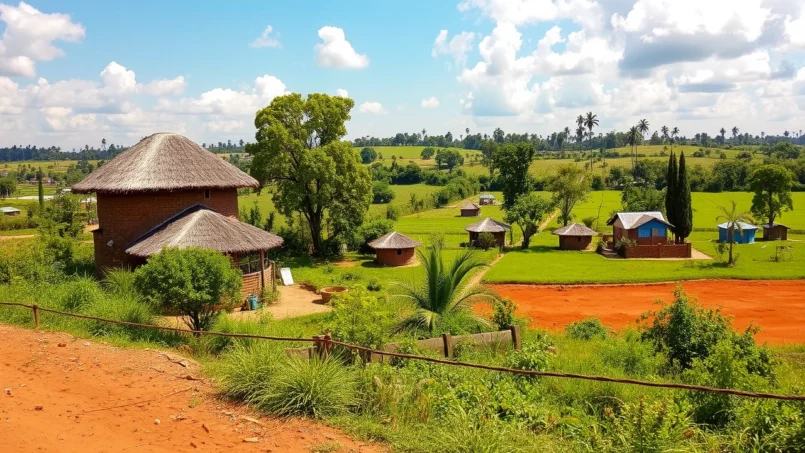
Burundi, officially the Republic of Burundi, is located in East Africa, in the Great Lakes region. It shares borders with the Democratic Republic of the Congo, Tanzania, and Rwanda. Its geography is dominated by mountains, a high plateau, deep valleys, and Lake Tanganyika, one of the continent’s largest and deepest lakes, with its beaches, cliffs, waterfalls, and hot springs.
Bujumbura, the main economic center and port of Burundi, has approximately 659,000 inhabitants.
The country is one of the most densely populated in Africa, with an estimated population of 10 to 14 million inhabitants depending on the source. The economy remains largely agricultural, dominated by coffee and tea, but also sugar, some of which is exported to European countries like the United Kingdom, Germany, or Switzerland.
Languages and cultural environment
Three languages structure daily life:
Burundi is a multilingual country where several languages coexist, each playing a specific role in social, administrative, and economic life.
The national language, omnipresent on the streets, in markets, and in basic administration.
The institutional working language, indispensable for most skilled positions.
Mainly used in commerce and certain urban neighborhoods.
English exists but remains marginal: only about 2% of speakers, mainly in certain business circles or urban youth. For an expatriate, having a good level of French and learning a few basics of Kirundi (greetings, thanks, polite expressions) radically changes the quality of interactions.
Burundian society is deeply communal. Extended families, clans, hill cooperatives (“Sangwe”), and professional or youth associations form a dense social fabric. Concepts like “ubumwe” (unity, solidarity) and the “ubuntu” philosophy (the interdependence of human beings) permeate relationships. Respect for elders, clear hierarchy in businesses, and a strong religious dimension (Christian majority, active Muslim minority, importance of traditional beliefs) structure behaviors.
Visas, work permits, and residence permits
Before considering a move, it is crucial to understand the visa and permit system in Burundi. Starting early helps avoid issues at the airport or illegal situations once on the ground.
Entering Burundi: Short-stay visas
Most foreigners need a visa to enter. Several options exist depending on profile and duration of stay.
Main types include:
– The visa on arrival, available at Melchior Ndadaye International Airport in Bujumbura and all land border posts for stays of up to one month (exact duration varies by nationality, sometimes 21 days for certain countries).
– The e-visa, an online application for stays up to 30 days, with an average processing time of 3 to 5 business days and the obligation to present a printed copy upon arrival.
– The visa issued by an embassy or consulate, particularly for planned business trips or certain profiles requiring prior authorization.
Nationals from neighboring countries in the East African Community (DRC, Kenya, Rwanda, Tanzania, Uganda, South Sudan) benefit from visa exemption for stays up to 90 days. Similar exemptions, from 30 to 90 days, also apply to holders of diplomatic or service passports from certain countries (Brazil, China, Russia, Singapore, Turkey).
The commonly requested documents are relatively standard: completed application form, recent passport photos, passport valid for at least six months, round-trip ticket or proof of onward travel, proof of accommodation reservation, and yellow fever vaccination certificate (theoretically mandatory for travelers from at-risk zones, but rarely checked in practice).
Working in Burundi: Work permit and long-stay visa
To engage in professional activity in Burundi, a tourist visa or a simple business visa is insufficient. Any foreigner intending to work must obtain an appropriate work permit and residence permit.
The general principle is: the position must not be fillable by a qualified Burundian citizen. Labor authorities often require the employer to demonstrate the lack of available local workforce (equivalent to a labor market test).
The key institutions are:
– The Directorate General of Migration and the General Commissariat for Migration, under the Ministry of Public Security.
– The Ministry of Public Service, Labor, and Employment.
The process unfolds in several steps:
1. Signing a contract with a legally registered entity in Burundi (NGO, company, UN agency, etc.), which agrees to act as the “sponsor”. 2. Work permit application file submitted by the employer to the competent authorities (Ministry of Labor, Migration). 3. Obtaining the work permit (generally valid for 1 to 2 years, sometimes 5 years for refugees, two years for certain technical positions). 4. Applying for a work visa at a Burundian embassy or consulate (or adjusting status if already in the country on a short-stay visa, depending on the case). 5. Applying for a residence permit within 15 days of entering the country.
Typically required documents
Even though each application is reviewed case by case, the following are almost always required:
To obtain a work permit, a foreigner must provide several documents, including a valid passport (with at least 6 months validity) and a copy, passport photos, a detailed employment contract outlining the role, salary, and duration, as well as a CV, diplomas, and certificates of experience. It is also necessary to attach a criminal record certificate from the country of origin (and possibly recent countries of residence), a medical certificate issued by an approved facility, a letter from the employer justifying the recruitment of a foreigner, proof of the employer’s registration (such as a trade register or tax ID), and the receipt for the application fee payment.
In many cases, documents must be in French or translated and, sometimes, legalized.
Costs, processing times, and validity
The available data provides general estimates.
| Type of Document | Indicative Cost Range | Typical Validity |
|---|---|---|
| Initial Work Permit | 200–500 USD or ~4% of annual salary | 1 to 2 years (5 years for refugees) |
| Work Permit Renewal | 200–500 USD | 1 to 2 years |
| Long-Stay Visa (non-work) | Varies by nationality | Often 1 year, renewable |
| Temporary Residence Permit | ~50,000 BIF (6 months) | 6 months |
| 1-Year Residence Permit | ~100,000 BIF | 1 year |
| Permanent Residence Permit | ~200,000 BIF | Long-term (strict conditions) |
Processing times vary significantly depending on the complexity of the application: for a work permit, processing typically takes 3 to 6 weeks, sometimes up to 12 weeks. For a long-stay visa, 1 to 4 weeks is a reasonable baseline. It is prudent to start the procedures at least one or two months before the desired start date.
Family and permits for dependents
A work permit holder can generally apply for a residence permit for their spouse and dependent children. These permits are linked to the validity of the main work permit and do not automatically grant work rights to the spouse. Applications typically include marriage or birth certificates, medical certificates, criminal record extracts, and proof of sufficient financial means.
Cost of living and expatriate budget
Compared to major Western cities, Burundi has a relatively low cost of living, but it remains very high when compared to local incomes. For an expatriate paid in foreign currency, things can seem affordable, provided certain expenses (notably housing, international schooling, and health) are anticipated.
General indicators
Burundi is ranked among the least expensive countries in the world in terms of overall cost of living: it is about 1.55 times cheaper than the global average. At the same time, GDP per capita is around 154 USD, life expectancy is 63.7 years, and the Human Freedom Index is 4.88, giving an idea of the general development level.
In Bujumbura, international comparisons show a paradoxical situation: the city is among the quarter of the cheapest cities in the world, but the cost of living is 8.4 times higher than the average local salary. In concrete terms, living on a local income can be very difficult, while an expatriate with an international salary retains a comfortable margin.
International Comparisons in Bujumbura
Typical budgets in Bujumbura
Estimates vary by source, but monthly spending ranges (including housing) can be outlined.
| Profile | “Average” Monthly Budget (USD) | Tight Budget (USD) | Comfort / High-End (USD) |
|---|---|---|---|
| Single person | 750–1,030 | ≈ 460 | ≈ 2,250 |
| Couple | ≈ 1,420 | ≈ 600–700 | ≈ 3,000+ |
| Family of 4 | 1,940–1,960 | ≈ 860 | ≈ 4,300 |
These estimates include housing, food, transport, and daily expenses, but not international schooling or air travel.
Salaries and local standard of living
Available data on salaries is very scattered, a sign of a dual labor market between low-paid local employees, NGO/UN staff, and expatriates.
| Indicator | Approximate Amount (USD/month) |
|---|---|
| Median net salary in Bujumbura | ≈ 89 |
| Average net salary (another source) | 468–598 |
| Average salary in Bujumbura Mairie | ≈ 172 (range 35–785) |
Even taking the highest figure, it remains well below the average monthly budget for a single person. This explains the strong income inequalities and the sometimes stark contrast between expatriate lifestyles and the situation of Burundian households.
Finding housing in Bujumbura: Neighborhoods, rents, and buying
Bujumbura is the preferred destination for expatriates. It hosts the majority of embassies, NGOs, international companies, and foreign schools. The housing market is highly segmented, ranging from simple small houses to high-end villas with gardens and security.
Rental price levels
Aggregated figures give a first idea of monthly costs.
| Type of Housing | Location | Average Rent (USD/month) |
|---|---|---|
| Studio/1 bedroom 40 m², standard | City center | ≈ 289–381 (sometimes more) |
| Studio/1 bedroom 40 m², economical | Various neighborhoods | ≈ 73–112 |
| Apartment, 3 bedrooms 80 m², center | City center | ≈ 482–703 (high variability) |
| Apartment, 3 bedrooms 80 m², outside center | Outskirts | ≈ 205–290 |
| Rent + utilities for 1 person | — | ≈ 244 |
| Rent + utilities for a family | — | ≈ 389 |
| Airbnb (median of 35 units) | — | ≈ 1,397 (698–3,859) |
These amounts reflect the diversity of the market. You can live relatively simply with a housing budget around 150–250 USD/month, but secure, well-located housing suitable for an expatriate family often approaches 500–1,000 USD/month, or more for high-end villas.
Buying property
Buying is possible for foreigners, but the process can be complex. Observed prices are around:
| Type of Property | Location | Average Purchase Price (USD/m²) |
|---|---|---|
| Apartment in city center | Bujumbura | ≈ 2,040–2,050 |
| House in outskirts / suburbs | Bujumbura / hills | ≈ 1,610–1,620 |
Transactions per square meter remain significantly lower than in major African capitals, but access to credit is limited and mortgage rates are around 14–14.3% for a fixed term of 20 years, which significantly increases financing costs.
Types of accommodation for initial settlement
For an initial stay, many expatriates opt for:
For a stay that’s more welcoming and practical than a hotel, choose a short-term rental in a guest house or aparthotel. These accommodations often offer a fully equipped kitchen, a washing machine, a terrace, and cleaning services. You can also book a furnished apartment or villa through platforms like Airbnb or Flatio, or through local agencies.
Typical properties illustrate the available range: fully equipped studios in the city center around €32–50 per night, small houses with a garden at €23–40 per night, high-end villas with a pool that can reach €200 or more per night. For a stay of several weeks, discounted rates are easily negotiable.
The neighborhoods most sought after by expatriates in Bujumbura are Rohero, Kiriri, Mutanga Sud, Kinindo, Kinanira, Zeimet, and Gihosha. They are appreciated for their relative safety, proximity to essential services, and for their views of Lake Tanganyika or the hills.
Managing your money: Currency, banking, and transfers
Burundi operates largely on cash. The official currency is the Burundian franc (BIF). However, the US dollar occupies a central place, particularly for:
– Hotel payments by non-residents
– Payment of certain major expenses (high-end rents, international schooling, specialized services)
– Saving in a currency with more stable value than the BIF
Dollar bills must be in very good condition, printed after 2009. Damaged or older bills are often rejected.
Access to banks and ATMs
Opening a bank account as a foreigner is possible but often cumbersome: they usually require a passport, residence permit, proof of local address, sometimes a letter from the employer. Procedures are in French and documents may need to be authenticated. Debit/credit cards or overdraft facilities are not standard for non-residents.
ATMs are rare in Burundi, mainly located in major banks in Bujumbura (Banque commerciale du Burundi, Ecobank, ICB Burundi, etc.). They don’t always accept foreign bank cards and only dispense Burundian francs (BIF). Their operation is often unreliable due to technical issues or lack of cash. Therefore, it’s strongly advised not to rely solely on local withdrawals. The best strategy is to arrive in the country with a reserve of foreign currency and to check in advance about international money transfer options.
There is an official exchange rate and a parallel market (“black market”) offering often more favorable rates, especially in certain neighborhoods of Bujumbura. Using this circuit carries risks (security, counterfeit bills, legality), and embassies generally recommend sticking to banks.
Specific banking products and mobile money
Some local banks target the diaspora or foreigners with specific products. For example, a “diaspora account” can be opened in BIF, USD, or EUR, with a minimum deposit of 20,000 BIF or 50 USD/EUR, interest payments (6% in BIF, 2% in USD), reduced transfer fees (0.5% instead of 1%), and no account maintenance fees. The account is accessible remotely via internet banking and can fund mobile wallets like Ecocash or Lumicash.
Mobile money is very developed and allows for bill payments and money transfers. For an expatriate, having a local phone line and a mobile money account facilitates small daily payments, provided one has a minimum command of French or Kirundi.
For international transfers, the usual big names exist (Western Union, MoneyGram, Wise, WorldRemit, CurrencyFair, etc.). Fees and exchange rates vary significantly, so it’s useful to compare and anticipate your needs.
Daily life: Food, transportation, and services
The daily life of an expatriate in Bujumbura will be very different depending on the desired comfort level, but some constants prevail: a reasonable but limited food supply for imported products, an unreliable public transport network, and very relative dependence on electricity.
Eating and grocery shopping
The diet relies heavily on local products: beans, corn, cassava, sweet potatoes, bananas, rice, various vegetables, and typical dishes like isombe (cassava leaves, beans, eggplant), ugali (cornmeal porridge), or lake fish (grilled tilapia, often served with plantains and rice). Bujumbura also offers some Indian, Chinese, Italian restaurants, and more westernized cafes.
Local markets provide fruits and vegetables at low prices, where bargaining is the norm. Supermarkets like Hypermet offer a range of imported products (cheese, wine, cereals, cosmetics), but at prices well above local standards.
To give an idea of prices:
| Product / Service (Bujumbura) | Approximate Average Price (USD) |
|---|---|
| Lunch, daily menu at a restaurant | ≈ 3.4 |
| Dinner for two (mid-range restaurant) | ≈ 27 |
| Fast-food type meal | ≈ 4.9 |
| Bottle of milk (1 L) | ≈ 1.1 |
| Bread (0.5 kg) | ≈ 1.35 |
| Rice (1 kg) | ≈ 1.55 |
| Eggs (12) | ≈ 3.1 |
| Chicken (1 kg) | ≈ 11.3 |
| Beer (0.5 L, supermarket) | ≈ 1.6 |
| Bottle of water (1 L) | ≈ 1.1 |
Vegetarians can manage thanks to the abundance of vegetables, but strict vegan options remain limited. Tap water is not potable: rely on bottled water or filtration systems.
Getting around: Car, taxi, bus, and motorbike
Traffic drives on the right. On paper, the driver must have an international driving permit and third-party insurance. In practice, roads are very uneven: some decent paved roads, but many deteriorated routes without markings or lighting, with numerous potholes, pedestrians, cyclists, and animals on the roadway. During the rainy season (especially February to May), landslides can cut off roads, and a 4×4 becomes essential off the main arteries.
The risk of accidents is high due to reckless drivers, poorly maintained vehicles, and a near-absence of organized emergency services. In case of an accident, if a hostile crowd gathers, the informal rule is to go directly to the nearest police station.
Public transportation (buses, minibuses, motorcycle taxis) is very cheap but overcrowded and dangerous. Many embassies advise their staff against using them. Taxis are safer provided you:
– Use a recommended company
– Negotiate the fare in advance (no meters)
– Avoid nighttime travel whenever possible
For an expatriate, renting or buying a car with a driver is often the most comfortable solution, especially at the beginning of the stay.
Electricity, internet, and telecommunications
Power outages are frequent, even in Bujumbura. Many upscale accommodations have generators and water tanks. For remote work, it is strategic to ensure that the accommodation has:
– an operational generator
– a water storage tank
– reliable internet access (fiber or 4G)
High-speed internet subscriptions are relatively expensive: offers around 44 to 67 USD per month for unlimited 50–60 Mbps can be found. A mobile line with 10 GB of data, on the other hand, costs very little, about 2.6 USD according to some records, but these official figures should be taken with caution.
SIM cards are easy to buy (airport, operator stores like Lumitel, Smart, Onatel), provided you show a passport or ID. eSIMs are still not widespread.
Health, hospitals, and insurance
For an expatriate, the question of health is central. The Burundian system combines public facilities, private clinics, and faith-based or NGO hospitals, with an overall level far below Western standards.
Organization of the health system
The country has over 500 first-level health centers, about thirty district hospitals, fifteen provincial hospitals, and a few major national hospitals, particularly in Bujumbura. Health priorities are combating malaria, tuberculosis, HIV/AIDS, and the rise of non-communicable diseases (diabetes, hypertension).
The main public hospitals in the capital are:
– The Kamenge University Hospital Center (CHUK), the reference university hospital
– The Bujumbura University Hospital Center (CHUB), over 500 beds
– Prince Regent Charles Hospital, a large public hospital with over 400 beds
– Prince Louis Rwagasore Clinic
– The Kamenge Military Hospital
– Various specialized centers (infectious diseases, blood transfusion, mental health, etc.)
The private health sector is developing with establishments like Kira Hospital, King Khaled Hospital, CMCK, and various specialized polyclinics. These facilities generally offer more modern equipment, better hygiene, and, in some cases, English-speaking staff.
Quality of care and the role of insurance
Overall, the quality of care remains far below what most expatriates are accustomed to. The main problems are:
– Lack of equipment and medications, especially outside the capital
– Sometimes insufficient hygiene and sterilization
– Long waiting times in public facilities
– Limited access to specialists and certain diagnostic techniques (imaging, advanced oncology)
In this context, international health insurance with medical evacuation coverage is essential. In case of serious illness or major trauma, it is common to organize a transfer to a better-equipped neighboring country or to Europe.
Hospitals generally require payment in cash and in advance. Bank cards are almost never accepted, and direct billing to insurance companies is rare. Therefore, you must plan for a reserve of cash or an arrangement for an advance on fees through the insurer.
Vaccines and health risks
Entry to Burundi is officially subject to presenting a yellow fever vaccination certificate for travelers coming from endemic countries or having transited through them, even though checks are inconsistent.
Recommended vaccinations include, depending on profiles:
– Hepatitis A and B
– Typhoid fever
– Meningitis (the country is in the “meningitis belt”)
– Rabies (especially for extended stays or people in contact with animals)
– Basic vaccines up to date (tetanus, diphtheria, pertussis, polio, measles, mumps, rubella, varicella, flu, pneumococcus)
Malaria is endemic and represents a major risk, as do other mosquito-borne diseases (dengue, chikungunya, Zika). Anti-malarial chemoprophylaxis is strongly advised for new arrivals, combined with standard measures: insecticide-treated bed nets, repellents, covering clothing in the evening, air conditioning or a fan in the bedroom. Pregnant women are particularly exposed to Zika risk and should seriously discuss with a doctor before deciding on a long-term stay.
Surface water (lakes, rivers) exposes you to bilharzia (schistosomiasis): it is recommended to avoid swimming in fresh water. Even in Lake Tanganyika, the combination of biological risks and animals (hippos, crocodiles in certain areas) calls for caution.
Schooling and education for expatriate children
The Burundian public education system suffers from a lack of resources, overcrowded classrooms, teacher shortages, and low enrollment rates through secondary school. The overall literacy rate is slightly below 60%. Education is theoretically compulsory for six years (from CP to the end of primary school), but implementation is incomplete.
For expatriate families, the most logical solution remains the international schools in Bujumbura or Gitega, despite costs that are very high by local standards.
Overview of international schools
Several major institutions can be found:
An overview of the main international education institutions in Burundi, offering various curriculum programs and pedagogical approaches.
A Christian, English-speaking school in Bujumbura, accredited by Pearson Edexcel. Follows the British curriculum (iPrimary to A-levels) for students aged 18 months to 18 years.
In Bujumbura, follows the Belgian curriculum (Wallonia-Brussels). Emphasizes French, English, and computer science. About 350 students of 20 nationalities.
Program aligned with American standards. Organizes community events like charity runs and spring balls.
A co-educational, Christian, English-speaking boarding school in Gitega for middle and high school students. Focused on leadership and academic excellence.
An expanding network with a learner-centered curriculum. Over 1000 students from several countries, celebrating diversity through cultural events.
Tuition fees vary by grade level, but an estimate is available for an international primary school: around 10,500 USD per year per child. Additional costs include enrollment fees, uniforms, school transport, and activities.
Cost and trade-offs
For a family of four with two children in international schools, schooling quickly becomes the largest expense, well ahead of housing and food. Some NGOs and UN agencies provide partial or full coverage of these costs: it is crucial to factor this into contract negotiations.
Distance learning or hybrid schooling are possible alternatives, but they require strong parental involvement and access to appropriate educational resources.
Safety, risks, and behaviors to adopt
Any move to Burundi must be prepared with a real awareness of the security context. Major Western countries maintain high-level travel advisories, sometimes recommending avoiding certain areas or non-essential travel.
Main risks
The risks exist on several levels:
The country presents several major risks: political instability marked by violence, partisan youth (Imbonerakure), and polarized elections; high crime rates in urban centers like Bujumbura (theft, assault, grenade attacks); sensitive border areas, particularly near the DRC (Cibitoke, Bubanza), where armed groups operate; and a terrorist threat, although rare, which remains present with identified potential targets.
Concretely, most serious incidents affect the local population rather than expatriates, but the latter are still perceived as relatively wealthy and can be targets for opportunistic theft or kidnapping.
Good daily security practices
A few basic rules appear in most recommendations:
For a safe stay, it’s crucial to avoid walking alone at night, especially in Bujumbura, and to limit road travel outside of cities after dark. Choose accommodation with security measures (perimeter wall, security guard, solid doors). Keep a photocopy of your ID on you, leaving the originals in a safe place. Avoid displaying valuables and be discreet, both regarding sensitive political topics and when photographing official, military, or strategic sites.
The visible, armed police and military presence (with Kalashnikovs slung over shoulders) can be surprising but is not unusual. Road checkpoints are frequent, sometimes involving harassment or corruption. Staying calm, polite, showing your papers, and, whenever possible, being accompanied by a Burundian colleague often facilitates interactions.
For LGBT+ individuals, particular vigilance must be added: same-sex relationships are penalized by law, social acceptance is low, and cases of targeted arrests or violence have been reported. Discretion is advised.
Succeeding in your expatriation to Burundi doesn’t rely solely on physical safety or material aspects. Cultural integration, respect for customs, and the ability to read between the lines are just as important.
Social relations and hierarchy
Society and the workplace are marked by a clear hierarchy. You greet the oldest or highest-ranking person first. Elders are considered holders of wisdom and should be treated with great deference. In a company, decisions are generally made at the top, and bypassing your direct superior to address a higher level is frowned upon.
Greetings are an essential ritual and it’s not proper to jump straight into business. A handshake, sometimes done with two hands or accompanied by placing the left hand on the right forearm, is the norm. Between close people, it may turn into a light hug. It’s also customary to ask about health, family, or loved ones before addressing the main topic of discussion.
The communication style favors harmony and avoiding open conflict. Saying “no” directly is rare; refusals often take the form of vague responses or polite phrases. For an expatriate, learning to read between the lines, observe non-verbal language (tone, silences, glances), and accepting that not everything is said explicitly is part of the adaptation process.
Work and business
Building a personal relationship of trust is often a prerequisite before seriously addressing professional matters. Initial meetings may serve to get to know each other better over coffee or a meal, talking about family, background, perspectives, rather than signing contracts immediately.
Negotiations are often slow and rely on many informal exchanges. It’s advisable to be patient, steady, and consistent, avoiding trying to impose a pace seen as too rushed. Furthermore, respecting formalities is crucial: the correct use of titles and polite phrases is particularly important, especially when addressing managers or government representatives.
Offering a small symbolic gift after a successful collaboration is welcome, but expensive or flashy gifts can be interpreted as bribery.
The expatriate community remains modest in size but fairly cosmopolitan, driven by the presence of many NGOs, UN agencies, and a few companies. Networks like InterNations facilitate meetings, with monthly events, interest groups, and online forums.
Hotels, cafes, and beach clubs on the lake (Saga Beach, Kajaga, clubs like Bora Bora) serve as social hubs for both affluent Burundians and expats. Water skiing, sailing, kayaking, paddleboarding, or freshwater diving are practiced there during the dry season, while swimming remains discouraged in certain areas due to health risks and wildlife.
To hike in national parks (Rusizi, Kibira), at the Karera Falls, and in the surrounding hills, it is imperative to use serious guides and follow safety recommendations.
Religion occupies a central place. About two-thirds of the population is Christian (predominantly Catholic), nearly a tenth is Muslim, and a significant portion remains attached to traditional beliefs (animism, ancestor worship, sanctity of cattle). Sundays and major religious holidays are reserved for worship and family: scheduling a business meeting on these days is very inappropriate.
During domestic invitations, the dimension of hospitality is strong. Drinks (banana beer, local beverages) and food are readily offered. Flatly refusing an offer can be perceived as offensive; it is more polite to accept at least symbolically.
Dress should remain modest, especially in rural areas and places of worship: covered shoulders and knees, no transparent or tight-fitting clothing. In Bujumbura, Western attire is common but generally remains sober.
Should you move to Burundi?
Moving to Burundi as an expatriate is far from a neutral project. The challenges are numerous: fragile infrastructure, limited healthcare system, shifting political and security context, sometimes opaque legal framework, potential isolation. The country ranks very low in international rankings on quality of life and human development.
To get the most enrichment from your stay, it’s essential to arrive with a solid professional project (NGO contract, UN mission, job in agribusiness, logistics, telecoms, or a social/educational project), good preparation, and genuine curiosity for the local culture. The intensity of social bonds, the sense of community, the creativity of associative initiatives, and the beauty of the landscapes are major assets that often lead foreigners to extend their initial mission.
The key lies in a clear-sighted approach: secure your contract, health insurance, budget, schooling, and housing before arrival, research the country’s realities, be willing to learn French and Kirundi, and rely on local networks rather than staying in a closed expatriate bubble. Under these conditions, settling in Burundi can become, despite the constraints, a genuinely unique human and professional adventure.
Disclaimer: The information provided on this website is for informational purposes only and does not constitute financial, legal, or professional advice. We encourage you to consult qualified experts before making any investment, real estate, or expatriation decisions. Although we strive to maintain up-to-date and accurate information, we do not guarantee the completeness, accuracy, or timeliness of the proposed content. As investment and expatriation involve risks, we disclaim any liability for potential losses or damages arising from the use of this site. Your use of this site confirms your acceptance of these terms and your understanding of the associated risks.

Cyril Jarnias is an independent expert in international wealth management with over 20 years of experience. As an expatriate himself, he is dedicated to helping individuals and business leaders build, protect, and pass on their wealth with complete peace of mind.
On his website, cyriljarnias.com, he shares his expertise on international real estate, offshore company formation, and expatriation.
Thanks to his expertise, he offers sound advice to optimize his clients' wealth management. Cyril Jarnias is also recognized for his appearances in many prestigious media outlets such as BFM Business, les Français de l’étranger, Le Figaro, Les Echos, and Mieux vivre votre argent, where he shares his knowledge and know-how in wealth management.





