
 Published on and written by Cyril Jarnias
Moving to Micronesia to study isn’t just a change of campus: it’s stepping into an archipelago of over 600 islands in the heart of the Pacific, between the Philippines and Hawaii, where the ocean sets the pace of daily life and where university exists alongside UNESCO World Heritage sites. Beyond this postcard image, the country has built a compact but solid higher education system, well-connected to the United States and other Pacific islands, with a relatively affordable cost of living for an international student.
This article details the practical aspects (institutions, costs, visas, health insurance) and living conditions for studying in Micronesia. It also highlights career prospects and the region’s strategic role in specialized fields like the environment, marine sciences, and technology.
Understanding the Context: A Pacific Island Nation
Pursuing higher education in Micronesia first means accepting a very unique setting. The country, officially the Federated States of Micronesia (FSM), stretches nearly 2,700 kilometers between its westernmost and easternmost islands, with a total land area of only 702 km². There are over 600 islands, 74 of which are inhabited, spread across four states: Yap, Chuuk, Pohnpei, and Kosrae.
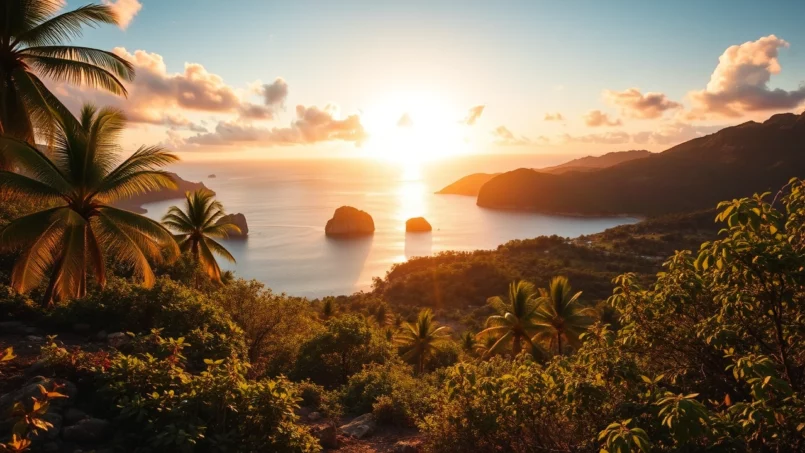
The political capital, Palikir, is located on the island of Pohnpei, which also hosts Kolonia, a major commercial center. This territory belongs to the broader geographical region of Micronesia, bordering Polynesia to the east and Melanesia to the south. The ocean is omnipresent, with its coral reefs, lagoons, World War II wrecks, and the ancient city of Nan Madol, a UNESCO World Heritage site.
The climate is tropical marine: hot and humid year-round, with a wetter season roughly between May and October and a relatively drier season from November to April. The islands are exposed to the effects of the ENSO oscillation (El Niño/La Niña), cyclones, droughts, and rising sea levels. This environment makes Micronesia a real-world laboratory for students in climate, environment, oceanography, or marine resource management.
The population is young (approximately 56% of residents are under 25) and numbers between 104,000 and 112,000 people. Society is heavily based on collectivism, cooperation, and community harmony. These values also permeate student life: mutual aid, close relationships with teachers, and the importance of family and customary networks.
The Higher Education System in Micronesia
The higher education system of the Federated States of Micronesia is intentionally compact: one main public institution, close ties with neighboring institutions (Guam, Marshall Islands, Palau, etc.), and strong alignment with the American educational system.
The Central Role of the College of Micronesia-FSM
The key player is the College of Micronesia-FSM (COM-FSM). It is a public college, akin to an American community college, English-speaking, which mainly awards associate degrees (2-year programs) and professional certificates, along with two bachelor’s degree programs.
Its history dates back to 1963, with the establishment of the Micronesian Teacher Education Center by the Trust Territory of the Pacific Islands and the University of Hawaii. Becoming the Community College of Micronesia in 1970, it was integrated in 1978 into a regional system (College of Micronesia) that also included a vocational school in Palau and a nursing school in Saipan. In 1992, a national law transformed COM-FSM into a national public corporation; autonomy became effective in 1993. Since 1999, it has also managed the FSM Fisheries & Maritime Institute in Yap.
The institution is now an autonomous national college, governed by a Board of Regents. The national campus is based in Palikir (Pohnpei), and state campuses exist at:
– Kolonia (Pohnpei Campus)
– Weno (Chuuk Campus)
– Tofol (Kosrae Campus)
– Colonia (Yap Campus)
– plus the FSM Fisheries & Maritime Institute in Yap
Instruction is in English, and the institution champions a “learner-centered” mission: priority is given to individual support, practical skills, and the development of Micronesia.
In terms of quality, COM-FSM is accredited by the Accrediting Commission for Community and Junior Colleges (ACCJC), an agency under the Western Association of Schools and Colleges (WASC). After being placed on “Warning” status in 2004, accreditation was reaffirmed in 2005, providing reassurance about the compliance of its degrees with American standards.
Among the programs offered are: notably
Discover the main training areas and academic programs offered.
Associate in Computer Information Systems, certificates in computer security, networks, and Associate in Telecommunications Technology.
Business Administration, management programs, and public service tracks.
Teacher training and a bachelor’s degree in Elementary Education.
Public Health, a nursing program (subject to approval), and community health projects.
Agriculture and Natural Resources, and programs in marine and environmental sciences.
Liberal Arts and Micronesian Studies (history, culture, economy, public policy).
Certificates in carpentry, masonry, law enforcement, maritime trades, etc.
The Pohnpei campus is particularly noted for its well-equipped computer labs, its cybersecurity and network labs, and a degree in information systems.
A Broader Regional Offer in the Pacific
Even if the heart of studies in Micronesia is at COM-FSM, many educational paths combine this college with other regional institutions:
Year of initial accreditation for the University of Guam by the WASC Senior College and University Commission.
Students can thus start with an associate degree at COM-FSM and then transfer to a university like UOG or an American institution, thanks to articulation agreements that facilitate credit recognition.
A System Aligned with the American Model
The entire school system (K-12) is modeled on the American system, with English as the language of instruction. The literacy rate for 15-24 year-olds is close to 99%, and national law mandates programs for gifted students and for children with disabilities until the end of high school or age 21.
For an international student, this means:
– course formats, credits, and degrees very comparable to those in the United States;
– opportunities to transfer to American or regional universities;
– an English-speaking environment, including in administration and daily life.
Cost of Studies and Living: A Competitive Advantage
One of Micronesia’s main advantages for international students is its relatively low cost level compared to many Western destinations, even though some expense items remain high due to geographical isolation.
Tuition Fees
Tuition fees at Micronesian public institutions are generally considered moderate:
| Type of Fee | Indicative Level |
|---|---|
| Annual public university fees for internationals | Approximately 2,000 to 4,000 USD |
| Enrollment fees at Palau Community College (example) | Approximately 3,730 USD (resident rate) |
For an international student, even taking the upper range, these amounts remain well below those of many North American, Australian, or European universities.
Additional one-time registration fees, lab costs, library or student service fees may apply, but the order of magnitude remains accessible compared to other English-speaking destinations.
Cost of Living for a Student
Estimates vary by source and lifestyle, but available data provides a general range:
| Profile | Estimated Monthly Cost (excluding tuition) |
|---|---|
| Average student | Approximately 680 to 1,000 USD |
| Single person with average consumption | 930 to 1,000 USD (sometimes excluding rent) |
| Solo nomad or expat in Pohnpei | 898 to 2,390 USD (depending on comfort level, with or without rent) |
The diversity in figures stems from differences in lifestyle (local vs. “expat”), type of housing, and degree of consumption of imported goods. For a student living simply, combining student housing or shared accommodation, home cooking, and local practices, a budget of around 700 to 1,200 USD per month is a realistic baseline.
Housing: From Dorms to Private Apartments
Housing options include:
COM-FSM offers three main housing options for students. On-campus dormitories are the most convenient and often cheapest option, with Wi-Fi access, ideal for a first year. Host families offer more intense cultural immersion, sometimes with meals included, but rates vary. Finally, rental apartments, in town or on the outskirts, are often basically furnished with a fridge, stove, and washing machine.
The price ranges for private rentals are as follows:
| Type of Housing | Monthly Rent Range (USD) |
|---|---|
| Single room in shared accommodation / basic studio | 120 to 300 USD |
| Furnished studio (45 m²) | Approximately 400 USD |
| 1-bedroom apartment (outside city center) | 180 to 710 USD |
| 1-bedroom apartment (city center) | 700 to 1,200 USD |
| “Nice” 1-bedroom (expat profile) | 500 to 1,000 USD |
| “Nice” 2-bedroom (expat profile) | 800 to 1,500 USD |
On Pohnpei, the average for a 1-bedroom is around 500 USD. For students, campus residences or small rentals near the university are generally the most economical.
Food, Transportation, and Other Expenses
Food is a dual-sided expense: imported goods and Western-style dining are expensive, while local products (fish, root vegetables, certain fruits) remain affordable.
As an indication:
The price of a dozen eggs in the United States is over 7 USD.
For transportation, buses are limited, taxis are relatively affordable in town (about 1 USD for a local trip or slightly more depending on distance), but inter-island connections are expensive (plane or boat, plus sometimes departure taxes of 15–20 USD per island). Renting a car often becomes the most practical solution in the medium term.
Regarding utilities and communications:
– electricity, water, waste bills: often between 50 and 150 USD per month depending on the size of the accommodation and usage;
– mobile plan with data: around 30 USD;
– high-speed internet: can climb to over 100 USD, or even more depending on offers and bandwidth.
Overall, the cost of living remains lower than in many Western capitals, but dependence on imports drives up some prices (processed food, electronics, internet). Therefore, careful budget planning is essential.
Admission Conditions, Visas, and Administrative Procedures
Studying in Micronesia involves navigating a particular legal system: on one hand, the national rules of the FSM, on the other, the specifics of the compacts of free association with the United States, not to mention the specific requirements of each institution.
Academic Admission
Universities and colleges apply entry criteria for international students similar to those for nationals: equivalent academic level, sufficient command of English (language of instruction), certified academic records. Institutions require that:
– diplomas and transcripts be duly attested by recognized authorities;
– the candidate has not previously been expelled from a Micronesian institution;
– the candidate has not already received another scholarship from the same institution, when applying for financial aid.
COM-FSM, for example, may accept transfer credits from American universities, facilitating incoming and outgoing mobility.
Visas and Study Permits
For most nationalities, Micronesia applies a short-stay visa-free regime (generally 30 days, extendable to 60), but for a study stay, a student residence permit is required beyond one month.
The conditions generally required for a study authorization include:
– a letter of acceptance into a full-time program at a recognized institution;
– proof of sufficient resources to cover studies and daily living;
– payment or pre-payment of tuition fees;
– subscription to adequate medical insurance;
– demonstration of intent to return to the home country upon completion of studies (in some cases).
Procedures must be planned ahead, as air connections are limited and administrative delays can be lengthy. For stays of less than 30 days (summer schools, short programs), a simple visitor’s permit may suffice, but it is necessary to check case by case.
U.S. citizens benefit, under the Compact of Free Association, from a special status: they can live, work, and study in Micronesia without a visa, with just a valid U.S. passport and local immigration and customs forms. Other nationalities (Marshallese, Palauan) also have special arrangements.
Health Insurance and Medical Requirements
Authorities and universities strongly advise, or even require, international health insurance covering:
Essential coverage for traveling with peace of mind, including medical protection, assistance, and liability.
Coverage for hospital care and outpatient consultations during your stay.
Coverage for medical evacuation and medical repatriation expenses (to Guam, Hawaii, or other countries).
Civil liability, accident coverage, and possibly protection for luggage and personal effects.
The Micronesian health system relies on public hospitals in each state (Pohnpei State Hospital being the best equipped), a few private clinics (including Genesis Hospital in Kolonia), and numerous frontline structures. Resources remain limited: a shortage of specialists, incomplete equipment, frequent reliance on medical evacuations for serious cases. In this context, having coverage that includes emergency evacuation is not a luxury, but a basic precaution.
There is a national insurance scheme, MiCare, primarily intended for residents (civil servants, private employees, local students), but for an international student, turning to insurers like Allianz, Cigna, GeoBlue, or VUMI is often recommended.
Regarding prevention, vaccinations such as hepatitis A and typhoid are generally advised, and it is recommended to inquire about local risks (vector-borne diseases, water quality, etc.).
Financial Aid and Scholarships: An Evolving Ecosystem
Even though Micronesia is not yet a global hub for study scholarships, several programs exist, particularly for students from the Pacific region, environmental fields, and programs involving a stay in Micronesia or a partner institution.
Local and Regional Aid
The most common sources of funding for studies in Micronesia or from Micronesia include:
– U.S. Federal Aid for certain categories of residents or citizens, under the compacts of free association.
– Scholarships from the Commonwealth of the Northern Mariana Islands, sometimes accessible to students from the region.
– Grants from environmental organizations (Coral Reef Alliance, UNESCO, etc.) for conservation, climate adaptation, or marine research projects.
The Micronesian government allocates nearly 18.6% of its public spending to education and awards scholarships each year to deserving students, including foreigners, based on specific academic and administrative criteria (non-cumulation with other local scholarships, validation by authorities of the home country, etc.).
Environment and Conservation-Oriented Scholarships
As Micronesia is on the front line of climate change, several regional scholarships specifically target students interested in natural resource management, biodiversity, and climate:
Two major scholarships support students from the Micronesia region. The Bill Raynor Micronesia Challenge (BRMC) Scholarship funds master’s or doctoral degrees in resource management, conservation, or sustainable development at universities in the Pacific or the United States, for students from FSM, Palau, Marshall Islands, Guam, and CNMI, with a requirement of involvement in the conservation sector. The Sophia-APIC-BRMC Scholarship offers a fully funded two-year master’s degree in Japan for graduates from FSM, Palau, or the Marshall Islands, covering all expenses in exchange for a commitment to work in their home country for at least two years after studies.
These programs do not directly fund COM-FSM fees, but they are part of a regional study trajectory in which Micronesia plays a central role, especially for students from the area.
Other Opportunities Related to Micronesia
Other programs target Micronesian nationals to help them pursue higher education in the region:
Total amount in USD of the Rotary District 2750 scholarship for the last two years of a bachelor’s degree at the University of Guam.
For a foreign student wishing to study “in Micronesia,” these programs mainly show that the region benefits from a structured scholarship ecosystem centered on Pacific issues: environment, community leadership, marine sciences, etc. A common strategy is to combine:
– a short cycle or the start of a program at COM-FSM (or an exchange stay);
– then pursuing studies at a partner university (Guam, Japan, Australia, United States) thanks to a regional scholarship.
Student Life and Cultural Immersion
Studying in Micronesia also means daily life in a society where traditional knowledge (star navigation, canoe building, subsistence agriculture, local medicine) still holds an important place. Campuses are small, with small cohorts and a teacher-student relationship often more friendly than in large Western universities.
Languages, Cultures, and Social Practices
English is commonly used for teaching, administration, and commerce, but each state has its own local language(s) (Chuukese, Pohnpeian, Yapese, Kosraean, etc.). For a foreign student, learning a few words of the local language is a sign of respect greatly appreciated and facilitates integration.
Values of respect, modesty, and cooperation are reflected in daily life. Dress codes are rather conservative, especially off-campus: covering shoulders and knees is often advised, particularly in villages or during customary events.
Traditional festivals (like the Yap Day Festival), dances, songs, ceremonies around sakau/kava, and artisanal practices (weaving, canoe building) offer opportunities for cultural immersion. Students can also participate in workshops, community projects, or university clubs focused on local culture.
Infrastructure and Student Services
COM-FSM offers various services:
– Library with access to online databases, essential for academic research despite geographical remoteness.
– Student residences with Wi-Fi on some campuses, enabling a structured campus life.
– Counseling and student health services, including free psychological support sessions.
– Career guidance, with help for orientation, internships, employability workshops.
Internet access can be uneven across islands, despite initiatives like partnerships with technology actors (e.g., collaborations around satellite networks) aimed at improving connectivity.
Safety, Health, and Environmental Risks
Violent crime remains generally low, but some more populated areas (like parts of Chuuk) may experience petty crime issues (theft, burglary). Simple precautions are therefore recommended: avoid moving alone at night in sensitive areas, do not display valuables, lock accommodations.
Environmentally, Micronesia is exposed to typhoons, floods, landslides, and droughts. Campuses and local authorities are accustomed to these risks and have emergency plans, but a foreign student must stay informed of instructions during cyclone season.
Finally, distance from major medical centers requires planning ahead: bring sufficient quantities of chronic medications, check medical evacuation clauses in insurance, inquire about reference hospitals on your island and emergency procedures.
Career Prospects and Opportunities After Studies
Micronesia is not a large industrial economy, but it offers specific opportunities in certain sectors: education, public health, environment, tourism, fisheries, public administration, and increasingly, information technology.
A Narrow but Targeted Job Market
With a GDP of about 330 million dollars and an economy dominated by services (nearly 67% of GDP), administration, fishing, and often subsistence agriculture, the job market remains limited and competitive, with a non-negligible unemployment rate.
Sectors where skills are in demand are:
– Education: teachers, trainers, educational program managers (COM-FSM and state education departments regularly recruit).
– Health and public health: nurses, community health workers, prevention program managers.
– Environment and natural resources: protected area management, marine conservation, projects related to the Micronesia Challenge initiative.
– Tourism and hospitality: guides, hotel staff, organizers of nautical activities (diving, snorkeling, ecotourism).
– Public service and NGOs: administration, project coordination, public policy (particularly in water, sanitation, energy, climate).
For a foreign student, obtaining long-term employment generally requires specialized skills (health, engineering, ICT, etc.) and an employer willing to sponsor a work permit. U.S. citizens, although free to work without a visa, still face competition from the local workforce.
Technology and Digital: A Growing Lever
Even if Micronesia is not yet a global “tech hub”, the Pacific Island region is seeing the emergence of a technology sector supported by international investments, connectivity initiatives, and training programs. COM-FSM plays a key role with its programs in information systems, cybersecurity, networks, and telecommunications.
Technologies permeate several areas:
– modernization of administrations and financial services;
– improvement of telecommunication networks in isolated islands;
– environmental and climate monitoring tools;
– digital services related to tourism and maritime logistics.
For a computer science student at COM-FSM, combining training with internships or further studies at the University of Guam, an American or Asian institution, opens the way to hybrid careers. These paths can lead to positions such as IT expert specializing in island environments, e-governance consultant, or network engineer for remote areas.
Studies in Micronesia, International Career
The major asset of a program in Micronesia lies in its compatibility with the American system and the FSM’s integration into regional networks. Since 2021, the country has been a member of the Western Interstate Commission for Higher Education (WICHE), a consortium that facilitates student mobility and allows for fee reductions at universities in the western United States.
A decisive advance occurred with the adoption in the United States of a provision (effective summer 2024) prohibiting charging fees higher than “in-state” tuition to citizens of the FSM, Palau, and the Marshall Islands at American public institutions. In concrete terms, a Micronesian student trained at COM-FSM can pursue studies in the United States paying the same fees as a local resident, enhancing Micronesia’s appeal as a starting point for an international academic trajectory.
For a foreign student, studying on-site therefore also offers the possibility to build networks in the Pacific and position oneself in globalized themes (climate, oceans, public health, technology in small island states) highly valued in international institutions, NGOs, and research programs.
Why Choose Micronesia for Studying Abroad?
At the end of this overview, several strong arguments emerge in favor of a higher education project “in Micronesia“:
1. An academic environment aligned with American standards, but on a human scale, with tuition fees and overall cost of living generally lower than many English-speaking destinations.
2. A natural specialization in marine, environmental, and climate themes, thanks to a territory experiencing the transformations of climate change firsthand and having made sustainable resource management a political priority (Micronesia Challenge, national climate policies, strong NGO presence).
The stay offers a deep immersion into Oceanian societies, where traditional knowledge like navigation, agriculture, craftsmanship, and oral storytelling remains alive. This rare human experience is particularly suited for students in anthropology, development, or history, as well as anyone wishing to discover cultures outside of standardized campuses.
4. A regional and international mobility strategy, with pathways to the University of Guam, American, Japanese, Australian, New Zealand, or Fijian universities, supported by scholarships and participation in the WICHE network.
5. Structured student services, despite the system’s small size: residences, connected libraries, counseling services, career guidance, close proximity to teachers.
Micronesia presents challenges like geographical isolation, climate risks, limited medical infrastructure, sometimes expensive internet, and a reduced urban cultural offer. However, it offers a unique field experience, a deep understanding of island societies, and a privileged observer position on climate upheavals, making it a relevant choice for students seeking more than just a degree.
The key to success lies in three words: preparation, adaptation, and engagement. Logistical and financial preparation; adaptation to cultural codes, the island pace, and material realities; and finally, engagement in academic and community projects that make this string of Pacific islands a territory both fragile and of growing strategic importance for the entire world.
Disclaimer: The information provided on this website is for informational purposes only and does not constitute financial, legal, or professional advice. We encourage you to consult qualified experts before making any investment, real estate, or expatriation decisions. Although we strive to maintain up-to-date and accurate information, we do not guarantee the completeness, accuracy, or timeliness of the proposed content. As investment and expatriation involve risks, we disclaim any liability for potential losses or damages arising from the use of this site. Your use of this site confirms your acceptance of these terms and your understanding of the associated risks.

Cyril Jarnias is an independent expert in international wealth management with over 20 years of experience. As an expatriate himself, he is dedicated to helping individuals and business leaders build, protect, and pass on their wealth with complete peace of mind.
On his website, cyriljarnias.com, he shares his expertise on international real estate, offshore company formation, and expatriation.
Thanks to his expertise, he offers sound advice to optimize his clients' wealth management. Cyril Jarnias is also recognized for his appearances in many prestigious media outlets such as BFM Business, les Français de l’étranger, Le Figaro, Les Echos, and Mieux vivre votre argent, where he shares his knowledge and know-how in wealth management.





