
 Published on and written by Cyril Jarnias
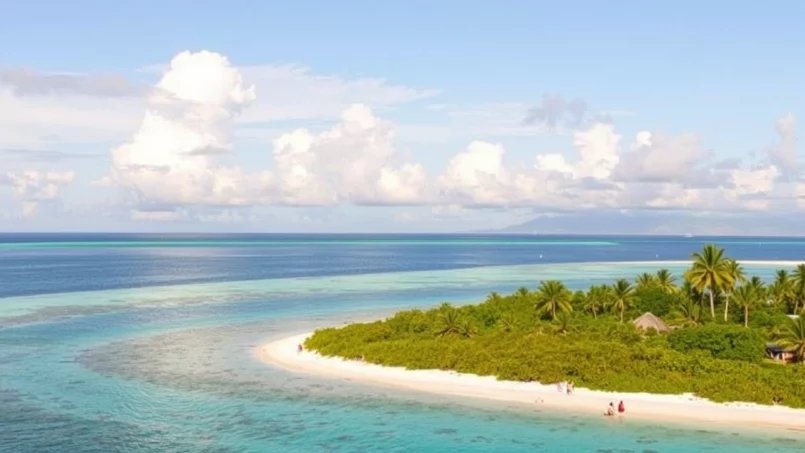
Moving to Micronesia means entering a world of turquoise lagoons, rain-soaked tropical forests, and wind-swept coastal villages. But behind this postcard image, the equatorial climate, extreme humidity, torrential rains, and risk of typhoons require real acclimatization for anyone coming to live for several months or years. For an expatriate, adapting well to the local climate is not a minor comfort detail: it is directly linked to daily health, safety, and budget.
This article, based on studies by the WHO and research institutes, explains how the body reacts to the tropical climate and details the main health risks. It provides practical advice on clothing, managing humidity at home, and protection from the sun, heat, mosquitoes, typhoons, and water shortages.
Understanding Micronesia’s Climate to Adapt Better
Micronesia is located just north of the equator, in the Caroline Islands. The climate is hot, humid, and rainy year-round, with variations from one state to another and between high volcanic islands and low coral atolls.
Temperatures vary little throughout the year: typically, nighttime lows hover around 73–77°F (23–25°C) and daytime highs around 86–90°F (30–32°C), with possible peaks of 93–95°F (34–35°C). Nights offer little relief from the heat, increasing heat-related fatigue.
The other major characteristic is humidity. It remains high year-round, with levels often exceeding 80%. Combined with the heat, it creates that feeling of “heavy” or “sticky” air. Sweat evaporates poorly, the evaporation that cools the body is less effective, and even minor exertion feels more tiring than in a temperate climate.
Some highland areas on Micronesian islands like Pohnpei or Kosrae receive over 400 inches (10,000 mm) of rain per year, making them some of the wettest places on earth.
To visualize the differences between some emblematic islands of Micronesia, we can summarize as follows:
| Location | Typical Temperatures (min–max) | Approximate Annual Rainfall | Climatic Particularities |
|---|---|---|---|
| Palikir (Pohnpei) | 73–75°F / 86–90°F (23–24°C / 30–32°C) | ~183 inches (~4,650 mm) | One of the world’s rainiest capitals |
| Kosrae (high island) | ~73°F / 88–90°F (~23°C / 31–32°C) | ~189 inches (~4,800 mm) | Almost constant rain, humid heat |
| Weno (Chuuk) | 75–77°F / 86–88°F (24–25°C / 30–31°C) | ~142 inches (~3,600 mm) | Slightly more defined seasons, drought risks during El Niño |
| Yap (high island) | 75°F / 88–90°F (24°C / 31–32°C) | ~123 inches (~3,135 mm) | One of the drier areas in the region |
| Kapingamarangi (atoll) | 75–77°F / 88–90°F (24–25°C / 31–32°C) | ~118 inches (~3,000 mm) | Equatorial atoll, relatively sheltered from typhoons |
Added to this basic climate are two major dimensions for an expatriate: seasons and extreme events.
Seasons, Typhoons, and Climate Irregularities
Broadly, a relatively “dry” season (from November/December to April) and a wetter season (from May to October/November) are distinguished. Dry does not mean arid: even during the least rainy period, the “driest” months around February commonly exceed 8 inches (200 mm) of rain. The difference lies more in the frequency and intensity of showers, the length of sunny spells, and the perceived humidity.
The region is exposed to typhoons, with an active season from April to December (peak from August to November). Although located on the southern edge of the typhoon belt, it faces serious risks: intense rains, violent winds, heavy swells, and storm surges.
Finally, the climate is strongly influenced by El Niño–Southern Oscillation (ENSO) cycles. El Niño episodes can cause severe droughts in several states, including islands that, on average, receive abundant rainfall. Studies conducted in the 2000s–2010s showed, for example, significant links between certain ENSO indices and the increase in diarrheal diseases, a sign that climate hazards directly reflect on the health status of populations.
How the Climate Affects Your Body and Health
Before discussing clothing or plumbing, it’s useful to understand how this climate influences human body functions – and why some expatriates feel “overwhelmed” in the first weeks.
The body’s main cooling mechanism is perspiration: sweat produced by sweat glands evaporates on the skin’s surface, absorbs heat, and lowers body temperature. In air saturated with humidity, evaporation is significantly less effective. Result: to produce the same effect, the body must sweat more. An adult can lose up to a quart (liter) of sweat per hour under these conditions.
Newcomers often underestimate their water needs, maintaining the drinking habits from their home country. This lack of awareness can lead to dehydration, sometimes insidious, manifesting as headaches, fatigue, irritability, loss of concentration, muscle cramps, or even heatstroke during prolonged exertion.
The hot and humid climate also affects the skin and mucous membranes. Constant humidity promotes maceration, fungal infections, skin rashes, and irritation in friction areas. Overweight individuals, more prone to friction in skin folds, may sometimes need specific creams or powders to prevent these issues. Eye, ear, and skin infections are also more frequent.
Climate vulnerability studies in Pacific islands identify specific health risks linked to the climate, beyond individual comfort issues. It is important to consider these when settling in the region.
| Type of Climate Effect on Health | Examples of Major Risks in Micronesia |
|---|---|
| Direct Effects | Injuries and deaths related to storms, floods, landslides; heat-related illnesses |
| Indirect Effects | Waterborne diseases (diarrhea, cholera), food insecurity and malnutrition, vector-borne diseases (dengue, Zika, chikungunya), leptospirosis, respiratory infections, skin, eye, and ear conditions |
| Diffuse Effects | Mental health disorders, worsening of chronic diseases (diabetes, hypertension, cardiovascular diseases), strain on an already fragile healthcare system |
For an expatriate, these problems are not theoretical. They add to under-resourced local healthcare systems, with few specialists, frequent shortages of equipment or medicines, and medical evacuations to Guam, Hawaii, or the Philippines for complex conditions. Having insurance covering medical evacuation is not a luxury.
Getting Used to the Heat and Humidity Daily
The good news is that the body gradually adapts to humid heat. Within a few weeks, one sweats earlier, resting heart rate slightly decreases, and exertion is better tolerated. This acclimatization, however, requires following some basic rules.
In a climate where perspiration can reach a quart (liter) per hour, it is crucial to drink water continuously, without waiting for the sensation of thirst. A minimally active adult should aim for 0.5–0.8 gallons (2 to 3 liters) per day, and more during exertion. Also compensate for mineral loss through local diet (fish, coconut, vegetables) or oral rehydration solutions if necessary.
Another implicit rule adopted by most residents: adapt your schedule. In many tropical islands, intense physical activities are avoided during the hottest hours of the day, often between 10 AM and 4 PM. Construction, agricultural work, or outdoor activities are organized early in the morning or late afternoon. Socially, life comes alive in the evening when the heat becomes more bearable. As an expatriate, aligning your schedule with this rhythm significantly reduces thermal stress.
In the Micronesian climate, sweating is considered normal, especially in transport, markets, or non-air-conditioned places. It’s common to take a quick shower to cool off during the day. Trying to ‘stay dry’ as in a temperate climate can be a source of frustration. The goal is rather to achieve relative comfort allowing one to work and interact, even with damp clothes.
Dressing Well in a Hot and Humid Climate
Choosing clothes is one of the simplest ways to improve comfort. In an environment where the air is saturated with humidity and sweat evaporates poorly, the goal is to maximize air circulation and sweat evaporation.
Fabrics to Prioritize and Avoid
Natural fibers remain the great allies of tropical climates, with a few nuances. Cotton is appreciated for its softness, breathability, and ability to absorb moisture, leaving the skin relatively dry. However, thick or tight cotton can become heavy and damp. In practice, thin, lightweight, loose-fitting fabrics are the most comfortable.
Linen, made from flax, is another reliable choice: very breathable, it absorbs moisture well and dries quickly. It wrinkles easily, but in tropical islands, “rumpled chic” is almost a dress code. Be careful, however, of the risk of mold on fabrics stored in poorly ventilated places: constant humidity can attack even high-quality fabrics.
Fibers like rayon/viscose, modal, and Tencel (lyocell), made from wood pulp, are breathable, pleasant, and often affordable, ideal for “eco” ranges in tropical climates. However, they are generally less durable and sensitive to repeated washing, except for some reinforced versions like HWM rayon.
So-called “quasi-natural” fibers like bamboo or hemp offer advantages: bamboo is often compared to silk or cashmere in terms of softness, has antibacterial properties, and manages moisture well; hemp is light, allows air to pass easily, blocks UV rays, and naturally resists mold.
To summarize useful properties by fabric:
| Fiber / Fabric | Advantages in Tropical Climate | Limitations and Precautions |
|---|---|---|
| Cotton (thin, 100%) | Breathable, absorbs sweat, easy to wash | Can stay damp and heavy, sweat stains |
| Linen | Very breathable, dries fast, comfortable | Wrinkles, mold risk during storage |
| Rayon / Viscose | Cool, soft, inexpensive | Less durable, delicate washing (often dry clean) |
| Bamboo | Soft, odor-resistant, manages moisture well, eco-friendly | Sensitive to some overly aggressive detergents |
| Hemp | Very light, anti-UV, mold-resistant | Less common, can be slightly stiff initially |
| Tencel (Lyocell) | Manages moisture well, cool feel, eco-friendly | Higher price, requires proper care |
| Merino (thin) | Regulates temperature well, odor-resistant, useful for evenings | Warmer, best reserved for evenings or air conditioning |
| “Classic” Polyester | Dries fast, wrinkle-resistant | Traps heat, sticky feeling |
Not all modern synthetics should be banned. Certain technical blends (combining, for example, Tencel, nylon, and spandex, or recycled polyester and nylon) are designed to wick away sweat, dry very quickly, and withstand frequent washing. For sports, hiking, or diving activities, these “performance” fabrics are often more suitable than pure cotton, which stays wet for a long time. In contrast, basic, inexpensive polyesters with poor breathability will mostly feel like wearing a plastic bag.
Colors, Cuts, and Adapted Styles
Under the Micronesian sun, light colors reflect light and heat better than dark shades. White, beige, sand, pastels remain safe choices to reduce fabric heating in the sun. This doesn’t preclude wearing bright colors, very present in island cultures, as long as the fabrics remain lightweight and airy.
Loose-fitting clothing, like flowing maxi dresses or traditional tunics from warm regions, promotes air circulation and sweat evaporation, offering better thermal comfort. Conversely, fitted, structured garments like thick jeans or body-hugging shirts quickly become uncomfortable outside air-conditioned environments.
It is generally simpler to take inspiration from local habits: observing what Micronesians wear at work, in town, during ceremonies helps find a balance between thermal comfort and respect for cultural codes, which often value modesty (shoulders and thighs covered in many contexts).
In a formal professional setting, opt for lightweight suits in tropical wool or linen, and shirts in fine poplin or cotton-Tencel blends to combine propriety and comfort. For evenings, choose thin garments in merino or silk, particularly suited to air-conditioned venues or outdoor settings when there’s a breeze.
Clothing Care in Humid Climate
The climate also affects your wardrobe. Constant humidity, combined with heat, accelerates the proliferation of mold on poorly aired textiles and can damage certain fibers. A few simple steps can extend clothing life:
washing in cold or lukewarm water, gentle cycles to limit fabric wear, drying in the shade as much as possible to preserve colors and avoid fiber degradation by the sun, ironing linen while still slightly damp to ease wrinkles, limiting fabric softeners and bleaching agents, which can reduce the effectiveness of technical treatments (anti-UV, odor-resistant) and weaken some fabrics, complete drying of clothes before storage, in a ventilated space, to prevent musty smells.
Quick-dry textiles allow for lighter travel and less laundry: a few well-chosen pieces, washed and dried quickly, suffice for most uses.
Managing Humidity at Home: Mold, Ventilation, and Air Conditioning
Living in a Micronesian home means learning to coexist with very high ambient humidity and frequent rains, sometimes lasting several days. This humidity affects not only comfort but also health and the building’s integrity.
Air constantly saturated with water promotes condensation on walls and windows, rapid mold growth (sometimes within 24–48 hours on a damp surface), wood swelling, metal corrosion, and degradation of electronic devices. For an expatriate, these factors impact the budget (repairs, replacements) and quality of life (allergies, respiratory irritation, asthma).
The ideal is to aim for an indoor relative humidity between 40% and 60%, a range where comfort is reasonable and mold risks are reduced. However, outdoors, it often ranges between 70% and 90%. Approaching this “ideal” zone requires action on architecture, ventilation, and air conditioning/dehumidification systems.
The Importance of Natural Ventilation
Traditional Pacific constructions intuitively integrate these constraints: houses on stilts to allow air circulation under the floor and distance the dwelling from damp ground, large openings, overhanging roofs to protect from rain while allowing ventilation, plant-based materials permeable to air.
Orientation perpendicular to prevailing winds can increase indoor air renewal by up to 40% in tropical environments.
In the daily practice of an expatriate, this translates to active management of openings: taking advantage of the least humid times of the day (often mid to late afternoon) to air out extensively, limiting opening during fog or fine rain, using ceiling fans to circulate air and enhance the perceived cooling effect, considering furniture placement to not block airflow (avoid placing large furniture against all exterior walls).
Air Conditioning, Dehumidification, and Maintenance
Air conditioning is widespread in hotels, offices, restaurants, and some modern homes. It plays a dual role: lowering temperature and removing some humidity from the air. However, an undersized system may cool quickly without sufficiently dehumidifying, leaving cool but still sticky air, or, conversely, struggle to keep up with the thermal load.
Specialists recommend specific heat load calculations for tropical climates, often leading to choosing slightly less powerful units than in temperate regions. These systems are designed to run longer at lower speeds, improving dehumidification. For optimal performance, prioritize systems with variable-speed or multi-stage compressors, which finely adjust power and consumption, allowing significant energy savings.
For an expatriate, the essentials are adopting a few habits: not running air conditioning with windows open, to avoid continuously letting in hot, humid air; regularly maintaining filters and indoor units, to prevent clogging, overconsumption, and health issues (mold, bacteria); supplementing, if necessary, with a dehumidifier, especially in rooms storing books, musical instruments, electronic equipment, or clothes.
To combat humidity in a targeted and constant manner, it is recommended to use dehumidifiers, whether standalone or integrated into the ventilation system, installed in the highest-risk rooms. To effectively monitor humidity levels, inexpensive hygrometers are perfectly adequate.
In rooms that produce significant water vapor (kitchen, bathroom, laundry room), properly sized exhaust fans, used during and after activities (showering, washing, cooking), quickly remove excess vapor. Common recommendations suggest letting them run for at least twenty minutes after use.
Water, Rain, and Drought: Adapting to Hydrological Reality
One might think living in Micronesia guarantees an abundance of fresh water. In reality, the situation is more complex, especially on low atolls. Water resources are one area where climate effects – extreme rains, droughts, sea-level rise – are most felt.
On high islands, rivers and surface catchments provide the main drinking water supply for urban areas. Palikir or Kolonia, for example, depend on dams and water intakes in forested watersheds. On these islands, significant efforts have been made to protect mountain forests to preserve water quality, such as creating watershed reserves in Pohnpei.
On atolls and small low islands, however, no rivers flow. All available fresh water comes from:
Two examples of unconventional freshwater resources are mentioned: rainwater harvesting via rooftops and storage in tanks, and tapping the freshwater lens, a shallow layer of fresh water floating on saltwater in coral sands, accessible via wells.
Studies conducted on atolls in Yap or Chuuk show this lens is very fragile: its thickness varies with rainfall and pumping, and can decrease by over six feet (two meters) in a few years during drought. Saltwater intrusion (during high tides or storms) and sea-level rise further thin it. On some islets, researchers recommend not using groundwater for drinking at all, due to the high risk of salinization.
For some communities, rainwater harvesting is essential. Installations typically use metal or aluminum roofs, gutters, and concrete or PVC tanks. Their design must consider roof surface area, number of users, average rainfall, and drought periods associated with El Niño.
A survey on a Yap atoll provided a typical portrait: an average house had about 178 sq ft (16.5 m²) of roof equipped with gutters, connected to a 530-gallon (2,000-liter) tank, and housed an average of seven people, each consuming about 3 gallons (12 L) of water per day. This suffices as long as rains remain close to average, but during major droughts, reserves deplete quickly.
Residents then develop drastic rationing strategies: distribution of one gallon (about 3.8 L) per household per day on fixed dates, increased use of coconut water for drinking, use of seawater for washing and some domestic uses, strict limitation of drinking water to consumption and cooking.
For an expatriate living on an atoll or in a village supplied by community tanks, it is crucial to understand the constraint of limited reserves. Consuming water as in Europe or North America, without concern for reserves, can quickly create tensions with the local community. It is therefore advisable to adopt responsible and measured consumption, in line with available resources and local practices.
monitor your tank level and adapt consumption according to season and climate forecasts; participate in system maintenance (cleaning roofs, gutters, filters, tanks) to improve water quality; boil water intended for drinking, especially when pollution sources (latrines, animals, waste) are near collection areas or wells.
The links between climate, water, and health are well documented: in some Micronesian states, analyses of hospital data series have highlighted an increase in diarrhea cases when maximum temperatures rise or during certain ENSO phases. Water quality and the food supply chain react directly to climate hazards.
Protecting Yourself from Mosquitoes, Vector-Borne Diseases, and Zoonoses
The hot and humid climate provides an ideal environment for mosquitoes and other disease vectors. Micronesia has experienced notable epidemics: the first recorded Zika epidemic in Yap State in 2007, outbreaks of dengue or chikungunya at irregular intervals, cases of leptospirosis associated with exposure to animal urine in wet environments.
For an expatriate, protection rests on a few simple pillars, often highlighted in public health campaigns:
To reduce risks, eliminate mosquito breeding sites around your home by regularly emptying containers of stagnant water, covering tanks, and cleaning gutters. Protect yourself from bites by wearing long, loose clothing at dusk and dawn, peak activity times for some species. Use appropriate repellents and mosquito nets, especially in less urbanized areas. Follow local health authority advisories during epidemics (dengue, Zika, chikungunya) and consult a doctor for unexplained fever, severe headaches, or joint pain.
Some zoonoses like leptospirosis increase after heavy rains and floods, when individuals walk barefoot or bathe in contaminated waters. Wearing closed shoes in swampy or muddy areas, avoiding swimming in dubious stagnant waters, and covering skin wounds are important precautionary measures.
Sun, UV, and Heatstroke: The Daily Weather Triathlon
The Micronesian sun, nearly vertical around noon, exposes the skin to intense ultraviolet radiation. Even under clouds, up to 80% of UV rays penetrate cloud cover. Add reflective surfaces: white sand reflects up to a quarter of received UV, water can locally double the dose through reflection.
Short-term effects – sunburn, actinic keratitis or conjunctivitis, heatstroke – are well-known. Long-term, cumulative exposure without protection increases risks of skin cancers, cataracts, and other eye damage. Local populations are not spared, but expatriates with fair skin types run an even higher risk if they replicate their temperate-country summer habits.
Recommendations rely on a combination of measures rather than a single tool.
Clothing, Hats, Glasses: The First Line of Defense
Clothing constitutes an effective barrier, provided it is sufficiently covering and offers a tight weave. Fabrics with a UPF (Ultraviolet Protection Factor) rating allow precise quantification of protection: UPF 15 is considered a minimum for good protection, 25 as “very good,” and 40–50+ as “excellent.” A garment rated UPF 50 lets through only about 1/50th of UV radiation.
To reduce sun exposure, prioritize light clothing with long sleeves and legs made from breathable fabrics, and a wide-brimmed hat (like a bucket hat or sun hat) that protects the face, ears, neck, and shoulders, rather than just a baseball cap.
Sunglasses must filter 99 to 100% of UVA and UVB. Wraparound frames limit side entry of rays and offer better protection for the conjunctiva and cornea.
Sunscreen: How to Use It Effectively
Sunscreen remains an indispensable complement, especially for exposed areas (face, hands, feet, neck, ears). Recommendations from multiple studies converge:
For effective protection, choose a broad-spectrum sunscreen, protecting against UVA and UVB, with an SPF of at least 30 (blocking about 97% of UVB). Apply a sufficient amount, equivalent to a shot glass for an adult’s entire body, 15 to 30 minutes before exposure. Reapply every two hours and immediately after swimming or heavy sweating, even for “water-resistant” products.
Frequently forgotten areas are the ears, back of the neck, tops of feet, hands, hairline, and lips. The latter require a specific balm with an SPF of at least 30.
In a fragile marine environment like Micronesia, choosing “reef-safe” sunscreens, free from certain chemical filters suspected of harming coral reefs, can be an additional responsible gesture.
Managing Schedules and Heatstroke Risk
The UV index reaches its highest values between 10 AM and 4 PM. When the index exceeds 3 (almost daily in the region), protection is already necessary, and it becomes essential above 8–10. Most weather apps now provide real-time UV index and automatic recommendations.
Beyond UV, the overall heat load matters. The combination heat + humidity can cause heatstroke, especially during prolonged physical exertion. Again, adapting schedules, planning the most strenuous activities for early morning or late afternoon, taking frequent breaks in the shade, drinking regularly, and wearing appropriate clothing are the best defenses.
Preparing for Typhoons and Extreme Events
Living in Micronesia means accepting the prospect of facing at least one tropical storm or typhoon during your stay. The Pacific region recorded over 2,400 tropical cyclones in the past six decades, averaging about forty per year across the basin. Eight of the twenty countries worldwide losing the largest proportion of their GDP infrastructure to disasters are Pacific Island states.
For an expatriate, good preparation makes the difference between a manageable misadventure and a very dangerous situation. Advice widely disseminated in the region can be applied in Micronesia:
Develop a family plan specifying a rally point if communications are cut, an off-island contact for updates, and each person’s responsibilities (securing the house, preparing the kit, caring for children or vulnerable individuals). Build an emergency stock for one to two weeks, including drinking water (1 gallon/person/day), non-perishable food, medications, flashlights, batteries, radio, waterproofed important documents, and cash in local currency and dollars. Identify safe shelters in advance (rooms without windows, sturdy structures, community shelters if your home is vulnerable). Scrupulously follow weather bulletins and authorities’ instructions regarding alert levels, evacuations, and routes to avoid.
During an imminent alert, recommendations focus on securing the home: securing or bringing in outdoor objects, protecting windows (shutters, boards), filling water reservoirs and bathtubs, cutting off gas and some electrical supplies if necessary, parking the vehicle in a clear area, away from trees or poles. During the typhoon, it is essential to stay indoors, away from windows, and wait for official instructions before going out, even if a momentary calm gives the impression it’s over (it could be the eye of the storm).
After a storm, extreme caution is required due to persistent dangers: downed power lines, debris, landslide risks, and contaminated water. Universal guidelines for the Pacific are not to touch fallen cables, avoid flooded areas, check water potability before consumption, and assist the most vulnerable neighbors.
Relying on Local Knowledge to Adapt Better
Micronesians have lived with this climate for over 3,000 years. Over centuries, they developed a body of knowledge and practices constituting a genuine “toolbox” for adaptation: crop selection according to rainfall and soils, architecture adapted to winds and humidity, community water management, use of medicinal plants, traditional warning systems based on nature’s signs.
Research shows traditional agricultural choices in Micronesia were an empirical optimization facing the climate. In heavily rained areas, food-bearing trees (breadfruit, coconut, pandanus) were favored for their adaptation to leached soils. In drier or seasonal regions, root crops (taro, yam, sweet potato) dominated, being better adapted to deep alluvial soils and irrigation.
Similarly, the construction of traditional houses – on stilts, with widely overhanging roofs, movable partitions, and renewable plant materials – integrates sophisticated responses to strong winds, driving rains, and humid heat. On some shores, stone structures built centuries ago testify to advanced management of coastal erosion and storm surges.
To adapt, an expatriate can draw inspiration from local knowledge by listening to neighbors’ advice: learn about water accumulation areas after heavy rains, safe routes when the sea is dangerous or a distant swell floods the atoll, crops suited to a domestic garden, and effective gestures for ventilating a house.
Recent cooperation and research programs emphasize the importance of fully integrating this knowledge into modern adaptation plans, rather than applying only imported models from temperate countries. They show that strategies combining modern technology (water collection systems, cyclone-resistant materials, health surveillance) and local knowledge (site selection, community resource management, agricultural practices) are often the most robust and widely accepted.
Daily Life: Finding Your Rhythm in a Demanding Climate
Beyond health and technical aspects, adapting to Micronesia’s climate also means acclimating to a certain pace of life. Heat and rain dictate a specific temporality: days punctuated by sometimes violent but brief showers, livelier evenings as the sun sets, transport delays or ferry cancellations in bad weather, more difficult communications in outer islands when antennas or cables are affected.
Expatriates discover “island time,” a necessary flexibility in the face of climatic unpredictability and local logistical constraints, like supply delays or cyclone-related holdups. Rather than resisting, it is healthier to integrate this reality by planning with margins, staying flexible, and adapting project and travel management.
The climate even influences social life. Community meetings and events are frequently scheduled in the late afternoon or evening, when the heat is less oppressive. Residents gather in the shade of trees, under shelters, or in community houses open to the winds, rather than in closed rooms. Adopting these frameworks of sociability also means less exposure to UV and better coping with the heat.
The shift towards a diet dependent on imported products (white rice, canned goods, sugary drinks, instant noodles) in Pacific states has fueled the explosion of diabetes, obesity, and cardiovascular diseases. These conditions are aggravated by heat, which places additional strain on the heart and kidneys. Studies indicate that a return towards a diet rich in local vegetables, roots, and fruits, combined with climate-adapted physical activity, significantly improves health.
Moving to Micronesia is therefore not just about learning to endure heat and showers, but also questioning how you move, eat, work, and care for yourself in a very different environment. By combining scientific knowledge and local wisdom, anticipating water constraints, protecting from UV, storms, and mosquitoes, it becomes possible not only to withstand this climate but to find a form of balance – and even, over time, to appreciate its rhythms and power.
Disclaimer: The information provided on this website is for informational purposes only and does not constitute financial, legal, or professional advice. We encourage you to consult qualified experts before making any investment, real estate, or expatriation decisions. Although we strive to maintain up-to-date and accurate information, we do not guarantee the completeness, accuracy, or timeliness of the proposed content. As investment and expatriation involve risks, we disclaim any liability for potential losses or damages arising from the use of this site. Your use of this site confirms your acceptance of these terms and your understanding of the associated risks.

Cyril Jarnias is an independent expert in international wealth management with over 20 years of experience. As an expatriate himself, he is dedicated to helping individuals and business leaders build, protect, and pass on their wealth with complete peace of mind.
On his website, cyriljarnias.com, he shares his expertise on international real estate, offshore company formation, and expatriation.
Thanks to his expertise, he offers sound advice to optimize his clients' wealth management. Cyril Jarnias is also recognized for his appearances in many prestigious media outlets such as BFM Business, les Français de l’étranger, Le Figaro, Les Echos, and Mieux vivre votre argent, where he shares his knowledge and know-how in wealth management.





