
 Published on and written by Cyril Jarnias
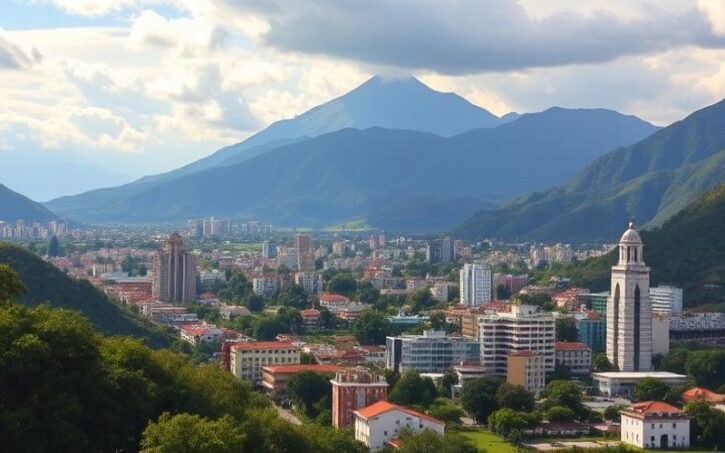
Guatemala’s real estate market is increasingly attracting foreign investors seeking high yields and geographic diversification. As the largest economy in Central America, with rapid urbanization, booming tourism, and prices still well below those of Costa Rica or Panama, the country checks many boxes for the savvy investor. However, this potential comes with a specific legal framework, real risks regarding property titles, and significant heterogeneity between regions.
This article provides a comprehensive guide for real estate investment in Guatemala, including analysis of past performance, rental yields, prices per square meter, taxation, financing options, and purchase procedures. It also details the main associated risks and strategies to mitigate them, based on the latest economic, legal, and market data.
A Favorable Macroeconomic Context for Real Estate
The attractiveness of the Guatemalan real estate market is primarily driven by its economic fundamentals. The country boasts the largest economy in Central America, with a GDP of approximately $92.3 billion in 2024 and projected growth of 3.5% to 4% per year through 2028. The economy is diversified, blending agriculture, textiles, tourism, services, and technology, which limits reliance on any single sector.
The housing deficit in Kazakhstan far exceeds one million units, a shortage that has worsened by nearly 40% in major cities within a few years.
Relative inflation stability, around 4.1%, supports purchasing power and the predictability of rental cash flows. The local currency, the quetzal (GTQ), remains broadly stable against the US dollar, with limited fluctuations in recent years. Meanwhile, remittances from the diaspora represent about $16 billion per year, providing a powerful boost to consumption and residential investment, particularly among middle- and lower-income classes.
The country’s credit rating has improved (BB- with a stable outlook from S&P, BB from Fitch), and foreign direct investment has rebounded (approximately 3.8% of GDP). Public plans such as the 2025 Economic Development Plan and the National FDI Attraction Strategy explicitly target improvements to the business climate and infrastructure, directly impacting land values.
Finally, tourism, a pillar of the seasonal rental market, is growing by 7 to 9% per year and accounts for about $2 billion of GDP. Tourist arrivals are increasing, with peaks in destinations like Antigua, Lake Atitlán, and coastal regions. All these dynamics create a favorable environment for long-term real estate investment.
Solid and Accelerating Real Estate Performance
Over the past fifteen years, the Guatemalan real estate market has shown a steady growth trajectory, although uneven across periods.
This evolution can be summarized in the following table:
| Period | Market Context | Average Annual Appreciation |
|---|---|---|
| 2010‑2015 | Post-crisis recovery, initial massive tourist flows | 3% to 5% |
| 2016‑2019 | Acceleration, influx of foreign investors | 6% to 8% |
| 2020‑2022 | Pandemic adjustment, interest in rural areas | 4% to 6% |
| 2023‑present | Strong recovery, return of tourism, influx of expats | 6% to 9% |
In the residential sector, prices are estimated to have risen by nearly 60% between 2020 and 2025 in nominal terms. Prime areas – upscale neighborhoods of Guatemala City, the historic center of Antigua, the shores of Lake Atitlán, the Pacific coast – have outperformed, with cumulative increases of 30 to 35% over five years in certain segments.
Analysts anticipate average residential market growth of around 6% per year between 2024 and 2029. Over a five-year horizon, total returns, combining capital appreciation and rental income, are estimated positively, confirming the sector’s momentum.
| Property Type / Area | Estimated Annual Rental Yield | Estimated Annual Appreciation | Total 5-Year Return (Pre-Tax) |
|---|---|---|---|
| Apartment in Guatemala City | 7.5% | 6.0% | 65% to 70% |
| Colonial house in Antigua | 8.0% | 7.0% | 75% to 80% |
| Property on Lake Atitlán | 8.5% | 8.0% | 80% to 85% |
| Pre-construction project | 0% (during construction), then ~7% | 18% to 25% over the period | 55% to 60% |
| Development on the Pacific coast | 6.0% | 9.0% | 75% to 80% |
These figures suggest that Guatemala remains a market in a growth phase, rather than a speculative bubble. Demand is driven by fundamentals – urbanization, housing deficit, tourism boom, rising middle class – more than by pure financial leverage.
Rental Yields: Where Are the Best Opportunities?
Gross yields in Guatemala generally range from 5.7% to 10% for residential properties, with peaks well above that in some short-term rental cases. Rates vary depending on the city, neighborhood, property type, and strategy (long-term vs. short-term).
Guatemala City: Deep and Diverse Rental Market
The capital, with nearly 3 million inhabitants in its metropolitan area, concentrates the majority of economic activity. Yields are relatively high for a major Latin American metropolis.
Available data indicates: recent trends, future forecasts, and consumer behaviors.
| Segment in Guatemala City | Estimated Gross Rental Yield |
|---|---|
| Overall rental market (city) | 5.7% to 8.4% |
| Studio / 1 bedroom (general) | > 8% |
| Studio (general trend) | 8% to 9% |
| 1-bedroom apartment | 7% to 8% |
| 2-bedroom apartment | 7% to 8% |
| 3-bedroom apartment | 6% to 7% |
| Prime condos (Zona 10‑16) | 6% to 8% |
| Mid-range apartments in central areas | 6% to 8% |
| Houses in Mixco / Villa Nueva | 8% to 9% |
| Short-term rentals (Airbnb, business, expats) | 7% to 10% |
| Extreme cases (some 200 m² very undervalued) | up to 17% |
It is clear that smaller units – studios and one-bedrooms – consistently offer the best yields. Premium areas like Zona 10, 14, 15, and 16 concentrate demand from executives, expatriates, and upper-middle classes, with vacancy rates below 8% in the best neighborhoods.
On the rent side, the order of magnitude in 2025 is as follows:
| Property Type – Guatemala City | Average Monthly Rent (Center) | Average Monthly Rent (Outskirts) |
|---|---|---|
| 1 bedroom (center) | Q5,577 (~$720) | Q3,241 (~$420) |
| 3 bedrooms (center) | Q10,000 (~$1,290) | Q5,035 (~$650) |
| Studio / 1 bedroom in Zona 10 | Q4,500–7,700 | Q2,500–4,000 (outer areas) |
| 2 bedrooms (central areas) | Q6,000–9,000 | – |
| 3 bedrooms premium (upscale centers) | Q10,000–16,000 | – |
| Mid-range house in Mixco / Villa Nueva | Q6,000–10,000 | – |
To these rents, utilities are generally added – condo fees, electricity, water, internet – bringing the total cost between $600 and $850 for a central one-bedroom, and between $1,100 and $1,600 for a three-bedroom in the city center.
Antigua: Colonial Prestige and High Tourist Demand
Antigua, a UNESCO World Heritage colonial city, remains the top destination for expats and tourists. The historic center, heavily constrained by preservation rules, has structurally limited supply, which supports prices and rents.
To succeed in the rental market, it is essential to know the laws in force, prepare a solid and complete application, and set a rent price in line with market reality. A carefully prepared property visit and clear communication with future tenants are also key factors for a successful and conflict-free rental.
| Rental Type in Antigua | Estimated Gross Rental Yield |
|---|---|
| Overall rental market (residential) | 6% to 10% |
| Reported overall average | ~6.3% |
| 1-2 bedroom apartments (rental) | 7% to 8% |
| Small apartments in the center | ≥ 8% |
| High-end colonial villas | ~4% (lower yield) |
| 3-bedroom houses (long-term rental) | $1,200 to $2,500 / month |
Short-term rental data is even more striking: an Airbnb-type property in Antigua is booked around 197 nights per year, with occupancy rates between 40% and 55%, an average annual income of $13,000 to over $15,000, and occupancy peaks near 98% during certain periods (Holy Week, year-end). Average daily rates range between $72 and $130, with a clientele composed of 55% foreigners and 45% nationals.
Lake Atitlán and the Pacific Coast: High Yield and a Bet on Tourism
Lake Atitlán is the second-largest tourist destination in the country and concentrates a significant stock of vacation rentals. Gross yields are reported to range between 7% and 10%, with projected value increases of 7 to 9% per year over the coming years in certain localities like Panajachel.
Overview of yields and property valuation in beach areas of Monterrico and Puerto San José.
Beachfront villas and resort complexes offer an average rental yield of around 6%.
Expected annual appreciation of 8 to 10% in developing areas, steering investment toward capital gains.
Opportunities are concentrated on the Pacific coast, notably in Monterrico, Puerto San José, and their surroundings.
Summary of Yields by Segment
To visualize the differences between major investment areas:
| Area / Property Type | Estimated Gross Rental Yield |
|---|---|
| Guatemala City – luxury apartments | 7% to 8% |
| Guatemala City – small units | 8% to 9% |
| Guatemala City – suburban houses | 8% to 9% |
| Antigua – colonial houses (vacation) | 6% to 9% |
| Antigua – small apartments | ≥ 8% |
| Lake Atitlán – houses / villas | 7% to 10% |
| Pacific Coast – beach properties | ~6% |
| Secondary cities (Quetzaltenango, etc.) | 5% to 7% (residential) |
| Commercial real estate (overall) | 8% to 12% |
Overall, Guatemalan rental yields often surpass those observed in North America by 2 to 4 percentage points for an equivalent budget, while offering more generous square footage and lower maintenance costs.
Purchase Prices: How Much Does Property Cost by Region?
Prices per square meter remain attractive compared to other Central American markets. However, they vary significantly by location and property type.
Guatemala City: Full Range, from Entry-Level to Luxury
The capital offers the widest selection, from investment apartments at $100,000 to penthouses over a million dollars.
The following order of magnitude provides a good reference point:
| Area / Apartment Type in Guatemala City | Estimated Price per m² (USD) | Typical Total Budget (USD) |
|---|---|---|
| Zona 10 & 14 – luxury apartments | $1,800 to $2,500 | $250,000 to $500,000 |
| Zona 15 & 16 – mid-range apartments | $1,200 to $1,800 | $150,000 to $250,000 |
| Zona 9 & 13 – entry-level | $900 to $1,200 | $100,000 to $150,000 |
| City center (overall average) | ~$1,425 | – |
| Outskirts (overall average) | ~$1,070 | – |
| Broad average (entire city, other source) | $900 to $1,200 | – |
For an investor, the entry ticket for an “investable” apartment generally falls between $120,000 and $250,000. Larger or more prestigious units can go much higher, up to $1 to $2.5 million for the most luxurious properties.
Antigua: Scarcity, Prestige, and Prices Driven Up
The historic center of Antigua, limited to a few blocks, is arguably the most expensive market in the country in terms of price per square meter, due to a very restricted supply and strong international demand.
Available data indicates:
| Antigua Sector | Estimated Price per m² (USD) | Typical Total Budget (USD) |
|---|---|---|
| Historic center – colonial houses | $2,000 to $3,000 | $400,000 to > $1,000,000 |
| Nearby outskirts (houses / apartments) | $1,500 to $2,000 | $250,000 to $500,000 |
| Surrounding villages / gated communities | $1,000 to $1,500 | $200,000 to $350,000 |
Nevertheless, new constructions a bit outside the city can be found around $250,000 to $300,000 for modern family homes. Generally, the market consists of approximately 60% local buyers and 40% international buyers (USA, Europe, Canada).
Lake Atitlán, Pacific Coast, and Secondary Cities
Lake Atitlán offers more moderate prices per square meter than central Antigua, while benefiting from strong tourist appeal.
| Area around Lake Atitlán | Estimated Price per m² (USD) | Typical Total Budget (USD) |
|---|---|---|
| Panajachel / Santa Catarina – lakeside | $1,300 to $2,200 | $300,000 to $800,000 |
| San Marcos / San Pedro – lake view | $1,000 to $1,500 | $150,000 to $350,000 |
| Hilltop villages – mountain view | $800 to $1,200 | $120,000 to $250,000 |
On the Pacific coast, prices remain relatively accessible for beachfront properties:
| Pacific Coast (Monterrico, etc.) | Estimated Price per m² (USD) | Typical Total Budget (USD) |
|---|---|---|
| Beach / resort properties | $1,200 to $2,000 | $200,000 to $600,000 |
Finally, some secondary cities like Quetzaltenango (Xela), the second-largest urban area, offer even lower entry points, with strong growth potential linked to regional economic development:
| Secondary City | Estimated Price per m² (USD) | Typical Total Budget (USD) |
|---|---|---|
| Quetzaltenango – central areas | $700 to $1,100 | $100,000 to $220,000 |
These price disparities allow investors to tailor their strategy: maximized yields in secondary or lake markets, longer-term appreciation in emerging coastal areas, and a combination of prestige and rental yield in Antigua or Guatemala City.
Taxation and Transaction Costs: What to Include in Your Business Plan
One of Guatemala’s advantages is its relatively moderate real estate taxation, especially on holding. However, transaction costs for new properties can be high due to VAT.
Acquisition Costs
For a buyer, total fees typically represent between 5% and 7% of the purchase price for a resale property, and more for a new property subject to VAT on the total price.
The main cost items are as follows:
| Cost Item | Indicative Rate on Price / Declared Value |
|---|---|
| Transfer tax (stamp duty) | ~3% (resale) |
| VAT (new) | 12% of the sale price |
| Stamp duty (documents) | ~0.3% |
| Land registry registration fees | ~0.15% |
| Notary fees | 1% to 3% |
| Legal fees (attorney) | 1% to 2% |
| Real estate agent commission | 5% to 6% (usually paid by the seller) |
For a $200,000 property on the resale market, the buyer should expect $10,000 to $14,000 in additional costs. On a new property at the same price, VAT alone could amount to $24,000, pushing the total entry cost significantly higher.
Recurring Taxation and Taxation of Rental Income
The property tax (IUSI) is calculated on the cadastral value – often lower than the market value – with a progressive scale:
| Cadastral Value Bracket (GTQ) | Annual IUSI Rate |
|---|---|
| 0 to 2,000 | 0% |
| 2,000 to 20,000 | 0.2% |
| 20,000 to 70,000 | 0.6% |
| Above 70,000 | 0.9% |
As a proportion of the true market value, the burden remains moderate compared to most North American markets. Taxes can be paid quarterly or annually. However, in case of extended delay, municipalities may apply penalties and eventually place liens and initiate foreclosure proceedings.
For rental income, the tax regime depends on resident / non-resident status.
Tax regime for rental income
| Investor Profile | Rental Income Taxation Method |
|---|---|
| Non-resident | Withholding tax of 15% on gross rents |
| Resident – simplified regime | 5% to 7% on gross rents |
| Resident – general regime | 25% on net income (after expense deductions) |
Short-term rentals may, in some cases, be subject to VAT at 12%. Associated services (property management, maintenance, etc.) are also subject to this VAT. Hence the importance of working with a local accountant to optimize the tax structure.
Capital Gains and Exit Taxation
Real estate capital gains are taxed at a flat rate of 10% on the net gain at the time of resale. Special rules apply for properties held less than two years, which may increase taxation on quick “flip” transactions.
Guatemala is characterized by overall low real estate taxation: low property tax, moderate rental income taxation (especially for non-residents), and a 10% flat tax on capital gains. This combination places the country at the low end of the regional tax scale, especially compared to North America or Western Europe.
Financing and Access to Credit: A Tougher Equation for Foreigners
Although interest rates tend to stabilize and remain reasonable for the region, access to mortgage credit remains one of the main obstacles for the foreign investor.
The key points regarding financing are as follows:
| Parameter | Local Residents | Foreigners / Non-Residents |
|---|---|---|
| Typical interest rate (20-year) | 6% to 10% | 7% to 12% in practice |
| Down payment | 10% to 20% | 35% to 40% (sometimes up to 50%) |
| Loan term | Up to 20 years (even 30 years on specific projects) | Often shorter, strict conditions |
| Loan-to-value ratio (LTV) | 60% to 80% | 60% to 70% maximum |
| Residency requirement | Yes for most banks | Very common, otherwise loan refusal |
The banks most often cited for working with foreigners are Banco Industrial, Banco G&T Continental, BAC, or Banco de los Trabajadores. But in practice, many foreign investors forgo local financing and use either cash, credit from their home country, or alternative financing arrangements.
Two solutions deserve particular attention:
Two financing options exist outside traditional bank loans. Developer financing, common on new builds, offers down payments of 20 to 40%, terms of 3 to 5 years, and rates of 8% to 12%, exceptionally extending up to 30 years on some structured programs. Seller financing, on the other hand, is fairly widespread and typically involves a 30 to 50% down payment with the balance payable over 1 to 5 years, offering great flexibility for negotiation, especially with sellers looking for a quick sale.
For an investor, it is crucial to incorporate the real cost of credit into your yield calculation, especially when interest rates reach 8 to 10%. At these levels, a gross rental yield of 7 to 8% may no longer be sufficient to generate positive cash flow after interest and expenses, unless heavily banking on capital appreciation.
Legal Framework, Foreigner Rights, and Restricted Areas
One of the country’s major attractions is that foreigners can acquire most real estate with rights very similar to those of Guatemalan citizens. However, several structural restrictions apply.
As a general rule, a non-resident can buy and hold houses, apartments, land, and commercial buildings without limit on number or value. No specific visa or residency is required to invest. The entire transaction is overseen by notaries (who are authorized attorneys) and must be registered with the General Property Registry.
However, the Constitution and a specific law strictly regulate certain so-called “state territorial reserve” areas:
Maximum distance, in kilometers, of the protection perimeter established around international borders according to certain legal formulations.
In these areas, foreigners generally cannot directly hold the land. Management of these spaces falls to a public agency, OCRET, which grants long-term emphyteutic leases for an annual rent often below $100. The investor can then buy and sell these lease rights, but not the land itself. Non-payment of fees can lead to forfeiture by the state.
The cost of incorporating a Guatemalan corporation, in dollars, to hold properties in sensitive areas.
Beyond restricted areas, another major legal risk concerns the quality of land titles. The registry can be incomplete or confusing in some regions, with cases of encroachment, indigenous land claims, poorly settled inheritances, or competing titles. For a foreigner, hiring a specialized attorney, conducting a historical title search covering at least 30 years, verifying boundaries via a surveyor, and checking for the absence of tax debts are indispensable.
Purchase Process: Steps, Timelines, and Best Practices
The acquisition process is relatively straightforward on paper, but requires great diligence.
In practice, the main steps are as follows:
The acquisition of real estate in Guatemala follows a structured procedure in several steps. It begins with identifying the property through local platforms, agencies, or networks. Then, a promise of sale is signed, accompanied by a deposit of 10 to 20%. A thorough legal due diligence is then conducted by professionals to verify the title status and encumbrances. The transfer of ownership is formalized by signing a public deed before a notary, which can be done by proxy for a foreign buyer. After tax payments and registration with the land registry (timelines vary from 2 to 8 weeks depending on the area), the buyer finally updates tax obligations and utility services.
Overall, between accepting an offer and final registration, expect 6 to 10 weeks in a smooth scenario. Selling a property can take 3 to 6 months in major cities and longer in rural or highly seasonal tourist areas.
To mitigate risks, several best practices are essential: avoid relying solely on informal intermediaries, insist that all verbal promises be included in contracts, physically inspect the property (preferably during the rainy season to detect potential infiltration issues), and never accept full payment before the notary confirms in writing the title’s soundness and the absence of liens.
Rental Market: Demand, Tenant Profiles, and Management
The Guatemalan rental market is particularly dynamic, with high occupancy rates over the long term and a genuine boom in short-term rentals in tourist areas.
In major cities like Guatemala City, the residential vacancy rate in prime neighborhoods is often below 5-8%. Demand comes from young professionals, executives, upwardly mobile middle-class families, and expatriates. Modern units with security, parking, green spaces, and quality internet connections are most sought after, explaining the rise of gated communities and newer buildings.
In Antigua, short-term rental listings on platforms like Airbnb have increased by approximately 18% in one year.
For a foreign investor, property management is a key issue. Three main models coexist:
Different management methods for your real estate, with their implications in terms of cost, time, and return.
Possible if you live locally and are proficient in Spanish and local customs. Allows saving 8 to 12% in fees, but requires a significant time investment and a network of reliable craftsmen.
Companies typically charge 8 to 12% of collected rents. In Antigua, offers around 10%, sometimes with an additional month’s rent as a leasing commission.
Intensive management (check-in, cleaning, marketing). Billed between 20 and 30% of gross revenue. Net returns can remain attractive due to higher nightly rates.
To these management costs, add recurring expenses: homeowners’ association (HOA) fees, which can range from $600 to $3,600 per year depending on the standard, domestic staff (gardener, maid, guard), maintenance, and a reserve budget for repairs equivalent to 1 to 2% of the property’s value per year.
Opportunities by Area: How to Position Yourself?
One of Guatemala’s attractions is the diversity of its sub-markets, each with a different combination of yield, risk, and appreciation prospects.
Guatemala City offers the greatest market depth, solvent tenants, an urban environment undergoing modernization (light rail projects, bus rapid transit, historic center renovation, hospital modernization), but also some security issues and a risk of oversupply in the more speculative luxury segment (e.g., part of Zona 10).
The Antigua real estate market, though modest in size, is very resilient, especially in heritage segments. The historic center has seen value increases of around 7% in recent years, with optimistic forecasts of 6 to 8% per year. It is a relevant choice for investors seeking stability, long-term capital appreciation, and opportunities for high-end vacation rentals.
Lake Atitlán combines spectacular landscapes, rising nature and spiritual tourism, and a strong presence of expatriates and foreign retirees. Rental yields here are among the highest in the country, but resale liquidity and the quality of land titles must be carefully examined, especially in the more remote villages.
This region, still underdeveloped, carries higher risk but offers strong medium-term appreciation potential, particularly in areas affected by infrastructure and beach tourism projects.
Secondary cities like Quetzaltenango, Cobán, or Flores offer lower entry points, a more local clientele, and respectable growth prospects (4 to 6% annual appreciation expected), often coupled with economic support programs (USAID, development banks, etc.).
Major Risks and How to Mitigate Them
Investing in Guatemalan real estate is not without risks. The main identified dangers are:
Real estate investment in Guatemala presents several specific risks to consider: property title security can be compromised by incomplete titles, succession disputes, non-privatizable indigenous communal lands, and document forgery, with scandals involving networks of notaries and officials. Political and regulatory risk, although the environment has improved, persists with episodes of corruption and the possibility of tax changes. The country is exposed to natural disasters (earthquakes, volcanoes, storms, rising sea levels). Public safety is affected by organized crime in certain regions, requiring discretion. Property liquidity can be low, with longer resale times outside major cities and tourist seasons. Finally, there is a currency risk, as the current stability of the quetzal does not rule out future fluctuations impacting investors in foreign currencies.
To limit these risks, several levers are available to investors:
To invest in real estate in Haiti while mitigating risks, several measures are crucial. Work systematically with a specialized attorney, independent of the agent or seller. Demand an exhaustive title search spanning several decades and a thorough technical inspection of the property. Prioritize areas where the land registry is most reliable, such as urban centers or recently developed projects by reputable players. Take out adequate insurance: multi-risk, earthquake, liability, and possibly title insurance. Structure property ownership via a local corporation for legal protection and ease of transfer. Diversify your investments across different areas or property types (urban/tourist, long-term/short-term rental). Finally, implement appropriate physical security measures (alarm systems, guards, gated residence), especially in the capital.
Conclusion: A Market for Patient and Structured Investors
Investing in Guatemalan real estate can offer a very attractive risk/return profile, provided a professional approach is adopted. Gross rental yields often exceeding 7%, low property taxes, sustained demographic and urban growth, the rise of tourism, and appreciation prospects of 5 to 9% per year in key areas create a performance potential hard to find in already saturated markets.
Investing in this country requires a high level of vigilance due to the complexity of property titles, inequalities in information quality, residual corruption, natural risks, and a constantly evolving regulatory environment. It is not suitable for short-term speculation without local presence or a team on the ground.
In practice, the best-suited investor profiles are those who:
– think in terms of horizons of at least five to ten years;
– are willing to allocate a significant budget to due diligence and legal and accounting support;
– target properties in the $150,000–$500,000 range in established areas (Guatemala City, Antigua, Lake Atitlán);
– consider, where relevant, a local corporate structure to optimize protection and taxation.
For those investors, Guatemalan real estate can play a key role in an international diversification strategy, combining geographic diversification, exposure to a growing emerging economy, high current yield, and long-term appreciation potential.
Disclaimer: The information provided on this website is for informational purposes only and does not constitute financial, legal, or professional advice. We encourage you to consult qualified experts before making any investment, real estate, or expatriation decisions. Although we strive to maintain up-to-date and accurate information, we do not guarantee the completeness, accuracy, or timeliness of the proposed content. As investment and expatriation involve risks, we disclaim any liability for potential losses or damages arising from the use of this site. Your use of this site confirms your acceptance of these terms and your understanding of the associated risks.

Cyril Jarnias is an independent expert in international wealth management with over 20 years of experience. As an expatriate himself, he is dedicated to helping individuals and business leaders build, protect, and pass on their wealth with complete peace of mind.
On his website, cyriljarnias.com, he shares his expertise on international real estate, offshore company formation, and expatriation.
Thanks to his expertise, he offers sound advice to optimize his clients' wealth management. Cyril Jarnias is also recognized for his appearances in many prestigious media outlets such as BFM Business, les Français de l’étranger, Le Figaro, Les Echos, and Mieux vivre votre argent, where he shares his knowledge and know-how in wealth management.





