
 Published on and written by Cyril Jarnias
Long overshadowed by its more media-savvy neighbors like Costa Rica or Panama, Guatemala’s real estate market is undergoing a major shift in scale. Between the boom of cities, massive inflows of foreign capital, the explosion of tourist rentals, and the rise of sustainable housing, the country is at a pivotal moment. Behind the promising outlook, however, the reality remains mixed, with a deficit of over 1.3 million homes and strong pressure on affordability.
This article provides a comprehensive analysis of the main trends currently transforming the real estate market in Guatemala, based on the latest available data.
A market expanding, driven by urbanization and investment
The Guatemalan real estate market is experiencing sustained growth. Residential prices rose by an average of 5% in 2024, while transaction volume increased by about 7% compared to 2023. Projections place the residential market value at around 0.41 trillion US dollars by 2025, with expected annual growth of roughly 6 to 6.5% through the end of the decade.
Share of the Guatemalan population expected to live in urban areas by 2025, illustrating extremely rapid urbanization.
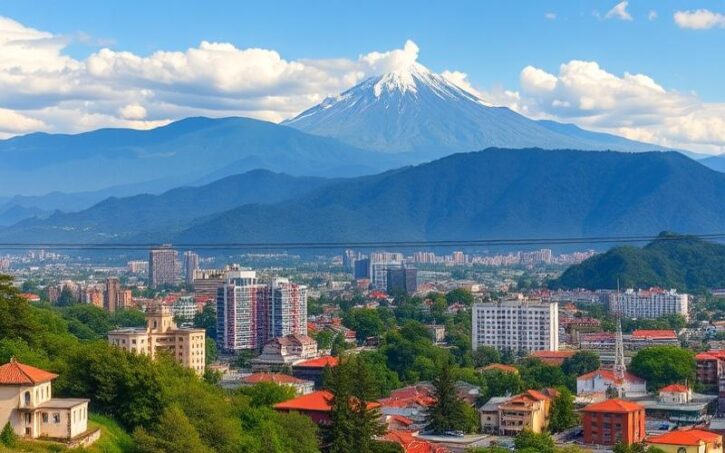
The capital, Guatemala City, perfectly illustrates this transition. Its metropolitan population approaches 3.23 million inhabitants, with annual growth exceeding 2%. This demographic concentration fuels demand for housing, offices, warehouses, and retail, driving prices upward, especially in central areas and the most sought-after neighborhoods.
Key residential market indicators
The table below summarizes some key benchmarks of the Guatemalan residential market.
| Indicator | Value / Recent Estimate |
|---|---|
| Annual price growth (2024) | +5% |
| Expected price growth (2025) | +3% to +7% (urban) |
| Real estate transactions (2024 vs 2023) | +7% |
| Share of foreign buyers (2024) | ≥ 20% of transactions |
| Projected annual market growth (2024–2029) | ≈ 6.0% to 6.5% |
| Residential market value (2025 projection) | ≈ 0.41 trillion USD |
Behind these aggregate figures, the market reality is highly segmented. Tourist areas and prime neighborhoods in the capital are experiencing increases well above the national average, while rural regions remain more sluggish, even stagnant.
Guatemala City: verticalization, rental yields, and land pressure
Guatemala City is the nerve center of the country’s real estate market. This is where the majority of investments, infrastructure projects, and new residential and commercial developments are concentrated.
Rising land costs in central neighborhoods are pushing the market toward verticalization. Apartment towers are proliferating, especially in Zones 10, 14, 15, and 16, as well as in transforming areas like Zone 4 or the Cayalá urban complex. The scarcity of available land downtown is prompting developers to densify rather than sprawl.
Prices per square meter illustrate this premium on centrality.
| Location in Guatemala City | Indicative Price per m² (USD) | Dominant Property Type |
|---|---|---|
| Zones 10 & 14 (luxury neighborhoods) | 1,800 – 2,500 | High-end apartments |
| Zones 15 & 16 (upper/mid-range neighborhoods) | 1,200 – 1,800 | Condominium apartments and houses |
| Zones 9 & 13 (urban “entry-level” segment) | 900 – 1,200 | Apartments |
| Periphery / suburbs (San Lucas, etc.) | 600 – 1,000 | Houses in gated communities |
Rents follow the same logic, with solid yields downtown.
| Rental Type in Guatemala City | City Center (USD/month) | Periphery (USD/month) | Estimated Gross Yield |
|---|---|---|---|
| 1-bedroom apartment | 570 – 900 | 340 – 600 | ≈ 9% in center |
| 3-bedroom apartment | 6,000 – 16,000 GTQ (equiv.) | 4,000 – 6,900 GTQ | 6.5% – 8% |
| Overall rental yield (residential) | 5% – 8% (up to 10.3% in some segments) |
This rental profitability, higher than in many North American or European markets, attracts both local investors and international buyers, notably from the United States and Europe.
A city shaped by infrastructure and mobility
Major infrastructure projects play a decisive role in reshaping the market. The Metro Riel project, a 21 km light rail system with 20 stations, is the most emblematic example. Areas near future stations, especially in Zones 10 and 4, have reportedly seen value increases of around 15 to 20% since construction began.
Investments in transport infrastructure (widening ring roads, new bridges, modernizing the electric bus fleet) and healthcare (new hospitals) are improving connectivity and quality of life, thereby helping to revitalize and make attractive previously neglected neighborhoods.
Between rent control and demand for security
The capital, however, remains a complex market. Stricter rent control measures are beginning to make certain rental products less attractive for investors, with yields that can drop to around 2.9% on new residences poorly positioned relative to the market.
With a homicide rate of 16.7 per 100,000 inhabitants in 2023, security concerns are strong. This leads to increasing demand for gated communities, with 24/7 protection, access control, cameras, security guards, and shared services.
Developers have understood this well: most new upscale residential projects now include a package of amenities that has become almost standard – pool, gym, green spaces, coworking, playgrounds, dog parks, sports courts – meeting both this demand for comfort and a “city within a city” logic.
Antigua Guatemala: colonial heritage, land tension, and tourist yield
Antigua Guatemala holds a special place in the country’s real estate landscape. Classified as a UNESCO World Heritage Site, this former colonial capital has a very specific market, highly tourist-oriented, heavily regulated, and marked by chronic scarcity of developable land.
The city welcomes approximately 1.2 million visitors per year and hosts an expatriate community of around 3,000 foreign residents, plus many retirees, digital nomads, and international investors seeking colonial charm. It is estimated that about 60% of buyers in Antigua are Guatemalans (often from the capital) and 40% are foreigners, mainly North American and European.
Prices boosted by scarcity and regulations
Prices reflect this international demand and heritage preservation constraints. The historic center, where facade modifications are strictly regulated, has become a very high-value niche market.
| Segment in Antigua Guatemala | Indicative Price per m² (USD) | Property Price Range (USD) |
|---|---|---|
| Historic center – colonial houses | 2,000 – 3,000 (restored) | 250,000 – 500,000 (up to $1M+) |
| Near periphery – modern houses/apartments | 1,500 – 2,000 | 85,000 – 200,000 (apartments) |
| Nearby villages (San Miguel Dueñas, Ciudad Vieja, etc.) | 1,000 – 1,500 | 200,000 – 350,000 (gated communities) |
Restored colonial houses in the center have moved from a range of $180,000–350,000 to $250,000–500,000 in just a few years, representing increases of 4 to 7% per year since 2020. Lots in surrounding municipalities have seen their price rise from about $30 to $120/m² in 2020 to $50 to $200/m² in 2025.
Necessary renovations on a colonial house in a UNESCO area are often estimated between $30,000 and $80,000.
A market boosted by tourist rentals
On the rental front, Antigua is one of the most dynamic markets in the country, driven by short-term stays and platforms like Airbnb. Seasonal rentals typically show an occupancy rate of 40 to 55% over the year, but can reach up to 98% during peak periods (Holy Week, year-end).
Daily rental rates range from $72 to $130 on average for tourist rentals, generating annual revenues of $13,000 to over $15,000 for a well-managed property. Observed gross yields range from 8 to 12% for colonial houses converted into vacation rentals, and 5 to 7% for apartments leased annually.
The local monthly salary in quetzales, i.e., $200 to $375, highlighting the unaffordability of rents in Antigua.
Market expansion toward the “southern corridor”
Facing historic center saturation, development is gradually shifting toward a “southern corridor” that includes Ciudad Vieja and San Miguel Dueñas, about twenty minutes from the city. Projects like Hacienda del Comendador, Antigua Gardens, or Portal de las Rosas offer houses in gated communities, often with volcano views and full amenities (clubhouse, green spaces, security).
Land in this corridor trades roughly between just over $40,000 and $185,000, while new houses range from $285,000 to $775,000 depending on size, finishes, and views. This is clearly an upper-middle class and expatriate market, with strong medium-term appreciation potential (forecasts of 6 to 8% annual increase over five years).
The boom of tourist destinations: Lake Atitlán, the Pacific, and emerging regions
Beyond the capital and Antigua, several tourist regions are experiencing a very clear real estate upswing, driven by the growth of international tourism, remote work, and seasonal rentals.
Lake Atitlán: eco-tourism, second homes, and high yields
Lake Atitlán is the second most visited tourist site in the country, with iconic villages like Panajachel, San Pedro La Laguna, and San Marcos La Laguna. The region attracts foreign retirees, long-term travelers, and a new generation of remote workers drawn by the natural setting and lower cost of living compared to Antigua.
Real estate prices vary greatly depending on proximity to the lake and views.
| Location around Lake Atitlán | Indicative Price per m² (USD) | Property Price Range (USD) |
|---|---|---|
| Panajachel / Santa Catarina (lakeside) | 1,300 – 2,200 | 300,000 – 800,000 |
| San Marcos / San Pedro (lake view) | 1,000 – 1,500 | 150,000 – 350,000 |
| Hilltop villages (mountain view) | 800 – 1,200 | 120,000 – 250,000 |
Appreciation is progressing on average 3 to 7% per year, with particularly attractive rental yields: some properties achieve gross annual yields of 7 to 10%, even around 8.4% on well-positioned short-term rental products. Panajachel, for example, has about a hundred active rentals with average monthly revenue close to $1,000 and an occupancy rate of roughly 33%.
The cultural project “Pintando El Cambio” visually transformed the village of Santa Catarina Palopó by painting 760 out of 850 houses. This initiative significantly increased tourist traffic, which in turn stimulated interest in the local real estate market. This case illustrates how cultural interventions and real estate market dynamics can feed each other.
Pacific Coast and coastal areas: opportunities and climate vulnerabilities
The Pacific coastline, with destinations like Monterrico, attracts a growing number of investors interested in beachfront residences and resort projects. Prices per square meter are still competitive, often between $1,200 and $2,000 for upscale beachfront properties.
However, these areas face increased risk linked to climate change. Sea level rise in the Caribbean – estimated at 3.6 mm per year, above the global average – and the increase in extreme events (hurricanes, late storms like Rafael or Otto) make the coastal market much more volatile. Investors must factor in higher construction costs for resilience, higher insurance premiums, and a risk of vacancy in case of repeated climate events.
Emerging regions: Quetzaltenango, Retalhuleu, Cobán, Río Dulce
Secondary cities like Quetzaltenango (Xela) or departments like Retalhuleu and Alta Verapaz are increasingly attracting investor attention.
Urban real estate prices in Quetzaltenango range between $700 and $1,100 per square meter.
Retalhuleu benefits from an industrial boom and a massive public investment program, notably a $154 million highway connecting Suchitepéquez, which generated value increases of 10 to 15% along its route. Cobán and the Alta Verapaz region are positioning themselves in eco-tourism and conservation (reforestation projects covering several hundred hectares), which is beginning to translate into increased interest in rural properties with tourist or eco-responsible potential.
Río Dulce and Livingston, with their access to the Caribbean Sea and Garifuna culture, also represent fast-developing niche markets, driven by boating, marinas, and adventure tourism.
A growing international appeal
One of the defining features of current trends is the rise in foreign demand. International buyers now account for more than 20% of transactions, a figure that has been increasing for several years.
The motivations are multiple: relatively open legal environment (equal treatment for local and foreign investors, no exchange controls, possibility to hold 100% of assets except in sensitive border or coastal areas), prices still significantly lower than in Costa Rica or Panama for often higher yields, and strong appreciation prospects, especially in tourist regions.
A foreigner cannot directly own land within a 3 km radius of the coastline or 15 km of the borders. For these zones, structures via Guatemalan companies or long-term leases with the OCRET agency are necessary. Outside these areas, purchase (houses, apartments, land, commercial premises) is free, subject to obtaining a tax ID (NIT) and following the standard notarial procedure.
Acquisition costs for buyers – local as well as foreign – remain reasonable compared to many mature markets: generally 5 to 7% of the purchase price, including transfer taxes (often 3% for a resale property, 12% VAT for a new property), notary and registration fees (around 0.15%), stamp duties, and legal fees (1 to 2%). Annual property tax (IUSI) is progressive but moderate, with most owners paying between 0.2 and 0.6% of the declared value.
Guatemala stands out in the region for its agricultural yields.
| Investment Segment | Typical Gross Yield | Key Locations |
|---|---|---|
| Long-term residential | 5.7% – 6.5% | Guatemala City, Quetzaltenango |
| Tourist residential (short stay) | 6.5% – 8.4% | Antigua, Lake Atitlán, Pacific |
| Colonial properties (Antigua) | 6% – 9% | Historic center and surroundings |
| Executive rentals (Zones 14–15 of capital) | 5.5% – 6.8% | High-end neighborhoods |
| Commercial projects (offices, retail, logistics) | 8% – 12% | Guatemala City, logistics corridors |
This combination of strong rental demand, appreciation prospects, and relatively moderate taxation explains the growing interest from institutional and individual investors, particularly European, in markets like Antigua, Lake Atitlán, or the prime neighborhoods of the capital.
Affordable housing and structural deficit: the flip side
Behind the buzz of premium and tourist segments lies a difficult social reality. Guatemala faces a housing deficit estimated at over 1.3 million units, with some sources even citing up to 2.2 million. About 60% of the population lives below the poverty line, even as the official unemployment rate remains relatively low (3%).
The Guatemalan government allocated about 750 million quetzales to credit programs for affordable housing.
International actors like the Central American Bank for Economic Integration (CABEI) or the US Development Finance Corporation are also financing social or affordable housing projects, with over $40 million already injected into this segment. NGOs like Habitat for Humanity play a major role: in fiscal year 2025 alone, the organization reportedly assisted nearly 75,000 people in Guatemala through housing construction, rehabilitation, or repair, mobilizing almost 4,000 volunteers.
The national ‘Price to Income’ indicator exceeds 11, illustrating the high cost of real estate relative to incomes in Guatemala.
Green turn: the spectacular rise of sustainable housing
One of the most notable trends in recent years is the explosion of interest in ecological and energy-efficient construction. Demand for “green” housing projects jumped 25% in 2023, and eco-responsible properties reportedly saw demand increase by about 25% as well.
On the energy front, the transition is tangible: the share of solar in national electricity production went from 1.83% in 2022 to over 17% in 2023. The country has adopted a National Energy Efficiency Policy covering 2023–2050 and has committed under the Paris Agreement, with ambitious targets for renewables, net metering, and tax incentives for solar installations.
In 2021, approximately 630,000 m² of certified sustainable construction were delivered in Guatemala, for an investment of about $68 million.
Examples of pioneering projects
Several emblematic projects illustrate this green turn:
Examples of residential and university projects in Guatemala that have obtained EDGE certifications, demonstrating significant savings in energy, water, and materials.
New urbanist community of over 850 homes. Savings of about 40% on energy, 30% on water, and 30% on materials. Offers more than 120 m² of green space per inhabitant.
Subdivision of 158 houses in Ciudad Vieja. 28–30% reduction in energy consumption, 29–31% water savings, and over 50% reduction in embodied energy of materials.
Building at Universidad del Valle in Guatemala City, EDGE certified. 40% reduction in energy consumption, 42% water savings, and 55% reduction in embodied energy, thanks to bioclimatic design and solar panels.
Vertical residential project in Guatemala City, in EDGE pre-certification. Targets of 20% energy savings, 28% water savings, and 67% reduction in embodied energy of materials.
These performances are not just an environmental gesture: by reducing electricity and water bills, they enhance the economic appeal of these properties, especially in a context of rising energy costs.
Beyond major commercial projects, more community-based or experimental initiatives (earthbag schools, “bottle schools” using plastic bottles filled with waste, compacted tire houses, stabilized earth blocks like “interblocks”) are helping to spread a culture of sustainable construction and reduce the ecological footprint of popular housing.
PropTech and digitalization: a quiet revolution of the sector
Another fundamental transformation: the rise of real estate-specific technologies, or PropTech. While digitalization of the Guatemalan sector is still incomplete, it is accelerating rapidly, driven notably by the Chamber of Real Estate Brokers (CBR Guatemala) and a new generation of startups.
Customer relationship management (CRM) tools, virtual tours, e-signatures, listing platforms, and big data analysis are becoming widespread. A growing share of agents use drones for aerial footage – properties benefiting from these views sell up to 68% faster – and virtual tours have become common in metropolises like Guatemala City, which has over 19 million connected smartphones.
Platforms such as Intercambio Inmobiliario, multi-listing portals (Encuentra24, Mapa Inmueble, Portal GPI), and new players using artificial intelligence and geographic information systems (like AstraData) aim to bring transparency, speed, and reliability to a market traditionally based on intuition and personal networks. Their main goal is to reduce time-to-market, which can average 360 days for a sale and 90 days to obtain a mortgage in Latin America.
This evolution is part of a continental movement: in 2021, venture capital invested in PropTech startups in Latin America and the Caribbean multiplied sixfold compared to 2020, reaching over $1.3 billion across 23 deals. Guatemala is beginning to carve out a place in this ecosystem, through its participation in regional events like Proptech Latam or REInn LATAM.
A contrasted market, between opportunities and risks
Current trends paint a picture of a Guatemalan real estate market in full transformation: sustained price appreciation, competitive rental yields, the rise of tourist destinations, the boom of gated communities and green residences, and the digitalization of professional practices.
Land titles can be fragile, especially in rural or poorly surveyed areas, requiring thorough legal due diligence. Furthermore, exposure to natural hazards (earthquakes, volcanic activity, storms) requires proper design and insurance for properties, particularly on the coasts and in the mountains.
Politically, Guatemala has shown a certain real estate resilience, with prices continuing to rise despite post-electoral tensions. But regulatory changes – whether regarding taxation, rent control, or environmental standards – can quickly alter the profitability of certain segments, especially rental ones.
Finally, the social question remains central. The strong presence of foreign investors and tourism programs, combined with a very high production of luxury housing (about 15% of new residential projects), risks widening territorial fractures and creating “dual-speed cities” if the affordable housing segment fails to keep up.
Outlook: toward a greener, denser, and more selective market
In the medium to long term, several driving forces seem to be emerging for the real estate market in Guatemala.
First, the trend toward urban densification and verticalization is expected to continue, particularly in large cities and high-value land areas, driven jointly by urbanization, the scarcity of available land, and new mobility (like Metro Riel). Condominium apartments, coliving projects, and student residences should continue to gain ground over the traditional single-family home.
Sustainable housing, currently a niche market, is expected to become the norm. This transition is driven by rising energy prices, tax incentives, public policies (such as the 2023-2050 energy efficiency targets), and growing demand from buyers, especially younger ones, for ecological solutions. In this context, environmental certifications (LEED, EDGE, CASA Guatemala) will become a decisive competitive advantage, including for mid-range housing.
The segment of tourist residences and short-term rentals should remain very strong, driven by annual tourism growth estimated at between 7 and 9%, traveler flows facilitated by visa-free policy with 83 countries, and an increasingly pronounced “digital nomad” effect. Antigua, Lake Atitlán, the Pacific, and certain eco-tourist corridors should be the main beneficiaries, with occupancy rates during high season potentially reaching record highs.
The social sustainability of the real estate model depends on the ability to resolve the massive housing deficit, urban land pressure, and price increases due to international demand, by mobilizing the state, donors, and private actors to ensure stability and social acceptability.
For investors as well as households, Guatemala today offers a rare combination: prices still low compared to regional standards, high yields, a resilient market, but also an environment where information remains patchy and territorial disparities are very strong. Navigating this landscape requires a good understanding of local specificities, particular attention to legal and environmental security, and a long-term vision capable of integrating both the opportunities and vulnerabilities of the country.
In this context, current real estate market trends in Guatemala are not merely a reflection of economic growth or a tourism boom. They tell, more broadly, the accelerated transformation of a country reinventing itself through its cities, landscapes, and housing – between modernity, heritage, and a quest for more sustainable and inclusive development.
Disclaimer: The information provided on this website is for informational purposes only and does not constitute financial, legal, or professional advice. We encourage you to consult qualified experts before making any investment, real estate, or expatriation decisions. Although we strive to maintain up-to-date and accurate information, we do not guarantee the completeness, accuracy, or timeliness of the proposed content. As investment and expatriation involve risks, we disclaim any liability for potential losses or damages arising from the use of this site. Your use of this site confirms your acceptance of these terms and your understanding of the associated risks.

Cyril Jarnias is an independent expert in international wealth management with over 20 years of experience. As an expatriate himself, he is dedicated to helping individuals and business leaders build, protect, and pass on their wealth with complete peace of mind.
On his website, cyriljarnias.com, he shares his expertise on international real estate, offshore company formation, and expatriation.
Thanks to his expertise, he offers sound advice to optimize his clients' wealth management. Cyril Jarnias is also recognized for his appearances in many prestigious media outlets such as BFM Business, les Français de l’étranger, Le Figaro, Les Echos, and Mieux vivre votre argent, where he shares his knowledge and know-how in wealth management.





