
 Published on and written by Cyril Jarnias
Moving abroad and buying property on site is both a life project and a financial bet. In Slovenia, this bet is attracting more and more expatriates: a dynamic market, a safe country, still reasonable prices for the European Union, moderate taxation, and decent rental yields. But behind this picture-postcard image, the regulations are precise, the market is highly segmented, and certain risks remain underestimated by foreign buyers.
This guide provides a pragmatic analysis of the Slovenian real estate market, intended for expatriation or rental investment projects. It is based exclusively on data available in the mentioned research report.
Why Slovenia Attracts Expat Investors
Slovenia ticks several boxes that immediately resonate with an expat: safety, stability, quality of life, and a real estate market that is still affordable by European standards.
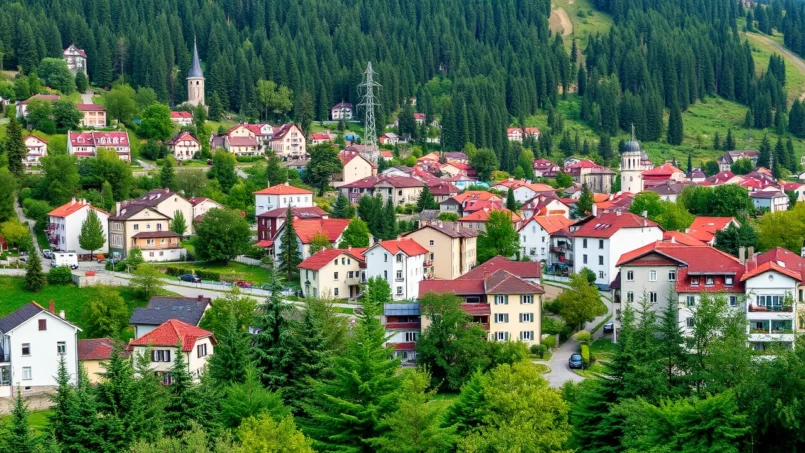
The country ranks among the safest in the world, with a very low crime rate. About half of its territory is covered by forests, making it one of the greenest countries in Europe, behind Finland and Sweden. A member of the European Union since 2004 and the eurozone since 2007, it offers a monetary and regulatory environment familiar to Europeans.
Housing prices in Slovenia have increased by about 70% over the past ten years.
The table below provides a concise overview of the market strengths for an expatriation-investment candidate.
| Key Factor | Situation in Slovenia |
|---|---|
| Safety | 8th safest country in the world, very low crime |
| Environment | ~50% forest cover, high quality of life, diverse landscapes |
| Economic Framework | Projected 5-year growth: +10.8%, GDP per capita up 11% in 5 years |
| European Framework | EU member (2004) and eurozone (2007) |
| Rise in Property Prices | +53.9% over 5 years, ~70% over 10 years |
| Gross Rental Yields | Typically 4–5%, up to 7–8% in some tourist segments |
| Annual Holding Cost | Moderate local taxation (often a few hundred euros per year) |
For an expat, this mix of macroeconomic stability, a secure environment, and steady real estate appreciation creates a favorable ground for a long-term wealth strategy.
Understanding the Legal Framework for Foreigners
Even before discussing yields or location, an expat must check whether they have the right to buy, and in what form. In Slovenia, everything starts from the principle of reciprocity.
The Reciprocity Principle and the Main Buyer Categories
Since 2003, a foreigner can acquire property in Slovenia if, conversely, a Slovene can buy property in their country of origin. This is the core of the system, enshrined in the Constitution (Article 68) and supplemented by international agreements.
In practice, several categories must be distinguished.
Citizens of the EU, EEA, and a Few Equivalent Countries
Nationals of the European Union, Iceland, Liechtenstein, and Norway can freely purchase real estate in Slovenia, whether residential or commercial. They enjoy exactly the same rights as Slovenes: no quotas, no residency requirement, no special authorization.
U.S. and OECD citizens benefit from privileged property access in France through reciprocity agreements or treaties. Americans can buy without restrictions, while Swiss nationals must hold a permanent residence permit (C permit) to acquire property.
For these audiences, buying an apartment in Ljubljana or a house in Maribor is administratively close to a standard intra-EU transaction.
Third-Country Citizens: Restrictions and Solutions
For non-Europeans from countries without a reciprocity agreement, the framework becomes more complicated. Direct access to ownership is either impossible or subject to authorization from the Ministry of Justice, particularly for nationals of EU candidate countries such as Albania, North Macedonia, Montenegro, or Serbia.
In this case, several routes exist:
– purchase via a Slovenian company (often a limited liability company, d.o.o.);
– acquisition by inheritance, if property is passed down through succession;
– access to ownership after obtaining Slovenian citizenship, sometimes through marriage, subject to reciprocity.
Minimum share capital required to set up a d.o.o. company in Slovenia.
What Property Ownership Does Not Automatically Grant: Residency and Visa
A crucial point for an expat: owning property in Slovenia does not automatically confer a right of residence. There is no Slovenian “golden visa” linked to a simple real estate purchase.
However, holding a home can strengthen a residence application filed on other grounds (business creation, employment, retirement, remote work, family reunification). For instance, there are schemes to obtain a residence permit through investment in a Slovenian company that itself owns property, provided a minimum amount is injected (e.g., €50,000 into the business), real activity is demonstrated, and the person actually resides part of the year.
For an expatriation project, the strategy must therefore articulate simultaneously:
– the legal channel for purchase (directly or via a company);
– the basis for the right of residence (professional activity, company creation, etc.).
How a Real Estate Purchase Works in Slovenia
On paper, the acquisition process is relatively simple. In practice, it remains very formal and requires following a series of well-codified steps, especially when you are not on the ground.
Basic Documents and Prerequisites
Regardless of the future owner’s status, a number of items are essential:
– a valid passport;
– a Slovenian tax number (obtained via a dedicated form from the tax administration);
– a personal identification number (EMŠO) for certain procedures;
– proof of financial capacity and source of funds (anti-money laundering);
– a local bank account to make payments and receive rent.
Obtaining the tax number and EMŠO takes a few days, but it conditions the rest of the process. The local bank will also typically require proof of address (rental or purchase contract).
Typical Transaction Timeline
Even though each case has its specifics, a common framework appears in most purchases.
To find a property, expats typically use major local real estate portals such as Nepremicnine.net or Bolha.com, or contact agencies specializing in foreign clients like Slovenia Estates, Elite Property Slovenia, or Think Slovenia. It is essential to verify the agency’s license with the Chamber of Commerce and Industry of Slovenia before any commitment.
2. Preliminary Checks A legal and technical audit is highly recommended. This involves:
– reviewing the land register extract (Zemljiška knjiga);
– verifying the chain of title, absence of mortgages, encumbrances, or disputes;
– checking building permits, completion certificates, and the energy performance certificate;
– having a technical inspection carried out (between €200 and €600).
After an agreement, a preliminary contract is signed. It is usually accompanied by a deposit of 10% of the price, paid into an escrow account or with the notary. If the buyer unjustifiably withdraws, this deposit may be forfeited.
4. Drafting and Signing the Notarial Deed The final contract must be executed before a notary to be valid. However, many foreign buyers entrust the drafting of the deed to a specialized lawyer, with the notary then merely authenticating it. The deed must include a clause for “authorization to register in the land register”, essential for recording the new owner.
5. Payment of the Price and Taxes After signing, full payment is made, often by transfer from the buyer’s Slovenian account. The seller has a deadline (generally 15 days) to declare the sale to the tax administration in order to pay the transfer tax of 2% within 30 days.
The official transfer of ownership only takes effect after the deed is registered in the land register. This verification typically takes a few days, but final registration may require one to two months. Without this formality, the contract alone is not enough to assert your property rights against third parties.
In total, for a European or equivalent buyer, a standard transaction can be completed in one to two months. For a non-European subject to reciprocity or going through a company, the total duration can extend to three to six months, especially if approval from the Ministry of Justice is required.
Role of Professionals and Fee Structure
Using a real estate agent and a lawyer is not theoretically mandatory, but it is highly recommended for an expat.
The main transaction costs, excluding the price of the property, are broken down into several items.
| Expense Item | Order of Magnitude (excluding property price) |
|---|---|
| Transfer tax (existing property) | 2% of the sale price |
| VAT (new property) | 9.5% for residential, 22% for commercial |
| Agency fees | 1–4% of the price (legally capped at 4% + VAT), often split |
| Notary fees | Approximately 0.1–1% of the price, or €300–800, + 20% VAT |
| Lawyer fees | Typically 0.5–2% of the price (or €800–€2,000) |
| Land register fees | Approximately 0.01–0.5% of the price (often €100–€250) |
| Translations, miscellaneous documents | Approximately €500 |
| Technical inspection | €200–€600 |
| Bank and currency exchange fees | 0.5–2% of amounts transferred (depending on bank and exchange rate) |
In most cases, the total acquisition cost (excluding financing and renovation costs) falls within a range of 3 to 7% of the property price. By European standards, this places Slovenia among countries with relatively moderate transfer costs.
Where to Invest in Slovenia as an Expat
For an expat, the question is not just about finding a good yield, but also a pleasant place to live, accessible and liquid for resale. The Slovenian market is highly regionalized, with significant price and yield differences between the capital, the coast, the Alps, and the interior.
Ljubljana: The Economic Heart and the Tightest Market
The capital alone accounts for about a quarter of national GDP. It attracts students, young professionals, international executives, and urban tourists. Unsurprisingly, it is also the most expensive market in the country.
Recent data show high prices per square meter, especially for apartments.
| City / Segment (2024–2025) | Approx. Median Price Apartments | Approx. Median Price Houses |
|---|---|---|
| Ljubljana (overall) | ~€4,700–4,800/m² | ~€3,300–3,700/m² |
| Ljubljana city center | €3,500–5,500/m² (can exceed €5,000/m²) | Up to €8,000/m² for very high-end |
Gross yields are typically 4 to 5% for well-located apartments, with rents per square meter among the highest in the country. Simulations on representative properties give:
| Apartment Type (Ljubljana) | Estimated Price | Estimated Monthly Rent | Gross Annual Yield |
|---|---|---|---|
| Studio in center | €215,000 | €740 | ~4.1% |
| 1-bedroom in center | €350,000 | €1,300 | ~4.5% |
| 2-bedroom | €390,000 | €1,500 | ~4.6% |
| 3-bedroom | €598,000 | €2,050 | ~4.1% |
For an expat who wants to live and rent simultaneously (partial co-living, renting a second apartment), Ljubljana remains the most natural choice: strong demand, limited vacancy, likely long-term appreciation (projected annual increase between 4 and 7% in coming years).
Maribor and Other Major Secondary Cities
Maribor, the country’s second city, offers an interesting compromise between price and yield. Apartments are significantly cheaper than in Ljubljana, while rental demand remains strong (university, employment base, proximity to vineyards and ski resorts).
This number represents the order of magnitude of recently observed median values.
– approximately €2,700–2,900/m² for apartments;
– approximately €1,400–1,600/m² for houses.
Gross yields can climb to 6–8% for well-located apartments, especially if targeting students and young professionals. For an expat with a tighter budget, or wanting to diversify across multiple units, Maribor represents a very credible entry point.
Other cities like Kranj, Celje, Nova Gorica, Velenje, or Novo Mesto often have prices below those of Ljubljana and the coast, with similar or slightly higher yields, at the cost of slightly lower liquidity upon resale.
Adriatic Coast: Piran, Portorož, Koper, Izola
The Slovenian coastline, though very short, is a highly sought-after market. Piran and Portorož, in particular, show price levels per square meter comparable to or even higher than those of Ljubljana.
Some orders of magnitude:
| Coastal Town (2024–2025) | Median Apartment Price | Median House Price |
|---|---|---|
| Piran | ~€5,480/m² | ~€3,900/m² (and up) |
| Portorož | ~€5,100/m² | ~€4,800/m² |
| Izola | ~€4,900/m² | ~€3,400/m² |
| Koper | ~€4,700/m² | ~€2,800–2,900/m² |
Gross yields on the coast often range between 4 and 7% by combining the high season (high rates, occupancy exceeding 80% in summer months) and a quieter low season. High-end villas or houses can achieve higher yields if operated as tourist rentals, but they require more intensive management, especially with new restrictions on short-term rentals.
For an expat, investing in a seaside real estate market allows you to benefit from tourism seasonality, but it means a high entry ticket and compliance with increasingly strict short-term rental regulations.
Alps, Lakes, and Ski Resorts: Bled, Bohinj, Kranjska Gora
The Alpine and lake regions, around Bled, Bohinj, or Kranjska Gora, are at the heart of Slovenia’s “picture-postcard” image. These areas are very touristic, with a gradual upscaling of accommodations.
Maximum price per square meter for apartments and small houses with a view of Lake Bled in Slovenia.
In terms of yield, seasonal rentals there show gross rates of 5 to 8%, even up to 10% in the most sought-after resorts, thanks to the combination of winter season (skiing) and summer season (hiking, nature). However, vacancy can be higher in shoulder seasons, which requires a well-calibrated business model.
For an expat sensitive to a mountain lifestyle, an investment in these regions is an interesting lever, provided you accept marked seasonality of income.
Countryside, Vineyards, and Emerging Areas
The wine regions (Goriška Brda, Dolenjska, Posavje), the Karst, or certain valleys (Soča, Logar) appeal to more “lifestyle” profiles: stone houses, renovated farms, rural cottages, green tourism projects. Prices are more affordable, often between €800 and €2,000/m², but market depth is limited.
Gross rental yields typically range between 3 and 6%, with a real dependence on the investor’s ability to develop a differentiating offering (wine tourism, wellness stays, etc.). This type of project is better suited to expats who plan to settle year-round and manage a hospitality or tourism activity themselves.
Taxation and Holding Costs: The Reality Behind the Yield
For an expat, the gross yield shown in an ad means little until you factor in local taxes, expenses, the tax system of your country of residence, and double tax treaties.
Acquisition Costs and Entry Taxation
For an existing property, the property transfer tax is 2% of the sale price, paid by the seller but necessarily integrated into the overall transaction economics. For a new property, this tax is replaced by VAT: 9.5% for residential and 22% for commercial.
In addition to these taxes, the buyer must include in their simulation:
– notary and lawyer fees;
– land register fees;
– possible agency fees;
– bank costs (processing fees, currency exchange) if financing via a loan.
Overall, an expat can reasonably expect total ancillary costs of 4 to 7% of the price, depending on whether they use a lawyer and whether there is a mortgage.
Annual Taxation: A Moderate Burden
Slovenia does not yet have a unified national property tax. Two main mechanisms coexist at the local level:
In Hungary, municipalities set a fee for the use of building land (NUSZ). Additionally, a local property tax is applied, with rates varying by use (residential or commercial) and the cadastral value of the property.
For residential housing, rates are generally between 0.10% and 1% of the value, often resulting in modest amounts in practice: around €80 to €350 per year for an apartment, and €200 to €900 for a house, depending on size and municipality.
A reform proposal aiming to introduce a single wealth tax on real estate, around 1.45% of the estimated value (with adjustments for primary residences), has been mentioned but faces strong opposition. At this stage, it is a regulatory risk to monitor rather than a certainty.
Rental Income Tax: Regimes and Rates
Rental income received in Slovenia is taxable, including for non-residents.
For individuals, the principle is as follows:
Rental income is taxed under two main regimes. By default, it is taxed at a flat rate (typically 25–27.5%), after a standard deduction for expenses. It is also possible, under conditions, to opt for taxation on actual profits. This regime allows deducting actual expenses (management fees, renovation work, loan interest, etc.) from taxable income, but involves more burdensome accounting formalities.
For short-term tourist rentals, this falls into the category of tourism activities, with obligations to:
– register guests and overnights;
– collect and remit a tourist tax (typically between €1 and €3 per person per night);
– declare the turnover.
For companies, rental income is subject to corporate income tax at the standard rate of 19%. This rate will temporarily increase to 22% between 2024 and 2028 to fund reconstruction after the 2023 floods. Expenses necessary to generate this income (maintenance, management, depreciation, interest) are generally deductible.
Capital Gains upon Resale
Capital gains on real estate for individuals are subject to a degressive scale that encourages long-term holding:
– sale before 5 years: rate around 25–27.5%;
– between 5 and 10 years: 15–20%;
– between 10 and 15 years: 10–15%;
– between 15 and 20 years: 5–10%;
– beyond 20 years: full exemption.
The primary residence, if occupied for at least three years before the sale, is exempt. For very old properties acquired before 2002, capital gains are also exempt.
For companies, capital gains are simply included in the taxable result at the corporate income tax rate.
Finally, for expats residing in a country with a tax treaty with Slovenia (e.g., France), double taxation rules apply: Slovenian rental income is taxable in Slovenia, and the tax paid locally is taken into account in the calculation of tax in the country of residence, via a tax credit or exemption method, depending on the treaty.
Financing Your Purchase: What the Slovenian Banking System Offers
The Slovenian banking system is considered mature and well-regulated. Major national and foreign banks operate there: NLB, Nova KBM, SKB, Intesa Sanpaolo, UniCredit, Raiffeisen, Erste, Sparkasse, and the Austrian bank VOLKSBANK, very active with foreign clients.
Typical Loan Conditions for a Non-Resident
Slovenian banks accept financing for non-residents, but with stricter conditions than for locals. The main points are as follows:
For a non-resident, the loan-to-value (LTV) ratio is generally between 50% and 70%. The required down payment is between 30% and 50% of the purchase price, and may be higher if the profile is considered risky. Applicable interest rates are slightly higher than for a resident, though they remain aligned with eurozone standards. Finally, an official appraisal report is required to determine the property’s benchmark value.
Some institutions specifically target international clients. VOLKSBANK can go up to 70–75% LTV for creditworthy clients, while SKB Banka finances up to 50% on an existing property, or even 70% for a property under construction or renovation, with a minimum down payment of about 10%.
Application and Timeline
For an expat, preparing the application is often the most time-consuming part. Banks expect:
To put together a complete loan application and facilitate its processing, here are the main categories of documents to prepare.
A valid passport and recent proof of address (electricity bill, rent receipt…).
Proof of income (employment contracts, balance sheets for self-employed) and bank statements from recent months.
Proof of your assets (savings, investments) and liabilities (ongoing loans, debts).
Explanations and justifications for the source of funds provided (KYC/SoF process – Know Your Customer / Source of Funds).
All documents related to the property: land register extract, draft sale contract, plans, and appraisal reports.
Indicative timelines typically break down as follows:
– pre-approval: 1 to 3 weeks;
– detailed processing: 2 to 6 weeks;
– disbursement of funds after signing: 1 to 2 weeks.
For an expat, it is often wise to use a broker specialized in international financing, especially to handle currency exchange, multi-currency aspects, or income received in several countries. Several players have specialized in this niche, in partnership with European banking networks.
Remote Property Management: A Key Issue for Expats
Buying a property in Slovenia as a rental investment while living abroad immediately raises the question of management. Poor organization can quickly turn a good asset into a source of stress and losses.
Traditional Agencies, Digital Agencies, and Services for Expats
On the ground, many agencies offer both purchase and management. Management fees for long-term rentals typically range between 8 and 12% of the monthly rent. More digital platforms, which are becoming common in other European countries, offer remote management models via mobile apps, with lower fees (3.9 to 5% of the rent), in exchange for greater service standardization.
An expat should be particularly attentive to several points:
To select a rental manager, evaluate several essential aspects: transparency on all fees (management, tenant search, move-in/move-out inspections, rent guarantee insurance, repairs); the responsiveness of their network of tradespeople for interventions; the quality of reporting (rent statements, invoices, work tracking, reminders for late payments); and finally, the scope of legal coverage, particularly in case of a dispute with a tenant.
Management fees are generally deductible from rental income under the actual cost regime, which partially reduces their net impact.
Choosing Between Long-Term and Short-Term Rentals
For an expat, the temptation of seasonal rentals like Airbnb is strong, especially in Ljubljana, on the coast, or in the Alps. However, Slovenia has recently tightened its regulations through a new law on tourist accommodation.
The main limitations concern the maximum number of rental days per year for a property not registered as professional tourist accommodation:
– 60 days per year for an apartment in a multi-unit building;
– 150 days per year for a dwelling in a single-family or two-family house.
Discussions are underway to lower the rental ceiling to about 30 days per year for non-professional owners, while also imposing energy performance requirements.
For an expat, this means that: understanding cultural differences, mastering the local language, and adapting to social norms are essential for successful integration in a new country.
– seasonal renting “on the side” is increasingly regulated;
– a business model based on intensive Airbnb-style use must account for these caps and often requires registration as a tourist activity, with associated constraints;
– long-term rental, more stable, remains the most secure strategy from a regulatory standpoint.
In practice, many investors opt for a combination: seasonal rentals in tourist areas within quotas, or switching to long-term rentals (students, families, remote workers) during off-peak periods.
Risks and Points of Vigilance for an Expat
Slovenia is not a risk-free promised land. Several elements must be integrated into the decision-making process.
Small Market Size and Liquidity
With about 2.1 million inhabitants and a limited housing stock (about 410 homes per 1,000 inhabitants, a stable figure for over ten years), the Slovenian market is structurally less deep than those of large European countries. In 2024, only a little over 8,000 homes were sold nationwide, with a marked decline in the number of transactions, especially for new builds.
This means that:
– resale may be slower, particularly for atypical or poorly located properties;
– major price corrections are rare, but the market can become very quiet during a downturn.
For an expat, it is therefore crucial to prioritize liquid assets: central or well-connected locations, standard sizes (studios, one-bedrooms, two-bedrooms, small houses), and attention to physical risks (flooding).
Climate Risks: Floods and Resilience
The 2023 floods brutally reminded of the vulnerability of certain areas in the country. Two-thirds of the territory were affected, with damage estimated at several billion euros. Only a little over 40% of losses were insured.
On the scale of a real estate project, this translates into several imperatives:
– systematically check the property’s location on risk maps (flood zones, mudslides, etc.);
– analyze the availability and cost of insurance, especially after 2023;
– incorporate the risk of resilience works (elevation, protections) into long-term costs.
The Slovenian government plans to invest heavily in anti-flood infrastructure by 2028, but protection is neither uniform nor immediate.
Administrative Complexity and Urban Planning
Despite recent simplification efforts, urban planning procedures often remain cumbersome. Building permits can take time, with delays and uncertainties, particularly for major renovation projects or changes of use.
For an expat considering a development, subdivision, or building conversion project, it is essential to thoroughly research local regulations, tax implications, and administrative procedures specific to the host country before committing.
– engage a local architect or engineering firm;
– check the applicable urban planning rules precisely (height, footprint, parking, energy);
– include a potentially long permit horizon in the business plan.
Evolving Regulations: Property Taxation and Tourist Rentals
Two major regulatory developments could impact future profitability:
– the possible introduction of a unified annual tax on the value of real estate, around 1.45% of the estimated value (with possible adjustments for primary residences);
– the continued tightening of rules governing short-term tourist rentals.
For an expat investor, it is prudent to build “conservative” scenarios, considering:
– a cap on short-term rental days;
– a gradual increase in energy requirements (nearly zero-energy for new constructions, thermal renovation obligations for older stock);
– a possible increase in property taxation in the medium term.
How to Structure a Concrete Project as an Expat
Given the density of information, it can be useful to translate all this into a typical path for an expat.
Let’s imagine a European executive, paid in euros, who wants to move to Slovenia and invest in an apartment in Ljubljana intended for long-term rental, while potentially residing there for a few years.
Their roadmap might be structured as follows:
1. Check eligibility As an EU citizen, they can freely buy a property. The question of buying in their own name or through a company remains to be decided (often unnecessary for a simple first asset purchase).
Amount the bank could finance for the purchase of a property, i.e., 60% of the total budget of €350,000.
3. Evaluate profitability For a rent of €1,300 to €1,500 per month, the gross annual yield is around 4.5%. After expenses, management, and Slovenian taxes, the net yield falls to between 2.5% and 3.5%, to which is added the prospect of annual appreciation of 4 to 7%.
It is essential to mandate a local lawyer to audit the property, draft the contract, and follow the registration in the land register. A consultation with a tax advisor is also necessary to coordinate Slovenian rental taxation with that of your country of residence, using the double tax treaty.
5. Set up rental management They choose a management agency offering follow-up in English or French, with digital tools and regular reports. They ensure conditions for handling arrears, vacancy, and repairs.
6. Anticipate their residency trajectory If aiming for long-term settlement, they simultaneously consider the type of residence permit (employment, company creation, remote work, etc.), knowing that property ownership strengthens the credibility of their application without replacing it.
This progressive and structured approach allows turning an attractive market on paper into a truly controlled investment.
In Conclusion
For an expat, investing in real estate in Slovenia means positioning yourself in a still relatively affordable European market, where steady price increases, legal security, and a high standard of living favor a long-term wealth strategy. Gross rental yields are around 4 to 5% in cities, with peaks of 7–8% in tourist or student areas, and holding costs that remain moderate compared to other EU countries.
Despite its attractiveness, real estate investment in France requires careful preparation, professional support, and a good understanding of local regulations, due to the principle of reciprocity, restrictions for some non-Europeans, limited market size, climate risks, and tightening rules on short-term rentals.
For an expat willing to invest time in understanding the Slovenian framework, the combination of a safe environment, a solid economy, and a controlled growth real estate market makes Slovenia a destination to seriously consider in an international investment strategy.
Disclaimer: The information provided on this website is for informational purposes only and does not constitute financial, legal, or professional advice. We encourage you to consult qualified experts before making any investment, real estate, or expatriation decisions. Although we strive to maintain up-to-date and accurate information, we do not guarantee the completeness, accuracy, or timeliness of the proposed content. As investment and expatriation involve risks, we disclaim any liability for potential losses or damages arising from the use of this site. Your use of this site confirms your acceptance of these terms and your understanding of the associated risks.

Cyril Jarnias is an independent expert in international wealth management with over 20 years of experience. As an expatriate himself, he is dedicated to helping individuals and business leaders build, protect, and pass on their wealth with complete peace of mind.
On his website, cyriljarnias.com, he shares his expertise on international real estate, offshore company formation, and expatriation.
Thanks to his expertise, he offers sound advice to optimize his clients' wealth management. Cyril Jarnias is also recognized for his appearances in many prestigious media outlets such as BFM Business, les Français de l’étranger, Le Figaro, Les Echos, and Mieux vivre votre argent, where he shares his knowledge and know-how in wealth management.





