
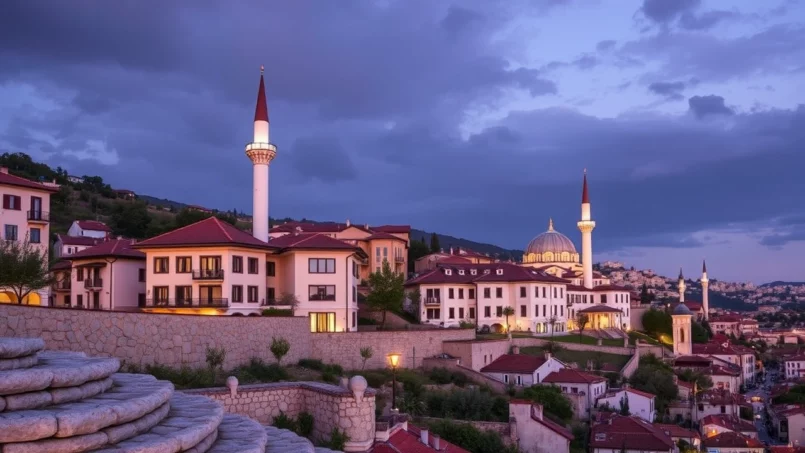
 Published on and written by Cyril Jarnias
Investing in Turkish real estate today attracts both yield-seekers and citizenship applicants. With still-affordable prices, rapidly rising rents, and an investment-based citizenship program starting at $400,000, the country has established itself as one of the most discussed markets in Eurasia. But behind promises of 8 to 10% gross yield, the context of high inflation, Turkish lira volatility, and changing regulations demands a methodical approach.
This article covers market dynamics, price levels, and rental yields by city. It details the difference between long-term and seasonal rentals, the appeal of the citizenship-by-investment program, as well as the main legal, tax, and economic risks to assess before any purchase.
An Expanding Market, Fueled by Domestic Demand
The Turkish residential market is worth approximately $110 billion in 2025 and projections place it around $187 billion by 2030, representing a compound annual growth rate of over 11%. Between 2021 and 2023, prices in Turkish lira skyrocketed (a 168% increase in 2022, 76% in 2023), but inflation has been just as severe. The result: in real terms, values have sometimes fallen, even as nominal statistics remained spectacular.
In 2025, the national residential price index is rising by about 33% year-on-year, but the real increase, adjusted for inflation, remains close to zero.
On the ground, activity is intense. Between January and July 2025, more than 834,000 homes changed hands, representing growth of over 24% in one year. Transactions are expected to exceed 1.6 million by the end of 2025, far ahead of the 1.23 million in 2023. The recovery is largely driven by local buyers: foreigners now represent only about 1.3 to 1.6% of sales, compared to 4.5% at the peak in 2022.
A Structural Shortage of New Supply
While construction permits are rebounding – more than 460,000 housing units authorized in the first half of 2025, a high since 2017 – Turkey estimates its annual needs at 800,000 units. Actual deliveries remain far below, mainly due to:
– the high cost of financing for developers
– the rising cost of imported materials
– the priority given to reconstructing areas devastated by the 2023 earthquakes
This deficit largely explains the pressure on rents and the strength of long-term purchase demand, particularly in major metropolises and dynamic job centers.
A Contrasted Macroeconomic Environment
The Turkish economy remains classified among the major economies of the G20, with a GDP of approximately $1.34 trillion and growth projected around 3 to 4% per year until 2027. But inflation, although decelerating, remains high (around 33% in 2025, with a target of 16–21% by 2026) and the Turkish lira continues its gradual slide. Benchmark interest rates, raised to 46–50% to try to curb price rises, are beginning a gradual decline, and mortgage loans remain expensive and inaccessible, especially for modest Turkish households.
For a foreign investor, this context is ambivalent:
– on one hand, the weakness of the currency and rental pressure make gross yields very attractive
– on the other hand, the value of the asset in hard currency can fluctuate, and reading real performance requires accounting for inflation
Rental Yields: A Country in the Top Tier Globally
Aggregated data for 2025 places the average gross residential rental yield around 7.76% nationwide, up from 7.41% in the first quarter. Net yields, after deducting property taxes, maintenance, management, insurance, and vacancy periods, are generally 1.5 to 2 percentage points lower, often around 5–6% for a well-chosen asset.
In Turkey, gross real estate yields frequently exceed 9 to 10%, especially in secondary cities or popular neighborhoods of major metropolises. This yield is significantly higher than that seen in most major European cities, where it rarely exceeds 3 to 5%.
Yield Comparison by Major Cities
The following table summarizes average gross yields for apartments in several major Turkish cities, based on the latest available data.
| City | Average Gross Apartment Yield | Main Comment |
|---|---|---|
| Adana | 8.87% | Most profitable city among the major markets analyzed |
| Ankara | 8.67% | Political capital, stable rental market, moderate prices |
| Istanbul | 8.15% | Economic metropolis, strong demand and great heterogeneity by neighborhood |
| Bursa | 7.79% | Industrial hub, proximity to Istanbul |
| Konya | 7.85% | Dynamic inland city, high yields on small units |
| Kayseri | 7.05% | Developing secondary market |
| Izmir | 7.38% | Major coastal city, decent yield and appreciation potential |
| Antalya | 6.28% | Tourist market, average yields on long-term rentals but very strong for seasonal |
It is important to note that these figures are averages: from one neighborhood to another, the differences are often spectacular.
Istanbul: Economic Engine, Segmented Market
With over 15 million inhabitants in the city and over 20 million in the metropolitan area, Istanbul concentrates a huge share of national wealth, over 30% of Turkey’s GDP. It is the country’s main financial, logistics, cultural, and tourist hub. Logically, it is also the deepest and most liquid real estate market, with over 21,000 property transactions in a single month of September 2025.
Price Levels and Appreciation Potential
Apartment prices in central areas average between $1,500 and $1,800 per square meter, with peaks above $4,000 in the most sought-after neighborhoods (Bosphorus, Beşiktaş, Kadıköy, certain sectors of Şişli or Sarıyer). Despite these increases, Istanbul remains well below European capitals, where prices frequently exceed $10,000/m².
The average property price in Q2 2025 is $1,630 per square meter, a nominal increase of nearly 29% year-on-year.
History shows that some neighborhoods undergoing urban renewal (Kağıthane, Küçükçekmece, parts of Beyoğlu, areas near new metro lines and the new airport) have recorded annual increases of 10–15%, or even more in certain years.
Yields by Neighborhood Type
Istanbul is a patchwork of micro-markets. In upscale central neighborhoods like Beşiktaş, Kadıköy, or Nişantaşı, the yield is more moderate but liquidity and resale demand remain excellent. Conversely, peripheral neighborhoods experiencing high densification like Esenyurt or Beylikdüzü often show double-digit gross yields, with higher risk in terms of vacancy, construction quality, or perception.
A few examples illustrate this heterogeneity:
| Neighborhood (Istanbul) | Type | Avg. 1-Bed Price (USD) | Monthly 1-Bed Rent (USD) | Estimated Gross Yield |
|---|---|---|---|---|
| Kadıköy | Central, Asian side | 190,500 | 930 | 5.86% |
| Şişli | Central, European side | 88,500 | 660 | 8.95% |
| Maltepe | Asian side | 132,700 | 810 | 7.32% |
| Esenyurt | Popular periphery | 47,900 | 390 | 9.77% |
| Beylikdüzü | Western periphery | 46,600 | 540 | 13.91% |
| Sarıyer | North, upscale | 245,800 | 860 | 4.20% |
| Overall Istanbul | All neighborhoods | 78,700 | 580 | 8.84% |
A clear trade-off emerges: the more prime the neighborhood, the more capital is potentially secure but the lower the gross yield. Conversely, some peripheral sectors offer significant cash flow, but with technical risks (quality of older buildings, seismic risk, urban planning) and liquidity risks to monitor.
Case Study: A Duplex in a Gentrifying Neighborhood
A concrete example describes a 130 m² duplex in Feriköy (Şişli), in a building about fifteen years old. Total price, fees included: approximately $235,000, furnished apartment. The expected rent is around $1,150 per month on average, with a slight decrease during the lease term due to lira depreciation.
Annual costs for a property in Turkey remain moderate, with a property tax of about $200 per year and mandatory earthquake insurance (DASK) of about $50. Property management fees are typically between 8% and 10% of rents collected, without separate additional fees for placing the property. The average occupancy rate is estimated at 95%.
In this specific case, the pre-tax income net yield comes out around 5%, for an asset located an eight-minute walk from a central metro station (Osmanbey) and in a neighborhood undergoing gentrification, still 30 to 50% cheaper than the highly sought-after nearby Bomonti.
This type of profile illustrates quite well what one can obtain in the heart of Istanbul: an interesting real yield, but not spectacular, in exchange for a very liquid location, popular with expatriates, students, and professionals.
Ankara, Izmir, Bursa: The Major Alternatives to Istanbul
If Istanbul dominates in volume and visibility, other metropolises offer different price/yield balances, sometimes better suited to cautious profiles.
Ankara: Political Stability and Institutional Tenants
The administrative capital, Ankara, stands out for a less speculative market and softer prices. The average gross yield there reaches 8.67%, slightly above Istanbul, with significant variations by district.
| District (Ankara) | Apartment Type | Avg. Price (USD) | Monthly Rent (USD) | Gross Yield |
|---|---|---|---|---|
| Çankaya | 2 rooms | 147,500 | 860 | 7.00% |
| Keçiören | 2 rooms | 62,600 | 480 | 9.20% |
| Mamak | 2 rooms | 58,500 | 440 | 9.03% |
| Etimesgut | 2 rooms | 81,100 | 620 | 9.17% |
| Altındağ | 2 rooms | 59,000 | 490 | 9.97% |
| Overall Ankara | 2 rooms | 75,600 | 620 | 9.84% |
Neighborhoods like Çankaya – home to embassies, ministries, and universities – offer a very attractive security/yield combination (5–6% expected yield in the 2025 market). Meanwhile, Yenimahalle, more affordable, regularly reaches 6–7%.
Ankara attracts a stable tenant clientele, notably comprising civil servants, diplomats, students, and professionals. Real estate cycles there are less brutal than in Istanbul, with more linear price increases and often a lower vacancy rate in good locations.
Izmir: Rising Coastal City, Yield / Appreciation Balance
The country’s third city, Izmir combines an industrial port, technology parks, free zones, and a tourist vocation. Average rental yields fluctuate between 5 and 7%, with an aggregate yield around 7.38% according to the latest data.
| District (Izmir) | Type | 1-Bed Price (USD) | 1-Bed Rent (USD/month) | Gross Yield |
|---|---|---|---|---|
| Karşıyaka | 1 bed | 98,900 | 620 | 7.52% |
| Konak | 1 bed | 66,000 | 740 | 13.45% |
| Bornova | 1 bed | 88,500 | 640 | 8.68% |
| Buca | 1 bed | 63,900 | 430 | 8.08% |
| Overall Izmir | 1 bed | 72,500 | 490 | 8.11% |
Some pockets, like Konak, show very high gross yields (over 13% on small units in the old city center), but the tenant profile, building quality, and renovation constraints require detailed analysis. Other sectors like Karşıyaka and Bornova, close to universities and job centers, offer a more reassuring balance between decent yield and appreciation potential.
Bursa: Industrial Hub, Solid Yields and Steady Growth
Bursa, the former Ottoman capital two hours from Istanbul, combines automotive industry (Renault, Tofaş), textiles, and thermal tourism. Average rental yields range between 6 and 8%, with annual price growth reported at 10–12% in recent years.
| City / Overall | 1 Bed (price, USD) | 1 Bed Rent (USD) | Gross Yield | Comment |
|---|---|---|---|---|
| Bursa (average) | 47,900 | 340 | 8.52% | Very active secondary market |
| Bursa (all types) | — | — | 7.79% | Overall city yield |
The districts of Nilüfer and Osmangazi concentrate most of the demand, both for purchase and rental. Proximity to Istanbul, still relatively low prices ($600 to $1,200/m² depending on neighborhoods), and a solid industrial base make it an option to consider for diversifying a portfolio away from major coastal spots.
Antalya, Bodrum, Alanya: The Leverage of Tourism and Seasonal Rentals
On the Mediterranean coast, Antalya lives up to its nickname as Turkey’s “tourist capital.” The city hosts over 15 million international visitors per year, mainly Russian and European, and neighborhoods like Konyaaltı and Lara attract a clientele of secondary residents and seasonal renters.
Long-Term vs. Short-Term Yields
In classic long-term rental, Antalya shows gross yields around 6–7% on average (6.28% all property types combined). But as soon as one switches to short-term rentals (Airbnb and similar), the figures change scale.
A dataset comparing annual long-term revenue and short-term revenue for two-bedroom apartments illustrates these differences:
| Location | Long-Term Revenue (TRY) | Short-Term Revenue (TRY) | Avg. Price (USD) | LT Yield | ST Yield |
|---|---|---|---|---|---|
| Antalya (city) | 244,790 | 563,990 | 3.89 M | 6.30% | 14.52% |
| Alanya | 209,820 | 464,620 | 3.89 M | 5.40% | 11.96% |
| Konyaaltı | 244,790 | 631,280 | 4.86 M | 5.04% | 13.00% |
| Bodrum | 244,790 | 794,800 | 4.86 M | 5.04% | 16.36% |
| Fethiye | 209,820 | 913,890 | 4.86 M | 4.32% | 18.82% |
| Marmaris | 209,820 | 900,940 | 4.86 M | 4.32% | 18.55% |
These figures assume structured management and good occupancy rates, but they confirm an order of magnitude: in many resorts, short-term rentals can generate 2 to 3 times more annual gross revenue than long-term, at the cost of much more active management and a regulatory framework that has become stricter.
Example of Short-Term Rental Regulation
Since 2024, accommodations rented for stays of 100 days or less are subject to a specific regime: mandatory license, registration in a guest tracking system, sometimes condominium approval, and dissuasive fines for violations. In Istanbul, the tightening of these rules has already reduced the number of declared short-term apartments from 32,000 to 21,000.
For an investor primarily targeting seasonal rental yield, these constraints mean:
It is necessary to work with a professional local manager familiar with administrative procedures. It is also crucial to verify that the building and the municipality actually permit this type of activity, and to account for the possibility of new legal restrictions in the future.
Ranking of Tourist Cities by Yield and Return Horizon
2025 rankings based on a combination of average annual yield and investment payback period (ROI in years) place:
– Antalya (Konyaaltı, Lara, Alanya) at the top, with 8–10% average annual yield and an estimated ROI between 12 and 15 years
– Muğla (Bodrum, Fethiye, Marmaris) just behind, with 7–9% yield and an ROI of 14–17 years
Seasonal peaks can drive yields on certain “prime” villas or apartments to 10–12% per year, or even more, but these levels are very sensitive to occupancy rates and the tourist climate.
Small and Medium-Sized Cities: Adana, Konya, Mersin, Trabzon…
Beyond major metropolises and ultra-media-saturated resorts, many medium-sized cities show gross yields above the national average, especially for small apartments located near universities, industrial zones, or hospitals.
Adana: Gross Yield Champion
Adana regularly tops profitability rankings, with an average gross yield above 8.8%, and some neighborhoods flirting with 11–12%.
| District (Adana) | Type | 1 Bed Price (USD) | 1 Bed Rent (USD) | Gross Yield |
|---|---|---|---|---|
| Çukurova | 1 bed | 47,900 | 450 | 11.27% |
| Seyhan | 1 bed | 48,500 | 340 | 8.41% |
| Overall Adana | 1 bed | 35,000 | 330 | 11.31% |
With an economy combining agriculture, industry, and transport, Adana attracts robust local rental demand. The entry ticket is significantly lower than in major coastal cities, allowing for portfolio diversification with several small units rather than a single expensive property.
Konya, Mersin, Trabzon: High Yields, Evolving Markets
Konya, a major inland city, shows an average yield of nearly 7.9%, with one-bedroom apartments reaching above 10% gross yield. Mersin, on the Mediterranean coast, combines an industrial port and tourist development, with yields of 7–8% and an influx of new residents. Trabzon, on the Black Sea, capitalizes on growing nature and religious tourism, with rental yields of 7–8% and an estimated investment payback period of 13–16 years.
For a foreign investor, cities less covered by media than Bodrum or Istanbul can offer an interesting risk/return ratio, provided they rely on a serious local partner.
Citizenship by Investment: The Differentiating Asset of the Turkish Market
One of the major drivers of international interest in Turkish real estate remains the citizenship-by-investment program. In exchange for a real estate investment of at least $400,000, a foreigner can obtain Turkish nationality for themselves, their spouse, and children under 18, within a few months.
Main Conditions of the Program via Real Estate
The current rules impose several specific conditions:
Main requirements to fulfill to obtain Turkish citizenship through a real estate investment.
Invest at least $400,000 US dollars in one or more real estate properties in Turkey.
Obtain an appraisal report confirming that the total value of the properties reaches the required threshold of $400,000.
Settle the price via a Turkish bank, after official conversion of foreign currency, with presentation of the DAB (Document of Provision of Balance) document.
Have a non-sale notation registered on the title deed for a period of three years.
Hold real estate properties free of any mortgage and which have not already been used by another foreigner for a citizenship application.
The program, initially set at $1 million, was lowered to $250,000, then raised to $400,000. Persistent rumors mention a potential new increase to $600,000. For interested investors, this political calendar matters: what is “too good” today could become more expensive or more restrictive tomorrow.
Timeline and Formalities
Once the investment is finalized and the titles annotated, the investor first obtains a short-term residence permit specific to investors. The citizenship application is then processed by the authorities, with a background check (source of funds, criminal record, etc.). Commonly cited timelines range from 3 to 6 months for the effective issuance of passports, sometimes a bit longer depending on administrative workload.
Only one trip to Turkey is necessary for the initial formalities (fingerprinting and certain signatures). Subsequently, there is no minimum residency requirement in the country.
Advantages of Turkish Citizenship
Beyond classic benefits (right to live, work, study, access the healthcare system, and vote), Turkish nationality opens:
– access to the U.S. E-2 investor visa thanks to a bilateral treaty
– a passport allowing visa-free travel or visa-on-arrival in over a hundred countries (Hong Kong, Japan, Singapore, Qatar, etc.)
– the possibility to pass citizenship to descendants
For an entrepreneur or international nomad, combining a profitable real estate asset and a second citizenship constitutes a key argument in favor of a large-scale investment in Turkey.
Taxation and Costs: What the Investor Must Anticipate
The appeal of gross yields does not dispense from checking the impact of taxes and charges on net profitability. Turkish real estate taxation is spread across several stages: upon purchase, during ownership, on rental income, upon resale, and during transfer.
Acquisition Cost
Upon purchase, several items are unavoidable:
– title transfer tax (Tapu Harcı), typically 4% of the declared value, often shared between seller and buyer, but very frequently borne entirely by the buyer
– real estate agent fees, typically 3–4% of the price, plus VAT
– real estate appraisal fees (mandatory for a foreigner), on the order of a few hundred dollars
– notary fees, sworn translations, obtaining a tax number and DASK (earthquake insurance)
In total, most estimates place additional purchase costs between 7 and 8% of the price, sometimes up to 10% including lawyer fees and certain ancillary costs.
VAT (KDV)
On the new-build market, VAT can range from 1% to 20% depending on:
– the size of the dwelling
– the cadastral value of the land
– the residential or commercial nature of the property
Non-resident foreigners can benefit from an advantageous VAT exemption regime under three conditions: buy directly from a developer, pay in foreign currency, and hold the property for at least one year. This provision, added to attractive per-square-meter prices, makes new developments particularly interesting for international investors.
Annual Property Tax
Owners pay a modest annual property tax, calculated on the cadastral value (often lower than market value), with typical rates:
– 0.1–0.2% for dwellings
– 0.2–0.4% for commercial premises
– 0.3–0.6% for land
Metropolises like Istanbul, Ankara, Izmir, Antalya, or Bursa apply the high end of these ranges. The tax is generally payable in two installments, in spring and autumn.
Tax on Rental Income
Rental income is subject to income tax according to a progressive scale. The investor can choose between:
Two tax options are available for declaring your rental income, each with its own calculation method.
Option with a flat-rate deduction on gross rents (e.g., 15%), without the need to provide detailed proof of expenses.
Option allowing the deduction of all actual expenses incurred (maintenance, repairs, insurance, loan interest, etc.) from your gross income.
The tax brackets are regularly adjusted for inflation, but progressivity quickly leads to marginal rates of 27 to 35%, even 40% for the highest incomes. Exemption thresholds apply to small amounts, but a non-resident investor declaring multiple properties will often exceed these ceilings.
Capital Gains on Resale
Turkey applies a regime very favorable to medium/long-term investments: if an individual holds a property for at least five years, the capital gain upon sale is exempt. Under five years, the gain is taxable according to the income tax scale, after accounting for inflation via a producer price index.
For a real estate investor combining rental yield and wealth planning with a horizon of five years or more, this exemption can significantly improve net performance.
Purchase Process for a Foreigner: Legal Framework and Precautions
The Turkish legal framework allows a foreigner to acquire a residential or commercial property very easily, with a few exceptions (military zones, area limits, quotas per district).
General Conditions for Foreigners
The main restrictions are as follows:
– no more than 30 hectares total per foreign person across the entire territory
– no more than 10% of a municipality’s area owned by foreigners
– prohibition on purchase in military or strategic zones
With the exception of a few nationalities (Syria, Armenia, North Korea, and certain special cases), citizens of over 180 countries can purchase property in Turkey. Foreign buyers benefit from a right of full ownership identical to that of a Turkish citizen, subject to certain geographical restrictions.
Key Steps in the Process
The standard acquisition process includes several stages:
– obtaining a Turkish tax number (from passport)
– opening a local bank account
– property search, price negotiation, signing a reservation contract, and payment of a deposit (often 5–10%)
– ordering an appraisal report from an accredited company
– legal checks (titles, debts, planning compliance, occupancy certificate “iskan”)
– transfer of funds, official conversion to Turkish lira, and issuance of the exchange certificate
– appointment at the land registry office (Tapu), presence of the buyer or their proxy, official signing of the deed, and registration
To simplify procedures, most foreigners entrust administrative or legal steps to a lawyer or local advisor. This is done via a notarized power of attorney, which can be established either in Turkey or at the Turkish consulate in their home country.
Importance of Due Diligence
The Turkish market offers many opportunities, but it is not without pitfalls:
– older buildings not complying with recent anti-seismic standards
– illegal extensions or planning irregularities (“imar barışı”)
– undeclared easements, mortgages, or disputes on titles
– new off-plan projects sold without sufficient delivery guarantees
Using a specialized lawyer and an independent technical expert (structure, compliance, seismic risks) is not an accessory option, but an indispensable component of securing the investment.
What Strategy for Investing in Turkish Real Estate?
Faced with the diversity of local markets and a changing macroeconomic context, there is no single strategy valid for everyone. However, some guidelines emerge from the data.
1. Clarify Your Primary Objective
The typical motivations are at least three:
– maximizing rental yield in the short/medium term
– targeting long-term capital appreciation in transforming areas
– obtaining citizenship by investment, with yield as a bonus
These objectives do not necessarily lead to the same types of properties or the same cities. Seeking 10–12% gross will push towards modest apartments in secondary cities or peripheral neighborhoods, while targeting asset security and liquidity will point more towards prime locations in Istanbul, Ankara, Izmir, or Antalya, with more moderate yields.
2. Choose Between New and Old
New-build offers:
– recent anti-seismic and energy standards
– the possibility of reduced VAT or exemption for foreigners
– greater eligibility for the citizenship program
Resale property (secondary market) brings:
Discover the main assets of buying a resale property compared to new-build.
Generally lower prices per m² than for new-build, allowing for a better surface area/investment ratio.
The possibility to negotiate the price strongly, especially in a buyer’s market context where the seller is more flexible.
Already consolidated and often more central neighborhoods, offering better accessibility and nearby services.
In the current context, where nominal prices are falling in dollars while remaining rising in lira, buying an existing property, with a rental history, can reduce some of the risk, provided the structure is meticulously checked.
3. Diversify by City and Usage
Rather than concentrating a budget in a single very expensive villa on the coast, it is possible to spread the investment:
– a central apartment in Istanbul or Ankara for stable year-round rental income
– one or two smaller assets in a high-yield city (Adana, Konya, Mersin)
– possibly a seasonal property in a resort, managed by a short-stay professional
This diversification allows smoothing out local uncertainties (tourism, regulations, economic cycles) and balancing yield and appreciation.
4. Anticipate the Impact of Currency and Inflation
For an investor in a hard currency, two scenarios must be considered:
If the lira depreciates faster than inflation, rents in foreign currency could stagnate or decrease, but purchasing power in dollars or euros will remain advantageous. Conversely, if macroeconomic stabilization succeeds and inflation decreases, prices in lira could increase in real terms, leading to a revaluation in hard currency.
Current forecasts envision a continuation of nominal price increases of 10 to 18% per year in 2025, then 8 to 14% in 2026, with a gradual return to positive real growth if inflation declines in line with official targets.
For the investor, it is therefore reasonable to build a central scenario on a net yield in lira around 5–6%, double-digit nominal capital appreciation in lira, and uncertainty about the currency’s trajectory against the dollar or euro.
5. Surround Yourself with On-the-Ground Partners
Whether it’s finding a property, ensuring property management, or preparing a citizenship application, relying on reliable local actors radically changes the nature of the risk. Agencies and platforms specialized in foreigners, property management companies accustomed to seasonal rentals, law firms dedicated to real estate law and investment immigration are essential links for a successful project.
Conclusion: A Demanding Window of Opportunity
Investing in Turkish real estate today means accepting a turbulent macroeconomic environment – still-high inflation, volatile currency, extreme interest rates – but it also means benefiting from a structurally under-supplied market, driven by a young demographic, continuing urbanization, and a massive housing deficit.
Average gross yield of residential rental real estate in Turkey, which can exceed 10% in some cities.
This attractiveness does not dispense with caution: disparities in construction quality, seismic safety, local regulations, and the seriousness of stakeholders are significant. Investors who take the time to inform themselves, compare cities and neighborhoods, model their cash flows, and surround themselves with professionals versed in the Turkish market have a rare window of opportunity today to combine yield, diversification, and international mobility strategy.
Disclaimer: The information provided on this website is for informational purposes only and does not constitute financial, legal, or professional advice. We encourage you to consult qualified experts before making any investment, real estate, or expatriation decisions. Although we strive to maintain up-to-date and accurate information, we do not guarantee the completeness, accuracy, or timeliness of the proposed content. As investment and expatriation involve risks, we disclaim any liability for potential losses or damages arising from the use of this site. Your use of this site confirms your acceptance of these terms and your understanding of the associated risks.

Cyril Jarnias is an independent expert in international wealth management with over 20 years of experience. As an expatriate himself, he is dedicated to helping individuals and business leaders build, protect, and pass on their wealth with complete peace of mind.
On his website, cyriljarnias.com, he shares his expertise on international real estate, offshore company formation, and expatriation.
Thanks to his expertise, he offers sound advice to optimize his clients' wealth management. Cyril Jarnias is also recognized for his appearances in many prestigious media outlets such as BFM Business, les Français de l’étranger, Le Figaro, Les Echos, and Mieux vivre votre argent, where he shares his knowledge and know-how in wealth management.





