
 Published on and written by Cyril Jarnias
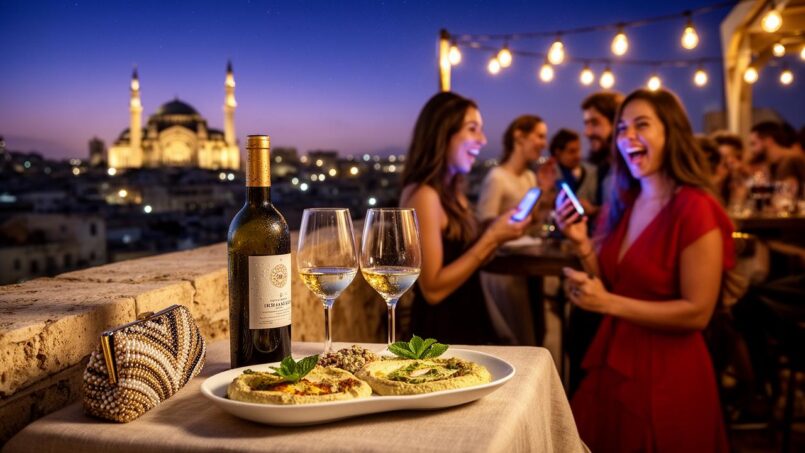
To say that Lebanese nights are lively is an understatement. Between rooftops overlooking the Mediterranean, electro clubs tucked away in former warehouses, old souks that transform into open-air bars, and hookah cafés where people debate the world until dawn, nightlife in Lebanon has become a full-fledged cultural phenomenon. People come to dance, but also to understand a country that has turned partying into an act of resilience.
Lebanese nightlife stretches along the coast, from Beirut to Batroun, passing through Jounieh, Byblos, and Tripoli. Arak, the local anise-flavored spirit, is a must and traditionally accompanies mezze.
Beirut, Capital of a Curfew‑Free Nightlife
Beirut earned its reputation as a nightlife capital as early as the 1960s, when international stars like Brigitte Bardot or Marlon Brando came to spend the evening. This tradition never really stopped. The city remains compact, neighborhoods are minutes apart by taxi, and most importantly, no law imposes a closing time on bars or clubs. Result: going out on a Tuesday until late at night is nothing out of the ordinary.
The scene is diverse. You can go from a very chic rooftop to a neighborhood bar in flip-flops, from an Oriental cabaret to an experimental concert hall. Those who don’t drink alcohol are not left out: Arabic coffee and shisha (hookah) remain the pillars of evening sociability, including in more conservative regions where going out sometimes boils down to that.
The atmosphere is both intimate and electric: venues are rarely huge, regulars recognize each other, artists cross paths with their audiences from club to club. All against a backdrop of economic crisis and regional tensions, which gives the simple act of going out to dance an almost political dimension.
Beirut’s Main Nightlife Districts
Some areas have become classics for anyone wanting to experience local nightlife. They each have a distinct personality.
Gemmayzeh embodies old Beirut with its shuttered houses and stairs covered in graffiti, but filled with cocktail bars, lounges, and shisha cafés. Rue Gouraud and Rue Pasteur are the two main axes. You’ll find institutions like Dragonfly, a cocktail pioneer, or newer speakeasy-style spots hidden behind anonymous doors.
The Mar Mikhael neighborhood in Beirut illustrates rapid urban transformation. In fifteen years, former workshops and garages have been replaced by designer bars, cultural spaces, and trendy establishments. Places like Anise, which offers cocktails made with local wild herbs, or Kalei Coffee Company, transitioning from specialty coffee to evening cocktails, are examples. At nightfall, the sidewalks turn into a vast terrace, symbolizing this dynamic of gentrification.
Hamra, further west, is one of the oldest nightlife districts, long shaped by its proximity to the American University of Beirut. Literary cafés rub shoulders with “dive bars” like Captain’s Cabin or Abou Elie, where smoking indoors persists despite the law. Ferdinand has built its reputation on cocktails, while places like Mezyan blend mezze, Oriental music, and a crowd of regulars.
Badaro has developed a more local scene in recent years, centered around spots like Brew Inc (craft beer), Roy’s Public House, Troika, or Kissproof. It retains a “neighborhood bar” spirit with a strong terrace culture.
Karantina and the BIEL waterfront host a completely different crowd: that of giant electro clubs and open-air events. Further out, areas like Achrafieh, Sodeco, Zaitunay Bay, or Raouche complete this patchwork with festive restaurants, shisha cafés, and hotel bars.
When Rooftops Become Dance Floors
One of Beirut‘s great strengths is its use of rooftops. Benefiting from mild weather almost year-round, the city has developed spectacular terraces with sea or skyline views. Some have become regional benchmarks.
Here is an overview of a few iconic rooftops, all mentioned in the research report.
| Rooftop / Venue | Neighborhood / Location | Vibe & Highlights | Target Audience |
|---|---|---|---|
| Spine | Naccache Seaside Road, north of downtown | Futuristic lounge, geometric light shows, 360° view | Very chic, 21+ / 25+ |
| Iris Beirut | Roof of Seaside Pavilion, Beirut New Waterfront | Open terrace, trendy crowd, perfect for sunset | Mix of expats / locals |
| CLAP Beirut | Anahar Building, Martyrs’ Square | Upscale Japanese restaurant, large terrace | Gourmet, couples |
| O Monot Rooftop | Roof of O Monot Hotel (Monot Street) | Intimate terrace with pool, panoramic city view | Chic relaxation |
| FABRK Beirut | Mar Mikhael, Pharoun Street | Industrial decor, billiards, cocktails, chill music | Young, creative |
| Hotel Albergo – Pool Bar | Achrafieh, Rue Abdel Wahab El Inglizi | Moroccan tile oasis, pool, glamorous ambiance | Hotel guests + locals |
| CLounge (C-Lounge) | Roof of Bayview Hotel, Ain El Mreisseh | Corniche view, balcony bar, DJ, happy hour | Afterwork & DJ nights |
| Skyline Rooftop Lounge | Roof of Mövenpick, Ain El Mreisseh | High-end lounge, shisha, sea view | Mostly 5-star hotel |
| Sea Lounge | Corniche, Ain El Mreisseh | Seaside terrace, three zones (sofas, balcony, panorama) | Sunset cocktails |
| Zaia Beirut | Mar Mikhael | Nikkei cuisine, creative cocktails, city view | Foodies & partygoers |
In addition to these terraces, there are more unique concepts like Coop d’état (CP DEA) with its 15-meter rooftop pool, or Skypool by La Scene, a rooftop pool perched on the Aïshti building. Not to mention Em Sherif on The Roof, a refined Oriental twist from the famous restaurant, or Palms Beirut, a mega-rooftop that relies on lasers, shows, and DJs.
Further out, beyond Beirut, rooftops like Margo in Dbayeh, The NEST in Tabarja, or Titans and ODD Rooftop in Batroun extend this open-air bar culture, often facing the setting sun.
Having a Drink, Listening to a Concert, Smoking Shisha
Beirut’s nightlife isn’t just about clubs. A large part of the scene takes place in bars, cafés, and restaurants with live music, where the line between a “quiet” outing and a real night out is often blurred.
In the cocktail realm, the report mentions several key addresses. Anise, in Mar Mikhael, helped establish a culture of crafted cocktails using local ingredients and homemade arak. Lucy Lu, hidden behind a blue door on Rue Pasteur in Gemmayzeh, plays the speakeasy card with an Alice in Wonderland-inspired decor. Le Terrible Prince, on Monot Street, serves “punchy” cocktails alongside burgers and a Lebanese cider.
In the same vein, Demo (Mar Mikhael) combines an intimate bar with DJ sets, Drop Sociale, in an old building in Gemmayzeh, offers a listening bar concept with an izakaya-style menu, while Salon Beyrouth organizes themed jazz or blues evenings.
In Beirut, smoking shisha is a deeply rooted social practice. Establishments like Café Em Nazih in Gemmayzeh, known for its affordable meals and live Arabic music, or Kahwet Leila with its historical photos, are pillars. Other spots, such as Ka3kaya in Hamra or the night garden of Al Falamanki between Achrafieh and downtown, set the pace for nightlife by offering classic flavors like double apple or lemon-mint.
The report also points out that shisha delivers much more nicotine than a cigarette, a detail easily forgotten while chatting for hours.
Nightlife on the Live Music Side: Cabarets, Concerts, and Alternative Venues
Another essential facet of Lebanese nightlife plays out on stage. Beirut is one of the few cities in the region that combines, within the same urban fabric, cutting-edge techno clubs, cabaret-style theaters, concert bars, and experimental venues.
MusicHall, a cabaret transformed from a former cinema, is the most spectacular example. The venue can accommodate around 650 people and feature up to 18 acts or artists in a single evening, from world music to rock to Oriental classics. The programming has included names like Nigel Kennedy, Jane Birkin, Yann Tiersen, and Souad Massi, alongside local artists.
In a more intimate format, Metro Al Madina, in Hamra, functions as an underground cabaret: musical revues, tributes to Arabic song, theater nights, jazz or indie rock concerts follow one another. Artists as diverse as classical singer Abdel Karim Shaar, Egyptian composer Maurice Louca, or hybrid projects like El Wad Na3na3 have performed there.
Venues like Onomatopoeia – The Music Hub, in Achrafieh, or Riwaq Beirut, a cultural bar-restaurant, offer a stage to the new generation: open mic, workshops, small concerts. ROOT Music Venue, in Dbayeh, has even specialized exclusively in live concerts.
For those who prefer Oriental music and a “dinner-show” atmosphere, places like Antika Bar, Anbar Beirut in Sodeco, or Em Sherif Restaurant host dabke, belly dancing, great Lebanese classics, and generous mezze. Dalida Bar, Kahwet Azmi, or B By Elefteriades, an Oriental rooftop at Aïshti by the sea, extend this festive tradition.
From the Bomb Shelter to the Dancefloor: Clubs and the Electronic Scene
If Lebanon is today a stronghold of electronic music in the Middle East, it is the result of a long and sometimes improbable history. The report recalls that electronic music was introduced in the early 1990s by two British bankers who organized private parties at their villa in Mansourieh. Very quickly, the scene moved to Beirut, where more than a dozen regular techno clubs operate today.
Bunkers and Warehouses Transformed into Cathedrals of Sound
B 018 remains the absolute symbol of this transformation. Designed by architect Bernard Khoury, this legendary club took over a former bomb shelter. You enter through a trapdoor, and the retractable roof sometimes opens at dawn to reveal the sky—sometimes tinted pink by the fumes from the nearby highway. It was there that the first generation of Lebanese ravers acquired a taste for long electronic nights.
The industrial district of Karantina is home to The Grand Factory, a venue founded by DJ Jade. This space includes a main room with panoramic views, Reunion for concerts, and a ‘Basement Reunion’ as a tribute to a pioneering local techno club. In summer, the same team also runs AHM, a mega open-air club by the sea.
Ballroom Blitz, another key address, has established itself with a state-of-the-art sound system and three rooms with distinct identities: a ballroom for big nights, a lobby with a “house party” vibe, and the Goldroom, a small hi-fi room dedicated to more niche experiences. It was there that a Boiler Room was organized in collaboration with the London platform, giving global exposure to 23 Lebanese artists.
The report cites a constellation of DJs and producers who embody this scene: Moe Choucair aka Jack the Fish, co-founder of Ballroom Blitz; DJ Ronin, who alternates between sets in Beirut and five-hour marathons in Berlin; Etyen, who has played in many European clubs; Tadafonk, with his vinyl sets blending afro-groove, funk, and house; Telmiz, who created Pocket of Light centered on vinyl; or Jad Atoui, author of a “plant-based” modular live set where electrical signals from plants control his machines.
A Structured Underground Ecosystem… and Exported
What strikes in the report is the very organized—despite appearances—nature of this scene. Collectives like Factory People, Ruptured, or Somewhere… organize artist residencies, workshops, and tours. The BBX program by Ballroom Blitz, for example, offers workshops over three months, after which a winner goes to Berlin to produce a record with a German producer.
This is the number of improvisation and experimental music concerts presented by the Irtijal Festival since its launch in 2001.
The influence crosses borders. The collective Somewhere… has exported its parties to cities like Vienna, Paris, Dubai, or Riyadh, and has ventured into publishing vinyl records to promote artists from the MENA region. The label Beirut Electro Parade, created by producer Hadi Zeidan, promotes Lebanese DJs on the international stage.
Clubs like CLOSR, Überhaus, and The Gärten compete with major European scenes by hosting renowned DJs (Ellen Allien, Gardens of God, Shall Ocin) and offering ambitious set design and programming.
A Scene That Serves as a Social Refuge
The report insists on a point rarely highlighted: these clubs have become refuges for many marginalized communities, including the LGBTQ+ community. Large venues like Uberhaus, The Grand Factory, and Ballroom Blitz enforce strict tolerance policies, quickly banning perpetrators of harassment. At the same time, a more clandestine queer scene unfolds, with parties announced at the last minute, sometimes in industrial districts or private spaces.
Yet this dynamic coexists with a hostile legal reality—homosexuality remains criminalized—and a recent rise in anti-LGBTQ+ discourse, illustrated by the attack on a gay-friendly establishment in Mar Mikhael mentioned in the report. Lebanese nightlife thus reveals itself as both a space of freedom and a terrain of tensions, making it all the more intense.
Going Out in Lebanon Is Not Just Beirut
While the capital concentrates the majority of clubs and bars, the rest of the country offers many alternatives, often more relaxed, sometimes more family-oriented.
Jounieh, Byblos, Batroun: The Coast in Party Mode
North of Beirut, a kind of “seaside safety bubble” runs from Jounieh to Batroun. These coastal towns combine tourism, beaches, and bars with a level of risk perceived as low by travelers cited in the report.
Byblos (Jbeil) charms with its old stone souk, which transforms into a street of pubs in the evening. The atmosphere is more family-friendly and touristy than in Mar Mikhael, but some bars like Frolic or Ashtar (jazz, creative cocktails) know how to appeal to discerning night owls. Local authorities have established a so-called “green” zone that is very safe, where you can walk around in the evening without any particular stress.
Further north, Batroun is described as a Mediterranean summer capital with a “surf town” vibe. Nightlife revolves around its beach clubs and beach bars, where you can have a drink with your feet in the sand, dance on the jetty, or taste the craft beers from Colonel Brewery, located right on the beach. For a more festive touch, rooftops like Titans or ODD Rooftop offer colorful cocktails at sunset.
Jounieh, closer to Beirut, combines a marina, old souk, and a series of bars, clubs, and rooftops. Events like Jounieh Crawl—a “barathon” format that chains five venues with free shots, games, and activities for around twenty dollars—allow you to take the temperature in a single night.
Tripoli: Between Traditional Cafés and New Addresses
The report also devotes a few pages to Tripoli, in the north. Here, evening sociability long remained centered on traditional cafés like Café Moussa, where you drink coffee or flavored juices while playing backgammon as vendors of kaak (street bread) and sweets pass by.
Discover the must-visit places that animate Tripoli’s nights, from intimate bars to electric clubs.
Known for its signature cocktail “Tripoli Sunrise,” it’s an iconic bar on the local scene.
A perched bar offering stunning sea views, perfect for an elevated evening.
A vibrant club with DJ, lights, and an international atmosphere, modeled on Jounieh.
Another major club on the Tripoli night scene, offering an electric and sophisticated nocturnal experience.
Most of these places require a smart casual dress code. Bars come alive around 9 PM, clubs after midnight. The report, however, recommends a certain caution: stay in lively areas, use reliable transportation, avoid wandering alone in darker neighborhoods.
Souks and Night Markets: Another Way to Go Out
In Lebanon, “going out in the evening” can also mean simply strolling through a souk or night market. Beirut Souks, an open-air shopping center rebuilt on the site of the old markets, becomes particularly pleasant in the early evening when the lights come on. You’ll find shops, restaurants, cinemas, and a high proportion of eateries.
Occasional markets like the Chiyah Night Market (Friday evening) or the Zgharta Night Market (Saturday) combine artisan stalls, food trucks, and concerts. In historic cities like Byblos, Saida, Baalbek, Tyre, or Batroun, the old souks sometimes take on the feel of a nocturnal promenade, with ice cream parlors, cafés, small terraces, and occasionally a few bars.
Arak, “Milk of Lions” of Lebanese Nights
It’s impossible to talk about nightlife in Lebanon without mentioning arak, the anise-flavored spirit that accompanies most festive meals. The research report describes it as a true social institution, as much as a drink.
Distilled from grapes and anise seeds, arak has an alcohol content between 40 and over 60%. It’s rarely drunk neat: it’s almost always diluted with water, which gives it that whitish color that earned it the nickname “milk of lions.” The image refers both to its milky appearance, due to anise essential oils, and its potency.
Traditionally, arak is drunk while eating mezze: hummus, labneh, tabbouleh, grilled meats, crunchy vegetables, fries, but also nuts and even some desserts. It is served as an aperitif, during the meal, or as a digestif, in carafes and small glasses lined up in the middle of the table.
From the Family Cellar to Large Distilleries
Many village families still produce their own arak, perpetuating wood-fire distillation methods and aging in clay jars. But the country also boasts an impressive constellation of distilleries, often attached to wine estates.
Selection of producers mentioned in the report, ideal for cellar visits, tastings, or evening cocktails.
Discover the secrets of wine and spirit making with a guided evening tour of the cellars.
Treat your palate to a selection of local products during a guided tasting session.
Savor unique creations based on local products in a friendly and relaxed atmosphere.
| Producer / Brand | Main Location | Notable Features |
|---|---|---|
| Arak Touma | Qob Elias (Bekaa) | Family business since 1888, phone +961 8 500 801 |
| Arak Abou Akl | Mtein | Brand created in 1935, exports to Canada then USA |
| Arak Al Karram | Zahlé (Bekaa) | Guided tours, tastings, open daily 8 AM–4 PM |
| Abi Raad Group – Al‑Khityar | Zahlé | Distillery founded in 1936, produces arak, wine, liqueurs |
| Chateau Nakad – Al‑Samir | Jdita (Bekaa) | Family estate created in 1923, arak “Al‑Samir” |
| Domaine des Tourelles – Brun | Jdita / Chtaura | Arak Brun, one of the most famous, tel. +961 3 775 943 |
| Château Musar – L’Arak de Musar | Bekaa / headquarters in Beirut | Quadruple-distilled arak for more smoothness |
| Massaya | Taanayel (Bekaa) & Faraya | Arak in blue bottle, oenotourism resort |
| Château Ksara – Ksarak | Bekaa (since 1857) | Visits and tastings 7/7, restaurant on site |
| Cedrus Arak | Bekaa | Kazan Distillery (1919), aged in clay jars for 3 years |
| Arak Mtallat | Smar Jbeil | Artisanal triple-distilled arak, very contemporary image |
| Ixsir Arak | Bazbina (Batroun region) | Modern estate with rooftop restaurant, founded in 2008 |
Many of these houses offer daytime visits, but some experiences easily extend into the evening, especially in the Bekaa or the Mount Lebanon mountains, where you can stay in guesthouses (e.g., Château Cana and its “Maison du Château,” Beit Ebrine near Batroun, etc.).
The report mentions workshops in the Bekaa Valley where participants can follow the distillation process, taste the first drops of alcohol coming out of the traditional still (called “karkeh”), receive a certificate, then share a countryside brunch before taking a nap.
Arak at the Bar: Tradition and Cocktails
While arak is mostly drunk at the table, it is now also inspiring mixologists. The report mentions, for example, an “Arak – Lebanese Night” cocktail made with vanilla ice cream, rose ice cream, arak, rose water, crushed ice, all garnished with pine nuts and raisins macerated in orange blossom water. Other versions play on arak flavored with cinnamon, coffee, or lavender.
This creativity ties into a broader trend: growing interest among younger generations, in Lebanon and abroad, in local spirits and their use in cocktails. Bars like Anise or certain rooftops in Beirut are helping to dust off arak’s image by taking it out of the strictly family context.
How to Enjoy the Lebanese Night Without Faux Pas
The research report devotes a large section to practical and safety aspects. Lebanese nightlife is described by many travelers as surprisingly safe in the main tourist centers (Beirut, Byblos, Batroun), despite a tense regional context. But a few unwritten rules allow you to fully enjoy it.
In high-end clubs (Skybar, AHM, Spine), the dress code is strict: ‘dress to impress’. Shorts and flip-flops are prohibited. Bouncers often refuse groups of men alone or poorly dressed individuals. Socializing is mainly organized around reserved tables and ‘bottle service’, which can be an obstacle for a solo visitor.
Reservation is almost mandatory for big nights, whether in clubs, dinner-show restaurants, or certain highly sought-after rooftops. Arriving early increases your chances of getting in.
Use apps (Uber, Bolt) or recognized taxi companies (e.g., Allo Taxi). Avoid hailing unmarked taxis. Share your trip with a friend, especially at night. Buses are not recommended after 7 PM.
For women traveling alone, the report notes that Beirut’s nightlife is generally safe, but encourages joining groups (hostels like Hostel Beirut or Hamra Urban Gardens, organized night tours, evenings with locals) rather than navigating entirely alone from club to club.
Finally, the broader security environment imposes some guidelines: avoid certain areas with a strong militia presence (south of Lebanon, Dahieh, Palestinian camps), do not photograph sensitive buildings, stay away from any political demonstrations, and keep an eye on the news, as situations can evolve quickly.
Organized Tours and Turnkey Experiences
For those who prefer not to improvise, several organizations offer turnkey nights out. Pub Crawl Beirut, for example, has long organized bar tours in Gemmayzeh and Mar Mikhael for around $22–$25, with free shots at each stop, pizza, discounts of up to 30–50% on drinks, and VIP access to a major club at the end of the night. The meeting point was at the intersection of Gouraud, Armenia, and Pasteur streets, opposite DOCULAND, around 8:15 PM.
Other packages, like Jounieh Crawl, offer a tour of five venues for around twenty dollars, with drinks and games included. On the academic side, the AUB International Affairs Club has organized pub crawls in Hamra covering up to 15 pubs, followed by an after-party at a bar like the Speakeasy.
On a more cultural note, the platform lebanonaholic.com offers “cultural night tours” in Beirut, combining dinner, discovery of the Oriental scene, and private transportation in an air-conditioned car. Shukran Lebanon DMC, meanwhile, organizes dinner-show evenings with a folklore show, dabke, and open bar depending on the package, wheelchair accessible and bookable up to 24 hours in advance.
These offers have an obvious advantage: they bypass club entry barriers, allow you to try several venues in one night, and secure transport logistics, especially for travelers unfamiliar with the city.
A Night That Tells the Story of a Country
Throughout the pages of the report, a common thread clearly emerges: Lebanese nightlife is not just a succession of bars and clubs; it is a mirror of society. In the techno clubs, the independent scene has learned to self-organize without state support, to create jobs, to educate an audience to sometimes very experimental sounds. In Oriental cabarets, concert halls, and shisha cafés, a culture of song, poetry, theater, and debate is maintained.
The night, the text reminds us, is also a space of gentle resistance. The Lebanese dance there with a kind of joy that defies crises, invent new musical forms from their vinyl archives, create places where marginalized communities can breathe. It is this blend of glamour, chaos, and smiling gravity that makes nightlife in Lebanon so unique.
The text
So, going out for an evening in Beirut, Byblos, or Batroun is much more than just “partying”: it is entering, for a few hours, a social and cultural laboratory where the contradictions and strengths of a tiny country are replayed, a country inexhaustible when it comes to living the night.
Disclaimer: The information provided on this website is for informational purposes only and does not constitute financial, legal, or professional advice. We encourage you to consult qualified experts before making any investment, real estate, or expatriation decisions. Although we strive to maintain up-to-date and accurate information, we do not guarantee the completeness, accuracy, or timeliness of the proposed content. As investment and expatriation involve risks, we disclaim any liability for potential losses or damages arising from the use of this site. Your use of this site confirms your acceptance of these terms and your understanding of the associated risks.

Cyril Jarnias is an independent expert in international wealth management with over 20 years of experience. As an expatriate himself, he is dedicated to helping individuals and business leaders build, protect, and pass on their wealth with complete peace of mind.
On his website, cyriljarnias.com, he shares his expertise on international real estate, offshore company formation, and expatriation.
Thanks to his expertise, he offers sound advice to optimize his clients' wealth management. Cyril Jarnias is also recognized for his appearances in many prestigious media outlets such as BFM Business, les Français de l’étranger, Le Figaro, Les Echos, and Mieux vivre votre argent, where he shares his knowledge and know-how in wealth management.





