
 Published on and written by Cyril Jarnias
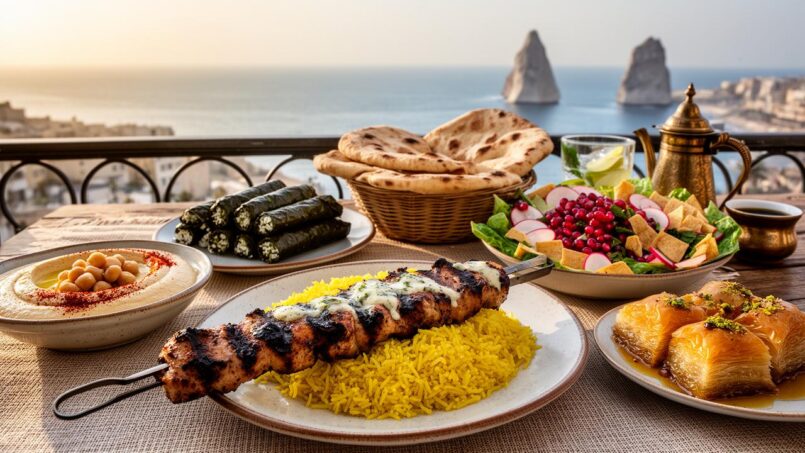
Moving to Lebanon means entering a country where you’ll quickly be judged on an unexpected criterion: your ability to eat, share, and appreciate what’s on your plate. Food is everywhere—in the streets of Beirut, in mountain villages—and it structures social life so much that it becomes a real gateway to the local culture. For an expat, understanding how to eat, what to try, where to go, and how to behave at the table is almost as important as deciphering a rental contract.
This comprehensive guide will help you discover Lebanese culture through its cuisine. It covers table etiquette, iconic dishes, Beirut neighborhoods, regional specialties, drinks, dietary needs, and everyday shopping. Its goal is to help you truly integrate into Lebanon, going beyond simple tourist clichés.
Understanding Table Culture in Lebanon
In Lebanon, the table is a sacred space. It embodies generosity—the famous karam—and the joy of being together, what Lebanese also call tarab, that collective happiness experienced during a meal that stretches on, with the sound of an oud, a burst of laughter around a shared dish.
Sharing a meal is an honor, both for the host and the guest. Dinner invitations come quickly, sometimes after just a first meeting. For an expat, accepting them—or at least some of them—is a powerful way to accelerate integration.
A traditional Lebanese meal is based on sharing. Instead of ordering an individual dish, you choose a variety of small plates placed in the center of the table for everyone to pick at, taste, and share. It’s important to note that refusing food offered to you is frowned upon: even if you’re full, accepting a small portion is seen as a sign of respect for your hosts.
One detail that sometimes surprises newcomers: conversations during meals often become very lively, even passionate, especially when politics comes to the table. Yet the raised voices don’t undermine the conviviality of the moment. The meal remains a place where people debate… but always while sharing a dish.
Timings, Rhythms, and Rituals
Lunch is usually around 1 p.m., dinner rarely before 8 p.m. Weekends, especially Sundays, are reserved for marathon meals with family or friends, where dishes follow one another for hours. If you’re invited to a “lunch” on a Saturday, assume you won’t need dinner.
In Lebanon, punctuality is flexible, and arriving a few minutes late is common. Leaving a meal immediately after eating is considered rude. It’s normal and appreciated to extend the evening after dessert with coffee, a glass of arak, or hookah, seen as a sign of respect and shared enjoyment.
The Must-Know Basics of Lebanese Cuisine
Lebanese cuisine belongs to the greater Mediterranean family: plenty of vegetables, legumes, grains, fish, and poultry, with olive oil as its backbone, and garlic and lemon as a constant refrain. Butter and cream are rarely used outside of pastries, making this cuisine both flavorful and generally considered healthy.
Lebanese cuisine is a blend of Ottoman (with the importance of lamb, spices, and dishes like pastirma), Arab, and French influences. However, it has a strong identity of its own, characterized by an abundance of parsley and mint, the prominent role of flatbread, the omnipresence of mezzes, and one emblematic national dish: kibbeh.
Key Pillars of the Lebanese Pantry
The ingredients that appear everywhere serve as a compass for new expats:
| Key Ingredient | Role in Lebanese Cuisine |
|---|---|
| Olive Oil | Main fat for cooking, dressing, preserving |
| Lemon | Source of acidity in salads, marinades, sauces |
| Garlic | Ubiquitous aromatic base (toum, marinades, soups, grills) |
| Parsley, Mint, Cilantro | Fresh herbs at the heart of salads, fritters, stuffings |
| Chickpeas, Lentils | Base of iconic dishes (hummus, falafel, mujadara, balila) |
| Bulgur (burghul) | Queen grain (tabbouleh, kibbeh, pilafs) |
| Sumac | Tangy spice, star of fattoush and many salads |
| Za’atar | Blend of thyme/oregano, sesame, sumac, salt; king of manakish |
| “Seven Spice” Blend | Lebanese baharat for meats, kibbeh, stews |
Flatbread, khobz, is everywhere. You don’t “butter” it; you use it as a spoon to scoop up hummus, mutabbal, or a piece of kibbeh. You tear it into pieces and place them on the edge of your plate, never directly on the tablecloth, and certainly not upside down, which would be considered disrespectful.
Mastering Mezze: The Heart of the Lebanese Experience
For an expat, the best entry point is mezze. You could compare it to Spanish tapas, but with diversity and an even more central role: in many meals, mezze simply replace the main course.
At home, a mezze might be just three or four dishes. At a restaurant, you can easily end up with dozens of small plates, especially on special occasions.
Cold Mezze: The Classic Must-Knows
To avoid feeling lost in front of an endless menu, just memorize a few key names.
The iconic duo consists of hummus, a creamy puree of chickpeas, tahini, lemon, and garlic—its texture depends on slowly adding very cold water—and baba ghanoush (or mutabbal), a puree of grilled eggplant, tahini, and lemon, known for its smoky flavor and silky texture, distinct from “eggplant caviar.”
Next come the bold salads. Tabbouleh is far more than a “French-style tabbouleh”: it’s a true ode to fresh parsley, with mint, tomato, onion, a little bulgur, lemon, and olive oil. The cracked wheat stays in the background, unlike Western versions where it dominates. Fattoush, meanwhile, is distinguished by crispy pieces of fried or grilled bread and a sumac vinaigrette, sometimes with pomegranate molasses, giving it that characteristic tangy taste.
Labneh (strained yogurt similar to fresh cheese, often drizzled with oil and sprinkled with za’atar), olives, pickles, and raw vegetables are not mere decorations but integral parts of the meal.
Hot Mezze: Textures, Aromas, and Togetherness
Hot mezzes bring crunch and melt-in-your-mouth goodness. Falafels, deep-fried chickpea patties (sometimes mixed with fava beans), are both a street food classic and a reliable restaurant choice. Served with tahini, fresh vegetables, and bread, they can make a complete meal.
Batata harra, potatoes sautéed with garlic, cilantro, and chili, live up to their name as “spicy potatoes.” Served piping hot, they often disappear within minutes from the center of the table.
Sambouseks or fatayers are small stuffed pastries. Versions with spinach, meat, or cheese are among the most accessible bites for an uninitiated palate.
And then there’s the almost infinite world of kibbeh.
Kibbeh: The National Dish to Get to Know
Kibbeh is officially considered Lebanon’s national dish. It’s also a tremendous revealer of the country’s diversity: every region, every town, sometimes every family, has its own version.
The base is the same: meat (lamb or beef), very fine bulgur, onions, and a blend of spices—especially the famous “seven spice” mix. From there, anything is possible.
The Main Families of Kibbeh
You can distinguish several major forms:
| Type of Kibbeh | Description and Context |
|---|---|
| Kibbeh nayyeh | Raw meat mixed with bulgur and spices, served with olive oil |
| Fried kibbeh (a’raas) | Oval croquettes stuffed with minced meat and pine nuts, crispy |
| Baked kibbeh | Layered casserole: kibbeh – filling – kibbeh, baked in the oven |
| Kibbeh in sauce | Kibbeh balls poached in a yogurt or kishk sauce |
Kibbeh nayyeh—the raw version—is probably the most disconcerting for an expat. It’s eaten with olive oil, onions, and bread, sometimes accompanied by arak. It’s a dish of absolute trust: trust in the freshness of the meat, in the butcher, in the cook. For a first try, it’s best to let Lebanese friends guide you to a reputable restaurant, like Al Halabi for raw meat platters or Mounir for the full mezze experience.
Fried kibbeh, on the other hand, are more approachable: crispy on the outside, soft on the inside, they are a staple of buffets, festive tables, and family meals. The baked version is a classic of home cooking.
Kibbeh description
In the mountains, in the south, in the Bekaa valley, variations multiply: kibbeh bil kishk (fermented yogurt and wheat mix), potato kibbeh, fish kibbeh on the coast, pumpkin kibbeh… A curious expat can spend years discovering them all.
Street Food and Breakfast: Eating Like a Beiruti
Stepping outside, you’ll find snacks everywhere. Street food is a practical school of Lebanese cuisine.
Shawarma remains the global flagship. Thin slices of marinated meat (chicken, beef, or lamb) are cooked on a vertical spit, sliced, and tucked into Lebanese bread with pickles, fresh vegetables, and sauce (tahini or garlic for chicken). In Beirut, Barbar, a popular institution, serves shawarma, falafel, and manakish around the clock, in a noisy, affordable atmosphere.
Falafel finds its best ambassadors at dedicated joints like Falafel Freiha or The Original Falafel M. Sahyoun. Lines spilling onto the sidewalk are a good indicator of quality.
Manakish and Ka’ak: Morning at the Bakeries
For breakfast or a mid-morning snack, manakish are essential: flatbreads baked in communal ovens, topped with za’atar, cheese, or meat. You buy them at the neighborhood bakery and eat them on the go, wrapped in paper.
The za’atar blend is made of four main ingredients: thyme or oregano, sumac, sesame, and salt.
Ka’ak, a sesame-covered bread ring sold by street vendors, is also part of the scenery. In cities like Tripoli, it is generously stuffed with melted halloumi cheese, turning this simple ring into a much-loved calorie bomb.
Drinks: From Coffee to Arak
What you drink says as much about the country as what’s on the plate.
Turkish coffee (or “Lebanese-style”) often ends the meal. Strong, unfiltered, served in small cups, it sometimes leads to a ritual: the cup is turned over to read the future from the coffee grounds.
Discover a selection of traditional juices and beverages that accompany and refresh daily life.
Orange, pomegranate, carrot juices and creative blends to pace the day.
Sweet drink made from carob, dates, and grape molasses, served with crushed ice, pine nuts, and raisins.
Diluted salted yogurt, which pairs well with grilled dishes.
Arak: The “Milk of Lions”
To understand the ritual dimension of drinking, you have to turn to arak, the national spirit. This clear anise-flavored spirit made from grapes turns milky as soon as water is added: that’s the “louche effect,” caused by essential oils of anise that cloud upon contact with water.
It’s traditionally served in small glasses, mixing one part arak to two parts water, then adding ice. Always in that order, or the oils will seize. A sprig of fresh mint can finish the glass.
Arak is traditionally sipped slowly over long mezze sessions, alternating with water to stay hydrated. In the Bekaa wine region, many distilleries (like Château Ksara, Domaine des Tourelles, Massaya, Riachi, or Touma) continue its production, often using indigenous grape varieties (Obeidi, Dabouki). Some houses age it for several years in terracotta amphorae.
For an expat, a visit to a Bekaa cellar, combining wine tasting and arak, shows just how much Lebanon is also experienced in a glass.
Beirut: A Food Map for Expats
Beirut concentrates a large part of the Lebanese culinary scene, from the simplest snack to the gastronomic institution. Understanding a few neighborhoods helps you choose your spots.
Hamra, with its cafés like T-Marbouta (famous for its pumpkin kibbeh and hummus) or the bars at Mezyan and Café Hamra, offers a student-friendly, laid-back vibe, ideal for a mix of traditional cuisine and Armenian or Moroccan influences.
Gemmayzeh and Mar Mikhael, meanwhile, blend restaurants, bistros, pubs, and street food. You’ll find institutions like Le Chef—a historic canteen for no-frills hummus and daily specials—and many more “fusion” spots like Frida (Lebanese cuisine with a Mexican twist).
The city center, Downtown, hosts more upscale venues: Em Sherif, a temple of refined banquet-style Lebanese meals, Liza, an elegant address for crafted mezzes, or cafés like Al Beiruti. At Zaitunay Bay, waterfront terraces accommodate restaurants like Leila Zaitunay Bay, specializing in Lebanese grills and barbecue.
Other spots have become classics for anyone wanting to “eat Lebanese” in a specific setting: Al Falamanki, with its large gardens, 1960s atmosphere, and mezze served late into the night; Tawlet – Souk el Tayeb, which applies a farm-to-table concept where home cooks from different regions take turns preparing dishes from their villages.
Lebanese food guide
A Few Landmarks Without Being an Exhaustive “Restaurant Guide”
| Type of Place | A Few Names to Know |
|---|---|
| Luxury institution | Em Sherif Restaurant, Em Sherif Café, Babel (especially Babel Bay) |
| Home-style, local cuisine | Le Chef (Gemmayzeh), Mounir, Bou Melhem, Enab Beirut |
| Iconic street food | Barbar, Falafel Freiha, Original Falafel M. Sahyoun |
| Armenian-Lebanese fusion | Mayrig, Onno Bistro, Loris |
| Farm-to-table concept | Tawlet – Souk el Tayeb |
For an expat, the best instinct is to see where Lebanese people themselves go. Spots full of families, loud groups, places you book for a birthday or a Sunday lunch, are excellent indicators of quality and authenticity.
Venturing Beyond Beirut: Tasting Lebanon’s Regions
Lebanon is small, but its culinary diversity is striking. Each region has its specialties, often tied to a specific terroir.
The Bekaa, a vast agricultural plain, provides vegetables, grains, and grapes for wine and arak. Rustic dishes made with bulgur, lentils, and stuffed vegetables (zucchini, grape leaves, cabbage) are common. It’s also the queen region for sfiha from Baalbek: small flatbreads topped with minced meat, onions, spices, and sometimes pomegranate molasses.
Lebanese coastal regions, such as Byblos and Saida, are known for their seafood. The Byblos Seafood Festival is an opportunity to discover typical dishes like grilled fish, octopus, shrimp, sayadieh (fish cooked with rice and caramelized onions), and samke harra, a spicy tahini-based variation.
The north, especially Tripoli, is considered a capital of Oriental sweets: baklava, halawet el jibn (cheese and semolina rolls filled with cream and pistachios), Arabian-style ice cream flavored with orange blossom water. Old houses like Rafaat Hallab or Abdul Rahman Hallab carry on these traditions.
In the mountains of Chouf and northern Lebanon, the cuisine is characterized by comforting, ancient dishes. These include vegetable stews, lentil soups, and preparations based on kishk, a fermented yogurt and wheat mix. Kibbeh, whether raw or cooked, is also hand-shaped using traditional techniques passed down through generations.
For an expat, organizing culinary escapades—a lunch at a palace like Mir Amin in Beiteddine, a weekend at Bkerzay in the heights of Baakline, dinner at a guesthouse like Beit el Jabal—allows you to discover a cuisine less standardized than that of big cities.
Vegetarians, Vegans, and Specific Diets: A Surprisingly Easy Country
For those who don’t eat meat or animal products, Lebanon is an almost ideal destination. Many specialties are naturally vegetarian, even vegan: hummus, baba ghanoush, tabbouleh, fattoush, mujadara (lentils and rice or bulgur with caramelized onions), green bean stew in oil (loubieh bi zeit), eggplant in tomato sauce, grape leaves stuffed with rice (no meat), and so on.
Specialized websites and authors offer many Lebanese plant-based recipes, including salads (malfouf, salata, tomatoes with mint), lentil soups, main dishes like bulgur pilaf with zucchini, stuffed pumpkin kibbeh, or spiced chickpeas, as well as desserts like rose-water rice pudding and baklava made with vegetable fats.
For a vegetarian or vegan expat, it often suffices to state your preference and ask to avoid meat broth or ghee in certain dishes. Many restaurants in Beirut have embraced this and offer clearly marked options.
Allergies: A Still-Unstructured Issue
Food allergies, on the other hand, are trickier terrain. Studies show a significant prevalence of allergies to fruits, nuts, spices, eggs, or milk in the Lebanese population, but legislation and practices haven’t fully caught up.
Ingredient labeling is mandatory on packaged products, but “may contain” statements are not clearly required. Fruits and vegetables often escape these rules, and additive codes (E-numbers) remain hard for consumers to understand.
Allergic individuals sometimes rarely consult doctors, and epinephrine auto-injectors are not always available locally, complicating the management of severe reactions.
For an expat with allergies, a few reflexes become essential: learn the basic vocabulary for your allergen in Arabic or French, always inform the server and, if possible, the chef, ask about ingredients and risks of cross-contamination (frying oil, cutting boards, shared knives), prioritize establishments used to handling such requests. In some cases, cooking at home may be safer, especially for multiple or severe allergies.
Grocery Shopping: From Farmers’ Markets to Modern Supermarkets
Living in Lebanon isn’t just about eating out. Expatriates soon find themselves cooking at home, if only to get familiar with local ingredients.
Large chains—Carrefour, Spinneys, Fahed, Le Charcutier Aoun, Metro, Happy, among others—offer an impressive selection of Lebanese and imported products. You’ll find bulgur, za’atar, tahini, sumac, pomegranate molasses, legumes, as well as a fresh section with local cheeses (halloumi, akkawi, baladi, shanklish), bread, and often locally grown vegetables.
Malls like ABC, CityMall, or Beirut City Center house several grocery stores and allow you to shop in an environment close to international standards, which can be reassuring when you first arrive.
Farmers’ markets, like the famous Souk el Tayeb, are essential for finding local, artisanal products. They highlight local agriculture, traditional preparations (mouneh, kishk, baladi za’atar, small-mill olive oils), and home-style cooking served at the Tawlet restaurant. These markets have embodied the farm-to-table philosophy for a long time.
Online platforms also allow you to order Lebanese products, sometimes with international delivery: baklava, maamoul, halawa, za’atar, Lebanese pine nuts, Bekaa olive oils, wines, as well as handicrafts, cookbooks, or household items.
Table Manners and Visiting a Home
Beyond the food, Lebanese cuisine rests on very precise relational codes. Mastering them makes invitations easier and helps avoid faux pas.
When invited, it’s customary to bring a gift, such as pastries, flowers, or a specialty from your home region. If you bring a bottle of wine, make sure beforehand that the host drinks alcohol, and avoid it in a practicing Muslim home. Always present the gift with your right hand or both hands. Finally, it’s polite to politely protest if your host apologizes for having “nothing special” prepared—a common formula that’s rarely sincere.
Remove your shoes at the entrance if the hosts do, accept the coffee or tea offered—flatly refusing would be seen as an offense—and let the host indicate where to sit. Wait for the host to invite everyone to start before serving yourself.
It’s polite to taste every dish, unless medically contraindicated. The host may insist on serving guests more. To avoid overeating, take modest portions initially so you can politely accept a second helping. To indicate you’re full, leave a small amount of food on your plate. Finishing everything might be interpreted as a sign you’re still hungry.
Conversation roams freely. Sensitive topics like politics or the civil war may come up, but it’s best to approach them cautiously until you know your hosts well. On the other hand, sincerely praising a dish, asking for a recipe, or showing interest in products from a region are foolproof icebreakers.
Festivals, Classes, and Culinary Experiences
For expats who want to go further, Lebanon’s culinary scene isn’t limited to restaurants.
Festivals like the Beirut International Food Festival bring together chefs, mezze stalls, demonstrations of kibbeh nayyeh or tabbouleh, workshops on rolling grape leaves or baking manakish. You can taste wines and arak, discover small producers, and see how family recipes are kept alive in dedicated “heritage corners.”
This festival spotlights chefs, products (from major brands to artisans), wines, and kitchen equipment. It offers a cooking demonstration area and a food court to sample Lebanese dishes and neighboring cuisines. It’s also a place to identify trends, such as plant-based menus, a return to forgotten regional recipes, and contemporary interpretations of mezze.
Souk el Tayeb and other schools or workshops in Beirut offer cooking classes: learning to assemble a mezze spread, make a proper hummus, roll cabbage leaves for malfouf, or turn out a baked kibbeh worthy of a village grandmother. For an expat, these moments are as much about honing your skills as about meeting other food lovers, both local and foreign.
Using Food as a Language of Integration
For an expat in Lebanon, food isn’t just a pleasure. It’s a key to entering society. Knowing how to name a few dishes in Arabic, understanding the difference between tabbouleh and fattoush, knowing that a plate of kibbeh nayyeh commands respect and that you don’t joke about meat freshness, recognizing a good manakish by the scent of its za’atar—all of this fuels conversations, connections, and invitations.
Preparing and sharing Lebanese dishes—like hummus for colleagues, fattoush salad for a picnic, or maamoul from a renowned pastry shop—shows genuine interest in your host country and encourages cultural exchange.
Lebanon is often described as the “culinary capital” of the Levant. For those living here, the good news is simple: this extraordinarily rich heritage isn’t reserved for cookbooks or high-end restaurants. It’s lived daily—in the sandwich bought on the corner, the improvised mezze spread at a friend’s house, the glass of arak shared on a Sunday in the mountains.
Learning to navigate it means learning to speak the country’s most universal language: the language of the table.
Disclaimer: The information provided on this website is for informational purposes only and does not constitute financial, legal, or professional advice. We encourage you to consult qualified experts before making any investment, real estate, or expatriation decisions. Although we strive to maintain up-to-date and accurate information, we do not guarantee the completeness, accuracy, or timeliness of the proposed content. As investment and expatriation involve risks, we disclaim any liability for potential losses or damages arising from the use of this site. Your use of this site confirms your acceptance of these terms and your understanding of the associated risks.

Cyril Jarnias is an independent expert in international wealth management with over 20 years of experience. As an expatriate himself, he is dedicated to helping individuals and business leaders build, protect, and pass on their wealth with complete peace of mind.
On his website, cyriljarnias.com, he shares his expertise on international real estate, offshore company formation, and expatriation.
Thanks to his expertise, he offers sound advice to optimize his clients' wealth management. Cyril Jarnias is also recognized for his appearances in many prestigious media outlets such as BFM Business, les Français de l’étranger, Le Figaro, Les Echos, and Mieux vivre votre argent, where he shares his knowledge and know-how in wealth management.





