
 Published on and written by Cyril Jarnias
Expatriating to Lebanon with your dog or cat is not just about buying a crate and booking a plane ticket. It is a full-fledged project, blending health procedures, airline constraints, local realities (strays, cost of living, access to veterinarians) and… the Lebanese culture of pet ownership, which is both warm and sometimes contradictory.
This guide offers practical advice to organize your departure to Lebanon with your pet, anticipate your arrival, and manage your daily life on the ground, avoiding nasty surprises.
Understanding the “Pet Passport” for Lebanon
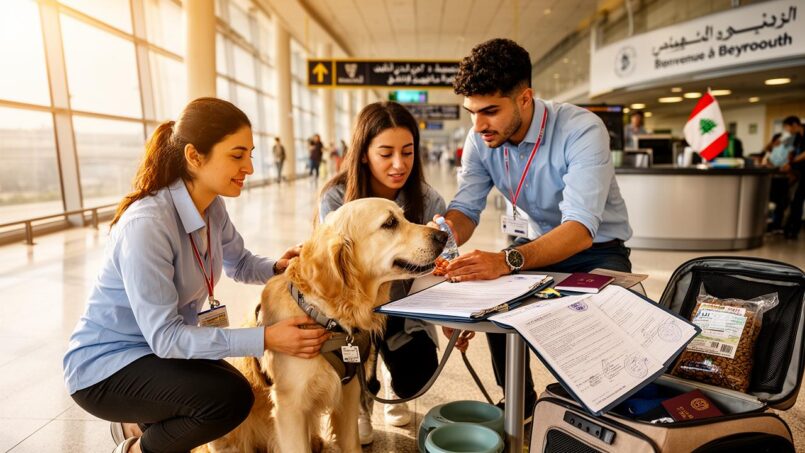
When we talk about a “pet passport” for Lebanon, it is not the blue EU passport issued by European veterinarians, but a set of documents that must accompany the animal upon import. This file is essential to clear customs at Beirut–Rafic Hariri Airport without issues.
Essential Documents in the File
This Lebanese “passport” consists of three main elements:
1. Proof of microchip implantation 2. Up-to-date rabies vaccination certificate 3. Export health certificate issued by an accredited veterinarian in the country of departure
All these documents must display the same 15-digit microchip number, which allows unambiguous identification of your animal upon arrival.
Reminder on Lebanon’s Status in International Trade
In international health regulations, Lebanon is classified by the European Union as a “non-listed country” and considered high-risk for rabies by several authorities (EU, USA). This has two important implications:
To enter Lebanon, no rabies titer test is required, although vaccines and the microchip are mandatory. However, to leave Lebanon for the EU or the USA, a titer test performed in a recognized laboratory is generally required. Failure to plan ahead can delay or block your departure.
In other words, when expatriating to Lebanon, already think about the next step: doing the titer test while you are still in an “easy” country can save you months of waiting later on.
Entry Requirements for Dogs and Cats in Lebanon
Lebanese rules are relatively clear as long as you follow the steps in order. The general framework targets domestic dogs and cats, including assistance animals. Wolf hybrids or certain races very close to wild species (Savannah, Bengal) are only accepted if they are at least the fifth generation removed from their wild ancestors.
Step 1: ISO-compliant Microchip
Before any vaccination, your animal must be identified by microchip:
– Format: 15 digits, unencrypted
– Standards: ISO 11784 or 11785 Annex A
– Implantation: by a veterinarian, a veterinary hospital, or, depending on the country, trained personnel
If your companion already has a non-ISO chip (different frequencies), you have two options:
– Have a second ISO microchip implanted,
– Or travel with your own compatible reader, informing the authorities.
The easiest way to avoid any discussion at inspection is to comply with ISO standards and record the chip number on all documents: health booklet, vaccination certificate, health certificate, official forms.
Step 2: Rabies Vaccination and “Core” Vaccines
Lebanon requires an up-to-date rabies vaccination:
– Injection given at least 30 days before entry,
– And at most 12 months before arrival, even if some vaccines are valid for three years in other countries,
– The day of injection does not count toward the 30-day waiting period.
In addition to rabies, health authorities require a set of core routine vaccinations for travelers or residents. It is essential to check and update these vaccines before departure.
For dogs, the following are required:
– Canine distemper,
– Infectious hepatitis,
– Parvovirus,
– Parainfluenza,
– Treatment or vaccination against leptospirosis (except dog already under documented treatment).
For cats, the following are required:
– Feline viral rhinotracheitis,
– Feline panleukopenia,
– Feline leukemia,
– Calicivirus.
To avoid any dispute, it is prudent not to give the rabies vaccine on the same day as the other vaccines. Some authorities consider that this could invalidate the protection, and therefore the validity of entry into Lebanon or a future journey from Lebanon.
Step 3: No Rabies Titer Required for Entry, but Useful for Exit
Contrary to many countries’ requirements, Lebanon does not require a rabies serology test (titer) for dogs and cats arriving from any country. This greatly simplifies entry.
However, for a later return to the European Union or several other destinations, this titer becomes mandatory due to Lebanon’s status. Ideally, you can:
– either have it done before leaving for Lebanon, in your home country,
– or have it done during your stay in Lebanon, allowing for the lead time (often several months) imposed by the destination country.
Step 4: Mandatory Antiparasitic Treatments
Before departure, dogs and cats must receive internal and external treatments:
– Deworming covering in particular Echinococcus multilocularis,
– Flea and tick treatment.
The veterinary treatments required for travel must be administered shortly before departure. Their traceability is essential: the veterinarian must record them in writing, legibly, on the health certificate or on a separate certificate. This entry must include the exact name of the product used, the precise date of administration, as well as the signature and official stamp of the practitioner.
Step 5: Export Health Certificate
This document is the cornerstone of the file. It is a health certificate for Lebanon, issued in the country of departure:
– Issued by an authorized veterinarian (often USDA-accredited for the USA, “Official Veterinarian” in the UK, etc.),
– Certifying that the animal is clinically healthy,
– Confirming that the rabies vaccine is compliant (dates, lot, manufacturer),
– Issued within 10 days of travel (sometimes less, depending on local procedures).
Next, this certificate must be legalized:
– Signed and stamped by an official veterinarian from the competent authority (Agriculture, Veterinary Services, APHIS, DEFRA, etc.),
– In some countries, apostilled by the Ministry of Foreign Affairs then legalized at the Lebanese Consulate (this is the case notably for the United Kingdom).
A point of caution: every entry must be legible, without erasures, with the microchip number clearly visible. An approximate document can lead to denial of boarding or being blocked upon arrival.
Step 6: Import Permit Issued Upon Arrival
Unlike other states, Lebanon does not require an import permit in advance. This document is issued by customs and veterinary services directly upon arrival at Beirut–Rafic Hariri Airport.
In short, if:
– microchip,
– vaccines,
– antiparasitic treatments,
– health certificate,
are in order, the import permit is issued on the spot, and your animal can enter without quarantine.
In case of non-compliance, the law provides for drastic measures: denial of entry, re-exportation, forced quarantine, or euthanasia, all costs borne by the owner. In practice, the authorities aim to protect public health rather than punish, but you should not count on leniency if the basics (rabies, microchip) are not respected.
Special Cases: Puppies, Kittens, and Other Species
Young animals under three months benefit from a rabies exemption:
– They may enter Lebanon without rabies vaccination,
– Provided they are microchipped,
– Have a recent health certificate,
– And provide proof that the mother was vaccinated against rabies within the six months prior to giving birth.
Conversely, all animals over three months old must meet all standard requirements.
For other species (birds, reptiles, rodents, rabbits, fish, invertebrates, etc.), rabies is not an issue, but a health certificate and import permit may be required. If the species is protected under the CITES Convention (parrot, tortoise, etc.), you must obtain CITES permits before departure.
Flying with Your Pet to Beirut
Even though Lebanon sets a clear health framework, it is the airlines that will concretely determine how your pet can travel: in the cabin, in the hold, or as cargo. However, policies vary greatly, and some are very restrictive regarding animals.
Key Rule: The Operating Carrier’s Policy Applies
If you are traveling with a multi-airline ticket, it is not the ticket issuer that matters, but the actual operator of each segment. As a result:
– A flight “Airline X” sold by Air France but operated by another airline will follow that airline’s rules for animals.
– If you change airlines at a layover, you may need to collect the animal, clear customs, and re-check it, sometimes with partial application of the transit country’s health rules.
Hence the importance, when possible, of choosing a direct itinerary or one with a single main airline all the way to Beirut.
Examples of Airline Policies Flying or Connecting to Beirut
The following policies change regularly; they give an idea of possible constraints for travel to Lebanon.
Middle East Airlines (MEA)
Lebanon’s national carrier allows dogs and cats:
– In the cabin (small sizes),
– In the hold as checked baggage,
– Or as cargo.
Main cabin rules:
To travel in the cabin with your pet, it must be at least 8 weeks old, but check the requirements of the destination country (e.g., 7 months to enter the EU from Lebanon). The weight of the animal alone must not exceed 7 kg, and the total weight (animal + carrier) is limited to 10 kg. The carrier must measure no more than 40 × 24 × 24 cm, have a waterproof bottom, and sufficient ventilation. Note that it is forbidden to sit in exit row seats or the first row.
Before departure:
– Fill out a release form and an acceptance checklist,
– Present the animal at the counter at least 30 minutes before the check-in deadline,
– Pay variable fees, from 25 to 150 USD depending on total weight and route.
Assistance dogs travel free in the cabin if the airline is notified 48 hours in advance.
For large crates in the hold:
– Max weight (animal + crate): 75 kg,
– Suspension of transport in extreme temperatures: above 29.4°C or below 7.2°C, unless a cold acclimation certificate is provided.
MEA bans certain dog breeds considered dangerous (American Pit Bull, Rottweiler, Doberman, etc.) and classifies brachycephalic breeds (Pug, French Bulldog, Shih Tzu, etc.) as at-risk, accepted only in the cabin with a signed release form.
Royal Jordanian
Royal Jordanian allows dogs and cats:
– In the cabin (flights up to 5 hours only),
– In the hold as checked baggage.
In the cabin:
Maximum allowed weight for an animal and its carrier in the cabin, to be stowed under the seat.
In the hold:
– Up to 4 crates per aircraft,
– Many brachycephalic or so-called dangerous breeds banned (Bulldogs, Mastiffs, Pit Bulls, Pugs, Boxers, etc.), both in cabin and hold.
Other Airlines in the Region
Several Gulf or regional carriers have sometimes very restrictive rules:
– Emirates: dogs and cats not allowed in the cabin (except falcons on certain sectors and guide dogs); animals cargo only.
– Etihad: small dogs and cats in the cabin on most routes, up to 8 kg including carrier, with reservation 7 days in advance. In Business or First class, an additional adjacent seat must be purchased for the carrier. Fees are often around 1,500 USD.
– Qatar Airways: dogs, cats, and birds accepted as checked baggage (not standard cabin), with a veterinary health certificate dated within 10 days. For layovers in Doha longer than 3 hours, ground staff are supposed to walk dogs and clean crates.
– Several low-cost carriers in the region (Flydubai, Air Arabia, Wizz Air Abu Dhabi, etc.) only accept falcons or guide dogs in the cabin; other animals travel exclusively as cargo or not at all (Corendon Airlines refuses all animals).
Some Turkish and regional airlines, such as Turkish Airlines, Pegasus, SunExpress, AJet, and El Al, generally allow animals in the cabin up to a total weight of 8 to 9 kg, including the carrier. However, this tolerance does not apply on flights to certain Gulf countries or the United Kingdom, where specific restrictions may apply.
Preparing the Travel Crate: IATA Standards
Regardless of the carrier, the crate must comply with IATA Live Animals Regulations. In summary:
– The animal must be able to stand, sit, lie down, and turn around comfortably,
– Waterproof bottom, good ventilation,
– Food and water bowls attached inside,
– “LIVE ANIMALS” sticker and directional arrows affixed,
– Owner’s name, contact details in Lebanon and in the country of origin, special instructions (anxious animal, do not open…).
Major brands (Ferplast Atlas, Trixie Gulliver, Petmate Sky Kennel, etc.) generally make compliant models. However, note: compliance with IATA standards does not automatically guarantee acceptance by the airline. Some may require, for example:
– Metal screws instead of plastic (United, Delta, etc.),
– Wire mesh reinforcement over vents for cats.
Acclimating the animal to its crate is a point often overlooked yet critical. Ideally, introduce it several weeks in advance:
– crate left open and accessible,
– treats given inside,
– then gradually close it for short periods,
– short car trips to get used to vibrations.
Summary Table of Some Airline Policies
| Airline | Allowed transport type to/from Beirut* | Max cabin weight (animal + carrier) | Notable Particularities |
|---|---|---|---|
| Middle East Airlines | Cabin, hold baggage, cargo | 10 kg | Brachycephalic breeds cabin only, ban to UAE & UK as baggage |
| Royal Jordanian | Cabin (≤ 5 h), hold baggage | 7 kg | Many breeds banned, max 2 animals in cabin |
| Qatar Airways | Hold baggage, cargo | N/A (no standard cabin) | Health certificate 3 h |
| Etihad Airways | Cabin, cargo | 8 kg | Extra seat in J/F, high fees (~1,500 USD) |
| Emirates | Cargo only (except falcons & guide dogs) | N/A | No dogs/cats in cabin |
| Turkish Airlines | Cabin, hold baggage, cargo | 8 kg | Special animal services in Istanbul |
| *Policies may change; always verify before booking. |
Upon Arrival at Beirut Airport
Dogs and cats must enter through Beirut–Rafic Hariri International Airport. Upon deplaning:
– The cabin animal stays with you,
– The animal transported in the hold is collected in the special baggage area, then presented to veterinary and customs authorities.
Checks generally focus on: procedures, risks, compliance, and operational effectiveness.
Before traveling with your pet, it is imperative to have its microchip checked, ensure its vaccinations and antiparasitic treatments are up to date, and present its health certificate along with required legalizations. The animal must also be clinically normal, with no symptoms of any disease transmissible to humans.
If everything is in order and the animal shows no concerning signs, the import permit is issued and you can exit without quarantine.
On the other hand, if the animal appears sick, authorities may impose a supplementary veterinary exam at your expense. The extreme scenario (denial, return, quarantine) is reserved for cases of clear non-compliance.
Living with a Pet in Lebanon: Culture, Constraints, and Realities
Settling in Lebanon with your dog or cat also means becoming part of a country where the relationship with animals is one of contrasts.
A Genuine Dog and Cat Culture… But an Expensive Luxury
Lebanon is known for its history, cultural diversity, landscapes, but also for the importance of pets in many households. In Beirut, you will encounter:
– dogs walked on leashes along the corniche,
– cats on rooftops, balconies, in alleyways.
Younger generations, in particular, tend to consider their pet as a full family member. Adoptions of shelter dogs are increasing, and Lebanese social media is full of positive “pet parent” stories.
At the same time, the economic crisis the country is going through has made having a pet a luxury for many. Quality food, vet visits, spaying/neutering, vaccines, pet-friendly housing, security deposits… the overall bill weighs heavily on a strained budget.
Studies showing the case of low-income elderly women highlight that:
– veterinary costs,
– higher rents or additional deposits for pets,
– and the price of specialized food
are major obstacles to responsible pet ownership.
Stray Dogs, Cats, and Stray Animals: A Public Health Issue
As in many countries in the region, Lebanon faces a large population of stray animals:
– Free-roaming cats, visible everywhere, from urban neighborhoods to villages,
– Packs of dogs, often skinny, sometimes sick or injured.
These dogs are sometimes perceived as a threat:
– risk of bites,
– possible rabies transmission,
– incidents highlighted by some media, which fuel fear without always providing context.
In some cases, the human reaction is violent: poisonings, beatings, abuse. Strays are then seen as nuisances rather than sentient beings.
In response, many animal protection associations are mobilizing to:
– rescue and treat animals,
– organize spay/neuter campaigns,
– promote adoption,
– conduct educational initiatives on owner responsibility and animal needs.
As an expatriate, it is strongly recommended to:
To reduce the risk of bites, keep your dog on a leash and avoid areas where packs of stray dogs are present. Make sure your pet’s vaccinations, especially against rabies, are always up to date. In case of a bite or scratch from an unknown animal, see a doctor immediately. The Ministry of Health recommends treatment within 24 hours.
Cultural and Religious Attitudes Toward Dogs
Representations of animals in Lebanon are diverse. Dogs are sometimes celebrated as symbols of loyalty, protection, and companionship, present in literature, art, and social media. But remnants of negative views persist:
– In some circles, the dog is still seen as unclean or dangerous,
– Contact with its saliva is considered, for some believers, a source of ritual impurity (najis),
– This can lead families to refuse a dog in the house, or keep it strictly outdoors.
However, the Islamic tradition also includes stories where kindness to animals is valued, and historical episodes show Muslim cities (Damascus, Istanbul, etc.) where street dogs were fed, watered, and protected by authorities or citizens.
For an expatriate dog lover, this means:
– respecting sensitivities: some guests will be uncomfortable in an apartment with a dog,
– planning to be able to temporarily isolate your pet during visits,
– accepting that not everyone sees your dog as a “baby” or a substitute child.
Finding Pet-Friendly Housing in Beirut and Surroundings
Finding pet-friendly housing in Lebanon, especially in Beirut, is a major challenge for any expatriation.
Supply of Pet-Accepting Accommodations
The main short-term rental platforms, like Airbnb, list several hundred pet-accepting rentals in and around Beirut.
A few figures illustrate the supply:
| Area | Number of pet-friendly rentals | Cumulative reviews | “Family” rentals | Rentals with dedicated workspace |
|---|---|---|---|---|
| Beirut (overall) | 680 | 10,000 | 270 | 390 |
| Mar Mikhael district | 80 | 2,400 | 30 | 60 |
Accommodations range from a downtown studio to a villa with a garden in the suburbs or mountains, including lofts, apartments in secure residences, chalets, etc. Many mention valuable perks for pet owners:
Discover the essential features that enhance comfort and quality of life in your home.
A major advantage in a country affected by power cuts, ensuring uninterrupted comfort and continuity of activity.
A private outdoor space to relax, enjoy the fresh air, and expand your living area.
A personal green oasis for leisure, family relaxation, or quiet moments, without sharing.
Close to public green spaces or walking areas for outdoor activities and well-being.
Dedicated services to ensure resident safety and simplify daily life with on-site assistance.
Neighborhoods popular with expats, such as Achrafieh, Mar Mikhael, Gemmayzeh, Hamra, Badaro, Saifi Village, or downtown, offer a wide selection of apartments where pets are accepted, sometimes for an additional deposit or with specific rules (no large dogs, no more than one animal, etc.).
Hotels and Guesthouses
The city also has various hotels and guesthouses that accept, at least occasionally, pets:
– Urban hotels in central Beirut,
– Mountain resorts and hotels (Broumana, Cedars, Jezzine, etc.),
– Guesthouses in regions like Batroun or the Chouf.
The conditions for accommodating dogs vary by establishment: some only accept small dogs, others charge an extra nightly fee, or require that the pet never be left alone in the room.
Home Setup and Neighbors
Beyond landlord acceptance, daily life with a pet in a Beirut apartment building means:
– managing noise (frequent barking is poorly tolerated),
– securing balconies and windows for cats,
– anticipating the possible presence of stray dogs near the building.
A cultural point: some neighbors may be very passionate about animals, while others may fear or even dislike them. The dog then sometimes becomes a social marker, revealing affinities or tensions.
Access to Veterinary Care
There are veterinary clinics and practices in Lebanon, especially in and around Beirut. However, available information is less standardized than in countries like the United States or France, and geographic disparities remain significant:
– In the capital and major cities, you will find facilities offering consultations, surgery, imaging, lab work, and preventive care,
– In some rural areas, access is more limited, and travel to Beirut may be necessary for complex procedures.
Animal protection associations often play a key role: protecting animals and promoting their welfare. They are also involved in public awareness and education about animal needs, while supporting rescue and adoption efforts.
– guide towards competent veterinarians,
– organize vaccination campaigns,
– offer low-cost spay/neuter.
For an expatriate, it is wise, upon arrival, to:
– identify a reference clinic near your home,
– transfer the animal’s medical file (blood work results, history, possible titer results),
– check opening hours and the procedure for after-hours emergencies.
Using Specialized Pet Transport Companies
For those who do not want to handle the procedures themselves (cargo bookings, customs formalities, veterinary coordination), there are specialized companies for transporting animals to and from Lebanon.
These companies generally offer:
Discover our full range of services to ensure a smooth and safe journey for your pet, in compliance with all international regulations.
Careful review and preparation of your pet’s complete veterinary and administrative file to ensure compliance.
Obtaining all required official documents: export certificates and import permits for the destination.
Cargo booking and full organization of transfers between airports.
Provision of sturdy travel crates fully compliant with IATA safety standards.
Dedicated pet taxi service for stress-free transfers to and from your home.
Upon request, a ‘Pet Nanny’ can accompany and comfort your pet during the cabin flight.
Costs can be significant, especially for “VIP” door-to-door international packages, but these services reduce the risk of error and stress, especially on complex routes or with multiple layovers.
Exporting Your Pet from Lebanon
Many expats arrive in Lebanon for a few years, intending to later move on to another destination (Europe, North America, the Gulf…). However, repatriating a pet from Lebanon can be more complex than the inbound journey.
The documents generally required include:
To travel with your pet, several documents are mandatory: a valid rabies vaccination certificate (between 30 days and 1 year before departure), proof of microchipping, and a health certificate issued by a Lebanese government veterinarian within 10 days of travel. Additionally, for many destinations like the EU, a rabies titer test performed at an approved laboratory is required, with a mandatory waiting period after the blood draw.
An export permit is also required, issued by the official veterinarian at the airport (valid for about ten days). Failing to anticipate these steps can force you to delay your departure date, or even leave your pet behind temporarily.
Practical Tips for a Successful Expatriation with Pets in Lebanon
Based on testimonials and official rules, a few principles emerge for a smooth move to Lebanon with a dog or cat.
1. Start procedures early Ideally 3 to 4 months before departure: microchip (if needed), rabies vaccine, boosters, treatments, document collection, scheduling the health certificate, coordination with the airline.
– 2. Check destination and transit requirements multiple times Regulations change, sometimes without notice. Always confirm with:
– the veterinary services of the departure country,
– the Lebanese embassy or consulate,
– the airline,
– the authorities of any transit country (especially the EU).
Choose a direct flight or one with a single airline. This limits the risk of problems such as being denied boarding during a layover or having only partial application of EU regulations.
4. Prepare the animal for travel Familiarize the crate, progressive training, vet check for fitness to fly. Sedatives are generally discouraged on planes, especially in the hold, as they can increase respiratory risks.
Moving abroad with a pet involves several costs beyond simple transport: veterinary care (vaccines, treatments, certificates), transport (cabin, hold, or cargo), possible fees for a specialized company, as well as a rent surcharge or security deposit. The total bill is often higher than expected, so it is essential to include these expenses in your expatriation budget.
6. Learn about local realities (strays, rabies, climate) Lebanon has rabies cases in dogs, reinforcing the importance of vaccination. The presence of stray dogs and high summer temperatures also require precautions (walks early morning or late evening, available water, parasite protection, etc.).
– 7. Connect with the associative network and expat communities Online groups, local associations, shelters, and expat communities are valuable resources for:
– finding a good veterinarian,
– identifying the best parks or walks,
– sharing tips on pet-sitting, boarding, trainers.
Conclusion
Expatriating with your pet to Lebanon requires thorough preparation, but the country offers an environment where dogs and cats can find their place, provided their needs are met and their owners are aware of local realities: presence of strays, cost of care, sometimes contrasting cultural perceptions.
To successfully expatriate your pet, several steps are essential: microchip identification, up-to-date vaccinations, antiparasitic treatments, obtaining a veterinary health certificate, and carefully choosing the airline. Anticipating the arrival and future departure procedures is also crucial for a smooth expatriation.
Disclaimer: The information provided on this website is for informational purposes only and does not constitute financial, legal, or professional advice. We encourage you to consult qualified experts before making any investment, real estate, or expatriation decisions. Although we strive to maintain up-to-date and accurate information, we do not guarantee the completeness, accuracy, or timeliness of the proposed content. As investment and expatriation involve risks, we disclaim any liability for potential losses or damages arising from the use of this site. Your use of this site confirms your acceptance of these terms and your understanding of the associated risks.

Cyril Jarnias is an independent expert in international wealth management with over 20 years of experience. As an expatriate himself, he is dedicated to helping individuals and business leaders build, protect, and pass on their wealth with complete peace of mind.
On his website, cyriljarnias.com, he shares his expertise on international real estate, offshore company formation, and expatriation.
Thanks to his expertise, he offers sound advice to optimize his clients' wealth management. Cyril Jarnias is also recognized for his appearances in many prestigious media outlets such as BFM Business, les Français de l’étranger, Le Figaro, Les Echos, and Mieux vivre votre argent, where he shares his knowledge and know-how in wealth management.





