
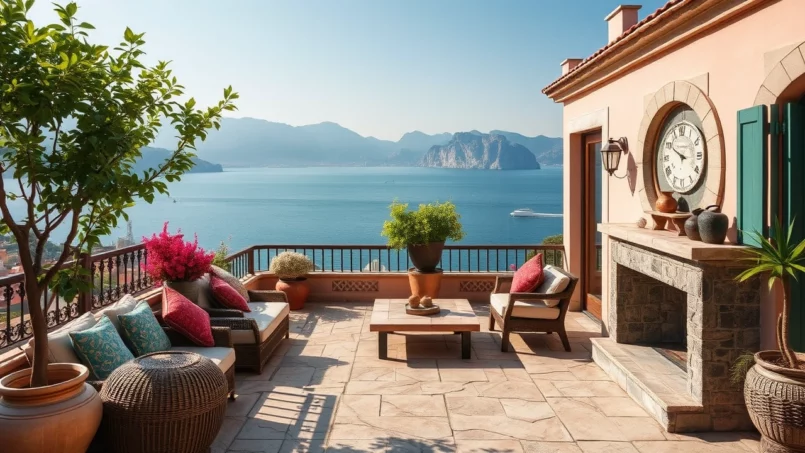
 Published on and written by Cyril Jarnias
Selling a property quickly and well in Turkey is not about luck. Between the season, the asking price, home preparation, taxes, and marketing strategy, every detail can save—or lose—weeks and thousands of euros. In a dynamic but demanding market, where over 1.5 million homes change hands each year and the vast majority of transactions are domestic, anyone who wants to stand out must think like a professional.
This article brings together, in simple, concrete French, the main levers for selling a property quickly in Turkey, drawing on market data, legal rules, and recent real-world experience.
Understanding the Turkish Market Before Listing
Even before setting a price or bringing in a photographer, you need to place your property in the real market context.
The Turkish real estate market is overwhelmingly domestic: about 98% of transactions are carried out by Turkish buyers, and foreigners account for only 5 to 6% of total sales, depending on the year. Cities like Istanbul, Ankara, Izmir, and Antalya alone concentrate nearly 37% of transactions, making them very liquid areas, especially for quick resale.
Number of homes sold between January and July 2025, an increase of about 24% year-over-year.
The Impact of Season on Sale Speed
In Turkey, the calendar plays a decisive role. Market studies show clear differences in sales times and price levels depending on the season.
| Season (approx.) | Buyer Demand | Typical Price Level | Average Days on Market |
|---|---|---|---|
| Winter (Dec.–Feb.) | Low | Low to Medium | 70–90 days |
| Spring (Mar.–May) | High | Medium to High | 30–45 days |
| Summer (June–Aug.) | High | High | 35–55 days |
| Fall (Sept.–Nov.) | Moderate | Medium | 55–75 days |
Spring and early summer are, on average, the most effective periods for selling quickly and well, especially for residential properties in major cities and along the coasts. May is often cited as the month when properties can sell for up to 10% more than in late fall, with a favorable balance between supply and demand.
The ideal time to sell a property in Turkey depends on its type. Family apartments in big cities like Istanbul or Ankara find buyers year-round, thanks to job relocations and local demand. However, for a vacation villa in Antalya, Bodrum, or Fethiye, it is best to list it between April and August. This period allows buyers, both Turkish and foreign, to view the property under the best conditions, speeding up the sale.
The Right Day to Publish Your Listing
Usage statistics from real estate portals show another often overlooked detail: listings published on Thursday achieve better results than those posted early in the week. Researchers note that by publishing on Thursday, you maximize visibility during the peak browsing hours of Friday and Saturday, which translates into more visits, more inquiries, and ultimately faster sales that are sometimes better negotiated.
For a seller, this means two very practical things: prepare the listing (photos, text, price) in advance, and launch it at the right time, rather than rushing to post on a Monday morning.
Setting a Realistic Price: The Number One Condition for a Quick Sale
The biggest mistake sellers—Turkish and foreign alike—make is excessive optimism. An overpriced property can sit online for months, racking up views without serious inquiries, only to eventually have to be discounted. Conversely, a correctly priced property sells 35 to 40% faster and receives offers on average 19 days earlier than one that is too expensive.
Why the Right Price Isn’t the One You Hope For
The “right” price is not the one you would like to get, nor the one a neighbor told you, but the price buyers are actually willing to pay in the next 3 to 6 months, taking into account:
– actual sales closed in your neighborhood for comparable properties,
– local demand for your type of property (studio for rent, large family apartment, vacation villa, etc.),
– the precise location (proximity to metro, a future line, a waterfront, a university campus…),
– the condition of the home (new, renovated, old without recent work),
– the local economic climate (interest rates, ease of access to credit, inflation).
Average percentage of the asking price achieved by sellers who rely on an official appraisal report.
The Value of a Valuation Report (Expertise)
In Turkey, an appraisal report prepared by an expert accredited by the Capital Markets Board (SPK) is now mandatory as soon as one party to the sale is foreign. Even if the law does not require it for other transactions, its value for a seller is clear:
– it analyzes local comparable sales (same neighborhood, same typology),
– it takes into account construction quality, actual square footage, amenities (parking, pool, 24/7 security),
– it factors in neighborhood prospects (new metro lines, infrastructure projects),
– it provides a price range consistent with demand.
The standard report includes photos, a description of the surroundings (schools, hospitals, shops), and a check of the property’s legal status (debts, mortgages, occupancy permit). It is generally valid for three months for land registry procedures, and its cost is modest, on the order of a few thousand Turkish lira for a home.
Relying on Market Data
In addition to the appraisal report, it is useful to look at average prices in the area to position your property:
| City / Region (Residential) | Approx. Average Price per m² (2025, USD) | Key Points for Quick Resale |
|---|---|---|
| Istanbul (city average) | ~1,630 | High liquidity, variations by neighborhood |
| Ankara | ~920 | Stable market, strong local demand |
| Izmir | ~1,150 | Growing market, lifestyle appeal |
| Antalya | ~1,200 | Very popular with tourists, seasonal |
| Muğla / Bodrum | ~1,810 / ~2,825 | High-end segment, resort markets |
These averages hide significant differences between neighborhoods. In Istanbul, an apartment in a new building with a pool in Beylikdüzü does not sell at the same price per m² as an older property in Kadıköy or Şişli. Hence the importance of analyzing comparable sales by micro‑area.
Don’t Add Too Much “Negotiation Room”
In many neighborhoods, both Turkish and foreign buyers expect to negotiate 10 to 20% off the asking price. But if you artificially inflate your price by 20 or 30% “to leave room,” your listing will be penalized in budget sort filters, will appear too expensive compared to comparable properties, and you will lose the new-listing momentum of the first few weeks.
Portal data shows that new listings receive the most clicks in the very first days. If your property is perceived as “off-market” from the start, you waste this visibility capital.
Preparing the Property: Presentation That Saves Time and Money
Once the price is set, the second major lever for a quick sale is presentation. Studies show that a well-prepared home attracts up to three times more offers in the first week of listing, and simple staging, cleaning, and minor repairs can add about 5 to 10% to the final value.
Small Improvements, Big Impact
Several items have a measurable impact on the sale price:
| Type of Improvement | Indicative Cost (order of magnitude) | Average Effect on Sale Price |
|---|---|---|
| Professional deep cleaning | 80–150 £ (equivalent) | +2.1% |
| Kitchen refresh | 300–600 £ | +4.8% |
| Landscaping / garden tidy-up | 200–400 £ | +3.3% |
By combining these targeted interventions, every pound invested can generate 4 to 7 pounds of increase in the final offer. In a market where buyers compare multiple properties side by side, these details often make the difference between “we’ll keep looking” and “we’ll make an offer.”
Concretely, in Turkey, it is advisable to:
To optimize a property’s value before a sale, focus on targeted, low-cost improvements. Start by repairing any broken or visible items like cracked tiles, leaking faucets, damaged electrical outlets, or chipped paint. Then freshen up walls with neutral shades (off-white, light gray) that have broad appeal. Inexpensively modernize key rooms like the kitchen and bathroom by changing handles, light fixtures, faucets, and backsplashes. Finally, care for the floors with deep cleaning, refinishing, or replacing the most worn coverings.
The Crucial Role of Home Staging
In Turkey, the culture of home staging is still underdeveloped, whereas in Europe or North America, it has become a standard for accelerating sales. Yet its principle is simple: present the home in its best version to help the buyer envision living there.
This involves:
– major decluttering: remove unnecessary furniture, knick-knacks, duplicates, boxes, toys to visually enlarge rooms,
– depersonalizing: remove family photos, very personal items, collections to neutralize the space,
– light staging: a few well-placed plants, cushions, a neutral sofa cover, clean light-colored bedding,
– lighting: open curtains, boost lighting in dark rooms, use stronger bulbs, possibly install mirrors,
– a pleasant smell: avoid strong perfumes, aim for a clean impression (fresh laundry, light neutral scent).
To trigger an emotional connection, focus your efforts on the living room, kitchen, and master bedroom. Secondary bedrooms and service areas can be presented more simply, as long as they are perfectly clean and tidy.
Exterior, Balcony, Terrace: Major Assets in Turkey
In a country where the climate allows outdoor living for much of the year, exteriors are never a detail. A well-maintained garden, a nicely presented balcony, a clean, clear terrace clearly boost appeal, especially in coastal regions like Antalya, Bodrum, or Fethiye.
It is strongly recommended to:
– mow the lawn, trim hedges and shrubs, weed the paths,
– pressure-wash terraces, stairs, walls, and dirty facades,
– check the pool if applicable (clear water, clean coping),
– limit garden furniture to the bare essentials (a table, a few chairs in good condition),
– remove anything that gives an impression of neglect or DIY (old broken pots, tools, worn-out toys, visible storage).
The goal is that the buyer can imagine having coffee on the balcony or hosting a barbecue in the garden at first glance.
Building a Listing That Drives Showings
Good preparation is useless if your listing is mediocre. Yet in Turkey, over 95% of searches now start online, on portals like Sahibinden, Hepsiemlak, Hurriyet Emlak, Zingat, or Rightmove Türkiye for foreign clientele.
Professional Photos, Not Quick Smartphone Snapshots
The numbers are clear: listings with professional photos receive up to 70% more inquiries than those with amateur shots, and listings accompanied by 3D virtual tours or videos receive offers about 23 days earlier than plain text with a few dark images.
To optimize your visuals:
For attractive photos, take shots after cleaning and staging. Favor natural light in the middle of the day with curtains open. Photograph every main room from multiple angles, avoiding backlight and unwanted reflections in mirrors. Don’t forget to include views from windows and balconies, especially if they are remarkable (sea, Bosphorus, mountains, city). Additionally, a simple floor plan with dimensions can help understand the layout.
For mid- to high-range properties (large apartments, villas, waterfront properties), a shoot by a specialized photographer or a reputable real estate agency is a very profitable investment.
Accurate, Honest, Benefit-Oriented Text
The description should be clear, complete, and honest. Turkish law prohibits misleading listings or omissions of important information. Commercially, transparency also reduces late renegotiations by nearly 73%.
Your text should:
For a comprehensive and attractive presentation, always include: the exact location (neighborhood, distance to transport, beach, schools, shops, hospitals); the net and gross floor areas, number of rooms, bedrooms, and bathrooms; the general condition (new, renovated, needs refreshing); amenities (elevator, parking, pool, security, gym, playground); differentiating assets (view, exposure, terrace, garden, proximity to new infrastructure); and, for investors, the rental potential (average gross yield in the area, e.g., 6–8% in Antalya or Istanbul).
It is useful to adapt the tone and information to the target audience: a Turkish family will be sensitive to schools and transport, a Russian or European investor will look more at rental profitability, neighborhood stability, and ease of remote management.
Multiply the Channels Without Spreading Yourself Too Thin
To maximize visibility, it is advisable to publish on several major portals simultaneously. Sellers who list on at least three important platforms receive on average 18% more inquiries. A common combination could be:
– a major national portal (Sahibinden, Hepsiemlak),
– a professional-oriented portal (Hurriyet Emlak, Zingat),
– an international portal (Rightmove Türkiye, specialized foreign portals).
Updating the listing every week (minor text tweak, adding photos, adjusting price if needed) helps maintain better positioning in search results, as algorithms often favor recent listings.
Working (or Not) with an Agency: Balancing Speed, Security, and Cost
In theory, nothing obliges an owner to go through an agency to sell in Turkey. In practice, 83% of transactions involving international buyers are handled by professionals, and statistics show that sales assisted by a licensed agency:
– close on average in 38 days, compared to 52 days for direct sales,
– have only 3% legal errors, compared to 41% for “DIY” processes,
– avoid property title disputes in 94% of cases, compared to 61% for sales without an intermediary.
What a Good Agency Actually Does
A serious agency—holding a real estate brokerage license—doesn’t just publish a listing. It:
The real estate agent accomplishes several key steps: they establish an estimate using comparables and appraisal reports, advise on the optimal listing period, verify legal documents (tapu, permit, DASK, mortgages), coordinate property visibility (photos, viewings), screen serious buyers by requiring proof of funds if needed, handle negotiations in compliance with the law in Turkish and foreign languages, prepare preliminary contracts, calculate taxes, and follow up until the title transfer.
This oversight drastically reduces the risk of last-minute snags at the land registry office, where 30% of transactions fail due to a missing signature, an expired document, or a discrepancy between declared data and reality.
How Much Does the Agency Cost, and Is It Worth It?
The real estate brokerage regulation generally caps the total commission at 4% of the sale price excluding VAT, often 2% payable by the seller and 2% by the buyer. In practice, this split can be negotiated: some sellers agree to bear a higher commission if they believe the agency can secure a better price or find a serious buyer faster.
For the sale of a property worth 150,000 £, total seller costs (including agency commission, share of transfer tax, legal fees, translation, and invoice regularization) generally range between 5,000 and 7,000 £. Selling without an agency saves part of these costs but exposes the seller to risks such as tax calculation errors, underestimation of legal aspects, or undervaluation of the property.
For a foreign seller, or for a transaction involving residency, citizenship by investment, or international tax issues, the use of an experienced agency and a specialized lawyer remains strongly advisable.
Legal and Tax File: Anticipate to Avoid Blocking the Sale
In Turkey, a sale legally exists only when it is signed before the Land Registry Office (Tapu Müdürlüğü / Tapu ve Kadastro Müdürlüğü) or, for some recent cases, before an authorized notary. Any “private” or handwritten contract does not transfer ownership without this formality.
Essential Documents for Selling
Even before publishing your listing, it is prudent to gather and verify:
– the title deed (Tapu): it must be in the seller’s exact name, with no spelling errors matching the passport,
– the seller’s Turkish tax identification number (mandatory for formalities and taxation),
– an up-to-date mandatory earthquake insurance certificate (DASK),
– the occupancy permit (iskan) if the property is in a building,
– a recent appraisal report if the buyer or seller is foreign (valid for three months),
– a certificate of no debt from the municipality (property taxes up to date),
– proof of payment for water, electricity, gas, and condo fees.
A check at the land registry allows verification of the absence of mortgages, seizures, or restrictions such as military zones or residency restrictions for foreigners.
Statistics show that one-third of sales are delayed by incomplete legal checks, and one-fifth of transactions suffer from discrepancies between registry data and the actual situation (former co-owners still listed, incorrect surface areas, etc.).
Capital Gains Tax: Don’t Get the Timing Wrong
The capital gains tax regime in Turkey is central for any seller. The basic rule is simple:
– if you sell a property held for more than five years, the capital gain is tax-exempt for an individual,
– if you sell within five years of acquisition, a capital gains tax (subject to a progressive scale, from 15% to 40% depending on the gain amount) applies.
Annual exemption in Turkish lira (TL) for real estate capital gains in 2025, above which a progressive scale applies.
Many tax disputes—up to 60% according to some analyses—stem from undocumented or unretained investment receipts (renovations, improvements) that could have reduced the taxable base. For a foreign investor, it is therefore crucial to keep all invoices for work and fees.
Common Taxes and Fees to Anticipate
In addition to any capital gains tax, a seller should account for:
– the title transfer tax (Tapu Harcı): 4% of the declared value, theoretically split 2%/2% between buyer and seller, but often paid entirely by the buyer in resales—this is negotiable,
– agency fees: generally 2 to 4% of the sale price for the seller’s share, plus VAT,
– lawyer and notary fees: a few hundred euros, varying with case complexity,
– sworn translator fees for sellers who do not speak Turkish,
– residual costs (bills, condo fees, local tax adjustments).
Late payment of the transfer tax can result in a penalty of 2% per month overdue. Rigorous tracking of the calendar and tax deadlines helps avoid significant extra costs.
Managing Showings, Offers, and Negotiation
Once the property is online, calls and messages start coming in—sometimes within hours if the price and presentation are right. The way these first contacts are handled strongly influences the final outcome.
Qualifying Buyers to Save Time
To avoid unnecessary showings, it helps to filter:
– financing capacity (cash purchase, loan reliance, bank pre-approval),
– desired timeline (need to close quickly or no rush),
– intended use of the property (primary residence, rental investment, second home).
In the Turkish real estate market, where cash transactions can be risky, politely asking for proof of funds or a bank document is a common and non-intrusive practice. This preliminary check helps filter out unrealistic offers and unserious buyers, thereby securing the transaction.
Embracing the Culture of Negotiation
In Turkey, negotiation is part of the game. Most buyers will propose 10 to 20% below the asking price. The seller must therefore know where their “bottom line” lies, taking into account:
– the minimum acceptable price after deducting taxes and fees,
– their own timeline (urgency or ability to wait for a better offer),
– the rarity of the property (a unique unit with an exceptional view, or an easily substitutable one).
Certain strategies can optimize negotiation:
To maximize your chances when selling real estate in Turkey, adopt these three key strategies. First, set a deadline when you receive multiple offers simultaneously, to encourage buyers to submit their best proposal without delay. Second, be flexible on the closing or key handover date, a lever often easier to concede than a price reduction. Finally, effectively adjust the transaction amount by a few thousand Turkish lira by including or excluding certain items, such as appliances or pieces of furniture.
Field experience shows that highlighting rarely quantified assets—an unobstructed sea view, an excellent rental history, a private parking spot in a dense neighborhood—can be enough to raise the final offer by several thousand euros.
Finalizing the Transaction: Securing Payment and Title Transfer
The final stretch takes place between the notary (if applicable), the land registry office, the bank, and often the lawyer of one party or the other.
The Tapu Step: The Only One That Actually Transfers Ownership
On the agreed day, seller and buyer—or their representatives with a notarized power of attorney—go to the land registry office. The officer handling the file:
– checks all documents (tapu, reports, IDs, translations, proof of tax payment),
– verifies the absence of new mortgages or seizures,
– reads or has read the essential terms of the deed to each party,
– explicitly asks the seller if they have received the full agreed price.
The new title deed in the buyer’s name is only issued after the deed is signed and registered. From that moment on, the seller permanently loses all rights to the property.
Ensuring Payment Security
To protect against the risks of fake checks or non-payment, it is recommended:
– to favor traceable bank transfers, with written proof (statements, wire orders),
– to use an escrow account when amounts are large or the parties do not know each other,
– to verify the authenticity of any bank check with the issuing institution,
– never to hand over the tapu or sign the final deed until the funds are visible in the seller’s account.
For transactions involving foreigners, the law requires converting amounts into Turkish lira through a Turkish bank and obtaining a foreign currency purchase certificate (Döviz Alım Belgesi). This document formalizes the transaction and allows authorities to track incoming capital flows.
Selling Remotely via Power of Attorney
A seller who cannot travel to Turkey can give a power of attorney to a lawyer, a relative, or an agency representative. This power of attorney must:
– be established before a Turkish notary or consulate, or before a foreign notary with an apostille,
– be translated into Turkish by a sworn translator,
– clearly specify the powers (negotiation, signing contracts, receiving the price, tax procedures, etc.).
Statistics indicate that sales conducted via power of attorney, when the POA is correctly drafted, close on average 33% faster than sales managed remotely by mailing documents.
After the Sale: Don’t Forget the Closing Formalities
Once the deed is signed, a few steps remain to properly close the file:
To finalize the sale of a property, several administrative and fiscal procedures are mandatory. You must cancel or transfer utility subscriptions (electricity, water, gas, internet) in the buyer’s presence, inform the municipality of the change of owner for property tax purposes, and archive all documents related to the transaction (contracts, receipts, appraisal reports, payment proofs). Additionally, the seller must declare, if applicable, the capital gain realized in their income tax return for the following year.
For a seller residing abroad, it may also be necessary to declare the sale in their country of residence and to check whether a bilateral tax treaty allows deducting taxes already paid in Turkey to avoid double taxation.
In Summary: Concrete Levers for Selling Quickly in Turkey
Selling a property quickly in Turkey is neither a lottery nor just a matter of price. It is a combination of structured decisions:
To sell a property efficiently and at the best price, it is crucial to: choose the most favorable time of year based on the property type and location; set a realistic sale price, backed by an appraisal and comparable sales analysis, avoiding excessive overvaluation; prepare the property through deep cleaning, targeted renovations, and sober but effective home staging; invest in a quality listing with professional photos, a comprehensive description, and distribution on multiple platforms; enlist, if needed, a licensed real estate agency and a lawyer to secure legal and tax aspects; organize showings methodically, qualify potential buyers, and conduct negotiations clearly and transparently; finally, secure payment and title transfer by strictly following land registry procedures.
The numbers confirm it: sellers who follow a structured plan close their transaction on average in less than 42 days, often without sacrificing their price. Conversely, an improvised listing, an unrealistic price, or negligence on documents easily turns what could be a quick operation into a long obstacle course.
In Turkey more than elsewhere, the key to a fast sale is less about finding “the right buyer” than giving yourself the means to be, for that buyer, “the right property, at the right time, at the right price, with the right file”.
Disclaimer: The information provided on this website is for informational purposes only and does not constitute financial, legal, or professional advice. We encourage you to consult qualified experts before making any investment, real estate, or expatriation decisions. Although we strive to maintain up-to-date and accurate information, we do not guarantee the completeness, accuracy, or timeliness of the proposed content. As investment and expatriation involve risks, we disclaim any liability for potential losses or damages arising from the use of this site. Your use of this site confirms your acceptance of these terms and your understanding of the associated risks.

Cyril Jarnias is an independent expert in international wealth management with over 20 years of experience. As an expatriate himself, he is dedicated to helping individuals and business leaders build, protect, and pass on their wealth with complete peace of mind.
On his website, cyriljarnias.com, he shares his expertise on international real estate, offshore company formation, and expatriation.
Thanks to his expertise, he offers sound advice to optimize his clients' wealth management. Cyril Jarnias is also recognized for his appearances in many prestigious media outlets such as BFM Business, les Français de l’étranger, Le Figaro, Les Echos, and Mieux vivre votre argent, where he shares his knowledge and know-how in wealth management.





