
 Published on and written by Cyril Jarnias
Long seen as a budget vacation destination, Turkey is emerging as one of the most structured and dynamic markets for second homes, particularly along the Mediterranean and Aegean coasts. Between a tourism boom, the depreciation of the lira, pro-investor policies, and new regulations, the country has become an open-air laboratory of what a vacation home market can look like—both highly attractive and heavily buffeted by inflation.
Buying a second home—whether for personal use, seasonal rental, or as a future retirement base—requires looking beyond aesthetic criteria. It is crucial to analyze a complex ecosystem that includes macroeconomics, taxation, property law, and tourism trends to make an informed investment.
A second-home market driven by the coastline and the depreciating lira
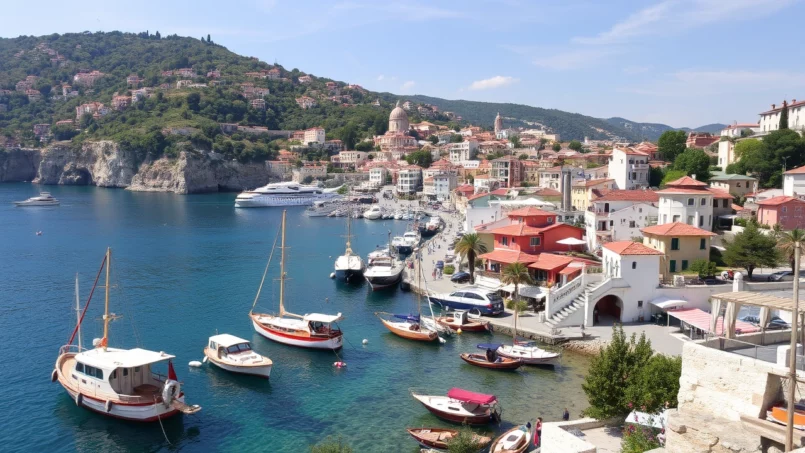
The backdrop is well known: Turkey ranks among the top ten global tourist destinations, with more than 50 million annual visitors and a target of over 60 million tourists by 2026. The coastline—over 4,500 miles of shores—concentrates most of this traffic, and therefore the bulk of the second-home market.
Two drivers support demand:
Average occupancy rate for well-managed properties on the Turkish coast, especially in Antalya, Bodrum, Fethiye, Alanya, and İzmir.
2. The weakness of the Turkish lira Between 2024 and 2025, the lira lost about 17 to 21% of its value against the dollar. As a result, when expressed in hard currencies, average prices hover around $850–$1,050 per square meter, a “discount” level compared to most European markets. In Istanbul, central neighborhoods trade between $1,300 and $1,800 per square meter (up to over $4,000 per square meter on some prestige waterfronts), while major EU capitals far exceed $10,000 per square meter in prime areas.
For a buyer using euros or dollars, the depreciation of the local currency acts as an implicit discount of 15 to 20% compared to a few years earlier. It is this window that many foreign investors consider a ‘Buy Zone’: nominal lira prices still rising, but hard-currency values remaining very attractive.
Analysis by an international real estate investor
A highly contrasting geography: Istanbul, Antalya, Bodrum, Alanya, Fethiye, İzmir…
Behind the umbrella term “Turkish second-home market”, the reality is very fragmented. Price figures show considerable disparities between cities and neighborhoods, but also depending on the type of property (apartment, villa, waterfront, or second line).
Antalya and its region: the heart of the vacation home market
Antalya crystallizes a large share of foreign demand and second-home purchases, thanks to a rare combination: mild climate, over 300 days of sunshine per year, a highly connected international airport (more than 330 destinations served by 80 airlines), a plentiful leisure offering, and prices still below those of Bodrum.
In 2025, the average price in Antalya stands at around 46,000 TRY/m² (approximately $1,200/m²), with an annual increase of about 12%. Some coastal areas have seen spectacular surges: in Lara, values have risen more than 600% in four years, and nearly 60% in a single year in Konyaaltı. Yet forecasts still point to 5 to 10% increases in 2025–2026.
An overview of price ranges by district illustrates the highly segmented nature of the local market:
| Antalya District | 2026 Price Range (TL/m²) |
|---|---|
| Konyaaltı | 65,000 – 120,000 |
| Lara – Güzeloba | 75,000 – 135,000 |
| Fener Area | 85,000 – 150,000 |
| Muratpaşa | 45,000 – 80,000 |
| Kepez | 28,000 – 55,000 |
| Altıntaş (Aksu) | 50,000 – 95,000 |
| Aksu | 40,000 – 70,000 |
| Döşemealtı | 70,000 – 120,000 |
For a second-home investor, these gaps translate into very different profiles:
In Antalya, investment profiles vary by neighborhood. Established coastal areas like Konyaaltı and Lara offer dense waterfronts with strong rental demand. Their growth is already substantial, but they retain high rental potential, with long-term rental yields estimated between 5 and 8%. By opting for licensed short-term rentals, yields can reach 10 to 16%. Conversely, emerging neighborhoods like Altıntaş, Kepez, and Aksu feature new complexes, often purchased off-plan. They offer strong capital appreciation potential, with frequent gains of 30 to 45% between project launch and property delivery.
Price ranges in euros for apartments and villas illustrate the relative affordability of the market:
| Property Type in Antalya | Price Range (EUR) |
|---|---|
| 1+1 Apartment | 60,000 – 225,000 |
| 2+1 Apartment | 80,000 – 350,000 |
| 3+1 Apartment | 100,000 – 450,000 |
| Villa | 250,000 – 750,000 |
In practice, two-bedroom apartments can start at around £65,000, while high-end villas easily exceed £1 million in the most sought-after areas.
Bodrum and Muğla Province: the high-end coastal market
If Antalya is the family destination, Bodrum embodies the “jet-set” version of the Turkish second home. The peninsula combines marinas, upscale beach clubs, architect-designed villas, and a luxury-oriented lifestyle.
The numbers confirm it: with an average price of around 220,000 TRY/m² (approximately $6,300/m²), Bodrum is the most expensive coastal market in the country. The average price of a standard home is around $373,000 for 137 m², while luxury villas often trade between $600,000 and $12 million. In Yalıkavak or Türkbükü, two iconic villages for ultra-high-end second homes, annual price increases exceed 20%, with surges of over 40% in some micro-areas.
An overview of median prices by area illustrates these pressures:
| Bodrum Area | Median Price (TRY/m²) | Annual Change |
|---|---|---|
| Yalıkavak | 235,952 | +8% |
| Gümüşlük | 157,838 | +6% |
| Göltürkbükü | 208,331 | -6% |
| Bodrum Center | n/a | +34.4% |
| Türkkuyusu | n/a | +50.2% |
| Umurca | n/a | +29.5% |
| Mazıköy | n/a | +22.2% |
This surge is not, however, considered unsustainably overheated: the market is constrained by the scarcity of coastal land and strict building regulations—notably the ban on new residences within 100 meters of the shoreline—which drive up the value of existing properties, including many second-home complexes built before these restrictions.
Maximum gross yield achievable during high season for well-marketed vacation villas in Bodrum.
Alanya, Fethiye, Mersin: more accessible coastal markets
Where Bodrum demands a high entry ticket, Alanya, Fethiye, and Mersin offer more affordable gateways to the Turkish second home.
Alanya, east of Antalya, combines an international clientele (Europeans, Russians) with the status of a year-round resort. Prices start from $1,500/m², with sea-view apartments between $100,000 and $250,000. Rental demand is described as strong twelve months a year, enabling yields of 7 to 10% in the best areas.
Fethiye, on the Mediterranean coast, is renowned for its spectacular landscapes like the Ölüdeniz lagoon and attracts both vacationers and foreign retirees. Close to Dalaman Airport, the region offers many second-home villages (Ovacık, Çalış, Hisarönü). Properties there are often used for a dual purpose: personal vacation home and seasonal rental.
Mersin, more discreet, is gaining momentum as a “value for money” destination on the Mediterranean. With an average price around 30,783 TRY/m² (about $795/m²) and districts like Erdemli, Mezitli, and Silifke, it attracts buyers seeking an affordable second home, particularly from the Middle East.
Istanbul, İzmir, Bursa: urban second homes
Though one first thinks of the coast for a second home, major cities are not left behind. Istanbul, in particular, remains the most liquid city in terms of transactions and concentrates buyers who combine personal use with rental investment.
Prices there are among the highest in the country—over 63,000 TRY/m² on average ($1,630/m²)—with gross rental yields of 4.5 to 6% depending on the neighborhood. In some districts undergoing redevelopment or benefiting from major infrastructure projects (new metro lines, proximity to the new airport), the medium-term capital appreciation potential for a second home that can be converted to a primary residence or rental pied-à-terre is considered significant.
İzmir, the country’s third-largest city, offers an interesting compromise: prices close to those of Antalya, a strong base of domestic demand, and proximity to highly sought-after resorts like Çeşme and Alaçatı, where second homes—stone houses, sea-view villas—have multiplied. Bursa, finally, particularly attracts Middle Eastern clientele for mixed vacation/long-stay use, supported by its proximity to Istanbul and natural assets (Mount Uludağ, thermal spas).
Who buys and why? Profile of the second-home owner
While the Turkish market is now largely driven by local buyers, second homes are the segment where foreigners remain very present.
Nationally, international sales have declined from the 2022 peak (where foreigners accounted for 4.5% of transactions), falling to around 1.3 to 1.6% in 2025. But this national figure masks much higher shares on coastal second-home markets: in Bodrum, foreigners account for over 40% of purchases in some neighborhoods, with even 55 to 60% foreign share in Yalıkavak or Türkbükü. In Antalya, about 34.6% of all sales to non-residents in Turkey are concentrated in the region.
The most active nationalities in second-home purchases are:
Key markets and motivations of international buyers on the Costa del Sol.
Often seek geopolitical security, a second base, and possibly a passport through citizenship by investment.
More motivated by climate, seaside quality of life, and seasonal rental yield.
Attracted by cultural proximity, halal cuisine, international schools, and healthcare services.
In parallel, a wealthy domestic clientele is heavily investing in coastal villas and apartments as second homes, particularly in Muğla Province (Bodrum, Marmaris, Fethiye) and around Antalya. Rising long-term rents in big cities, combined with the appeal of the sea, are also pushing some Turkish households to opt for small secondary apartments on the coast, sometimes on the outskirts of major tourist centers.
Standardized products: villas with pools, apartments in complexes, stone houses
Architecturally, the second-home market in Turkey has become standardized around a few typologies.
Individual villas—often in gated communities, with private pool, landscaped garden, panoramic terraces, gym, and sometimes spa or hammam—dominate the high-end segment, especially in Bodrum, Kalkan, Kaş, and parts of Antalya. Contemporary versions frequently integrate smart home systems, sustainable materials, and more efficient energy equipment.
Sea-view apartments in secure complexes make up most of the supply for intermediate budgets, from the coast of Alanya to that of Mersin, including Konyaaltı and Lara. These “turnkey” second homes typically offer shared pool, 24/7 security, gym, children’s areas, sometimes spa, restaurant, or concierge service.
Traditional stone houses, found in regions like Alaçatı, Ayvalık, certain villages on the Aegean peninsula, and the Lycian coast, target clients seeking authentic charm. These properties are rarer, often more expensive per square meter, and highly sought after for use as a second home with high usage value, such as a multi-generational summer residence or for charming guesthouse-type rentals.
Finally, a booming segment involves aparthotels and serviced residences designed from the start for rental: furnished studios and apartments integrated into a hotel program, with pooled management. Announced yields hover around 8 to 12% per year, making them a product closely watched by second-home investors with a more financial profile.
Rental yields, capital gains, and seasonality: the economic equation of a second home
Investing in a second home in Turkey lies at the intersection of two logics: personal use (vacations, retirement, pied-à-terre) and rental return (short or long term). Available data allows for a fairly precise picture of potential profitability.
Gross and net yields
Gross residential yields in Turkey average around 7.4 to 7.8% nationally, with strong disparities:
– Istanbul: 4.5 to 6% depending on the neighborhood, more long-term oriented;
– Antalya: 6 to 8% on standard rentals, up to 10–16% on licensed seasonal rentals along the coast;
– Bodrum: 5 to 8% over the year, with a seasonal peak in summer;
– Alanya, Fethiye, Mersin: 7 to 10% in the best seaside areas.
After accounting for management fees (10–15% of rents), maintenance, condominium charges (aidat), insurance, and local taxes, net yields generally sit 1.5 to 2 percentage points below gross yields, typically between 5 and 8% for a well-operated second-home rental property.
In Antalya, the average daily rate for a licensed vacation rental is around $180.
Capital gains and price dynamics
Nominally, the Turkish market continues to show rapid increases: the central bank recorded an annual rise in its residential price index of over 30% in 2025. But given inflation still above 30%, the reality in real terms is more nuanced: many cities are seeing their prices decline slightly in constant purchasing power, although some coastal areas remain oriented upwards.
Average price per square meter in dollars in Muğla Province, Turkey, with a progression of nearly 10% over one year.
In Antalya, price increases have been spectacular since 2020: over 140% in ten years, nearly 109% between 2022 and 2024, and still a little over 12% increase in a single year in 2025. Forecasts for 2025–2026 are in a more moderate range (8 to 14% nationally, 5 to 10% in Antalya), which raises hopes for a return to real capital gains if inflation recedes as expected.
For a second-home buyer who remains an owner for more than five years, the tax framework is particularly favorable: capital gains on resale after five years are tax-exempt. Over a shorter term, off-plan purchase strategies in developing areas like Altıntaş, Kepez, or certain districts of Istanbul and Mersin sometimes allow capturing 30 to 45% capital gain between launch and delivery, but at the cost of construction risk and capital being locked in for several years.
Rules of the game for foreigners: property, limits, residence, and citizenship
One of the strengths of the Turkish market for second homes is its relatively clear legal framework for foreign buyers. Since the lifting of the reciprocity principle in 2012, almost all nationalities can acquire real estate—house, apartment, land, commercial premises—under full ownership (freehold).
Several limits do exist, however:
– A foreigner cannot hold more than 30 hectares total on Turkish territory;
– In the same district, they cannot exceed 10% of the land area;
– Military zones and certain security zones remain off-limits for acquisition.
Property transfer is carried out only at the Land Registry Directorate (Tapu ve Kadastro). The title deed (TAPU) is the sole legal proof. The buyer must: obtain a Turkish tax number, open a local bank account, provide a property appraisal (ekspertiz), and, since the monetary reform, prove the entry of funds in foreign currency via a declaration (Foreign Exchange Declaration).
Residence and citizenship by investment
For second-home buyers, two thresholds have become decisive:
To obtain a residence permit (ikamet) in Turkey based on a real estate investment, a minimum amount of $200,000 is required. The permit, generally valid for one to two years and renewable, is conditional on maintaining ownership of the property. To acquire Turkish citizenship, an investment of at least $400,000 in one or more real estate properties is required, with a commitment to hold them for at least three years. This citizenship, obtainable in a few months, extends to the investor’s spouse and minor children and offers visa-free or visa-on-arrival access to more than 110 countries.
These programs have played a major role in the rise of high-end second homes, especially along the coast and in Istanbul. They partly explain the overrepresentation of certain nationalities (Russian, Middle Eastern) in these segments, but also the resilience of prices in neighborhoods where many buyers exceed the $400,000 threshold.
Financing, interest rates, and the role of cash payments
For a foreign second-home buyer, the issue of financing is more delicate in Turkey than in many European countries. The context of very high interest rates—the policy rate peaked at 46% in 2024, with still over 40% on new mortgage loans in 2025 before a gradual decline—has caused mortgage-financed sales to collapse: the share of credit-financed transactions fell to around 10–15% in 2024, far from the historical average of about 30%.
Turkish banks can finance foreigners, generally up to 50% of the appraisal value of the property, with repayment terms of 10 to 15 years. However, due to high interest rates and the volatility of the Turkish lira, taking out a local loan for a second home offers limited economic interest if you have liquidity in hard currencies (such as euros or dollars).
In practice, the second-home market thus functions primarily as a cash buyer market:
Foreigners predominantly acquire properties in Turkey with cash, which can allow them to negotiate significant discounts (up to 20-30%) with sellers or developers in need of liquidity. Developers also frequently offer installment payment plans without interest over 2 to 3 years, though the listed price is then slightly higher. Finally, another strategy is to finance in one’s country of origin, where interest rates may be lower, before injecting the funds into Turkey.
For second homes, this market profile has two consequences: a lower risk of a credit-fueled bubble, but also increased sensitivity to international capital flows and Turkey’s attractiveness in hard currencies.
An unstable macroeconomic environment, but moving toward normalization
The Turkish second-home market cannot be understood without considering the macroeconomic context: high inflation, strong currency volatility, and a recent shift toward more orthodox monetary policy.
Inflation, which exceeded 80% in 2022 and flirted with 100% in 2023, has begun to decelerate. Forecasts for the coming years anticipate a gradual decline toward 20% and then to single-digit levels by 2027, driven by massive monetary tightening and increased fiscal discipline. Interest rates are expected to follow a downward trajectory, from the 40+% range to around 25% by end of 2026.
Historically, each phase of rate cuts in Turkey has been accompanied by a real estate boom. Analysts anticipate a new, “healthier” upward cycle.
– a nominal price increase of 15 to 25% per year in 2025–2026,
– a moderate real increase (2 to 4% above inflation) if disinflation is confirmed,
– a gradual return of foreign investors, after a phase of retreat linked to tighter residence and citizenship conditions.
In this scenario, second homes located in areas with strong structural tension between supply and demand—the coasts of Antalya, Bodrum, Fethiye, Alanya, certain sectors of İzmir—should outperform the national average, with price increases 5 to 10 points higher than the rest of the country according to several projections.
Tax framework, ancillary costs, and new regulations on short-term rentals
For a second-home owner, the attractiveness of the Turkish market lies not only in purchase prices and rental profitability, but also in a relatively lenient tax system.
Acquiring a property entails a transfer tax (Tapu Harcı) of 4% of the declared price, in principle split 50/50 between seller and buyer, but often borne entirely by the latter. Agency fees are around 2 to 3%, legal fees between $1,000 and $3,000, plus the mandatory appraisal, translation costs, the indispensable earthquake insurance (DASK), and utility connections.
The annual property tax rate in France, expressed as a percentage of a property’s cadastral value.
The tax regime for capital gains is particularly favorable to long-term investors: resale after five years of ownership is exempt. Before five years, the capital gain is included in taxable income and taxed according to a progressive scale that can go up to 40% for the highest brackets, but after accounting for inflation and an allowance.
On the rental side, the second-home owner must distinguish:
The tax regime and legal obligations differ radically depending on the rental duration. For standard rentals (medium/long-term), income is subject to personal income tax (progressive scale from ~15% to 40%), with an annual exemption and the choice between deducting actual expenses or a flat-rate allowance. For short-term rentals (e.g., Airbnb), a specific permit has been mandatory since 2024 for any accommodation rented for less than 100 days, under penalty of fines that can reach one million lira. This activity is increasingly treated as a commercial activity, potentially subject to VAT and, in some cases, corporate income tax.
This regulation has already had concrete effects: in Istanbul, the number of declared short-term rental apartments has dropped by about a third, even though the sector’s overall revenues continue to rise, driven by better professionalization and higher rates.
Risks and points of vigilance for the second-home buyer
Despite its strengths, the second-home market in Turkey involves specific risks that buyers must factor in.
The volatility of the lira exposes investors to significant fluctuations in the hard-currency value of their property and their rental income. In a context of high inflation and interest rates, construction and renovation costs have surged (40 to 60% increase for some materials), making new projects more expensive and potentially slowing down some developments.
Conditions for obtaining residence and citizenship by investment in Turkey are tightening, with higher financial thresholds, complex procedures, and local quotas in some districts. Additionally, there is a risk of temporary oversupply in targeted segments, such as in Antalya, where many new second homes target a similar clientele.
Legally, the same precautions apply as elsewhere: verification of the TAPU, building compliance, existence of the occupancy permit (iskan), absence of mortgages or debts, systematic recourse to an independent lawyer, and, for any seasonal rental strategy, obtaining the necessary licenses.
What future for the second-home market in Turkey?
By the 2026 horizon, most analyses converge: Turkey is entering a stabilization phase after several years of inflationary rollercoasters. For the second-home segment, this normalization scenario could be particularly favorable.
Several structural trends are emerging:
The second-home market on the Turkish coast is evolving along several key trends. A gradual return of foreign investors is anticipated, contingent on declining rates and inflation and a stabilization of the Turkish lira. Supply is modernizing with an upgrade in quality, integrating criteria of sustainability, hotel-like comfort, and seismic safety to attract an international clientele. Pressure on coastal land persists due to construction restrictions and land scarcity, supporting prices of existing properties, especially pre-regulation ‘waterfront’ homes. Finally, the professionalization of vacation rentals, encouraged by increased regulation, secures seasonal rental income.
A central question remains for every buyer: will Turkey lastingly remain this big “discount” market in hard currency, or will the gap with Europe shrink as inflation is tamed and growth consolidates? The most optimistic scenarios bet on a gradual catch-up, supported by tourism growth, demographics, major infrastructure projects, and increased economic integration into regional flows.
The second-home market in Turkey presents two sides: an attractive investment opportunity thanks to rental yields, taxation, and entry price, but also a risky emerging market due to monetary and regulatory volatility, requiring an informed approach, a medium-to-long-term horizon, and rigorous legal support.
It is precisely this combination of attractions and constraints that makes Turkey, today, a closely watched laboratory for the international second-home market.
Disclaimer: The information provided on this website is for informational purposes only and does not constitute financial, legal, or professional advice. We encourage you to consult qualified experts before making any investment, real estate, or expatriation decisions. Although we strive to maintain up-to-date and accurate information, we do not guarantee the completeness, accuracy, or timeliness of the proposed content. As investment and expatriation involve risks, we disclaim any liability for potential losses or damages arising from the use of this site. Your use of this site confirms your acceptance of these terms and your understanding of the associated risks.

Cyril Jarnias is an independent expert in international wealth management with over 20 years of experience. As an expatriate himself, he is dedicated to helping individuals and business leaders build, protect, and pass on their wealth with complete peace of mind.
On his website, cyriljarnias.com, he shares his expertise on international real estate, offshore company formation, and expatriation.
Thanks to his expertise, he offers sound advice to optimize his clients' wealth management. Cyril Jarnias is also recognized for his appearances in many prestigious media outlets such as BFM Business, les Français de l’étranger, Le Figaro, Les Echos, and Mieux vivre votre argent, where he shares his knowledge and know-how in wealth management.





