
 Published on and written by Cyril Jarnias
Moving to the British Virgin Islands isn’t just about swapping your office for a view of turquoise waters. It’s also about diving into a culture where cuisine tells the story of the archipelago as much as its museums or beaches. For an expat, understanding what’s on your plate is one of the quickest ways to truly feel “from here.”
This guide covers all aspects of food in the territory: from the best places to eat to the dishes you should order, including how to manage a food budget in a context of heavy imports. It also provides tips for cooking at home using local farm produce.
Understanding the Culinary DNA of the British Virgin Islands
The cuisine of the British Virgin Islands is the result of a long blend. Before colonization, the Arawaks and Caribs already cultivated cassava, corn, and beans. Slavery brought West African culinary traditions, which were adapted with locally available ingredients. Then came European influence (British, Dutch, Spanish, Danish, French, American), Indian laborers, and even Chinese workers in the 19th century, who introduced their way of combining sugar, salt, ginger, and scallions.
St. Lucian cuisine is a blend of African, French, and English influences, creating a colorful and highly fragrant cuisine, often spicy. It follows classic Caribbean codes like chili, nutmeg, curry, and jerk spices, but has its own identity. The dishes are hearty, historically designed to sustain field or sea workers, and include slow-cooked stews, thick soups, fish in sauce, fried bread, and “ground provisions” (roots and tubers like yam, dasheen, sweet potato, and cassava).
Fish and seafood take center stage, logical in an archipelago where the waters are home to over 500 species of fish. Alongside, tropical fruits (mango, papaya, guava, soursop, sugar apple, genip) and root vegetables structure daily life, while rum and sugarcane-based drinks recall the region’s sugar history.
In upscale restaurants, the menu is often tailored to North American visitors (burgers, pasta, steaks, fusion dishes). To discover authentic local cuisine, look beyond that menu and favor establishments where the traditional culinary heritage is preserved.
Essential Dishes to Know for Integrating
Certain dishes appear everywhere, from roadside food stalls to fine dining restaurants. Knowing them helps not only with ordering but also with understanding conversations, celebrations, or even cultural policy debates.
Fish and Fungi: The National Dish
Fish and fungi is the cornerstone of BVI cuisine. Fungi (pronounced “foon-ji”) is a preparation of cornmeal cooked slowly with okra and butter, somewhere between firm polenta and a large dumpling. Historically, it was a cheap food rationed to slaves, but over time it became a comfort food that many associate with childhood and family.
It is served with fish, usually boiled or simmered in a well-seasoned sauce with onion, tomato, bell pepper, and herbs, sometimes with a hot pepper like Scotch bonnet. Depending on the household, they use snapper, grouper, mackerel, or desalted saltfish.
Johnny Cakes, Pates, and Fried Breads
Bread often takes the form of fried fritters.
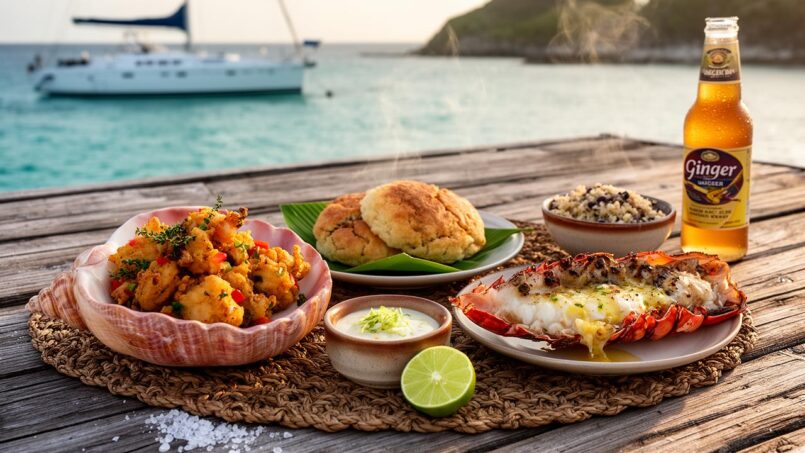
Johnny cakes (or johnnycakes), a contraction of “journey cakes,” originally accompanied travelers. They are small fried round breads made from a mixture of cornmeal, milk, butter, baking powder, a little sugar, and salt. They are eaten at any time, plain, with butter, jam, cheese, or as a side to saltfish.
Pates (pronounced “pah-tay”) are fried turnovers resembling empanadas, filled with spicy beef, chicken, conch, saltfish, or vegetables. Found in bakeries, street stalls, and some beach bars. They are the safest snack to tide you over until dinner without breaking the bank.
Saltfish, Soups, and Stews
Saltfish is a direct relic of the colonial period, when salted fish was the dietary staple of enslaved populations. Today, it is sautéed with onions, tomatoes, and bell peppers, made into fritters, or served in a coconut milk dish called “run down.” A classic breakfast is saltfish buljol, flaked seasoned saltfish served with johnny cakes or provisions (yam, plantain, sweet potato).
Among the iconic soups and stews, we must mention:
Discover the iconic and comforting dishes of the islands, rich in flavor and history.
A blend of leafy greens (callaloo, spinach, or dasheen), okra, potatoes, eggplant, meat or seafood, coconut milk, and plenty of herbs.
Hearty soup made with red beans, salted pig tails, coconut milk, pumpkin, cassava, and cornmeal dumplings.
Spiced goat stew, often served at large gatherings and festivities.
A root soup made from a local purple tuber, prepared with onions, tomatoes, and salted meats.
These dishes are perfect for understanding the link between food, memory, and the history of the archipelago.
Conch, Reef Fish, and Anegada Lobster
Conch, a large marine mollusk, is everywhere: in fritters (conch fritters), creamy chowder, Creole stew with salted pork, onion, garlic, chili, and herbs. The meat must be tenderized with a mallet before cooking, giving it a particular texture when done right.
Pot fish – reef fish caught in pots – are often grilled whole, simply seasoned with garlic, thyme, and lime, or served in fragrant broths. A traditional dish, porgies & grunts, mixes different species (bonito, kingfish, yellowfish) in a lime and chili broth.
But the absolute star remains the Anegada lobster, a variety of spiny lobster without claws, with plenty of meat in the tail. Anegada claims nothing less than “the best lobster in the world,” and even dedicates a festival to it. It is most often grilled, drizzled with butter and a “secret” spice blend.
Roti, Indian and Indo-Asian Influences
The arrival of Indian laborers after the abolition of slavery left a very visible legacy: roti, a soft flatbread wrapped around a curry. In the British Virgin Islands, roti comes with chicken, goat, beef, vegetables, chickpeas, conch, or even whelk. It is often accompanied by chutneys and chili sauces.
Curry-type spices are also used in dishes like Caribbean curried chicken, shrimp curry, or lobster in curry sauce served in some restaurants, illustrating the diversity of their culinary application.
Desserts, Candies, and Festive Sweets
Sweets are expressed as much in pastries as in candied fruits:
– coconut tarts, filled with grated coconut cooked with sugar and spices;
– sugar cakes, candies made with coconut and sugar;
– tamarind stew, a sweet-and-sour preparation of tamarind pulp simmered with sugar and spices;
– coconut drops, small coconut rock-like candies found in some local cookbooks;
– guavaberry pie and especially guavaberry wine, a Christmas drink made from these small wild berries, rum, and sugar, deeply rooted in local culture.
Even if some desserts like red grout come more from the U.S. Virgin Islands, they are sometimes found at buffets or in Caribbean cookbooks present on the islands.
Drinks: From Bush Tea to Painkiller
In the British Virgin Islands, you drink almost as many stories as cocktails. Rum, local plants, exotic fruits: each glass has its context.
Rum, Rum Punch, and Iconic Cocktails
Rum is the direct heir of the sugar plantations. You can find industrial versions and more artisanal productions, notably at Callwood Rum Distillery on Tortola, one of the oldest distilleries in the Caribbean.
Rum punch is the common thread of the region, but here it takes several famous forms:
The Painkiller, created at the Soggy Dollar Bar on Jost Van Dyke, combines rum (often Pusser’s), pineapple and orange juice, cream of coconut, and nutmeg, offering a powerful and creamy taste typical of the BVI. The Bushwhacker, a chocolatey variation of the Piña Colada made with dark rum and liqueurs, is very popular on the beaches. You can also find variations like the No-See-Um or house rum punches.
Some spots have their signatures: Delirious Donkey (a Moscow Mule variation) at Hendo’s Hideout, Wonky Dog Colada on Anegada, Tortola Smash, Palmer’s Punch, or even reinvented martinis (Raspberry Mojito Martini, Coconut Mangotini, etc.) at bars like Aromas Cigar & Martini Bar or The Dove.
Non-Alcoholic Drinks and Bush Teas
Not everything revolves around alcohol. Bush teas – herbal teas made from lemongrass, mint, local herbs – hold an important place, often consumed in the early morning instead of coffee. They are also a cultural marker of traditional knowledge.
Among typical non-alcoholic drinks:
– maubi, a bitter-sweet drink made from tree bark, very much an acquired taste;
– sorrel, a bright red infusion of hibiscus calyces with ginger, cloves, and orange zest, sweetened and optionally fermented, especially around Christmas;
– passion fruit, soursop, tamarind, mango, papaya juices, often freshly pressed or homemade;
– fresh coconut water, opened with a machete by street vendors.
Expatriates quickly discover that these drinks mark the seasons: sorrel and guavaberry at year-end, mango and guava juice in summer, etc.
Where to Eat: Island-by-Island Overview for Expats
The dining scene is very diverse for a territory this size: small beach shacks, markets, family bistros, festive bars, upscale restaurants with wine cellars. Each island has its culinary personality, and some spots are worth the trip, even by boat.
Tortola: Gastronomic Heart and Daily Life
Tortola has the largest number of restaurants and markets, especially around Road Town.
For an expat, some useful landmarks:
A selection of iconic establishments offering local and international cuisine, unique atmospheres, and remarkable views.
Refined cuisine centered on local seafood and meats. Extensive wine and martini list. Friday Caribbean barbecue night with roast pork and live music. Free mooring buoys for boaters.
Combines French techniques and Asian influences with Caribbean ingredients. Includes the Dragon Fly Lounge, a cocktail bar focused on contemporary mixology.
A family-run spot by Evelyn Dawson, currently relocating to Carrot Bay. Specialties: ribs, shrimp roti, conch fritters, curry-crusted grouper. Waterfront terrace setting.
In Cane Garden Bay. Famous for its curry chicken roti, ribs, and house rum. Affordable prices (rotis around 8–12 USD).
Near Little Apple Bay. A short menu based on the day’s fresh catch (grilled fish, jerk chicken). Rootsy decor and authentic vibe, despite a somewhat chaotic access.
On Great Carrot Bay. A mix of Caribbean and international cuisine (jerk pork loin, churrasco). Known for spectacular sunsets.
For a simpler lunch, Trellis Bay Market Bar & Grill combines grilling, grocery, and bar, serving conch fritters, jerk chicken, and macaroni pie, with a Painkiller as its signature drink. Open early morning until evening, it’s also a good spot for quick errands.
Road Town Market and the BVI Farmer’s Market (Saturday at Sir Olva George’s Plaza) are the best places to discover raw products: tubers, plantains, herbs, chilies, seasonal fruits, local honey, condiments. You’ll also meet farmers like Good Moon Farm or Full Belly Farm.
Virgin Gorda: Between Beach Bistronomy and Panoramic Views
Virgin Gorda positions itself as the island for a “beautiful” dinner, without giving up Caribbean roots.
Among the spots to integrate into your expat routine:
The British Virgin Islands offer a varied gastronomic experience, from popular beach restaurants like Coco Maya (Asian-Mediterranean-Caribbean fusion, Sunday barbecue) to perched establishments with spectacular views like Hog Heaven (specializing in ribs) and The Restaurant at Leverick Bay (refined cuisine and entertainment). Mid-range options (Top of the Baths) coexist with high-end tables for special occasions, such as Chef’s Table at Rosewood Little Dix Bay with its Caribbean tasting menu at around 425 USD.
For more traditional home cooking, places like Sugar Apple Café in South Valley (mahi-mahi fish fry, johnny cakes) or Leticia Lennard’s stalls on Friday evenings (pork stew, curried goat, barbecue pig tails) keep you close to popular gastronomy.
Anegada: Lobster Kingdom
Anegada is almost a pilgrimage for seafood lovers. The flat island – its highest point is around 28 feet – lives much to the rhythm of fishing.
The major culinary stops:
– Potters By The Sea, an iconic beach shack where lobster, caught the same day, is grilled over wood collected inland for a distinct aroma. Also find conch, Caribbean music, and sometimes limbo;
– Big Bamboo at Loblolly Bay, claiming the “sweetest lobster,” also serves conch, chicken, ribs, and steak;
– The Lobster Trap at Setting Point, where you choose your live lobster from the holding pen before cooking;
– The Wonky Dog, with a laid-back vibe, pets allowed, signature cocktails like the Wonky Dog Colada, and inventive seafood cuisine.
Each year, this festival brings together chefs, bands, and DJs around creative lobster recipes (mac & cheese, jerk, wontons, skewers, fritters…). It’s a gastronomic event and an important social occasion for the local community and expats.
Jost Van Dyke: Beach Bars and Cult Cocktails
Jost Van Dyke cultivates an image of bohemian paradise, where gastronomy is experienced with feet in the sand, Painkiller in hand.
Some landmarks:
– Soggy Dollar Bar, on White Bay, accessible by swimming from anchored boats, is the birthplace of the Painkiller. The “soggy” dollar bills made its legend;
– Foxy’s in Great Harbour, known for its barbecues, lively parties, and simple but generous local cuisine;
– Hendo’s Hideout, also on White Bay, reimagines Caribbean classics with an American twist (rum and coke pulled pork, lamb lollipops, fish tacos), and offers the house cocktail Delirious Donkey;
– Ali’s, not far from White Bay, focuses on fresh fish, with dishes around 25 USD.
For an expat based on Tortola or Virgin Gorda, a round trip to Jost Van Dyke for a grilled fish lunch and a few cocktails quickly becomes a weekend ritual.
The “Bonus” Islands: Cooper, Scrub, Norman…
The smaller islands offer very targeted experiences:
– Cooper Island Beach Club combines a solar-powered eco-resort, microbrewery, huge rum bar (over 280, even 400 references depending on sources), locavore cuisine (seasonal ceviche, seafood curries, fish tacos, coconut shrimp rendang, house-made rum-infused chocolate);
– Scrub Island Resort, Spa & Marina highlights a seafood paella and the Scrub Island Breeze cocktail, around an infinity pool;
– Norman Island, often associated with the “Treasure Island” legend, hosts floating bars and snorkeling stops that pair well with a local fish lunch.
Eating Like a Local When You’re an Expat
Mastering local gastronomy happens as much through attitudes as through addresses.
First, accept the pace. Service often follows “island time”: slow, but it’s also what allows you to enjoy the sea, the music, the conversations. Coming with an ultra-pressed mindset is the best way to frustrate yourself.
Then, ask for recommendations. Locals love to suggest their favorite spots, whether it’s a food truck for pates, an auntie who makes the best callaloo soup in the neighborhood, or a fisherman who sells his catch directly. A simple “good morning” or “good afternoon” opens many doors.
It’s important to respect dress codes depending on the location. Swimsuits and bare chests are for the beach. In restaurants, even beachside, at least shorts and a t-shirt, a light dress, or sandals are expected.
On the payment side, many small establishments prefer cash, even though cards are common elsewhere. And some shacks or canteens close during the low season (May to October), or more particularly in September, so it’s essential to check hours.
Finally, learning by doing: try saltfish for breakfast, taste maubi even if the first sip surprises you, accept a cup of bush tea, discover the levels of chili (and ask first if you can’t handle very spicy).
Cost of Living and Food Budget for Expats
The British Virgin Islands have a high cost of living, and food contributes significantly. Almost all basic products are imported, driving up grocery costs. Comparisons with the United States or neighboring Virgin Islands provide useful benchmarks.
Some Price Benchmarks: Restaurants and Products
Based on the most recent data available, the British Virgin Islands are about 20 to 30% more expensive than the United States for a western-style grocery basket. For dining, prices are also above the US average.
Here is a summary of some typical prices (observed averages):
| Product / Service | British Virgin Islands | United States (reference) |
|---|---|---|
| Inexpensive restaurant meal | 22.50–24.50 USD | 18.50–20.00 USD |
| Fast food meal (combo type) | 13–15 USD | 10.50–11.50 USD |
| Meal for two, mid-range restaurant | ~80 USD | ~75 USD |
| White bread (1 lb) | ~4.4–5.0 USD | ~3.3 USD |
| Milk (1 gallon) | 8.3–9.4 USD | ~4.0 USD |
| Eggs (12) | 6.0–6.1 USD | ~3.6–4.3 USD |
| Chicken fillets (1 lb) | ~5.2 USD | ~5.2–5.5 USD |
| Domestic draft beer (1 pint, bar) | 3.75–4.00 USD | ~5.8–6.0 USD |
| Bottle of water (33 cl, bar) | 1.3–1.5 USD | ~2.0–2.1 USD |
For local dining, the ranges are as follows:
| Typical Dish / Drink | Approximate Average Price |
|---|---|
| Conch fritters | 8–12 USD |
| Roti (chicken, goat, vegetables) | 10–15 USD |
| Grilled fish plate | 25–35 USD |
| Lobster dish (outside Anegada) | 40–60 USD |
| Lobster on Anegada | 50–70+ USD |
| Goat water (goat stew) | 10–18 USD |
| Fish fry (full plate) | 20–30 USD |
| Painkiller at the bar | 8–12 USD |
For expats, this means that regular dining at “expat-friendly” restaurants can quickly strain the budget.
Strategies for Eating Well Without Breaking the Bank
Several levers help manage costs while enjoying local gastronomy.
To save money and get better quality produce, it’s advisable to cook at home by buying directly from fishermen for fish and from local farms for vegetables and roots, rather than shopping at supermarkets.
Next, frequenting street stalls and small local eateries for lunch: a roti, a pate, a simple chicken-and-rice dish can stay in the 5–15 USD range, much more affordable than dinner at a resort.
In New Caledonia, imported products like American cereals, European cheeses, or foreign organic products can cost 30 to 40% more than in their country of origin. To reduce the food budget, it’s advisable to adapt your habits by replacing some of these foods with local alternatives such as fruits, tubers, and regional fish.
To give an order of magnitude: a solo nomad can aim for a monthly budget of around 1,200 USD excluding housing, with a large portion for food. Families will need to budget much more, especially since local average salaries are lower than those in major US or European cities.
Cooking Local: Markets, Supermarkets, and Farms
One of the major advantages for an expat is being able to cook. The British Virgin Islands have a network of modern supermarkets and, increasingly, local farms that supply fresh, often organic, produce.
Supermarkets and Grocery Stores
The major retail players are:
A guide to the main supermarket chains and specialty stores for your provisions in Tortola.
The main supermarket group, with locations at Pasea Estate, Fleming Street, Soper’s Hole, East End, Road Reef, etc. Offers everything from basics to American and European brands, as well as provisioning services for yachts and villas.
Located at Port Purcell, this family-run supermarket is popular for its fresh fruits and vegetables, groceries, and bulk purchases.
Stands out for its focus on organic, gluten-free, vegan, Caribbean, and baby products.
For very specific products: French Deli (charcuterie, cheeses, wines), Steakation, Grape Expectations, Relish Gourmet Food & Wine, or Italian Wine Food Caribbean.
On the other islands, Buck’s Food Market on Virgin Gorda or small grocery stores on Jost Van Dyke and Anegada handle the essentials.
Farmers’ Markets and Direct Sales
To break away from total dependence on imported products, several local farms have organized themselves, often with an ecological and educational dimension. For an expat looking to eat better, this is a key resource.
A few iconic examples:
Discover innovative agricultural operations shaping sustainable farming and the local economy in the archipelago.
A 0.6-acre regenerative farm in Belle Vue (Tortola). CSA basket system, supplies yachts, restaurants, and the Road Town market. Products: heirloom tomatoes, lettuce, carrots, beets, herbs, and edible flowers.
Hydroponic production on Virgin Gorda, specializing in lettuce and microgreens to save water. Supplies many restaurants and aims for solar self-sufficiency.
Founded in 2005 on the north coast of Tortola, follows a lunar calendar. Delivers baskets throughout the archipelago, organizes tours and farm-to-table dinners, and relies on a network of producers.
Located on Sage Mountain (Tortola), grows about thirty varieties. Supplies prestigious resorts and the market, and processes its harvest into teas, jams, pickles, and oils.
This network allows expats to access produce often of much higher quality than imports, even if the unit price may sometimes be a bit higher.
Key Products, Seasonality, and Tips
The most common local products include: lettuce, spinach, arugula, tomatoes, eggplant, bok choy, avocados, sweet potatoes, carrots, beets, kale, cabbage, broccoli, okra, beans, pumpkin, butternut squash, bell peppers, sweet corn, cassava, tania, dasheen, yam, plantain.
This is the total number of herb and fruit varieties listed as available.
Seasonality is marked:
– Winter: high season for tomatoes, lettuce, onions, and bell peppers, cooler and drier climate;
– Spring: flowers, fruit tree blossoming, good yields for spinach and arugula;
– Summer: slower production, but good period for mangoes, avocados, starfruit, etc.;
– Christmas period: harvests of sorrel and guavaberries, turned into festive drinks.
For an expat, learning to follow local seasons, rather than those of your home country, allows you to buy produce that is both better and cheaper.
Festivals and Culinary Events: The Gourmet Expat’s Calendar
Gastronomy is at the heart of many festive events in the British Virgin Islands. Attending them allows you not only to taste a wide variety of dishes in one day but also to better understand the place of food in society.
Among the most significant:
The British Virgin Islands host several annual events celebrating local cuisine and culture. The **BVI Food Fête**, since 2014, is a series of events including tastings, cooking demonstrations, and concerts, with island-specific versions like Taste of Virgin Gorda. The **Anegada Lobster Festival**, in November, highlights lobster with culinary tours and entertainment. The **Emancipation Festival** symbolically incorporates traditional dishes like saltfish. Finally, weekend **fish fries** offer grilled fish and seafood with live music.
Expatriates are welcome, provided they respect local codes: greet, do not aggressively haggle over prices of already affordable dishes, favor family and association stalls, and accept stepping out of your culinary comfort zone.
Culinary Identity and Challenges for the Future
A debate runs through the British Virgin Islands today: how to preserve and enhance their culinary heritage at a time when international resorts, supermarket chains, and globalization are standardizing tastes?
Tourism and cultural authorities speak of creating dedicated programs for culinary and cultural tourism, integrating gastronomic history into school curricula, supporting local farmers and fishermen, or even the idea of mandating the presence of certain traditional dishes on restaurant menus.
Expatriates can actively contribute to preserving local culture by favoring restaurants that cook with local products, attending farmers’ markets, choosing typical dishes like fish and fungi, and buying local artisanal products (such as guavaberry wine) rather than imported ones.
Moving to the British Virgin Islands isn’t just about changing time zones. It’s about accepting that a bowl of callaloo soup, a goat roti, a glass of sorrel, or a plate of grilled lobster is an integral part of understanding this territory. For an expat willing to play the game, gastronomy becomes much more than a pleasure: it’s a true language of integration.
Disclaimer: The information provided on this website is for informational purposes only and does not constitute financial, legal, or professional advice. We encourage you to consult qualified experts before making any investment, real estate, or expatriation decisions. Although we strive to maintain up-to-date and accurate information, we do not guarantee the completeness, accuracy, or timeliness of the proposed content. As investment and expatriation involve risks, we disclaim any liability for potential losses or damages arising from the use of this site. Your use of this site confirms your acceptance of these terms and your understanding of the associated risks.

Cyril Jarnias is an independent expert in international wealth management with over 20 years of experience. As an expatriate himself, he is dedicated to helping individuals and business leaders build, protect, and pass on their wealth with complete peace of mind.
On his website, cyriljarnias.com, he shares his expertise on international real estate, offshore company formation, and expatriation.
Thanks to his expertise, he offers sound advice to optimize his clients' wealth management. Cyril Jarnias is also recognized for his appearances in many prestigious media outlets such as BFM Business, les Français de l’étranger, Le Figaro, Les Echos, and Mieux vivre votre argent, where he shares his knowledge and know-how in wealth management.





