
 Published on and written by Cyril Jarnias
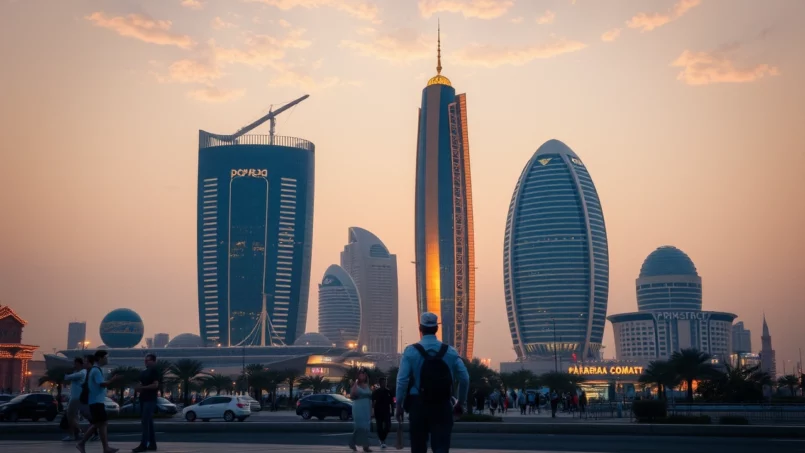
The United Arab Emirates has been attracting professionals from around the world for years with a simple yet powerful promise: tax-free salaries, security, modern infrastructure, and fast career prospects. Behind this image of a “dream career” destination, the UAE job market is actually much more structured—and more competitive—than it appears.
Good to know:
Before moving, it’s essential to understand the job market, the hiring sectors, as well as the rules regarding visas, labor law, and the cost of living.
A dynamic, young job market heavily geared toward expats
The United Arab Emirates has approximately 9.9 million residents, nearly 88% of whom are expatriates. In other words, the country largely runs on a foreign workforce—over 4.8 million non-national workers from more than 200 nationalities directly contribute to its economy.
96
Employment rate is over 96% of the working population.
More than half of workers are under 35, giving the market a very young, often highly educated and tech-savvy face. This dynamism partly explains why international rankings place the UAE at the top of countries able to attract top talent: the Legatum Institute’s Global Prosperity Index ranks them number one for talent attractiveness, and the Global Labour Resilience Index names them the most resilient labor market in the Arab world.
A country moving from black gold to a knowledge economy
To understand the opportunities for expats, you need to grasp the economic trajectory of the United Arab Emirates. Long dependent on oil, the economy has undergone a profound transformation toward a diversified model based on digital, technology, services, and innovation.
Attention:
The United Arab Emirates is steering its economic transition through strategic roadmaps (We the UAE 2031, Vision 2030, D33, Dubai 2040) and an investment of about $25 billion in digital and smart infrastructure. This policy enables estimated annual GDP growth of between 4% and 4.5%, now primarily driven by non-oil sectors.
This diversification creates demand for skills in fields as varied as artificial intelligence, cybersecurity, finance, renewable energy, education, and healthcare. And since the national talent pool remains limited (Emiratis make up about 10 to 20% of the total population depending on sources), the country continues to open widely to expats to fill skilled positions.
Public or private: where are the real opportunities for foreigners?
The UAE job market is based on a fairly clear split between the public and private sectors.
An attractive public sector… but largely reserved for nationals
Government jobs are, for the most part, intended for Emirati citizens. They are prized by nationals for their often high salaries, very structured career progression, strong job security, and generous benefits: six-hour workdays, five days a week, generous public holidays (more than 13), sick leave of up to a full year, and advantageous pension plans.
Tip:
Expats can access certain public sector positions, but only through renewable fixed-term contracts. These contracts are often shorter and offer less protection than those offered to nationals. Consequently, for a foreigner, these jobs are an exception and not a massive entry route into public employment.
A massive private sector, the main employer of expats
So it’s the private sector that holds the vast majority of opportunities for expats. It is estimated that more than 90% of jobs are in the private sector, with approximately 3.8 million workers spread across some 285,000 private companies.
Example:
Many traditional sectors hire large numbers of foreign workers, such as finance, banking, information technology, consulting, engineering, construction, healthcare, retail, hospitality, education, energy, logistics, and aviation. Added to these are very dynamic emerging fields like fintech, artificial intelligence, cybersecurity, data, clean energy, and e-commerce.
The private sector is also characterized by a faster pace of work: standard eight-hour days, six days a week in most establishments, with about 48 days of annual rest excluding paid leave, compared to two weekend days and more public holidays in the public sector. In exchange, it often offers faster career progression, performance-related bonuses, very competitive salaries in key sectors, and significant international exposure, especially in large groups and multinationals.
Dubai, Abu Dhabi: two employment capitals, two different balances
For an expat, the question isn’t just “come to the UAE” but often “which emirate to settle in?” Dubai and Abu Dhabi represent the two main employment hubs, each with its positioning.
14600
The average net monthly salary in Dubai is about 14,600 AED, 29% higher than in Abu Dhabi.
Abu Dhabi, the political and financial capital of the country, notably houses the oil sector, a large part of the federal administration, and heavy industries. Remuneration is very attractive in specialized fields—oil and gas, engineering, large infrastructure projects, industry—and the environment is perceived as calmer, more family-oriented, with significantly more affordable housing costs.
40-45
Rents in Dubai are 40 to 45% higher than in Abu Dhabi.
Here is a comparative overview of some key expense items between the two cities.
| Expense item | Dubai (average) | Abu Dhabi (average) | Estimated difference |
|---|---|---|---|
| Average net monthly salary | 14,689.92 AED | 11,370.96 AED | +29.2% in Dubai |
| Annual studio rent | 52,000 AED | 30,000 AED | +73% in Dubai |
| Annual 2-bedroom apartment rent | 150,000 AED | 92,000 AED | +63% in Dubai |
| Monthly public transport pass | ≈ 320–350 AED | ≈ 80–95 AED | over +200% in Dubai |
| Basic utilities (electricity, water, AC) | ≈ 815 AED | ≈ 570 AED | +43% in Dubai |
| Lunch for two (mid-range restaurant) | 270–300 AED | ≈ 250 AED | slightly more expensive in Dubai |
For a single expat, a monthly budget between 15,000 and 20,000 AED is often cited as “comfortable” in Abu Dhabi; in Dubai, the range shifts to 16,000–30,000 AED, depending on lifestyle and housing type. For a family, amounts quickly climb, especially if international schooling is included.
Salaries: an ultra-favorable tax environment and high compensation levels
One of the great advantages of the United Arab Emirates for expats lies in the tax regime. There is no federal personal income tax: salaries, bonuses, commissions, dividends, capital gains, or rental income are not individually taxed. There is no wealth tax, nor gift or inheritance tax for individuals.
Good to know:
Companies benefit from a very competitive federal corporate tax of 9% on profits exceeding 375,000 AED per year. For foreign workers, the contractual salary largely corresponds to disposable income, with the only notable deductions being VAT (5% on most goods and services), certain property transfer fees, and personal expenses for housing, education, or healthcare.
Compensation levels for skilled profiles are particularly attractive. The estimated average monthly salary is around 15,500 AED (about 4,220 USD), with an increase of about 3.8% year over year. In the most promising sectors, the gaps are considerable:
| Position (indicative) | Monthly salary range (AED) |
|---|---|
| CEO (large companies) | 90,000 – 170,000 (even 200,000) |
| CFO | 110,000 – 200,000 |
| Specialist doctor (surgery, radiology…) | 70,000 – 150,000 |
| IT Director / CTO | 55,000 – 100,000 |
| AI Engineer / Senior AI Specialist | 35,000 – 80,000 |
| Data scientist (senior) | 35,000 – 45,000 |
| Construction project director | 45,000 – 90,000 |
| Airline pilot | 45,000 – 90,000 |
| Senior lawyer / Legal Counsel | 50,000 – 95,000 |
| High-level real estate agent | 40,000 – 100,000+ (with commissions) |
These figures are explained by the intense competition for rare skills in certain fields: AI, cybersecurity, complex finance, energy, specialized healthcare, large infrastructure. Annual increases of 4 to 6% are common in key sectors, with even faster progression for cutting-edge profiles (AI, product, compliance, green energy).
66
About two-thirds of working professionals say they are open to changing jobs, often for reasons of compensation or career advancement.
Sectors that are hiring and profiles in demand
The economic transformation and major investment plans draw a fairly clear map of the most promising sectors for expats.
Technology, data, AI: the heart of the diversification strategy
The United Arab Emirates has set itself the goal of becoming a global leader in artificial intelligence by 2031. Massive public programs, innovation hubs like DIFC Innovation Hub, Hub71 in Abu Dhabi, or Dubai Internet City support the establishment of startups and the digital transformation of large groups.
In-demand jobs are numerous: AI/ML engineers, data scientists and data analysts, cloud architects, DevOps specialists, full-stack developers, blockchain and Web3 experts, cybersecurity specialists, digital product managers, UX/UI designers. Starting salaries for a data scientist or junior AI engineer can land in the 15,000–20,000 AED range, exceeding 35,000–40,000 AED after a few years of experience and advanced skills.
Good to know:
In response to demand, companies are increasingly adopting “skills-based hiring,” favoring skills over degrees. This approach opens opportunities for self-taught individuals, provided they can present a portfolio or concrete achievements demonstrating their abilities.
Finance, banking, and fintech: a booming regional hub
The financial centers of Dubai (DIFC) and Abu Dhabi (ADGM) house international banks, asset management firms, fintechs, and insurance companies. The digitalization of financial services, the arrival of wealthy international clients, and the strengthening of regulatory requirements create strong demand for compliance officers, risk managers, financial analysts, wealth managers, and fintech or blockchain specialists.
Compliance heads and wholesale banking executives can achieve six-figure monthly remuneration. More junior profiles—analysts, controllers, risk specialists—generally fall in the 12,000 to 25,000 AED range for entry or mid-career.
Construction, real estate, engineering: a gigantic project pipeline
Major urban plans like the Dubai Urban Master Plan 2040 or Abu Dhabi’s mega-projects (Zayed City, large entertainment complexes, new industrial zones) maintain a steady demand for engineers and project managers.
90000
Maximum monthly salary in AED that a construction project director can achieve in the UAE.
Energy and renewable energy: from oil to solar, nuclear, and hydrogen
While oil and gas remain economic pillars, the United Arab Emirates is actively refocusing on clean energy, with enormous investments in solar, wind, civil nuclear, green hydrogen, and carbon capture projects.
Engineers specializing in renewable energy, smart grids, and energy optimization are particularly in the spotlight. Annual salaries for these advanced profiles can exceed 300,000 AED, with technical or project management positions paying well above that.
Healthcare and education: structural needs in a growing society
The country’s positioning as a medical tourism hub, combined with a young but growing population, creates strong demand for specialist doctors, intensive care nurses, radiologists, psychologists, physiotherapists, and digital health and medical data experts.
Specialist doctors often earn monthly incomes between 70,000 and 150,000 AED in high-end facilities. Experienced nurses, physiotherapists, and certified medical technicians fall in the 8,000 to 15,000 AED range.
Careers in education in the United Arab Emirates
Teaching opportunities in international schools in Dubai and Abu Dhabi, with highly sought-after profiles and attractive benefits.
High-demand disciplines
Active recruitment of qualified teachers in STEM (Science, Technology, Engineering, Math), bilingualism, special education, and EdTech.
Benefits and compensation
Salaries vary by institution. Packages often include housing or an allowance, annual flight tickets, and comprehensive health coverage.
Marketing, sales, logistics, tourism: key functions in a service economy
With the rise of e-commerce (expected market of about $17 billion), digital platforms, and tourism, specialists in digital marketing, SEO/SEM, social media, as well as B2B and B2C sales managers, remain in high demand.
Remuneration varies more, but a senior digital marketing specialist can expect 12,000–18,000 AED monthly, while a sales manager in technology or real estate can earn much more if combining base salary and high commissions.
Logistics and supply chain professions benefit from the country’s strategic position at the crossroads of Europe, Asia, and Africa. Logistics coordination, supply chain management, or port and airport operations offer solid prospects, with salaries of 10,000 to 25,000 AED for managers.
The legal framework: worker protection and the rules of the game
The United Arab Emirates has long been criticized on workers’ rights, especially for low-skilled labor. Under international pressure and to maintain economic attractiveness, the country has deeply reformed its labor law.
The current legislative foundation is the Federal Law on the Regulation of Labor Relations (Decree-Law No. 33 of 2021), which came into effect in 2022, regularly supplemented and adjusted. It notably provides for:
Workers’ rights in the United Arab Emirates
Main legal guarantees protecting employees in the private sector, in accordance with federal labor law.
Fundamental freedoms and equality
Prohibition of forced labor and any discrimination based on sex, religion, origin, disability, etc. Equal pay between men and women for work of equal value.
Wage protection and integrity
Mandatory payment via the electronic WPS system, ensuring full and timely payment. Prohibition for the employer to retain the passport or charge recruitment fees.
Working hours and safety
Legal limits: 8h/day and 48h/week (reduced by 2h during Ramadan). Mandatory breaks and strict prohibition of outdoor work during the hottest hours in summer (mid-June to mid-September).
Paid leave and sick leave
Annual paid leave of at least 30 days after one year of service. Sick leave of 90 days per year after the probation period, with a graduated pay system.
Family leave
Maternity leave of 60 days (45 days at full pay, 15 days at half pay). Parental leave of 5 days for each parent.
Employment contracts are now mandatory fixed-term, for a maximum duration of three years, renewable. Forms of employment have been diversified (full-time, part-time, temporary, flexible work, telework, job sharing), providing more flexibility for companies and employees.
Good to know:
In case of a dispute, the Ministry of Human Resources and Emiratisation (MoHRE) is the central point of contact. It offers mediation, amicable settlement, and can refer the case to the courts. Its services are multilingual, accessible 24/7 via hotline 80084 and at centers across the country. Workers are exempt from court fees for disputes under 100,000 AED, and the ministry can issue enforceable decisions for low-value disputes.
For the skilled expat, this framework means they benefit from a work environment increasingly aligned with international standards, even though the employment relationship remains highly tied to the visa-employment link.
Visas, sponsorship, freelancing: how to work legally in the UAE?
Working in the United Arab Emirates necessarily requires a legal residency status. The system is based on the concept of sponsor (kafeel), who assumes responsibility for the foreigner with the authorities.
The classic work visa: the most common route
Most salaried expats enter via an employment visa:
1. A legally registered company offers a contract;
2. It requests a work permit and entry permit;
3. The candidate undergoes a medical exam and obtains a UAE identity card (Emirates ID);
4. A residence visa (often two years on the mainland, sometimes three in a free zone) is stamped in the passport.
This visa is tied to the employer. In case of contract termination, the employee has a grace period to find a new employer or leave the country. Recent reforms have eased employer changes and reduced “visa transfer” restrictions, improving job mobility.
Golden Visa, Green Visa: a more autonomous status for talent
To attract and retain highly skilled profiles, the United Arab Emirates has launched the Golden Visa (5 or 10 years) and the Green Visa (5 years). These long-term, self-sponsored residence permits are accessible to:
360000
Minimum annual income required over two years for freelancers seeking a Green Visa in the United Arab Emirates.
For an expat, these visas offer a major advantage: they are not tied to a specific employer, enabling job changes, investing, or freelancing with much more freedom.
Freelance and remote work: new entry points
The United Arab Emirates is also betting on the rise of independent work. Several free zones—Dubai Media City, Dubai Internet City, Dubai Design District, Ras Al Khaimah Economic Zone, Ajman Free Zone, Sharjah Media City, Fujairah Creative City, etc.—issue freelance permits, often grouped under programs like GoFreelance.
Good to know:
To work as a freelancer in the United Arab Emirates, a professional must first obtain a permit (license) in their field of activity (media, design, IT, etc.). This permit then allows them to obtain a residence visa, often valid for three to five years. This status provides the autonomy to invoice local or international clients, open a professional bank account, and sponsor family members, without being tied to a traditional employer.
Costs vary greatly depending on the zone and services included (license, visa, establishment card, insurance, etc.), but typically range from 7,500 to 20,000 AED for a full freelance visa package, with permits valid for two or three years.
Alongside this, the remote work visa (“Remote Work Visa” or “digital nomad visa”) allows employees or freelancers working for foreign employers to live in the United Arab Emirates while continuing to work remotely for abroad. It is a one-year renewable residence visa, which does not permit paid activity on the local market but allows you to benefit from the UAE’s quality of life and environment.
Social protection, insurance, unemployment: what safety nets for expats?
Unlike many European countries, there are no mandatory social contributions for expats who are not nationals of the Gulf Cooperation Council. Mandatory pension and retirement systems mainly concern Emirati citizens.
However, several obligations protect foreigners:
Good to know:
Health insurance is mandatory for all residents and must be provided by the employer according to local minimum standards. Additionally, the unemployment compensation system (ILOE) covers private and federal public sector employees. For a modest contribution (5 or 10 AED/month), it guarantees, in case of involuntary termination, a benefit equal to 60% of the average basic salary over the last six months, paid for a maximum of three months.
Expats do not contribute to a local public pension scheme. Instead, they receive an end-of-service gratuity calculated on the basic salary: 21 days’ salary per year of service for the first five years, then 30 days per additional year, capped at two years’ salary. This amount is paid upon the employee’s departure, provided they have at least one year of service.
Cost of living, housing, education: a balance to calculate carefully
For many expats, the shock is not so much the salary as the cost of certain expense items.
Housing, the biggest expense, can account for 30 to 40% of the monthly salary, or more in the most sought-after neighborhoods. In Dubai, a studio rents for an average of around 52,000 AED per year, a two-bedroom around 150,000 AED. In Abu Dhabi, levels are significantly lower (30,000 AED for a studio, 92,000 AED for a two-bedroom). “Affordable” areas exist in each city, but central and tourist neighborhoods can reach spectacular rents.
320-350
This is the average monthly cost in AED for a public transport pass in Dubai, significantly higher than in Abu Dhabi.
Education is a crucial issue for families: most expats opt for private international schools, with annual fees ranging from a few tens of thousands to over 100,000 AED per child depending on the curriculum (British, American, IB, etc.) and level. Dubai, with a large number of premium schools, charges higher fees than Abu Dhabi for comparable offers.
Tip:
Healthcare is of a very high standard in the UAE, with a strong public system and very developed private offerings. Company health insurance generally covers a large portion of costs. However, it is crucial for expats to carefully review the details of their contract, especially reimbursement caps, applicable deductibles, and the extent of coverage for family members.
Despite these costs, the combination of high salaries + no income tax + high quality of life (safety, infrastructure, leisure opportunities, easy travel to Europe, Asia, and Africa) means many expats not only live comfortably but also save significantly.
Work culture and adaptation: the other dimension of success
Working in the United Arab Emirates is not just about changing continents; it’s also about changing cultural references. The country is Muslim and largely governed by the values and rites of Islam, even though it remains relatively liberal compared to other countries in the region.
The professional world blends two strong influences: international standards (especially in multinationals) and local codes (hierarchy, importance of personal relationships, diplomacy in communication).
Good to know:
Decisions are generally made at the highest hierarchical level. To close deals or advance projects, it is essential to build personal trust through meetings, informal conversations, and invitations. Communication is usually indirect and very polite; any direct or public criticism is poorly received.
Respecting certain implicit rules (using the right hand to greet and give objects, modest dress, caution about public displays of affection, adaptation during Ramadan) greatly facilitates integration.
For an expat, the ability to navigate this multicultural environment, understand local sensitivities, and communicate diplomatically can make the difference, all else being equal.
Emiratisation: a policy to know about, without panicking
One element often causing concern for foreigners is the Emiratisation policy. It aims to increase the share of Emirati citizens in the workforce, particularly in the private sector. Specifically, companies with 50 or more employees must increase their proportion of Emiratis in skilled positions by about 2% per year, reaching 10% by 2026. Those with 20 to 49 employees are required to hire at least one citizen, then two.
Programs like NAFIS provide subsidies, recruitment platforms, and training to facilitate these hires. Companies that fail to meet quotas face fines, sometimes substantial.
Good to know:
The Emiratisation policy aims to rebalance employment in favor of nationals but does not close the market to expats. Strong economic growth generates more jobs than the local population can absorb, and Emiratis remain a minority in the private sector. Demand for foreign talent, especially in highly specialized fields, therefore remains significant.
For an expat, the challenge is more about positioning themselves in niches where added value is high, not easily substitutable in the short term, and staying ahead in their skills.
Freelancing, telecommuting, “liquid” careers: a new deal for expats
In a context of global skills shortages, the United Arab Emirates is also positioning itself as a hub for freelancers and telecommuters. The growth of freelancing is rapid, with an estimated 30% increase in the number of freelancers in some emirates according to recent studies.
Good to know:
For freelancers, these visas offer autonomy, the ability to work for multiple clients, 0% income tax, a stable and well-connected environment, and geographic freedom within the country. For international companies, hiring these freelancers allows them to benefit from a time zone between Europe and Asia, a multilingual workforce, and a clear contractual environment.
Added to this is the remote work visa, which particularly interests employees of large Western companies authorized to work remotely, but who want to enjoy the climate, safety, and infrastructure of the United Arab Emirates, while remaining employed abroad.
Challenges not to underestimate
Despite its many advantages, the UAE job market also presents real challenges for expats.
International competition is intense: the most interesting positions attract applications from Europe, Asia, North America, and the entire MENA region. Companies increasingly process applications through applicant tracking systems (ATS), sometimes using AI to mass-filter CVs.
Attention:
Losing a job can lead to losing the residence visa, despite the existence of unemployment schemes and grace periods that provide a slight cushion.
The cost of living, especially housing and education, can quickly erode the tax advantage if the negotiated package (salary + housing + schooling + health) is not up to par.
Finally, cultural distance, social and legal rules (especially regarding alcohol, relationships, freedom of expression) require an adaptation period and vigilance to avoid serious misunderstandings.
Conclusion: a market of opportunities, but for well-thought-out projects
The job market in the United Arab Emirates remains one of the most attractive for expats worldwide. Low unemployment, sustained growth, very favorable taxation, high salaries for skilled profiles, quality of life, safety: the arguments are numerous and legitimate.
However, the UAE is no longer the “Wild West” where you just needed to show up with a CV to quickly find a job. Competition is tough, skill requirements are rising, regulations are becoming more refined, and policies like Emiratisation are partially reshuffling the deck.
Attention:
To succeed in an expatriation, you must approach the market as a strategic project: identify promising sectors, develop rare and up-to-date skills, understand the legal framework and cost of living, anticipate visa and residency procedures, and commit to a coherent long-term project.
Under these conditions, the United Arab Emirates still offers, and likely for a long time, an exceptional arena to accelerate a career, build solid financial capital, and live an extraordinary professional and personal experience.

Cyril Jarnias is an independent expert in international wealth management with over 20 years of experience. As an expatriate himself, he is dedicated to helping individuals and business leaders build, protect, and pass on their wealth with complete peace of mind.
On his website, cyriljarnias.com, he shares his expertise on international real estate, offshore company formation, and expatriation.
Thanks to his expertise, he offers sound advice to optimize his clients' wealth management. Cyril Jarnias is also recognized for his appearances in many prestigious media outlets such as BFM Business, les Français de l’étranger, Le Figaro, Les Echos, and Mieux vivre votre argent, where he shares his knowledge and know-how in wealth management.





