
 Published on and written by Cyril Jarnias
On the Cusp of 2030: Panama in the Midst of Economic Transformation
Panama is preparing for an unprecedented economic transformation as real estate prices in some of its cities soar. This phenomenon is fueled by robust economic growth, increased foreign investment, and a renewed appeal for modern infrastructure.
Panama City: The Undisputed Leader in the Real Estate Market
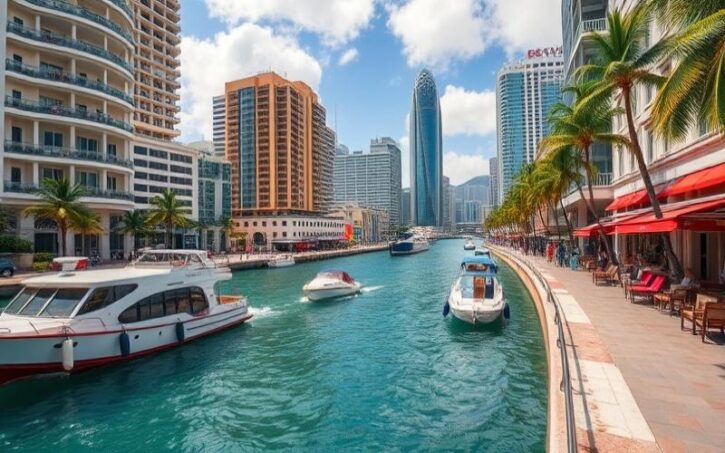
Among these high-potential metropolises, Panama City, with its sleek skyscrapers and status as a business hub, stands out as an unmatched leader.
Emerging Cities: Opportunities for Savvy Investors
Yet, other cities are emerging in the shadow of this giant, promising impressive returns for savvy investors.
Dynamics and Opportunities of a Booming Region
This article explores the complex dynamics and opportunities of a booming region where a smart purchase today could mean significant financial rewards tomorrow.
Good to Know:
The Panamanian real estate market is increasingly attracting international investors thanks to its economic stability and tax advantages.
Promising Cities in Panama for Real Estate
Panama stands out with several cities and neighborhoods showing strong real estate growth potential by 2030, driven by major demographic, economic, and infrastructural factors.
Comparative Table of Key High-Potential Areas in Panama
| City / Neighborhood | Projected Population (2030) | Infrastructure Projects | Economic Investments | Quality of Life / Assets |
|---|---|---|---|---|
| Panama City (Costa del Este) | >1.5 million* | New corporate headquarters, modern shopping centers | Thriving economic district | International schools, modern urban planning |
| Panama City (San Francisco) | >1.5 million* | Ongoing urban renovation | High-end real estate & strong rental demand | Accessibility, proximity to city center |
| Panama City (Coco del Mar) | >1.5 million* | Recent residential developments | Investments in the premium sector | Views of the Bay of Panama |
| Chiriquí (David) | >170,000 | Road and airport expansion | Agro-industrial and logistics & tourism growth | Attractive cost of living |
| Bocas del Toro | >16,000 | Major ongoing tourism projects | Hotel investment ($371M projected)* | Exceptional natural environment |
Key Factors Favoring Real Estate Growth
- Population Growth:
- Panama City shows a steady increase with over 1.5 million inhabitants expected by 2030*, driven by international and regional immigration.
- Infrastructure Improvement:
- Development of the urban metro
- New intercity roads
- Construction or renovation of airports in David and Bocas del Toro
- Economic Investments:
- The country’s GDP has seen remarkable growth (+15% in 2021), positioning the real estate market among the most dynamic in Central America.
- Major Urban Projects:
- Costa del Este concentrates international corporate headquarters; San Francisco continues its residential modernization; Coco del Mar attracts upper classes with its new luxury residences.
- Tourism Development:
- Special law favoring hotel investment for Bocas del Toro and Chiriquí; five mega-tourism projects totaling $371M are planned for these regions.
Real Estate Market Forecasts Through 2030
- Prices are expected to continue their annual progression between +6% and +8% in premium neighborhoods like Costa del Este or Coco del Mar.
- In David/Chiriquí or Bocas del Toro, tourism development could lead to price increases exceeding +10% annually after the delivery of new hotel complexes.
Specific Advantages by City/Neighborhood
- Panama City – Costa del Este :
- National economic hub,
- New infrastructure,
- Strong expatriate rental demand,
- Easy access to international schools.
- San Francisco – Panama City :
- Central location,
- Mature but dynamic market,
- Ease of finding long-term tenants.
- Coco del Mar – Panama City :
- High-end residential,
- Unobstructed sea views,
- Proximity to strategic axes.
- David – Chiriquí :
- Regional agro-industrial hub,
- Easy access thanks to new roads/airports,
- Prices still affordable compared to the capital,
- High potential with the arrival of new tourists/investors.
- Bocas del Toro :
- Flagship ecotourism destination,
- Strong appreciation expected post-hotel development,
- Rare environmental quality at the regional level.
Previous studies confirm that Panama’s economic dynamism is based on its political/legal stability (use of the US dollar), its tax attractiveness for foreign investors, and a government vision oriented towards urban innovation.
For any potential buyer seeking rental yield or strong asset appreciation over ten years, these cities currently represent the leading real estate opportunities within the Panamanian market.
Good to Know:
Panama City, with its rapid urban growth and status as an economic hub, appears as a leading destination for real estate investments through 2030, favored by projects like the metro expansion that will improve accessibility and stimulate demand. David, benefiting from constant infrastructure improvement and growing interest in agriculture and ecotourism, is also expanding rapidly. The towns of Boquete and Coronado are increasingly attracting expatriates seeking a higher quality of life, thanks to their pleasant climate and stunning natural surroundings. According to forecasts, these areas should see a population increase of 20% by 2030, fueled by substantial economic investments, which will cause real estate values to skyrocket. These cities thus represent promising investment opportunities, supported by recent studies projecting annual price increases of around 5 to 7%, making the real estate market particularly attractive for savvy buyers.
Long-Term Investment: Opportunities in Panama
Panama’s Economic Growth Prospects Through 2030
Panama shows a dynamic growth trajectory, with an average annual rate above 4% over the last decade. After a marked rebound in 2022 (GDP +10.8%) and solid growth in 2023 (6-7%), the country is expected to continue its expansion in the medium and long term thanks to the recovery of services, logistics dynamism, and foreign investment. Optimistic forecasts point to an acceleration from 2025 onwards, driven by the country’s attractiveness to international investors.
Key Indicators:
- Projected economic growth in 2024: 4.2%
- GDP per capita: 14,740 USD (2022)
- Services sector: 71% of GDP
- Poverty reduced to 12.9% in 2023
Government Policies Favoring Foreign Investment
The Panamanian government implements several mechanisms to stimulate investment:
- Sectoral tax exemptions (notably tourism and real estate)
- Administrative facilitation for foreign companies
- Special economic zones offering customs advantages
- Strong commitments to energy modernization through a transition agenda supporting technological innovation and public/private partnerships
Infrastructure Development in Major Cities
Panama is investing heavily in its urban infrastructure:
Panama City
- Metro expansion
- Construction of high-end residential buildings
- Development of the international financial hub
Colón
- Port modernization
- Improved logistical connectivity with the Canal
David & Santiago
- Strengthening of road infrastructure
- Creation of agro-industrial hubs
Energy projects also aim to transform the national grid towards greater efficiency and renewable integration.
Importance of International Trade Agreements & Impact of the Panama Canal
The Canal remains at the heart of the national economic strategy:
| Asset | Economic Effect |
|---|---|
| Expanded Canal | Increased global traffic |
| Geostrategic position | Commercial hub for the Americas |
| Trade agreements | Free trade with USA/EU/NAFTA |
Multilateral agreements facilitate access to global markets while the canal generates significant direct revenue, stimulates the logistics sector, and attracts multinational corporations.
Promising Long-Term Investment Sectors
List of Key Sectors:
- High-end residential real estate & international office space
- Port logistics & warehousing connected to the canal
- Sustainable tourism: ecotourism, high-end hospitality
- Renewable energy: solar/hydroelectric/electric mobility
These areas benefit from specific tax incentives as well as growing demand linked to the country’s strategic position.
Socio-Economic and Environmental Factors for Investors
To consider before any decision:
Socio-Economic Factors
- Relative political stability but attention to electoral cycles
- Youthful demographics opening prospects in the domestic market
- Persistent regional inequalities despite overall poverty reduction
Environmental Factors
- Increased sensitivity to climate hazards (tropical rains)
- Active policies aimed at reducing carbon footprint
- Strong encouragement for green building & responsible tourism operations
Good to Know:
Investing long-term in Panama offers attractive prospects thanks to sustained economic growth expected through 2030, supported by proactive government policies favoring foreign investments, particularly in key infrastructure like the Panama City metro and special economic zones. The strategic position of the Panama Canal continues to be a crucial driver for global trade, backed by international agreements favoring logistics and maritime transport. The real estate sector, benefiting from increasing urbanization, and tourism, amplified by the country’s natural and cultural wealth, present significant growth opportunities. However, investors must evaluate socio-economic factors like income disparities and environmental issues related to climate change that can influence long-term markets.
Key Information Boxed:
Investing in Panama offers a unique opportunity thanks to its macroeconomic stability, investor-friendly policies, the logistical power linked to the Canal, and its promising sectors such as high-end real estate, international logistics, sustainable tourism, and renewable energy.
Growth Zones to Watch by 2030
Zones and Neighborhoods with High Economic and Demographic Growth Potential in Panama by 2030
| Zone / Neighborhood | Major Growth Factors | Planned Infrastructure Projects and Investments | Driving Sectors | Real Estate Trends & Local Impact |
|---|---|---|---|---|
| Panama City | International financial center, logistics hub, rapid population growth | Metro development (extensions), new business districts (Costa del Este, Santa María), waterfront modernization, urban renovation in El Casco Antiguo | Finance, logistics, real estate, ICT, tourism, commerce | Price increases in central and coastal neighborhoods, gentrification in historic areas, pressure on affordable housing |
| Colón | Free trade zone, port modernization, proximity to the canal | Expansion of the Colón Free Zone, port modernization, logistics and industrial projects | Logistics, commerce, industry | Real estate revaluation around the free zone, development of worker housing |
| David (Chiriquí) | Agro-industrial growth, new middle class, proximity to Costa Rica | Improvement of road infrastructure, investments in agricultural free zones | Agro-industry, logistics, cross-border trade | Gradual price increases in residential neighborhoods, development of new subdivisions |
| West Panama (Arraiján, La Chorrera) | Rapid urbanization, extension of Panama City | Metro extension, new roads, large-scale residential projects | Construction, services, commerce | Strong increase in land prices, emergence of new urban hubs, growth in housing demand |
| Pacific Region (Riviera Pacífica, Pedasí, Playa Blanca) | Tourism development, attractiveness for expatriates, residential growth | Hotel investments, road infrastructure, coastal eco-development | Tourism, real estate, services | Land speculation, rapid price increases in beach areas, pressure on local resources |
Growth Drivers
Rise of Major Infrastructure
- Extension of the Panama City metro network (Line 3 to the west, connection with the Canal)
- Modernization and expansion of the ports of Colón and Balboa
- Construction of roads and bridges to connect regional economic hubs
- Development of logistics parks and free zones, particularly inland
Government Investments and Projects
- Implementation of the National Strategic Plan “Panama 2030” and the Colmena Plan targeting 63 priority districts
- Poverty reduction and inclusive urban development programs
- Tax and regulatory incentives for renewable energy, ICT, and the tourism sector
- Reforestation and coastal zone preservation policies
Business Sectors Fostering Growth
- Logistics and international transport (Panama Canal, free zones)
- Finance and technology services (regional financial center)
- Agro-industry and food processing (notably in Chiriquí and Herrera)
- Sustainable tourism and ecotourism (Pacific and Caribbean regions)
- Construction and real estate development
Current and Projected Real Estate Trends
- Significant price increases in business districts, coastal areas, and new urban hubs
- Gentrification of central and historic neighborhoods (El Casco Antiguo, Bella Vista)
- Development of mid-range and high-end housing in expanding areas (Costa del Este, Santa María, West Panama)
- Land speculation in tourist regions (Riviera Pacífica, Pedasí)
- Pressure on affordable housing in highly urbanized areas
Factors Accelerating Real Estate Prices
- Arrival of new foreign investors and expatriates
- Improved infrastructure and increased accessibility
- Incentive policies for real estate investment and business establishment
- Population growth and increase of the urban middle class
Impact of Growth on Local Communities
- Job creation but also risk of displacement of vulnerable populations (gentrification)
- Improved access to services, but strain on resources (water, energy, education)
- Need for inclusive urban planning to avoid spatial and social segregation
The areas of Panama City, Colón, West Panama, David, and the Pacific coast are identified as the main drivers of economic and demographic growth by 2030, driven by major investments in infrastructure, the rise of logistics, tourism, real estate, and ambitious government policies.
Good to Know:
In Panama, the Costa del Este area is one to watch closely by 2030, thanks to the anticipated rise of its major infrastructure, including the development of new shopping centers and business offices that attract massive investments. Additionally, the Pacific region of Panama City, especially Punta Pacifica and San Francisco, is expected to experience rapid growth supported by luxury real estate projects and the development of modern skyscrapers. The construction of the metro crossing the city, as well as areas near the Panama Canal, also interest investors due to industrial and logistics expansion plans. Premium real estate offerings and government interventions focused on strengthening public infrastructure are driving up prices, and the technology sector, along with tourism, are key drivers of these economic transformations. The impact on local communities involves jobs created in construction, but also raises issues of gentrification.
Disclaimer: The information provided on this website is for informational purposes only and does not constitute financial, legal, or professional advice. We encourage you to consult qualified experts before making any investment, real estate, or expatriation decisions. Although we strive to maintain up-to-date and accurate information, we do not guarantee the completeness, accuracy, or timeliness of the proposed content. As investment and expatriation involve risks, we disclaim any liability for potential losses or damages arising from the use of this site. Your use of this site confirms your acceptance of these terms and your understanding of the associated risks.

Cyril Jarnias is an independent expert in international wealth management with over 20 years of experience. As an expatriate himself, he is dedicated to helping individuals and business leaders build, protect, and pass on their wealth with complete peace of mind.
On his website, cyriljarnias.com, he shares his expertise on international real estate, offshore company formation, and expatriation.
Thanks to his expertise, he offers sound advice to optimize his clients' wealth management. Cyril Jarnias is also recognized for his appearances in many prestigious media outlets such as BFM Business, les Français de l’étranger, Le Figaro, Les Echos, and Mieux vivre votre argent, where he shares his knowledge and know-how in wealth management.





