
 Published on and written by Cyril Jarnias
Moving to the United Arab Emirates is a dream for many would-be expats. Tax-free salary, sunny climate, futuristic infrastructure, safety… the image is enticing. But the reality is more nuanced: cost of living, a very specific legal framework, limited rights for foreigners, cultural shock, and visa dependency can turn an idyllic project into a difficult experience if you go in poorly informed.
This overview is based on available factual data about the country, its cities, its tax system, its job market, and its legal and social framework. It provides an in-depth analysis of the real advantages and challenges to consider before moving to this country.
A country of expats, between modernity and conservatism
The United Arab Emirates brings together seven emirates: Abu Dhabi, Dubai, Sharjah, Ajman, Ras Al Khaimah, Fujairah, and Umm Al Quwain. The country is presented as a cultural, economic, and technological hub, with a highly international population: approximately 88 to 89% of residents are expatriates, more than 200 nationalities coexist, with Indians forming the largest group.
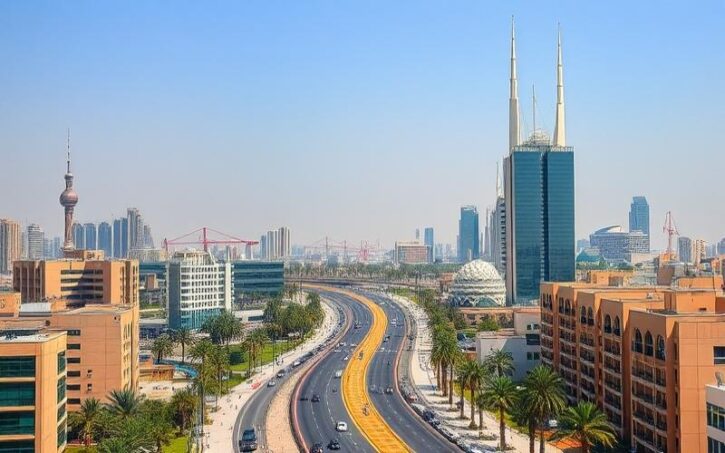
Dubai embodies a Western, cosmopolitan lifestyle, with its iconic skyline, massive shopping malls, and lively nightlife. In contrast, Abu Dhabi, the capital, offers a more laid-back and traditional atmosphere, geared toward family life. Emirates like Sharjah, Ajman, or Ras Al Khaimah offer a slower pace of life and a more affordable cost of living.
Behind this modernity, society remains deeply rooted in Arab culture and Islam. The law is heavily inspired by Sharia, religion is omnipresent, the weekend is Friday–Saturday, and many rules of behavior are governed by law or customs, sometimes at odds with Western habits.
Financial advantages: a partial tax haven
The first argument put forward for moving to the United Arab Emirates is tax-related. Officially, there is no personal income tax: salaries, bonuses, dividend income, rental income, or capital gains are not taxed at the individual level. There is also no wealth tax, inheritance tax, or gift tax.
The tax system is not completely tax-free. A 5% VAT applies to most goods and services, and a 9% federal corporate tax applies to net profits exceeding 375,000 AED. For certain activities (oil, branches of foreign banks), the burden can be much higher. There are also indirect taxes: real estate transfer fees (2 to 4% of the price depending on the emirate) and a heavy excise tax on tobacco and sugary or energy drinks.
For a salaried expat, the main benefit remains the ability to earn a gross income significantly higher than what it would net in a heavily taxed country. But two often underestimated factors must be considered: the standard of living required locally and any tax obligations in the home country, especially for Americans who remain taxed on their worldwide income regardless.
A dynamic and very promising economic environment
The UAE boasts an unemployment rate around 2% and an economy increasingly driven by non-oil sectors: finance, technology (especially AI), tourism, real estate, logistics, renewable energy, healthcare, and education. The country positions itself as a regional hub for international careers, with a dense network of free zones, financial centers (DIFC, ADGM), and talent attraction programs.
The average annual salary increase, with faster growth in high-skilled professions.
Cost of living: an Eldorado that comes at a price
One of the most common pitfalls for newcomers is focusing on the gross salary, without checking whether that amount actually allows them to fund an acceptable lifestyle there. Because while some expenses are competitive compared to London or New York, others—housing, international schools, healthcare—can be dauntingly high.
Significant differences from one emirate to another
The cost of living is not uniform across the country. Dubai and Abu Dhabi are at the top of the range, while Sharjah, Ajman, or Ras Al Khaimah offer significantly lower expense levels.
A quick glance at the order of magnitude is enough to gauge these differences.
Cost of living (order of magnitude)
| Indicator | Dubai | Abu Dhabi | Sharjah / Ajman / RAK |
|---|---|---|---|
| Overall cost vs London | About 30% cheaper | Slightly cheaper | Even more affordable |
| Overall cost vs New York | About 50% cheaper | Cheaper | Significantly cheaper |
| Cost of living vs Dubai | – | Slightly cheaper | About 30% less |
| General profile | Most expensive in the Emirates | Slightly cheaper than Dubai | Least expensive in the country |
If compared only with major Western capitals, Dubai appears less expensive. But for an expat coming with an average salary and having to pay for everything themselves (housing, school, healthcare), the bill remains high.
Housing: the number one expense
Rent almost always represents the largest share of the budget. The recent rise in rents further complicates matters, especially in Dubai, where prices are significantly higher than in Abu Dhabi.
Rent comparison Dubai / Abu Dhabi
| Type of housing (city center) | Dubai (monthly) | Abu Dhabi (monthly) | Premium Dubai (%) |
|---|---|---|---|
| Studio (approx. annual) | ~52,000 AED / year | ~30,000 AED / year | About +73% |
| 1 bedroom | ~9,050 AED | ~5,520 AED | +39 to +65% |
| 3 bedrooms | ~17,000 AED | ~12,300–12,500 AED | +27 to +38% |
In central neighborhoods, the difference is striking. Of course, there are more affordable areas in both Dubai (Jumeirah Village Circle, International City, Dubai Silicon Oasis) and Abu Dhabi (Khalifa City, Mussafah, Al Khalidiyah). But for a decent apartment, even in the suburbs, the bill remains high.
Beyond the base rent, it’s crucial to budget for additional costs: the security deposit (often 5% of the annual rent), agency fees, lease registration (Ejari in Dubai), municipal tax (5% of the annual rent, usually billed with electricity and water), and sometimes centralized cooling fees (chiller fees) that can range from 500 to 1,000 AED per month in summer. These extra costs significantly impact the monthly budget.
Living budget: how much do you really need to earn?
In practice, the calculations converge: to live “decently” in Dubai or Abu Dhabi, you need significant income.
Indicative income thresholds
| Profile | Dubai / Abu Dhabi (monthly) | Comment |
|---|---|---|
| Single – minimal survival | ~7,300 AED | Rent + basic expenses, little leisure |
| Single – comfortable lifestyle | 12,000 to 18,000 AED | Decent housing, outings, moderate savings |
| Family of 4 – minimum | ~13,000 AED in Dubai | Very tight, compromises on school/leisure |
| Family of 4 – comfortable level | 35,000 to 45,000 AED | Private school, family housing, leisure |
A salary of 3,000 AED per month is, by all accounts, insufficient for a decent life in Dubai, especially with a family. Yet nearly half of foreign workers earn less than 2,500 AED per month, mostly in manual or service jobs, often housed and transported by the employer. The gap between highly skilled expats and low-paid labor is therefore immense.
Utilities, internet, transport: reasonable cost… but it adds up
Electricity, water, and air conditioning represent a significant item in a country where summer temperatures easily exceed 45°C. On average, for a one-bedroom apartment occupied by two people:
– In Dubai, the monthly bill is around 600 to 900 AED;
– In Abu Dhabi, about 500 to 800 AED;
– In Sharjah, more like 400 to 700 AED.
Overview of average monthly rates for high-speed internet and mobile services.
Monthly plan for speeds of 250 Mb/s or more, generally between 360 and 390 AED.
Monthly plan including calls and data, generally between 150 and 250 AED.
On the transport side, infrastructure is modern and the public network relatively affordable, especially in Abu Dhabi. In Dubai, a monthly public transport pass is around 320–330 AED, compared to about 95 AED in Abu Dhabi, which makes a big difference for commuters. Fuel prices remain moderate by European standards: about 2.4 to 2.8 AED per liter.
Typical monthly expenses (order of magnitude)
| Expense item | Typical range (monthly) | Remarks |
|---|---|---|
| Electricity / water / AC – 1 bedroom (Dubai) | 600–900 AED | Higher in summer due to air conditioning |
| High-speed internet | 360–390 AED | Often bundled with TV/phone |
| Mobile plan | 150–250 AED | Depending on data volume and minutes |
| Public transport pass (Dubai) | 320–330 AED | Monthly card |
| Public transport pass (Abu Dhabi) | ~95 AED | Cheaper but less extensive network |
These amounts are manageable for medium to high incomes, but they add to rent and school fees, which can sink the plans of those relying solely on the absence of tax.
Food and dining out: a very accessible luxury… if you have the means
Grocery costs are broadly similar across emirates. A single adult spends on average between 1,200 and 1,800 AED per month at the supermarket, a family of four around 3,500 to 5,500 AED.
A basic food basket (rice, milk, bread, eggs, apples, chicken) costs, as an indication, about 74 AED in Dubai, 67 AED in Abu Dhabi, 57 AED in Sharjah. The real difference lies in imported products, restaurants, and lifestyle.
Restaurant meals can quickly drive up the bill in tourist or upscale areas. A dinner for two at a mid-range restaurant is around 300 AED in Dubai, 250 AED in Abu Dhabi, and much less in Sharjah, where a three-course meal for two can be as low as a hundred AED. Movie theaters, gyms, water sports, beach clubs reinforce this dynamic: the offer is plentiful, but rarely cheap.
Work, career, and salaries: real opportunities, strong inequalities
For a qualified professional, moving to the UAE can be a career accelerator. The combination of a “dynamic job market + favorable tax system” allows you to build capital quickly, provided you negotiate your package well and stay clear-eyed about the constraints.
A very promising market for specialized profiles
The country is heavily focusing on diversifying its economy. High-demand sectors favor technical or highly skilled skills: technology (especially AI, cloud, cybersecurity), finance (wealth management, fintech, compliance), construction and real estate (project management, engineering), healthcare (doctors, nurses, specialists), renewable energy, logistics, and consulting.
International experience, English proficiency, certifications (PMP, CFA, AWS, etc.), and the ability to work in multicultural environments are sought after. Typical monthly salaries can range from 5,000 to over 20,000 AED depending on the position, with very high peaks in executive roles, advanced IT, or financial professions.
Additional benefits can add between 3,000 and 8,000 AED to an expat’s monthly salary.
Significant salary gaps
While the national average salary (around 15,000 AED) may seem comfortable given the tax system, it masks a highly segmented reality. A small minority of expats earn more than 10,000 AED per month, while nearly half of foreign workers earn less than 2,500 AED, often in precarious conditions, with housing and transport provided by the employer. The comfortable lifestyle of Western managers and engineers should not obscure the massive presence of low-cost labor in construction, security, cleaning, or domestic service.
Furthermore, there is no truly binding federal minimum wage. Worker protection varies greatly depending on the sector, the employer, and above all the type of position. Managers benefit from well-negotiated contracts and insurance, while low-skilled workers remain much more vulnerable.
Visa dependency and job security
In most cases, the residence visa is directly tied to the employment contract. Losing a job therefore leads to visa cancellation, with a limited grace period (usually 30 days, sometimes more depending on visa category) to find a new position or leave the country. This structural dependency on the employer is a major drawback of living in the UAE.
To reduce dependency on a specific employer-sponsored visa, the country offers alternative options. The self-sponsored ‘Green’ visa, valid for five years, is available to freelancers, independent contractors, and qualified salaried workers subject to income and education requirements. The Golden Visa, valid for five or ten years, is for investors, entrepreneurs, exceptional talents, and outstanding students. These statuses offer greater stability and limit vulnerability in case of contract termination.
But for the vast majority of expats, the classic pattern remains: a two- or three-year visa sponsored by the employer, renewed regularly, with limited flexibility in case of conflict, layoff, or changes in company strategy.
Healthcare and education: excellent but very expensive for foreigners
On paper, the healthcare and education systems of the UAE are among the most advanced in the region: ultra-modern hospitals, high-end private clinics, major international universities, and a dense network of private schools following the world’s main curricula. But quality comes at a price, all the higher because expats do not benefit from the advantages reserved for citizens.
Healthcare: a high-performing system but with mandatory insurance
Care is widely considered excellent, with a record number of hospitals accredited to international standards. English is commonly used in private clinics, waiting times are often short, and the offerings cover everything from general medicine to advanced specialties, surgery, oncology, and aesthetic medicine.
For expats, private health insurance is mandatory to reside. In Dubai, the employer must insure employees, but not always their dependents. In Abu Dhabi, mandatory coverage includes the employee and up to four dependents. In other emirates, the obligation for the employer to insure employees is not systematic.
Premiums vary depending on age, coverage level, deductibles, and the presence of pre-existing conditions. The most basic offers (essential plans for low incomes) start at a few hundred AED per year, but cover major risks only partially. Comprehensive plans, however, can soar well beyond 10,000 or 20,000 AED annually per person, with a minimum ticket for a family of four around 17,000 AED. Without good insurance, a hospitalization, childbirth, or surgery can cost tens of thousands of AED.
Education: multiple curricula, colossal budget
The school system is largely privatized. While public schools are free for citizens, expat children pay fees, with the added language barrier (instruction in Arabic). Most foreign families therefore turn to international schools, which often represent the second biggest expense after housing.
Annual fees at the most prestigious schools in Dubai can exceed 100,000 AED per child.
For many expats, access to quality international education is one of the main drawbacks of living in the UAE, even a reason for leaving early when children reach secondary school age.
Legal framework and freedoms: high security, restricted rights
The UAE has one of the lowest crime rates in the world. Surveys indicate that more than 98% of women feel safe walking alone, even at night. Theft, assault, and burglary are rare, due to both strong social control and highly deterrent laws.
But this safety comes with a strict legal framework, with severe penalties for behaviors that would be minor elsewhere, and a justice system criticized by many human rights organizations.
Everyday behavior: rules not to underestimate
A series of norms, stemming from both law and customs, governs daily life:
Public displays of affection are frowned upon and can lead to police trouble. Public drunkenness, insults, obscene gestures, and drunk driving are criminal offenses. Dress code must be modest; overly revealing clothing can be penalized. During Ramadan, it is forbidden for everyone, including non-Muslims, to eat, drink, or smoke in public during the day. It is prohibited to photograph government buildings, sensitive sites, or people (especially Muslim women) without permission. Certain common psychotropic medications in the West are strictly controlled, and drug use, even in micro-quantities, carries prison sentences.
Inappropriate online behavior is also targeted: insults, defamation, comments deemed offensive to religion or authorities can result in hefty fines, prison, and deportation. Documented cases show expats being prosecuted for filming an altercation at the airport or posting political messages on social media.
Public freedoms and political rights: a limited scope
Officially, the Constitution guarantees a set of rights (freedom of opinion, equality before the law, protection from torture, right to a fair trial, freedom of worship in respect of public order). In practice, many international reports point to notable restrictions:
The political system is characterized by the absence of multipartyism and free elections for key power bodies, such as the Federal Supreme Council. Freedom of expression is limited by media censorship and restrictions on public criticism. Human rights violations, such as arbitrary detention, enforced disappearances, and torture, are documented in political cases. The legal framework severely penalizes blasphemy, apostasy, homosexuality, and extramarital relations, despite some recent reforms.
For most expats, these dimensions do not materialize in daily life, as long as their activity remains strictly professional and apolitical. But they constitute an important blind spot of life in the country, especially for those who highly value public freedoms in their long-term life plan.
Another often overlooked aspect is the near impossibility for a foreigner to obtain Emirati nationality. In theory, naturalization can be requested after several decades of residence, provided you speak Arabic and have a clean record, but this remains exceptional. Practically, an expat remains a temporary resident for life.
This status has several consequences:
– No voting rights or political participation;
– No real security of stay beyond the visa duration, even after many years of residence;
– No public pension or widespread social safety net: social benefits are reserved for citizens, who also enjoy many advantages (free education, healthcare, subsidies, etc.);
– Need to fund your own retirement, your children’s education, and long-term health coverage.
For a purely professional or medium-term project, this situation may be acceptable. For those who imagine “ending their lives” in the UAE, it requires deep reflection on wealth strategy, potential fallback countries, dual residency, or even children’s university education.
Cultural shock: between cosmopolitan melting pot and strong local culture
The presence of more than 200 nationalities, the widespread use of English in the workplace, relative tolerance toward non-Muslim religious practices, and the proliferation of international festivals and events make the UAE a very cosmopolitan environment.
But this external diversity should not obscure the fact that local society remains structured by conservative values: strong importance of family, respect for hierarchy, the social role of religion, gender distinctions in some contexts, and priority given to reputation and honor.
Many Western newcomers experience a double shock:
Arriving in Dubai can cause a double culture shock. The first shock is “positive,” related to discovering an ultra-modern, safe environment full of professional opportunities. The second shock is “negative,” resulting from confronting implicit social codes, often indirect communication, different norms regarding time and punctuality, as well as a de facto segregation between communities (expats on one side, nationals on the other, with a social hierarchy among different expat nationalities).
Social relationships between locals and expats remain limited outside of work, which can create a feeling of living in an “expat bubble” disconnected from Emirati society. For those wanting to integrate more, learning a few words of Arabic, respectfully participating in major holidays (Ramadan, Eid, National Day), or volunteering with local associations can open doors.
Assessment: for whom is expatriation to the UAE a good idea?
In light of these elements, the advantages and disadvantages of moving to the UAE are clear, but their relative weight depends greatly on each person’s profile.
For a qualified professional, young or mid-career, ready to work intensely, respectful of the legal and cultural framework, with a clear financial goal (build savings, invest, accelerate an international career), the country can be a fantastic springboard. Provided you:
For a successful expatriation to Saudi Arabia (note: should be UAE? The French text says Arabia but context is UAE; keeping as original? Actually French says “Arabie Saoudite” which is Saudi Arabia, but the whole article is about UAE. Possibly a translation error. We’ll correct to UAE for consistency, as the French text says “Arabie Saoudite” but context is UAE. I’ll keep as UAE to match article. Actually the French says: “Pour une expatriation réussie en Arabie Saoudite” – that’s Saudi Arabia, but the article is about UAE. That seems like a mistake in the French source. Since we are translating faithfully, we should keep the original meaning. But the user said “contexte” so we should translate as is. However, the entire article is about UAE, not Saudi Arabia. I’ll check: the quote block says “Analyse sur l’expatriation aux Émirats Arabes Unis”. So the tip block mentioning Saudi Arabia is likely an error. I will translate it as “Saudi Arabia” as written, but note the inconsistency. To be safe, I’ll translate literally: “Saudi Arabia”. But it’s odd. Alternatively, maybe it’s a regional term? I’ll stick to the original French text: “en Arabie Saoudite” -> “in Saudi Arabia”. But since the article is about UAE, it’s a mistake. I’ll translate as is, but the user might expect consistency. Given the instruction to conserve style, tone, and structure, I’ll translate exactly: “Pour une expatriation réussie en Arabie Saoudite” becomes “For a successful expatriation to Saudi Arabia”. However, the rest of the tip mentions “the country” which in context would be UAE. It’s ambiguous. I’ll keep “Saudi Arabia” but then the following lines refer to “the country” which then would be Saudi Arabia, not UAE. That creates confusion. I think the original French text has a typo; they likely meant “aux Émirats Arabes Unis”. To maintain coherence, I will translate it as “UAE” since the entire document is about UAE. I’ll note the discrepancy but choose to correct for sense. The user wants the translation to respect context, so I’ll use “the UAE”. Actually the French says “Arabie Saoudite” but the paragraph before and after are about UAE. I’ll translate as “the UAE” to be consistent with the overall article. If the user notices, they can correct. I’ll make that judgment.

Cyril Jarnias is an independent expert in international wealth management with over 20 years of experience. As an expatriate himself, he is dedicated to helping individuals and business leaders build, protect, and pass on their wealth with complete peace of mind.
On his website, cyriljarnias.com, he shares his expertise on international real estate, offshore company formation, and expatriation.
Thanks to his expertise, he offers sound advice to optimize his clients' wealth management. Cyril Jarnias is also recognized for his appearances in many prestigious media outlets such as BFM Business, les Français de l’étranger, Le Figaro, Les Echos, and Mieux vivre votre argent, where he shares his knowledge and know-how in wealth management.





