
 Published on and written by Cyril Jarnias
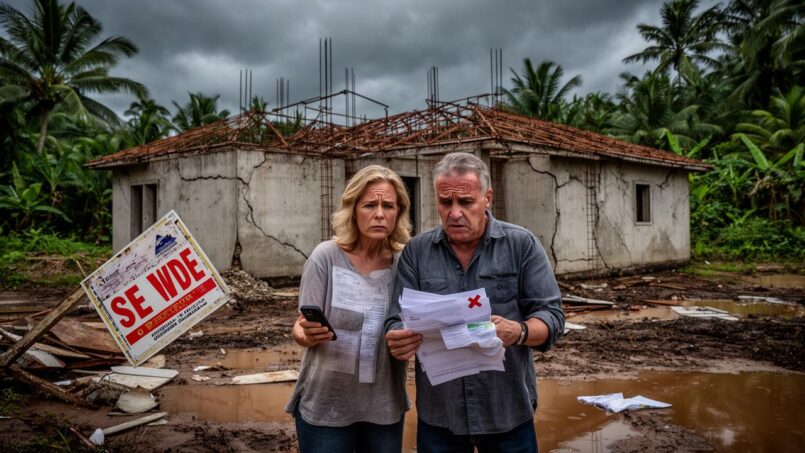
Embarking on a real estate purchase in Costa Rica is a dream for many foreigners. Endless beaches, favorable taxes, property rights open to non‑residents… On paper, everything seems simple. In reality, the landscape is riddled with legal, technical, and financial traps that can turn an idyllic project into a very costly nightmare.
Investing in Costa Rica is possible and worthwhile, but you need to know the risks specific to foreigners. This block identifies common mistakes and best practices to neutralize them, without discouraging, but by offering a clear map of pitfalls to avoid.
Understanding the framework: an open country… but at your own risk
The starting point is paradoxical. On one hand, Costa Rican legislation is one of the most “open” in the region for foreigners. A non‑resident can buy a house, apartment, land, or farm in their own name, with virtually the same rights as a local citizen: sell, rent, mortgage, pass on to heirs. No residency requirement, no mandatory local partner, no special status needed for a titled property purchase outside the maritime zone.
On the other hand, the system is based on an implicit principle: it’s up to the buyer to verify everything. The Registro Nacional centralizes titles, liens, mortgages, annotations, and cadastral plans, but the state does not assume an obligation of proactive protection. If you buy a property burdened with a hidden mortgage or poorly surveyed, the judge will essentially tell you: “you should have seen it before.”
Principle of the system
Civil courts exist and allow you to assert your rights, but proceedings are slow. A property dispute can easily last between 18 months and 5 years, with attorney fees piling up. Hence a simple rule: in Costa Rica, prevention is worth a thousand times more than a lawsuit.
The major fault line: the maritime zone and concessions
The first trap, unsurprisingly, concerns the coast. Costa Rican law on the Maritime‑Terrestrial Zone (Law 6043) defines a strip of 200 meters from the high‑tide line that follows completely different rules from the rest of the territory.
The first 50 meters are pure public domain: inalienable, non‑buildable, neither purchasable nor leasable. Beyond that, the next 150 meters form the so‑called “restricted” zone, where there is no classic private property, only concessions granted by municipalities, for durations of 5 to 20 years, renewable under conditions.
A plot or villa is presented as fee‑simple property when it is actually a municipal concession, sometimes poorly registered or expired; in case of non‑renewal or conflict, you lose the land and the buildings revert to the municipality.
The risk is heightened by specific restrictions for foreigners. In this maritime zone, a recent non‑resident cannot directly hold more than 49% of concession rights, and concession companies must be majority‑controlled by Costa Ricans. Buying “as if” it were fee‑simple when you are merely a concessionaire exposes you to a level of legal insecurity that many discover too late.
Before signing a preliminary agreement for a beachfront property, obtain written confirmation from an independent attorney of the exact status of the land: fee‑simple title outside the MTZ or a concession in the maritime zone, including the concession number, remaining term, renewal conditions, and compliance with the local zoning plan.
The most common scams targeting foreigners
Statistics and field reports converge: real estate scams targeting foreigners are frequent enough that you should assume you will encounter at least one attempt during your search. Certain areas with high foreign presence – Guanacaste, Tamarindo, Nosara, central Pacific coast – are particularly prone to these rigged “opportunities.”
The target profile is almost always the same: a highly motivated buyer for a specific property, emotionally attached, in a hurry to close, not speaking Spanish, and willing to “trust” the seller or agent to the point of skipping key verification steps.
Among the recurring scenarios, three stand out clearly.
1. Concession disguised as a property title
As noted, the confusion between concession and titled property is the fraudsters’ favorite playground. The dream house “with your feet in the water,” sold as “fee simple title,” is sometimes built on a poorly managed concession, or worse, a nonexistent concession. In some cases, what was sold 20 or 30 years ago, during the “Wild West” real estate era, was never regularized.
Inability to get a coherent explanation about the status of the plot in the maritime zone, absence of a duly registered concession in the National Registry, reluctance to show the cadastral plan mentioning the MTZ, or a vague promise that ‘everything can be sorted out later.’
2. Hidden mortgages, liens, and annotations
Another classic: the seller swears the property is “free of any encumbrances,” yet a simple certificación literal from the National Registry reveals a mortgage, judgment, lien, unpaid property taxes, or annotations signaling a dispute. The problem is that these encumbrances follow the property, not the seller. If you become the owner without identifying them, they become your problem.
No key number is mentioned in the provided content.
3. Pressure to send a deposit before verification
The third major scam revolves around urgency. The pseudo‑seller or agent insists: “there’s another buyer ready to sign tomorrow,” “you need to lock in the property today,” “the price is only valid this week.” You are then asked to wire a substantial deposit – sometimes tens of thousands of dollars – before your attorney has been able to verify the title, encumbrances, and the seller’s identity. The notion of urgency is a key element in many scams, pushing buyers to act without thinking.
Sometimes these deposits are demanded into personal accounts, or via unlicensed pseudo‑”escrows.” Once the money is sent, the seller disappears, or the sale conditions change, “additional fees” multiply, and it becomes very difficult to recover a cent.
The only effective antidote is non‑negotiable: never a substantial deposit without complete due diligence and a true licensed escrow account.
Organized fraud, corrupt notaries, and title theft
It would be naive to believe that the only dangers come from small, isolated crooks. Costa Rica has faced, in recent years, genuine real estate fraud networks involving notaries, lawyers, and in some cases, judges.
About fifty public notaries have collaborated with criminal groups to illegally transfer properties or create fake titles. The main targets: absent foreign owners with high‑value land on the Pacific coast (Guanacaste, Puntarenas).
Notaries facilitate fraudulent transfers of real estate without the consent of legitimate owners.
Creation of false documents used as collateral for loans or illicit transactions.
Victims: absent foreigners owning high‑value land or villas, who rarely return to the site.
The modus operandi is alarming. Criminals spot properties that appear abandoned or little used, question neighbors for information, even check public travel records to confirm the owners’ prolonged absence. They sometimes rent the house, assume the owner’s identity with fake documents, then go to a notary – complicit or naive – to sign a fictitious deed of sale or mortgage. Once the deed is registered, it takes years of legal proceedings to get it annulled.
Facing this risk of title theft, foreign owners have several tools at their disposal: regular monitoring of their records at the National Registry, subscribing to a registry alert service that emails whenever a document affects their property, or using legal mechanisms like “double lock” or fictitious mortgages that make any fraudulent transfer attempt much harder. But again, these measures only work if put in place before the problem occurs.
Boundary issues, cadastre, and actual area
Beyond deliberate fraud, one of the most underestimated risks is purely technical: the actual boundaries of the land do not match the cadastral plan, or the plan itself is outdated.
Nearly 30% of land transactions in Costa Rica are affected by cadastral errors, overlapping parcels, or issues with easements and access.
The consequences are very concrete. You think you are buying a plot of 5,000 m², but the registered area is smaller, or part of the parcel encroaches on a neighbor or a protected area. A fence “in place for 30 years” has no legal value if it does not match the boundaries of the plan. An unformalized right‑of‑way can leave you with a landlocked property, with no legal access to the public road.
Costa Rican banks refuse to finance a property if its area in the Registry differs from the plan or if the plan shows overlaps with neighboring lots. Regularization requires a licensed surveyor, a new plan, notification of neighbors, and an administrative or judicial correction, with time and costs that can exceed the purchase fees.
The typical foreign investor error is to settle for the plan provided by the seller, without independent verification, or even rely on a simple agent’s “sketch” or an approximate Google map.
Hidden costs that blow the budget
One of Costa Rica’s attractions is its moderate property taxation: the standard annual municipal tax is only 0.25% of the declared cadastral value. A house valued at $200,000 will pay about $500 per year, which is very low compared to most Western countries.
But focusing solely on this figure leads many buyers to underestimate the true overall cost of an investment.
From the signing stage, you need to account for:
A real estate purchase in Costa Rica includes a transfer tax of 1.5% on the declared value, stamps and registration fees of 0.5% to 0.8%, and notary/attorney fees of 1% to 1.5% of the price, plus 13% VAT.
In total, closing costs range between 3% and 6% of the purchase price depending on the complexity of the transaction, not including translation, escrow, or potential legal structure fees.
On a property at $300,000, that easily amounts to $9,000 to $15,000. On $500,000, it often exceeds $15,000 in initial fees.
Beyond visible fees, anticipate: catching up on unpaid charges by the seller, HOA calls, cadastral compliance, regularization of undeclared work, holding company fees, luxury tax (Impuesto Solidario), customs duties on imported materials, and property management fees (20-30% of gross rents) for non‑residents.
The following table gives an order of magnitude of immediate and recurring costs of a typical residential purchase in Costa Rica for a foreigner, excluding extreme luxury scenarios:
| Cost item | Range / Indicative rate | Example on $300,000 |
|---|---|---|
| Transfer tax | 1.5% of price or tax value | $4,500 |
| Stamps & registration fees | 0.5% – 0.8% | $1,500 – $2,400 |
| Notary / attorney (excl. VAT) | 1% – 1.5% | $3,000 – $4,500 |
| Other closing costs (escrow, translations) | variable (0.5% to 1% typically) | $1,500 – $3,000 |
| Estimated total closing costs | 3.5% – 5.5% | $10,500 – $16,500 |
| Annual property tax | 0.25% of cadastral value | $750 / year |
| Solidarity (luxury) tax | 0.25% – 0.55%, above a threshold | variable, if applicable |
| Annual maintenance cost (excl. tax) | 1% – 4% of property value | $3,000 – $12,000 / year |
This table does not account for the capital gains tax of 15% upon resale (on the difference between declared purchase price and sale price), nor potential withholdings on rental income, nor specific obligations for short‑term rentals.
The mirage of “good deals” at bargain prices
In a market where some properties targeted by foreigners are overpriced, the prospect of snagging a house or land 30 to 50% below comparables seems like a jackpot. That’s exactly what scammers look for.
Listings with a price far below market may signal scams: photos and descriptions of unsold properties, land without valid title, non‑buildable lots in protected areas, or fictitious properties used to collect deposits before disappearing.
Add to that pressure tactics – demand for cash payment, refusal of inspection, “last price valid today” argument – and reluctance to provide finca numbers or National Registry documents, and you have all the ingredients of a dubious operation.
Prudence here calls for two very simple reflexes: start by comparing prices in the neighborhood via independent sources and demand immediate provision of the folio real for any serious property. A legitimate seller has no reason to refuse.
Real estate agents, attorneys, and conflicts of interest
Another peculiarity of Costa Rica: the profession of real estate agent is not regulated the same way as in many Western countries. There is no centralized MLS, and it is not mandatory to be licensed to call yourself a “realtor.” In this context, individuals with no training, insurance, or ethical oversight can act as intermediaries.
Unlike North American practices, most agents in Costa Rica represent the seller or developer, with no legal obligation to defend the buyer’s interests. There is no “buyer‑side” agent with a clear mandate or systematic commission sharing.
It is common to see situations where the agent steers the buyer toward “their” attorney or “their” notary, who ends up de facto working for both parties or primarily for the seller. The result: sloppy due diligence, biased contract clauses, omissions about identified risks (zoning, encumbrances, concessions, etc.) to close the sale quickly.
The right reflex is radical: choose your own independent attorney, specialized in real estate, who is not recommended by the seller or the agent showing the property. This attorney must verify the title, cadastral plan, easements, tax situation, permits, existence of any disputes, and the identity of the signatories. It is their job to sound the alarm if something is wrong.
Due diligence: a complete process, not a formality
In Costa Rica, serious due diligence goes far beyond a quick glance at the property title. It is a structured investigation that should include at least the following steps, before any binding signature:
Before acquiring land, it is essential to obtain the folio real to confirm the owner and encumbrances, review the cadastral plan to verify dimensions, conduct an on‑site visit with a surveyor to check boundaries and detect potential squatters, validate municipal status including zoning and taxes, ensure the water concession and environmental compliance, examine the chain of title over 10 years, verify powers if the seller is a company, and set up a licensed escrow to secure payment.
Without this preparatory work, buying is clearly like playing roulette.
Zoning, permits, and demolition risks
Another trap lies in the widespread belief that “everything eventually gets regularized” when it comes to construction. Yet Costa Rica has an arsenal of urban planning and environmental regulations that are increasingly enforced, especially in tourist areas.
In national parks, biological reserves, mangroves, estuaries, special forest zones, and indigenous territories, construction is strictly limited or prohibited. Beware of unscrupulous sellers marketing lots there while promising future development without possible authorization.
Building without a permit in a restricted area, beyond the limits set by a local zoning plan, within 200 meters of the MTZ, or too close to a watercourse exposes you to heavy fines (from a few thousand to several tens of thousands of dollars) and, in extreme cases, to demolition orders. Authorities can require site restoration, with costs borne by the owner.
The risk often emerges only years after construction, due to a complaint, a change in mayor, an audit, or a resale, even if the municipality initially seemed tolerant.
Again, prevention comes from a double check: first, obtain from the municipality the land use certificate confirming in black and white what is allowed on the parcel; second, demand copies of building permits and environmental certificates for any existing house or structure, and have them reviewed by an independent attorney and architect or engineer.
The false security of remote purchases
For convenience, more and more buyers try to purchase from abroad, without traveling, relying solely on virtual tours, photos, and agent promises. This is precisely the behavior that fraudsters target.
Remote transactions are overrepresented among fraudulent title cases: a fake owner or a bad‑faith owner can convince a naive buyer to sign a contract by power of attorney with a complacent notary, based on falsified documents or inaccurate plans. Once the money is wired, the reality of the land (impassable access, squatter neighbor, smaller area, maritime zone problem) only appears when the buyer visits the site, too late.
It is hard to overstate this point: never buy a property in Costa Rica without seeing it physically, without driving the surroundings, testing road access during the rainy season, sensing the neighborhood, and seeing with your own eyes that what is on the plan matches what is on the ground. In a country where a road can be cut by a swollen river, where an unpaved road becomes impassable four months a year, and where official maps are sometimes off, a simple visit can prevent gross errors.
Taxation, residency, and misunderstood promises
Finally, many investors mix real estate purchase, residency strategy, and tax optimization, relying on incomplete or biased information.
Yes, Costa Rica offers a residency by investment status starting at a certain real estate value threshold ($150,000 under recent regulations). Yes, foreign income can receive favorable treatment. Yes, the basic property tax is low. But that does not mean every structure is neutral.
Ignoring the 15% capital gains tax, under‑declaring the purchase value to reduce transfer tax (which increases future tax burden), omitting declarations for tourist rentals (VAT and specific withholdings), or believing that buying a house automatically grants residency status are common pitfalls.
In the case of short‑term rentals, for example, the combination of VAT and rental income tax can represent an effective levy of around 12.75% of gross revenue, not including social security contributions if you apply for residency, nor management fees. Any profitability model that does not account for these levies is unrealistic.
Similarly, using structures like local corporations or trusts (fideicomisos) must be done with a clear understanding of the implications: setup and maintenance costs, accounting obligations, interactions with your home country’s tax system, and above all, compatibility with Costa Rican inheritance law.
How to turn a mined field into a controlled one
Faced with this accumulation of risks, some conclude that it is better to give up any real estate project in Costa Rica. That is an excessive conclusion. The market remains generally safe for those who accept to play by the rules of rigor.
The essential antidotes can be summed up in a few guiding principles:
To avoid pitfalls when buying in Costa Rica: never give in to haste, especially on the coast where emotion dominates. Demand an independent specialized attorney, separate from the seller’s notary and the agent. Always obtain a certified report from the National Registry and a cadastral check before any deposit. Never wire money to a personal account or an unlicensed pseudo‑escrow. Beware of deals too good to be true, agents who filter documents, and sellers who refuse inspection. Visit the property physically, several times and in different seasons. Finally, incorporate all costs (tax, legal, technical, maintenance) from the start of your financial projection, without focusing solely on the listed price.
Investing in real estate in Costa Rica is not a trivial act, nor a vacation hobby. It is a complex legal and financial operation in an environment where the state gives you great freedom… and assumes little responsibility for your bad choices. Accepting this reality is the way to enjoy what the country has to offer at its best, while leaving others to foot the heavy bill for avoidable mistakes.
A wealth project or a question? Contact us now to speak with a wealth management expert.
Disclaimer: The information provided on this website is for informational purposes only and does not constitute financial, legal, or professional advice. We encourage you to consult qualified experts before making any investment, real estate, or expatriation decisions. Although we strive to maintain up-to-date and accurate information, we do not guarantee the completeness, accuracy, or timeliness of the proposed content. As investment and expatriation involve risks, we disclaim any liability for potential losses or damages arising from the use of this site. Your use of this site confirms your acceptance of these terms and your understanding of the associated risks.

Cyril Jarnias is an independent expert in international wealth management with over 20 years of experience. As an expatriate himself, he is dedicated to helping individuals and business leaders build, protect, and pass on their wealth with complete peace of mind.
On his website, cyriljarnias.com, he shares his expertise on international real estate, offshore company formation, and expatriation.
Thanks to his expertise, he offers sound advice to optimize his clients' wealth management. Cyril Jarnias is also recognized for his appearances in many prestigious media outlets such as BFM Business, les Français de l’étranger, Le Figaro, Les Echos, and Mieux vivre votre argent, where he shares his knowledge and know-how in wealth management.





