
 Published on and written by Cyril Jarnias
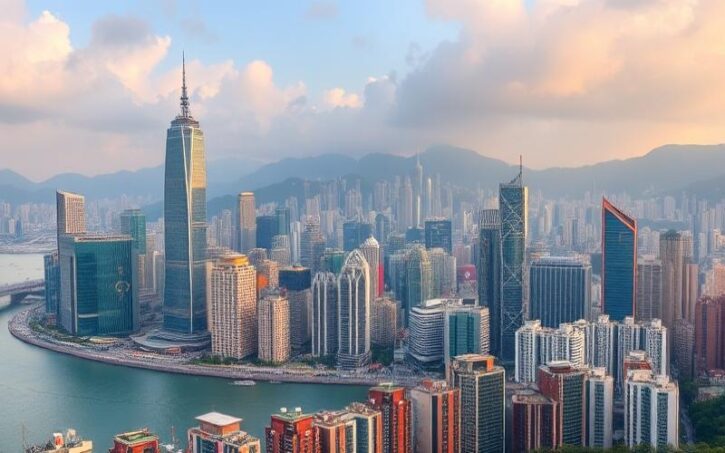
Moving to Hong Kong as an expatriate may seem like a fascinating adventure, but relocating to the other side of the world requires meticulous preparation. From the vibrant culture to unparalleled professional opportunities, Hong Kong offers a unique environment for those looking to enrich their international experience.
However, to ensure a smooth transition, it’s crucial to understand the nuances of housing, the healthcare system, and the local job market.
Whether you’re drawn to the towering skyscrapers, mouthwatering gourmet cuisine, or the harmonious blend of ancient traditions and modernity, our guide will help you navigate the many facets of life as an expatriate in this dynamic metropolis.
Preparation and Formalities Before Flying to Hong Kong
Essential Steps for Obtaining a Hong Kong Visa
Obtaining a visa is a crucial step in preparing for your stay in Hong Kong. Here are the main procedures to follow:
- Determine visa requirements based on your nationality and length of stay (many countries are exempt for tourist stays up to 90 days).
- For stays longer than 90 days or for work/study, prepare an application including: valid passport, application form, ID photo, proof of accommodation and financial resources, employment or admission letter.
- Submit the application to the consulate or via the Hong Kong Immigration Department’s online portal.
- Average processing time: 4 to 8 weeks depending on visa category.
- Estimated costs:
- Tourist/transit visa: free or approximately $30-50 USD depending on nationality.
- Work/study visa: 230 to 500 HKD.
- Family/reunion visa: approximately 230 HKD.
Vaccinations and Health Entry Requirements
| Required/Recommended Vaccine | Details |
|---|---|
| Hepatitis A | Recommended for most travelers |
| Hepatitis B | Recommended for extended stays or exposure risk |
| Typhoid | Recommended for long stays or rural areas |
| Polio | Adult booster recommended |
| Rabies | Recommended for outdoor activities |
| Influenza | Annual booster recommended |
| COVID-19 | Recommended but not required for entry |
| Yellow Fever | Certificate required only if arriving from at-risk countries |
| Routine (Tdap, MMR, varicella, meningitis, pneumococcal, shingles) | Up to date per national recommendations |
Health tips: wear long sleeves and use mosquito repellent (dengue, zika, malaria very rare but present).
No PCR test or quarantine currently required upon arrival, but systematic temperature checks are conducted.
Logistical Preparation Before Departure
Logistical preparation is essential for a successful stay in Hong Kong:
- Find temporary accommodation:
- Book in advance (hotels, serviced apartments, Airbnb) for 1-2 weeks.
- Compare neighborhoods based on proximity to transportation and shops.
- Open an international bank account:
- Schedule an appointment online with an international bank (HSBC, Standard Chartered, Bank of China).
- Prepare passport, proof of address, visa/residence permit, and proof of income.
- Option for multi-currency account or pre-opening from your home country.
- Moving organization:
- Inventory items to be shipped.
- Contact international moving companies for quotes (parcels, container, groupage).
- Check customs rules and restrictions (prohibited items, e-cigarettes, bladed weapons, quantity limits for certain products).
- Prepare a carry-on bag with documents, medications, valuables.
Health Insurance and Administrative Documents to Prepare
Health insurance and administrative documents are essential elements:
- Subscribe to international health insurance covering:
- Hospitalization, outpatient care, repatriation, civil liability, COVID-19 coverage.
- Compare offers (Aetna, AXA, Allianz, Cigna) and verify coverage in Hong Kong.
- Documents to gather:
- Passport (validity >6 months)
- Visa or residence permit
- International vaccination certificate
- Health insurance certificate
- Proof of temporary accommodation
- Round-trip flight ticket or proof of onward travel
- Bank statements and proof of income
- Employment contract or admission letter (if applicable)
- Certified copies of important diplomas and certificates
- Official translations of documents if necessary
Practical Tips
- Scan and save all important documents on a USB drive or secure cloud.
- Bring an electrical adapter compatible with British plugs (type G).
- Install useful mobile apps: transportation, translation, banking, health.
- Notify your embassy or consulate of your arrival and local contact details.
Good to Know:
To obtain a Hong Kong visa, allow for a processing time of 4 to 8 weeks and a cost of approximately $190 to $230 USD; make sure your vaccinations are up to date as some, like Hepatitis A, are recommended. Before departure, open an international account, find temporary accommodation, and subscribe to health insurance covering medical expenses in Hong Kong.
First Steps in Hong Kong: Procedures and Settlement
Settling in Hong Kong requires meticulous preparation and a thorough understanding of local administrative procedures. This special administrative region of China combines administrative efficiency with regulatory complexity, making rigorous planning before departure essential. Starting these procedures 2-3 months before departure helps avoid complications and greatly facilitates integration into this dynamic and cosmopolitan territory.
The Hong Kong visa system offers several options depending on the expatriate candidate’s profile. The Employment Visa is the main route for professionals and absolutely requires a job offer validated by a local employer. This visa typically requires an application including the official application form, passport copy, recent photographs, employment contract, financial proofs, and diplomas attesting to professional qualifications. Processing times usually extend between 4 and 6 weeks.
For spouses and children, the Dependent Visa allows joining the work visa holder, with the considerable advantage that the spouse can often work freely in Hong Kong without additional procedures. Young French nationals aged 18-30 can apply for the Working Holiday Visa (PVT), although places are limited each year and require promptness when registrations open.
Any stay exceeding 180 days requires obtaining the Hong Kong Identity Card (HKID) within 30 days of arrival, by appointment with immigration services. This local ID card becomes essential for accessing many services and simplifying daily procedures. Hong Kong residents holding a smart ID card can also register for the e-Channel service to benefit from automated immigration controls, particularly useful for frequent travelers.
Registration in the register of French nationals abroad, available online via the service-public.fr portal, is highly recommended to maintain contact with French consular services and be contacted in case of emergency.
Banking Services and Payment Methods
Opening a local bank account is a priority step upon arrival. Institutions like HSBC, Standard Chartered, and Hang Seng Bank are among the most sought after by the expatriate community. The procedure requires a valid passport, proof of local address (or alternatively an employer’s letter), and depending on the institution, presentation of a work visa. Some banks offer early opening services for non-residents, allowing procedures to begin even before actual settlement.
The Octopus card quickly becomes indispensable in daily Hong Kong life. This rechargeable prepaid card functions as a universal payment method in public transport (MTR subway, buses, ferries), shops, vending machines, and restaurants. Acquiring one in the first few days greatly facilitates transportation and everyday transactions.
Healthcare System
For healthcare services, Hong Kong has a dual system combining public and private sectors. The public system offers care at reduced rates but with sometimes significant waiting times, while the private sector ensures quick but expensive care. Subscribing to international health insurance before departure is an essential precaution, particularly to cover private hospitalization costs and specialized consultations. Employers frequently offer group coverage, but it’s advisable to verify the extent of coverage and consider supplements if necessary.
Real Estate Market
The Hong Kong real estate market has notable particularities and ranks among the most expensive in the world. Rents are mainly concentrated in the neighborhoods of Central, Mid-Levels, Causeway Bay on Hong Kong Island, and Tsim Sha Tsui, Kowloon Tong on the Kowloon side. Expatriates often prefer neighborhoods like Discovery Bay, Stanley, or Sai Kung for a more residential setting. Areas are measured in square feet, and housing is generally compact compared to European standards.
| Housing Type | Average Area | Indicative Monthly Rent |
|---|---|---|
| Studio | 300-400 sq ft | 12,000-18,000 HKD |
| 2-bedroom | 500-700 sq ft | 20,000-35,000 HKD |
| 3-bedroom | 800-1,000 sq ft | 35,000-60,000 HKD |
Lease agreements are typically established for two years with the possibility of early termination with a penalty. A deposit equivalent to two or three months’ rent is systematically required. Although it’s possible to search for housing remotely, visiting the premises before signing is strongly advised to avoid unpleasant surprises. Real estate agencies specializing in expatriate assistance greatly facilitate this search by offering selections tailored to needs and budgets.
Cost of Living
The cost of living in Hong Kong is among the highest in the world, particularly regarding housing which typically absorbs half of the monthly budget. Food costs vary significantly depending on choices: local restaurants and markets offer affordable options (30-50 HKD per meal), while Western chains and imported supermarkets display substantially higher prices. Public transport remains relatively affordable and remarkably efficient. Planning a minimum monthly budget of 30,000-40,000 HKD for a single person covers common expenses excluding housing.
Cultural and Professional Adaptation
Cultural adaptation in Hong Kong is generally smooth thanks to the city’s international character and widespread use of English in professional environments and central neighborhoods. Cantonese nevertheless remains the dominant language in daily life, and learning a few basics greatly facilitates interactions with the local population, particularly in markets, traditional restaurants, and administrative services.
Hong Kong professional culture values hierarchy, strict punctuality, and efficiency. Working hours frequently extend beyond European standards, with a less developed telecommuting culture compared to recent Western practices. The work-life balance differs significantly, requiring an adjustment period for newcomers.
Tax Aspects
Regarding taxation, Hong Kong applies a territorial system where only locally generated income is taxed, with progressive rates among the most advantageous internationally. However, French nationals remain liable for tax declarations in France according to their situation, making consultation with an international tax advisor essential to avoid double taxation and optimize the situation based on individual specifics (dual nationality, rental income in France, etc.).
The Hong Kong regulatory environment continues to evolve with measures aimed at strengthening the territory’s attractiveness. The government notably introduced in May 2025 a re-domiciliation regime allowing foreign companies to transfer their headquarters to Hong Kong while preserving their legal continuity, illustrating the authorities’ commitment to maintaining the territory’s competitiveness against regional competition.
To maximize the chances of successful settlement, seeking assistance from professionals specialized in international relocation adds considerable value, from housing search to complex administrative procedures, allowing focus on professional and personal adaptation rather than logistical aspects.
Good to Know:
Consider learning a few basic phrases in Cantonese to facilitate your integration, and explore neighborhoods like Causeway Bay or Tsim Sha Tsui to discover the local real estate market.
Cultural Immersion: Integrating into the Hong Kong Community
To fully immerse yourself in Hong Kong life, it’s essential to understand and respect local customs, while grasping the importance of languages and cultural diversity that shape daily life.
Local Customs and Important Traditions
Hong Kong is distinguished by a unique blend of traditional Chinese and modern Western influences. Here are some essential traditions to know:
- Tai Chi: Practiced early in the morning in parks, this blend of martial art and meditation is much more than just physical exercise; it’s a true social ritual for many residents, especially among older generations.
- Popular Rituals: Some neighborhoods host unusual practices like “Ngo Keng Kiu” under the Canal Road overpass in Causeway Bay, where you can find small altars tended by women performing rituals to ward off misfortune.
- Major Festivals: Celebrations like Chinese New Year (parades, lion dances), Dragon Boat Festival (boat races), Mid-Autumn Festival (mooncake tasting), and the Cheung Chau Bun Festival are opportunities to share local culture. These events often involve the entire community and are open to visitors.
- Feng Shui: This ancient practice influences urban architecture and interior design; it remains very present in professional or personal decisions.
| Tradition | Description | Where to Observe/Participate |
|---|---|---|
| Tai Chi | Morning group exercises | Public parks |
| Local Festivals | Parades, dances, fireworks | Central neighborhoods |
| Popular Rituals | Altars under bridges | Causeway Bay |
| Feng Shui | Influence on buildings | Urban architecture |
Spoken Languages
Cantonese is the dominant native language in Hong Kong. English remains very present thanks to the British colonial past; it’s commonly used in business, administration, and among a significant portion of the population. Learning a few common phrases in Cantonese greatly facilitates daily exchanges:
- Hello: 你好 (néih hóu)
- Thank you: 多謝 (dō jeh)
- Goodbye: 再見 (joi gin)
- Excuse me/Sorry: 唔該 (m̀h gōi)
Learning these basics shows your willingness to integrate and will be appreciated by your local interlocutors.
Cultural Diversity
Hong Kong is a cultural mosaic where the majority Han Chinese, international expatriate communities from around the world, and regional ethnic minorities coexist. This diversity is reflected in:
- The varied local cuisine ranging from traditional dim sum to Cantonese-Western fusion creations
- Buddhist or Taoist religious holidays celebrated alongside Christian holidays
- A rich festive calendar that includes both Christmas and Chinese New Year
Good to Know:
Learn a few basic phrases in Cantonese to facilitate daily interactions and participate in festivals like Chinese New Year to immerse yourself in local culture. Respect hierarchy in professional relationships and enjoy dim sum to discover Hong Kong cuisine in the company of new friends.

Cyril Jarnias is an independent expert in international wealth management with over 20 years of experience. As an expatriate himself, he is dedicated to helping individuals and business leaders build, protect, and pass on their wealth with complete peace of mind.
On his website, cyriljarnias.com, he shares his expertise on international real estate, offshore company formation, and expatriation.
Thanks to his expertise, he offers sound advice to optimize his clients' wealth management. Cyril Jarnias is also recognized for his appearances in many prestigious media outlets such as BFM Business, les Français de l’étranger, Le Figaro, Les Echos, and Mieux vivre votre argent, where he shares his knowledge and know-how in wealth management.





