
 Published on and written by Cyril Jarnias
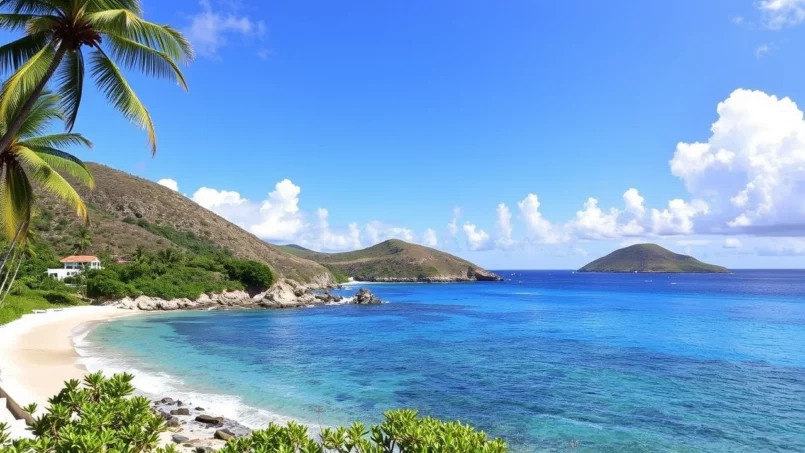
Antigua and Barbuda likes to present itself as the country of “365 beaches, one for every day of the year”. This slogan perfectly captures the spirit of this small Caribbean nation: a string of turquoise coves, but also a unique naval history, landscapes of mangroves and reefs, steep hiking trails, and a smaller sister island, Barbuda, still wild, known for its pink sand beaches and frigatebird sanctuary.
Beyond its postcard image, Antigua and Barbuda offers a rich heritage concentrated in a few key sites: Nelson’s Dockyard, the cliffs of Devil’s Bridge, the heights of Shirley Heights, and the lagoons of Barbuda. The territory is ideal for curious travelers, hikers, and lovers of maritime activities.
Nelson’s Dockyard and English Harbour, Historic and Maritime Heart
It’s hard to talk about must-see sites without starting with Nelson’s Dockyard in English Harbour. A UNESCO World Heritage site, this 18th-century port complex is presented as the only Georgian-era naval dockyard still in operation in the world. Today, it functions as a marina, an open-air museum, and a nerve center for sailing in the region.
At the peak of its activity, over three-quarters of the dockyard’s workforce were enslaved people.
The site doesn’t just live in the past. The marina now hosts some of the world’s most beautiful yachts and serves as a backdrop for major sailing competitions – Antigua Sailing Week, Antigua Classic Yacht Regatta, Royal Ocean Racing Club offshore races. During these events, Nelson’s Dockyard transforms into a festive village, with concerts, “Reggae in the Park” evenings, award ceremonies, and dinners under the palm trees.
Visitor access is managed by the National Parks Authority. A paid daily pass grants access to the Dockyard, as well as to the main batteries and viewpoints like Shirley Heights, Dow’s Hill, and Clarence House. A more expensive weekly pass allows for more comprehensive exploration of the national park, which spans approximately 16 square miles.
A National Park Studded with Forts, Trails, and Viewpoints
Nelson’s Dockyard National Park isn’t limited to the harbor basin. All around, the terrain is dotted with redoubts and military houses built to monitor comings and goings in the deep bays of English Harbour and Falmouth Harbour. This concentration of historic sites and spectacular landscapes makes it a central area for planning your stay.
Among the park’s main points of interest are: hiking trails, picnic areas, children’s playgrounds, wildlife viewing areas, and panoramic viewpoints.
| Site | Type | Main Feature |
|---|---|---|
| Nelson’s Dockyard | Historic Port & Marina | Still-active Georgian dockyard, museum, restaurants, hotels |
| Fort Berkeley | 18th-century Fort | First fortification (1704), view of the harbor entrance and Deep Bay in the distance |
| Shirley Heights | Former Battery & Lookout | Iconic panorama over English & Falmouth Harbours, Sunday evening parties |
| Dow’s Hill Interpretation Centre | Interpretation Center | Audio-visual presentations on Antigua’s history, fortified ruins |
| Clarence House | Georgian Residence | Former prestigious home, now a museum and event venue |
| The Blockhouse | Fort & Viewpoint | Panorama over the southeast coast, view of Eric Clapton’s villa |
| Galleon Beach | Beach & Trailhead | Snorkeling, access to Pillars of Hercules and Shirley Heights |
| Pigeon Point Beach | Beach | Bustling cove, access to Middle Ground Trail to Fort Berkeley |
These various points are connected by a network of trails – Jones Valley Trail, Lookout Trail, Carpenter Rock Trail, Middle Ground Trail – allowing you to combine swimming, hiking, and historical visits in the same day. The routes are short in distance but often steep, offering spectacular views of the coves and the anchored fleet.
Shirley Heights, the Mythical Panorama and Sunday Party
Perched at about 490 feet in elevation, Shirley Heights Lookout is probably the most photographed view in Antigua. From this former battery, transformed into a restaurant-bar and event space, the view spans 360° over English Harbour, Falmouth Harbour, and, below, Galleon Bay beach. In good weather, the silhouettes of other islands can be seen on the horizon.
The Shirley Heights site in Antigua takes its name from Sir Thomas Shirley, Governor of the Leeward Islands in the late 18th century, who oversaw the strengthening of the island’s defenses during the colonial wars. The military complex, built from 1788, included up to about fifty buildings in the 19th century before being abandoned. Integrated into the national park in the 1980s, it was restored and is now repurposed as one of the island’s most popular nightlife spots.
Two weekly events have made it a tourist institution: the grand Sunday sunset barbecue, and a quieter “Reggae Heights” evening on Thursdays. On Sundays, the site fills with visitors, residents, boaters, and regatta crews coming to listen to steel bands and reggae groups, toast with rum punch, and sample jerk chicken, burgers, and grilled corn. Admission to these events is paid, in addition to the park access fee for those without a pass.
The experience is as sensory as it is scenic: the sound of steel drums, the scents of grilled food, the changing light over the two natural harbors, the ballet of masts at anchor. The crowds can be impressive, lines long, and prices relatively high, but many consider this evening a must-do during a stay in Antigua.
Visitor to Antigua
For those who prefer tranquility, it’s possible to enjoy the site during the day, avoiding the evening crowds. Standard opening hours allow you to come admire the view, visit the restored buildings, and continue on to other sections of the park, like Dow’s Hill or the Blockhouse. It’s also possible to reach Shirley Heights on foot from Galleon Beach via a fairly steep hiking trail, appreciated by walkers.
Iconic Beaches of Antigua: From the Lively North to the Wild South
If the historic heritage gives Antigua its character, it is indeed its beaches that attract the majority of visitors. The island presents three coastal faces: a northwest facing the Caribbean Sea, with often calm waters and busy beaches; an east and southeast more exposed to the Atlantic, where waves are felt; and a green south, backed by hills and forests.
Several beaches consistently appear in recommendations, whether for swimming, snorkeling, water sports, or simply the atmosphere.
Dickenson Bay and the Northwest Coast, the Beachfront Showcase
Just a few miles from St. John’s, Dickenson Bay concentrates much of the activity on the northwest coast. This long stretch of sand about a mile long, lined with beach bars, water sports centers, hotels, and restaurants, is often presented as the “flagship” beach of Antigua. You’ll find establishments like Sandals Grande, popular restaurants, and even a floating bar offshore.
For those wanting a more relaxed vibe, the neighboring beach of Runaway Bay extends the coast in a slightly calmer setting, while still being close to amenities.
Discover the must-see beaches of Antigua, from the famous Dickenson Bay to more local gems.
A long sandy beach five minutes from the cruise port, dominated by the ruins of an 18th-century fort. Very popular with local families on weekends.
The spot offers a few beach restaurants and bars for dining and refreshments facing the sea.
Opportunity to explore the fort ruins, which offer an ideal vantage point over the entrance to St. John’s harbor.
The Bays of the West Coast: Calm Waters, Sunsets, and Snorkeling
Heading south along the Caribbean coast, a series of more intimate beaches follow one another, all accessible by road.
| Beach / Bay | Location | Tourist Highlights |
|---|---|---|
| Deep Bay | West, near St. John’s | Tranquil beach, wreck of the Andes accessible by snorkeling, overlooked by Fort Barrington |
| Hawksbill Bay & Eden Beach | West, peninsula west of St. John’s | Cluster of four beaches, including a naturist beach (Eden Beach) |
| Ffryes Beach | West, south of Jolly Harbour | Golden sand, calm water, popular beach restaurant, near an old windmill |
| Darkwood Beach | Southwest, near Jolly Harbour | Long ribbon of sand with lagoon in the background, leisure facilities, near Turners Beach |
| Turners Beach | Far southwest, towards Johnson’s Point | Highly-regarded beach, sheltered from waves, view of Cades Reef offshore |
| Valley Church Bay | West, near Jolly Harbour | Turquoise water, friendly atmosphere, beach bar |
| Jolly Beach | West, Jolly Harbour | Large, lively beach, many surrounding services |
| Coco Beach | West, near Jolly Harbour | Beach attached to a resort, famous panoramic restaurant overlooking the sea |
| Hermitage Bay | West, north of Jolly Harbour | Secluded cove, white sand, very pristine setting |
Deep Bay well illustrates Antigua’s ability to combine history and sea. The beach is dominated by Fort Barrington, an 18th-century fort accessible by a short climb. At the foot of the hill lies the wreck of the Andes, a three-masted sailing ship built in 1874 and sunk in 1905 in about thirty feet of water. The site is a delight for snorkeling enthusiasts.
For less crowded beaches and crystal-clear waters, favor the south of Antigua with Ffryes Beach, Darkwood, and Turners Beach, regularly ranked among the island’s most beautiful. Their atmosphere is more relaxed than the major tourist beaches of the north. For snorkeling and diving, the vast barrier reef of Cades Reef, offshore, is an exceptional playground.
The Green South: Carlisle Bay, Pigeon Point, Galleon Beach, Rendezvous Bay
On the south coast, the coastline becomes more dramatic. Wooded hills descend towards crescent-shaped bays, backed by forest or hiking trails.
Carlisle Bay is the most emblematic example of this configuration: a horseshoe-shaped bay, golden sand, coconut palms, hills covered in vegetation. The area is classified as a marine park, with several wrecks and rich marine life, including sea turtles. A luxury hotel occupies part of the bay, but the beach remains accessible and highly appreciated for snorkeling and swimming.
Further east, around English Harbour and Falmouth Harbour, two beaches stand out:
– Pigeon Point Beach, a small 200-meter cove, very popular with locals and boaters. You can see mega-yachts passing in the channel, and there are beach bars and renowned restaurants. The Middle Ground Trail, a path leading to Fort Berkeley, also starts from here.
– Galleon Beach, at the entrance to English Harbour, accessible by road or water taxi from the Dockyard. It’s an excellent snorkeling spot, with a small wreck and trail access to the spectacular Pillars of Hercules.
Finally, Rendezvous Bay plays the card of a well-kept secret. This south coast beach, with no direct road access, is earned on foot via a trail from Falmouth or Wallings Nature Reserve, or by private boat. Its isolation and preserved setting make it one of the favorite getaways for those seeking to escape the crowds.
Half Moon Bay and the Atlantic Coast
On the eastern side, facing the Atlantic, beaches are more exposed to the trade winds, with more pronounced waves. Half Moon Bay is arguably the most famous: a half-moon cove, with shades of blue, bordered by cliffs and integrated into a national park. One part of the bay is choppier, attracting thrill-seekers, while another, more sheltered part is suitable for snorkeling.
Not far away, Long Bay Beach combines very fine white sand with a coral reef located less than 50 yards from the shore. It’s one of the island’s best snorkeling spots, ideal for observing tropical fish without straying far from the beach. A few minutes away, the Stingray City attraction allows you to approach Southern stingrays on a sandy shoal, accessible only by boat in a controlled setting.
Spectacular Natural Sites: Devil’s Bridge, Pillars of Hercules, Great Bird Island
Beyond the beaches, Antigua offers several unique natural sites that are part of the “must-sees”.
Devil’s Bridge National Park, the Force of the Atlantic
At the eastern tip of the island, Devil’s Bridge is a natural arch carved into a limestone promontory by Atlantic waves. The site, classified as a national park, features blowholes where water spurts like geysers during heavy swells. The contrast between the deep blue ocean, the light rock, and powerful spray makes for an impressive scene, often included in tours combining beaches and heritage (for example with a visit to Betty’s Hope).
Pillars of Hercules, Limestone Cathedral and Underwater Garden
At the entrance to English Harbour, the Pillars of Hercules line up a series of limestone columns vertically carved into the cliff, forming a relief worthy of a monumental organ. Access is either by boat – many snorkeling excursions stop here – or on foot via a coastal trail from Galleon Beach or the Shirley Heights area, depending on the tide.
The site is renowned for its excellent snorkeling with rich marine life (tropical fish, sea turtles). The hike to reach it is considered one of the best loops, but some sections are rated “intermediate to advanced,” recommending it for experienced hikers.
Great Bird Island, Protected Cay and Refuge for Rare Species
Off the northeast coast, Great Bird Island embodies the wilder side of Antigua. This small island, located about three kilometers offshore, is part of the North East Marine Management Area, a group of small islands and cays surrounded by mangroves and reefs. Several eco-tours take visitors there for a day of snorkeling, light hiking, and wildlife observation.
The island is home to the world’s rarest snake, the non-venomous Antigua racer, whose population has been restored through conservation efforts. Its trails offer views over the archipelago of cays, and its beaches and seagrass beds are habitats for fish, rays, and turtles.
Hiking, Another Side of Antigua
Often described as one of the driest islands in the Caribbean, Antigua nonetheless has a surprisingly varied network of trails. The “Hike 365” guide, produced by a local sports association with the help of hiking clubs, systematically catalogues these routes for the first time, ranging from coastal walks to summit climbs.
There are no major multi-day crossings or treks with overnight stays in shelters; the itineraries are rather loops or out-and-back trips of a few kilometers, centered on a peak, a remote beach, or a historic site.
Discover a selection of the most iconic peaks and circuits, offering unique experiences to visitors.
A UNESCO World Heritage site, famous for its perched abbey and spectacular tides.
Mythical route traversing the highest passes of the French Alps, offering breathtaking landscapes.
Iconic volcano of the Chaîne des Puys, offering an exceptional panorama over the Auvergne from its summit.
Historic route taken by Napoleon on his return from Elba, linking the French Riviera to the Alps.
| Peak / Area | Approx. Altitude | Hike Characteristics |
|---|---|---|
| Boggy Peak (Mount Obama) | 402 m | Highest point in Antigua, multiple access points (Christian Valley, Cades Bay, Fig Tree Drive…) |
| Signal Hill (Wallings) | 370 m | Second highest summit on the island, at the heart of Wallings Nature Reserve, rainforest and panoramic views |
| McNish Mountain | 339 m | Fourth highest peak, trails from Bendals, dry waterfalls and lemongrass fields |
| Sugar Loaf | 309 m | Fifth highest peak, overlooking Falmouth Harbour, short loop with nice viewpoints |
| Sleeping Indian Range | ~ | Chain of three peaks (Leonard, Saddle, Flat Top), route reserved for experienced hikers |
| Mount Thomas | ~ | View over Five Islands and Hansons Bay, crossing of wetland areas, link to Pinching Bay |
The most well-known hiking areas include the Shekerley Mountains massif in the southwest, the “Green Corridor” – a green belt encompassing Wallings, Christian Valley, and Mount Obama – and the Nelson’s Dockyard area with its many trails.
Wallings Nature Reserve is the first community-managed protected area in Antigua and Barbuda. This NGO oversees 1,680 acres of rainforest and serves as an international case study on the involvement of local communities, especially women and youth, in combating climate change and preserving biodiversity.
Trails there lead notably to Signal Hill, but also to water points, the remote Rendezvous Bay beach, and other secondary peaks. An entrance fee is required, which contributes to trail maintenance and conservation projects.
For more technical hikes, local guides are highly recommended, sometimes mandatory, especially on routes crossing private property or leading to isolated sites like Pinching Bay, Green Island, or certain peaks. Several associations and specialized operators – Footsteps Rainforest Hiking Tours, 268 Trails, Wadadli Trail Blazers, among others – offer guided outings.
Barbuda, the Other Face of the Country: Lagoons, Pink Sand Beaches, and Frigatebirds
About thirty miles north of Antigua, Barbuda offers a striking contrast. Smaller, flatter, and much less populated (barely over 1,500 residents), it appears as a world apart, where sea and sand dominate the landscape. It’s often summed up by its endless ribbons of beach and its end-of-the-world atmosphere.
The Frigate Bird Sanctuary, Ecological Treasure of Codrington Lagoon
The most iconic site on Barbuda is undoubtedly the Frigate Bird Sanctuary, nestled in the vast Codrington Lagoon, within a national park and a Ramsar site (wetlands of international importance). It’s one of the largest frigatebird colonies in the entire western hemisphere, with several thousand nesting pairs, some even estimating the total population at nearly 100,000 individuals.
Frigatebirds, seabirds recognizable by their long wings and the spectacular red gular sac that males inflate to attract females, nest in the mangroves at the heart of the lagoon. The visit is done exclusively by boat with a licensed Barbudan guide, from the small dock in Codrington. An entrance fee is collected by the Barbuda Council, and only registered boats can navigate the lagoon.
The lagoon sanctuary hosts over 170 different bird species throughout the year.
Codrington Lagoon National Park, beyond the birds, also protects a mosaic of mangroves, seagrass beds, mud flats, beaches, and coral reefs, essential as a nursery for reef fish, lobster, hawksbill, and leatherback turtles.
Pink Sand Beaches and Endless Sand
Barbuda is often called the kingdom of beaches. The most striking feature is the pinkish hue of certain areas, due to fragments of crushed coral shells mixed with the white sand. The famous Pink Sand Beach, particularly around Low Bay and Palmetto Point, is regularly cited as one of the most spectacular beaches in the Caribbean.
The coast near the lagoon offers long, almost deserted sandy beaches, with turquoise water and a pink fringe, creating a sense of untouched nature. Accommodation is very limited, consisting of a few discreet boutique hotels, for a total of only a few dozen rooms on the entire island of Barbuda.
A little further south, Princess Diana Beach, named in homage to the princess who stayed there several times, offers another postcard setting, with intensely blue water and a highly-publicized beach restaurant, Nobu Barbuda, attached to a planned hotel complex project. The beach is also renowned for snorkeling.
Caves, Sinkholes, and Colonial Ruins
The interior of Barbuda also holds geological curiosities and traces of its history. Two Foot Bay National Park, on the wind-swept northeast coast, gathers high limestone cliffs pierced by caves, including Indian Cave. This cavity, over 30 feet high, houses the only known Arawak petroglyphs on the island, as well as bat colonies. Access is via dirt tracks, with a minimum of walking.
Nearby, Darby Sinkhole (or Darby Cave) is a vast circular collapse over 100 meters in diameter and 20 meters deep. Its floor hosts lush vegetation reminiscent of a “mini rainforest,” composed of palm trees, ferns, and populated by land crabs, land turtles, and sometimes deer. Access is via a hike starting at the ruins of Highland House, the former country house of the Codrington family who administered Barbuda.
On the south coast, the Martello Tower, a cylindrical defensive tower from the early 19th century, recalls the island’s strategic military importance during the British era.
Codrington, a Village Capital
Human life on Barbuda is concentrated around the village of Codrington, the only significant settlement on the island. There you’ll find a few schools, churches, a small hospital, basic shops, and dining spots. The atmosphere is very different from Antigua: slow pace, close-knit sociability, houses built gradually as means allow, without massive reliance on credit.
Most day trips combine the transfer from Antigua (by fast ferry, light aircraft, or helicopter), a stop in the village, a visit to the frigatebird sanctuary, a lunch of fish or lobster in a local restaurant, and then relaxation time on an iconic beach like Princess Diana Beach or a stretch of Pink Sand Beach. The rough roads, often dirt, are part of the experience.
How to Get Around: Transportation and Tours
The relatively small size of the islands shouldn’t make one forget the transportation constraints. In Antigua, most travelers rely on a mix of taxis, car rentals, and organized tours to connect beaches, forts, and national parks. Taxis easily serve all major sites – from St. John’s to English Harbour, from Dickenson Bay to Devil’s Bridge – but cumulative fares can quickly add up. Renting a car allows for free exploration between the various bays and historic sites, provided you’re comfortable with left-side driving.
Discover the different ways to explore Antigua’s treasures through organized tours by local agencies.
A full day to visit major sites: Nelson’s Dockyard, Shirley Heights, Devil’s Bridge, Betty’s Hope, with a beach break included.
Explore the exceptional underwater world on a dedicated trip to Cades Reef, Pillars of Hercules, or around Great Bird Island.
For walking enthusiasts, ascent of Boggy Peak, trails of the Shekerley Range, or discovery of the Wallings Nature Reserve.
Between Antigua and Barbuda, connections are made by fast ferry (about 90 minutes to two hours), small planes (10 to 15 minutes), or private helicopter. “Barbuda for a Day” tours often include all logistics: transfers, boat to the frigatebird sanctuary, transport on Barbuda’s tracks, and lunch. Costs remain relatively high, encouraging some travelers to dedicate a full day, or even an overnight stay, to fully enjoy the sister island.
A Cultural Heritage in the Background
Beyond the landscapes and activities, Antigua and Barbuda offers a rich historical and cultural thread that runs through many must-see sites.
In St. John’s, the baroque cathedral and the Museum of Antigua and Barbuda, housed in an old 18th-century colonial courthouse, illustrate key stages of the island’s history: Amerindian presence, arrival of Christopher Columbus, English colonization, development of sugar plantations, slavery, emancipation in 1834, and the march toward independence in 1981. The Betty’s Hope site, the first large sugar plantation with its restored windmill, complements this narrative by highlighting the reality of the slave system and the transformation of the landscape by the sugar industry.
In the south, the National Sailing Academy in Falmouth Harbour illustrates another aspect of identity: the contemporary passion for the sea and sailing, perpetuating in a very different register the historical link between the inhabitants and the water. Each spring, the major regattas – Antigua Sailing Week, Antigua Classic Yacht Regatta – transform the island into a world sailing capital, with races, concerts, and a cosmopolitan crowd gathering around Nelson’s Dockyard, Falmouth Harbour, and Shirley Heights.
Antiguan cuisine is a culinary fusion, with dishes like saltfish and fungee, pepperpot, rotis, goat water, and conch fritters. The iconic fruit is the Antigua Black Pineapple, known for being very sweet. For a gourmet experience, food tours in town and small restaurants near the beaches complement the visit of the sites.
Why These Sites Are Truly “Must-Sees”
Faced with the abundance of coves with poetic names, small islands, trails, and ruins in varying states of preservation, the “must-see” might seem like just a marketing notion. Yet, in the case of Antigua and Barbuda, certain sites stand out objectively due to their role in the country’s identity, their heritage value, or the uniqueness of the experience they offer.
They can be grouped into a few broad categories:
A Caribbean archipelago offering a diversity of experiences, from white sand beaches to historic sites and nature reserves.
Explore iconic places combining history and spectacular landscapes, like Nelson’s Dockyard, Shirley Heights, Fort Barrington, or Devil’s Bridge.
Relax on the beaches that define the archipelago, in Antigua (Dickenson Bay, Half Moon Bay…) and in Barbuda (Pink Sand Beach, Low Bay…).
Discover unique natural sites like the Pillars of Hercules, Great Bird Island, the Codrington frigatebird sanctuary, and the Two Foot Bay caves.
See the islands from another perspective by exploring the Shekerley Mountains chain, Mount Obama, Wallings Nature Reserve, and secondary peaks.
Experience local culture through its events (Shirley Heights evening, regattas) and museums (Dow’s Hill, Betty’s Hope, St. John’s museum).
Explored together, these sites paint a nuanced portrait of Antigua and Barbuda: a country of beaches, certainly, but also of fortified harbors, mangroves teeming with birds, dry and humid forests, small roads leading to villages, skies filled with sails during regattas, rocky cliffs sculpted by the Atlantic, rare snakes on a tiny island, sinkholes transformed into secret gardens at the heart of Barbuda.
The challenge isn’t to see everything, but to choose a theme – maritime, historical, naturalist, sporting – and weave it through these key places. It’s by moving from the joyful tumult of a barbecue at Shirley Heights to the muffled silence of a boat gliding among the frigatebirds of Barbuda that one truly understands why these tourist sites are, in their own way, must-sees in Antigua and Barbuda.
For the traveler
Disclaimer: The information provided on this website is for informational purposes only and does not constitute financial, legal, or professional advice. We encourage you to consult qualified experts before making any investment, real estate, or expatriation decisions. Although we strive to maintain up-to-date and accurate information, we do not guarantee the completeness, accuracy, or timeliness of the proposed content. As investment and expatriation involve risks, we disclaim any liability for potential losses or damages arising from the use of this site. Your use of this site confirms your acceptance of these terms and your understanding of the associated risks.

Cyril Jarnias is an independent expert in international wealth management with over 20 years of experience. As an expatriate himself, he is dedicated to helping individuals and business leaders build, protect, and pass on their wealth with complete peace of mind.
On his website, cyriljarnias.com, he shares his expertise on international real estate, offshore company formation, and expatriation.
Thanks to his expertise, he offers sound advice to optimize his clients' wealth management. Cyril Jarnias is also recognized for his appearances in many prestigious media outlets such as BFM Business, les Français de l’étranger, Le Figaro, Les Echos, and Mieux vivre votre argent, where he shares his knowledge and know-how in wealth management.





