
 Published on and written by Cyril Jarnias
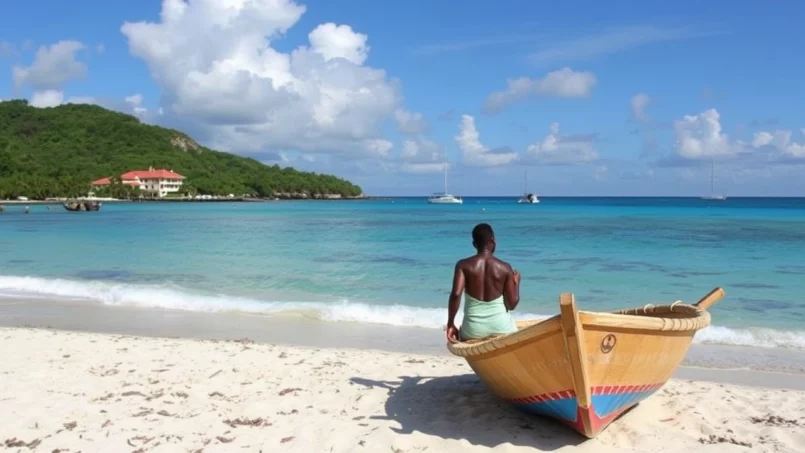
Moving to Antigua and Barbuda is a dream for many: picture-perfect beaches, favorable tax policies, sunny climate, and a laid-back atmosphere. But behind the image of a tropical paradise, expat life in this small Caribbean island nation also comes with very real constraints: risks of natural disasters, a sometimes high cost of living, dependency on imports, small job and business markets, and structural vulnerabilities.
This article analyzes the pros and cons of moving to Antigua and Barbuda, based on up-to-date data concerning the country’s economy, society, climate, and taxation.
A Small Island Nation… with Big Ambitions
Antigua and Barbuda is a small nation in the Eastern Caribbean, a member of the Commonwealth and CARICOM. The country primarily consists of two inhabited islands, Antigua – the most populous – and Barbuda, as well as the uninhabited islet of Redonda. The capital, St. John’s, concentrates a significant portion of the population and economic infrastructure.
Fixed exchange rate between the Eastern Caribbean Dollar (XCD) and the US Dollar (USD).
Antigua and Barbuda is often described as one of the most developed countries in the Caribbean, with a relatively high standard of living, an economy considered investor-friendly, and stable democratic institutions. But, like many small island states, the country also exhibits significant economic and environmental vulnerability, especially in the face of climate hazards.
Climate, Natural Setting, and Risks: Paradise… but in a Hazard Zone
The climate of Antigua and Barbuda is typically tropical maritime, with little temperature variation throughout the year: around 77–82°F (25–28°C) on average, relative humidity of about 75%, a dry season mainly in the early part of the year, and a wet season from late summer to fall. For an expat, this means almost permanent sunshine, constant warmth, and the possibility of living outdoors year-round.
But this idyllic setting comes with significant constraints, especially for those settling long-term.
An Exceptional Environment for Quality of Life
The tourist brochure images aren’t entirely false. The country boasts about 365 beaches, one for each day of the year, with turquoise waters, coral reef landscapes, and beautiful natural bays like English Harbour or Falmouth Harbour, key centers for international yachting.
For an expat, this translates into a very “outdoor” quality of life: sailing, diving, snorkeling, sport fishing, hiking, kitesurfing, windsurfing, golf, not to mention major events like Antigua Sailing Week or Carnival. The combination of scenery + climate + relaxed vibe attracts many retirees, digital nomads, and international professionals seeking a slower pace of life.
Crime is perceived as lower than in many other Caribbean countries, fostering a sense of safety, despite a recent increase in reports. The environment is generally considered welcoming for families, with local and expat communities described as warm.
Extreme Exposure to Natural Disasters
The downside of this tropical setting is very serious: Antigua and Barbuda is among the world’s most exposed countries to multiple natural hazards. Risk studies indicate that 100% of the territory and population are exposed to at least two major types of hazards (hurricanes, droughts, earthquakes, floods), and over 80% of GDP is potentially affected by these risks.
The country lies in the path of North Atlantic hurricanes. The official hurricane season runs from June to November, with a statistical peak between mid‑August and mid‑September. On average, there is about a 33% probability that a hurricane will pass within 120 miles of the islands each year – roughly one serious event every three years.
Hurricane Irma, in 2017, is the most significant episode in recent decades. It struck Barbuda with exceptionally violent winds, causing such destruction that over 80% of buildings and infrastructure were damaged or destroyed. The island had to be completely evacuated, and part of its territory became temporarily uninhabitable, leading to the forced displacement of 1.5% of the national population.
In addition to cyclones, the country is located in a high‑risk seismic zone (zone 4 on a scale of 0 to 4). A magnitude 7.5 earthquake already caused considerable damage in the 1970s. The risk of tsunamis, although infrequent, is also present, linked to the activity of an underwater volcano further south in the Lesser Antilles region.
For an expat, this means it’s not just a vacation backdrop, but an environment that requires real preparation: home and health insurance covering natural disasters, an evacuation plan, strict adherence to hurricane‑resistant construction standards, and psychological acceptance of this structural risk.
Water Stress and Climate Change Impact
Another point often discovered after moving: Antigua and Barbuda is among the most water‑stressed countries in the Caribbean. Daily demand for potable water is estimated at around 8 million imperial gallons, while production covers only about 5.5 million gallons. The deficit, close to 31%, is offset by a heavy reliance on desalination (over 80% of potable water produced).
Prolonged droughts, like the one from 2014‑2016, deplete surface water reserves and increase dependency on desalinated water, which is more expensive. This situation directly affects water costs, the reliability of its supply, and consequently, daily comfort and household bills.
Climate change will intensify these trends: high‑emissions climate scenarios predict an increase in average temperatures of about 2.8°C (5°F) by the end of the century and a possible 20% decrease in annual rainfall, with high uncertainty. “Very hot” days would become almost permanent, droughts more frequent and intense, and hurricanes fewer but potentially more violent.
In practice, for an expat establishing a primary or secondary residence, this means that issues of water storage, cisterns, rainwater harvesting, robustness of power supply, and air conditioning are not secondary but fundamental.
Economy, Jobs, and Cost of Living: Between Opportunities and Dependencies
Antigua and Barbuda displays flattering economic indicators for a country of less than 100,000 inhabitants: GDP per capita around $20,000–$24,000 depending on sources, recent strong growth (over 5% in 2024), and a favorable ranking in terms of quality of life in the region. The country indeed presents itself as one of the most attractive destinations in the Caribbean to live and invest.
A Service‑Oriented Economy… Especially Tourism
The downside of this success is the near‑monoculture of tourism. Tourism accounts for over 50% of GDP according to some sources, and up to 70–80% of economic activity when including direct and indirect jobs. The main visitor source markets are the United States, Canada, and Europe.
The country has many hotels, resorts, marinas, and yachting‑related services that offer jobs in hospitality and food service, tourism complex management, nautical services, and services for boaters. Opportunities also exist in financial services, construction, real estate, healthcare, education, and public administration.
Overview of the main promising sectors and alternatives for newcomers to the Monegasque job market.
A very concentrated market with real possibilities in hospitality, food service, yachting, healthcare, and finance.
Fewer opportunities in industry or technology‑intensive services.
Alternative chosen by many newcomers: creation of small tourism businesses, service companies, consulting, or online activities.
Another alternative: working remotely for foreign employers, outside the local market.
The country is also focusing on niches like medical schools for foreign students, business process outsourcing, and regional logistics, but these sectors remain complementary to the mega‑sector of tourism.
A Mixed Cost of Living
One of the key questions for an expatriation project is budget sustainability. Available data shows a nuanced picture: compared to the United States or the United Kingdom, Antigua and Barbuda can be significantly cheaper on some items (housing, domestic services, taxes), but more expensive on others (imported food, vehicles, electricity).
Monthly cost estimates vary by source but provide useful ballpark figures:
| Profile | Monthly Cost of Living (excluding rent) – USD (estimates) |
|---|---|
| Single Person | ~1,100 to 1,150 |
| Family of 4 | ~2,700 to 3,900 |
To these amounts, add rent. For example:
| Type of Housing | Average Monthly Rent (USD, ballpark) |
|---|---|
| 1‑bedroom in city center | ~700 to 1,000 |
| 1‑bedroom outside center | ~500 to 750 |
| 3‑bedroom in city center | ~1,450 to 1,850 |
| 3‑bedroom outside center | ~880 to 1,200 |
Variations come from the neighborhood (St. John’s vs. rural areas), proximity to beaches and tourist hubs (English Harbour, Jolly Harbour, Dickenson Bay), or the level of luxury (villa with pool vs. modest apartment).
Overall, international indexes rank Antigua and Barbuda as slightly cheaper than the global average, and significantly cheaper than major North American or European cities. But for a developing country, the cost of living remains high, largely due to import dependency: many food, electronic, or automotive products face significant import duties.
Food, Transport, and Services: Where It Bites, Where It Breathes
For the food basket, staples (rice, flour, bread, milk, vegetables) and local produce (tropical fruits, some vegetables, fish) remain relatively affordable, especially if shopping at markets and farmers’ stalls. On the other hand, imported products (meats, cheeses, processed Western goods) can cost much more than in Europe or the US.
A meal at a small local restaurant remains affordable, while a full dinner at an upscale establishment or resort quickly reaches prices comparable to major Western cities. Local alcoholic beverages (beers, rum) are relatively cheap; cocktails at beach resorts come at a premium.
The network of private buses and minibuses is extensive and economical but can lack punctuality and comfort. Many expats therefore choose to buy a car, which entails significant costs: high import duties and taxes on vehicles, as well as significant fuel costs in the monthly budget.
Regarding energy and utilities, electricity, water, and air conditioning bills can climb quickly, especially in poorly insulated homes or those with heavy AC use. High‑speed fixed internet packages, while more affordable than before fiber rollout, remain relatively expensive as a proportion of the average local income.
For an expat with foreign‑source income (pension, salary from a foreign company, capital income), the overall cost generally remains reasonable. However, an expat seeking to live solely on local income will need to be cautious, as average salaries do not offer the same purchasing power as in North America or Europe.
Taxation: A Paradise for Wealthy Residents and Investors?
One of the most powerful arguments for expatriating to Antigua and Barbuda lies in its tax regime, which is particularly attractive for high‑income individuals or those with significant assets.
No Income, Wealth, or Inheritance Tax
Antigua and Barbuda does not levy personal income tax – income tax was abolished in 2016. Tax residents do not pay tax on their worldwide income, whether from salaries, dividends, interest, or capital gains, and there is no wealth tax, inheritance tax, or gift tax.
For a retiree with a substantial financial portfolio, or an entrepreneur receiving high dividends from international companies, this is a massive advantage. Similarly, capital gains on asset sales (including real estate) are not taxed as such, although stamp duties and certain specific taxes apply to transactions.
Local VAT, Indirect Taxes, and Property Taxes
The absence of direct taxation does not mean a “tax‑free” environment. Antigua and Barbuda applies a sales tax‑type VAT, called the Antigua and Barbuda Sales Tax (ABST). The standard rate is 15%, with a reduced rate of about 14% for hospitality and food service, and 0% rates for certain essential goods (exports, basic foodstuffs, electricity, fuel, water).
Businesses, local or foreign, as well as expat entrepreneurs, must register for ABST if their annual turnover exceeds a certain threshold. This formality is an essential step in managing their business.
Real estate owners pay a moderate property tax, generally between 0.1% and 0.5% of the estimated property value. However, for non‑residents owning undeveloped land, much higher rates can apply (up to 10–20% of the value) to discourage passive land speculation.
Percentage of the property value generally representing the cost of the special landholding license for foreigners upon purchase.
Tax Residence and Special Programs
To be considered a tax resident, obtaining a visa or residence permit is not sufficient. Criteria include physical presence of at least 183 days per year, a registered address, and integration into the country’s economic and social life. Once this status is acquired, the absence of worldwide income tax becomes fully applicable.
Antigua and Barbuda offers a flat‑rate tax residence program for high‑income individuals. It requires a fixed payment of USD 20,000 per year for individuals earning at least USD 100,000 annually, in exchange for a limited physical presence requirement (e.g., 30 days per year). Although the regulatory framework is still evolving, this scheme represents a potentially very attractive option for international entrepreneurs and executives looking to optimize their tax burden.
The Special Case of US Citizens and Other Countries with Worldwide Taxation
For citizens of countries applying worldwide taxation (notably the United States), expatriating to Antigua and Barbuda is not enough to escape tax obligations to the country of origin. US citizens must continue to declare their worldwide income to the US tax authority (IRS), even as tax residents of Antigua and Barbuda.
They can use mechanisms like the Foreign Earned Income Exclusion or the Foreign Tax Credit; but the absence of local income tax limits the usefulness of the tax credit, and does not eliminate the need to file annual forms (tax return, FATCA forms, FBAR for foreign bank accounts, etc.).
For citizens of countries with tax treaties or purely territorial systems, the benefits of expatriation can be more immediate, provided they fully understand the anti‑abuse rules and residence definitions of their home country.
Citizenship and Residence by Investment: An Expatriation Accelerator
Antigua and Barbuda is one of the Caribbean states that established a Citizenship by Investment Program (CIP) early on. For individuals with capital, this mechanism constitutes a particularly fast track for expatriation and comes with many practical advantages.
The Main Principles of the Program
The Citizenship by Investment Program allows a foreign investor and their family to obtain Antiguan citizenship in exchange for a significant economic contribution to the country. It is legally based on a 2013 law and regulations updated regularly.
Applications are processed by a specific government unit (Citizenship by Investment Unit) and must be submitted through an authorized agent, with no direct application. The process includes an in‑depth due diligence check, background verification (criminal record, health, source of funds), and a mandatory interview for adults.
Several investment options exist, with minimum thresholds:
| Investment Option | Minimum Amount – USD (Ballpark) | Key Conditions |
|---|---|---|
| Contribution to the National Development Fund | ~230,000 for a single applicant or family of 4 | Non‑refundable donation |
| Donation to the University of the West Indies Fund | ~260,000 for a family of 6 or more | Includes some fees; one‑year scholarship for a family member |
| Purchase of Approved Real Estate | Starting at approx. 300,000 | Property must be held for at least 5 years |
| Investment in an Approved Business | 1.5 million solo / 5 million group | Targeted sectors (tourism, agriculture, industry, tech) |
In addition to these amounts, there are government processing fees, due diligence fees, passport fees, legal fees, and since late 2023 a paid interview for each adult.
The processing time for an application is generally between 3 and 6 months.
Once citizenship is granted, the passport is issued for 5 years (renewable thereafter every 10 years), provided a minimum physical presence requirement is met: spending at least 5 days in Antigua and Barbuda within the first 5 years. Failure to meet this requirement can theoretically lead to revocation of citizenship.
Practical Benefits for the Investor Expat
The benefits for new citizens are numerous:
– right to reside, work, and study in Antigua and Barbuda,
– visa‑free or visa‑on‑arrival access to over 140–150 countries, including the UK, Schengen Area, Hong Kong, Singapore, and many Caribbean states,
– possibility to more easily apply for a long‑term visitor visa to the United States,
– tolerance of dual citizenship: no obligation to renounce original citizenship,
– favorable tax regime described above, with no worldwide income tax,
– easier integration into regional structures (CARICOM, OECS),
– possibility for a wide circle of dependents to be included in the application (spouse, dependent children up to age 30, parents, grandparents, unmarried siblings, within certain limits).
This program offers a secure residence in a stable, sunny environment, tax optimization, and better international mobility. However, it requires a significant financial investment and compliance with constraints, such as proving the legal origin of funds and having a clean criminal record.
Limitations and Constraints
This system is not without its gray areas or risks. Like all citizenship‑by‑investment programs, it is under close scrutiny from international partners, especially regarding anti‑money laundering and security. The country has strengthened its vetting procedures and regularly updates its list of restricted nationalities (countries considered high‑risk for security or under sanctions).
Candidates must factor in regulatory risk: possible tightening of conditions, increases in minimum amounts, or changes in tax policy over time. Moreover, obtaining citizenship does not automatically equate to tax residence; rules on physical presence and economic substance remain determining factors.
Finally, distinguishing a sincere expatriation project from a mere “passport of convenience” logic is important: actually living in Antigua and Barbuda means embracing its day‑to‑day realities, not just collecting mobility and tax benefits.
Infrastructure, Health, and Education: A High Level… for a Small Island
Beyond taxation, the decision to expatriate hinges on very concrete elements: quality of healthcare, quality of schools, internet connectivity, infrastructure safety. On these aspects, Antigua and Barbuda ranks rather high in the Caribbean, while still falling short of standards in major Western powers.
Healthcare System: Solid Regionally, but with Limitations
The public healthcare system is largely state‑funded, with about 3% of GDP devoted to health. The main public hospital, the Sir Lester Bird Medical Centre in St. John’s, is a modern facility with about 185 beds, offering a wide range of services (emergency, surgery, maternity, intensive care, oncology, dialysis, etc.). It is complemented by a well‑equipped private clinic, an elder care center, a small hospital facility on Barbuda, and a dense network of primary care health centers.
National residents are covered by the Medical Benefits Scheme, which covers part of care and medication costs, especially for chronic diseases. For expats, coverage depends on status: some employers offer local insurance, but most new arrivals take out private international insurance. It is recommended that this insurance includes a medical evacuation clause to specialized centers (like Barbados, Miami, or Puerto Rico) for complex medical conditions.
For long‑term expatriation, it’s important to keep in mind that while general medicine and emergency care are solid on a Caribbean scale, some highly specialized procedures and cutting‑edge therapies will require a transfer out of the country. Wait times in the public sector can also be significant, pushing expats towards the private sector when possible.
Education: A Decent Offering and Some International Schools
Access to education is free and compulsory from ages 5 to 16 in the public system, aligned with the British model. The country has a relatively high‑performing education system regionally, with a literacy rate close to 99%.
For expat children, it is mainly the international and private schools that draw attention. These include institutions offering programs like the International Baccalaureate or North American curriculum, with small class sizes and a multicultural environment. Tuition fees are high by local standards, however, potentially reaching several thousand dollars per year.
The country has a campus of the University of the West Indies and private medical schools with an international focus. However, many Antiguan students pursue higher education in the UK, US, or Canada. For expat children, considering university studies abroad therefore often remains the norm.
Connectivity and Telecommunications: A Surprisingly Well‑Equipped Country
Regarding internet access, the country has made rapid progress. A fiber‑to‑the‑home infrastructure now covers almost all households on the main island, enabling speeds of up to several hundred megabits per second for residential users. 4G mobile networks cover about 99% of the population, and work to further improve international capacity (new submarine cables, arrival of satellite services like Starlink) is underway.
Prices remain relatively high compared to the average local income, but for an expat, the offers are generally acceptable for intensive professional use, including remote work. Occasional outages during bad weather or the hurricane season remain a risk to factor in, but the infrastructure’s resilience is improving.
Safety, Daily Life, and Social Integration
Safety and the quality of social life matter greatly in choosing an expatriation destination. In this regard, Antigua and Barbuda presents a largely reassuring face, provided one remains clear‑eyed about certain trends.
Crime: Low Regionally, with a Relative Increase
Compared to other Caribbean destinations, Antigua and Barbuda is often cited as a relatively safe country. Serious violence remains concentrated in certain neighborhoods and contexts, and the tourist and residential areas favored by expats are largely spared from the harshest forms of crime.
The most frequent type of incident remains opportunistic crime (theft, burglary, pickpocketing), requiring basic precautions. Although infrequent, homicides have seen a recent increase, fueling a local debate on safety and police effectiveness.
For expats, living in secure residential areas, sometimes within gated communities around marinas or golf courses, offers a particularly protective environment, especially for families with children. The flip side is a certain risk of living in an “expat bubble,” with more superficial cultural integration.
Integration, Culture, and Pace of Life
One of the great strengths of Antigua and Barbuda is the ease of social integration. The country already has a diverse expat community (about 5% of the population), with a notable presence of North Americans and Europeans. Many foreign residents report coming for a few months… and ending up staying for years.
The culture is a blend of British heritage, Afro‑Caribbean traditions, and contemporary influences. The year is punctuated by major events like Carnival, sailing festivals, and sporting competitions. English, as the common language, facilitates interaction with the local population and other expats.
The pace of life, slower, more “relaxed” than in Western Europe or North America, is both an asset and a challenge. It helps reduce stress, but can also frustrate newcomers accustomed to different standards of efficiency and punctuality. Learning to accept this local temporality – including for administrative procedures or certain services – is an integral part of the adaptation process.
Conclusion: For Which Profile is Antigua and Barbuda a Good Expat Choice?
From a distance, Antigua and Barbuda ticks many boxes: dream climate, political stability, very favorable taxation, exceptional natural setting, good‑quality infrastructure for a small island, English language, direct air access from North America and Europe. Upon closer inspection, the drawbacks are nevertheless very real: extreme vulnerability to climate hazards, a limited job market outside tourism, high cost of many imported goods, limited specialized healthcare options, reliance on small‑scale infrastructure.
In practice, the country appears particularly well‑suited to certain expat profiles:
– Retirees with stable foreign‑source income (public or private pensions, annuities, investment income), seeking a sunny, tax‑attractive environment with a pleasant social life and a reasonable cost of living relative to their resource level.
– International investors and entrepreneurs looking to benefit from a light‑touch tax environment, a citizenship or residence‑by‑investment program, and a dynamic tourism ecosystem to create or develop activities (hotel, food service, nautical services, real estate, services for expats).
– High‑income remote workers and “digital nomads”, enjoying flexible employment with a foreign employer or international clientele, for whom internet connectivity, safety, and quality of life outweigh the size of the local job market.
– International families attracted by an English‑speaking environment, the possibility of schooling in international schools, and a living setting safer and more serene than in some major cities.
Conversely, Antigua and Barbuda is less suitable for:
– professionals dependent on a diversified local job market (industry, R&D, major tech services),
– expats with modest incomes and no clear job prospects locally,
– individuals requiring immediate and permanent access to highly specialized hospital facilities.
Ultimately, the advantages and disadvantages of expatriating to Antigua and Barbuda form a coherent whole: a country both privileged by nature and highly exposed, tax‑welcoming yet economically dependent, comfortable for international incomes but potentially challenging for local incomes. For those who take the time to measure its realities – and accept its structural fragilities – Antigua and Barbuda can, over time, offer much more than a simple vacation backdrop: a genuine life project.
Disclaimer: The information provided on this website is for informational purposes only and does not constitute financial, legal, or professional advice. We encourage you to consult qualified experts before making any investment, real estate, or expatriation decisions. Although we strive to maintain up-to-date and accurate information, we do not guarantee the completeness, accuracy, or timeliness of the proposed content. As investment and expatriation involve risks, we disclaim any liability for potential losses or damages arising from the use of this site. Your use of this site confirms your acceptance of these terms and your understanding of the associated risks.

Cyril Jarnias is an independent expert in international wealth management with over 20 years of experience. As an expatriate himself, he is dedicated to helping individuals and business leaders build, protect, and pass on their wealth with complete peace of mind.
On his website, cyriljarnias.com, he shares his expertise on international real estate, offshore company formation, and expatriation.
Thanks to his expertise, he offers sound advice to optimize his clients' wealth management. Cyril Jarnias is also recognized for his appearances in many prestigious media outlets such as BFM Business, les Français de l’étranger, Le Figaro, Les Echos, and Mieux vivre votre argent, where he shares his knowledge and know-how in wealth management.





