
 Published on and written by Cyril Jarnias
Expatriating to Greenland isn’t just changing countries—it’s stepping into another world. Between spectacular landscapes, a community-oriented lifestyle, a very specific job market, and an unforgiving Arctic climate, this destination attracts a very particular profile of expatriates. But behind the dream of wide-open spaces and northern lights, daily reality is demanding, sometimes harsh, and requires careful preparation.
This article details the key aspects to know before expatriating to Greenland, covering society, economy, cost of living, health, housing, residency formalities, and cultural context.
A unique territory in the world, between ice and political autonomy
Greenland, officially Kalaallit Nunaat, “land of the Greenlandic people,” is the world’s largest island. Its territory covers approximately 2.17 million km², of which nearly 94 to 98% is covered by a multi-millennial ice sheet. In practice, life is concentrated along a thin coastal strip, especially in the southwest, where towns and villages are located.
The population is very small, around 56,000 to 57,000 inhabitants, making it the least densely populated country in the world. The capital, Nuuk, has about 18,000 residents. The rest of the population is scattered across about thirty towns and sixty small coastal settlements, some extremely isolated, like Ittoqqortoormiit on the east coast, accessible most of the year only by helicopter.
Greenland is an autonomous territory of Denmark, with self-government since 1979 and an enhanced Self-Government regime since 2009. While its parliament manages internal affairs, foreign policy and defense remain under Copenhagen’s purview. All major Greenlandic political parties aim for independence, but the timeline is complicated by heavy economic dependence on Danish subsidies.
For an expatriate, this means living in a politically stable territory with functioning institutions and a high level of public services, but one that remains in transition, with intense debates about decolonization, social justice, and resource extraction.
Spectacular nature, extreme isolation: asset or handicap?
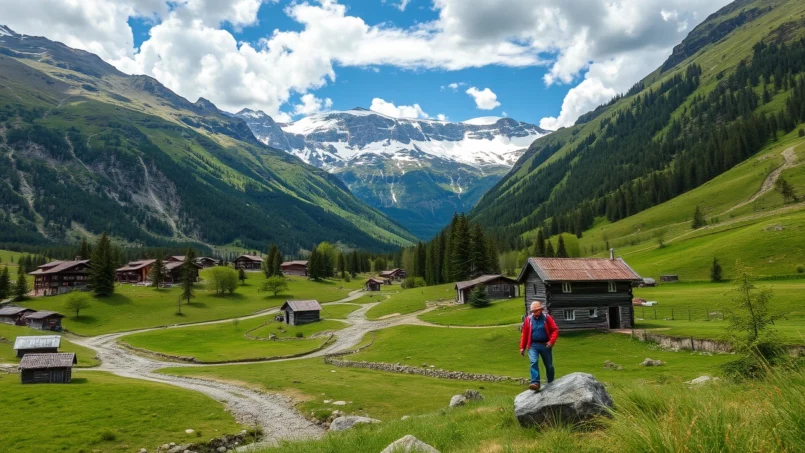
The first argument in favor of Greenland is obvious: nature. Deep fjords, active glaciers, giant icebergs, the ice sheet, mountains, sea ice, northern lights in winter and midnight sun in summer create a backdrop that few places on Earth can offer.
Outdoor activity possibilities are immense: hiking, kayaking, fishing, sport hunting (within a highly regulated framework), snowmobiling, skiing, ice climbing, dog sledding, whale watching, seal and bird watching, exploring fjords like Ilulissat, a UNESCO World Heritage site. The world’s largest protected area, Northeast Greenland National Park, covers over 970,000 km².
Average winter temperature in some regions of Greenland, in degrees Celsius.
Isolation is another defining feature: there are virtually no roads connecting towns. Intercity travel relies on planes, helicopters, and boats. Connections are expensive, subject to weather disruptions, and logistical breakdowns are not uncommon. In some villages, a supply ship only calls twice a year. International travel is mainly via Denmark or Iceland, increasing the cost of trips to Europe or elsewhere.
For some, living in an isolated place offers benefits like a pristine environment, low crime, a slow pace of life, close social relationships, and extremely pure air. For others, it becomes a burden, leading to a feeling of confinement, difficulty traveling spontaneously, limited choice of consumer goods, and geographical distance from family abroad.
Greenlandic society is predominantly Inuit: about 89 to 90% of the population identify as Kalaallit (Greenlandic Inuit), with the remainder mostly Danish. The culture emphasizes community, sharing, cooperation, and a strong connection to nature and the sea. Traditional practices—hunting, fishing, kayaking, drumming, oral storytelling, kaffemik (open gatherings with coffee, cakes, and sometimes local dishes)—remain central, even if Danish and Western modernity are very present in larger towns.
For an expatriate, integration into the Greenlandic community comes through a genuine interest in local culture. It is important to respect social norms, such as low-conflict communication, some reserve in expressing emotions, and valuing patience and harmony. Learning some basics of Greenlandic or Danish is also much appreciated. Many expatriates report quickly feeling integrated into their work team or neighborhood, especially in smaller localities where community bonds are strong.
However, behind this image of a close-knit community lie significant fragilities. The country has one of the highest suicide rates in the world, especially affecting young men aged 15–24. Public health studies show a very high prevalence of traumatic childhood experiences (violence, household alcoholism, sexual abuse), problematic alcohol consumption, domestic violence, and growing social inequalities depending on place of residence, education level, and employment. More than a third of young people report having grown up in an environment marked by alcohol, violence, or abuse, which sharply increases their risk of psychological distress.
Beyond the landscapes, Greenland presents complex social realities that impact daily life and pose a challenge for expatriate professionals.
Social services are under heavy pressure, requiring resources and constant adaptation.
Needs for mental health support and care are significant within communities.
Some communities face delicate family situations requiring specific support.
For professionals in health, social work, or education, it is a demanding challenge but one where the impact is significant.
Languages and integration: the weight of Greenlandic and Danish
One of the main filters for integration remains language. Greenlandic (Kalaallisut) is the official and majority language, with several regional variants. It is an Inuit language, very different from Indo-European languages, with a complex morphological structure and an extremely rich vocabulary, especially for describing ice, snow, sea, and weather.
Danish is the second major language of public life: administration, media, secondary and higher education, business world. Historically, assimilation policies favored Danish over Greenlandic, before a linguistic revitalization movement reversed that trend after self-government was established. Today, the official goal is a predominantly Greenlandic-speaking system, but bilingualism is a daily fact, especially in Nuuk.
For an expatriate, the situation is ambivalent. In some sectors—particularly tourism, parts of Arctic research, or internationally oriented companies—English may suffice at work, at least initially. However, administrative life, public services, children’s schooling, and interactions with many colleagues or neighbors go through Greenlandic and/or Danish. Without one of these languages, the feeling of staying on the sidelines is common.
Expatriate in Greenland
Learning Greenlandic is demanding but valued locally. Making the effort to learn a few words, understand pronunciation, and some everyday expressions is often seen as a sign of respect. Danish, on the other hand, is more accessible for many Europeans and remains an important key for those aiming for a long career in the country or for higher education locally or in Denmark.
Job market: small opportunities, targeted needs
With about 56,000 inhabitants and a very concentrated economy, Greenland does not offer a diverse job market like a major European metropolis. However, there are genuine niches for specific profiles, and some expatriates can find stable and well-paid employment.
The economic pillars are fishing and seafood processing (over 90% of exports), public administration, construction, health, education, and a developing tourism sector. Emerging sectors include mining (rare earths, uranium, various minerals), energy (hydropower, wind projects), and scientific research on climate, the Arctic, and polar ecosystems.
Companies like Royal Greenland regularly recruit foreign workers for fish processing plants, especially from Asia (China, Philippines). Significant wage gaps compared to home countries (sometimes 10:1 for Filipinos) explain this appeal. In other sectors—health, construction, engineering, tourism/hospitality, education—the demand for qualified professionals is chronic, especially since the health system and schools often lack permanent staff.
For an expatriate, it is realistic to secure a job offer before arriving. Work and residence permits are generally tied to a specific contract and employer, valid for up to two years and renewable. Changing jobs often requires a new permit application. Citizens of Nordic countries (Denmark, Norway, Sweden, Finland, Iceland) have free movement and can live and work without a permit, unlike others for whom the framework is strict.
The work pace is generally at least 40 hours per week, sometimes more depending on the sector, with strong seasonality in construction and tourism. Conditions are governed by Greenlandic collective agreements, and workplace safety (especially zero tolerance for alcohol and drugs at work) is taken seriously, which reassures some expatriates.
Legal framework for expatriation: visas, permits, and residency
Greenland is not part of the European Union or the Schengen Area, even though most flights go through Denmark or Iceland. This means a Schengen visa gives neither the right to stay nor the right to work in Greenland. The territory has its own migration regime, administered by Denmark on behalf of Greenlandic authorities.
The main outlines are as follows:
Citizens of Nordic countries have full freedom of settlement and work. For everyone else, including EU/EEA nationals, a residence permit (and often a work permit) is required. Some may enter without a visa for a short stay (max 90 days), but this does not authorize work. For a long stay (employment, studies, family reunification, retirement), a permit application is mandatory.
A few permit categories are particularly relevant for expatriates:
– Standard work and residence permit, tied to a full-time job offer meeting local salary levels;
– Study permit, for students admitted to a full-time program (University of Greenland, local higher education, or exchange stays);
– Family reunification, to join a spouse, partner, or parent already established;
– Specific permit for health professionals, with a simplified procedure under cooperation agreements;
– Retirement permit, for people over 60 who can prove financial self-sufficiency (a fairly rare case in practice).
The permit application is made through the Danish Agency for International Recruitment and Integration (SIRI) or the Danish Immigration Service, in coordination with the Greenlandic government (Naalakkersuisut). Processing times are about three months for a first permit and can be longer for a permanent residence application. There is no specific visa for digital nomads.
An important point to keep in mind: property ownership does not grant any special residence rights. Greenland’s land tenure system, where land is collectively owned and managed by municipalities, prohibits private ownership of the land; you can only own buildings, based on a land-use concession. This also curbs foreign speculation, which is monitored by authorities, with rules since 2025 restricting purchases to Danish citizens or people who have paid taxes in Greenland for at least two years, unless exempted.
Housing: scarcity, high cost, and strong dependence on employer
For virtually all newcomers, the housing issue is the number one practical problem. Supply is limited, especially in larger towns like Nuuk or Ilulissat, where demographic pressure (internal rural exodus, attractiveness of public sector jobs, tourism growth) combines with very high construction costs and a short building season.
Greenland’s housing system combines a public housing stock and private ownership of buildings (land remains public). A large portion of housing is managed by the state, municipalities, or public companies for their staff, via organizations like INI A/S or Iserit. This dependence and scarcity lead to very long waiting lists, exceeding ten years for a municipal apartment in Nuuk.
For expatriates, a few common configurations arise:
Overview of the main housing options available, from temporary arrival to permanent settlement.
Very common in health, construction, education, or certain industries (fishing, factories, tourism). Can be a private room in a shared house or a dedicated apartment.
Furnished housing for newcomers awaiting a permanent solution. No rent is due, but the benefit in kind is taxable.
A possible but rare and expensive option, especially for small apartments in city centers.
Generally reserved for long-term residents, due to cost, restrictions for non-residents, and an illiquid market (resale often takes time).
A few orders of magnitude (in Danish kroner, DKK) illustrate the constraint:
| Type of housing (Nuuk) | Average monthly rent (DKK) |
|---|---|
| 1-bedroom apartment in city center | ~ 6,700 (range 4,000–10,000) |
| 1-bedroom apartment outside center | ~ 6,000 (range 2,360–8,260) |
| 3-bedroom apartment in city center | ~ 10,500 (range 6,000–16,300) |
| 3-bedroom apartment outside center | ~ 10,200 (range 6,000–16,300) |
To these rents, add significant utilities: heating, electricity, water, waste, sometimes internet. The Arctic climate requires heavily insulated buildings, but does not eliminate energy costs. In practice, access to stable housing is so difficult that it is strongly advised not to expatriate without a pre-arranged accommodation solution.
Cost of living: an expensive daily life, dominated by imports
Greenland is known to be very expensive, and available data confirms that perception. Isolation, lack of significant agricultural production (less than 1% of land is suitable for grazing), logistical costs, and small market volumes drive up the price of nearly all consumer goods.
Estimates provide the following budgets:
| Profile | Average monthly cost (excluding rent) |
|---|---|
| Single person | ~ 15,700 DKK |
| Couple | ~ 26,000 DKK |
| Family with children | ~ 30,000–38,000 DKK |
| Student | ~ 13,000 DKK |
| Average net monthly salary | ~ 27,000–28,800 DKK |
Residents are estimated to spend on average more than 80% of their income on current expenses. The typical budget structure is instructive:
| Expense category | Average share of budget | Average monthly spending |
|---|---|---|
| Housing | ~ 28% | ~ 6,100 DKK |
| Food | ~ 26% | ~ 5,000 DKK |
| Transport | ~ 9% | ~ 2,000 DKK |
| Utilities | ~ 6% | ~ 1,000 DKK |
| Health | ~ 8% | ~ 1,400 DKK |
| Education | ~ 6% | ~ 1,200 DKK |
| Other (leisure, etc.) | ~ 11% | ~ 2,600 DKK |
International comparisons show, for example, that in Nuuk, the cost of living is higher than in Copenhagen, London, or Hong Kong for a comparable basket, especially regarding food. Basic staples like milk, bread, meat, fruits, and vegetables are significantly more expensive than in mainland Europe or North America. Some products cost two to three times more than in the U.S.; local cheese or beer can have markups of over 200% compared to some markets.
Fresh products are particularly expensive and sometimes hard to find, as their supply depends on deliveries by plane or boat. The traditional diet, based on local resources like fish, seal, reindeer, musk ox, whale, and game, plays a crucial role. It is especially important in small communities, where hunting and fishing help reduce food expenses through self-production.
To this costly picture add expensive and sometimes slow internet, limited shopping options (hardly any major international chains), and high internal transportation costs, especially if you frequently need to travel between towns for work or family reasons.
Health: public system, good intentions, heavy constraints
Greenland has its own public health system, funded by income tax, separate from Denmark’s. It covers registered residents, who in principle receive free care at the point of service: general practitioner consultations, public hospitalization, prescription drugs, public dental care, specialist visits, and home nursing services.
The health structure is organized around: prevention, care, and rehabilitation.
The Greenlandic healthcare system is structured in several levels to cover a vast territory. It relies on a national hospital, regional hospitals, a network of local centers, and the use of telemedicine.
Located in Nuuk, it has about 130 beds, a CT scanner, an MRI, and treats major non-specialized pathologies (cardio-respiratory, diabetes, cancers, etc.).
Five hospitals (Aasiaat, Ilulissat, Sisimiut, Qaqortoq, Tasiilaq) offering basic care, simple X-rays, and lab analyses, without heavy capabilities like CT scans.
Centers in larger settlements and nursing stations in villages, often run by nurses or community health workers.
Extensively used to connect isolated health professionals with specialists in Nuuk or abroad.
For a resident expatriate, access to care is in principle similar to that of a native Greenlander, provided you are properly registered. However, short-term visitors (tourists, temporary contracts without registration) must pay for their care and medication, and are not covered by the European Health Insurance Card, which is not valid in Greenland. Medical evacuations by plane or helicopter, sometimes to Denmark or Iceland for treatments unavailable locally, can be extremely costly for non-residents.
The system has strengths—universal coverage, commitment to proximity, innovative use of telemedicine—but suffers from several structural limitations:
– Chronic difficulties in recruiting and retaining medical and nursing staff, hence heavy reliance on foreign temporary workers;
– Significant inequalities between Nuuk and remote regions in terms of care availability and wait times;
– Higher mortality, lower life expectancy, and higher infant mortality than in other Nordic countries, partly due to living conditions and social factors;
– Inadequate mental health services given the scale of suicide, addiction, and trauma issues.
For an expatriate, these constraints translate into an almost systematic need to take out international health insurance covering evacuation and care outside the country, especially if you have conditions requiring regular specialist follow-up.
Education: free, bilingual, and departures to Denmark
Basic education is free and compulsory for ten years, from ages 6 to 16. Primary and lower secondary schools are divided into town schools, village schools, and some boarding schools for students who board when their families live too far away. The system is under the authority of the Greenlandic Ministry of Education, with Greenlandic as the main language of instruction, and Danish taught as a second language from the start of schooling.
About half of students drop out before completing their higher education degree.
Greenland has one university, Ilisimatusarfik, located in Nuuk, offering bachelor’s and some master’s programs, especially in Greenlandic language, culture and society, administration, as well as programs in cooperation with Nordic or Canadian universities, notably in Arctic studies and polar technologies. The availability of courses in English is increasing, but a large portion remains in Greenlandic or Danish. Greenlanders can also study free of charge in Denmark, where about 30% of Greenlandic students go for training.
For expatriate families with children, there are no traditional international schools, except for a small private school in Nuuk (Nuuk Internationale Friskole). The public system provides instruction in Greenlandic and Danish, sometimes with English as an additional subject. This immersion can be a linguistic opportunity but poses a challenge for families not proficient in these languages and may raise questions about potential academic gaps if returning to the home country.
Greenland applies its own tax system, separate from Denmark’s. Income tax is progressive, with generally high rates, typically between 36% and over 40%, plus municipal taxes. In return, public services—health, education, some social benefits—are largely funded by taxes.
Residents staying more than six months in Greenland and having their center of economic interest there are taxable on their worldwide income. Those staying less than six months are taxed only on their Greenland-source income. Double taxation treaties with several countries prevent being taxed twice on the same income.
Some elements are nonetheless attractive:
– No VAT on goods and services;
– No social security contributions charged to the employee (employers contribute about 0.9% of payroll to a collective scheme);
– Relatively protective leave and working time regime: five weeks paid vacation, 17 weeks maternity leave, standard 40-hour week, 13 public holidays.
Amount of the annual Danish subsidy, representing over 50% of public revenue and one-fifth of the territory’s GDP.
For expatriates, the combination of a high cost of living, significant income tax, and sometimes competitive salaries in targeted sectors makes the financial equation highly variable. Depending on the situation (housing provided or not, family composition, debts in the home country, savings plans), an expatriation can be worthwhile or conversely very financially strained.
Mental health, light and darkness: an often underestimated dimension
Living in Greenland also means living with extreme light cycles and a particular emotional environment. The long winter, polar night in the north, cold, isolation, and weather-disrupted transport create a breeding ground for depressive episodes in some profiles. Many expatriates describe a necessary adjustment period to come to terms with the darkness and relative confinement of certain months, and emphasize the importance of wellness routines: daily outings, adapted artificial light, physical activity, social contacts.
Local data reveal a high prevalence of depression, stress, and suicidal thoughts, especially among young adults. Suicide, very present socially, can trigger contagion phenomena in small communities. Mental health services, although strengthened by 24/7 helplines, community programs, and training, remain insufficient given the scale of needs.
For the expatriate, this dimension can translate into:
It is necessary to monitor your mental health, especially if you have a history of depression or anxiety. This vigilance is all the more important in a professional or neighborhood context that confronts you with difficult life stories (education, health, social). Moreover, approaching sensitive topics like suicide, trauma, colonization, or discrimination requires tact and humility.
In return, many accounts also mention the deeply rejuvenating nature of the connection to nature, trips on the sea or on the ice, hunting or fishing with locals, participating in kaffemiks or national celebrations. For some, this immersion in an extreme natural setting and a community-centered culture is instead a factor of well-being.
Major advantages of expatriating to Greenland
Bringing together the previous elements, we can summarize the main assets for a well-prepared expatriation project:
Discover the main advantages of life in Greenland, a unique destination that combines adventure, safety, and quality of life.
Discover unique polar landscapes, Arctic biodiversity, and the chance to engage in intense outdoor activities.
The main source of danger comes from the climate and terrain, far more than from criminal acts.
Live at a slower pace, enjoy strong local solidarity, and have direct, authentic human contact.
Structural needs exist in targeted sectors: health, construction, public services, tourism, fishing, and research.
Benefit from free healthcare and education, a structured school system, and pathways to higher education in Denmark.
Live a powerful biographical experience by participating in the life of a territory in transition and discovering a living Inuit culture.
Structural drawbacks and profiles for which Greenland is not suitable
Conversely, several constraints are heavy enough to constitute real deterrents or even make expatriation inadvisable for some:
Settling in Greenland presents significant challenges: geographical isolation with limited and expensive transport, extreme polar climate requiring material and psychological preparation, and a very high cost of living. Integration requires proficiency in Danish or Greenlandic, the job market is narrow and tied to residence permits. Healthcare, especially specialized services, is limited, with frequent evacuations. Society faces heavy social issues (trauma, alcoholism). Finally, administrative procedures are complex and specific.
It can be said that Greenland is better suited to profiles that:
– seek a nature-centered life, far from large urban centers;
– accept geographical isolation, including the difficulty of returning frequently to their home country;
– are willing to learn a new language (ideally Danish, or even Greenlandic);
– feel comfortable in professional environments where you “do a bit of everything,” with little specialization and broad responsibilities;
– are financially prepared for the high cost of daily life and uncertainty about housing;
– have a good capacity to manage relative solitude, winter darkness, and logistical frustration.
In conclusion: a lifestyle choice, not just a professional destination
Expatriating to Greenland is not just a transfer abroad. It is a paradigm shift. You gain a rare closeness to Arctic nature, immersion in a strong Inuit culture, an intense community life, and sometimes the satisfaction of working in a job where you feel immediately useful. You leave behind a good part of the comforts of globalization: variety of consumption, frequent travel, anonymity of big cities, specialized services at your fingertips.
For an unforgettable experience and lasting roots in Greenland, it is essential to have a clear project, solid mental and material preparation, and a genuine willingness to integrate into local society. On the other hand, the territory is not suitable for those primarily seeking a fast international career in a cosmopolitan and well-connected environment.
Before taking the plunge, it is therefore essential to:
For a successful move to Greenland, it is crucial to: thoroughly understand the legal framework for residence and work permits; negotiate your housing and installation conditions in advance; seriously assess the cost of living relative to your salary; inform yourself about social realities and mental health, including for yourself and your family; anticipate language learning (Danish, Greenlandic) and children’s schooling if applicable; and honestly project yourself into a very different lifestyle, where weather, logistics, and community weigh more than in most countries.
Greenland is neither a white paradise nor a frozen hell: it is a complex, magnificent, and fragile territory, where expatriation, provided it is well thought out, can become a deeply transformative adventure.
Disclaimer: The information provided on this website is for informational purposes only and does not constitute financial, legal, or professional advice. We encourage you to consult qualified experts before making any investment, real estate, or expatriation decisions. Although we strive to maintain up-to-date and accurate information, we do not guarantee the completeness, accuracy, or timeliness of the proposed content. As investment and expatriation involve risks, we disclaim any liability for potential losses or damages arising from the use of this site. Your use of this site confirms your acceptance of these terms and your understanding of the associated risks.

Cyril Jarnias is an independent expert in international wealth management with over 20 years of experience. As an expatriate himself, he is dedicated to helping individuals and business leaders build, protect, and pass on their wealth with complete peace of mind.
On his website, cyriljarnias.com, he shares his expertise on international real estate, offshore company formation, and expatriation.
Thanks to his expertise, he offers sound advice to optimize his clients' wealth management. Cyril Jarnias is also recognized for his appearances in many prestigious media outlets such as BFM Business, les Français de l’étranger, Le Figaro, Les Echos, and Mieux vivre votre argent, where he shares his knowledge and know-how in wealth management.





