
 Published on and written by Cyril Jarnias
Settling in Greenland, whether for a few months or several years, is far from a simple change of scenery. You often leave a dense, connected, familiar life behind for a vast island, sparsely populated, with an extreme climate where winter lasts six to seven months and you can go weeks without seeing the sun. In this context, homesickness is almost inevitable. It is neither a weakness nor proof that you made a “mistake” by leaving: it is a normal reaction to a profound upheaval.
Good to know:
For a successful adaptation to Greenland, it is crucial to understand the specific challenges: culture shock, isolation, the Arctic climate, and the prevalence of psychological vulnerabilities. This awareness makes it possible to implement concrete tools to prevent homesickness from worsening into seasonal depression or a depressive state.
Homesickness: A normal emotion in an extreme environment
Homesickness, researchers describe it as a form of grief: grief for a familiar environment, reassuring routines, daily connections with loved ones. Studies show that between 20% and 90% of people who expatriate experience significant homesickness during their first year. It manifests as persistent nostalgia, a feeling of being out of sync, and sometimes even physical symptoms like sleep or appetite disturbances.
Arriving in Greenland adds an extra dimension: you’re not just changing countries, you’re changing worlds. You go from a dense society to the largest island and one of the least populated on the planet, where everyone lives on the coast, without roads between towns, with immense distances, unpredictable weather, and light that disappears in winter only to return slowly.
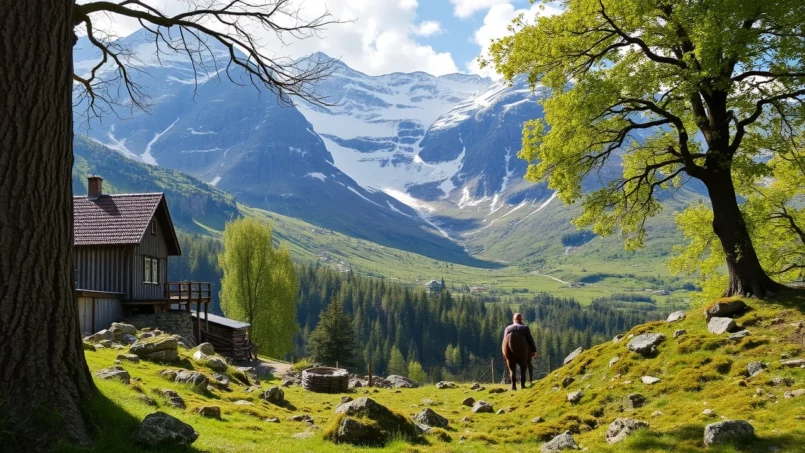
Greenland
This combination – geographic isolation, profoundly different culture, harsh climate – makes adaptation slower and homesickness more persistent. Yet many foreigners report that after a few months to a year, Greenland begins to feel like an alternative “home,” provided they truly commit to it.
A country that lives with light and darkness
To understand why homesickness can be so intense here, you have to look at the sky. In Greenland, the seasons don’t just vary temperatures; they transform the very amount of light.
Example:
In winter, in certain polar regions, the polar night sets in from about late November to mid-January, a period when the sun does not rise. Workdays can thus unfold entirely in darkness. In contrast, in summer, the midnight sun phenomenon occurs, where the sun remains visible nearly 24 hours a day, only briefly dipping below the horizon.
This extreme alternation has well-documented effects on mood. Research on Seasonal Affective Disorder (SAD) shows that the farther you live from the equator, the higher the risk of seasonal depression. In the American state of Alaska, for example, nearly 10% of the population is affected by frank SAD, and about a quarter by a milder form. Comparable rates are observed in high European latitudes.
Caution:
Common winter symptoms, such as persistent fatigue, increased need for sleep, carb cravings, weight gain, loss of motivation, social withdrawal, and sometimes feelings of worthlessness or hopelessness, can easily overlap with and amplify existing homesickness.
For a newcomer, this can feel like “everything is going wrong at once”: the distance from loved ones, the feeling of not understanding the country, and this endless darkness. It’s not “in your head” in an imaginary sense: the drop in light disrupts the internal clock, lowers serotonin production (involved in mood regulation), and increases melatonin (the sleep hormone).
Culture shock: A tight-knit community, but cautious with newcomers
Homesickness stems not only from what is missing (family, friends, everyday language) but also from what is disorienting. Greenlandic culture can baffle a foreigner used to a more direct or louder society.
Society is organized around very close-knit communities, especially in smaller towns and villages. Many people know each other personally, and family ties extend far beyond the nuclear parent-child unit. For example, there is the tradition of “gift children,” a form of adoption within the family where a child may be raised by an uncle, aunt, or grandparents, without taboo, as a way of helping.
Good to know:
The communication style is generally calm and reserved, avoiding direct confrontation. Silences are accepted and part of the conversation. Humor is often physical and slapstick. It is common for people to laugh if a foreigner slips on the ice or mispronounces a Greenlandic word; this is not malicious mockery, but a positive way of acknowledging that the person is making an effort to fit in.
For an expatriate, this can be confusing at first: you don’t always get the jokes, you misinterpret the silences, you feel judged. Moreover, Greenlanders are used to seeing foreigners arrive for a few-year contract, leave without learning the language or really integrating. Result: trust is earned over time. Several accounts mention a delay of about a year before feeling truly part of a Greenlandic social circle.
Tip:
To avoid homesickness and a feeling of relational emptiness during an expatriation, it is important to accept that the slowness of the integration process is not a personal rejection. This slowness is the normal functioning of a community marked by its history, notably colonization, and by a continuous succession of arrivals and departures.
Living with a fragile mental landscape: The weight of mental health in Greenland
Settling in Greenland also means entering a country that is experiencing a profound mental health crisis. Greenland has the highest suicide rate in the world. In some studies, up to a quarter of young people have already attempted suicide, with a particularly troubling peak between ages 20 and 24. A large majority of adolescents report at least one mental health problem, and violence, alcoholism, and sexual abuse are very real in certain environments.
1
For a newcomer, the country seems peaceful, but many residents live with the aftermath of trauma, the social consequences of colonization, and the effects of climate change.
This ambient fragility has two major implications for homesickness.
First, it reminds you that you are not alone in going through something difficult. Homesickness should not overshadow the suffering of others, but it places you within a human landscape where mental health is a collective issue, not just an individual one.
Caution:
In a context where Greenlandic-speaking psychologists are limited and distance from major healthcare centers is real, it is crucial to monitor your psychological state to prevent homesickness from escalating into severe depression or suicidal thoughts. Although Greenland has helplines, prevention centers, and national strategies like the QAMANI plan, concrete access to professional help may be less immediate than in mainland Europe.
In other words: recognizing the signs of a downward spiral early is not catastrophizing, it is prudence.
Climate, winter, isolation: A trio that amplifies nostalgia
Beyond the light, the Arctic climate plays a subtle but constant role in the intensity of homesickness. Winter here lasts six to seven months, with temperatures that can easily drop to -30 °C in places like Kangerlussuaq. The cold is dry, which paradoxically makes it more bearable than a humid -10 °C elsewhere, but it complicates everyday tasks, causes fatigue, and keeps you indoors.
Snowstorms can immobilize ferries and planes for a day or two. When you’re waiting for a package that already takes a month by boat to arrive, when you’ve booked a flight to go see your family and everything gets delayed, the frustration can gradually turn into resentment: against the country, against yourself, against this sky that “doesn’t want” you to leave.
Good to know:
Faced with disorientation, it is common to retreat into video calls, social media, and nostalgia, constantly comparing your new life to the old one. This tendency to idealize the home country can amplify the feeling that the new place is cold, slow, or empty. This behavior can lead to a “psychological hibernation,” where you function on autopilot without fully investing in your life on the ground.
To avoid this trap, several proven strategies from other polar environments – for example, Antarctic research stations, where researchers live up to four months without seeing the sun – can be adapted to Greenland.
The vital importance of routine
In Antarctic stations, one of the primary tools for combating isolation is structuring time: regular work hours, dedicated break times, and slots reserved for leisure. The idea is simple: give shape to days that would otherwise all blend together.
In Greenland, doing the same might seem trivial, but it is decisive. Setting stable times for waking up, eating, going out, exercising, and calling loved ones reduces the feeling of drifting. It also helps synchronize your rhythm with that of local residents, so you don’t live permanently out of sync with the country.
The body as an ally against homesickness
In the cold, the body expends enormous energy to keep warm. In polar expeditions, some members need to consume up to 5,000 calories per day, with a massive intake of fats, to keep going. Without going that far, you must understand that your body is working harder than usual. Persistent fatigue, cravings for sugar or starches, and heightened sensitivity to cold are common and can exacerbate gloominess.
Good to know:
Staying active (walking, skiing, hiking, gym, yoga) is an effective way to combat Seasonal Affective Disorder (SAD) and isolation. Exercise boosts endorphin and serotonin production, helps regulate sleep, and structures the day.
Prevent rather than cure: Light and sleep
In most northern countries, recommendations for Seasonal Affective Disorder include exposure to natural light (going outside at midday, opening curtains fully) and using light therapy lamps at 10,000 lux in the morning for 15 to 60 minutes. When used correctly, this type of device helps reset the biological clock.
Combined with regular bed and wake times, reduced alcohol consumption – which worsens sleep and mood disorders – and attention to meal timing, this forms a solid foundation so that homesickness does not have a body already depleted as its playground.
Anchoring yourself in the local culture: From “spectator” to “participant”
One of the best antidotes to homesickness is to transform Greenland from an exotic backdrop into a lived, inhabited, invested environment. This requires a conscious effort, because the natural temptation is to retreat into a small expat bubble, where you speak your language, share the same references, and sometimes complain about the same things.
Yet, those who integrate best in Greenland share a common trait: they accept being transformed by the country, at least a little.
Learning to say “Aluu”
The official language is Greenlandic (Kalaallisut), with several dialects. Danish remains very present in administration and professional circles, while English is common in larger cities, especially among young people. But making the effort to learn a few words of Greenlandic – even just the greeting “Aluu,” expressions of thanks, a few simple questions – changes how you are perceived.
In Nuuk or Sisimiut, a foreigner who stumbles through a few sentences is often met with amused goodwill. Pronunciation errors sometimes trigger bursts of laughter, but it is a laughter that, culturally, means “you are with us, not above us.”
Observer of cultural interactions in Greenland
Understanding social codes
Integration also comes through understanding small everyday things. In a supermarket line, for example, Greenlanders wait patiently, without complaining, even if the person in front takes an eternity. If a new checkout opens, everyone rushes over, without regard for the “original order” of the line. Getting upset out loud or lecturing would be seen as rude.
Good to know:
Offering help spontaneously can be perceived as paternalistic. On the other hand, responding to an explicit request or expressing concern through a question (like “Is your coat warm enough?”) falls in line with a logic of mutual care and respects the other person’s independence.
Little by little, these codes become familiar. They reduce the feeling of being eternally the “guest.” And the less you feel like an extended tourist, the more homesickness loses its grip.
Sharing the table: Sociability through food
In Greenlandic culture, sharing food is a major social gesture. The traditional coffee, the “kaffemik” held for a birthday or family event, meals where you try dishes like “mattak” (whale skin and blubber), hunting specialties – all of this builds bridges.
Participating in these moments, even if you don’t eat everything, even if some textures or flavors surprise you, is a way of saying: “I’m ready to discover your world.” Conversely, cooking a dish from home for your colleagues or neighbors, explaining where a recipe comes from, brings your family universe into the relationship. This eases the disconnect from your home country: it is, in a sense, at the table with you.
Building a network: Between local community and long-distance ties
To tame homesickness in Greenland, you have to fight two battles at once: not losing the connection with those who stayed behind, and at the same time, creating new ones on the ground. Focusing solely on one of the two is risky.
Maintaining ties with “home” intelligently
The tools are plentiful: WhatsApp for daily exchanges, regular video calls via FaceTime, Zoom or others, shared photo albums on iCloud or Google Photos, family blogs, even handwritten letters or care packages with typical products. All studies on separated families indicate: keeping regular ties relieves loneliness and reduces the feeling of being “forgotten.”
Tip:
To root yourself well in local life abroad, it is advisable to avoid constant digital presence with your home country (daily video calls, perpetual comparisons). From the start, establish a reasonable rhythm with your loved ones: one long call once or twice a week, asynchronous voice messages, and sharing photo albums, rather than a continuous connection that keeps your mind elsewhere.
Creating your circle on the ground: Initiatives and patience
On the ground, not everything happens at work. Many accounts from expatriates in Greenland show how joining a club – for qajaq (kayak), sports, hunting, handball, hiking – was decisive. A teacher based in Sisimiut explains that it was by joining a qajaq club, where he was often the only immigrant, that he truly began to feel at home, sharing the sea, the wind, the jokes, and the technical struggles.
Pillars of local life
Municipalities value cultural and sports activities as central elements of community life, through various facilities and associations.
Associations and clubs
Essential structures for energizing the region and bringing residents together around shared passions.
Public facilities
Libraries and village houses serve as meeting places and access to culture for everyone.
Integration of newcomers
Policies aimed at making these spaces levers for integration and reducing language barriers.
Language courses
Specific initiatives, such as courses for migrants, to facilitate inclusion and participation in local life.
Here again, the key is quiet consistency rather than bursts of enthusiasm. Showing up regularly for handball practice, even if you don’t yet speak Danish or Greenlandic well, participating in community events, being present without pushing – it eventually has an effect: you are “there,” simply. And in Greenland, presence over time often counts more than a grand speech.
Staying attentive to your mental health: Leveraging available resources
Even with good integration, homesickness can sometimes combine with Seasonal Affective Disorder or a more global depression. Recognizing the warning signs is crucial.
Among the signs to watch for: persistent sadness, loss of interest in everything that used to bring pleasure (including new discoveries in Greenland), marked withdrawal, sleep changes (insomnia or hypersomnia), significant weight gain or loss, difficulty concentrating, thoughts like “what’s the point,” or even suicidal ideas.
Help and support in Greenland
Greenland has several psychological support and counseling services, accessible free of charge and anonymously to its population.
National helplines
Free, anonymous services open 24/7, such as Tusaannga, including a dedicated number for children.
Addiction treatment centers
Allorfik offers support for issues related to alcohol, cannabis, and gambling in several major cities.
Online resources in Greenlandic
The platform mindhelper.gl offers resources to understand anxiety and learn to manage emotions.
However, for many expatriates, one challenge remains: language. Finding a psychologist or therapist who speaks your native language, or at least good English, is not as straightforward as in Copenhagen or Paris. Anticipating this question by identifying, before or upon arrival, the available professionals, online resources, or even remote therapists in your home country, can provide valuable security.
A few signals to monitor
To make things more concrete, here is a summary table of common symptoms of homesickness, Seasonal Affective Disorder, and depression, and how they can intertwine in Greenland:
| Aspect | “Classic” homesickness | Seasonal Affective Disorder (SAD) | Severe depression |
|---|---|---|---|
| Mood | Nostalgia, sadness linked to distance | Low mood mainly in autumn/winter | Persistent sadness, hopelessness |
| Thoughts | Idealization of home country, regrets | Ruminations on fatigue, the season | Thoughts of worthlessness, sometimes suicidal |
| Energy | Moderate decrease, lack of motivation | Marked fatigue despite sleep | Constant exhaustion, daily tasks difficult |
| Sleep | Difficulty falling asleep if many ruminations | Tendency to oversleep (hypersomnia) | Marked disturbances (insomnia or hypersomnia) |
| Appetite | Variations linked to stress | Carb cravings, weight gain | Strong decrease or increase in appetite |
| Socialization | Frequent calls to family, local withdrawal | Tendency to isolate during winter | Near-complete isolation, broken contacts |
| Duration | Often diminishes in 1 to 6 weeks, may return | Repeats each year at the same season | Can last months without improvement |
When the columns overlap – for example, homesickness that persists, combined with very low mood all winter, and dark thoughts – do not hesitate to ask for help, even if you feel “it’s not that bad” or “others have been through worse.” The reality of Greenland, with its very high suicide rate, calls for increased vigilance instead.
Turning homesickness into a driver for exploration
One way to not suffer from homesickness is to view it as a signal of what matters most to you: connections, certain habits, forms of daily life. Rather than trying to reproduce them identically – which is often impossible – you can seek to translate them into Greenland’s reality.
Example:
Someone used to going to the cinema in the city can recreate movie nights at home, sometimes in a group with colleagues or neighbors, exploring Greenlandic films or documentaries about the Arctic. Similarly, Sunday family dinners can evolve into regular brunches with a small circle of friends met locally.
Leisure activities that combat isolation in other cold regions – painting, crafts, reading, hiking, skiing, yoga, music, photography, watching the northern lights – work just as well here. They create landmarks, generate projects (“this weekend we’re going to the fjord,” “this month I’ll finish this book”), and foster a feeling of progress, rather than just “holding on” until the end of the contract.
The idea is not to fill your time with occupations to flee your emotions – psychologists remind us that a hobby should not become a way to avoid all questioning – but to avoid letting nostalgia occupy all mental space.
Summary table: Concrete levers for taming homesickness in Greenland
To conclude operationally, here is a second table summarizing homesickness management strategies adapted to the Greenlandic context, linking what we know about polar environments, local mental health, and expatriate experience.
| Domain | Objective | Actions adapted to Greenland |
|---|---|---|
| Routine | Structure time | Fixed times for waking/sleeping, meals, exercise, outdoor time in daylight, slots for calling family |
| Body & health | Support mood | Regular physical activity (walking, skiing, gym, yoga), energy-rich but balanced diet, limited alcohol |
| Light | Prevent SAD | Daily outings during daylight, possibly a light therapy lamp in the morning, curtains fully open |
| Long-distance ties | Reassure without shutting yourself off | Scheduled video calls, shared photo albums, care packages, but screen-free periods to live the local present |
| Local integration | Create a new network | Sports clubs (qajaq, handball…), associations, kaffemik, participation in municipal events |
| Language & culture | Reduce the feeling of strangeness | Learn basic Greenlandic or Danish, take interest in history, traditions, local festivals |
| Mind & emotions | Avoid escalation | Acknowledge sadness and nostalgia, journaling, meditation, seek help (Tusaannga, psychologists, teleconsultation) |
| Meaning & motivation | Provide a framework for the challenge | Remember the reasons for leaving (work, adventure, family), set small goals, plan a future return or trip |
Accepting that “home” can become multiple
Over the months, many who have lived in Greenland report a subtle but profound transformation: the country, initially experienced as a parenthesis, becomes an intimate reference point. You leave behind friendships, habits, inner landscapes. It even happens that upon leaving, you feel a new homesickness… for Greenland.
This does not mean you stop loving your home country. Simply, the concept of “home” expands. It now includes a small town with no roads to its neighbors, colorful wooden houses facing the fjord, the green light of the auroras, populated silences, bursts of laughter after a fall on the ice.
Good to know:
It is not a matter of choosing between staying attached to your home country or fully assimilating. Accept nostalgia as part of the journey, learn to regulate it so it does not crush the present, and gradually let Greenland find its place in your personal geography.
This work requires patience, curiosity, a bit of courage, and a lot of self-compassion. But it relies on a strong reality: Greenland, despite its wounds and challenges, is a country deeply marked by solidarity, community, and the art of facing an extreme environment together. To inscribe yourself in it, even temporarily, is also to benefit from this collective resilience to tame your own.

Cyril Jarnias is an independent expert in international wealth management with over 20 years of experience. As an expatriate himself, he is dedicated to helping individuals and business leaders build, protect, and pass on their wealth with complete peace of mind.
On his website, cyriljarnias.com, he shares his expertise on international real estate, offshore company formation, and expatriation.
Thanks to his expertise, he offers sound advice to optimize his clients' wealth management. Cyril Jarnias is also recognized for his appearances in many prestigious media outlets such as BFM Business, les Français de l’étranger, Le Figaro, Les Echos, and Mieux vivre votre argent, where he shares his knowledge and know-how in wealth management.





