
 Published on and written by Cyril Jarnias
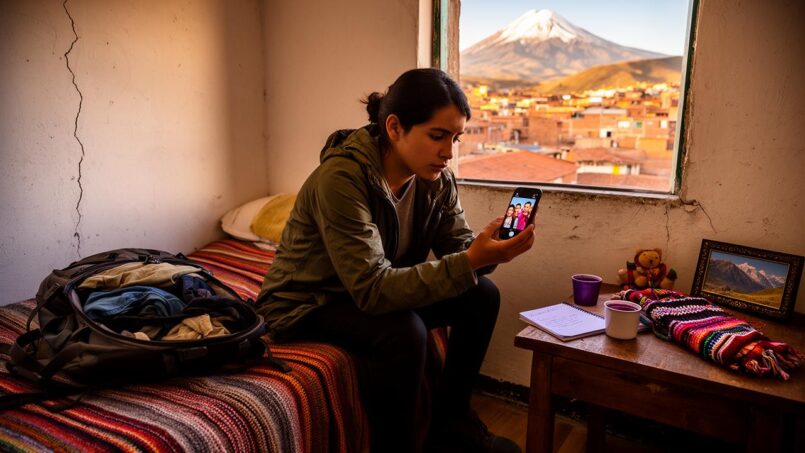
Moving to Bolivia, whether for a few months of study, a professional assignment, or a longer-term life project, is often an exciting adventure. An Andean country with vibrant, colorful festivals, a very much alive indigenous culture, and an attractive cost of living, Bolivia is attracting more and more foreigners. But behind the photos of the Salar de Uyuni or the alleys of La Paz, a much more intimate reality sometimes slips in: homesickness.
Nearly 70% of people who have moved abroad face homesickness at least once.
This article aims to help you understand what you’re going through and offer concrete suggestions, grounded in the Bolivian reality, to better manage homesickness without missing out on the country’s cultural richness.
Understanding Homesickness: A Normal Reaction, Not a Weakness
Homesickness is neither abnormal nor pathological in itself. Experts define it as emotional distress linked to separation from a familiar and secure environment. In other words: your brain is reacting to a sudden change in your frame of reference, language, social rhythms, and being far from your loved ones.
Research highlights several important points to keep in mind when nostalgia hits you:
| What Studies Say | What This Means for You in Bolivia |
|---|---|
| Homesickness is a common symptom of culture shock | Feeling a mix of euphoria, frustration, and sadness is a classic stage after arrival |
| It can appear in the first weeks, but often also after 3 months or even a year | You might be “fine” at first and then be surprised by a wave of longing later |
| It reflects neither mental instability nor personal weakness | You are neither “too sensitive” nor “not cut out for expat life” |
| It can come in waves, with ups and downs | A “good” day doesn’t mean it’s resolved, and a “bad” day is not a failure |
| If nothing is done, it can foster anxiety and depression | Hence the importance of taking it seriously and acting early |
Typically reported emotions include sadness, loneliness, irritability, a constant feeling of strangeness, excessive idealization of the home country, and sometimes a loss of motivation. Physical manifestations can also occur: persistent fatigue, headaches, sleep disturbances, muscle tension, sometimes digestive issues.
In Bolivia, in high-altitude cities like La Paz, Potosí, or Uyuni, the symptoms of altitude sickness (soroche) – headaches, shortness of breath, fatigue – can be confused with those of an emotional state. It’s often hard to distinguish them initially, as the two realities frequently overlap.
A Bewildering Country Day-to-Day: What Fuels Homesickness
To understand why this nostalgia can be so persistent, you have to look at how daily life in Bolivia disrupts your frame of reference.
Bolivia is a country of stark contrasts. On one hand, an extremely present indigenous culture, powerful religious festivals, markets of weavers and cholitas, a connection to Pachamama and Andean rituals. On the other, modern urban neighborhoods, air-conditioned malls, a connected youth, aspirations towards Western codes in some affluent circles.
In this setting, foreigners run into several factors that reinforce homesickness.
The Language Barrier and the Feeling of Isolation
Fewer than 5% of the population speaks English, and even more rarely outside tourist areas. Spanish is essential for administrative procedures, healthcare, renting, everyday transportation. In many regions, especially rural ones, Aymara or Quechua are also very present.
Not being able to joke spontaneously, follow a family conversation during an almuerzo, understand an ironic remark about ‘Bolivian time,’ or negotiate rent creates a profound feeling of disconnect. The difficulty in telling who you are, expressing nuances in your personality, feeds the feeling of being somewhat ‘invisible’ or infantilized, which is fertile ground for homesickness.
Expatriate’s experience
Very Different Social Codes
Bolivian relational codes are both warm and precise. Systematic greetings are expected from you, “buenos días” every time you enter a store or office, a polite and respectful tone, the use of “usted” in most initial interactions. Refusing offered coffee or food can be taken as an offense.
At the same time, the concept of time is much more flexible. Delays, postponements, half-promises are part of the game. For a newcomer used to precise schedules and strict punctuality, this flexibility can translate into a feeling of chaos… or unreliable relationships. Again, fertile ground for missing the “predictability” of your home country.
Altitude, Climate, and Health: The Body Is Also in Transition
In Bolivia, the physical environment is far from neutral. La Paz sits at over 3,600 meters, El Alto even higher, the Salar de Uyuni and Lake Titicaca require serious acclimatization. Soroche manifests as headaches, shortness of breath, fatigue, sometimes nausea.
The regions of Santa Cruz, Chapare, Yungas, and the Amazon expose you to mosquito bites and diseases like dengue, chikungunya, or Zika. Adaptation requires constant use of mosquito nets, repellent, and covering clothing, even in intense heat.
All of this weighs on your mood, especially if you come from a temperate climate and highly structured healthcare systems. The contrast between the safety felt “back home” and the constant effort to manage your body here rekindles regret for lost comfort.
The Real Distance from Family and Friends
Bolivia is far from many expatriates’ home countries, with long flights, high ticket costs, and significant time differences. Studies show that migrants and expats often report frequent use of long-distance calls, but also high levels of loneliness and a lack of real support. Technology (WhatsApp, Zoom, etc.) helps, but doesn’t replace a family meal or a hug from a friend.
A well-documented psychological phenomenon further complicates things: the more physically distant you are, the less loved ones spontaneously think of you, not for lack of love, but because you are less present in their daily lives. It’s often up to you to make most of the effort to maintain the connection, which can feel unfair or painful, especially during intense bouts of homesickness.
Recognizing the Signs: When Nostalgia Becomes a Warning Signal
Homesickness is normal, but it shouldn’t be dismissed. It can be seen as an indicator: something in your adaptation needs attention.
Signs to watch out for:
| Emotional Signs | Physical Signs | Cognitive Signs |
|---|---|---|
| Persistent sadness | Fatigue, muscle tension | Obsessive thoughts about home |
| Feeling lonely even when surrounded | Sleep disturbances | Difficulty concentrating |
| Irritability, anger outbursts | Digestive issues | Tendency to overly idealize “back home” |
| Loss of interest in things you used to enjoy | Frequent headaches | Very negative view of Bolivia |
| Anxiety, feeling of losing control | Decreased appetite or compulsive snacking | Ruminating on the “mistakes” of leaving |
If these manifestations become daily, last several weeks, or impact your work, studies, or relationships, the risk is sliding into more serious disorders like depression or an anxiety disorder. Studies show that expatriates have up to 2.5 times higher risks of anxiety and depression than the population who stayed home.
Be vigilant, as access to quality psychological care remains limited in Bolivia. Only about 10% of people are estimated to have access to satisfactory care, and stigma around psychiatry remains strong.
Anchoring Yourself in Your Bolivian Daily Life: Simple Gestures That Change Everything
When facing homesickness, the temptation is strong to retreat solely into the virtual world, with streaming shows from home, social media, and repeated calls back. However, research shows that a good balance is crucial: staying connected to your roots without cutting yourself off from your current environment.
Creating a “Home” in Your Living Space
Whether you live in a room in Cochabamba, an apartment in Sopocachi, or a house in Santa Cruz, the space you return to at night can become a valuable ally.
Some concrete levers:
To adapt in Bolivia while staying connected to your roots, you can display photos of loved ones and familiar places, mixed with local souvenirs. Recreating mini-rituals, like having your coffee in your favorite mug or playing a playlist mixing music from home and Latino tunes, helps establish an anchor. Finally, buying local comfort items (blanket, cushions, string lights) allows you to personalize your space and regain a sense of control in a new environment.
This is not trivial: psychological models of homesickness emphasize the importance of restoring a sense of security and personal continuity.
Structuring Your Days
Moving breaks your routines. Recreating a simple framework helps your brain get its bearings:
Tips for maintaining balance and personal grounding during expatriation by integrating healthy habits and enjoyable activities.
Set relatively stable bedtimes and wake-up times to stabilize your internal clock and improve sleep quality.
Plan at least one moment for physical activity, even modest (walking, taking stairs, running, gym, or yoga).
Schedule time in your week for activities you already loved (reading, music, crafting, etc.) to nurture your identity.
Public health studies show that regular exercise, a balanced diet, and sufficient sleep act as emotional “safety nets,” reducing the risk of sliding into lasting distress.
Embracing Bolivian Culture Rather Than Avoiding It
Managing homesickness doesn’t mean locking yourself in an “expat” bubble. On the contrary, the more you understand the codes and logic of the country, the more predictable daily life becomes and the less anxiety-inducing it is.
Decoding Social Customs
Simply knowing certain unspoken rules reduces the feeling of being lost. For example:
For harmonious interaction in Bolivia, adopt these local customs: always greet with ‘buenos días’, ‘buenas tardes’, or ‘buenas noches’ when entering a place like a taxi, store, or waiting room. Use the formal ‘usted’ by default, and only switch to the informal ‘tú’ if explicitly invited. Know that it’s common and accepted to arrive 15 to 30 minutes late to a private dinner, and showing impatience would be poorly perceived. Finally, understand that a firm refusal of food or drink at a host’s place may be considered a personal offense; it’s better to accept politely.
Anticipating these situations reduces relational stress, and thus nostalgia for your own frame of reference.
Letting Yourself Be Carried Away by Festivals and Traditions
Bolivia is filled with festivals: Carnaval de Oruro, Gran Poder in La Paz, Día de los Muertos, Alasitas, Inti Raymi, Easter processions, Marian celebrations… So many moments when the community gathers in the streets, mixing Catholic influences and Andean rituals.
Even if you don’t understand everything, immersing yourself in these moments – as a respectful spectator – can be a powerful antidote to loneliness. You can feel very concretely the strength of family and community ties, which resonates with the human need for connection.
Taking Language Seriously
In all expatriate accounts, one point recurs: Spanish changes your life. Not just for procedures, but for self-esteem and sense of belonging.
| Level of Spanish Proficiency | Typical Impact on Homesickness |
|---|---|
| Very Low | Strong dependence on other foreigners, isolation, feeling of being “on the sidelines” |
| Intermediate (survival + some conversation) | Ability to manage daily life, beginnings of connections with Bolivians, rising confidence |
| Advanced | Possibility of deep relationships, participation in jokes, feeling of truly being part of the landscape |
Language classes, tandem exchanges, apps, participation in language exchange meetups in cafes in La Paz, Cochabamba, or Santa Cruz: any investment in Spanish translates almost directly into a reduction in the feeling of uprootedness.
Building a New Circle: Not Staying Alone with Your Nostalgia
Research on loneliness reminds us that it depends not only on the number of people around you but on the quality of connections and the feeling of real support. In Bolivia, you can be surrounded by colleagues and still feel profoundly alone if you have no one to talk to about what you’re feeling.
Relying on Expatriate Communities
The foreign community is small but present, especially in larger cities. Several structures can help you meet people in the same situation:
Discover the main networks and platforms to meet other expatriates, get practical advice, and integrate in Bolivia.
Join organizations like InterNations which organize social and professional events in major Bolivian cities (La Paz, Santa Cruz, Cochabamba, Sucre, Samaipata) and offer themed groups (dinners, hikes, cultural outings).
Exchange tips and support through Facebook groups like ‘Expats in Bolivia’ or specialized forums, which serve as a practical Q&A box and informal community space.
Explore sites like BoliviaBella or participate in local initiatives that facilitate meetings between foreigners and Bolivians for authentic immersion.
These spaces should not completely replace contact with Bolivian society, but they offer exchanges where you can speak your own language, talk openly about your homesickness, and get concrete advice.
Creating “Third Places” That Become Your Landmarks
Social science researchers talk about “third places” to designate spaces that are neither home nor work: neighborhood café, gym, favorite market, library, church, community center.
In Bolivia, this can become: the breaking point for social and political tensions that have built up over the years.
– A café in Sopocachi where the server eventually knows your order.
– A hiking club with which you explore the valleys around Cochabamba.
– A market where you buy your fruit from the same vendor each week.
– A parish or spiritual community where you find support.
Through repetition, these places and faces create a reassuring fabric that lessens the feeling of existential vagueness.
Daring to Talk About What You Feel
Homesickness tends to reinforce itself when kept inside. Yet, many people around you – expatriates, but also Bolivians who migrated from the countryside to the city or abroad before returning – have experienced uprooting.
Talking about it allows you to:
– Normalize your emotions (“others have been through this too”).
– Avoid loved ones or colleagues interpreting your withdrawal as disinterest.
– Receive strategies that have worked for others: activities, groups, professionals to consult.
It’s also useful to explain to your loved ones back home what you’re going through, without dramatizing but without minimizing either. Studies on long-distance relationships show that balanced conversations – where each person talks about their daily life rather than long monologues – truly strengthen the relationship.
Staying Connected to Home Without Getting Stuck There
In a country where WhatsApp dominates communication, where Entel or Tigo SIM cards are affordable and video calls have become commonplace, it’s tempting to be in constant contact with your home country. Yet, too much contact can sometimes reinforce homesickness rather than soothe it, by keeping you permanently “between two worlds.”
Establishing a Communication Rhythm
Rather than calling on a whim every time a wave of sadness hits, it’s often more calming to: take a moment for yourself, reflect on the situation, and find strategies to manage your emotions.
– Set regular appointments with your loved ones (weekly or bi-weekly) that fit the time differences.
– Complement with voice messages, photos, or short texts when you want to share a moment, without necessarily expecting an immediate reply.
Long periods without contact can be interpreted as a lack of interest, while they often simply result from busy schedules and differences in life rhythms between people.
Sharing Your Life Here in a Lively Way
Loved ones often struggle to imagine your Bolivian daily life. A few tips help bring them along:
– Send short videos of a market, a packed bus, a neighborhood party, an altitude thunderstorm.
– Keep a small blog or a monthly newsletter with a few photos and anecdotes (under 1,000 words, easy to read).
– Give virtual tours using your phone’s camera: a walk around your La Paz neighborhood, a city viewpoint, inside your home.
Sharing your reality makes it more tangible for your loved ones. It can also lessen your own feeling of living an ‘invisible’ experience.
Limiting the Social Media Trap
On Instagram or TikTok, friends back home seem to lead a perfect life: parties, weddings, promotions, births… Comparing your solitary evenings in your Santa Cruz room to these carefully filtered images can only fuel the feeling of missing out.
You can:
– Voluntarily reduce time spent scrolling through news feeds.
– Stop following accounts that trigger too much FOMO.
– Replace that time with a local activity, however modest: walking in the neighborhood, going to buy a juice on the plaza, flipping through a book in Spanish.
Research on loneliness shows that digital contacts are protective when they complement lived relationships, but can increase discomfort when they completely substitute for the present.
When and How to Seek Professional Help in Bolivia
There is a threshold where personal resources, friends, and family are no longer enough. Continuing to “hold on” alone, especially in a country where spontaneous access to a psychologist isn’t always simple, risks unnecessarily prolonging your suffering.
It is recommended to seek professional help if: you experience persistent symptoms of emotional distress, if you have difficulty coping with the demands of daily life, or if you have suicidal or self-destructive thoughts. It is also advisable to consult a professional if your personal or professional relationships are suffering and you feel it is affecting your quality of life.
– Homesickness has lasted several months with no notable improvement.
– You are increasingly isolating yourself, including from activities you usually enjoy.
– Your sleep, appetite, or concentration are seriously disrupted.
– Your work or studies are suffering (repeated mistakes, delays, disengagement).
– Thoughts of despair or not wanting to live appear.
Local and Online Resources Available
In Bolivia, mental health services remain concentrated in major cities, but several structures exist, notably in La Paz, Sucre, and Santa Cruz. Centers like El Alfarero, for example, offer free psychological support for students and low-cost support for the general public.
In parallel, many online platforms have developed, which is particularly useful for expatriates. These platforms facilitate, for example, remote administrative management, maintaining social ties, or accessing banking and health services from abroad.
– International services specialized in supporting expatriates offer video therapy, with practitioners trained in culture shock and homesickness issues.
– More generalist platforms allow you to find a therapist who speaks your language, no matter where you live in Bolivia, bypassing the low density of local services in some cities.
Online video therapy is as effective as in-person therapy, offering major logistical advantages.
What Therapy Can Offer an Expatriate in Bolivia
Several approaches have proven particularly relevant in this context:
– Cognitive-behavioral therapies (CBT), which help identify and modify automatic thoughts like “I’ll never manage here,” “everyone is better off back home,” or “I made a mistake coming here.”
– Mindfulness approaches, useful for learning to calm the nervous system in the face of multiple micro-stressors (language, noise, traffic, cultural misunderstandings).
– Narrative therapies, which help make sense of the migration experience by placing it within the broader story of your life, rather than as a “failure” or painful parenthesis.
One major benefit of professional support is avoiding reducing your entire experience in Bolivia to your current suffering, and helping you also notice what, despite everything, is working, progressing, and enriching your journey.
Leveraging Bolivia’s Unique Strengths to Feel Less Alone
Beyond the difficulties, Bolivia also offers unique resources to counter homesickness, provided you see and mobilize them.
The Strength of Community Ties
Family is at the heart of Bolivian society. Several generations often live under the same roof, networks of neighbors and compadres (godparents) support daily life. If you are welcomed by a host family or integrated into a local in-law family, you’ll have direct access to this solidarity. Participating in it – helping in the kitchen, sharing a meal, accompanying to a neighborhood party – gives you a place that goes beyond your status as a foreigner.
In La Paz, conviviality is experienced daily, even for people without local family. For instance, a market vendor who starts to recognize a face, a trufi (shared minibus) driver who spontaneously strikes up a conversation, or a cholita (indigenous woman in traditional dress) responding with a kind smile to efforts to speak Spanish.
Cultural Richness as an Antidote to Withdrawal
Exploring museums (National Art Museum in La Paz, Casa de la Moneda in Potosí, Museum of Indigenous Art in Sucre), visiting Tiwanaku, strolling through the textile markets of Tarabuco, listening to traditional charango music… all ways to feed your curiosity and remind yourself why you chose this country.
Turning your stay into a learning project – about Andean culture, the spiritualities around Pachamama, dances like the morenada or cueca, local cuisine – gives meaning to the effort of adaptation and reduces the mental space occupied by nostalgia.
A Cost of Living That Allows Investing in Your Well-being
Bolivia is one of the most affordable countries in South America. For many foreigners with external income, this translates into the possibility to:
Living abroad can allow you to enjoy regular leisure activities (restaurants, getaways, classes) at a lower cost, access a more spacious and comfortable home, and, in a respectful framework, delegate some domestic tasks to free up time.
Of course, this ease contrasts sharply with the reality of many Bolivians living on very little. Being aware of this, acting with humility and supporting local initiatives when possible (artisans, associations, community tourism) allows transforming this privilege into a positive lever rather than a source of guilt.
Accepting the Process: Homesickness as Part of the Journey
Models of culture shock generally describe several phases: honeymoon (everything is new and exhilarating), frustration (flaws become unbearable), adjustment (you start finding your place), relative mastery (you navigate more serenely between cultures). Homesickness manifests mostly in the frustration phase but can reappear later, in waves.
Considering nostalgia as a normal movement of the psyche, and not as a failure of expatriation, transforms how you experience it. Each return of nostalgia is an opportunity to seize.
– Check your basic needs (sleep, diet, exercise, health).
– Take stock of your connections (do you have enough quality contacts, here and there?).
– Adjust your routines (too much time online, not enough exploration, not enough Spanish?).
– Ask yourself if external support could help you reach a new stage.
Over time, homesickness doesn’t completely disappear but transforms. It becomes less paralyzing and overwhelming, gradually mixing with a feeling of gratitude for the new life and pride for the journey accomplished.
Living in Bolivia won’t require erasing your home country, your habits, or your values. It will rather invite you to broaden your definition of “home,” to integrate other landscapes, other languages, other relationships to time and community. Homesickness, in this process, is not the enemy: it’s a sign that you care about what you left behind, and that you are patiently redrawing your place between two worlds.
Disclaimer: The information provided on this website is for informational purposes only and does not constitute financial, legal, or professional advice. We encourage you to consult qualified experts before making any investment, real estate, or expatriation decisions. Although we strive to maintain up-to-date and accurate information, we do not guarantee the completeness, accuracy, or timeliness of the proposed content. As investment and expatriation involve risks, we disclaim any liability for potential losses or damages arising from the use of this site. Your use of this site confirms your acceptance of these terms and your understanding of the associated risks.

Cyril Jarnias is an independent expert in international wealth management with over 20 years of experience. As an expatriate himself, he is dedicated to helping individuals and business leaders build, protect, and pass on their wealth with complete peace of mind.
On his website, cyriljarnias.com, he shares his expertise on international real estate, offshore company formation, and expatriation.
Thanks to his expertise, he offers sound advice to optimize his clients' wealth management. Cyril Jarnias is also recognized for his appearances in many prestigious media outlets such as BFM Business, les Français de l’étranger, Le Figaro, Les Echos, and Mieux vivre votre argent, where he shares his knowledge and know-how in wealth management.





