
 Published on and written by Cyril Jarnias
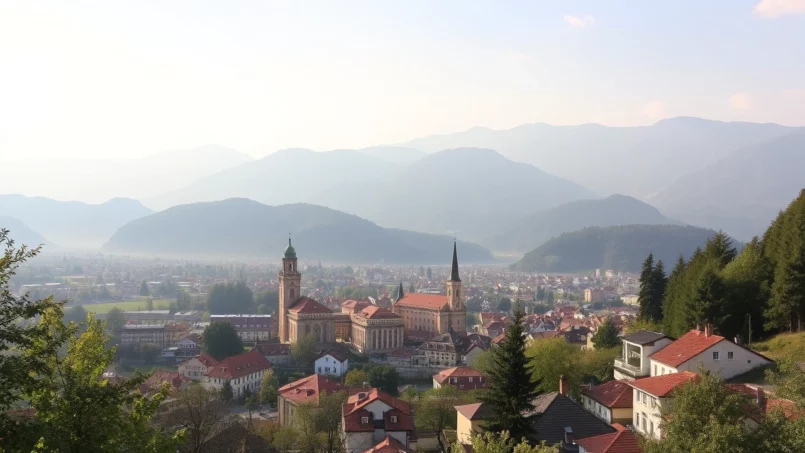
Nestled between the Adriatic and the Alps, at the crossroads of Western Europe and the Balkans, Slovenia is attracting a growing number of foreign workers, families, students, and retirees. With around two million inhabitants, a high standard of living, a sense of safety rarely matched in Europe, and landscapes ranging from alpine peaks to small coastal towns, the country ticks many boxes on the ideal expat checklist.
This guide covers all the essential aspects for a long-term move: choosing where to live and which cities, administrative procedures, job hunting, and housing. It also addresses the cost of living, the healthcare system, international schools, opening a bank account, as well as tips for social integration and learning the Slovenian language.
Understanding the Living Environment in Slovenia
Slovenia is a “small, great country”: modest in size but with astonishing diversity. Within a few hours’ drive, you go from the Adriatic beaches to high mountains, passing through wine valleys, dense forests, and glacial lakes. The climate varies from Mediterranean on the coast to continental and then mountainous inland.
Slovenia is one of the safest countries in Europe, with a very low homicide rate. The population is very attached to cleanliness, recycling, and respect for the environment. Its capital, Ljubljana, is recognized as one of the greenest cities on the continent and has been designated a ‘European Green Capital’.
The overall quality of life is high: safety, an efficient healthcare system, modern infrastructure, a reliable public transport network (buses and trains), and rail connections to major European cities. The country also ranks high on the United Nations Human Development Index, and its overall quality of life index is very favorable.
Slovene is the official language and may sound difficult to a French speaker’s ear. However, about 59% of adults speak English, and it is common for Slovenes to master two or even three foreign languages. For an expat, this considerably facilitates the first months of settling in, especially in larger cities and tourist areas.
Where to Settle: Overview of Main Cities and Regions
Slovenia offers a wide range of living environments: a student capital, a small alpine town, a historic wine village, or a seaside resort. The choice of settlement location will depend on your priorities: career, housing costs, schooling for children, connection with nature, or cultural life.
Ljubljana: Green Capital and Expat Hub
Ljubljana, the capital, has around 280,000 to 300,000 inhabitants. Crossed by the Ljubljanica River with its café terraces, it offers a pedestrian historic center, numerous bike paths, and a rich cultural life (museums, galleries, summer festival, castle overlooking the city).
It is the main hub for skilled jobs for expats, with opportunities in IT, engineering, finance, services, healthcare, communications, but also teaching English or other languages. It is home to the majority of international schools, a large university campus (over 64,000 students), and a well-established foreign community.
The flip side is a higher cost of housing than in the rest of the country, as well as some parking pressure.
Maribor: Second City, Wine, Mountains, and a Gentler Budget
Maribor, approximately 95,000 to 112,000 inhabitants depending on sources, is the country’s second city. Located in the northeast near the Austrian border, it is surrounded by vineyard-covered hills and a major ski resort, Maribor Pohorje.
The city is less international than the capital, with no international school, but attracts digital nomads, retirees, and expats looking for a calmer pace and lower rents. Wine culture is very present, with the famous “Old Vine”, the oldest producing vine in the world, and a festival (Lent) that animates the old town every year.
Small Alpine Towns: Kranj, Bled, Kranjska Gora, Bovec
For those who prioritize wide-open spaces, the west and north of the country are full of small alpine towns. Kranj is considered the “capital of the Slovenian Alps”, a half-hour drive from Ljubljana. It offers a lower cost of living than the capital (rents are about 50% cheaper), while allowing for commuting to work in Ljubljana.
The localities of Bled (approx. 8,000 inhabitants) and Kranjska Gora (approx. 1,500 inhabitants) are mountain resorts renowned for their strong tourist appeal and many outdoor activities like hiking, cycling, and skiing. Further west, Bovec, located in the heart of the Julian Alps, offers an even more nature-oriented atmosphere, particularly around the Soča River, a very popular site for kayaking and rafting.
Adriatic Coast: Koper, Piran, Portorož
The Slovenian coast is short but sought-after. Koper, the largest coastal city, features Venetian architecture, a dynamic port, a Mediterranean climate, and a bilingual Slovene-Italian environment. The cost of living is higher than inland, especially during the summer.
This small medieval town of about 4,000 inhabitants, located on a peninsula, is famous for its extremely picturesque atmosphere, its alleys, Tartini Square, and its orange roofs. However, prices are high due to heavy tourist traffic.
Portorož, very close by, is more of a modern seaside resort with a promenade, hotels, seafood restaurants, and spa centers.
Other Interesting Cities to Settle In
The country has many other medium-sized cities that may appeal to certain expat profiles: Celje (the country’s third city, medieval castle, affordable cost of living), Novo Mesto (automotive and pharmaceutical industry), Velenje (city known for its sunshine, inexpensive), Ptuj (one of the oldest Slovenian towns, with thermal baths), Murska Sobota (in a very cheap rural region), or Škofja Loka, a pretty medieval town near Kranj and Ljubljana.
To get a quick overview of average costs reported in different cities, the following table allows for comparison of overall cost of living estimates (excluding detailed budget):
| City | Population (approx.) | Avg. Monthly Cost of Living* (USD) |
|---|---|---|
| Ljubljana | 284,000 | 1,640 |
| Maribor | 96,200 | 1,236 |
| Kranj | 37,900 | 1,422 |
| Celje | 37,900 | 1,340 |
| Velenje | 25,600 | 1,383 |
| Novo Mesto | 24,200 | 1,195 |
| Nova Gorica | 13,000 | 1,081 |
| Izola | 11,700 | 1,386 |
| Murska Sobota | 11,200 | 1,044 |
| Piran | 3,790 | 1,377 |
Average cost for one person, data from cost-of-living comparison platforms.
Visas, Stay, and Residence: What You Need to Know
The legal framework differs significantly depending on whether you are a citizen of the EU/EEA or from a “third country”.
EU/EEA Citizens: Simplified Formalities
As an EU or EEA citizen, entry into Slovenia is simply with a valid ID card or passport, regardless of the reason for stay (work, study, relocation). No visa is required.
You can reside for three months without formalities. Beyond that, you must apply for a Certificate of Registration of Residence with the local administration. This document can be issued for reasons of employment, self-employment, job-seeking, study/training, family reunification, or other valid reasons, provided you have health insurance and sufficient resources (unless you are already working locally). After five years of continuous and legal residence, you can apply for a permanent residence certificate with unlimited validity.
Non-EU/EEA Citizens: Visas, Temporary Permits, and Permanent Residence
For third-country nationals, the rules are more complex. Short-term entry is generally with a Schengen Type C visa (stay up to 90 days within the entire Schengen area over a 180-day period). To come to work, study, join a spouse, or settle longer term, you must go through temporary residence permits, often coupled with a work permit.
The main scenarios are as follows:
– single work and residence permit for local employment (with a Slovenian contract);
– EU Blue Card for highly qualified workers (minimum salary set at about 150% of the national average gross salary);
– permit for studies, internship, or research;
– permit for self-employment or starting a business (in practice, a significant minimum investment for a d.o.o. is expected, often cited around €50,000);
– family reunification (spouse, children, sometimes dependent parents);
– new specific schemes, such as the digital nomad permit.
Initial temporary permits are usually valid for one year, renewable, and permanent residence becomes accessible after five years of continuous legal stay. In many cases, time spent solely in a student status counts as half towards this calculation.
Level of Slovene proficiency now required to obtain permanent residence in Slovenia.
The Special Case of the Digital Nomad Permit
Slovenia has established a specific residence permit for non-European remote workers. This permit is aimed at people who work online for clients or employers located exclusively outside Slovenia. It does not grant the right to work for a local company.
This permit is a temporary residence title with a maximum duration of 12 months, not immediately renewable. After this year, you must leave the country and wait six months before being able to apply for the same type of permit again. During the stay, it is possible to switch to another basis for residence (local employment, studies, starting a business, etc.), if conditions are met.
Criteria include:
To obtain a residence permit in Slovenia as a non-EU/EEA remote worker, several conditions must be met. The professional activity must be conducted exclusively remotely and for an employer or clients based abroad. It is necessary to demonstrate stable monthly income of at least twice the Slovenian average net salary, which in practice corresponded to a range of €3,000 to €3,300 based on available data. Health insurance covering the entire stay, with a minimum coverage of €30,000, is mandatory. The applicant must also provide proof of accommodation (rental contract, hotel booking, or confirmation) and present a clean criminal record from all previous countries of residence.
Applications are submitted either at a Slovenian embassy or consulate, or directly in Slovenia at an administrative unit if already in legal stay (e.g., tourism). Processing times announced are around one to two months. The administration issues a provisional certificate allowing you to stay while awaiting the decision.
Tourist Stay, “Schengen Shuffle,” and Long Term
For a purely tourist stay, the standard Schengen rules apply: maximum 90 days within a rolling 180-day period. Some expats sometimes try alternating 90 days in Slovenia and 90 days outside Schengen, known as the “Schengen Shuffle.” This type of strategy can work for an exploratory phase, but it obviously does not constitute a secure basis for a long-term move (no access to the social system, no work rights, no housing stability).
For a more serious life project, you must therefore consider a clear residency framework: local employment contract, business, studies, family reunification, or special schemes (digital nomad, etc.). Given the complexity, consultation with a specialized lawyer or immigration advisor is generally advisable, especially for non-Europeans.
Working, Starting a Business, and Paying Taxes in Slovenia
The Slovenian job market is diversified, with strong sectors in the automotive industry, chemicals-pharmaceuticals, information technology, export, but also education and services. Many expats also find positions in language teaching, especially English, in public or international schools.
Ljubljana concentrates most bilingual or English-speaking opportunities, followed by Maribor and the coast (notably Koper). Platforms like LinkedIn or specialized portals for international jobs in Europe are frequently used for recruitment.
The country has a relatively high tax burden, with a progressive personal income tax scale that can reach levels comparable to Western Europe for high incomes. This system is accompanied by significant social coverage, including mandatory health insurance, family benefits, and housing assistance for low-income earners.
For the self-employed, a simplified scheme exists: sole proprietors can, up to a certain revenue threshold, benefit from a flat taxable base corresponding to 20% of receipts, taxed at 20%. This gives a very attractive effective rate of about 4%, but monthly social security contributions must be added, which are just under €600 for a full-time self-employed person based on available data.
Employers must first obtain approval from the Slovenian employment service, demonstrating the lack of available local candidates, before a combined work-residence permit is issued to the worker.
For foreign companies that wish to employ in Slovenia without establishing a subsidiary, service providers of the “Employer of Record” type can act as intermediaries by assuming the role of the legal employer on-site.
Cost of Living: An Interesting Compromise for Europe
According to various rankings, Slovenia is among the most expensive countries in Eastern Europe, but remains overall much more affordable than most major Western European economies. Cost of living comparators often indicate that the country ranks around 35th–40th globally, and about 3rd most expensive in its region, while still being cheaper than nearly 60% of the world’s countries.
To better understand where the country stands, we can look at some indices and averages:
| Index / Data | Approximate Value |
|---|---|
| Cost of Living Index (base NYC=100) | 46–54 |
| Rent Index | ~19–21 |
| Groceries Index | ~52 |
| Restaurants Index | ~51 |
| Local Purchasing Power Index | ~87 |
| Average Monthly Expense (1 person) | ~$1,468 |
| Average Monthly Expense (family) | ~$3,465 |
| Average Monthly Net Salary | ~€1,460 – €1,780 |
Comparisons with other countries speak for themselves: living in Slovenia costs about 42% less than in the United States (cost of living), rents are over 50% cheaper, and schooling costs, particularly for kindergarten and international schools, are significantly lower. Compared to Spain, Slovenia is about 7% cheaper overall, with rents for a 1-bedroom apartment in the city center about 24% lower.
Daily Budget: Food, Outings, Transport
Consumer prices remain reasonable, especially if you cook at home and frequent markets or non-specialized supermarkets. Some average price examples give an idea:
| Product / Service | Average Price (approx.) |
|---|---|
| Simple meal at an inexpensive restaurant | €12 |
| Full meal for two at a mid-range restaurant | €50 |
| Fast-food meal (e.g., McDonald’s) | €7–8 |
| Local draught beer (0.5 l) | €3 |
| Cappuccino | ~€2.1–€2.3 |
| White bread (1 lb / ~450 g) | €1.6 |
| Liter of milk | €1.45 |
| Dozen eggs | €3.3 |
| Local cheese (500 g) | ~€6 |
| Chicken (500 g of breast) | €4.6 |
| Apples (1 kg) | €1.7 |
| Mid-range bottle of wine | €6–10 |
| Mobile plan (10 GB+) per month | ~€13.5–25 |
| Fixed-line internet subscription | €20–35 |
Public transport is accessible: an urban bus ticket costs about €1.30, a monthly pass is around €37–39. Fuel is in the higher European average (around €1.4 per liter of gasoline, sometimes more), which can weigh on the budget for long daily commutes.
This is the average monthly cost of a gym membership in France.
Housing: Rents, Utilities, and Property Purchase
The amount of rent depends heavily on location and standard. In large urban areas and on the coast, the pressure is higher, while medium-sized cities and rural areas remain affordable.
At the national level, the average rents reported look like this:
| Type of Housing | Average Monthly Rent |
|---|---|
| 1-bedroom apartment city center | ~€670 |
| 1-bedroom apartment outside center | ~€565 |
| 3-bedroom apartment city center | ~€1,300 |
| 3-bedroom apartment outside center | ~€1,000 |
| 45 m² studio (expensive area) | ~€790 |
| 45 m² studio (“normal” area) | ~€620 |
Utilities (electricity, heating, water, garbage) for a medium-sized apartment can cost around €150 per month for two people in summer, but rise to €200–250 for a small family, or even more in winter if heating is gas or oil. In Ljubljana, a high winter heating bill is not uncommon.
Average price per square meter for apartments in Ljubljana and the main Slovenian seaside resorts.
EU citizens have the same rights as Slovenes to acquire real estate. For third-country nationals, direct purchase may be subject to conditions of reciprocity between Slovenia and the country of origin. In practice, many non-Europeans opt to create a Slovenian company to hold their property.
Finding Housing: Platforms, Contracts, and Pitfalls to Avoid
The housing search can be done largely online. Several platforms are well established in the Slovenian market:
– local real estate classifieds websites for long-term rentals and sales;
– international platforms for shared apartments or mid-term furnished rentals;
– specialized real estate agencies, some accustomed to working with foreigners.
For rentals of a few months to a year, websites dedicated to expats offer furnished apartments, sometimes without a security deposit and with electronic contracts. In Ljubljana, some agencies (like Stoja) are known to assist expats.
Slovenian law requires a written lease agreement. It must specify the lease duration, the rent amount, the allocation of utilities, the respective responsibilities of the owner and tenant, and the termination conditions. Fixed-term leases (usually one to three years) are common, but open-ended contracts also exist. Regarding termination, the usual notice periods are about one month for the tenant and three months for the owner.
It is common for the landlord to request a security deposit equivalent to one or two months’ rent, refundable if the property is returned in good condition. For long-term rentals, you often need to expect a sparsely furnished or unfurnished apartment (fitted kitchen, some closets, but little furniture).
The lease agreement is a key document in an expat’s administrative life. It is necessary to complete several important procedures.
– register with the town hall (mandatory within eight days of arrival or signing);
– apply for or renew a residence permit;
– open a local bank account;
– register with the public healthcare system;
– enroll a child in the local public school sector.
Some agencies charge the tenant a commission equivalent to one month’s rent, in addition to the one paid by the owner. It is advisable to conduct a detailed inventory and keep dated photos.
Healthcare System: How to Get Medical Care in Slovenia
Slovenia has a mixed healthcare system, combining a mandatory public scheme and many complementary private offers. This model resembles a social health insurance system, funded by mandatory contributions from employers and employees.
Mandatory and Complementary Health Insurance
Everyone residing permanently in Slovenia, including expats with residence permits and their dependents, must be covered by mandatory health insurance managed by the Health Insurance Institute of Slovenia (ZZZS). Contributions overall represent just over 13% of income, shared between employer and employee. Self-employed workers and certain categories (unemployed, retirees, maternity leave) are affiliated according to specific rules.
Mandatory health insurance in Slovenia covers routine care (GP consultations, hospitalization, maternity, emergencies). However, many specialized procedures, dental care, stays in private clinics, or medications are only partially reimbursed. To bridge this gap, most residents take out voluntary complementary insurance with local companies (like Vzajemna, Triglav, or Generali). This complementary insurance covers the portion not covered by the public system, within the limits defined by the contract.
For an expat from the EU, the European Health Insurance Card (EHIC) provides access to medically necessary care during a temporary stay, but does not replace affiliation with Slovenian insurance in case of relocation. For non-EU nationals, private international insurance is generally required for visa and residence permit applications. Once settled and officially employed, access to the public scheme may be opened.
Practical Operation of the Healthcare System
Care is structured in several levels. Primary care is provided by a general practitioner or pediatrician for children, located either in a public health center or in a contracted private practice. You generally need to choose a primary care physician. Basic gynecologists and dentists also fall under this primary level.
To see a specialist (cardiologist, orthopedist, etc.), a referral letter from your primary care physician is generally required. Exceptions exist for gynecology, pediatrics, or emergencies. Regarding hospitalizations, public hospitals handle the majority. Private clinics are often used for more specific or aesthetic procedures, but can lead to higher out-of-pocket costs for the patient.
Pharmacies are widely distributed across the country, with on-call services in larger cities. Medications on the positive list are reimbursed, sometimes in full, sometimes partially. Children and students up to a certain age benefit from particularly broad coverage, including dental care up to age 19.
Emergency situations (accidents, serious crises) provide access to emergency services via the European number 112. This single number connects you to ambulance services, fire departments, and other responders. Other specialized numbers exist (e.g., 113 for police, 144 for medical emergencies, 140 for mountain rescue).
International Insurance and Expats
For a new arrival, especially from a non-EU country, international health insurance remains an important safety net, particularly during the transition period when the residence permit is not yet granted or when working remotely (digital nomad, self-employed for foreign clients, etc.). Insurers like Cigna Global or Allianz International offer coverage recognized by Slovenian institutions, often including repatriation assistance, medical evacuation, and care in other countries.
Family and Education: Public and International Schools
Slovenia is very family-oriented. The country’s overall safety, the possibility of living in medium-sized cities, proximity to nature, and the quality of education make it an interesting destination for expats with children.
The public education system is free, from kindergarten (partially subsidized, with parental contribution) through the end of secondary school. Public schools operate in Slovene. Foreign children can be enrolled, with language support and integration measures available, especially for refugees and beneficiaries of international protection.
Ljubljana offers several recognized international schools, providing continuity of international curriculum as well as instruction in English or French, meeting the needs of expat families.
– schools following the British curriculum with international exams;
– institutions offering International Baccalaureate programs (PYP, MYP, DP);
– a French state-accredited school, with instruction in French for children aged 2 to 15–18;
– an international English-language section within a Slovenian public school, where teachers are Slovenian but classes are delivered in English, with subsidized tuition fees.
Maximum annual fees for Anglo-Saxon and IB programs at the secondary level in Slovenia.
To help get an idea, the table below compiles some approximate annual fee ranges reported for different structures:
| Type of School / Program | Range of Annual Fees (approx.) |
|---|---|
| French School in Ljubljana | €5,600 – €8,000 |
| Public International Section (English) | €5,500 – €7,800 |
| Generalist IB / Anglo-Saxon schools | €9,500 – €14,900 |
| High-end private international high schools | €13,200 – €15,750 |
| High-end international school (single fee) | ~€13,800 |
These amounts should be considered in relation to the general cost of living: for a family of four, total monthly expenses are often estimated at around €3,600 in Slovenia, including housing, excluding private school fees.
Banking, Current Accounts, and Money Transfers
The Slovenian banking system is modern and generally welcoming to non-residents. Major local banks and subsidiaries of foreign groups (Austrian, Italian, etc.) offer standard payment accounts, with cards, online access, and common services.
As a resident of an EU country, you have the right to open a “basic payment account” in any member state, and the bank cannot refuse your application solely on the grounds that you do not live in the country. However, it may require compliance with European anti-money laundering rules (KYC, proof of income and identity).
The essential and recurring elements to prepare for your account opening application.
A valid passport or national ID card for EU/EEA nationals.
A recent bill (electricity, water, phone) or a rental contract confirming your address.
Pay slips, tax assessment, or employment contract to prove your sources of income.
This tax identification number is often required by banks for transactions.
The account opening form provided by the bank, duly filled out and signed.
An initial deposit is generally needed to activate the account, the amount varies by institution.
– valid passport or ID card;
– Slovenian tax identification number (“davčna številka”), obtained via a specific form from the tax administration;
– sometimes, proof of local address (rental contract);
– for non-residents, tax number from country of origin.
For businesses or self-employed individuals, you additionally need the company registration documents, articles of association, and sometimes a business plan.
Account opening can be done at a branch (about an hour). Some local banks offer an online procedure, often only in Slovene. Alternatives exist with 100% online banks based in other eurozone countries, which operate in Slovenia and provide a European IBAN (mobile banks, fintechs). For an expat, an advantageous strategy is to combine a local account for daily expenses and a multi-currency account with a specialized provider (using the real market exchange rate) for international transfers, to optimize fees.
Banking fees remain moderate: the EU caps monthly fees for basic accounts, most ATMs of your own bank do not charge withdrawal fees, and online services simplify payments. However, classic international transfers can be costly and offer unfavorable exchange rates; using specialized solutions often helps reduce these costs.
Public transport adequately serves most cities. In Slovenia, trains connect the main urban areas and allow easy travel to neighboring countries. Buses complement the network, especially for smaller towns. In Ljubljana, a rechargeable card (Urbana) is used to pay for buses and sometimes bike-sharing.
To drive on highways, a vignette (toll sticker) system is in place. It is therefore essential to purchase and affix this vignette to the windshield if you use the main highways.
Expats can drive with their original license for the first few months, subject to reciprocity agreements. After obtaining resident status, use of the national license is generally allowed for six months, before conversion to a Slovenian license becomes mandatory. This conversion may, depending on the country of origin, require taking a practical test. The application is made to the Slovenian Road Safety Agency, providing ID photos, the original license, sometimes a medical certificate, and paying a modest administrative fee.
Integration, Social Life, and Expat Communities
Slovenes are often described as reserved at first contact, but deeply warm and loyal once a relationship is established. They value their privacy and often build lasting friendships around common activities: hiking, skiing, cycling, kayaking, team sports, mountaineering clubs, or cultural associations.
For an expat, multiplying opportunities for informal contact helps a lot: frequenting the same neighborhood café, chatting with shopkeepers, joining a sports club, a language course, or a hiking group. Social media and platforms dedicated to expats play an important role. There are many online groups focused on expats in Ljubljana or Slovenia, international associations (expat women’s clubs, English-speaking clubs, etc.), and global platforms that regularly organize meetups, workshops, cultural outings, or networking activities.
To immerse yourself in the culture and integrate in Slovenia, participate in major national holidays and cultural events, such as music festivals or traditional carnivals. Also adopt the daily leisure activities of Slovenes like skiing, hiking, thermal baths, or weekends by the lakes or on the coast, which allows for natural bonding.
Learning Slovene: A Major Key to Putting Down Roots
Even though English is widely understood, especially in cities, speaking a little Slovene changes everything in the relationship with locals. Slovene is a Slavic language with a 25-letter Latin alphabet, supplemented by diacritics (č, š, ž). There are many resources for beginners: local language schools, university courses, online programs, apps, and textbooks.
Several centers offer structured courses for foreigners (intensive, evening, online, or in-person). Official integration programs may fund these courses for certain profiles. A certain level of language may be required for administrative procedures, and learning it is essential for successful social integration.
—
Relocating to Slovenia requires some preparation, but the country offers a rare balance between quality of life, safety, omnipresent nature, and modern infrastructure. Between green Ljubljana, the vineyards of Maribor, the peaks of Triglav, and the alleyways of Piran, every expat can find a corner that suits them, provided they anticipate visas, budget, housing, schooling, and health insurance well, and give themselves time to build connections, in Slovene or in English, with those who will gradually make this small alpine country their new home.
Disclaimer: The information provided on this website is for informational purposes only and does not constitute financial, legal, or professional advice. We encourage you to consult qualified experts before making any investment, real estate, or expatriation decisions. Although we strive to maintain up-to-date and accurate information, we do not guarantee the completeness, accuracy, or timeliness of the proposed content. As investment and expatriation involve risks, we disclaim any liability for potential losses or damages arising from the use of this site. Your use of this site confirms your acceptance of these terms and your understanding of the associated risks.

Cyril Jarnias is an independent expert in international wealth management with over 20 years of experience. As an expatriate himself, he is dedicated to helping individuals and business leaders build, protect, and pass on their wealth with complete peace of mind.
On his website, cyriljarnias.com, he shares his expertise on international real estate, offshore company formation, and expatriation.
Thanks to his expertise, he offers sound advice to optimize his clients' wealth management. Cyril Jarnias is also recognized for his appearances in many prestigious media outlets such as BFM Business, les Français de l’étranger, Le Figaro, Les Echos, and Mieux vivre votre argent, where he shares his knowledge and know-how in wealth management.





