
 Published on and written by Cyril Jarnias
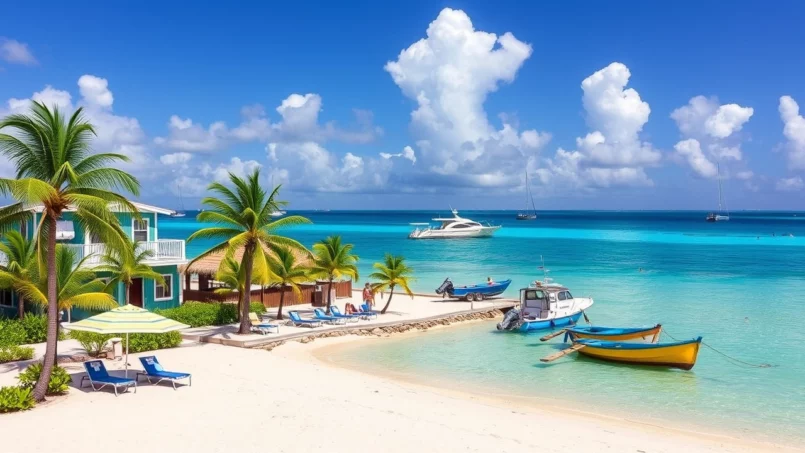
Located in the Caribbean, Aruba attracts tourists, digital nomads, and new residents each year, drawn by its dry climate, picture-postcard beaches, and reputation as a safe, modern island. But vacationing on “One Happy Island” is nothing like living, working, or spending several months a year there as an expat. It’s a different experience worth exploring.
This guide covers all the essential aspects for relocating to Aruba: administrative procedures (visas, residence permits), cost of living, neighborhood and housing choices, healthcare system, taxation, importing belongings, children’s education, opening a bank account, driver’s license, as well as specific options for investors and retirees. It provides a realistic, data-driven overview to prepare your project with peace of mind.
Understanding Aruba: A small territory… very open to the world
Aruba is a constituent country of the Kingdom of the Netherlands, autonomous in its internal affairs but linked to the Netherlands for nationality and certain aspects of foreign policy. Located just 13 miles off the coast of Venezuela, the island lies outside the main hurricane belt, significantly limiting the risk of hurricanes compared to other Caribbean islands.
Fixed exchange rate between the Aruban florin and the US dollar, at 1.79 AWG to 1 USD.
With over 90 nationalities represented and an already well-established expat community, local society is accustomed to foreigners. The “poco poco” pace of life – easy-going, unhurried – is accompanied by a relatively low crime rate, making Aruba one of the safest islands in the Caribbean according to several rankings.
The climate is hot, dry, and windy, with around 300 sunny days per year and an average temperature of about 28°C (82°F). Humidity remains high, but the constant trade winds make the heat more bearable, though UV levels require serious sun protection.
Where to live in Aruba: Overview of neighborhoods and lifestyles
The island is small but highly diverse. Your daily life won’t be the same if you settle in the capital, in a residential area near the beaches, or in a smaller, more local town. Each area has its own vibe, advantages, and limitations for an expat.
Oranjestad: Urban life, services, and controlled costs
The administrative, economic, and cultural capital, Oranjestad concentrates a large part of the infrastructure: the main Dr. Horacio E. Oduber Hospital, the university, museums, shops, government offices, coworking spaces (like Colab Aruba). Its lively waterfront, colorful colonial buildings, and commercial areas make it a dynamic place to live for those who appreciate an urban atmosphere.
Financially, Oranjestad is generally a bit cheaper than the island’s average, particularly for food, housing, and leisure.
Here are some average differences between Oranjestad and the island as a whole:
| Expense Category | Oranjestad vs. Aruba Average |
|---|---|
| Restaurants | –5% |
| Groceries | –17.5% |
| Housing | –6.2% |
| Childcare | –22% |
| Leisure / Sports | –8.2% |
| Transportation | +3.4% |
Rents remain high on a regional scale but are generally lower than in highly touristic beach areas like Palm Beach. You can find modern downtown apartments, small townhouses, and some more upscale seaside residences.
Noord, Palm Beach and Eagle Beach: The expat and tourist heartland
Noord is often cited as the best compromise for expats, especially families. This residential area in the northwest, adjacent to the famous Palm Beach and Eagle Beach, combines:
A typical neighborhood attracting a significant expat community stands out for its quality of life. It offers quiet streets, single-family homes, and secure gated communities. Residents also benefit from proximity to amenities such as parks, sports facilities, shopping malls, supermarkets, and a variety of restaurants.
The flip side: it’s one of the most expensive areas on the island, especially right near the beaches and the “Hotel Zone,” which encompasses Palm Beach, Eagle Beach, and Divi Beach.
Palm Beach is the most expensive sector, lined with luxury resorts, beach bars, shops, and nightlife. Ideal if you love constant activity, less so if you seek tranquility or a controlled budget.
Eagle Beach, regularly ranked among the most beautiful beaches in the Caribbean, offers a calmer atmosphere, with wide white sand beaches and a more residential community. It’s also a sought-after area for high-end seasonal rentals.
Malmok, Savaneta, San Nicolas, Santa Cruz, and Paradera: Other options to consider
For an expat, other areas may better suit a more local or nature-oriented lifestyle.
Aruba offers a diversity of neighborhoods, each with its own character, atmosphere, and real estate assets, to match different lifestyles and budgets.
Very high-end residential area in the north, with luxury villas and seaside homes. Direct access to snorkeling spots and water sports. Exclusive vibe and high prices.
Former fishing village, more authentic and quiet, with beaches like Mangel Halto. Housing generally more spacious and cheaper than in Noord, for good immersion in Aruban culture.
Island’s second-largest city, nicknamed the “Sunrise City.” Less touristy and more cultural (street art, festivals). Includes family-friendly beaches like Baby Beach. Real estate prices are among the most affordable.
Central area appreciated for its proximity to Arikok National Park and its hiking trails. More affordable housing, ideal for an “outdoor” and community-oriented lifestyle.
The “green heart” of Aruba, more rural and peaceful, away from major tourist flows but relatively close to everything by car. A central and quiet neighborhood.
These areas generally offer lower rents and purchase prices than Noord or Palm Beach, at the cost of longer trips to certain services or highly touristic beaches. Since a car is almost essential on the island, this constraint remains relative.
Visas, permits, and statuses: Overview of options for relocating
Aruba is part of the Kingdom of the Netherlands but is not in the European Union or the Schengen Area. Immigration policy is specific to the island, although Dutch nationality law applies. The key organization for any relocation project is DIMAS (Departamento di Integracion, Maneho y Admision di Stranhero) in Oranjestad.
Short stays and extended tourist stays
Many nationals can enter without a visa for a tourist stay, including citizens of the United States, Canada, the European Union, the United Kingdom, Ireland, and Schengen countries.
In practice:
– the standard admission period is 30 days;
– this can be extended up to 180 days per year, under conditions and upon request;
– US nationals can stay up to 90 days without any special procedure;
– Dutch citizens and citizens of the former Netherlands Antilles can stay up to six months.
Even without a visa, the immigration officer upon arrival always has the final say and can deny entry. Beyond 30 days, you must prove sufficient financial means and have health insurance covering the duration of your stay. Additionally, all air travelers must pay an entry fee of about 20 USD, valid for the calendar year.
“One Happy Workation”: The option for digital nomads
For remote workers, Aruba launched the “One Happy Workation” program, primarily targeted at US citizens but illustrative of the local logic: welcoming remote workers without integrating them into the local labor market.
Main features:
The stay is granted for an initial period of 90 days, extendable to 180 days upon approval by immigration authorities. Remote work is permitted exclusively for foreign employers or clients; no paid activity for entities based in Aruba is allowed. For eligible US travelers, no visa application is required. Simply indicate “One Happy Workation” as the purpose of stay on the mandatory Electronic Embarkation/Disembarkation (ED) card before departure. Requirements include: proof of accommodation, a return or onward ticket, valid health insurance, and proof of sufficient income.
Financially, several sources suggest a monthly income of at least 5,000 USD or an annual income of at least 30,000 USD.
Program beneficiaries are not considered tax residents and do not pay tax on their foreign income in Aruba. Note, however: this program is not a stepping stone to long-term residency.
Temporary residence, work, and retirement: Settling long-term
As soon as you want to reside longer or work locally, the game changes. Apart from tourism, everyone must have written authorization proving their legal presence on the island: a residence permit, work permit, or a combination of both.
Some key rules:
– a temporary residence permit does not automatically allow you to work: you need a separate work permit;
– work permits are generally granted only if no local candidate is available;
– a local employer must typically sponsor the application and assume potential financial responsibilities vis-à-vis the authorities;
– investors/shareholders may be exempt from the local labor market priority test.
For individuals of independent means or self-employed persons, an application for a residence permit without a work permit is possible. It requires proving strong financial self-sufficiency, providing bank references, a recent police clearance certificate, and a clear explanation of the reasons for residency.
Programs for retirees and individuals with independent income
Aruba has established specific arrangements for retirees and people living on their income (investments, pension):
– a residency program for pensioners from age 55, requiring:
– a minimum annual income of approximately 56,200 USD from pension or guaranteed income;
– proof of ownership or a long-term lease on housing in Aruba;
– comprehensive health coverage;
– another scheme mentions a lower threshold around 28,000 USD of guaranteed annual income for certain types of residency.
This type of permit must be renewed annually and does not allow you to hold a job or engage in local commercial activity. A deposit may be required before issuance, the amount varying by country of origin.
To obtain permanent residence, you must have resided legally for five consecutive years with a valid permit, without exceeding:
– six consecutive months outside Aruba, or
– eight months total absence in a given year.
You must also prove stable resources, adequate housing, and pass a civic integration exam in Dutch.
Investing in Aruba to obtain residency
Aruba does not officially offer a “citizenship by investment” program like some Caribbean states, but has established investor pathways leading to a residence permit, often incorrectly called a “golden visa.”
Two main avenues exist:
Minimum investment in Aruban florins (approx. 28,000 USD) required for a 40% stake in a local company under the investor visa.
– 2. Real estate investment
– purchase of a property with a minimum value of 200,000 USD (house, apartment, commercial space);
– maintain ownership for the entire duration of residency;
– limited physical presence possible: one annual visit may suffice to renew the permit.
These investments require planning for transfer taxes (3 to 6%), notary fees (1 to 4%), annual property tax (approx. 0.4% for residents, 0.6% for non-residents), insurance, and possibly property management if you rent out your property.
The entire process – investment, obtaining residency, then Dutch naturalization – takes at least five years of continuous legal residence.
Towards the Dutch passport: Naturalization after five years
A key but often overlooked point: legal residence in Aruba eventually opens access to Dutch nationality, and thus European citizenship. After five years of continuous legal residence (respecting the aforementioned absence limits), it becomes possible to apply for naturalization, subject to:
– passing the integration exam (Dutch language level A2 and knowledge of society);
– presenting a clean or nearly clean criminal record;
– generally agreeing to renounce your original nationality, unless exceptions provided by Dutch law apply.
The procedure is conducted locally in Aruba, leading to a naturalization ceremony and the issuance of a Dutch passport, with all rights associated with the European Union (freedom of movement, right of residence and work in the 27 member states, etc.).
Cost of living and budget: What does it really cost to live in Aruba?
Aruba is an importing island: most consumer goods come from outside, driving up the cost of groceries. The cost of living is significant, especially if you keep consumption habits from your home country instead of adapting to the local offerings.
Overview of rents and overall cost
Several estimates provide an idea:
– for a single person, a “comfortable” budget around 2,000 USD per month, rent included, is often cited;
– for an expat in Oranjestad, some calculations mention about 1,846 USD per month;
– for a family, estimates range from 1,885 USD (more local lifestyle) to over 3,800 USD for a higher comfort level.
Monthly rent ranges are as follows:
| Type of Housing | Indicative Range (USD / month) |
|---|---|
| 1 bedroom downtown | 600 – 1,000 |
| 1 bedroom outside center | 500 – 665 |
| 3 bedrooms downtown | 1,111 – 1,665 |
| 3 bedrooms outside center | 950 – 1,340 |
In practice, living in the capital or in more local areas (San Nicolas, Santa Cruz, Paradera, Savaneta) allows for a more contained budget compared to highly touristic neighborhoods like Noord, Palm Beach, or Eagle Beach.
Groceries, outings, and services: Some key figures
Based on data collected between Oranjestad and the island average, we can outline an indicative table for certain expense items:
| Item / Product | Oranjestad (USD) | Aruba Average (USD) |
|---|---|---|
| Basic restaurant meal | 19.00 | 16.63 |
| Fast-food meal | 10.27 | 10.00 |
| Local draught beer (bar) | 3.00 | 4.25 |
| Cappuccino | 3.72 | 4.75 |
| Milk (gallon) | 7.04 | 7.11 |
| White bread (loaf) | 2.69 | 2.68 |
| Eggs (dozen) | 5.33 | 4.89 |
| Tomatoes (1 lb) | 1.59 | 2.98 |
| Potatoes (1 lb) | 1.01 | 1.78 |
| Mid-range wine (bottle) | 9.99 | 14.00 |
| Internet subscription (≈60 Mbps) | 105.51 | 95.25 |
| Electricity + water (85 m²) | 253.69 | 223.01 |
The electricity and water bill can climb quickly, especially due to air conditioning, which is almost indispensable. Therefore, it’s useful to choose a well-ventilated, well-insulated home and adopt some energy-saving habits.
To reduce expenses abroad, it’s advisable to adopt the local lifestyle by prioritizing products available locally rather than constantly importing brands from your home country. Conversely, a permanent “resort”-style lifestyle will blow your budget.
Housing and real estate: Renting, buying, investing
For an expat, the simplest solution upon arrival is to rent, with the option of considering a purchase after a few months or years, once you understand how the island works better.
Starting with temporary housing
It is generally recommended to book temporary accommodation (hotel, vacation apartment, short-term rental) for the first few weeks or months. This allows you to:
– visit several neighborhoods;
– scope out schools, services, commute times;
– meet with real estate agencies and compare offers.
In Noord, several establishments are often recommended for a soft landing, from small budget to more luxurious family villas.
Buying property: Legal framework and types of ownership
In Aruba, foreigners can freely buy real estate, whether residents or not. Two main categories of land exist:
Freehold (fee simple): you own the land and the building; Leasehold: the land belongs to the State but is subject to a long-term (often 60 years) renewable concession, very common in areas like Palm Beach, Eagle Beach, and parts of Noord.
Types of property ownership in Aruba
In both cases, the purchase follows the same procedure as for an Aruban citizen. A notary public commissioned by the State checks titles, drafts deeds, and secures the transaction. Typically, the buyer pays a deposit of about 10% upon signing the purchase agreement, then the balance upon signing the final deed, within 8 to 12 weeks.
Acquisition costs include:
– transfer tax (3% up to 250,000 AWG, 6% above);
– notary fees (1 to 4% of the price);
– possibly agency commission (often paid by the seller, around 2 to 3%).
Real estate market: Price levels and trends
The residential market is considered relatively stable and transparent on a Caribbean scale. There is no public database like an MLS, but major trends are known:
– strong demand in tourist coastal areas (Noord, Palm Beach, Eagle Beach, Malmok);
– competitive prices compared to other neighboring islands, but steadily rising in premium sectors;
– no restrictions for foreigners, which encourages international investment.
The average prices observed for the entire island are approximately zero, according to consolidated data.
| Property Type | Indicative Average Price (USD) |
|---|---|
| 1 bedroom | 355,000 |
| 2 bedrooms | 475,777 |
| 3 bedrooms | 545,000 |
| 4 bedrooms and more | 589,446 |
Price ranges in a few areas illustrate internal differences:
| Area | Type | Indicative Range (USD) |
|---|---|---|
| Noord | Apartments | 249,000 – 7,500,000 (waterfront) |
| Noord | Houses | 330,000 – 5,500,000 |
| Oranjestad | Apartments | 230,000 – 5,500,000 |
| Oranjestad | Houses | 135,955 – 1,999,500 |
| Savaneta | Houses | 224,157 – 5,200,000 |
| San Nicolas | Houses | 98,315 – 850,000 |
For investors, long-term average gross yields are around 4.5 to 5.5% depending on property size, with significantly higher yields in short-term rentals in tourist areas (up to nearly 19% gross in some calculation scenarios).
Mortgages and financing
The local banking sector offers mortgages, but with stricter conditions for non-residents:
– average interest rates on home loans: around 5.3%;
– loan-to-value (LTV) ratios generally limited to 60% for non-residents, 70–80% for residents;
– high income and collateral requirements.
A significant portion of foreign buyers pay in cash, which simplifies procedures. For an expat planning a long-term stay, consulting a local bank and a tax advisor helps determine whether a local loan is relevant or if it’s better to finance from the home country.
Healthcare, safety, and the medical system: A strength for expatriation
For long-term relocation, the quality of the healthcare system is a major criterion. On this front, Aruba stands out positively.
A robust healthcare system, public and private
The island has one of the best-organized healthcare systems in the Caribbean region. The public system is structured around a mandatory general health insurance, the AZV (Algemene Ziektekosten Verzekering), funded by contributions from employees, employers, and the State.
For people who legally live and work in Aruba (including foreigners), the AZV provides basic coverage:
– general practitioner consultations;
– specialist care upon referral;
– hospitalization;
– reimbursable medications.
Enrollment in the system requires being registered in the population register (Censo) and then joining the AZV. Additionally, some opt for private insurance, local or international, for faster access to private care or to cover services not included in the basic package.
Number of beds at the Dr. Horacio E. Oduber Hospital, Aruba’s main modern general hospital.
– Centro Medico Rudy Engelbrecht in San Nicolas;
– MedCare Clinic in Noord;
– Urgent Care Aruba (Noord) for non-life-threatening emergencies;
– various medical centers and general practitioner offices.
The working language in hospitals is mainly Dutch, but staff also widely speak English, Spanish, Papiamento, and sometimes French or German, which facilitates communication for expats.
Pharmacies, medical equipment, and emergencies
Pharmacies (“botikas”) are well-stocked and generally open Monday to Saturday, with a rotating 24/7 on-call service in each district for emergencies. All medications, even basic ones (paracetamol, etc.), are dispensed at pharmacies. A local prescription is required, as prescriptions from foreign doctors cannot be used directly.
The country also has several medical equipment providers (wheelchairs, hospital beds, oxygen concentrators, etc.), with delivery to home or hotel, and even beach-friendly wheelchairs.
In case of a critical emergency requiring care not available locally, medical evacuations by air ambulance are organized to Curaçao, the United States, Colombia, or the Netherlands.
Health insurance for expats and nomads
For temporary stays (tourism, digital nomadism), travel insurance covering at least 15,000 USD in medical expenses, hospitalization, and repatriation is recommended, even required. Many international companies (Cigna, Allianz, SafetyWing, etc.) are recognized by local health institutions.
For long-term expats not working locally (individuals of independent means, retirees, self-employed persons working for foreign clients), it is essential to have solid international coverage, possibly including medical evacuation to a third country.
Safety and public health
Aruba remains a safe island, but some precautions are still advised:
– avoid leaving valuables on display in cars and at home;
– limit visits to very isolated beaches after dark;
– protect yourself from mosquitoes (risk of dengue, chikungunya);
– stay well-hydrated and avoid prolonged sun exposure in the middle of the day.
The quality of drinking water is excellent thanks to an efficient desalination system, greatly simplifying daily life. On the other hand, the heat and intense sunshine require adapting habits: hat, sunscreen, breaks in the shade.
Education: What options for expat children?
The Aruban education system is heavily inspired by the Dutch model. The island boasts a literacy rate of 98%, a sign of a generally high level of education, even though schooling is not legally compulsory.
For expat families, several options exist:
– local public and private schools, mostly in Dutch or Papiamento;
– international or bilingual schools, in English and other languages.
International School of Aruba and bilingual schools
The International School of Aruba (ISA) is the flagship institution for international families. A private non-profit school, it welcomes students from kindergarten to high school in an English-language setting, preparing them for higher education with curricula aligned with American standards. Tuition fees – on the order of 13,600 to 30,100 AWG per year – remain high compared to the local cost of living but are comparable to other international schools in the region.
The ISA offers mother-tongue programs in Spanish and Dutch, a rare offering on an island of this size. This is particularly valuable for families wishing their children to maintain a high level in these languages.
Other structures, like Beautiful Sun Monterossi School (the island’s first Montessori school, bilingual English-Dutch for ages 3–6), complement the offering for young children.
Local system and preparation for return
For families considering a future return to Europe or elsewhere, international schools have the advantage of offering recognized and transferable programs (American programs, even the International Baccalaureate for some schools in the region). Local schools, however, can be an excellent choice for families settling long-term, with strong linguistic and cultural immersion.
The educational offering is abundant: primary schools, middle schools, high schools, specialized structures. However, on-site university options are limited, so many young people pursue higher education abroad (Netherlands, United States, etc.).
Banking, money, and taxation: Organizing your finances in Aruba
Relocating to Aruba requires rethinking how you manage money and taxes, especially if you maintain financial ties to your home country.
Opening a local bank account
For a long-term stay, having an Aruban account makes life easier: receiving a local salary, paying bills (rent, electricity, internet), transferring to landlords or schools, etc. Using only a foreign card leads to exchange fees, withdrawal limits, and sometimes security blocks.
Several commercial banks operate on the island:
– local banks: Aruba Bank, Caribbean Mercantile Bank (CMB), Banco di Caribe;
– international banks: RBC Royal Bank (Canada), CIBC FirstCaribbean, etc.
Opening conditions vary by institution but generally include: legal requirements, security standards, and quality expectations.
– a valid passport;
– proof of address (rental contract, recent utility bill);
– proof of income or activity (employment contract, bank statements, tax certificates);
– sometimes a bank reference letter.
For non-residents, some banks require a local anchor (like property ownership, an employment contract, or an investment project) as well as minimum deposits. Monthly account maintenance fees for basic products are typically between 4.5 and 5 Aruban florins (AWG). While procedures can often be initiated online, a visit to a branch is still necessary to finalize account opening.
For those who don’t want to go that far, neobank solutions like Wise, Revolut, or N26 (depending on country of residence) allow you to maintain multi-currency accounts and limit exchange fees.
Personal taxation: Basic principles
The Aruban tax system is based on taxation:
– for residents, on their worldwide income;
– for non-residents, only on their income from Aruban sources.
Taxable income includes wages, business profits, dividends, interest (with certain exemptions), rental income, specific capital gains. The system is progressive, with rates that can approach 52% on the highest brackets according to some schedules.
Some key points:
Most capital gains (except from a substantial participation of 25% or more) are not specifically taxed. Interest from savings accounts in recognized banks is exempt from income tax. Dividends paid by resident companies to individuals are subject to a 10% withholding tax.
Residents benefit from broader deductions than non-residents (mortgage interest, life insurance premiums, exceptional medical or educational expenses, donations, etc.). Tax losses can be carried forward for several years.
This is complemented by a mandatory social security system (pension, survivor’s insurance, AZV health insurance), funded by contributions shared between employer and employee, which can represent up to about 26% of gross salary.
Individuals present in Aruba under temporary statuses like “One Happy Workation” are not considered residents and are in principle not taxed on their foreign income in Aruba.
Real estate taxation and rental income
For property owners, taxation is structured around:
Flat annual property tax rate for non-residents and corporations, while residents are subject to a progressive scale from 0 to 0.6%.
– a transfer tax (3% up to 250,000 AWG, 6% above) upon purchase or transfer of shares in a real estate company;
– taxation of any rental income (subject to general income tax or corporate tax rules).
There is no specific tax on capital gains, except for substantial participations. Investors must, however, consider consumption taxes (BBO, health taxes, etc.) if their rental activity is structured as a business.
For expats from countries with worldwide taxation (notably the United States), coordination between Aruban tax and home country tax obligations requires specialized advice: foreign earned income exclusion, tax credits, foreign account reporting, etc.
Bringing your belongings, car, pets: Moving logistics
Aruba offers a relatively favorable regime for those moving there with the intention to reside.
Importing personal effects and furniture
New residents can, under conditions, import their household goods and personal effects duty-free. To do so:
– you must have normally resided outside Aruba for at least 12 consecutive months before moving, having spent at least 185 days per year there;
– the goods must be used, owned, and in use for at least six months (one year for vehicles);
– they must be intended for the same private use in Aruba (no immediate resale or commercial use);
– you are not permitted to sell, lend, or pawn the goods imported under the exemption.
The exemption applies to a maximum of two shipments, and the goods must be imported within 6 to 12 months of arrival (extensions can be requested). The application for exemption is made to the technical department of customs (Departamento di Aduana).
The import file must be complete (residency certificate, detailed inventory of goods, invoices, customs form, copy of passport, etc.). The physical presence of the interested party in Aruba during customs clearance is mandatory. In case of refusal of exemption, a double appeal is possible: first to the Commissioner of Customs, then to the Council for Tax Appeals.
Alcohol, tobacco, commercial vehicles, professional equipment (except small portable instruments) are excluded from the exemption.
Importing a car
It is possible to import a car or motorcycle as part of personal effects, potentially benefiting from the exemption if:
– the vehicle is left-hand drive (local standard);
– it was acquired and used at least six months before shipping (one year to justify previous residence);
– it is not a sports car or a vehicle intended for racing recreation.
This is the percentage of import duties typically applied, in the absence of exemption, on the CIF value of a vehicle.
Once on site, the vehicle must be inspected and registered with Customs, complying with environmental standards (some very old or highly polluting cars may be rejected).
Transporting pets
Dogs and cats are permitted, but regulations are strict:
– passport or veterinary health certificate in Dutch or English, detailing the animal’s description and its owner;
– valid rabies vaccination, administered less than a year ago and at least 30 days before arrival;
– procedures to be initiated with a veterinarian at least 10 days before departure.
Without compliant documents, the animal will need to be vaccinated upon arrival and placed in quarantine for 30 days. Importing animals from certain Central and South American countries is generally prohibited, except with explicit waiver from Aruba’s veterinary service.
For other domestic species or protected animals, you must check CITES regulations with local veterinary authorities.
Getting around: Car almost mandatory, traffic rules to learn
Aruba’s road infrastructure is designed for cars. Sidewalks and bike lanes are rare, and the heat is poorly suited for long walks or bike rides. For an expat, having a car (bought locally or imported) is very quickly indispensable.
Essential rules:
– drive on the right, pass on the left;
– speed limits: 30 km/h (19 mph) in built-up areas, 60 km/h (37 mph) outside, 80 km/h (50 mph) on some main roads, unless otherwise indicated;
– give way to traffic already in a roundabout, yield to the right at unmarked intersections;
– no right turn on red;
– an open secret among many local drivers: signs and speeds are not always respected, so extra caution, especially at night.
In case of an accident, do not move the vehicles and call the police immediately. Downtown parking is regulated by meters (notably in Oranjestad). Parking along yellow lines or in reserved areas is prohibited. Overstaying your parking time can lead to the vehicle being towed.
Car rental is possible with an international driver’s permit or a valid foreign license. Most rental companies require a minimum age of 25 (sometimes 21 with conditions). To explore the wildest areas (some trails in Arikok Park, access to some natural pools), a 4×4 is necessary, but driving on dunes and beaches is strictly prohibited. UTVs and ATVs have been banned from the national park since 2020.
Quality of life: Beaches, nature, activities, and daily life
Beyond administration and budget, settling in Aruba is above all about embracing a new quality of life.
The beaches – Eagle Beach, Palm Beach, Baby Beach, Arashi, Mangel Halto, Boca Catalina, Tres Trapi, Divi Beach, Manchebo, and many more – are part of daily life. Some are ideal for families (Baby Beach with its shallow water), others for snorkeling (Mangel Halto, Boca Catalina), and others for watching planes land (Surfside Beach).
Aruba’s arid interior contrasts with its beaches, featuring cacti and rock formations. Arikok National Park covers nearly 20% of the island and contains caves, cliffs, dunes, coves, and natural pools. For a panoramic view, climbing the Hooiberg (587 steps) offers a 360° viewpoint. Finally, the dunes around the California Lighthouse are famous for spectacular sunsets.
The cultural scene centers around Oranjestad and San Nicolas, with museums, a historic fort (Fort Zoutman), street art, festivals, and music events. Nightlife is mainly in Palm Beach and on some beaches with bars, karaoke, and live concerts.
Modern comforts are generally present: high-speed internet (with averages of 17 Mbps for some nomads, but fixed infrastructure can be higher), quality drinking water, reliable electricity, a solid healthcare network, and well-stocked stores.
However, the island remains a small, isolated territory: for some profiles, routine can set in, and you must enjoy the island vibe, the slow administrative pace, and sometimes the reliance on planes for major trips.
Conclusion: Preparing your expatriation to Aruba with realism
Aruba combines many assets for an expatriation project: safety, exceptional climate, robust healthcare system, welcoming population, modern infrastructure, stable political status within the Dutch realm, reasonable taxation on assets and capital gains, and, for those aiming long-term, a clear path to permanent residence and then Dutch nationality.
In return, you must contend with:
– a high cost of living, especially if you don’t adapt to local habits;
– the near-mandatory necessity of a car;
– potentially heavy income tax for high-income residents;
– demanding administrative procedures for residence permits, work permits, or investment;
– the island character, which can be seen as an advantage or a constraint.
To succeed in your relocation, it is recommended to:
Before permanently settling in Aruba, it is crucial to: take a long exploratory stay of several weeks or months to live like a local; consult DIMAS and possibly a specialized immigration lawyer to choose the appropriate status (retiree, investor, worker, digital nomad); work with a local real estate agent to find a neighborhood matching your lifestyle and budget; anticipate health (international insurance, enrollment in AZV if necessary) and children’s education; and, in case of an investment project, get advice on the tax implications in your home country and in Aruba.
Aruba is not just a vacation backdrop: it’s a full-fledged territory with its own rules, economic and social balances, and a strong identity. Approached with realism and preparation, however, “One Happy Island” can become a durable and happy home for many expats.
Disclaimer: The information provided on this website is for informational purposes only and does not constitute financial, legal, or professional advice. We encourage you to consult qualified experts before making any investment, real estate, or expatriation decisions. Although we strive to maintain up-to-date and accurate information, we do not guarantee the completeness, accuracy, or timeliness of the proposed content. As investment and expatriation involve risks, we disclaim any liability for potential losses or damages arising from the use of this site. Your use of this site confirms your acceptance of these terms and your understanding of the associated risks.

Cyril Jarnias is an independent expert in international wealth management with over 20 years of experience. As an expatriate himself, he is dedicated to helping individuals and business leaders build, protect, and pass on their wealth with complete peace of mind.
On his website, cyriljarnias.com, he shares his expertise on international real estate, offshore company formation, and expatriation.
Thanks to his expertise, he offers sound advice to optimize his clients' wealth management. Cyril Jarnias is also recognized for his appearances in many prestigious media outlets such as BFM Business, les Français de l’étranger, Le Figaro, Les Echos, and Mieux vivre votre argent, where he shares his knowledge and know-how in wealth management.





