
 Published on and written by Cyril Jarnias
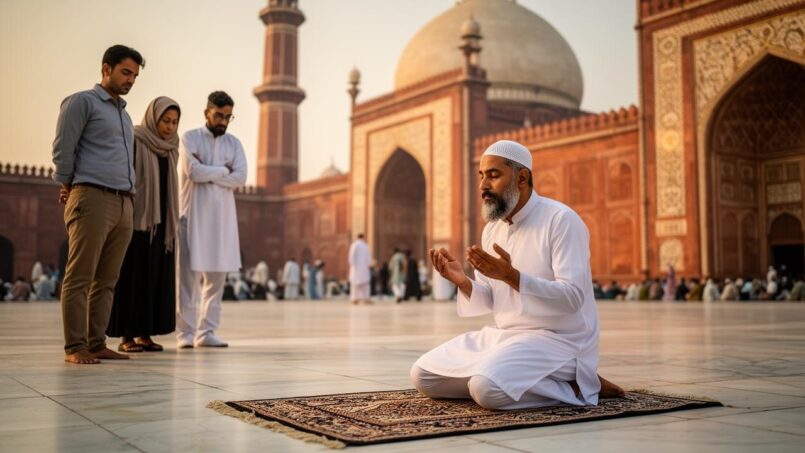
Settling in Pakistan means entering a country where religion is not limited to mosques and holidays: it shapes social codes, work hours, the way people greet each other, dress, eat, and even give to those in need. For an expatriate, understanding these local religious practices is not just a matter of politeness; it is the key to avoiding missteps, gaining the trust of those you interact with, and truly feeling integrated.
Pakistan is a country with a vast Muslim majority, where religion plays an important role. It is also home to religious minorities, including Christians, Hindus, Sikhs, and other faiths. To live harmoniously there, it is essential to understand and respect these local religious sensitivities.
A predominantly Muslim but plural religious landscape
Pakistan is an Islamic republic, where Islam permeates private life, public life, and the legal system. Approximately 95 to 97% of the population is Muslim, the vast majority being Sunni, with a dominant Hanafi school and influences from movements such as Deobandism and Sufism. Shia Muslims represent a significant minority (often estimated between 10 and 20%), making the country one of the largest Shia centers in the world after Iran.
Although the Pakistani Constitution officially guarantees the protection of religious minorities (Christians, Hindus, Sikhs, Parsis, Jains, Buddhists, and Ahmadis), their freedom of worship, and reserved seats in Parliament, the reality is often marked by tensions, discrimination, and violence.
For an expatriate, it is essential to remember two things: the centrality of Islam in daily life, and the presence of religious minorities who have their own festivals, temples, churches, or gurdwaras. In most major cities, you can find a mosque, a church, and a Hindu temple within a few streets of each other.
Religious greetings: the first sign of respect
In Pakistan, the way you greet someone immediately sets the tone of the relationship. Using local phrases, even with a rough accent, is a strong marker of respect.
The most common greeting is “Assalamualaikum”, literally “Peace be upon you”. The expected response is “Waalaikum Assalam” – “And upon you, peace.” This phrase transcends age, social class, and context: it is used when entering a home, an office, a shop, a taxi, or a business meeting.
You will often hear a shortened form, “Salaam,” which serves as a “hello.” Non-Muslims also use it widely, even among themselves, as the phrase has become a shared social code.
In everyday Urdu conversation, many religious expressions are commonly used, such as ‘Insha’Allah’ (God willing) or ‘Alhamdulillah’ (praise be to God), illustrating the deep integration of faith into everyday language.
| Expression | Meaning / Primary usage |
|---|---|
| Insha’Allah | “God willing” – used for any future plan, from the most mundane to the most important. |
| Masha’Allah | “What Allah has willed” – an admiring compliment, often for a child, an achievement, a house, to avoid invoking envy. |
| Subhanallah | “Glory to God” – amazement or admiration at something beautiful or surprising. |
| Alhamdulillah | “Praise be to God” – to say that one is well, or to express gratitude. |
| Bismillah | “In the name of God” – said before starting a meal, work, or a journey. |
| JazakAllah Khair | “May Allah reward you with goodness” – a thank you with a strong religious connotation. |
Farewell phrases follow the same logic: “Khuda Hafiz” or “Allah Hafiz” mean “May God protect you”. Here again, non-Muslims commonly use them.
For an expatriate, adopting them is neither a profession of faith nor cultural appropriation, but a much-appreciated gesture of politeness. In a multi-faith environment, simply saying “Salaam” or “Hello” may suffice if you are not comfortable with explicitly Islamic expressions.
Greetings from religious minorities
In some regions, especially in Punjab and Sindh, you will encounter Sikhs and Hindus. Their religious universe is also reflected in greetings:
| Community | Phrase | Meaning |
|---|---|---|
| Sikh | Sat shree Akaal | “The name of God is truth” – formal greeting. |
| Sikh | Rab rakhaa / Guru rakhaa | “May God / the Guru protect you” – farewell phrase. |
| Hindu | Namaste / Namaskaar | Greeting with hands joined at chest level; can also mean goodbye. |
Using these phrases in the right contexts – a Sikh temple, a Hindu village, a colleague from these communities – is seen as a sign of attentiveness and cultural sensitivity.
Daily prayer and the mosque: understanding the rhythm of the day
Ritual prayer (salat or namaz) structures time in Pakistan. Five times a day, the call to prayer (Azaan) resonates from the minarets: at dawn, noon, afternoon, sunset, and evening. Even if not all Muslims pray at the mosque each time, this call marks a very strong symbolic tempo.
In working-class neighborhoods as well as city centers, mosques are everywhere. For an expatriate, this implies several concrete things:
– accepting that meetings, classes, or appointments may be adjusted around prayer times, especially Friday noon ;
– avoiding loud music or noise near a mosque during prayer time ;
– understanding that mosque attendance is much more than a ritual act: it is a moment of socializing, meeting, and information exchange.
Friday, the heart of the religious week
On Friday noon, the Jumu’ah prayer has a special status: it is considered obligatory for adult Muslim men residing in the locality. It replaces the usual noon prayer and is accompanied by a sermon (khutbah).
In Pakistan, this moment translates into offices closing or reducing activity, traffic jams in front of major mosques, and shopkeepers lowering their shutters for the duration of the prayer. In many Muslim countries, Friday is part of the weekend; in Pakistan, it is officially a working day, but in practice, the midday period is largely devoted to worship.
Observer of social practices in Pakistan
A typical Jumu’ah service lasts about an hour: the call to prayer, the sermon (in Urdu, sometimes mixed with Arabic), then two units of congregational prayer. The sermon addresses religious themes, but also social ones: solidarity, justice, morality, current community affairs.
For a non-Muslim expatriate, it is often possible to attend the khutbah, provided you scrupulously respect the etiquette:
– dress very modestly (shoulders, arms, and legs covered, scarf for women);
– remove your shoes before entering the prayer hall;
– stay in the background, in silence, without participating in the prayer gestures;
– avoid taking photos or videos without explicit permission.
Mosques are designed as prayer spaces. They feature large halls covered with carpets, without chairs or figurative religious representations. There is often a separation between men and women, marked by a curtain, a separate floor, or a dedicated room.
Social and charitable role of mosques
In Pakistan, the mosque is not just a place of worship; it is a true community center. Historically, in the time of the Prophet in Medina, the mosque already served as a place of prayer, a court, a study center, and a refuge. This tradition continues.
Concretely, many local mosques:
– distribute food aid to poor families through zakat and donations ;
– organize Quran, Arabic language, and religious initiation classes for children and adults ;
– host collective iftars during Ramadan;
– serve as gathering points during disasters (floods, earthquakes) to coordinate solidarity;
– offer informal family or social advice, through the imam or committee members.
Organizations like Jamiat Sanabilul Khair (JSK) have developed an impressive network of mosques and Islamic centers, building or rehabilitating several thousand places of worship that today serve over a million people across the country. For an expatriate, engaging in calm, respectful dialogue with the neighborhood imam or mosque officials can be an excellent way to understand local needs, sensitivities, and expectations.
Dress and modesty: a religious language in itself
The concept of modesty, central to Islam, permeates dress codes in Pakistan. There is no law imposing a dress code on foreigners, but social scrutiny plays a powerful role. Dressing soberly and covered is seen as a sign of respect – and, concretely, also reduces unwanted staring.
For women, the implicit rules are clear:
– legs covered by pants or a long skirt; skirts above the knee and shorts are to be avoided;
– torso fully covered, without cleavage or exposed midriff;
– shoulders and upper arms covered – no tank tops or thin straps in public;
– loose-fitting rather than tight or sheer clothing.
Wearing a headscarf is not a legal requirement in public spaces in Pakistan, and it is common to see women without head coverings in major cities. However, it is mandatory to cover your head with a veil, shawl, or dupatta when entering mosques, Sufi shrines, or certain mausoleums. It is therefore recommended to always have a light scarf on hand to comply with this rule in places of worship.
For men, the modesty requirement is slightly more relaxed, but very real:
For appropriate attire, avoid short shorts outside of sports contexts. Cover your shoulders, avoiding tank tops, especially in conservative areas. Opt for pants or a shalwar kameez for mosque visits and professional settings.
The shalwar kameez, a loose-fitting ensemble consisting of baggy pants and a long tunic, is the most common traditional outfit. For an expatriate, adopting it – for example, on festive days, when visiting villages or religious sites – sends a strong signal of cultural respect and offers the added benefit of welcome comfort in hot weather.
In more conservative regions, such as parts of Khyber Pakhtunkhwa or southern Punjab, wearing the niqab or burqa is common among women, though not legally imposed. Conversely, in tourist valleys like Hunza or Ghizer, or in large urban centers, the dress atmosphere is a bit more relaxed, though modesty remains the norm.
Ramadan: experiencing the holy month as an expatriate
Ramadan, the ninth month of the Islamic calendar, is the most structuring religious event of the year. Adult Muslims are required to fast from dawn to sunset, abstaining from food, drink (including water), tobacco, and sexual relations, while also striving to purify their thoughts and behavior.
In Pakistan, this month literally transforms the rhythm of society:
– days are slower, nights livelier;
– work hours are often reduced by about two hours;
– many restaurants close during the day or only offer discreet takeaway services;
– transportation and taxis become scarce around iftar time, as everyone wants to go home to break their fast with family.
Pakistani law provides for imprisonment for those violating the ban on eating, drinking, or smoking in public during the Ramadan fast, applicable even to non-Muslims.
For a non-Muslim or non-practicing expatriate, a few essential guidelines are needed:
– avoid drinking even water or smoking in public before sunset;
– prefer meals in the privacy of a closed office or your home;
– accept invitations to iftar, the meal breaking the fast after sunset: it is a mark of great hospitality.
Iftar is a strong social moment: people share dates, tea, and traditional dishes; mosques organize free meals open to all, including non-Muslims. In Lahore, for example, the Badshahi Mosque is known for its collective iftars where thousands of people sit side by side. For an expatriate, participating calmly and respectfully is a rare immersive experience.
During Ramadan, additional nightly prayers called Taraweeh take place in mosques. The end of the month is particularly marked by Laylat al-Qadr, the “Night of Destiny,” a night of intense devotion considered more virtuous than a thousand months of prayer.
Concrete impact on daily life
Beyond the legal and spiritual aspects, Ramadan has very practical effects for an expatriate:
– increased difficulty finding a restaurant open during the day, except for some international chains or places frequented by foreigners;
– the need to book well in advance for dinner at a restaurant around iftar time, which is very popular;
– reduced energy and patience among fasting colleagues or collaborators, especially at the end of the day in hot weather;
– changes in hours for public institutions and businesses, sometimes communicated late.
Planning your travel, meals, and appointments with these constraints in mind is essential to avoid mutual frustration.
Major religious festivals: what an expatriate should know
The Pakistani calendar is punctuated by numerous Muslim festivals, but also by minority festivities and secular national holidays. The main religious moments you will see and feel are as follows.
Eid-ul-Fitr: the festival ending Ramadan
Eid-ul-Fitr marks the end of the fast. In the morning, huge crowds gather for a special prayer, often outdoors or in large mosques. In Lahore, over a hundred thousand worshippers may assemble at the Badshahi Mosque. Families wear new clothes, exchange gifts, and visit relatives.
A strong religious dimension accompanies the festival: the zakat al-fitr, a charitable contribution given before the Eid prayer to enable the less fortunate to also partake in the joy of the holiday. The country operates at a slow pace: public holidays, closed public services, massive travel to join family of origin.
For an expatriate, Eid is a moment to anticipate. It is like a super extended weekend during which many activities come to a halt. It is also an opportunity to be invited into local homes, to discover traditional cuisine and the domestic rituals specific to this festival.
Eid-ul-Adha: sacrifice and sharing
Eid-ul-Adha, the “Greater Eid,” commemorates the prophet Ibrahim’s willingness to sacrifice his son on divine command, before God sent him a ram as a substitute. The festival is closely linked to the pilgrimage to Mecca (Hajj), but also concerns those who stay in the country.
The central rite is the sacrifice of an animal (often a sheep, goat, sometimes a cow or camel) whose meat is divided: one share for the family, one for relatives, one for the poor. In the days leading up to it, cities see entire livestock markets arrive; on the morning of the festival, these ritual slaughters take place on many streets.
For an expatriate unfamiliar with these practices, the visual and auditory aspect can be disorienting. The key is to understand the symbolism of giving, trust in God, and redistribution that this festival carries, and to avoid any mocking or shocked comments in public.
Other Islamic and Sufi celebrations
Throughout the year, other dates mark religious life:
The Pakistani religious calendar includes several major commemorations, sometimes sources of division or requiring specific security measures. Among them: Mawlid, celebrating the birth of the Prophet Muhammad; Shab-e-Barat, the night of forgiveness marked by prayers and offerings; Muharram and Ashura, an intense mourning period for Shias commemorating the martyrdom of Husayn, often under high security; and Sufi Urs, annual festivals honoring saints, combining devotion, music, and dance, and drawing trans-community crowds.
These events, far from being purely “folkloric,” showcase forms of Islam that are more mystical, marked by music, poetry, and a very emotional relationship with the sacred. Attending them as a respectful observer allows you to understand another facet of Pakistani religiosity.
Charity and solidarity: religion as a driver of giving
A striking feature for many expatriates is the power of the giving culture in Pakistan. Inspired by Islam but also by the other religions present, it manifests daily and on a massive scale.
This is the percentage of monetary wealth that affluent Muslims must pay annually as zakat, one of the five pillars of Islam.
Alongside this obligation, sadaqah represents voluntary almsgiving, much more flexible: it can take the form of money, food, volunteer time, or even a simple smile. It can benefit Muslims or non-Muslims, fund an orphanage or the operating costs of a health association. Specific forms, such as fitrana (given at the end of Ramadan) or ushr (tax on agricultural production), complete this system.
Surveys show that the majority of Pakistani households, including the most modest, give regularly.
For an expatriate, concretely, this means: the need to adapt your daily life to a new country, including aspects such as language, culture, legal system, and local habits. They must also manage practical aspects like housing, employment, and social integration.
– being often asked to contribute to zakat or sadaqah collections, especially during Ramadan;
– seeing mosques, NGOs, and neighborhood committees organize distributions of food, clothing, and medical care;
– sometimes being invited to support educational, health, or orphan sponsorship projects.
Understanding that these practices stem from both faith, social justice, and community cohesion helps to better grasp the extent of Pakistani philanthropy, which is heavily religiously marked.
Religious minorities: respect, caution, and measured curiosity
While Islam dominates the landscape, Pakistan remains woven with small religious communities with sometimes troubled histories: Christians, Hindus, Sikhs, Parsis, Shias of various persuasions, Ahmadis. Some concentrate their places of worship in identified neighborhoods, like Youhanabad in Lahore for Christians, or Nankana Sahib as a major Sikh site.
The Pakistani Constitution guarantees equality for citizens and reserved parliamentary seats for non-Muslims. However, discriminatory laws and practices persist, including very harsh blasphemy laws and specific provisions that prohibit Ahmadis from declaring themselves Muslims or using Islamic symbols and terminology.
For an expatriate, two precautions are necessary:
– avoid publicly engaging in debates on these sensitive issues, which touch on theology, politics, and national identity;
– treat all places of worship with the same delicacy: remove shoes, dress modestly, be silent, respect specific instructions (photography, access to certain areas, etc.).
Attending a Christmas mass in a Karachi church, joining a Diwali celebration in a Hindu temple, or visiting a Sikh gurdwara during a pilgrimage are all opportunities to broaden your understanding of Pakistani religious pluralism, provided you research the access rules beforehand, which are often stricter for non-coreligionists.
Social codes shaped by religion and honor
Religion does not act alone; it intertwines with tribal and cultural codes like Pashtunwali among Pashtuns or Balochmayar among Baloch, which emphasize hospitality, honor, protection of guests and family women, and vengeance in case of grave offense.
In practice, for an expatriate, many strong social rules take on a religious coloring:
It is important to treat elderly people with great respect, a value often expressed through religious phrases. Society observes a more or less pronounced separation between men and women depending on the context: separate rooms during meals, separate areas in transportation, or differentiated queues. Outside the family circle, physical contact with a person of the opposite sex is generally avoided; a woman will thus prefer a verbal greeting to a handshake with a man.
Hospitality, meanwhile, is almost sacred. Being invited to eat in a family, Muslim or not, is a mark of honor; refusing is very frowned upon. The meal often begins with “Bismillah,” and is preferably eaten using the right hand to bring food to the mouth. You will be offered seconds several times: it is polite to refuse once, then accept.
Certain topics should be approached with extreme caution, or even avoided: sexuality, atheism, criticism of Islam, religious cartoons, and sensitive geopolitical issues (Kashmir, Israel-Palestine, the Pakistani army). Even among close colleagues, the line between intellectual debate and identity wound is very thin.
Being invited to a mosque or a home: a how-to guide
A large part of religious life takes place in private spaces: family living room during Ramadan evenings, a room reserved for prayer, an inner courtyard turned into a collective iftar hall. You may be invited to participate.
A few simple principles will help you avoid mistakes:
For harmonious interaction, it is essential to adopt certain codes of conduct. Remove your shoes before entering a house or prayer room. Greet the gathering by saying “Assalamualaikum” upon arrival and “Khuda Hafiz” when leaving. Always accept at least a glass of tea or a small snack, as refusing food can be perceived as keeping distance. Finally, carefully observe the behavior of others to adapt to appropriate moments, such as standing, covering your head, or remaining silent.
In a mosque, in particular, avoid: speaking too loudly, using electronic devices, eating or drinking, wearing inappropriate clothing, and disturbing other worshippers.
– walking in front of someone who is praying;
– touching the Quran or a prayer rug without being invited;
– taking photos of worshippers without their consent.
Expatriate women visiting a mosque should wear even more covering clothes than usual, and a scarf to cover their hair, even if they are not Muslim.
Building work relationships in a religious environment
In the professional world, religion makes its presence felt without necessarily being explicitly discussed. Days often begin with a few exchanges about health, family, sometimes punctuated with “Alhamdulillah” (thank God) or “Insha’Allah”. Meetings may be rescheduled to avoid prayer times or Friday noon. During Ramadan, hours are adjusted, and the atmosphere is calmer in the afternoon.
An expatriate manager will gain a lot by:
To foster an inclusive environment, it is recommended to allow practicing colleagues to step out for a few minutes for prayer, especially on Fridays. Avoid scheduling demanding meetings just before iftar during Ramadan. Send greeting messages for major religious festivals, such as “Eid Mubarak.” Finally, incorporate Islamic holidays into project planning to better organize deadlines.
Even partial mastery of a few Urdu phrases – “Shukriya” (thank you), “Bohat shukriya” (thank you very much), “Maaf kijiye” (sorry/excuse me), “Mubarak ho” (congratulations) – creates a closeness that counts enormously in a culture where personal relationships matter most.
Between respect and distance: finding your place as an expatriate
Living in Pakistan is not about adopting the religion of the majority or renouncing your own beliefs, but recognizing the structuring role that faith plays in people’s lives, and behaving accordingly. Concretely, this means:
To integrate and show respect in a culturally Islamic environment, it is recommended: to adjust your clothing to norms of modesty inspired by Islam, even without religious adherence; to observe key times like Ramadan, Eids, or Friday, by adapting your schedule and attitude; to use local greetings and polite phrases, often laden with divine references, with the same naturalness as common phrases elsewhere; and to deeply respect all places and objects held as sacred, whether a Quran, a mosque, a Sufi shrine, a cross, or a Hindu statue.
In return, the expatriate discovers a country where religion inspires immense generosity, a solidarity that is often informal but very effective, and a sense of honor and loyalty that structures families and neighborhoods. By approaching these realities with curiosity, modesty, and tact, it becomes possible not only to avoid misunderstandings, but above all to forge rich connections with a social fabric deeply permeated by religion.
In Pakistan, understanding local religious practices is not an optional extra for “local color”: it is the heart of the key to entering society. The more you grasp its logics – greetings, prayers, festivals, charity, modesty – the more the country ceases to be disorienting and becomes legible, vibrant… and welcoming.
Disclaimer: The information provided on this website is for informational purposes only and does not constitute financial, legal, or professional advice. We encourage you to consult qualified experts before making any investment, real estate, or expatriation decisions. Although we strive to maintain up-to-date and accurate information, we do not guarantee the completeness, accuracy, or timeliness of the proposed content. As investment and expatriation involve risks, we disclaim any liability for potential losses or damages arising from the use of this site. Your use of this site confirms your acceptance of these terms and your understanding of the associated risks.

Cyril Jarnias is an independent expert in international wealth management with over 20 years of experience. As an expatriate himself, he is dedicated to helping individuals and business leaders build, protect, and pass on their wealth with complete peace of mind.
On his website, cyriljarnias.com, he shares his expertise on international real estate, offshore company formation, and expatriation.
Thanks to his expertise, he offers sound advice to optimize his clients' wealth management. Cyril Jarnias is also recognized for his appearances in many prestigious media outlets such as BFM Business, les Français de l’étranger, Le Figaro, Les Echos, and Mieux vivre votre argent, where he shares his knowledge and know-how in wealth management.





