
 Published on and written by Cyril Jarnias
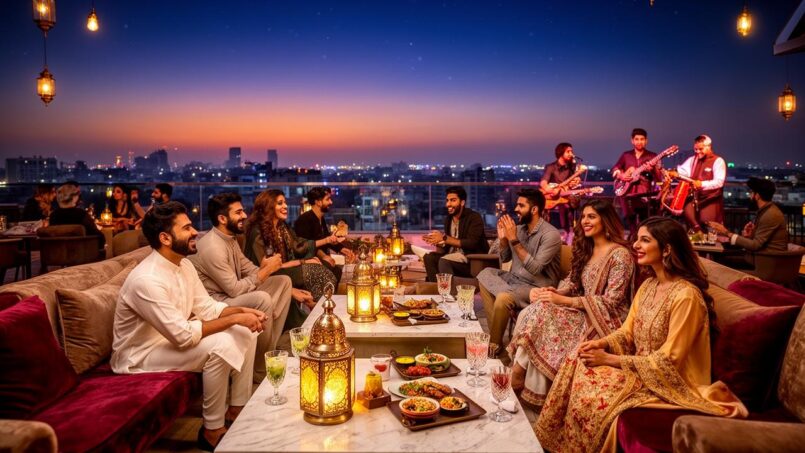
When you think of Pakistan, you often picture daytime bazaars, monumental mosques, mountains, or desert landscapes. Much less is said about what happens once night falls. Yet, between Karachi, Lahore, Islamabad, and a few other cities, nightlife is very real, highly codified by local culture, but surprisingly intense for those who know where to look. Nothing like the unrestrained clubbing of some Western capitals: here, it’s more about food streets packed until 2 a.m., cafes open all night, qawwali concerts, ultra-secret private parties, and long conversations over a simple glass of burning hot chai.
Understanding the Pakistani Night Before Heading Out
The first thing to grasp is the religious and legal framework. Pakistan is officially a dry country: alcohol is forbidden for Muslims, who make up about 97 % of the population. In practice, there are legal channels for non-Muslims and foreigners—special licenses, so-called “wine shops,” bars in certain five-star hotels—and a whole parallel economy of smuggling and bootleg. But the vast majority of nightlife in Pakistan does not revolve around alcohol.
Evenings are primarily organized around food (food streets, stalls, dhabas), tea (like karak chai), and music. Family outings to malls (cinemas, bowling) coexist with a more discreet nightlife scene, featuring electronic raves, house parties, and EDM events organized with the utmost secrecy, on the fringes of mainstream social norms.
Not all cities offer the same nocturnal palette. Lahore is often described as the cultural capital and the best city in the country for going out, Karachi as the “City of Lights” and the beating heart of Pakistani nightlife, and Islamabad as a more subdued capital but with a genuine late-night cafe culture. Security remains a constant concern: despite overall improvements, risks (terrorism, kidnapping, theft) are still taken seriously by locals, who adjust their going-out habits accordingly.
Karachi, “City of Lights”: Food Streets, Cafes, Private Clubs, and Secret Raves
Karachi, a sprawling megacity of about 20 million inhabitants, is often cited as the country’s second city for nightlife, just behind Lahore. Markets stay open until midnight, sometimes 2 a.m. during winter holidays, and some neighborhoods practically never sleep. For a visitor, the challenge is not so much finding a lively spot, but knowing what kind of night you’re after: family-friendly, gastronomic, contemplative, or downright underground.
Neighborhoods That Come Alive After Dark
The coastal and affluent areas concentrate a good portion of the visible nightlife spots. The Defence Housing Authority (DHA) and Seaview sectors are considered relatively safe, which is why many families go out there in the evening. Clifton, with its residential blocks, malls, shisha lounges, and cafes, is also a key reference point. Around Park Tower, Schoen Circle, or Zamzama Street, restaurants and fashion boutiques stay lively late, drawing a younger, urban, well-off crowd.
Other sites play a central role in evening socializing. Khadda Market, in DHA on Khayaban‑e‑Shamsheer, is a real hub of small eateries and snack spots, very congested but bustling well into the night. The Sindh Muslim Central Housing Society (SMCHS) transforms into a food street come dinner time: traffic jams are common after 8 p.m., a sign that crowds are arriving for supper and hanging out on terraces until late, especially on weekends.
Here’s a summary of some major Karachi areas that matter when it comes to nightlife:
| Area / Neighborhood | Dominant Vibe | Nighttime Highlights |
|---|---|---|
| DHA & Seaview | Family-friendly, affluent, seaside | Cafes, private clubs, beach strolls |
| Clifton (Park Tower, Zamzama, etc.) | Trendy, young urbanites | Malls, shisha lounges, restaurants, gaming lounges |
| SMCHS (food street) | Popular, very crowded in the evening | Late dinners, traffic jams after 8 p.m. |
| Khadda Market (DHA) | Densely commercial, foodie-oriented | Row of restaurants open late |
| Bahria Town Carnival | Recreational, family-oriented | Attractions, a spot called “Karachi Nightlife” |
Beyond these main axes, there are more popular or peripheral arteries where clubs are often discreet, tucked away in basements or commercial buildings in neighborhoods like Nazimabad, Gulshan‑e‑Iqbal, Gulberg, or Gulistan‑e‑Johar.
When the Sea Becomes a Nighttime Backdrop
For those who love the sea, the Karachi night is also lived on the sand. Clifton Beach and Seaview are very popular in the evening: when the heat subsides, snack vendors, camel carts, horses, and buggies take over the area. Families come for a stroll, an improvised ride, or just to watch the sea in the dark.
Off the coast of Karachi, the Karachi Port Trust has installed one of the world’s largest marine fountains. Its jet shoots seawater over 600 feet high. At nightfall, the spectacle is enhanced by powerful white spotlights illuminating it. From Clifton Beach and Seaview, this luminous water jet, visible from the shore, gives the waterfront a nearly futuristic look, especially on clear nights.
Farther along the coast, diving and snorkeling trips to Charna Island are organized by specialized clubs. Outings depart from villages like Mubarak by speedboat and sometimes turn into a day or night mini-adventure, with swimming, barbecue, music, and a late return to the city.
Malls, Food Streets, and Family Entertainment
The mainstream nightlife of Karachi is often reflected in shopping malls and large dining areas. Dolmen Mall and Lucky One Mall have become classics for family evenings: shops, restaurants, sometimes a cinema, bowling alley, or children’s play area, all in an air-conditioned environment perceived as safe. Locals come for window shopping after dinner or to catch a movie at the Atrium complex, where a ticket costs around 500 Pakistani rupees (PKR).
Street food culture remains at the heart of Karachi’s identity. Burns Road is the archetype of a food street that doesn’t clear out until 2 a.m.: you can go through kebabs, nihari, sajji, rabri, and other local specialties. A meal in this neighborhood averages around 600 PKR per person. Other spots like Chatkharay, known for its chana chaat, dahi bhalay, and gol gappay, or Yadgar Fish, famous for fish dishes around 350 to 450 PKR per head, round out the nighttime menu.
The range of evening activities goes beyond eating. In Karachi, you can find:
– adventure parks like Go Aish, offering paintball and rock climbing at very affordable prices (a few hundred rupees per attraction) ;
– game spaces like Pi Social, a board game cafe where you pay around 400 PKR for a drink and access to games ;
– trampoline parks like Bounce, around 350 PKR per session, sometimes complemented by horror attractions like XD Haunted Adventure in Ocean Mall ;
– nautical clubs like Defence Authority Marina Club or Defence Authority Creek Club, which occasionally host evening water sports activities.
For a moderate budget evening, available data helps sketch a rough estimate.
| Type of Expense | Indicative Range in Karachi (PKR) |
|---|---|
| Local dinner | 300 – 900 |
| Burns Road food street | ≈ 600 per person |
| Snack at Chatkharay | ≈ 170 |
| Gola ganda at Dhoraji | 50 – 150 |
| Atrium cinema ticket | ≈ 500 |
| Bounce (trampoline) session | ≈ 350 |
| Drink + games at Pi Social | ≈ 400 |
On a “rather comfortable” day, traveler estimates place the overall budget between 6,500 and 8,000 PKR, including accommodation, meals, transport, and leisure. Compared to other metropolises, Karachi remains affordable, which contributes to the intensity of its popular nightlife.
Clubs, Bars, Shishas, and More Discreet Venues
Officially, clubs in Pakistan are rare and tightly regulated. In Karachi, most places identified as bars, lounges, nightclubs, or discos have little in common with large Western venues. Many are former social clubs, multipurpose halls, snooker clubs, or event spaces that take on a more festive vibe at night.
In neighborhoods like Nazimabad, Gulberg, or Gulshan‑e‑Iqbal, names such as Four Seasons Limca, Disco Deewanay, Baloch King, SLOW NUCES, Kpt, or Cloud Mansion appear as bars, discos, or clubs. Some function more like lively cafes with music, others as halls for weddings or private parties, and a few claim a more clubbing atmosphere. Places like Cola de Nuts on Khalid Bin Walid Road present themselves as disco clubs, while spaces such as Alys Snooker Parlour, 8 Ball Snooker, or The Last Black Snooker Club and Gaming Lounge combine billiards, video games, and a bar-like spirit.
In the wealthier neighborhoods, particularly Clifton and Defence, clubs like Sind Club, Defence Authority Club, Karachi Club, or more confidential lounges (Telemart Lounge, Faculty Lounge at Aga Khan Hospital, Supreme Court Judges Rest House in Clifton) play an important role for urban elites: dining, golf at DHA Golf Club, private parties, often behind closed doors.
Add to this a galaxy of shisha cafes and relaxation lounges: Memories Cafe & Hooka Lounge, Rocky Sheesha Cafe, Clifton Chaseup Sheesha Bar, or places like Cafe 9 O’Clock in Khadda Market. Whether it’s a simple hookah shared among friends or an entire evening spent gaming online at lounges like Orange Esports, Karachi’s nightlife largely revolves around these semi-public spaces.
Legal alcohol purchase is officially reserved for non-Muslims and foreigners with a permit. However, in practice, many shops (wine shops) sell to a predominantly Muslim clientele, often with lax oversight. High-end hotels remain the safest and simplest option for foreigners, but their visibility also exposes them to attack risks, leading some to prefer more private settings.
Techno Raves and Clandestine Parties
Alongside this official or semi-official landscape, Karachi hosts one of the most intriguing electronic music scenes in the region. A collective like Controlled Chaos, born from a series of parties at a farmhouse 90 minutes from the city, regularly organizes techno, drum and bass, jungle, or hard house raves in secret locations across the metropolis. Its founder, an event co-producer, recounts how at the first party at that famous farmhouse, hundreds of people showed up despite the isolated location, lack of comfort, and a lineup far from Pakistani pop standards.
The model for these parties is almost micro-sociological: location shared at the last minute, tickets issued after application and manual profile checks, deliberately limited capacity (around 150 people), and basement spaces for discretion. Organizers even obtain official certificates by registering events as concerts or cultural events to guard against administrative shutdowns.
This scene attracts an educated youth, often exposed abroad, seeking harder music (techno, DnB, donk) and spaces perceived as liberating in a highly normative social environment. International DJs are regularly invited: an artist like Sam Binga, known for his fast sets, or a Berlin-based queer DJ like Radical Softness have played in these Karachi basements. Last-minute cancellations, frightened landlords backing out, or police checks are common, hence the collective’s name: “Controlled Chaos.”
For foreign travelers, accessing these parties is nearly impossible without a very strong local network. By definition, they operate in a closed circuit, based on trust and word of mouth to minimize security and police risks.
Lahore: Where the Night Speaks the Language of Food and Music
Lahore presents itself as the cultural capital of the country, and the night there is shaped by an obsession: food. “You can eat endlessly,” say those who know it well, and that’s no exaggeration. Between Gawalmandi, Lakshmi Chowk, Fort Road Food Street, M.M. Alam Road, Old Anarkali, and the mini food streets of Gulberg, you can eat almost 24/7, with very different atmospheres from one neighborhood to another.
Food Streets, the Beating Heart of the Lahori Night
Some streets of Lahore only come alive after sunset. Gawalmandi Food Street, located near the old city and bazaars like Landa Bazaar or Baansan‑wala Bazaar, is a prime example. Lined with old buildings, it’s famous for its traditional breakfasts (halwa puri, paye, nihari) in the morning, then for late dinners of haleem, kebabs, BBQ, and desserts like rabri or kheer. It’s often said that Gawalmandi “wakes up in the evening”: by day, only the sporadic noise of a rickshaw disturbs the street, while at night, the smells of butter, spices, and grilled meat fill the air.
Located at the junction of Mall Road and Abbott Road, Lakshmi Chowk is a historic intersection turned into a nocturnal sanctuary for meat lovers. Described as chaotic, noisy, and a carnivore’s paradise, the spot is famous for its karahis, skewers, and fried meat, with restaurants open very late, sometimes all night. For a complete culinary experience, some local guides recommend dining there after having breakfast at Gawalmandi, forming a kind of gastronomic pilgrimage.
Fort Road Food Street offers yet another face. Developed by the Punjab government along the old city wall, lit with garlands and street lamps, this street is lined with former havelis converted into restaurants. Most offer rooftop terraces with direct views of the Badshahi Mosque, Lahore Fort, and the surrounding skyline. The colorful buildings, illuminated balconies, and perspective on the monuments make this food street a nearly theatrical setting, especially at night. Establishments like Cooco’s Den or Haveli Restaurant, housed in Haveli Khalil Khan, have become institutions for enjoying so-called “desi” cuisine in a heritage setting.
Old Anarkali Food Street, backed by the famous bazaar of the same name, stands out for its more retro atmosphere, with facades reminiscent of the Mughal era, falooda stalls (Riaz Falooda), street snacks, sometimes accompanied by musicians, poets, or qawwals. At night, the street is packed with students, families, and tourists, looking for a dessert or a full meal before heading home.
Here’s a summary of the major food streets of Lahore and their dominant nighttime specialty:
| Food Street / Neighborhood | Perceived Nighttime Specialty | Dominant Crowd Type |
|---|---|---|
| Gawalmandi Food Street | Traditional breakfast, haleem, kebabs, BBQ | Locals, families, curious tourists |
| Lakshmi Chowk | Barbecue, karahi, fried meat | Meat lovers, nocturnal foodies |
| Fort Road Food Street | Authentic Lahori cuisine, Badshahi view | Families, couples, foreign visitors |
| Old Anarkali Food Street | Street snacks, falooda, desserts | Students, families, strollers |
| Mini Food Street of Gulberg | Varied cuisine for middle class and office workers | Gulberg residents, office employees |
| M.M. Alam Road (Gulberg) | Upscale restaurants, world cuisines | Youth, influencers, affluent classes |
The hours are also telling: some food streets like Gawalmandi or Lakshmi Chowk are open 24/7, but truly come alive in the evening. Others, like Fort Road Food Street, mainly operate from late afternoon until after midnight. In high season or on weekend evenings, it’s advisable to book a terrace table to enjoy the view of the Badshahi Mosque.
M.M. Alam Road and “Trendy” Spots
If the historic food streets embody the popular Lahore, M.M. Alam Road in Gulberg reflects another side of the city: an avenue lined with upscale restaurants, cafes, rooftops, and pastry shops, frequented by a young, connected clientele, often from the upper-middle and upper classes. You’ll find international chains (Nando’s, Burger Hub) alongside local institutions like Chaaye Khana for breakfast and tea, Ziafat for family buffets, Salt N Pepper Village for a sophisticated take on Pakistani cuisine, and Xiwang for Chinese food enthusiasts.
A bustling Lahore artery that awakens on weekends, offering a social spectacle and great culinary diversity.
Couples, groups of friends, and families come to dine, have dessert, or simply see and be seen in a parade-like atmosphere.
Establishments like Cafe Aylanto, Espresso, or Jammin Java offer specialty coffees, desserts, and sometimes live music.
An impressive range from Mughlai and Turkish grills to pizzas, steaks, and Asian fusion cuisines.
Qawwali Nights, Folk Festivals, and Musical Nights
Lahore doesn’t just eat at night; it also sings. The city is a bastion of Sufi music and qawwali, a form of devotional singing that fills entire rooms with voices, percussion, and mystical poetry. Events like Qawwali Nights at restaurants in Johar Town, open from 5 p.m. to 1 a.m., combine meals with live performances, immersing the audience in a world of rhythms and Sufi verses in Urdu, Punjabi, or Persian.
Institutions like the National College of Arts (NCA) regularly organize qawwali evenings in auditoriums like Shakir Ali, featuring artists from prestigious lineages. These events, heavily attended by students, faculty, and culture enthusiasts, play a key role in passing this heritage to younger generations. The evenings often blend classic kalams—poems by great mystics—with more contemporary arrangements, while retaining the traditional structure: harmoniums, tablas, choruses, hand claps, and a gradual build in intensity.
More broadly, Lahore hosts folk festivals where music, dance, food stalls, and workshops extend late into the night. Some private schools or universities hold annual folk festivals or Qawwali Nights, where parents, children, and grandparents gather to watch performances, eat, and celebrate, sometimes until the early hours. These events, openly family-friendly and rooted in the academic calendar, show that nightlife in Pakistan is not necessarily synonymous with transgression: it can also be the festive extension of social and community life.
Islamabad: Cafes, Mountain Views, and Very Private Enclaves
Political capital, Islamabad was long considered a city that went to bed early, with restaurants closing at 11 p.m. or midnight at most. But the rise of a genuine cafe culture and the opening of new establishments have gradually changed the landscape. Today, certain sectors, especially F‑10 Markaz, F‑6, and F‑7, experience a sort of “second day” until 2 a.m. or 3 a.m.
The Markaz and Late-Night Cafe Culture
The “markaz,” those small neighborhood commercial centers, play a key role in Islamabad’s nighttime socializing. F‑10 Markaz is often described by locals as the “true” face of the night in the capital: in recent years, restaurants there have stayed open until early morning, with a few cafes operating 24/7. You can drink coffee, play cards or Ludo on the illuminated sidewalks, surrounded by fast-food chains and Pakistani snacks.
Mocca Coffee stays open until 1 a.m., illustrating the lively cafe nightlife in sectors F-6 and F-7 of Islamabad.
A simplified overview of hours for a few iconic cafes in Islamabad:
| Cafe / Venue | Approximate Location | Typical Closing Time |
|---|---|---|
| Junkyard Cafe | I‑8 Markaz | 2 a.m. (until 4 a.m. on Sunday) |
| Chaaye Khana | F‑6 & Bahria Town | Midnight |
| Mocca Coffee | Kohsar Market (F‑6/3) | 1 a.m. |
| Burning Brownie | DHA II | Midnight |
| English Tea House | F‑7/2 | Midnight |
| The Hot Spot | F‑7/3 | 2 a.m. |
| Café Behbud | F‑6 Markaz | 10 p.m. |
In these places, nightlife revolves around desserts, filter coffees, pastries, savory snacks, and a studious or relaxed atmosphere. Some cafes have libraries or reading-room-style interiors, others focus on modern decor, extravagant milkshakes, or terraces where conversations stretch into the cool night.
Panoramic Views and Diplomatic Enclaves
Beyond cafes, Islamabad offers a few iconic nighttime experiences. Monal, a restaurant perched in the Margalla Hills accessible by a winding road, is one of the most famous: you dine while gazing at the illuminated city below, in a setting that attracts both couples and families. Outdoor tables are especially sought after during spring or fall evenings when temperatures are mild.
The capital has private, ultra-secure clubs located in the Diplomatic Enclave, such as the British Club, French Club, and UN Club. Reserved for embassy staff and expatriates, they function as bars and nightclubs with private parties, music, and legal alcohol service. Access is strictly controlled and contingent on nationality or institutional affiliation.
In a more worldly vein, official nightclubs exist in the basements of major five-star hotels like the Marriott or Serena. The Bassment, a nightclub at the Islamabad Marriott, was long one of the country’s few visible clubs, frequented by a mix of expatriates, local elite, and affluent young urbanites. Security is drastic: searches, ID checks, and entry screening.
In parallel, the capital has its own underground scene. Private entrepreneurs organize parties in upscale villas in sectors F and E, or on farms in the Margalla Hills, following the same principle as Karachi’s raves: personal invitations, last-minute location sharing, electronic or Western pop music, and alcohol and sometimes drugs circulating in very tight circles.
Tea, Music, and Weddings: The Other Side of the Pakistani Night
Beyond the major cities and their more or less visible circuits, the Pakistani night is fueled by deeply rooted cultural practices.
The first is undoubtedly chai culture. The Quetta Chai-style stalls—small shops often open 24/7 along main roads—are gathering points where you drink karak chai (very strong, sweet tea), dip a paratha into burning hot chai, and discuss everything: cricket, local politics, weddings, power outages. Some of these stalls stay open long after traffic has died down, offering light and warmth in the night.
The night in Pakistan is often animated by musical expressions inherited from Persian, Arabic, Turkish, and South Asian traditions. These manifestations, such as concerts, festivals, or mehfil-e-sama (Sufi spiritual gatherings), find their most emblematic form in qawwali. A typical mehfil-e-sama brings together a group of 8 to 12 musicians (humnawa), including a lead singer, harmonium and tabla players, accompanied by rhythmic hand claps and the recitation of mystical poems.
Great figures like Nusrat Fateh Ali Khan, nicknamed the “Shahenshah‑e‑Qawwali,” popularized this genre worldwide. Even today, hundreds of qawwali groups, often heirs to a lineage, perform in cities like Karachi or Lahore. Qawwali nights are organized in restaurants, universities, festivals, and also at private events: weddings, mehndi nights, birthdays, or spiritual evenings. In the Azad Kashmir region or in cities like Mirpur or Kotli, Qawwali Nights are even a service industry, with agencies offering to handle sound, decor, and group selection based on budget.
The mehndi night, a Pakistani wedding evening dedicated to henna and dancing, illustrates the scale of nocturnal festivities. In Karachi, these events, often documented in vlogs, take place under large tents in residential neighborhoods. They feature musical stages, dance competitions, covers of Bollywood or Pakistani pop songs, and gigantic buffets that can stretch until 2 a.m. or 4 a.m. The atmosphere is so festive and legitimate that neighbors generally encourage the music.
Going Out While Respecting Local Norms
Nightlife in Pakistan rests on a series of compromises between the desire for socializing, religious constraints, social norms, and security concerns. For anyone visiting or settling in the country, a few basic principles allow you to enjoy the night without major missteps.
Dress should remain modest, even in the evening. In liberal neighborhoods of big cities, jeans and long shirts are acceptable, but tight clothing, short skirts, and low necklines are rare and frowned upon. It’s advisable to carry a scarf or shawl to quickly adapt to more conservative environments like mosques or traditional neighborhoods.
Public displays of affection are strongly discouraged. Holding hands, kissing, or even standing too close to each other on the street or in a restaurant can provoke stares, remarks, or even intervention. On the other hand, two men or two women holding hands or embracing as a sign of friendship is not shocking, as the social code is different.
It is recommended to avoid walking alone at night in deserted alleys and to limit nighttime travel in fragile provinces (Khyber Pakhtunkhwa, Balochistan). Prefer reputable taxis or private cars via app. Women traveling alone should exercise extra caution: keep bags and phones out of sight, sit in the back of vehicles, avoid shared vans, and maintain a polite but clear distance from strangers.
In terms of conversation topics, the night does not permit everything: criticizing Islam, joking about alcohol, mentioning sexuality or homosexuality, or directly attacking politics or security issues are slippery ground, especially in mixed or unfamiliar settings. On the other hand, talking about food, cricket, music, movies, children, or scenery remains a well-appreciated classic.
A Unique Nightlife, Between the Light of Food Streets and the Shadow of Raves
The Pakistani night does not resemble that of Bangkok, Berlin, or Beirut, but it is far from non-existent. It is fragmented, heavily segmented by social class, gender, religion, and status, but it exists, vibrant, on the streets that stay open until dawn, in the cafes of F‑10, on the restaurant terraces of Fort Road, in the food streets of Burns Road and Gawalmandi, on Seaview beach, at qawwali nights and folk festivals, and even in the basements where a few hundred young people dance to techno, out of sight.
For a visitor, adapting to nightlife in Pakistan means adopting its unique codes: savoring a bun kebab at midnight on the street, drinking tea in a neon-lit dhaba, or being carried away by a qawwali in a packed hall, rather than seeking cocktail bars. It can also mean being spontaneously invited to a wedding that lasts until dawn or to a private party, revealing an inventive and sometimes rebellious youth shaping their own nocturnal experiences.
In this constant tension between rules and transgressions, between family spaces and clandestine spheres, nightlife in Pakistan ultimately tells one thing: the deep desire to come together, to share, to eat, to talk, to sing, and to dance, even—and perhaps especially—within a framework that officially leaves little room for it.
Disclaimer: The information provided on this website is for informational purposes only and does not constitute financial, legal, or professional advice. We encourage you to consult qualified experts before making any investment, real estate, or expatriation decisions. Although we strive to maintain up-to-date and accurate information, we do not guarantee the completeness, accuracy, or timeliness of the proposed content. As investment and expatriation involve risks, we disclaim any liability for potential losses or damages arising from the use of this site. Your use of this site confirms your acceptance of these terms and your understanding of the associated risks.

Cyril Jarnias is an independent expert in international wealth management with over 20 years of experience. As an expatriate himself, he is dedicated to helping individuals and business leaders build, protect, and pass on their wealth with complete peace of mind.
On his website, cyriljarnias.com, he shares his expertise on international real estate, offshore company formation, and expatriation.
Thanks to his expertise, he offers sound advice to optimize his clients' wealth management. Cyril Jarnias is also recognized for his appearances in many prestigious media outlets such as BFM Business, les Français de l’étranger, Le Figaro, Les Echos, and Mieux vivre votre argent, where he shares his knowledge and know-how in wealth management.





