
 Published on and written by Cyril Jarnias
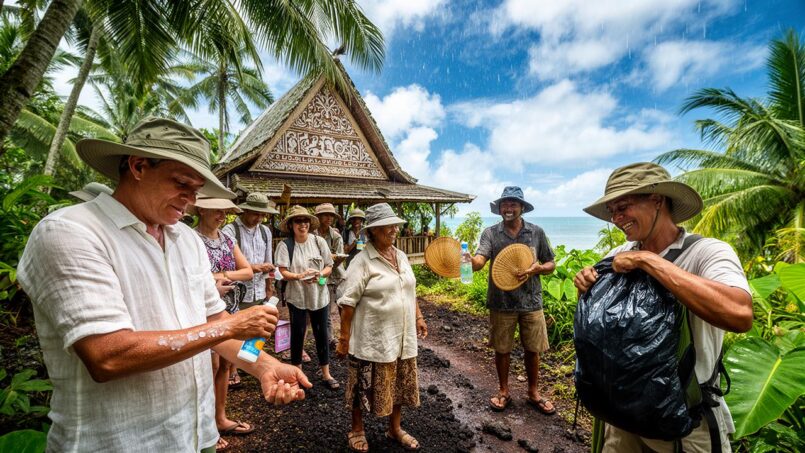
Moving to Palau means choosing a life surrounded by turquoise lagoons, dense forests, and spectacular coral reefs. But behind the postcard lies a demanding tropical climate that tests your body, wardrobe, home… and even your mental health. For an expatriate, the difference between “living in paradise” and “enduring humid heat” often comes down to one thing: preparation.
This guide provides practical tips for acclimating to the local climate, maintaining good health, choosing appropriate clothing, protecting your home from moisture, and preparing for extreme events like typhoons and heavy rains, all while respecting Palau’s specific environmental regulations.
Understanding Palau’s Climate to Better Adapt
Before changing your habits, you need to understand what you’ll be dealing with daily. Palau is located in Micronesia, in the western Pacific, with a climate officially classified as “Af” in the Köppen system—that is, a tropical rainforest climate.
One of the key features is the near absence of distinct seasons: heat, humidity, and rain are present year-round, with only slight variations in intensity.
Temperatures: Hot, All the Time
The climate statistics are almost disconcertingly consistent for a European or North American used to seasons.
| Indicator | Typical Value in Palau |
|---|---|
| Average annual temperature | ≈ 28–28.5 °C (82–83 °F) |
| Average annual high | ≈ 30–31 °C (86–88 °F) |
| Average annual low | ≈ 24–25 °C (75–77 °F) |
| Average day/night difference | 5–6 °C (9–11 °F) |
| Absolute minimum temperature | Rarely below 20 °C (68 °F) |
Daytime temperatures almost always hover around 30–31 °C (86–88 °F), while nighttime lows rarely drop below 24–25 °C (75–77 °F). Even the “coolest months” (December to February) remain warm: in February, it’s typically 30 °C (86 °F) in the afternoon and 25 °C (77 °F) at night. The “heat peak” usually occurs around April, with average highs near 31 °C (88 °F) and possible spikes to 33–34 °C (91–93 °F).
For an expatriate from a temperate climate, this means two things:
In some extreme climatic contexts, such as hot deserts, the body almost never gets a real nighttime cool-down, which can impair sleep quality. Moreover, the concept of a “cold season” is nonexistent: a sweater is only useful for protection against the artificial cold of air-conditioned rooms, not for dealing with an outdoor winter.
Humidity: The Constant Feeling of Dampness
The second key factor is very high humidity, which makes the heat harder to bear. In Palau, relative humidity averages 77 to 84% depending on the area, with a national average of about 82%. The dew point—the measure of perceived humidity—hovers around 24–26 °C (75–79 °F), creating that sensation of heavy, sticky heat.
| Month / Period | Average Humidity (approx.) | Notable Feature |
|---|---|---|
| February (drier) | ~77–80% | Dew point ≈ 25 °C (77 °F) |
| May (wetter) | ~82–84% | Dew point ≈ 26 °C (79 °F) |
| Annual average | ~82% | Stable humidity year-round |
Under these conditions, sweat evaporates poorly, so it cools the body less effectively. The result: faster fatigue, a constant feeling of heat, increased risks of dehydration, heat stroke, and skin problems (fungal infections, rashes, prickly heat).
Adapting means organizing your life around this reality: activity schedules, clothing, hydration, and managing air conditioning and home ventilation.
Rain: A Year-Round of Tropical Showers
Rainfall is another major hallmark of Palau’s climate: the archipelago receives over 3.7 to 3.8 meters (12–12.5 feet) of rain per year, placing it among the wettest territories on Earth. These aren’t light drizzles but heavy downpours, often brief but very intense.
| Period / Month | Average Monthly Rainfall (order of magnitude) | Remarks |
|---|---|---|
| December – February | ≈ 200–220 mm (8–9 in) per month | “Driest” season |
| March – April | 200–250 mm (8–10 in) per month | Relative minimum (March) |
| May | > 300 mm (12 in) per month | Start of the high rainy season |
| June | > 350 mm (14 in) per month | Very wet |
| July – August | > 400 mm (16 in) per month in some areas | Rainfall peak |
| September – October | 300–350 mm (12–14 in) per month | Still very rainy |
| Number of rainy days | > 200 days per year | Frequent showers |
Even the “dry months” (February, March, April) are still heavily watered by European standards. The consequence for an expatriate is twofold:
You must accept that it can rain any day of the year, often several times a day. Furthermore, everything you own—clothes, furniture, walls—will be constantly exposed to the combination of heat + humidity + water, which promotes mold, corrosion, and deterioration.
Wind, Sun, and Sea: Allies… with a Double Edge
The wind patterns alternate between northeast trade winds (December to March) and southwest monsoon (June to October). Average wind speeds hover around 10–20 km/h (6–12 mph) depending on the season, providing welcome ventilation but also potentially amplifying stormy conditions during heavy rains.
On average, Palau enjoys about 2,350 hours of sunshine per year, or more than 8 hours per day on average. Sunshine is better from January to May, and slightly reduced during the heart of the rainy season, especially in July. But even in July, you’ll still get around 7–7.5 hours of daily sunshine.
Extreme UV index reached in March, capable of causing sunburn in less than 20 minutes on unprotected fair skin.
As for the sea, water temperatures hover around 28–30 °C (82–86 °F) all year. You can swim, snorkel, and dive in any season. However, underwater visibility is better during the drier period (December to April) and decreases with heavy rains (turbidity, runoff, stronger swells).
Seasonality: When Is the “Best Time”?
For beach vacations, January, February, March, and October are often considered the best compromise between sunshine, sea conditions, and rainfall. Conversely, the period from July to October is trickier: higher risk of heavy rain, reduced diving visibility, and higher probability of storms or typhoons.
For an expatriate living there year-round, the real question isn’t “when to come” but “how to live with these cycles.” The answer lies in organizing daily life, making suitable clothing and housing choices, and being well prepared for extreme events.
Dressing Smartly: Your First Barrier Against Heat, Sun, and Mosquitoes
In a climate like Palau’s, your wardrobe is no small detail. It affects your comfort at work, your social image in a rather conservative society, and even your health (heatstroke, fungal infections, mosquito bites). The key is: suitable materials, loose fits, and a careful balance between cultural modesty and sun protection.
Understanding What Humidity Does to Fabrics
Moisture-saturated air slows down sweat evaporation, but it also slows down the drying of clothes. A thick cotton T-shirt that takes hours to dry on a shaded balcony will quickly become a source of odors and fungus. Conversely, a thin, breathable fabric that dries quickly reduces the feeling of damp cold and skin irritations.
Recommended fabrics for this climate combine three qualities: lightness, breathability, and quick drying.
| Fabric Type | Advantages in Humid Tropical Climate | Limitations / Precautions |
|---|---|---|
| Lightweight cotton (performance, Supima) | Comfort, softness, good breathability | Retains water, dries slowly if thick |
| Linen | Very airy fabric, dries quickly, feels cool | Wrinkles easily |
| Bamboo | Soft, breathable, antibacterial, good moisture management | Quality varies by manufacturer |
| Tencel / Lyocell / Modal | Smooth fabric, excellent moisture transfer, low odor | Can be more expensive |
| Technical blends (breathable polyester/nylon) | Ultra-fast drying, durable, ideal for outdoor activities | Avoid low-quality non-breathable versions |
To avoid for daily wear: thick denim, traditional wool, non-technical polyester, very tight fabrics, and delicate silk (damaged by sweat and sun).
Colors, Cuts, and Styles: Staying Cool While Respecting Local Culture
In Palau, society remains largely conservative. Swimwear is acceptable on the beach, but walking around shirtless or in a bikini in town or villages is seen as disrespectful. T-shirts, shorts, and flip-flops are widely tolerated, but for official visits, offices, or churches, a minimum standard is expected: polo shirt, light button-down, dress or knee-length skirt, covered shoulders.
For a holistic approach, it’s essential to combine climate and cultural issues. This dual perspective allows you to design strategies and actions that are both ecologically responsible and culturally relevant, strengthening their impact and acceptance within communities.
– Light colors (white, beige, pastel, light gray) reflect light and help keep you cooler;
– Loose cuts (oversized shirts, wide pants, flowing dresses) promote air circulation and reduce friction, thus minimizing irritation;
– Light long sleeves protect better against the sun than short sleeves, while still being comfortable if the fabric is suitable;
– To hide sweat marks in a professional context, some people prefer darker colors (navy blue, black), but you must accept that they absorb more heat.
Concretely, a basic wardrobe for an expatriate might look like this (over time, not just for a single suitcase):
| Type of Clothing | Primary Use |
|---|---|
| 5–8 breathable T-shirts | Daily wear, leisure, layering |
| 2–3 light long-sleeve shirts | Work, official visits, sun protection |
| 2–3 light long pants | Air-conditioned offices, mosquito protection, field work |
| 5–7 shorts or bermudas | Daily life, casual outings |
| 2 swimsuits | Beach, diving, boat trips |
| 1–2 light long dresses or skirts | Women: village visits, churches, meetings |
| 1 light jacket or shirt for layering | Over-air-conditioned spaces |
A local trick is also to adapt your clothes once you’re there: shorten sleeves, add side slits to a tunic, or mix a cotton shirt with a linen skirt to improve ventilation.
Footwear and Accessories: Think Wet Ground, Sharp Coral, and Mosquitoes
The combination of heat + frequent rain requires rethinking your choice of footwear:
A guide to choosing the right footwear for your activities in the tropics, ensuring comfort and safety.
Ubiquitous for everyday life, but they offer no protection against insect bites or injuries on rough terrain.
Ideal for walks, freshwater sites, or wet sidewalks, with non-slip soles and front protection.
Highly recommended for marine activities (diving, snorkeling, walking on coral or rocky bottoms) to avoid cuts and contact with stinging marine animals.
Preferred for jungle or field work, even in synthetic fabric (dries faster) rather than leather, which molds quickly.
As for accessories, some items become almost indispensable:
– A wide-brimmed hat or a cap with a long visor;
– Sunglasses with 100% UVA/UVB protection, ideally polarized to reduce glare off the water;
– A lightweight backpack with a compartment for a water bottle or hydration bladder;
– A small microfiber towel that dries quickly;
– A compact umbrella or a lightweight poncho for sudden downpours.
Dressing Against the Sun… and Against Mosquitoes
The tropical climate isn’t just about heat: it also promotes the proliferation of mosquitoes, vectors of diseases like dengue, chikungunya, or other viral infections found in many tropical areas. Even though the epidemiological situation varies from country to country, caution remains important.
The most effective strategy for an expatriate combines three levels:
– Covering but lightweight clothing: long pants and long sleeves in the morning and late afternoon, when mosquitoes are most active;
– A mosquito repellent containing DEET or an equivalent active ingredient (applied to exposed skin);
– A treated mosquito net for sleeping, especially in poorly sealed housing.
For the sun, the equation is similar: covering clothes + sunscreen. In Palau, this point has a very specific legal dimension that directly concerns expatriates.
Protecting Yourself from the Sun While Respecting Palau’s Environmental Laws
Palau is a pioneer in coral reef protection. The Responsible Tourism Law bans a number of ingredients found in many sunscreens and skincare products, considered toxic to corals, fish, and other marine organisms. This regulation directly affects the habits of expatriates, who often use large amounts of sunscreen.
Banned Chemical Sunscreens
Authorities have banned the sale and use of products containing various UV filters and preservatives, including:
– Oxybenzone (benzophenone-3),
– Octinoxate (octyl methoxycinnamate),
– Octocrylene,
– 4-methylbenzylidene camphor,
– Certain parabens (ethyl, butyl, benzyl, methyl),
– Triclosan,
– Phenoxyethanol.
These substances are identified as potential endocrine disruptors. They are toxic to coral larvae, can induce or worsen coral bleaching, cause developmental abnormalities, and affect the survival of many marine organisms.
A very concrete result: upon arrival, customs confiscates non-compliant sunscreens, and the sale of these products is subject to fines. For an expatriate, it is therefore simpler and safer to opt for compliant solutions from the start.
Which Products to Use?
The only allowed UV active ingredients are mineral filters:
– Zinc oxide,
– Titanium dioxide,
provided they are not combined with the banned preservatives (parabens, triclosan, triclocarban, phenoxyethanol). There are now many brands specialized in “reef-safe sunscreens,” often recommended by local authorities or certified by reef protection organizations.
For effective protection in a climate like Palau’s:
For effective protection, choose a sunscreen with at least SPF 30, ideally 50, and broad-spectrum (UVA + UVB). Apply generously and reapply every two hours, or more often if swimming or sweating heavily. Always complement this protection with UV-protective clothing, such as a rash guard, long-sleeve lycra, a hat, and sunglasses.
Expat Tip: Protecting Your Skin and Saving on Cream
The prices of “reef-safe” mineral sunscreens can be high. One way to reduce the cost while maximizing protection is to:
– Opt for long-sleeved tops with UPF (30+ or 50+) for the beach, snorkeling, kayaking;
– Reserve the cream for the face, neck, hands, and uncovered areas;
– Schedule outdoor activities before 10 a.m. or after 4 p.m. to limit exposure to the most aggressive UV rays.
This way, you reduce product consumption, decrease the chemical load on your skin, and respect marine ecosystems, which are central to Palau’s economy and culture.
Managing Heat and Humidity Daily: Hydration, Diet, and Lifestyle Rhythm
Living constantly at 30 °C (86 °F) with over 80% humidity means adapting your lifestyle beyond just clothing. Your body must learn to handle the heat, and you need to help it with consistent habits.
Hydration: Make It a Real Routine
In a humid tropical climate, fluid loss through sweat is significant, sometimes invisible (sweat that doesn’t dry). Waiting for the feeling of thirst is already too late: dehydration sets in silently, with fatigue, headaches, cramps, irritability, and eventually heat stroke.
For an active adult, the practical recommendation is often around 2 to 3 liters (68–101 oz) of water per day, or more during exertion or prolonged outings. In Palau, the water supply system is generally structured, but the resource remains sensitive to droughts, storms, and infrastructure issues. Get into the habit of:
To maintain optimal hydration, it’s recommended to always carry a reusable water bottle of one liter or more. It’s better to drink regularly in small sips rather than large amounts at once. Finally, after intense physical activity or heat episodes, it can be beneficial to occasionally add oral rehydration solutions or electrolytes to your intake.
As for drinks, strictly limit alcohol, very sugary sodas, and large amounts of caffeine, which can worsen dehydration and disrupt thermoregulation.
Adapting Your Diet to the Heat
Diet can become an ally in better tolerating heat and humidity. Research on “cooling foods” in tropical regions shows that certain dietary profiles help:
– Maintain good hydration;
– Compensate for electrolyte losses (sodium, potassium, magnesium);
– Limit inflammation and oxidative stress related to repeated heat exposure.
Without copying a specific diet, you can apply several useful principles in Palau:
To eat a balanced and refreshing diet in the tropics, it’s recommended to: prioritize water-rich fruits (watermelon, citrus, pineapple, papaya, mango); consume green vegetables and leafy greens (local salads, leafy greens); incorporate light soups, broths, and stews rather than greasy fried preparations; opt for digestible starches typical of the region like taro, cassava, sweet potato, or rice; and enjoy marine resources (fish, seafood) as a source of lean protein.
Conversely, reduce extremely fatty dishes, very rich in red meat and fried foods, especially during the hottest hours: they increase digestive load and internal heat production.
Organizing Your Schedule Around the Climate
Heat and UV rays typically peak between 10 a.m. and 4 p.m. Tropical populations have developed a culture of evening life: social activities, ceremonies, and gatherings often take place after sunset.
For an expatriate, the trap is to stick to an “air-conditioned office” rhythm without considering the outdoor reality. A few pragmatic adjustments can make a big difference:
To limit heat-related risks, plan sporting activities (running, walking, gardening) early in the morning or late afternoon. Avoid prolonged outings during the hottest hours, or protect yourself with a hat, water, and covering clothing. If you must stay outside for a long time, take regular breaks in ventilated or air-conditioned spots.
Acclimatization takes time: it can take several weeks for the body to partially adapt to the heat (increased plasma volume, more efficient sweating, better cardiovascular management). So it’s important not to overestimate yourself in the early days, even if “everyone seems used to it.”
Mental Health: Heat as a Stress Factor
We rarely think of climate in terms of psychological health, but living in constant humid heat can increase fatigue, irritability, and a feeling of confinement, especially if you spend a lot of time in air-conditioned indoor spaces. Add to that distance from family, cultural barriers, and sometimes anxiety about environmental risks (typhoons, rising sea levels, tropical diseases).
To cushion this shock:
– Allow yourself time to adapt, without guilt if you feel exhausted at first;
– Establish routines: hydration, diet, gentle physical activity, social moments;
– Build a local network (colleagues, neighbors, other expats, Palauans) with whom to discuss difficulties and share tips for living in this climate.
Housing: Fighting Humidity, Mold, and Indoor Heat
In Palau, the enemy isn’t just outside. The combination of high temperatures + high humidity + frequent rain creates an indoor environment ideal for mold, fungus, and gradual deterioration of materials.
Understanding What Mold Does to a Home… and to Health
Mold spores are everywhere in the air. As soon as they find four conditions—moisture, food (wood, cardboard, fabrics, dust), suitable temperature, and enough time—they colonize surfaces and materials. In a tropical climate, the ideal temperature (between 0 and 50 °C / 32–122 °F) is almost always present; the most controllable factor is therefore humidity.
The consequences of a mold infestation are not just cosmetic:
– Allergies, asthma attacks, respiratory tract irritation;
– More serious respiratory infections in vulnerable individuals;
– Persistent musty odor, hard to eliminate;
– Degradation of walls, ceilings, furniture, clothes, books;
– Decline in indoor air quality.
For an expatriate, who often lives in rented housing, it is crucial to be proactive from the moment you move in.
Good Habits from the Start: When Viewing a Home
When visiting an apartment or house:
To spot humidity problems in a home, visually inspect walls, ceilings, corners, and behind furniture for signs of mold, paint blisters, or water stains. Pay special attention to wet areas (bathroom, kitchen, laundry room). Be alert to persistent musty odors. Ask about the ventilation system (windows, mechanical ventilation, etc.) and any history of water damage, flooding, or leaks.
Once you’ve moved in, respond immediately to any leak (roof, plumbing, air conditioner) and never leave a soaked area for more than 24–48 hours without complete drying.
Keeping Humidity at a Reasonable Level
It’s generally recommended to keep indoor humidity below 60%, ideally around 40–50%. In Palau, this often requires a combination of tools:
– Properly sized air conditioning, well maintained (clean filters, clear drains);
– Dehumidifiers in the most affected rooms (bedrooms, rooms without windows);
– Regular ventilation when the outside air isn’t saturated (e.g., morning or evening, if it’s slightly less humid outside).
A hygrometer, an inexpensive device for measuring humidity, allows you to monitor levels in each room. It’s a good investment for an expatriate, just like a quality ceiling fan.
Establishing Maintenance Routines
Prevention also relies on small, repeated actions:
– Dry towels and clothes outside or in ventilated rooms, not on the bed or in a closet;
– Avoid piling up cardboard boxes, stacks of paper, and clothes in poorly ventilated corners;
– Clean bathroom grout, faucets, and areas around the shower regularly with suitable products (or diluted vinegar);
– Check the air conditioner’s condensation pans, gutters, and rainwater drainage around the house.
If limited mold appears (less than 1 m², for example), clean quickly with detergent and water, then dry the surface completely. If the affected area is extensive, if there are persistent odors, or if the mold affects porous materials (drywall, insulation, carpet), professional intervention may be necessary.
Water, Extreme Rain, and Drought: Understanding a Fragile System
Paradoxically, a country as extremely rainy as Palau can suffer from water shortages. The resource is abundant but vulnerable: pollution, excessive runoff, droughts linked to El Niño events, aging infrastructure, population concentration in a few areas like Koror and Airai.
How the Freshwater Supply Works
The archipelago has significant surface and groundwater resources: rivers, lakes, aquifers, and a large dam (Ngerimel) that feeds a treatment plant supplying water to about 75% of the population. On smaller islands, rainwater harvesting and underground freshwater lenses play a key role.
But several threats weigh on this system:
The archipelago of Guadeloupe faces several interconnected environmental challenges: erosion and sedimentation of watersheds, exacerbated by human activities like clearing, certain construction, and slash-and-burn practices; water pollution from poorly maintained septic tanks, landfills, and agricultural runoff; and extreme climatic events, such as the severe drought of 2016, which revealed the territory’s overall vulnerability to these cumulative pressures.
To strengthen resilience, authorities have adopted a national water policy aimed at better managing watersheds, strengthening controls, improving distribution infrastructure, and raising public awareness about water conservation.
What This Means for an Expatriate
Even if you won’t be asked to solve the country’s structural problems, your individual behavior has an impact, especially in a context where per capita consumption is considered high. In daily life:
For responsible water management, avoid letting it run unnecessarily while showering, washing dishes, or watering. Report any visible leaks in your home promptly. If you are an owner or in a long-term position, consider installing a rainwater harvesting system for non-potable uses like watering or cleaning. Finally, follow water restriction guidelines issued by the water company or government during periods of water stress.
Heavy rains can also cause local flooding, damage roads, and affect water quality (turbidity, contamination). During extreme events, it’s prudent to ensure drinking water is treated or bottled, especially if official advisories are issued.
Typhoons and Extreme Events: Preparing Without Panic
Palau lies on the edge of the Pacific’s main typhoon formation zone. Direct impacts from powerful cyclones are relatively rare, but they do occur: examples like Bopha (2012) or Haiyan (2013) remain vivid. Moreover, climate change tends to increase the maximum intensity of cyclones, even if their overall number might decrease.
How the Warning System Works
Palauan authorities use a system of “conditions” to alert the population to an approaching typhoon or tropical storm:
– Condition III: Risk of impact within 48 hours;
– Condition II: Risk of impact within 24 hours;
– Condition I: Risk of impact within 12 hours;
– Condition IV: Post-event return to normal, damage assessment.
In parallel, weather services issue regular bulletins, relayed by radio, television, social media, and the Palau Red Cross. For an expatriate, it’s essential to understand these levels, know where to find information, and follow recommendations without downplaying them.
Basic Kit for Facing a Cyclone
In a tropical climate, preparation happens before the rainy season. International recommendations stress putting together an emergency kit capable of covering at least a few days of self-sufficiency:
To prepare for emergencies, put together a kit containing: a supply of drinking water (at least 3 days at about 4 liters per person per day); non-perishable food (canned goods, crackers, rice, etc.); a first aid kit and your personal medications; flashlights, a battery-powered or hand-crank radio, and spare batteries; copies of important documents in waterproof pouches (IDs, insurance, titles); cash (in case of prolonged power outage); and spare clothes, lightweight blankets, and hygiene products.
It’s also wise to identify formal or informal shelters in advance (sturdy buildings, friends’ houses in less exposed areas), plan evacuation routes, and keep local emergency numbers handy.
During and After: Some Guidelines
When authorities announce a move to Condition II or I, you should:
– Secure anything outside that could fly away (pots, garden furniture, trash cans);
– Protect windows (shutters, plywood, protective film if available);
– Fill up the gas tank;
– Charge all electronic devices.
During the system’s passage, stay indoors, away from openings, and follow official instructions. Once the storm has passed and authorities have announced a return to Condition IV, caution is still needed: downed power lines, unstable branches, potentially contaminated puddles, and damaged roads.
Health Risks in a Tropical Climate: Mosquitoes, Water, Heat, Infections
Adapting to Palau’s climate also has a medical side. Tropical climates are conducive to many infectious diseases, some mild, others serious. You can’t live in constant fear, but you can significantly reduce risks with a few sensible measures.
Mosquitoes and Vector-Borne Diseases
In many tropical areas, mosquitoes transmit viral or parasitic diseases: dengue, chikungunya, Zika, and sometimes malaria depending on the region. Even though the exact situation varies by country and changes over time, a reasonable precautionary principle applies for any expatriate in a tropical climate:
– Consult a doctor or travel medicine center before departure to review vaccinations and any recommended prophylactic treatments;
– Use a suitable skin repellent (DEET or equivalent molecules) on exposed skin;
– Wear long sleeves and pants in the evening;
– Favor housing equipped with mosquito nets and insect screens on windows;
– Eliminate standing water around the home, where mosquitoes lay eggs.
In case of fever, extreme fatigue, joint pain, or significant headaches following frequent mosquito bites, see a doctor promptly. Avoid self-medication with anti-inflammatories, as they can worsen certain diseases like dengue.
Water, Food, and Digestive Infections
Moving from a temperate food system to a tropical environment also exposes you to digestive issues: changes in gut flora, exposure to different pathogens, and variable hygiene at some food outlets.
Standard recommendations remain relevant:
– Drink safe source water (controlled tap or sealed bottled water);
– Be cautious with ice of unknown origin;
– Favor well-cooked foods served hot;
– Avoid unpasteurized dairy products and undercooked meat/fish;
– Be especially careful at street food stalls where refrigeration conditions are not guaranteed.
In case of acute diarrhea, hydration is the priority: water, oral rehydration solutions, light diet. If symptoms persist, are accompanied by fever or blood in stool, seek medical attention.
Heat, Skin, and Skin Infections
Heat and humidity contribute to several common issues among expatriates in tropical zones:
– Heat rash (“prickly heat”) due to blocked sweat glands;
– Fungal skin or genital infections promoted by constant moisture;
– Irritations, chafing, and redness in poorly ventilated areas.
To mitigate these problems:
To avoid irritation and chafing, wear loose clothing in natural or breathable technical fabrics. Change quickly after exercise or heavy sweating. After showering, dry skin folds thoroughly. Also avoid staying in a wet swimsuit for too long. Applying powders or anti-irritation creams to sensitive areas can be helpful.
If you have persistent or painful lesions, intense itching, or suspected infection, it’s better to see a healthcare professional rather than piling on creams through self-medication.
Vaccinations and Medical Follow-Up
Before any long-term stay in a tropical climate, advice from a specialized doctor is essential. They will check:
– Basic vaccinations (diphtheria, tetanus, pertussis, polio, measles, etc.);
– Recommended vaccinations for the region (hepatitis A and B, typhoid, possibly encephalitis or rabies depending on the type of stay);
– Preventive treatments suitable for certain endemic diseases (e.g., malaria in some parts of the world).
Once there, it’s helpful to:
– Identify reference clinics and hospitals;
– Understand how your international health insurance works (coverage, evacuation, network of care);
– Regularly monitor your health if you belong to a vulnerable population (children, pregnant women, elderly, or those with chronic diseases).
Living in Respect of Palau’s Environment and Culture
Adapting to Palau’s climate isn’t just about surviving the heat; it’s also about learning to live in a country where nature and traditions are central, and where the pressure of climate change is already perceptible: bleached coral, coastal erosion, rising sea levels, more intense extreme events.
A Fragile Environment, a Society Deeply Attached to Land and Sea
Palau experienced a massive coral bleaching event in the late 1990s, with mortality reaching up to 90% on some reefs and severe impacts on tourism. Sea level rise threatens coastal plantations, freshwater sources, and some coastal infrastructure. Authorities have therefore implemented a series of ambitious measures:
– The Palau Pledge signed by all visitors, symbolically committing them to protect the archipelago;
– A network of marine protected areas and moratoriums on certain mangrove destruction;
– Strict regulations on sunscreens and behavior at sea (do not touch or feed wildlife, do not walk on coral, do not take anything).
As an expatriate, you’re not just a passing tourist. Integrating these constraints into your daily life is a way of respecting the society that welcomes you.
Expatriate
Balancing Personal Comfort and Sobriety
The humid climate makes you want to crank up the air conditioning. But energy is expensive, often comes from fossil sources, and the country is pushing for transitions toward more sustainable models. Without resorting to austerity, you can find a compromise:
– Limit temperature differences between indoors and outdoors (e.g., set the AC to 26–27 °C / 79–81 °F rather than 20 °C / 68 °F) to reduce consumption and thermal shock;
– Use natural ventilation more often when the weather allows (windows, ceiling fans);
– Choose more efficient equipment (powerful fans, modern air conditioners) if you are equipping your own home.
Similarly, freshwater remains a vulnerable resource, even in a very rainy country. Adopting water-saving behaviors (conservative flushing, showers instead of baths, quick repair of leaks, reuse of gray water for some uses when possible) is a sign of respect for the territory.
Adjusting Your Perspective: From Exoticism to Everyday Life
Finally, adapting to Palau’s climate requires a certain mental shift. What seems exotic in the first few months—torrential downpours, constant mugginess, nighttime thunderstorms, the sound of frogs in the rain—becomes an ordinary backdrop. Daily life is as much shaped by the weather as by office hours.
Accepting the tropical climate rather than fighting it allows you to enjoy year-round swimming, pleasant evening activities thanks to the warmth, lush vegetation, and constant proximity to the ocean. This adaptation becomes a different and positive way of inhabiting the world, turning perceived constraints into opportunities.
—
Moving to Palau therefore requires learning to tame a heat without a cold season, omnipresent humidity, aggressive sun, heavy rains, and occasional storm risks. With a well-thought-out wardrobe, rigorous hydration management, constant attention to your home, good health preparation, and deep respect for local environmental rules, expatriation to this archipelago can become a rich and sustainable experience rather than a struggle against the climate. The secret lies less in resistance than in the intelligence of adaptation.
Disclaimer: The information provided on this website is for informational purposes only and does not constitute financial, legal, or professional advice. We encourage you to consult qualified experts before making any investment, real estate, or expatriation decisions. Although we strive to maintain up-to-date and accurate information, we do not guarantee the completeness, accuracy, or timeliness of the proposed content. As investment and expatriation involve risks, we disclaim any liability for potential losses or damages arising from the use of this site. Your use of this site confirms your acceptance of these terms and your understanding of the associated risks.

Cyril Jarnias is an independent expert in international wealth management with over 20 years of experience. As an expatriate himself, he is dedicated to helping individuals and business leaders build, protect, and pass on their wealth with complete peace of mind.
On his website, cyriljarnias.com, he shares his expertise on international real estate, offshore company formation, and expatriation.
Thanks to his expertise, he offers sound advice to optimize his clients' wealth management. Cyril Jarnias is also recognized for his appearances in many prestigious media outlets such as BFM Business, les Français de l’étranger, Le Figaro, Les Echos, and Mieux vivre votre argent, where he shares his knowledge and know-how in wealth management.





