
 Published on and written by Cyril Jarnias
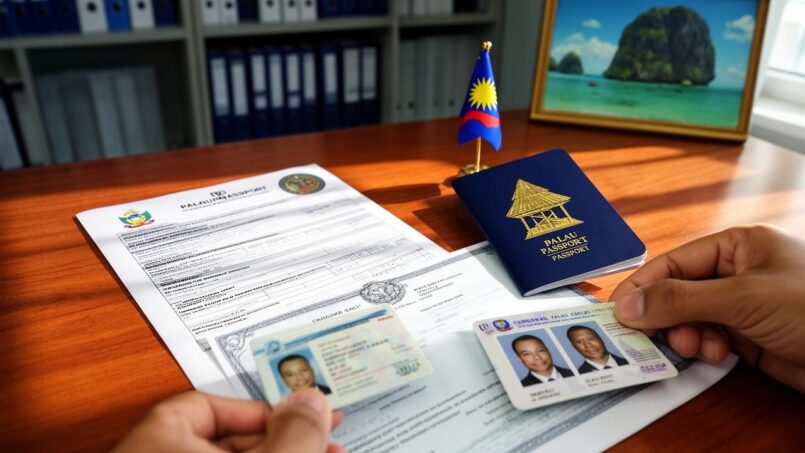
Getting a passport for Palau is far from a simple trip to the counter to get a few forms stamped. With an extremely strict nationality law, tightly regulated procedures, and often difficult-to-gather proof of ancestry, the path can be long, especially for those living abroad. This guide provides a clear and detailed overview of the legal framework, eligibility requirements, and concrete steps to obtain—or renew—a passport for Palau.
This passport applies to specific individuals, whose eligibility must be verified. The steps to obtain, renew, or replace it in case of loss are detailed step by step. The document also allows international travel, with practical rights and restrictions to be aware of.
Understanding the Link Between Palauan Nationality and Passport
Before even discussing forms, photos, and fees, one key rule must be recalled: the passport for Palau is issued only to citizens of the Republic of Palau. The entire procedure therefore rests on proof of this citizenship. Without it, no passport, even if you have resided there for a long time or are married to a Palauan citizen.
A Very Restrictive Legal Framework
Palau’s nationality law is among the most restrictive in the world. It is primarily based on the 1980 Constitution and the Palau Citizenship Act of 1994. This system emphasizes Palauan ancestry, much more than length of residence, economic investment, or marriage.
The general philosophy can be summarized as follows: Palauan citizenship is a status of blood, not a status of stay or money. Consequently, the Republic of Palau is perceived as a “closed” jurisdiction for those hoping to diversify their passports through investment programs.
Who is a Citizen by Birth?
Most holders of a Palauan passport obtain it by birth. The principle is that of jus sanguinis (right of blood), even if the place of birth plays an administrative role.
To simplify, two main situations can be distinguished.
| Birth Situation | Condition for Palauan Citizenship | Consequence on Passport Entitlement |
|---|---|---|
| Birth in Palau | At least one parent is a Palauan citizen or of “recognized Palauan ancestry” | Citizenship by birth, potential right to passport |
| Birth abroad | At least one parent is a Palauan citizen or of “recognized Palauan ancestry” | Citizenship by birth, subject to registration and proof, potential right to passport |
The concept of “recognized Palauan ancestry” refers to having Palauan blood, which can be demonstrated through testimony or any evidence admissible in court. For children born abroad, it is generally necessary to formally register this birth with Palauan authorities to document citizenship status.
Naturalization: Possible, but Only for Descendants
Unlike many countries, naturalization in Palau is not a general gateway. It is exclusively reserved for persons born to parents, at least one of whom has recognized Palauan ancestry. In other words, even naturalization is, again, based on blood.
To be naturalized, an applicant must meet several conditions:
To obtain Palauan citizenship, four cumulative conditions must be met: be of legal age (at least 18), have legal and continuous permanent residence (often a minimum of 5 years), have a clean criminal record or good moral character, and prove Palauan ancestry through documents or testimony.
It is important to emphasize that there is no naturalization based solely on long-term residence, nor any automatic path through marriage to a Palauan citizen. A foreign spouse does not become a citizen simply by marriage.
A Supreme Court decision (Appellate Division), rendered in 2010 in the case _Ucherremasech v. Hiroichi_, however, opened the door to naturalization for adopted foreign children, provided they have at least one Palauan parent.
Once a Citizen, the Right to a Passport
Once citizenship is recognized, access to the passport becomes essentially a matter of administrative procedure. The passport is not a certificate of citizenship: it is a travel document that relies on already established proof of citizenship (birth certificate, certificate of citizenship or naturalization, old passport).
This is why, in complex cases (birth abroad, adoption, recent naturalization), the phase of compiling and validating the citizenship file is, in practice, the longest and most delicate. Once this step is completed, the issuance of the passport follows a much more standardized framework.
Dual Nationality and the Inability to Renounce Citizenship
The issue of dual nationality is crucial for many Palauans living abroad, especially in the United States, Japan, or Pacific countries.
An Opening to Dual Nationality Since 2008
A constitutional revision approved by referendum in 2008 changed Palau’s approach to dual citizenship. Since then, a Palauan citizen may also hold the nationality of another state without automatically losing their Palauan citizenship. The text specifies that possession of a foreign citizenship does not in itself affect the status of being a Palauan citizen.
In practice, a Palauan naturalized in another country or born with two nationalities can keep their Palauan passport. However, this retention is subject to compliance with local administrative requirements, such as making certain declarations or obtaining specific certificates.
Renunciation: A Right… That Doesn’t Really Exist
One of the most surprising aspects of Palauan law is that citizens cannot voluntarily renounce their nationality. In other words, there is no procedure to officially abandon Palauan citizenship, even when no longer residing in the country or wishing, for personal or tax reasons, to keep only another nationality.
Even if the passport is no longer used for travel, the legal bond with the State of Palau remains. This relationship is only broken by official deprivation, pronounced by the authorities for specific reasons such as fraud or a threat to national security.
Specific Formalities for Dual Nationals
Citizens who hold dual nationality and wish to continue being recognized as Palauans must file, with the Ministry of Justice, a sworn declaration confirming their desire to retain Palauan citizenship and their compliance with legal conditions. After verification, the Ministry may issue a certificate of citizenship.
This certificate is not a passport, but it can be an essential document for subsequently applying for or renewing a passport for Palau, especially when living abroad and needing to convince a consulate of the reality of one’s status.
Competent Institutions and Administrative Chain
Several institutional actors are involved, directly or indirectly, in the process leading to the issuance of a Palauan passport.
The Main Institutions Involved
| Institution / Authority | Primary Role in the Citizenship and Passport Process |
|---|---|
| Ministry of Justice | Issues certificates of naturalization and citizenship, sets forms and procedures for naturalization, may also issue certificates of citizenship with the same value as a judicial certificate |
| Bureau of Immigration and Labor | Administrative entry point for naturalization applications, record keeping, information transmission |
| Supreme Court of Palau (Clerk of Courts) | Receives naturalization petitions, holds hearings, pronounces admission to citizenship, issues certificates of naturalization |
| Palau Passport Office (Ministry of State) | Manages the issuance, renewal, and replacement of Palauan passports |
| Embassies and Consulates of Palau | Overseas relays to receive certain passport applications and transmit files to the central administration |
The true keystone of the system is the Ministry of Justice, which holds both a normative role (defining forms and procedural rules) and a role in certifying citizenship. The Palau Passport Office then relies on these decisions and documents to issue passports.
Types of Passports and Validity Period
The Republic of Palau issues several types of passports, with different validity periods depending on the holder’s age and the nature of the document.
Passport Categories
There are three main categories of Palauan passports:
France issues different types of passports, each with a specific function and audience.
Intended for citizens for personal travel and serving as an international identity document.
Reserved for state officials or persons on official government missions.
Issued to high-ranking state officials and diplomats on mission.
Official and diplomatic passports are issued free of charge to beneficiaries, which is obviously not the case for ordinary passports.
Validity by Age
The standard validity depends on the age at the time of issuance.
| Age Category of Holder | Validity Period of Ordinary Passport |
|---|---|
| 16 years and over | 10 years from date of issue (unless special limitation) |
| 15 years and under | 5 years from date of issue (unless special limitation) |
It is strongly recommended to start renewal procedures at least six months before expiration. Many countries require a passport still valid for six months upon entry; waiting until the last minute can therefore block a trip.
General Conditions for Obtaining a Passport for Palau
Once Palauan citizenship is established, the conditions for actually obtaining a passport are fairly uniform, although certain scenarios (loss, birth abroad, name change) involve additional documents.
Basic Principles and Eligibility
A few key principles govern access to the passport:
Only Palauan citizens are eligible. Each individual must have their own personal passport (no family passport) and can generally hold only one valid Palauan passport at a time. Any application requires an appointment and physical presence. All information provided must be accurate and complete, subject to penalties for falsification or deliberate omission.
Required Documents
The core of the passport application file rests on several categories of documents.
| Document Type | Examples and Particularities |
|---|---|
| Application Form | Form PA‑1 (revised version), duly completed, generally notarized for first applications, birth abroad cases, and lost or damaged passports |
| Proof of Citizenship | Original or certified Palauan birth certificate, certificate of citizenship, certificate of naturalization, old Palauan passport |
| Proof of Identity | Old passport, Palauan national ID card, Palauan driver’s license, certificate of naturalization with photo and signature |
| Photograph | One (sometimes two) 2×2 inch color photo(s), white background, taken within the last 6 months, face unobstructed, no hat or sunglasses |
| Fee Payment | Payment in US dollars, by bank check, money order, etc., payable to the National Treasury of the Republic of Palau |
When the applicant is not personally known to passport office staff, the authorities may be more demanding regarding proof of identity, especially for those living abroad for a long time.
Citizenship Proof File: Standard Cases and Complex Situations
The type of citizenship proof required varies depending on the place of birth and the applicant’s history. The diversity of concrete cases forces the administration to provide for several scenarios.
Born in Palau: The Simplest Case
For citizens born on Palauan soil, the process is generally more straightforward. The administration primarily requests:
– either an old Palauan passport;
– or an original Palauan birth certificate or a certified true copy, including:
– full name,
– date and place of birth,
– name(s) of parent(s),
– date of birth registration,
– official seal or signature of the registrar.
If a birth certificate does not exist, especially for older generations or in cases of late registration, other documents may be accepted. These can include a baptismal certificate, an old census record, or notarized affidavits from persons attesting to the birth. These documents must bear the signature and seal of the issuing authority.
Born Abroad: The Puzzle of Ancestry
For citizens born outside Palau, the file becomes more extensive. Not only must birth be proven, but the link to a Palauan parent must be clearly demonstrated.
In such cases, the administration generally requests: “some additional explanations.”
To establish Palauan citizenship by descent, you must provide: the original or certified birth certificate from the country of birth (sometimes with approval from the Palauan Clerk of Courts), a copy of the Palauan parent’s birth certificate or passport, the existing certificate of citizenship or naturalization if applicable, and a sworn declaration from the Palauan parent listing all their periods of residence in Palau and abroad.
For families long settled abroad, this step may require genuine family archive work. But it is an unavoidable step for the Palauan state to formally recognize citizenship and, consequently, authorize the issuance of a passport.
Naturalization and Adoption: Additional Documents
The rare naturalized persons will need to present their certificate of naturalization, either issued by the Supreme Court (Clerk of Courts) or by the Minister of Justice. Both types of certificates have the same legal force.
Adopted children with a Palauan parent must additionally produce the judicial or administrative adoption decisions, translated and authenticated if they come from foreign jurisdictions.
Proof of Identity: When Papers Aren’t Enough
In practice, proof of citizenship is only part of the problem. One must also prove the identity of the person presenting themselves as that citizen.
Standard Identity Documents
The authorities expect documents bearing a photo, signature, and sufficiently precise physical description. The most common are:
– an old Palauan passport;
– a Palauan national ID card;
– a Palauan driver’s license;
– a certificate of naturalization with photo.
Documents that are altered, scratched out, or obviously modified are rejected outright. When in doubt, the agent may request additional documents.
Recourse to an Identifying Witness
When the applicant cannot produce a satisfactory identity document, the system provides a solution: the identifying witness.
This witness must meet several criteria:
– be a Palauan citizen;
– have personally known the applicant for at least two years;
– be able to prove their own identity with solid documents;
– sign an Affidavit of Identifying Witness before the Clerk of Courts.
This mechanism plays a key role for the elderly, residents of rural areas, or expatriate citizens who have lost most of their identity documents over the years.
Photo Specifications and Biometrics
As in most countries, the passport photo and biometric data are strictly regulated.
Passport Photo: Technical Requirements
Palauan authorities impose very precise characteristics, close to international standards:
The photo must be 2 x 2 inches (approximately 5 x 5 cm). It must be recent (less than six months old) and accurately show your current appearance. The face must be forward-facing, full frame, with a neutral expression and eyes looking directly at the camera. Wear ‘everyday’ clothing, no head coverings or sunglasses. The background must be white, uniform, with no shadows or patterns. Finally, the photo must be printed on thin photo paper, with no retouching that alters your appearance.
The photo must be glued onto the application form. Exceptions exist for infants, for whom the rigidity of the rules (position, expression, etc.) is harder to meet.
Biometric Data Collection
At the time of application, services may take fingerprints and a digital photo. This data is used to secure the document, combat identity theft, and facilitate border controls.
Practical Procedure: From Appointment to Passport Delivery
Beyond the texts, how does a passport application for Palau actually unfold? Several steps follow one another, whether for a first application, renewal, or replacement.
Step 1 – Make an Appointment
Passport services operate exclusively by appointment. No walk-in service is provided. This applies both to the Palau Passport Office, located within the Ministry of State, and to Palauan embassies and consulates abroad.
Services are not open:
– on weekends;
– on public holidays of the Republic of Palau;
– on US public holidays, when offices are located in shared spaces or subject to those calendars.
Step 2 – Prepare the File
Before the appointment, it is essential to gather all necessary documents. The type of form and the precise list of documents vary depending on the case:
Different types of procedures for obtaining or renewing a passport
First passport application for a citizen born in Palau.
First passport application for a citizen born abroad.
Renewal of an expired passport.
Replacement of a lost, stolen, damaged, or destroyed passport.
Passport application following a name change.
The form must be filled out legibly, typed or in ink, and often notarized for sensitive cases (first application, birth abroad, lost passport). The applicant must not sign the form until invited to do so by the authorized officer, who will administer the oath.
Step 3 – In-Person Submission and Oath
On the day of the appointment, the applicant must appear in person, with all documents and payment for fees. On site, the officer checks the documents, possibly collects biometric data, then invites the applicant to sign the form under oath.
The commitment generally includes the declaration that:
– all information provided is accurate;
– the applicant is a Palauan citizen;
– they understand that false statements or use of falsified documents are punishable.
Some older forms contained a clause renouncing any other allegiance and pledging allegiance to Palau. However, since 2008, dual nationality is recognized. This commitment is therefore mainly a symbol of loyalty in exercising the rights and duties of a Palauan citizen.
Step 4 – Processing the File
Once the file is accepted, it enters the processing queue. The processing time is not strictly predetermined and depends on the workload of the office. At the time of submission, it is advisable to ask for an estimated timeframe.
Some sources mention processing times of six to eight weeks when the passport must be produced and then sent by mail after a consular appointment. For applications made directly in Palau, times may be shorter, but vary depending on the time of year (peak tourist season, election deadlines, etc.).
Step 5 – Collecting the Passport
When the passport is ready, the administration notifies the applicant, usually by phone or email. Delivery is generally done in person:
– at the Immigration Office or Passport Office in Palau;
– or at the embassy/consulate where the application was filed.
The applicant must present an identity document to collect their document. In some cases, particularly for expatriates, the passport may be sent by mail, but this option depends on the local practices of each diplomatic mission.
Common Scenarios: First Application, Renewal, Loss, Name Change
Depending on your situation, the required documents and fees differ. Here is an overview of the main scenarios.
First Application for a Citizen Born in Palau
This is the most common and simplest case. The basic requirements are as follows:
– completed application form, generally notarized;
– one 2×2 color photo, glued to the form;
– original or certified Palauan birth certificate, or old Palauan passport;
– proof of identity (national ID card, driver’s license, etc.);
– payment of fees (US $50).
First Application for a Citizen Born Abroad
Here, the emphasis is on demonstrating Palauan ancestry and the transmission of citizenship. A typical file includes:
The application requires a notarized form with photo, the applicant’s foreign birth certificate (original or certified copy), as well as the Palauan parent’s birth certificate or passport. A sworn declaration from the parent regarding their periods of residence, the applicant’s identity documents, and possibly a certificate of citizenship or naturalization for regularization are also required. The application fee is US $50.
Renewal of an Expired Passport
For a standard renewal, the procedure is lighter:
– application form (not necessarily notarized);
– one 2×2 photo;
– expired Palauan passport;
– proof of identity (often the expired passport suffices);
– fee of US $50.
As noted earlier, starting the process at least six months before expiration avoids travel disruptions.
Replacement in Case of Loss, Theft, Damage, or Destruction
The loss or destruction of a passport is considered a sensitive case. Authorities impose additional requirements:
Fee in US dollars for a Palauan passport application, including cases of loss, theft, or damage.
If a passport reported lost or stolen is later found, it must be surrendered to the authorities for cancellation. It remains invalid and must no longer be used for travel.
Name Change
In case of marriage, divorce, or a court decision changing the name, the holder must update their identity documents, including the passport. The file then includes:
– notarized application form;
– certified copy of the marriage certificate, divorce decree, or court order for name change;
– 2×2 photo;
– proof of identity;
– payment of fees (in practice, the same rates as for a renewal, unless policy changes).
Fees and Payment Methods
The pricing system is relatively simple, with fixed amounts expressed in US dollars.
| Type of Service | Fee Amount | Observations |
|---|---|---|
| First ordinary passport application | $50.00 | Same fee for citizens born in Palau or abroad |
| Passport renewal | $50.00 | Recommended to do at least 6 months before expiration |
| Replacement for loss, theft, mutilation, destruction | $75.00 | Affidavit and often police report required |
| Amendment / validation | $25.00 | For example, for certain corrections or annotations |
| Official and diplomatic passports | $0.00 | Exempt from fees |
All fees are non-refundable, including when the application is refused due to incorrect information or insufficient documents.
Payments must be made payable to the National Treasury of the Republic of Palau. Accepted methods are: direct payment to the Treasury, bank check, postal or international money order, or US cash. The exact method should be confirmed with the office where the application is filed.
Role of Palauan Embassies and Consulates
For citizens living abroad, embassies and consulates are often the first point of contact to obtain or renew a passport for Palau.
Diplomatic and Consular Presence
Palau has a modest but strategic diplomatic network, with representations in several regions:
– United States (Washington D.C., Mission to the UN in New York, office in Hawaii);
– Japan (Tokyo);
– Philippines (Manila);
– Taiwan (Taipei);
– Guam (Tamuning);
– Northern Mariana Islands (Saipan);
– United Kingdom (office of an honorary consul);
– India (honorary consulate in New Delhi).
Palau’s diplomatic missions can handle several passport procedures: receiving applications, verifying documents, administering oaths, and forwarding files to the Passport Office. They may also sometimes serve as points of collection for passports once issued.
Contacting the Palau Passport Office
For updated information on forms, appointments, or specific requirements, the Passport Office can be contacted directly.
| Contact Information | Details |
|---|---|
| Entity | Palau Passport Office – Ministry of State |
| Mailing Address | P.O. Box 100, The National Capitol, Republic of Palau 96939 |
| Phone | (+680) 767‑6330 (other numbers sometimes mentioned: 488‑6330 / 8092) |
| Fax | (+680) 767‑8092 (or 488‑2443 depending on version) |
| Emails | [email protected] ; [email protected] ; [email protected] |
| Websites | www.palaugov.org/passport-office ; www.palauembassy.com ; www.bdarop.com |
Practical needs (appointment slots, processing times, shipping methods) may change; it is therefore prudent to verify the most recent information with this office or the nearest diplomatic mission.
Passport for Palau and International Mobility
Beyond the application process, it is useful to understand what a Palauan passport actually allows in terms of travel.
Ranking and Visa-Free Access Level
Sources report varying figures, but converge on the idea that the Palauan passport offers relatively broad access without a visa, or with simplified arrangements (eVisa, visa on arrival).
Some benchmarks:
The Palauan passport allows visa-free or visa-on-arrival/eVisa access to a total ranging between 121 and 139 destinations.
The discrepancies in figures are explained by the more or less frequent updates of databases and by regular changes in bilateral agreements or entry regimes.
Types of Visa Regimes Encountered
Destinations fall into several categories, from simplest to most restrictive.
| Visa Policy Category | Approximate Number of Countries | Description |
|---|---|---|
| Visa-free | ~68 | Entry allowed with passport alone, for a limited duration |
| Visa on arrival | ~31 | Visa issued at the point of entry, often against payment of a fee |
| eVisa | ~64 | Online application before travel, digital authorization |
| eTA / pre-registration / tourist card | Few countries | Specific pre-registration procedures or electronic authorizations |
| Visa required | ~42 | Standard procedure at a foreign embassy or consulate before departure |
It is vital to verify, for each travel plan, the updated conditions: maximum length of stay, required documents, return obligations, etc.
Examples of Visa-Free Stays
Authorized lengths of stay vary greatly from one country to another. Here are some illustrative examples based on available data:
Micronesia offers the longest visa-free stay, up to 360 days, for citizens of the Federated States of Micronesia.
These examples illustrate the strategic value of the passport for Palau for its holders, particularly for Palauans working in tourism, trade, or the diaspora.
What the Passport Is Not: Digital Residency and Elite Visas
In a global landscape teeming with digital programs and premium visas, it is important to clearly distinguish what pertains to the Palauan passport and what does not.
Digital Residency: No Pathway to Citizenship or Passport
In 2022, Palau launched a digital residency program via the Root Name System (RNS). This fee-based program allows non-residents to obtain a digital identity (NFT, physical card) to facilitate, among other things, KYC procedures on crypto platforms or online financial services.
This status is sometimes promoted for its supposed advantages, such as displaying “0% tax on non-Palauan income.” But it must be extremely clear:
Palau’s digital residency confers no right of physical residence, grants no right to a passport, and does not constitute a path to citizenship in any way.
At best, this program can extend tourist stays through visa extensions, up to 180 days total via two 90-day extensions. But it remains within the framework of a tourist visa, with no impact on nationality.
Elite Resident Visa: A Premium Residence Permit, Not a Passport
Palau also offers an Elite Resident Visa, aimed at individuals able to invest at least $250,000 in renting or purchasing accommodation from a Palauan citizen or entity. This visa also requires a clean criminal record (no convictions for crimes, no ongoing prosecutions).
Again, this program opens no pathway to citizenship or a Palauan passport. It is solely a privileged resident status, which may attract investors or retirees, but remains detached from nationality matters.
Loss and Deprivation of Citizenship: Impact on Passport
Even if one cannot voluntarily renounce Palauan citizenship, it can be withdrawn by the authorities in certain extreme cases, with direct consequences for the passport.
Grounds for Deprivation
Palauan law provides for the possibility of revoking naturalization or, more broadly, withdrawing citizenship in cases of:
– fraud, false declaration, or concealment of essential information during the acquisition of nationality;
– permanent residence established in another country within five years of naturalization (in certain cases);
– serious acts against national security, such as treason, espionage, or sedition.
The procedure for deprivation of nationality is initiated by the Minister of Justice before the Supreme Court. If the deprivation decision becomes final, naturalization certificates are nullified and the passport of the concerned person automatically becomes invalid.
Impossibility of Voluntary Renunciation
The impossibility for a citizen to voluntarily renounce their nationality means they cannot request the outright removal of their Palauan status to, for example, avoid obligations. But this does not prevent the state, in cases provided for by law, from removing this status. The possession and use of the passport therefore always depend on the solidity of the legal bond with the state.
Entering, Living, and Driving in Palau: Some Practical Points
Even though these elements go slightly beyond the strict issue of obtaining the passport, they are directly relevant to Palauan citizens as well as visitors.
Entry Requirements for Visitors
Palau requires all visitors, including foreign citizens benefiting from visa exemption, to complete a Palau Entry Form within 72 hours before arrival. This online form generates a QR code to present at the international airport. Additionally, each visitor must pay an environmental fee of $100, often included in the airfare (with refund possibilities for diplomats and certain official travelers).
US citizens generally do not need a visa to enter Palau. However, they must present a valid passport with a minimum validity of six months. An exception exists for military personnel on official duty, who are subject to different rules.
Driver’s License
US driver’s licenses are accepted for a period of 30 days. Beyond that, it is necessary to obtain a Palauan license from the Bureau of Public Safety. Palauans returning home with a foreign license must therefore quickly comply if they intend to drive for more than a month.
In Summary: A Passport Rooted in Blood Rather Than Territory
The passport for Palau is, in the strict sense, a relatively standard travel document: photo, biometric data, validity of 5 or 10 years, reasonable fees, visa-free access to many destinations. But what sets it apart profoundly is the level of prior requirement on citizenship.
Unlike many countries, Palau grants citizenship only on the criterion of Palauan ancestry, excluding almost all other pathways such as marriage or investment. This system aims to protect the national community but can complicate the situation of descendants of Palauans born and raised abroad.
For those who meet these criteria, the key is to: take initiative, develop skills, and build networks.
– methodically gather all civil status and citizenship documents;
– anticipate deadlines well in advance (especially for expatriates);
– scrupulously comply with formal requirements (notarization, photos, oath, affidavits).
With a solid file and a good understanding of the rules, obtaining the passport for Palau remains perfectly achievable – and opens the door to significant international mobility, commensurate with the agreements woven by this small Pacific state with the rest of the world.
Disclaimer: The information provided on this website is for informational purposes only and does not constitute financial, legal, or professional advice. We encourage you to consult qualified experts before making any investment, real estate, or expatriation decisions. Although we strive to maintain up-to-date and accurate information, we do not guarantee the completeness, accuracy, or timeliness of the proposed content. As investment and expatriation involve risks, we disclaim any liability for potential losses or damages arising from the use of this site. Your use of this site confirms your acceptance of these terms and your understanding of the associated risks.

Cyril Jarnias is an independent expert in international wealth management with over 20 years of experience. As an expatriate himself, he is dedicated to helping individuals and business leaders build, protect, and pass on their wealth with complete peace of mind.
On his website, cyriljarnias.com, he shares his expertise on international real estate, offshore company formation, and expatriation.
Thanks to his expertise, he offers sound advice to optimize his clients' wealth management. Cyril Jarnias is also recognized for his appearances in many prestigious media outlets such as BFM Business, les Français de l’étranger, Le Figaro, Les Echos, and Mieux vivre votre argent, where he shares his knowledge and know-how in wealth management.





