
 Published on and written by Cyril Jarnias
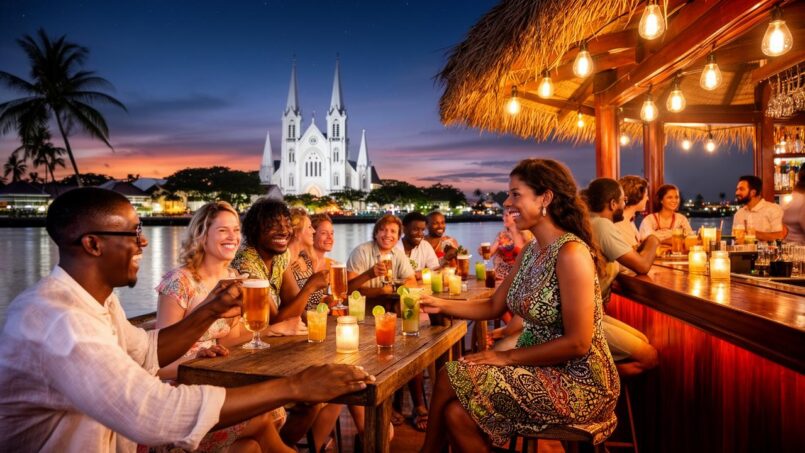
Long kept off the beaten path of major tourist circuits, Suriname has quietly built a reputation as a unique destination for those who love to experience the night in a different way. In Paramaribo, the capital set on the banks of the Suriname River, darkness doesn’t mean the end of the day—it marks the beginning of another world: riverside terraces, high-energy clubs, flashy casinos, lively markets, kaseko music nights, intimate jazz, or open-air reggae.
Nightlife in Suriname, especially in Paramaribo, is laid-back and far from the standards of big metropolises. It offers an immersion into the country’s cultural diversity, blending African, Indian, Javanese, Chinese, Caribbean, and Dutch influences. A night out is thus a local, musical, and culinary experience all at once.
Understanding the Surinamese Night
In Paramaribo, the night belongs to those who like to take their time. Clubs usually open around 9 p.m., but the vibe really takes off around 11 p.m., often stretching until 3 or 4 a.m., sometimes 5 a.m. in places like Club Manilla. Neighborhood bars and riverside terraces start filling up as early as late afternoon, especially when the heat subsides and the golden light sets off the colonial houses and palm trees.
At night in Paramaribo, the atmosphere is generally relaxed and welcoming. People drink Parbo Bier (the national beer), cocktails made with local rum and tropical fruits, and snack on Javanese or Creole street food. Conversations mix Dutch, Sranan Tongo, and sometimes English. While some travelers find the city a bit “rough” or “chaotic” after dark, the night scene remains accessible and warm for those who know where to go and follow a few basic rules.
The variety of venues is striking for a country of just over half a million people. Between specialty clubs for dancehall or electronic music, fully equipped casinos, café-concerts, karaoke bars, rooftops, LGBTQ+ bars, or chic lounges in the diplomatic district, there’s plenty to fill several nights without ever having the same experience.
The Main Nightlife Districts of Paramaribo
Each area of the city has its own personality and crowd. Knowing this nighttime geography helps you plan your evenings without wasting time.
| District / Area | Dominant Vibe | What You’ll Find Mainly |
|---|---|---|
| Waterkant (Riverfront) | Lively, popular, river view, street food | Bars, terraces, casinos, food stalls |
| Center (Centrum) | Urban, convenient for bar-hopping | Bars, pubs, a few clubs, night markets |
| Maretraite & Diplomatic Quarter | Chic, subdued, hotel-oriented, upscale clientele | Hotel lounges, cocktail bars, fine dining restaurants |
| North & Blauwgrond | Local, cheap, very “foodie” | Javanese warungs, pubs, karaoke bars, nighttime snacks |
| Tourtonnelaan & Wilhelminastraat | Typical nightlife street, mix of bars and clubs | Themed bars, restaurants, café-concerts, dance clubs |
| “Paramaribo Strip” | Festive, the street itself becomes a party spot | Parked cars, music outdoors, lined bars and clubs |
| Torarica Zone / Kleine Waterstraat | Relatively safe, mix of tourists and locals | Hotels, casinos, bars and lounges, live music |
Along the Suriname River, the Waterkant is Paramaribo’s nighttime postcard. You stroll along the water, stop for a drink, try a bakabana (fried plantain) from a stand, or try your luck at a nearby casino. The historic center, on the other hand, is great for bar-hopping, with plenty of spots within walking distance.
Further north, Blauwgrond functions somewhat like the city’s “nocturnal belly”: Javanese food courts, late-night warungs, karaoke bars where you sing in Dutch or Indonesian, and cheap beer. Finally, in the upscale areas of Maretraite and the diplomatic quarter, it’s hotel lounges, rooftop bars, and gourmet restaurants that dominate, often with a dress code.
Description of Paramaribo neighborhoods
The Waterkant Riverbanks: Terraces, Casinos, and Night Strolls
It’s hard to talk about Surinamese nightlife without starting with the Waterkant. This thoroughfare runs along the Suriname River and combines heritage, local life, and entertainment.
By day, the area is already bustling, between the large central market (Paramaribo Central Market) and the historic buildings. But come nightfall, everything changes: food stalls set up, the smells of skewers and fried goodies fill the air, music pours out of bars, and boats on the river become dark silhouettes against the orange sky.
Iconic Terraces and Cafés
Among local institutions, ’t Vat (or Het Vat) is almost a must. Often called the most famous terrace in the country, this café near Fort Zeelandia and the Palmentuin draws a very diverse crowd. You’ll find Surinamese after work, expats, backpackers, civil servants, and musicians. The vibe is relaxed, with regular live concerts and a wide selection of beers.
A bit further, De Waag Restaurant & Bar occupies the old weigh house building at the entrance to the Waterkant. The place plays up the history: high ceilings, old façade, terrace overlooking the street. By day it serves coffee, juices, and tapas; in the evening, the menu shifts to grilled dishes with Surinamese, Brazilian, and American influences, paired with cocktails.
Broki, set on a pontoon at the water’s edge, blends bar, restaurant, and “party pier”: you come to dine, hang out at the bar, or dance depending on the night. In a similar vein for drinks with a view, Tangelo, perched between ’t Vat and the Torarica hotel, attracts customers with its pleasant terrace, pastries, ice cream, and drinks—perfect for watching the nighttime ballet of the Waterkant without being in the crowd.
Casinos Facing the River
The Waterkant is also the territory of casinos. Magic Island Casino, at number 48, is a stone’s throw from the historic center. Inside, a range of slot machines and tables (blackjack, roulette, poker) attracts both locals and visitors. The place sells itself more as an entertainment complex than a simple gambling hall, with a restaurant and live evenings.
The banks of the Suriname River host several establishments combining gaming, dining, and shows, such as the Torarica Resort (with its well-known small casino), Planet Casino, Savannah Casino, Tropicana Casino, Flamingo Hotel and Casino Resort, and Paramaribo Princess Casino.
A table summarizes some major casinos, useful for those who like to extend the evening around a gaming table.
| Casino / Hotel-Casino | Address / Area | Main Features |
|---|---|---|
| Hotel Casino Torarica | Riebergplein 1, riverfront | Slots, tables, hotel with pool and spa, airport shuttle |
| Magic Island Casino | Waterkant 48 | Machines + tables, restaurant, live events |
| Paramaribo Princess Casino | Kleine Waterstraat 9 | 16 tables, 263 machines, premier bar, 2,300 m² |
| Planet Casino | Kwattaweg 596 | Classic games, concerts by local artists, Surinamese specialties |
| Savannah Casino | ANAMOE Straat 9 | 300+ machines, tables, restaurant, live music nights |
| Tropicana Hotel & Casino | Saramaccastraat 17 | Hotel + casino, shows and themed events |
| Flamingo Hotel and Casino | Sophie Redmondstraat 69 | 135 machines, 11 tables, extended hours on weekends |
| Riviera Casino Club | Anton Dragtenweg 50, Rainville | Open 24/7, restaurant, shows, smart casual dress code |
Casinos are generally open all day and late into the night, with a majority of local adult players; the legal age is 18. An ID may be requested for entry, especially in the more serious establishments.
Strengths and Limitations of the Waterkant
The riverside promenade has undeniable charm: late-day light, reflections on the water, fishing boats, silhouettes of palm trees. It’s also an ideal spot for photographers during the “golden hour.” On the other hand, some travelers note that the surroundings can get a bit noisy or messy at night, with sometimes uneven cleanliness. So it’s best to enjoy the atmosphere but stay vigilant with your belongings, avoid lingering very late in poorly lit areas, and stick to busy streets or clearly established terraces.
Downtown and Nightlife Streets: Bars, Clubs, and Café-Concerts
The center of Paramaribo (Centrum) concentrates a large number of bars and clubs within reasonable walking distance of each other. For a first exploration of the nightlife, it’s a handy playground: you can try several spots in one evening without multiple trips.
Bar-Hopping Between ’t Vat, De Bunker, and Cafés
Besides ’t Vat and De Waag, already mentioned, the center area includes places like De Bunker (bar-restaurant popular for its city-center location on Dr. Sophie Redmondstraat), Lindeboom (large café at Wilhelminastraat 8), Eetcafé Zus en Zo (cozy café-guesthouse next to the Palmentuin), and Grand Café Rumours (in the Krasnapolsky hotel).
Beyond the classic venues, there are small specialized spots like coffee shops (The Coffee Corner in the Hermitage Mall), wine and cocktail boutiques (RISING SUN WINE SHOP & COCKTAIL BAR), and themed bars offering a more intimate atmosphere.
Fans of live music often gravitate toward places like Rock n’ Roll Café, where bands perform every night, or more jazz-oriented venues such as Paramaribo Jazz Club or 22 Jazz Club, a true haunt for saxophone and double bass enthusiasts.
Tourtonnelaan and Wilhelminastraat: Streets That Never Sleep
Tourtonnelaan is one of those streets that, at night, feels like a mini nightlife district: a lineup of bars, restaurants, small terraces, and snack spots. People come to eat, drink, and, depending on the venue, dance. On Wilhelminastraat, the mix is similar: laid-back cafés, livelier bars, and a few clubs that crank up the decibels as the night goes on.
Among the notable addresses along the main axes and surrounding areas in Paramaribo, you’ll find Bar Bizar Restaurant & Café on Dr. J.F. Nassylaan, Lindeboom, and sports bars like Sportcafe Munder. These establishments, where sports matches and music set the vibe, attract both locals and visitors.
Clubs and Discos: From Dancehall to Electronic
For those looking for the dance floor, Paramaribo has something for almost every taste, from reggaeton to hip-hop, dancehall to electronic, and modern kaseko to bubbling.
The Major Clubs of Paramaribo
The names that come up most often when talking about clubbing in Suriname are Club Aventura, Euphoria Nightclub, Club Liquid, Millennium 2000, Next Nightclub, Club Touche, Club Manilla, Club Starzz, and Zsa Zsa Zsu.
Club Aventura emphasizes a modern decor, aggressive lighting effects, and the energy of local DJs. The vibe is often Latin, with Dominican and Caribbean sounds, and parties that go well beyond 3 a.m.
An iconic nightclub located at Kleine Waterstraat 5–7, known for its themed parties and festive atmosphere until dawn.
Hosts events that have become brands in themselves, like “TIS A FESA” or “Meisjes Willen Meisjes Fest.”
Caters to a crowd looking to party until sunrise, with an energetic lineup.
Boosts its big nights with internationally renowned DJs for a unique musical experience.
Club Liquid, on Van Sommelsdijckstraat 22, presents itself as one of the most “premium” addresses in town. A favorite nightlife spot for a young, trendy crowd, it regularly hosts guest DJs and offers bottle service in VIP style.
Millennium 2000, Dance Pub Millenium & The Grill, Club Starzz and Dance Hall Promotions round out this galaxy of venues where reggae, hip-hop, dancehall, soca, and local music tracks roll one after another, often with light shows and stage effects.
An overview of several renowned establishments and their main musical directions.
Historic Parisian venue offering an eclectic lineup from rock and pop to electronic and indie music.
Parisian temple of electronic music, renowned for its house and techno nights and internationally acclaimed DJs.
Legendary concert hall in Paris, hosting French variety artists, international pop, and large-scale shows.
Intimate venue in the Pigalle district, programming rock, French chanson, electro, and comedy.
Former music hall offering a varied program: rock, world music, jazz, and visual shows.
Electro club set in the former boilers of the Moulin Rouge, known for its techno nights and artistic events.
| Club / Discotheque | Zone / Address | Style and Dominant Vibe |
|---|---|---|
| Club Aventura | Paramaribo (central area) | Dominican vibe, Latin, local DJs, modern decor |
| Euphoria Nightclub | Kleine Waterstraat 5–7 | Themed parties, international DJs, nights until dawn |
| Club Liquid | Van Sommelsdijckstraat 22 | High-end club, international music, trendy crowd |
| Millennium 2000 | Petrus Dondersstraat 2 | Large dance floor, mix Latin/reggae/hip-hop/electronic |
| Next Nightclub | Ramada Princess Hotel | International DJs, VIP sections, “cosmopolitan” vibe |
| Club Touche | Downtown, historic discotheque | Founded in 1983, blend of nostalgia and modernity, LGBT-friendly |
| Club Manilla | Zwartenhovenbrug Straat | 9 p.m.–5 a.m., “Thrilling Thursday,” “Fantasy Friday” nights |
| Club Starzz | Queens Hotel, center | Electronic and house, sleek design |
| Zsa Zsa Zsu | Paramaribo | Salsa space + area for younger crowd, mixed vibe |
Dress Code, Hours, and Practical Tips
Most clubs require at least a “smart casual” dress code. In upscale establishments (Next Nightclub, Club Liquid, some places in the diplomatic district), flip-flops, tank tops, or beachwear are clearly not allowed. Clean jeans, a shirt or polo, and closed-toe shoes for men; a neat but not flashy outfit for women will avoid unpleasant surprises at the door.
Cover charges vary by event, generally between 50 and 150 SRD. A local beer starts around 25 SRD, cocktails from about 60 SRD. It’s highly recommended to reserve a table in advance, especially on weekends or during major holidays (Carnival, Keti Koti, Srefidensi, etc.), and to bring a valid ID; the minimum age is 18.
Music and Culture: From Kaseko to Jazz and Reggae
One of the great pleasures of the night in Suriname is precisely hearing musical styles you won’t find elsewhere, or at least not in the same way. Music is everywhere: in clubs, of course, but also in café-concerts, cultural centers, festivals, and even certain ceremonies.
Kaseko, Kawina, and Bigi Poku: The Country’s Sonic Soul
Kaseko is probably the music that best embodies Afro-Surinamese urban identity. Its name is said to come from the French “casser le corps,” referring to the frenetic dance moves it inspires. Born in the early 20th century from kawina—African-inspired drum music—kaseko gradually incorporated brass from big bands, elements of jazz, calypso, reggae, and zouk.
Kaseko, Paramaribo’s emblematic sound, is characterized by the fusion of three instrument families: percussion, brass, and vocals.
The best way to discover it at night is to attend Kaseko Dance Nights, which take the form of dance parties, or to frequent places like Zus & Zo or the Cultuurcentrum Suriname, which regularly host traditional music concerts. Some festivals, such as Paramaribo Fête de la Nuit, also feature kaseko artists on their stages.
Jazz, Rock, Reggae, and Other Specialized Scenes
Jazz has its own niche in the capital, with spots like Paramaribo Jazz Club or 22 Jazz Club, offering intimate concerts paired with dinners and cocktails. The Suriname Jazz Festival, held annually, draws musicians from both the country and abroad, with American, African, and Asian influences.
For rock fans, Rock n’ Roll Café offers live concerts every night by local bands, with covers and original compositions. The reggae scene, very popular, is also well represented in dedicated venues like Reggae Nights or certain dancehall-focused clubs.
You’ll also encounter more unexpected forms, such as paramaribop (a mix of bebop jazz and Surinamese sounds), kabula (a fusion of kaseko and street music), or Indo-Caribbean music like baithak gana, widely featured in community celebrations.
Dance and Nighttime Performances
Dance traditions extend into the night, especially during festivals or themed evenings. You might see winti dances (linked to Afro-Surinamese spirituality), Maroon dances, Hindustani ballets in bharatanatyam or kathak style at cultural events, or Javanese performances (jaran kepang, tayuban) in certain community circles.
Drag shows and cabaret nights are also part of the landscape, particularly in LGBTQ+ or LGBT-friendly venues like Rainbow Lounge or Club Touche on certain nights.
Lounges, Rooftops, and Quieter Spots
Not everyone is looking for the pit of a packed club. Suriname has also developed a range of quieter bars and lounges, where you sip your drink on a couch or a terrace with a view.
Chic Lounges and Hotel Bars
In the diplomatic district or in Rainville, upscale international and local hotels house stylish bars, often frequented by a more laid-back crowd. Bar Zuid, on Van Sommelsdijckstraat, is an example of an American-style bar-lounge, minimalist and trendy, well positioned on a street that’s gaining momentum in nightlife. It also serves food late into the night, making it a practical spot after a concert or movie.
Zsa Zsa Lounge offers a chic, sophisticated atmosphere with crafted cocktails and DJ sets leaning “lounge” rather than pure clubbing. Not to be confused with the Zsa Zsa Zsu discotheque. Rainbow Lounge, meanwhile, positions itself as a safe, welcoming space for the LGBTQ+ community and allies, offering themed nights and shows.
Rooftops—like certain bars on top of buildings or hotels—offer panoramic views of the city lights. You enjoy rum or vodka cocktails, take photos, and chat in a more relaxed atmosphere than in nightclubs.
Themed Bars, Pubs, and Karaoke
Pubs are also present, with places resembling Surinamese-style bistros: The Pub, De Spits Bar & More, or Happy Bar and Lounge combine sports broadcasts, music, and snacks.
For singing enthusiasts, Sing Along Bar and Microphone Madness offer dedicated rooms, sometimes with private spaces to rent. In popular neighborhoods like Blauwgrond or the north of the city, you’ll also find small bars with impromptu karaoke.
Eating at Night: Javanese Warungs, Grills, and Dawn Soups
The other essential side of Surinamese nightlife is the food. Here, you don’t just grab a quick pizza after the club: culinary diversity stretches late into the night, from chicken satay skewers to Javanese soups, not to mention roadside barbecue stands.
Blauwgrond, Kingdom of Javanese Street Food
The Blauwgrond neighborhood is known throughout the country for its warungs—small Javanese restaurants—and its stalls open until the late hours. You’ll find nasi goreng, bami, gado-gado, sate (skewers) smothered in a beloved peanut sauce, and saoto (chicken soup fragrant with spices and herbs).
Dawet is a traditional drink served cold, made with coconut milk, pink syrup, and green rice flour pearls. Ideal for cooling down, it’s available at affordable prices in a typically Surinamese atmosphere.
Soup at 5 a.m. and Roadside Barbecue
One of the striking images of Surinamese nightlife is travelers ending their night at 5 a.m. at a market like Saoena Market (also spelled Sauna or Saena Market), a famous spot for its Javanese saoto soup served at dawn. After a night at clubs or casinos, finishing with a steaming bowl of fragrant soup is almost a ritual.
In the evening, on Curacaoweg in Lelydorp, the ACL BBQ Stand offers sausages (vleesworst), burgers, chicken satay, and shawarma. Customers order at the counter and can eat in or take away, in an atmosphere often lively with families and groups of friends.
The “street food alleys,” these rows of stalls dedicated to grilled meats, fried snacks, skewers, or Creole dishes like pom or moksi-alesi (mixed rice), complete this delicious picture.
Festivals, Celebrations, and Events: The Night in XXL Mode
Going out in Suriname isn’t just about bars or clubs: the calendar is packed with festivals, community celebrations, and events where streets, squares, and even villages become open-air stages.
Major National and Cultural Celebrations
Keti Koti, celebrated on July 1st, commemorates the abolition of slavery. In the streets of Paramaribo, parades, music, traditional koto attire, poetry, and food stalls (including heri heri, a symbolic dish) often take over much of the night. Clubs, bars, and casinos ride this wave by extending their hours.
This day celebrates Maroon communities with cultural events like concerts, dances, craft exhibitions, and ceremonies. The festivities, where the line between day and night is porous, can extend well past midnight.
Srefidensi, Independence Day on November 25th, features parades, concerts, parties in bars and clubs, while New Year’s Eve (Owru Yari) sees the city pulse to the rhythm of pagara—those endless firecrackers exploding in the streets—as well as concerts and parties until dawn, notably during the Pagara Estafette.
Music and Food Festivals
In the festival department, options are plentiful: Suriname Jazz Festival, Paramaribo Fête de la Nuit, Surifesta (between Christmas and New Year’s), Good Vibes Festival, Kaseko-Kawina Festival, Fête de la Musique, Parbo Night, to name just a few. These events often turn nights into marathons of concerts, street food, and entertainment.
Events like the Suriname Food Festival, the Pasar Malam (Javanese night market), and dance and theater festivals in Moengo, Nieuw-Amsterdam, and Brokopondo offer immersion in lesser-known cultural scenes, often driven by drums, songs, and gamelan.
Night and Spirituality
A more discreet but equally important part of the nightlife takes place in winti ceremonies, wakes in Maroon villages, or Javanese rituals like Satu Suro. Often, these events combine music, dance, prayers, and storytelling late into the night, sometimes by candlelight or oil lamps. They are not strictly tourist attractions, but some local guides may introduce you, with respect and by invitation, to these worlds.
Casinos and Gambling: Another Face of the Night
As we’ve seen, casinos hold a special place in Paramaribo’s nights. They are numerous for such a small country—over a dozen land-based establishments—and most are integrated into hotels, making them easy nightlife options for visitors.
A Very Comprehensive Gaming Offer
Whether at Torarica, Tropicana, Savannah Casino, or Planet Casino, you’ll find the same mix: slot machines, blackjack, roulette, and poker tables, sometimes with more specialized games like “Paradise” blackjack at certain establishments. The most ambitious casinos, such as Paramaribo Princess Casino, boast several hundred machines and around fifteen tables, complemented by a central bar, giant screens, and sometimes stages for concerts.
To build customer loyalty, some establishments like the Riviera Casino Club, Flamingo Hotel & Casino, or Tropicana offer shows, themed nights, and poker tournaments that extend late into the night.
Regulations and Atmosphere
Legislation, overseen by the Ministry of Justice and Police, regulates the activity: license requirements, anti-money laundering measures, minor protection, taxation. The legal gambling age is 18, and ID may be requested.
The atmosphere in these casinos is less stuffy than in some major gambling capitals, but you still feel the same mix of tension and euphoria, set to the soundtrack of slot machine jingles and croupiers’ calls. Neat attire is recommended, though not necessarily formal.
Safety, Etiquette, and Best Practices for Going Out
While the nighttime atmosphere in Suriname is generally welcoming, it would be misleading to describe it as entirely risk-free. Several reports note an increase in petty theft, especially in central neighborhoods, near major hotels, and in markets. More serious crimes exist, particularly in Paramaribo and certain border areas.
Areas to Favor and Areas to Avoid
Authorities and various traveler feedback recommend sticking after dark to well-frequented areas: the Torarica and Kleine Waterstraat districts, the Waterkant around well-known bars, and main nightlife arteries when the crowds are dense.
Certain sectors, like the Palmentuin after dark, poorly lit stretches, or towns such as Albina and Moengo at night, are considered more sensitive. Outside Paramaribo, police presence is scarce, and poorly maintained, dimly lit roads increase traffic risks.
Concrete Tips for Enjoying Without Risk
A few basic rules can significantly reduce risks and let you approach the night with peace of mind.
| Topic | Key Recommendations |
|---|---|
| Money & valuables | Avoid wearing flashy jewelry, large wads of cash, or visible cameras. Keep phone and wallet in a safe place. |
| Getting around | Use registered taxis or services recommended by your hotel. Don’t hail unknown taxis on the street late at night. |
| Company | Preferably go out in groups, avoid solo nighttime outings, especially in poorly lit areas. |
| Alcohol & drugs | Drink in moderation, never leave your drink unattended. Drugs are strictly prohibited. |
| Attire | Smart casual recommended in upscale venues; avoid overly provocative or flashy clothes in popular areas. |
| Attitude | Be polite, avoid confrontations and loud behavior in residential neighborhoods. |
For female travelers, recommendations are even stricter: avoid going to isolated bars and clubs alone, stick to recognized hotel bars, dress relatively modestly, and if in doubt, ask your accommodation for advice on safe places.
Finally, in case of an incident—theft, assault, scam—it is advised not to resist, to contact the police immediately, and if needed, reach out to your country’s embassy or consulate.
Local Etiquette: What You Need to Know to Be Welcome
The night in Suriname is not just about commercial exchanges; it’s woven into a culture of conviviality and hospitality. Knowing a few codes goes a long way in facilitating interactions.
The standard greeting is a firm handshake, accompanied by a smile and a “Goedenavond” in Dutch, or “Fa waka?” in Sranan Tongo. With elderly or respected people, use titles like “Meneer,” “Mevrouw,” “Oom,” or “Tante”, and the formal “u” form.
Excessive public displays of affection are generally frowned upon. A simple hug between close friends (brasa) is acceptable, but prolonged kissing on the street or in family-friendly bars can cause discomfort. Male homosexuality remains a taboo subject for a portion of the population, although a small gay scene exists in Paramaribo, with a few dedicated nights and venues.
In more traditional neighborhoods, modest dress is appreciated, especially outside the capital or near religious sites. So avoid walking around in swimsuits or very short clothing outside of pools and beaches.
Also, it’s best to avoid starting upfront political discussions or directly criticizing someone’s religion or ethnicity. Stick to lighter topics—music, food, soccer, or the weather—and let sensitive subjects come from locals if they wish.
Conclusion: A Plural Night, to Be Experienced with Curiosity and Discernment
Nightlife in Suriname is neither a series of “standardized” bars nor impersonal mega-clubs. It reflects the very profile of the country: multicultural, contrasting, sometimes rough, but deeply warm. Between a twilight stroll along the Waterkant, a Javanese dinner in Blauwgrond, a kaseko concert at a cultural center, a blackjack session at a riverside casino, a DJ set at a club on Kleine Waterstraat, or a shared saoto soup at dawn in a market, each evening can take a different turn.
To fully enjoy nightlife in Suriname, it’s essential to embrace its diversity and unique pace. Learn about the different neighborhoods, respect local codes, and keep a few basic precautions in mind. In return, you’ll discover a one-of-a-kind nighttime experience, far from the clichés, where the night rhymes with music, authentic flavors, and warm encounters.
Disclaimer: The information provided on this website is for informational purposes only and does not constitute financial, legal, or professional advice. We encourage you to consult qualified experts before making any investment, real estate, or expatriation decisions. Although we strive to maintain up-to-date and accurate information, we do not guarantee the completeness, accuracy, or timeliness of the proposed content. As investment and expatriation involve risks, we disclaim any liability for potential losses or damages arising from the use of this site. Your use of this site confirms your acceptance of these terms and your understanding of the associated risks.

Cyril Jarnias is an independent expert in international wealth management with over 20 years of experience. As an expatriate himself, he is dedicated to helping individuals and business leaders build, protect, and pass on their wealth with complete peace of mind.
On his website, cyriljarnias.com, he shares his expertise on international real estate, offshore company formation, and expatriation.
Thanks to his expertise, he offers sound advice to optimize his clients' wealth management. Cyril Jarnias is also recognized for his appearances in many prestigious media outlets such as BFM Business, les Français de l’étranger, Le Figaro, Les Echos, and Mieux vivre votre argent, where he shares his knowledge and know-how in wealth management.





