
 Published on and written by Cyril Jarnias
Relocating to the Turks and Caicos Islands is far more than a simple sun-drenched interlude. For many expatriates, it’s a true life project, even a legacy-building endeavor. Behind the postcard-perfect beaches, the unreal turquoise of the lagoon, and the relaxed atmosphere lies a costly territory, heavily focused on tourism, with a far more structured administration than one might imagine, a modernized healthcare system, and taxation… virtually non-existent on income.
This guide covers the essential aspects for a successful relocation: choosing where to live, estimating your budget, procedures for residency status, access to employment, the healthcare system, schooling for children, opening a bank account, as well as procedures for importing your personal effects and pets.
Understanding the Territory and Living Environment
The Turks and Caicos Islands form an archipelago of about forty coral islands and cays in the northern Caribbean, between the Bahamas and the Dominican Republic, roughly 600 miles southeast of Miami. Only eight islands are inhabited. The territory is a British Overseas Territory, with a British common law legal system and high political stability.
The modern hub of the archipelago is Providenciales, often called “Provo.” This is where the majority of the population resides (most of the estimated 46,900 inhabitants in 2025), along with infrastructure, businesses, banks, and the international airport (PLS). The administrative capital, Cockburn Town, is on Grand Turk.
The climate is tropical with daytime temperatures typically between 26°C and 35°C (80°F and 95°F) and nights rarely below 21°C (70°F). The rainy season, from June to November, coincides with the hurricane risk period. The coolest months are from December to February. The environment is preserved: air and water quality is good, with no notable industrial pollution, and there are no endemic drinking water issues like on some other tropical islands.
The lifestyle is often described as luxurious but understated, centered on the sea, the beach, and modern comforts (well-maintained roads, contemporary restaurants, recent shopping centers). There are few large standardized chains, which contributes to the feeling of a “preserved” destination.
Providenciales: Where to Live When Expatriating
For an expatriate, Providenciales is almost always the landing point: this is where jobs, international schools, main hospitals, most services, and air access are concentrated. The island is approximately 98 km², about 15 km long, with nearly 47,700 estimated inhabitants in 2022.
There is no single downtown. The area called Downtown groups together government offices and some businesses, while Grace Bay constitutes the modern tourist and commercial heart. The west remains largely wild and protected.
Overview of Providenciales’ Main Neighborhoods
Choosing a neighborhood involves balancing proximity to services, beach access, budget, and desired level of tranquility. Rather than lists, here is a commented overview, supported by some real estate figures cited in the report.
The main zones can be summarized as follows: the main zones.
| Zone / Neighborhood | Dominant Vibe | Main Property Types | Typical Expatriate Profile |
|---|---|---|---|
| Grace Bay | Touristy, chic, lively, walkable | Resorts, high-end condos | New arrivals, families, tourism executives |
| Leeward / Leeward Settlement | Prestigious residential, secure | Luxury villas, private homes | Business owners, boat owners, families |
| Long Bay | Exclusive residential, sporty | Beachfront villas, modern condos | Kitesurfers, affluent remote workers, discreet families |
| Chalk Sound & Silly Creek | Nature, lagoon, secluded | Lagoon-front villas | Couples, families seeking peace |
| Sapodilla Bay & Taylor Bay | Family-friendly, ultra calm | Vacation villas, residences | Families with young children |
| Turtle Cove | Marina, local vibe, controlled budget | Condos, houses, small hotels | Long-term expats, mid-range budgets, boaters |
| The Bight | Mix of local / touristy, lively | Small resorts, condos, villas | Families, mid-range budgets, “local” life |
| Turtle Tail | Ultra exclusive, spectacular views | Large luxury villas | Ultra-wealthy, investors |
| Cooper Jack Bay | Developing, panoramic views | Modern villas, hillside homes | Investors, those prioritizing views over walkable beach |
| Northwest Point | Wild, isolated | Secluded resorts, condos | Nature lovers, temporary stays |
Grace Bay: The Island’s Showcase, Practical but Expensive
Located on the north of Providenciales, Grace Bay is the most developed area for tourism. Its iconic beach, Grace Bay Beach, stretches for nearly 12 miles, protected by the world’s third-largest barrier reef. Powder-soft white sand, calm turquoise water: it’s no accident it has been voted the world’s best beach by magazines like Condé Nast Traveler.
Approximately 80% of the island’s restaurants, shops, and accommodations are in this area. Daily life can therefore be done on foot for many needs (groceries, restaurants, beach, golf with the Provo Golf Club nearby). The atmosphere remains relaxed, though clearly high-end.
You’ll find mostly luxury resorts, boutique hotels, and condominiums: Grace Bay Club, Seven Stars Resort, The Ritz‑Carlton, Beaches Turks & Caicos, The Palms, The Somerset on Grace Bay, Wymara Resort and Villas, Coral Gardens on Grace Bay, The Oasis at Grace Bay… All this is reflected in the rents and purchase prices, which are the highest on the island.
While not essential for daily life within Grace Bay, a car becomes useful for exploring the rest of Providenciales, shopping at larger supermarkets located outside the main area, or accessing quieter, more isolated beaches.
Leeward: Chic Residential Living, Canal and Marina Style
At the northeastern tip of Providenciales, just past Grace Bay, Leeward and Leeward Settlement form a very residential area with many gated communities. It’s a quiet, secure neighborhood, ideal for a more “upscale suburb” lifestyle than a bustling ultra-animated waterfront.
Leeward features an extensive canal system offering direct ocean access, particularly attractive for boat owners. Leeward Marina (Blue Haven Marina) is a major center for boating and excursions to nearby cays, notably Little Water Cay (Iguana Island) home to protected rare iguanas.
It features luxury villas, single-family homes, and a few resorts like Blue Haven Resort, The Atrium Resort, or Caribbean Diamond. The neighborhood is a five-minute drive from Grace Bay for shops and restaurants. The International School of the Turks and Caicos Islands (ISTCI), a major international school in the area, is located in Leeward, a big plus for expatriate families.
Long Bay: Sports, Villas, and Wide-Open Spaces
On the southeast side of Providenciales, Long Bay is one of the world’s most renowned kitesurfing spots. The steady winds and shallow, crystal-clear water make it an ideal playground for board sports, as well as a tranquil setting, less dense than Grace Bay.
The beach stretches for about 3 miles, with development still moderate, though many projects are underway: ultra-luxury villas, residences, and a few resorts like The Shore Club, South Bank, Beach Enclave Long Bay, or H2O Lifestyle Resort. One example cited in the report, the “Mandalay” villa, is listed at $22.5 million, giving an idea of the caliber.
Long Bay is favored by expatriates for its tranquil single-family villas, ideal for remote work with an ocean view. A vehicle is essential to quickly access the livelier areas of Grace Bay or Leeward.
Chalk Sound, Silly Creek, Sapodilla Bay, Taylor Bay: The Postcard Lagoon
In the southwest of Providenciales, Chalk Sound is a protected lagoon designated a national park, famous for its vivid turquoise waters dotted with small limestone islands. Powerboats are prohibited, making it a silent environment, ideal for kayaking and paddleboarding.
Chalk Sound and neighboring Silly Creek are highly sought-after for lagoon-front villas, often rented seasonally but also used as primary residences by expatriates seeking peace. Accommodations like Neptune Villas or Villa Tropidero can be found here.
Sapodilla Bay and Taylor Bay, on the southern shore nearby, are two very shallow, warm beaches with almost no waves, perfect for young children. The atmosphere is ultra-peaceful, almost exclusively residential, with mainly seasonal rental villas (Villa Osprey, Sapodilla Bay Beach Villas, etc.). Services are a few kilometers away, so a car is essential.
Turtle Cove, The Bight: A Mix of Local and Expatriate
Turtle Cove, on the northwest coast just past Grace Bay, revolves around a large marina, Turtle Cove Marina, the starting point for many boating trips. Historically, this is where tourism on Providenciales began, with pioneering establishments like the Third Turtle Inn.
The vibe is laid-back, more “local” than Grace Bay, with a mix of permanent residents, boaters, and visitors. Expatriates find condos, houses, or small hotels here, often at slightly more reasonable prices than the Grace Bay strip. A major advantage: Smith’s Reef, one of the best shore-accessible snorkeling sites, is right next door, as is the wilder Babalua Beach.
The Bight, located just west of Grace Bay, offers a balanced mix with beautiful beaches, accessible reefs for snorkeling (like Bight Reef / Coral Gardens), and smaller-scale hotel complexes such as Wymara Resort and Villas, Coral Gardens Resort, and Windsong. Its signature event is the Thursday Night Fish Fry, a major weekly street party very popular with local residents and expatriates, featuring music, food stalls, and artisans.
Turtle Tail, Cooper Jack Bay, Northwest Point: Prestige and Isolation
Turtle Tail, south of Providenciales, is an enclave of ultra-confidential villas perched on limestone cliffs overlooking private coves. Properties here are typically very high-end, sometimes with private docks, close to Southside Marina. Expatriates who settle here primarily seek discretion and spectacular views over an animated neighborhood life.
Cooper Jack Bay, in the south-center, is a booming area, marked by cliffs, ocean panoramas, and canals. You’ll find modern developments like The Strand, as well as contemporary villas like “Alta Bella,” “View‑Topia,” or “The Sanctuary,” cited at nearly $6 million. It’s an interesting option for those wanting beautiful views and modernity, while accepting the need to drive for everything.
Northwest Point, finally, is the extreme northwest of the island, almost totally wild, with a marine park and nature reserve. Access is via bumpy tracks often requiring a 4×4. Spotty cell service, no immediate amenities: it’s more of a weekend destination than a permanent residence, unless you want to live almost off-grid. However, a few accommodations exist here, like the very exclusive Amanyara and Northwest Point Resort.
Areas to Avoid for a First Home
The report indicates that the “Downtown/Back Road” areas behind Five Cays and Kew Town, as well as the industrial sectors near the airport, are mainly local residential and commercial, without beaches or tourist appeal, with higher petty crime rates. For a newly arrived expatriate, renting accommodation there, especially at night, is not advised.
Cost of Living: A Paradise… Very Expensive
The Turks and Caicos Islands rank among the most expensive destinations in the region. Providenciales has a cost of living approximately 31% higher than the U.S. average, 44% higher than Nassau (Bahamas), and comparable to Grand Cayman. Compared to some mid-sized European cities, it’s almost double.
Monthly Budget by Situation
Estimates compiled in the report give a good idea of the scale:
| Profile (incl. rent) | “Average” Monthly Budget | Overall Range (tight budget → high-end) |
|---|---|---|
| Single Person | ~$3,535 to $4,795 | $2,900 → $8,525 |
| Couple (2 adults) | ~$6,441 | $3,816 → $11,677 |
| Family of 4 (2 adults, 2 children) | ~$8,960 | $5,323.50 → $16,147 |
In other words, even living relatively simply, a family of 4 will struggle to stay under $5,300 per month, and a single person under $2,900. At the other extreme, a very comfortable lifestyle with outings, restaurants, and high-end housing can easily exceed $8,000 for one person or $16,000 for a family.
For comparison, the average reported net salary is between $2,383 and $3,000 per month, which clearly shows that most expatriates either have higher compensation (executives, professionals, entrepreneurs) or external income (remote work, retirement, assets).
Housing: Rentals and Purchase
Rents vary enormously by location (Grace Bay vs. inland), size, and condition of the property. The average figures cited for Providenciales are:
| Type of Accommodation (long-term) | Average Monthly Rent | Observed Range |
|---|---|---|
| 1 bedroom, “center” (Grace Bay / main areas) | $1,700 | $1,500 – $1,800 |
| 1 bedroom, outside center | $1,250 | $800 – $1,600 |
| 3 bedrooms, “center” | $3,750 | $3,500 – $4,000 |
| 3 bedrooms, outside center | $3,250 | $2,500 – $4,000 |
The purchase price for an apartment outside the center is given at about $201 per square foot, but this figure is misleading compared to villas seen at several million dollars in premium areas. In practice, quality real estate near the sea is priced at levels comparable to other highly sought-after Caribbean destinations.
Maximum stamp duty rate on purchase, a main source of government revenue in the absence of property tax and income tax.
Food, Restaurants, Leisure
Food is expensive, largely imported. Some benchmarks:
– Meal at an inexpensive restaurant: around $20 per person (rarely under $15).
– Three-course meal for two at a mid-range restaurant: about $120 (up to $180).
– Fast-food combo meal: $10.
The price of a gallon of milk at the supermarket, illustrating the cost differential with North America.
Sea-related leisure activities are a budget item to anticipate: renting an umbrella and two chairs on the beach starts at $40, and can reach $75 at hotels. A shared half-day snorkeling tour costs ~$125 per person, a private full-day boat trip about $600.
Alcohol is also expensive: a craft beer can go up to $10–12 outside happy hour ($5 on promotion), a cocktail $9–12, a glass of wine $10–12, a bottle in a restaurant starts around $35. This is further increased by specific excise duties on alcohol and a 12% tax on tourist services (accommodation, dining, activities).
Transportation and Utilities
There is no organized bus network. Taxis are common for tourists, but at about $1 per minute ($10 to $12 for 10 minutes), they quickly become prohibitive for daily use. Most expatriates buy or rent a vehicle.
– Small car rental: $35–50/day (about $350 per week).
– Gasoline: about $8.22 per gallon (with a significant range depending on the period, $6.50–$10.86).
– Local transport ticket (rare cases) mentioned at $2.
Basic services also cost more than in many countries:
| Expense Item (monthly) | Approximate Average Cost |
|---|---|
| Electricity + water + waste for 915 sq ft | ~$400 |
| Fixed-line internet (≥ 60 Mbps, unlimited) | ~$142 ($100–$176) |
| Mobile plan (10 GB or more) | ~$46 |
| Gym membership | ~$100 |
Healthcare System: Public, NHIP and Private Insurance
The Turks and Caicos Islands have modernized their healthcare system with the establishment of a public scheme, the National Health Insurance Plan (NHIP), launched in 2009, and the construction of two hospitals managed by InterHealth Canada: Cheshire Hall Medical Centre on Providenciales and Cockburn Town Medical Centre on Grand Turk. These facilities have emergency departments, general surgery, maternity, orthopedics, hemodialysis, and even intensive care and neonatal units.
NHIP: Mandatory Public Health Insurance
For all legally employed residents, enrollment in NHIP is mandatory. The principle:
– Contribution of 6% of salary, shared between employer and employee (3% each), with a capped income considered (up to $7,800 per month).
– For self-employed individuals, flat-rate contribution of $250/month (reducible with proof of low income).
– For a non-working spouse: $25/month, and $10/month per dependent child.
The NHIP (National Health Insurance Plan) covers primary and secondary care in public facilities, prevention programs, and some overseas referrals for treatments not available locally. It does not apply medical underwriting, does not exclude pre-existing conditions, and has no deductible. Co-payments are symbolic, about $10 per visit.
However, for advanced specialized care or serious conditions, patients are regularly evacuated to Miami, Nassau, or other regional centers. Hence the insistence from authorities and private actors for expatriates to supplement with an international health insurance policy including coverage for medical evacuation and care outside the territory.
International Private Insurance
For expatriates, especially those traveling between Turks & Caicos, North America, and Europe, it is highly recommended to take out an international health insurance policy (Allianz, AXA, Cigna Global, Bupa, April International, etc.). These contracts are adaptable: hospitalization only, hospitalization + outpatient care, maternity, optical, dental, mental health, etc.
The main goal is to be well covered in third countries (like the United States, Canada, or the home country) where healthcare costs are very high, beyond obtaining better reimbursements locally. On an island territory where heavy medical specialties may be lacking, it is crucial to prioritize medical evacuation options, such as medical repatriation or body transport.
Local Health Risks
The health profile of the Turks and Caicos Islands is rather favorable: no particular endemic diseases, no required or even recommended vaccinations beyond the standard schedule. The most frequent problems for expatriates and visitors are common: severe sunburn, dehydration, travelers’ digestive issues.
However, mosquitoes can be very annoying during the rainy season, especially on North Caicos, Middle Caicos, or Parrot Cay. Outbreaks of dengue, chikungunya, and Zika have been recorded. Zika was officially detected in 2016, with a few cases until 2017, and is subject to a CDC Level 2 Alert (“enhanced precautions”).
In nature, some plants (poisonwood / coral sumac, manchineel, jequirity bean) can be toxic, and marine life (lionfish, jellyfish, stinging corals) can cause injuries. These species are generally absent from heavily frequented beach areas but present in wild sectors like Chalk Sound.
Immigration, Work, and Residency Statuses
One of the major assets of the Turks and Caicos Islands is taxation: no income tax, no capital gains tax, no wealth tax, no inheritance or gift tax. This makes the territory attractive for high-income expatriates and investors. But it is not a rule-free Eldorado: immigration and work are heavily regulated, with priority given to local nationals.
Entering the Territory: Visas and Basic Formalities
For many nationals (United States, Canada, United Kingdom, European Union, much of Latin America, Asia, and the region), no visa is required for a short tourist stay. Upon arrival, visitors generally receive a stamp for 30 days, sometimes up to 90 days.
Basic requirements:
– Passport valid for the entire duration of stay (and sometimes 6 additional months depending on nationality).
– Return or onward travel ticket.
– Immigration form filled out on arrival (on an official form provided, not a home-printed version).
– Customs declaration only if exceeding import allowances.
Individuals from countries not visa-exempt must apply to the Immigration Department, via a British embassy/consulate or directly (Grand Turk, offices in London or New York). The standard procedure takes two to three weeks without complication, longer for some residency types (up to six weeks for investor/homeowner categories, even six months for some spouse permits).
Working: A Highly Regulated System
Generally, any foreigner intending to work in the Turks and Caicos Islands needs a work permit. There are several categories:
Presentation of the different work permits available in the Turks and Caicos Islands for foreign nationals, adapted to various professional situations.
For employed individuals, whether skilled or unskilled, by an established company in the Turks and Caicos Islands.
For self-employed individuals conducting professional activity on their own account.
Designed specifically for young persons residing long-term in the Turks and Caicos Islands without other legal status.
Authorizes very short-term professional interventions, up to a maximum of 10 days.
For repetitive, short business trips, up to 7 days per visit, without local employment.
The system resembles a sponsorship regime: the permit is tied to a specific employer and position. Changing employers practically means starting from scratch, sometimes with an obligation to leave the territory during the procedure. Authorities emphasize priority given to “Islanders” (local national status) for all employment.
Process for a Salaried Permit
An employer wishing to hire a foreigner must:
To hire a foreign worker in the Turks and Caicos Islands, the employer must first test the local market by advertising the position in the local press for two consecutive issues. They must then justify the absence of a suitable local candidate by keeping applications and reasons for rejection. Finally, they must prepare a complete dossier including the application form, the candidate’s personal and professional documents, the employment contract, the business license, and proof of the recruitment campaign.
The administrative cost is not negligible: there are over 100 job categories, classified in scales, with permit fees ranging from about $150 for very basic jobs up to $9,500 for high-level positions (doctors, company directors…). In addition, there are non-refundable fees (application fee, repatriation fee, possibly $500 fast-track processing service), and most employers use specialized agents or lawyers ($900–1,500).
The theoretical processing time ranges from 30 days (target) to 4–12 weeks in practice, or more. Hence the importance for expatriate candidates to never count on an immediate start: one cannot begin working until the permit is officially granted and paid for.
Working for Yourself or Starting a Business
A self‑employed work permit allows you to create and operate your own business. It requires beforehand obtaining a business license, which itself depends on a dossier submitted to the administration (business description, summary business plan, identity of partners, etc.).
Many businesses must have a majority of capital owned by a local resident (Islander). However, specialized or internationally-focused activities can sometimes be 100% foreign-owned. The self-employed work permit is typically valid for up to five years and may, depending on the case (such as certain permanent residency by investment titles), include or exclude the right to work.
Accompanying Family and Schooling
Unskilled permits do not officially allow bringing spouse and children. For skilled workers, self-employed individuals, or certain special categories, it is possible to endorse spouse and children as “dependents” provided:
– Proof of sufficient income,
– Existence of a private schooling solution (dependents’ children do not have access to public schools),
– Complete dossier (marriage certificate, birth certificates, police clearance from age 10, health certificates…),
– Payment of additional fees ($500 per dependent + administrative fees).
Private international schools therefore play a key role for expatriate families. In Providenciales, you’ll find notably:
– International School of the Turks and Caicos Islands (ISTCI), in Leeward. School from early childhood to middle school (ages 1 to 14), following a British curriculum. The school offers a very active environment (activity blog, educational trips, ecological projects, visits from elite athletes), with a strong international dimension.
– Precious Treasures International School (PTIS), in Cooper Jack Bay. Over 30 years old, pedagogy based on an international program (Fieldwork Education), strong emphasis on character development and teaching quality.
– Provo Christian School, focused on Christian education, with admission documents and fee schedules publicly available.
Tuition fees at these institutions are generally in the range of $11,000 to $15,500 per year for primary and middle school, which must be integrated into the family budget.
Taxation, Social Charges, and Administrative Costs
One of the most attractive points for a high‑income expatriate is the virtual absence of direct taxation. There is no income tax, no capital gains tax, no general VAT, no local corporate tax. Government revenue comes essentially from:
– Stamp duty on land and real estate transactions,
– Import customs duties,
– Tourist accommodation tax,
– Fuel tax,
– Taxes on telecommunications, gaming, money transfers, etc.
Stamp duty revenue, in millions of dollars, representing about 22% of recurrent revenue in the 2023‑2024 budget.
Mandatory Contributions for Residents
For individuals, however, two contributions are mandatory as soon as they work legally:
– National Insurance (NI), which funds pensions, sick benefits, workplace injuries, maternity, etc.
– National Health Insurance Plan (NHIP), for healthcare.
For a private sector employee:
– NI: 12% of salary (up to a $4,000 monthly base), with 6.5% paid by the employer and 5.5% deducted from salary.
– NHIP: 6% of salary (capped at $7,800), with 3% employer’s share and 3% from the employee.
An employee earning $5,000 per month will thus pay several hundred dollars in combined contributions, supplemented by a similar contribution from their employer. For self-employed individuals, NI is set at 10% of the chosen base, and NHIP at a standard $250 monthly, except with proof of very low income.
Banks, Accounts, and Financial Environment
Providenciales concentrates most financial institutions. Several regional or international banks are present: Scotiabank, Royal Bank of Canada (RBC), CIBC Caribbean, British Caribbean Bank, and Turks & Caicos Banking Company (TCBC), specializing in private banking.
The official currency is the U.S. dollar. There is no exchange control, nor particular restrictions on international transfers, but compliance with international standards (FATCA, CRS, anti-money laundering) is strict.
Opening a Bank Account
Account opening processes can be paradoxical: relatively quick for a standard personal account at some banks (Scotiabank, for example, advertises opening in about twenty minutes online, with confirmation in two days), but potentially very lengthy and complex for business accounts, which can take two to six months.
In practice, opening requires:
– A passport or other official ID,
– A recent proof of address,
– Proof of source of funds (pay slips, employer letter, tax returns, etc.),
– Often a bank reference and, for non-residents, letters of recommendation.
The minimum initial deposit required for a personal account at Turks & Caicos Banking Company.
Also expect sometimes slow and unresponsive customer service: delayed responses to emails, decisions referred to regional headquarters, long processing times. Many expatriates use a local lawyer to prepare their banking dossier, especially for asset-holding structures or companies.
Importing Your Belongings, Car, and Pets
Relocating to the Turks and Caicos Islands sooner or later raises logistical questions: how to ship (or not) furniture, equipment, vehicles, pets. The customs system is modern but very document-heavy, with an online portal (ASYCUDA) for declarations and classification of goods under the Harmonized System (HS).
Personal Effects and Duty Exemptions
Individuals establishing residence can benefit from duty‑free admission for their used personal effects and household goods, provided:
– They import these goods within the first six months after their arrival,
– They demonstrate the goods were owned and used by them for at least 12 months.
This exemption does not apply to vehicles, boats, aircraft, foodstuffs, tobacco, perfumes, and alcohol. Furthermore, a Customs Processing Fee (CPF) of 7.5% is generally applied on the declared value of all goods, including those normally exempt, except by special waiver.
If duty‑free conditions are not met, the base rate on household goods is 30% customs duty, plus 7.5% CPF. There are reduced rates on some goods deemed essential or “green” (books, certain foods, energy-efficient equipment).
Importing a Vehicle
Importing a car is possible but costly. The main tax is a customs duty based on engine capacity:
– 25% up to 2,000 cm³,
– 35% up to 4,000 cm³,
– 45% beyond,
– With a reduced rate for hybrid vehicles (10%).
Importing a motorcycle is subject to a duty calculated on the CIF (Cost, Insurance, Freight) value. This duty varies from 25% to 45% depending on engine capacity. A CPF (Customs Processing Fee) is added, calculated on the vehicle cost excluding freight. Required documents include: the bill of lading, sale certificate, registration certificate, and detailed bike information (chassis and engine numbers, year, make, model).
Daily driving is on the left, but the majority of imported vehicles come from the United States, so with left-hand drive. A foreign license is valid for 30 days, after which a local license must be obtained.
Pets
Importing dogs and cats is highly regulated:
– Mandatory prior permit from the Department of Agriculture,
– Original health certificate from the country of origin, often translated and legalized,
– Identification by microchip or tattoo,
– Mandatory sterilization of dogs, except for licensed breeders,
– Certain breeds prohibited or subject to strict conditions.
All animals are inspected upon arrival. In case of non‑compliance, they may be sent back to the country of origin or euthanized after 48 hours.
Getting Around, Ensuring Safety and Daily Life
There is no subway, no structured bus system, no ride‑sharing network like Uber or Lyft. On Providenciales, a car is almost indispensable as soon as you settle outside the ultra-central Grace Bay area.
Main roads are in good condition, but secondary roads are often unpaved. Driving is on the left. Speed limits are about 20 mph in built-up areas and 40 mph on main roads. Seat belts are mandatory and drinking and driving is prohibited.
In terms of safety, the territory has a lower crime rate than other Caribbean islands, but it should not be underestimated: burglaries, theft from vehicles, assaults exist, especially on Providenciales. Standard recommendations apply: avoid isolated areas at night, do not leave valuables visible in vehicles, secure homes well, and report any incident to 911.
In Summary: For Which Expatriate Profile?
Relocating to the Turks and Caicos Islands is particularly suitable for:
– Executives and professionals with a well‑paid local contract including international health insurance, housing or housing allowance, coverage of school fees,
– Entrepreneurs and investors capable of setting up a profitable local project (hospitality, restaurants, services, finance, real estate),
– Wealthy retirees or self‑employed individuals wanting to optimize their taxation and live much of the year in the sun, while funding a high standard of living and robust health insurance,
– Remote workers with external income, aware however that there is currently no dedicated “digital nomad” visa.
To ensure a successful relocation, it’s crucial to first come for an extended stay to test daily life (cost of groceries, traffic, climate outside high season). Also, research residency and work statuses precisely, anticipate insurance and schooling costs, and establish a realistic budget accounting for price levels significantly higher than most North American and European cities.
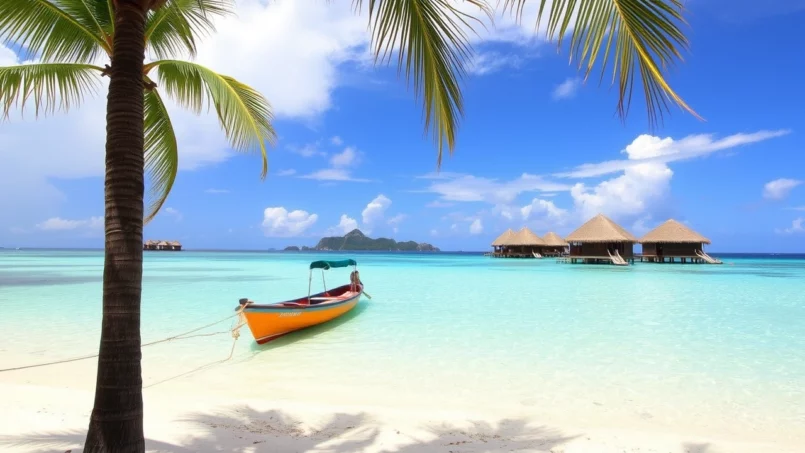
The postcard image, however, does not lie: world‑class beaches, spectacular coral reefs, air and water quality, lack of income tax, and Caribbean ambiance are real. But this “paradise” comes at a price, both financial and administrative, that is best measured before turning an expatriation dream into a concrete project in the Turks and Caicos Islands.
Disclaimer: The information provided on this website is for informational purposes only and does not constitute financial, legal, or professional advice. We encourage you to consult qualified experts before making any investment, real estate, or expatriation decisions. Although we strive to maintain up-to-date and accurate information, we do not guarantee the completeness, accuracy, or timeliness of the proposed content. As investment and expatriation involve risks, we disclaim any liability for potential losses or damages arising from the use of this site. Your use of this site confirms your acceptance of these terms and your understanding of the associated risks.

Cyril Jarnias is an independent expert in international wealth management with over 20 years of experience. As an expatriate himself, he is dedicated to helping individuals and business leaders build, protect, and pass on their wealth with complete peace of mind.
On his website, cyriljarnias.com, he shares his expertise on international real estate, offshore company formation, and expatriation.
Thanks to his expertise, he offers sound advice to optimize his clients' wealth management. Cyril Jarnias is also recognized for his appearances in many prestigious media outlets such as BFM Business, les Français de l’étranger, Le Figaro, Les Echos, and Mieux vivre votre argent, where he shares his knowledge and know-how in wealth management.





