
 Published on and written by Cyril Jarnias
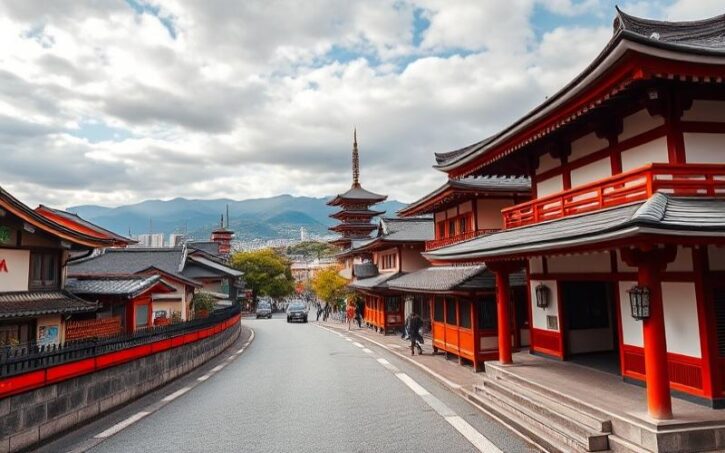
An imperial city for over a thousand years, Japan’s cultural capital and a major tourist destination, the city of Kyoto concentrates everything long-term real estate investors look for: land scarcity, strong rental demand, a strict regulatory framework that protects value, and powerful international branding. The market is both atypical – due to the presence of historic machiya and very specific urban rules – and surprisingly accessible to foreigners, since Japan does not restrict property purchases by non-residents.
Good to know:
This article analyzes the Kyoto real estate market in detail, covering price trends, strategic neighborhoods, rental yield, and the specific characteristics of machiya. It also addresses short-term rental regulations, taxation, financing options, and support services, based on the most recent data available through 2025.
A market that is rare, expensive… and still growing
With approximately 1.5 million inhabitants in the city and nearly 2.7 million in the metropolitan area, Kyoto is at the heart of the greater Keihanshin conurbation (with Osaka and Kobe). It attracts more than 50 million visitors per year, and hosted 75.18 million tourists in 2023, a record exceeding pre‑pandemic levels. This tourist pressure, combined with limited new supply, sustains a steady rise in prices.
60
In 2025, the average price of a house in Kyoto reaches 60 million yen, after a 25% increase since 2020.
Price levels by property type
The table below provides a general idea of typical prices observed recently:
| Property type | Indicative price range |
|---|---|
| Standard family apartment (2–3 BR) | 30 to 40 M¥ |
| 3‑bedroom house in the suburbs | 45 to 60 M¥ |
| Average traditional machiya | ≈ 75 M¥ |
| Peripheral “budget” properties | 20 to 40 M¥ |
| Luxury homes (Gion, Higashiyama…) | 120 to 150 M¥ |
| Land in the city center | Often > 1 M¥ / m² |
This surge is reinforced by structural scarcity: between 2021 and 2023, only 6,185 new apartments were brought to market in Kyoto city, seven times fewer than in Tokyo (43,559 units). Available land is scarce, and large historical areas are virtually frozen by landscape and preservation rules.
Trends and projections
Since 2020, prices have been rising by 4 to 5% per year, for both housing and land in historic districts. Projections through 2027 still indicate annual growth of 3 to 5%. Over a longer horizon (2030–2035), estimates place the average price of an urban house around 69–73 M¥, with central properties potentially reaching 80–95 M¥.
Warning:
Prices of new condominiums rose by 30.6% in 2024 in Kyoto Prefecture, exceeding 100 million yen in central neighborhoods like Nakagyo. The market, already expensive, is not a bargain, and scarcity combined with structural demand suggests further upside potential.
A market open to foreigners, but heavily regulated
A key point for international investors: Japan allows foreigners – individuals or companies – to buy properties in freehold, with no residency or nationality requirement. The only exception is agricultural land, which is regulated. A non‑resident can therefore buy a house, apartment, or machiya in Kyoto just like a Japanese person, and hold it indefinitely.
Purchase process
The procedure is largely standardized and very legally regulated:
Example:
A typical real estate transaction in Japan usually takes 1 to 3 months, from search to property transfer. The process follows precise steps: after a letter of intent, the buyer receives the “explanation of important points” (juyo jiko setsumeisho), then signs a private contract. A deposit of 5 to 10% of the price, generally non‑refundable, is paid, unless specific clauses (such as “subject to inspection”) are included. Finally, a specialized legal professional, the “judicial scrivener” (shiho shoshi), handles the official registration of the property transfer at the Legal Affairs Bureau.
For a foreigner, standard documents include passport, proof of funds, possibly a certificate of residence (juminhyo) for residents, and often an inkan (personal seal) – a simple signature may sometimes suffice. Non‑residents must appoint a representative in Japan (power of attorney) and a local tax agent for tax management.
Financing and constraints
The trickiest point for non‑residents remains financing: Japanese banks are cautious. Permanent residents can often obtain a loan under conditions close to those for Japanese nationals (very low rates, financing sometimes up to 80–100% of the price). Without permanent resident status, getting a loan becomes difficult, unless through a Japanese/PR spouse, a Japanese company, or overseas financing.
Tip:
Mortgage rates in Japan remain attractive, with fixed loans (like Flat 35) around 1.95–3.69% and variable rates that can drop to 0.5–0.7%. However, the majority of foreign investors in Kyoto prefer all‑cash purchases, especially for older properties or non‑rebuildable machiya, which banks consider riskier.
Additional costs and acquisition taxes
Beyond the price, the buyer must budget 5 to 10% in additional costs: agent commission, registration taxes, stamp duty, scrivener fees, etc. So, for a property at 60 M¥, expect a total of about 63.6 to 64.8 M¥ all inclusive.
Some benchmarks:
– agent commission: up to 3% of the price + 60,000 ¥ (+10% VAT);
– registration tax: generally 1.5–2% for land and 0.3–2% for the building, depending on whether it is new or old;
– stamp duty: e.g., 10,000 to 30,000 ¥ for a contract around 50 M¥;
– real estate acquisition tax: 3% on the assessed value (often reduced to 1.5% for residential land).
In parallel, owners pay annually the Fixed Asset Tax of 1.4% of the assessed value, plus the City Planning Tax of 0.3% in urban areas. The effective annual rate therefore hovers around 1.7%.
Understanding Kyoto’s neighborhoods: where to invest based on your profile
The territory of Kyoto city is highly varied: imperial districts, student areas, family suburbs, industrial zones undergoing redevelopment. The choice of area affects asset value, rental yield, and the type of management required.
Historic and tourist heart: Higashiyama, Gion, Rakuto, Arashiyama
Higashiyama is the iconic postcard district: World Heritage temples, cobblestone lanes, tightly packed machiya, and the Gion district, one of the last geisha neighborhoods. Properties here are sought after, both for residence and upscale tourism.
Investors see a double advantage: rapid price appreciation (land values in historic districts have gained 4–5% per year since 2020) and strong potential for seasonal rentals, where regulations permit. Luxury hotel projects (Banyan Tree Higashiyama Kyoto, Capella Kyoto, Shangri‑La, Regent hotels, etc.) testify to this up‑market shift.
Arashiyama and Rakusei
Area west of Kyoto, known for its natural landscapes and improved accessibility, with a dynamic hotel development.
Includes the famous Arashiyama Bamboo Grove and the banks of the Katsura River at Sagano.
The area benefits from continuous improvements in transport and visitor infrastructure.
New hotels and tourist facilities are under construction or in planning.
This ongoing development is expected to maintain upward pressure on real estate prices.
Urban center and business: Nakagyo, Shimogyo, Tanoji, Rakuchu
Nakagyo, Shimogyo and more broadly the Tanoji area (central business hub) represent the commercial and office heart of Kyoto. You’ll find Karasuma, Shijo, Kawaramachi, Nishiki Market, Nijo Castle… It’s also the preferred territory for young professionals, students, and expatriates.
Advantages for a classic rental investment:
– high employment density (headquarters of Nintendo, Kyocera, Omron, Nidec, etc.);
– proximity to major universities (Kyoto University, Doshisha, Ritsumeikan, Kyoto Institute of Technology);
– exceptional accessibility (Kyoto Station, Hankyu and Keihan lines, Karasuma subway).
Gross yields remain modest (2–3% for long‑term rentals), reflecting a market more patrimonial than purely speculative. Shimogyo stands out with particularly strong dynamics: prices are rising by about 8% per year, driven by commercial revitalization programs and proximity to Kyoto Station.
Historic residential districts: Kamigyo, Sakyo, Kita
Kamigyo, around the Imperial Palace and Kitano Tenmangu shrine, attracts machiya enthusiasts and small boutique inn projects. Sakyo, home to Kyoto University and several cultural institutions, blends traditional houses and modern homes; demand is driven by students, researchers, and executives, with values rising sharply in recent years.
Quieter and greener, it mainly attracts families. Prices here rise more slowly (1 to 3% per year), but the quality of life and the presence of international schools, such as Kyoto International School in its northern part, strengthen its appeal for a residential expatriate clientele.
Kita, a family‑oriented district of Kyoto
Affordable and emerging suburbs: Fushimi, Yamashina, Minami
Fushimi, identified at the level of the Rakunan macro‑zone, is famous for the Fushimi Inari Taisha shrine and its sake breweries. It’s also an area with significantly lower prices than the urban average, with good rental yield potential, especially as it lies halfway between Kyoto and Osaka. Investors can still find houses and apartments around 20 M¥, sometimes less.
Yamashina benefits from improved transportation and policies aimed at making it a family district: prices per square meter remain substantially lower than in central districts, but the potential for revaluation is real as families and infrastructure (daycares, pediatric clinics, parks) develop.
Minami, meanwhile, is driven by industrial redevelopment and major logistics and infrastructure projects (such as the LOGI’Q Minami‑Ibaraki center or developments around Kyoto Station). The presence of groups like Nintendo and Kyocera supports rental demand from employees and corporate executives. For an investor, this type of district can offer an interesting compromise between entry price, appreciation prospects, and rental demand.
Numerical overview of selected districts
The following table shows average prices for resale homes (apartments 70 m² / detached houses 100 m²) in several districts:
| District | Apartment 70 m² (¥) | House 100 m² (¥) |
|---|---|---|
| Kita | 26.42 M | 29.29 M |
| Kamigyo | 36.08 M | 36.52 M |
| Sakyo | 37.28 M | 32.75 M |
| Nakagyo | 44.96 M | 32.55 M |
| Higashiyama | 31.01 M | 27.47 M |
| Fushimi | 19.75 M | 20.86 M |
Here we see the contrast between very expensive central districts (Nakagyo) and more affordable areas like Fushimi or Kita. For an investor, balancing yield (higher in the periphery) and asset value (stronger in the center) is a key strategic choice.
Machiya, kominka, and modern apartments: which type of property to choose?
One of the most distinctive features of Kyoto is the presence of machiya, wooden townhouses that shape the traditional urban landscape. They attract investors sensitive to heritage… but also carry technical and regulatory risks.
Machiya: a rare cultural asset, but complex
Machiya are wooden houses with narrow fronts and deep layouts, inherited from the Muromachi and Edo periods. They feature lattice facades, sliding doors, inner courtyards (tsuboniwa), and sometimes a hibukuro, a large open volume above the former kitchen.
Historically, property taxes were based on frontage width, hence these very deep plots. It is estimated that about 800 machiya disappear every year in Kyoto, due to lack of maintenance or replacement by small buildings. If the pace does not change, they could virtually disappear in about fifty years.
Several factors fuel their investment appeal:
– impossibility of rebuilding using traditional techniques from before 1950, which increases scarcity;
– public subsidy programs that can cover up to 50% of certain work (seismic, fire, energy efficiency, facades, etc.);
– very strong tourist demand for authentic accommodations, especially when machiya are certified and can operate as rentals year‑round.
On the flip side, costs and constraints are high: a complete machiya renovation typically runs around 300,000 ¥/m² (sometimes 275,000–400,000 ¥/m² depending on finish level), with a construction period of at least 3 to 4 months – in practice rather 6 to 18 months including studies, permits, and subsidy applications.
Kominka and rural houses
Kominka, old Japanese farmhouses often located in the countryside around Kyoto or elsewhere in the prefecture, can appeal to those wanting large volumes at a relatively low price per square meter. But their renovation is even more expensive: between 700,000 and 900,000 ¥/m² for relocation and reconstruction, equivalent to a high‑end new build.
Good to know:
These properties are better suited to second‑home, retirement, or specialized tourism projects (like a rural ryokan or wellness retreat) than to a classic urban rental investment.
Modern apartments and recent houses
Apartments in recent buildings are the simplest asset to manage: no heritage issues, shared maintenance through condo fees, easier bank financing. The price per square meter for a central apartment rose 34% between 2020 and 2025, from 65,000 to 87,000 ¥, a sign of a very strong market.
Contemporary single‑family homes, especially in suburbs or residential districts where most are owner‑occupied (61.3% of households own their home at the city level), offer an interesting alternative for long‑term rentals to families or expats.
Long‑term vs. short‑term rentals: two very different logics
In Kyoto, the gross yield on conventional rentals remains modest: 2 to 3% in central districts, 3 to 3.5% in more affordable districts like Fushimi. Demand is strong – especially around universities and employment hubs – but purchase prices are high, compressing yields.
Long‑term rental market
Some key figures:
| Type of rental | Average monthly rent (Kyoto city) |
|---|---|
| Studio / 1‑bedroom in city center | ≈ 84,500 ¥ |
| 2‑bedroom (overall, entire city) | 120,000 to 150,000 ¥ |
| 3‑bedroom in city center | ≈ 240,000 ¥ |
By district, rents for 2‑bedroom units (and associated gross yields) vary widely:
– Sakyo: 120,000 to 150,000 ¥ / month, yield 2.5–3% (student/academic profile);
– Higashiyama: 180,000 to 250,000 ¥ / month, yield 2–2.5% (executives, expats, affluent couples);
– Shimogyo: 140,000 to 180,000 ¥ / month, yield 2.5–3% (young professionals, families);
– Fushimi: 100,000 to 130,000 ¥ / month, yield 3–3.5% (families, commuters);
– Kamigyo: 110,000 to 140,000 ¥ / month, yield 2–2.5%.
The occupancy rate for housing in student districts is around 95%, driven by a considerable university population: approximately 147,000 students (universities and junior colleges), or nearly 10% of the city’s population, a ratio well above the average for major Japanese cities.
3 to 4
The net profitability, after expenses and taxes, of apartments near campuses or major thoroughfares in Kyoto rarely exceeds this percentage.
Short‑term rentals: high potential, very strict regulations
Kyoto is one of the country’s most renowned seasonal markets, with a median occupancy rate of 80% for short‑term rentals nationwide and monthly revenues that can exceed 3,000 USD for the best properties near Gion or Kyoto Station.
But the regulations are probably the strictest in Japan:
Warning:
Short‑term rentals in Japan are strictly regulated by the Minpaku Law (limit of 180 nights/year, mandatory registration). Local rules, such as those in Kyoto, impose additional restrictions (very short authorization windows, or even a total ban in some neighborhoods). A local manager must be available within 10 minutes for properties not occupied by the owner. Inspections are frequent, and penalties severe (fines up to 1 million yen, prison sentences).
To bypass the 180‑night limit, several options exist but come with heavier requirements:
– obtain a hotel or inn license (Hotel Business Act), which allows year‑round operation but imposes high standards (reception, equipment, floor space, etc.);
– in rare special zones (tokku, more in Osaka than in Kyoto city), obtain a Special Zone Minpaku certification with year‑round operation but regulated minimum stays.
Certified machiya, protected by the municipality for their cultural value, occupy a special place: under certain conditions, they can benefit from more flexible rules, including year‑round rental operation and slightly relaxed requirements if traditional aesthetics are preserved. This is a major lever for investors focused on upscale tourism.
Operational constraints
Beyond permits, short‑term rental operators must comply with rigorous obligations:
Tip:
To rent a property on a seasonal basis, you must maintain a guest register (names, addresses, occupations, dates) with copies of passports for foreigners, kept for three years. A semi‑annual report on the number of nights and nationalities must be sent to the authorities. The accommodation must strictly comply with fire and seismic standards, with emergency lighting, evacuation plans, and multilingual signage. Waste must be managed by a specialized company, not through residential services. Finally, an official administrator must be appointed if the owner does not live on the premises or if there are more than five rooms.
Any infringement can lead to suspension or revocation of the license. Social pressure – from neighbors, neighborhood associations (chōnaikai) – is also a factor to consider: noise, poor garbage management, or inappropriate tourist behavior can trigger complaints, or even push authorities to tighten rules further.
For a foreign investor, it is therefore strongly recommended to work with an experienced local manager (e.g., Shiki Properties for short‑term, Hachise or Heritage Homes Japan for management and renovation of machiya), and to engage from the start a gyoseishoshi (administrative scrivener) competent in minpaku matters.
Renovation, subsidies, and traditional building regulations
Many of the most unique opportunities in Kyoto lie in the old property segment: machiya, old houses, akiya (vacant houses). However, these properties combine technical constraints (wooden structure, potential insect damage, seismic compliance) and legal ones (non‑rebuildable, protected landscape zones, cultural properties).
Renovation costs and steps
For a machiya or old house, we find fairly consistent order of magnitude figures:
– structural inspection: about 100,000 ¥, over about three days;
– complete interior demolition (80–90 m²): around 1 to 2 M¥ depending on the contractor;
– full renovation: 275,000 to 400,000 ¥/m², including structure, utilities, insulation, modern kitchens and bathrooms, finishes.
As an indication, some typical expense items:
– roof replacement: close to 2 M¥;
– underfloor heating: around 1 M¥;
– modern bathroom: ≈ 1.5 M¥;
– fitted kitchen: ≈ 2 M¥.
18
The maximum duration in months of a comprehensive renovation project, including obtaining municipal subsidies.
Rules are also set to tighten: from April 2025, the city is introducing a “startup permit” for major renovations, which is likely to add at least two months to administrative timelines.
Subsidies for machiya
Good news for investors willing to play the preservation game: Kyoto city offers a very extensive range of subsidies for machiya, with coverage rates that can reach 80% on certain work, and high caps.
A few examples:
| Type of subsidy | Coverage rate | Cap |
|---|---|---|
| Seismic reinforcement | 80% | 3 M¥ |
| Fire protection improvement | 80% | 600,000 ¥ |
| Energy efficiency improvement | 80% | 500,000 ¥ |
| Machiya facade renovation | 66.6% | 5 M¥ |
| Group of machiya for streetscape continuity | 75% | 10 M¥ |
| Machiya in preservation zone (12 designated areas) | 50% | 1 M¥ |
| Machiya on historic street (3 sectors) | 66.6% | 6 M¥ |
| Machiya in important traditional buildings district | 80% | 6 M¥ |
However, the budgets are limited and renewed once a year, at the start of the fiscal year in April. Interested investors must therefore act early and seek support from players who know how to prepare applications, such as Old Houses Japan, Heritage Homes Japan, or Hachise.
Non‑rebuildable, landscape, and heritage properties
Many old houses in the center are classified as “non‑rebuildable”: the street is too narrow under the building standards law (Article 42), or setback rules would prevent any new similar construction. You can renovate, but you cannot demolish to build something else. Banks are often reluctant to finance these properties, which can limit liquidity on resale… while offering a discount at purchase (often 50 to 70% below similar rebuildable properties).
Warning:
Kyoto enforces a very strict “Landscape Act” that limits building heights (maximum 31 m, often less in historic areas), and imposes strong restrictions on facades, signage, and colors. In areas like Gion or Higashiyama, any exterior modification is rigorously controlled to preserve the city’s UNESCO status.
For houses listed as cultural properties or included in important traditional buildings districts, any major intervention requires a specific permit (Cultural Property Modification Permit), with technical support from municipal services. These constraints are the price to pay for an extremely rare heritage asset.
Recurring taxes, capital gains, and proposed vacant home tax
In addition to acquisition taxes and rental taxation, investors must factor in holding and resale taxes.
Annual taxation and non‑resident obligations
As mentioned above, the combination of Fixed Asset Tax (1.4%) and City Planning Tax (0.3%) results in an annual rate of approximately 1.7% of the assessed value. This value is revised every three years by the municipality.
Good to know:
Non‑resident owners must appoint a tax administrator in Japan to receive tax notices and ensure payment. If the tenant is a corporation, that corporation may be required to withhold 20.42% of the rent (excluding security deposit) and remit it to the Japanese tax authorities. Rental income and capital gains are subject to separate tax brackets.
– short‑term capital gains tax (held < 5 years): 39.63%;
– long‑term capital gains (≥ 5 years): 20.315%.
Proposed surtax on vacant homes
Kyoto faces a housing shortage, which raises the cost of living for young households and exacerbates the problem of abandoned akiya. In response, the city council has passed a proposed special tax on unoccupied homes or under‑used second homes. After approval by the Ministry of Internal Affairs, implementation could occur no earlier than 2026.
The main lines:
Kyoto property surtax
Specific tax measures on real estate in Kyoto, including brackets, surcharges, and exemptions.
Application of a surcharge of approximately 50% of the standard property tax for targeted properties.
Calculation based on a schedule by value brackets (under 7 M¥, 7–9 M¥, over 9 M¥).
Temporary five‑year exemption for properties with a total value under 1 M¥.
Permanent exemption for historic machiya, rented properties, those used for business, or actively marketed.
For the investor, this proposal reinforces the advantage of either occupying, renting, or renovating a property rather than leaving it empty. Here again, the logic of public policy is clear: the city seeks to avoid a “glass case museum” effect with closed houses and to mobilize all potential stock to house residents and visitors.
Structural trends: students, seniors, eco‑housing, and digital nomads
Beyond tourism, Kyoto is driven by several demographic and societal trends that directly influence the real estate market.
Surge in single‑person households and aging
In 2020, 41.2% of households in the city were single‑person, and projections indicate that by 2050, over 20% of households will consist of elderly people living alone (compared to 13.2% in 2020). Average household size is decreasing, sustaining demand for compact, well‑serviced, low‑maintenance housing.
At the same time, the shortage of housing adapted for seniors (accessibility, elevators, proximity services) is becoming a real concern. For an investor, offering products targeting this clientele – small step‑free apartments near clinics and supermarkets, with good bus/subway access – can be a defensive niche, relatively uncorrelated with tourism alone.
Student market and knowledge economy
With over 147,000 students and numerous leading institutions (Kyoto University, Ritsumeikan, Doshisha, Kyoto Institute of Technology), Kyoto is developing a dynamic knowledge economy. Structures like Kyoto University Innovation Capital (a 16 billion ¥ fund) support startups, enhancing the appeal for young graduates and researchers.
Good to know:
For renting a well‑designed small apartment in Kyoto, prioritize the districts of Sakyo, Kamigyo, and Nakagyo. Some areas of Ukyo and Fushimi, offering quick access to university campuses, are also reliable choices.
Green economy and energy renovation
National and local policies now favor eco‑friendly construction and renovation: low‑carbon building certification, tax credits for energy renovation, financial incentives for “green” materials. The Japanese market for eco‑friendly building materials is expected to grow 11% annually between 2024 and 2029.
Good to know:
Kyoto city offers subsidies to improve the energy performance of machiya. These grants allow buyers to finance part of the work, while increasing the property’s appeal to environmentally conscious tenants.
Remote work, digital nomads, and hybrid properties
The rise of remote work and digital nomads leads to growing interest in housing that combines a pleasant living environment, integrated workspaces, and good connectivity. Quieter areas well connected to Kyoto, such as Kameoka (neighboring city) or certain pockets of Kita, Ukyo, and Yamashina, are becoming credible for primary residences of teleworkers or long‑term stays.
For an investor, designing housing with an office, good internet connectivity, and possibly common spaces (coworking, ground‑floor café in a machiya) makes it possible to capture this mixed clientele, between residential and pseudo‑touristic.
Services, specialized agencies, and support for foreign investors
Navigating the Kyoto market, especially the traditional property segment, requires building a team: bilingual real estate agents, specialized architects, legal and tax experts, property managers.
Local real estate agencies
Several agencies have specialized in this market and support international buyers:
Agencies specializing in old properties in Japan
Overview of agencies and brokers expert in acquiring, renovating, and managing traditional Japanese properties, especially machiya and akiya.
Agency operating under Kyoto Prefecture license, offering services in English to manage purchases, sales, rentals, and advise on the acquisition process.
The absolute reference for machiya. Buys, restores, and resells traditional houses, builds “new machiya” or relocates historic buildings to ski resorts like Niseko.
With an in‑house construction department led by an architect, accompanies renovation projects for old properties with site supervision and videoconference meetings.
Participated in creating a design hotel (RC HOTEL Kyoto Yasaka). Handles the transformation of old buildings into hotels or commercial spaces.
Real Estate Japan, Japan Property Central, Old Houses Japan or KORYOYA list old properties, akiya or machiya, with renovation cost estimates and subsidy leads.
It is common for the most interesting properties – especially the best‑located machiya – to be offered first to a subscribed clientele via newsletters, or even only as “off‑market” deals. Building a local network and signing up for alert lists is therefore a winning strategy.
Rental management and hotel operation
For long‑term rental management, companies like Hachise offer lease management services (2–3 year contracts), handling tenant search, rent collection, and routine maintenance. For seasonal rentals, other players manage the entire cycle: platform marketing, check‑in/out, cleaning, maintenance, regulatory filings, etc.
These services can be especially valuable for non‑residents, because:
– some operators prefer to avoid non‑Japanese‑speaking tenants, requiring a bilingual local interface;
– most utility payments (water, gas, electricity, internet) ideally go through a Japanese bank account, which small management companies do not always open for non‑residents;
– managing neighbor relations and with local associations (chōnaikai) is crucial, especially for short‑term rentals.
Agency fees and new rules on small properties
Brokerage fees in Japan are strictly regulated. For properties over 4 M¥, the simplified calculation formula (3% + 60,000 ¥) corresponds to a progressive scale (5% on the first 2 M¥, 4% on the next, 3% above). VAT (10%) is added.
Since July 2024, a reform limits commissions on properties of 8 M¥ or less to 300,000 ¥ before tax (330,000 ¥ including tax), to facilitate transactions on small homes and akiya. This is good news for those buying very affordable properties, sometimes requiring full renovation.
Should you invest in Kyoto? Investor profiles and possible strategies
Given all these elements, Kyoto is not an “easy cash‑flow” destination. It is a patrimonial market, protected, with relatively low rental yields but a high probability of preservation, or even real value appreciation, over the long term.
Profiles for which investment makes sense
The longer the holding horizon (5–10 years or more), the more Kyoto becomes relevant, especially for:
– buyers who wish to combine personal use (partial residence, pied‑à‑terre) and occasional rental;
– investors sensitive to cultural heritage and preservation (machiya);
– families or expats who plan to live on site and prefer to buy rather than rent, in a market where prices, though high, remain lower than Tokyo;
– hotel or para‑hotel operators able to absorb compliance costs and navigate the regulatory complexity of minpaku and inn permits.
4.5-5
This is the average gross rental yield, in percentage, offered by other Japanese cities like Osaka, Fukuoka, or Sapporo, higher than in Kyoto.
Concrete strategies
Several strategies emerge, depending on means and objectives:
Types of real estate investment in Kyoto
Overview of the main investment opportunities in Kyoto, from defensive placement to the most ambitious project.
Defensive placement with little renovation, modest but stable yield, and good resale liquidity.
Targets local or expat clientele. Slightly higher yields than the center and appreciation potential via future densification (e.g., Fushimi, Yamashina).
Risky bet but potentially very rewarding in capital and seasonal income. Requires regulatory compliance, obtaining subsidies, and professional support.
Intended for seasoned operators. Requires substantial financing, in‑depth regulatory expertise, and the ability to offer high‑end service.
In all cases, the key remains preparation: thorough market study (possibly using tools like Airdna or PriceLabs for short‑term), serious technical audit, verification of urban planning status (non‑rebuildable or not, Landscape Act constraints, eligibility for minpaku or hotel permit), and financial simulation including all costs (taxes, maintenance, condo fees, management, financing).
Kyoto, with its thousand‑year history and modern constraints, is not to be taken lightly. But for those who accept to play the game of time, quality, and respect for the local fabric, it offers something few real estate markets in the world can promise: the opportunity to own, inhabit, or operate a “piece of living heritage,” backed by an urban brand whose value seems destined to endure.
Disclaimer: The information provided on this website is for informational purposes only and does not constitute financial, legal, or professional advice. We encourage you to consult qualified experts before making any investment, real estate, or expatriation decisions. Although we strive to maintain up-to-date and accurate information, we do not guarantee the completeness, accuracy, or timeliness of the proposed content. As investment and expatriation involve risks, we disclaim any liability for potential losses or damages arising from the use of this site. Your use of this site confirms your acceptance of these terms and your understanding of the associated risks.

Cyril Jarnias is an independent expert in international wealth management with over 20 years of experience. As an expatriate himself, he is dedicated to helping individuals and business leaders build, protect, and pass on their wealth with complete peace of mind.
On his website, cyriljarnias.com, he shares his expertise on international real estate, offshore company formation, and expatriation.
Thanks to his expertise, he offers sound advice to optimize his clients' wealth management. Cyril Jarnias is also recognized for his appearances in many prestigious media outlets such as BFM Business, les Français de l’étranger, Le Figaro, Les Echos, and Mieux vivre votre argent, where he shares his knowledge and know-how in wealth management.





