
 Published on and written by Cyril Jarnias
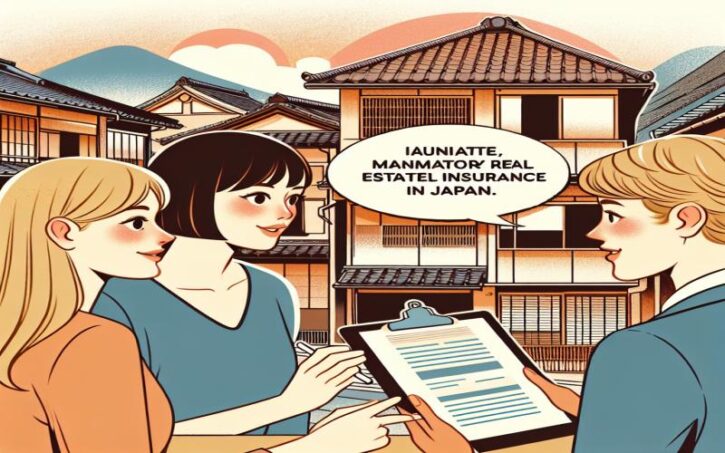
In the dynamic real estate sector in Japan, safety and protection are essential concerns for property owners and tenants, especially when it comes to subscribing to mandatory insurance. Indeed, this complex world requires individuals to familiarize themselves with several types of insurance, such as fire insurance or earthquake insurance, each with its own specific features and legal implications. By comparing these different types of insurance, this article aims to clarify the choices for investors and residents to optimize their safety while complying with the country’s legal requirements. Whether you are a property owner, tenant, or simply interested in Japan’s unique market, we invite you to dive into a detailed analysis of these essential protections to navigate the Japanese real estate world with peace of mind.
Preventing Financial and Legal Risks in Japanese Real Estate
Key Mandatory Insurances in Japanese Real Estate and Their Role
In the Japanese real estate market, fire insurance and earthquake insurance are considered the main property damage insurances. Fire insurance covers buildings and household belongings against a wide range of natural disasters such as fires, wind, and water damage. In contrast, earthquake damage is not covered by fire insurance, making it essential to also take out earthquake insurance. Earthquake insurance is a system that covers specific risks such as collapse caused by an earthquake or damage from a tsunami. These systems play an important role in reducing unexpected financial losses and providing economic stability to property owners.Coverage for Natural Disasters and Legal Obligations
Since Japan is a country where natural disasters such as typhoons and earthquakes are frequent, it is particularly important for property owners to prepare for these risks. However, in many cases, these mandatory systems (e.g., subscribing to fire and earthquake insurance when taking out a mortgage) stem from agreements with financial institutions. On the other hand, some cases are directly mandated by law (e.g., the Law on Liability for Defects in New Housing). This law requires suppliers of new housing to guarantee the structural integrity of the homes for ten years, and a dedicated “Certificate of Warranty for Housing Defects” is therefore established as proof of this guarantee.Considerations for Foreign Investors and Specific Structural Risks
Foreign buyers must also have a proper understanding of building risks influenced by Japan’s unique natural environment and the Building Standards Law. In the case of multi-story buildings, Japan has group plans that cover common areas through a comprehensive liability or fire insurance contract. Additionally, if the purchase is for investment purposes, facility liability insurance products are also recommended. This set of comprehensive coverage increases the likelihood of avoiding unexpected repair costs.Best Practices for Minimizing Financial and Legal Risks
1. Conducting Comprehensive Surveys: Confirming land data and proper setup for each individual project. 2. Establishing Transparency: Maintaining open communication between both parties before and after the contract. 3. Utilizing Professional Qualifications: Seeking advice from lawyers, financial planners, etc.Good to Know:
In Japan, several mandatory insurances help prevent financial and legal risks in real estate, including earthquake insurance, essential given the frequency of seismic activity, and standard home insurance covering typhoons or fires. Property owners must also take out policies covering structural defects to comply with local regulations, thereby ensuring the protection of foreign buyers’ investments, who often face strict and unique building codes. To minimize risks, buyers are advised to thoroughly understand these obligations and regularly consult experts in the Japanese real estate sector to ensure property compliance and the effectiveness of insurance coverage, while guarding against unforeseen events through rigorous documentation and careful attention during transactions.
Comparison of Mandatory Home Insurance in Japan
Overview of Home Insurance in Japan
In Japan, home insurance is not legally mandatory, but it is generally required as part of rental or mortgage contracts. The main types include fire insurance, which covers buildings, and personal property insurance, which covers personal belongings. Additionally, liability insurance can often be added as an optional extra.Necessary Insurances for Property Owners and Tenants
Property Owners: Homeowners primarily need fire insurance to protect the building against fires and natural disasters. Due to the high risk of earthquakes, earthquake insurance is often used in conjunction. It is also possible to add options for certain damages (e.g., breakage or theft), and when building a new home, special plans with a hidden defect warranty can be chosen. Tenants: For rental properties, it is recommended to take out personal property insurance to primarily cover “movable property.” It covers personal furniture and appliances, protecting against unexpected economic burdens. Additionally, liability insurance for damages to third parties (e.g., water leak accidents) is also important.Major Companies and Product Comparison
Here is a summary of the features of popular products in Japan: | Insurance Company | Product Name | Features | Coverage Customization | |———-|——–|——|———————–| | Secom Damage Insurance | Anshin My Home | Many discount systems (discount for all-electric, etc.). Flood exclusion possible. | High flexibility | | Sompo Japan | THE Sumai no Hoken | Earthquake supplement allowing 100% reimbursement. However, limited to short-term contracts. | Limited | | Mitsui Sumitomo Insurance | GK Sumai Series | Guarantee of full payment in case of total destruction. Simplified design plan available. | Flexibility | The possible use of long-term contracts and discount systems (e.g., discount for all-electric) offers some originality.Market Trends and Additional Options
In 2025, the Japanese market is experiencing growing demand for online subscriptions, thanks to the spread of digital services. Additionally, the popularity of short-term, low-cost products is on the rise. At the same time, due to increased disaster awareness, needs are growing for products strengthened against floods and earthquakes. In this context, it is important to define appropriate coverage based on the residential environment (e.g., by checking risk maps) and to stay informed of the latest trends. For real estate investment, it is advisable to consider a special plan as a measure to reduce the risk of income loss.Good to Know:
In Japan, mandatory home insurances differ for property owners and tenants, with fire insurance and liability insurance being the main ones. Property owners often need to take out insurance covering damage from natural disasters, a high risk in certain regions, while tenants prioritize liability insurance towards the landlord. Companies like Tokio Marine, Sompo Japan, and Mitsui Sumitomo stand out for their pricing diversity, customizable coverage options for earthquakes, and general conditions, which are more flexible for higher premiums. Insurance covering damage from typhoons or earthquakes proves indispensable, occupying an important place in a market influenced by the social and economic climate. Japanese laws do not strictly mandate home insurance, but financial institutions often require it for mortgages, thus ensuring financial protection against significant losses. Recent trends show a growing interest in modular policies, reflecting increasing needs for solutions adapted to changing lifestyles, thereby influencing policyholders’ choices in an environment where financial security is paramount.
Property Owner Liability in Japan
Liability of Property Owners in Japan
Legal Obligations and Covered Damages Under the Japanese Civil Code, when a property owner causes damage to others, they are obligated to compensate for that damage (Article 709 of the Civil Code). This includes cases where a violation of rights has been committed intentionally or through negligence. For example, property owners may be held liable for personal injury or property damage caused to third parties due to poor management or structural defects of buildings. For instance, a user injured due to a defective staircase or a tenant’s belongings damaged by water leakage. Exceptions and Limitations In some cases, liability may be mitigated. For example, under the “Law on Liability for Fire” (Shikka no Sekinin ni Kansuru Hōritsu), tort liability is exempted in the absence of gross negligence or intent in the event of a fire. Additionally, certain situations may be excluded from coverage based on contract terms in insurances like facility liability insurance (intent or gross negligence, etc.). Relationship with Insurance and International Comparison In Japan, “facility liability insurance” and “fire insurance” for property owners are common and are considered essential preparation against property-related risks. These compensation systems protect property owners from the risk of large damage payments. However, unlike mandatory liability insurance for driving, real estate-related insurance is not mandatory. In international comparison, provisions like the “Law on Liability for Fire” constitute a Japan-specific example for mitigating risks unique to wooden houses. Also, many countries have similar compensation systems or strict liability principles (as for manufactured products). Concrete Examples and Recent Statistics A recently notable case involves accidents resulting from insufficient management of vacant houses, a growing problem in an aging society, and potential collapses. Water leaks are also frequently reported, with some statistics indicating this involves several thousand cases annually according to property management companies. Subscribing to appropriate insurance is extremely important for promptly responding to and resolving these unforeseen situations. Overall, property owners in Japan benefit from clear civil obligations and a diverse offering of specialized insurance products to address them. Nevertheless, the absence of a mandatory membership system in this area preserves a certain degree of freedom. Therefore, careful consideration of individual circumstances and verification of contractual options are essential.Good to Know:
In Japan, property owners are legally responsible for damages caused to others by their property, including personal injury or property damage due to structural defects or hazardous conditions. This civil liability can be covered by property owner insurance, although its subscription is not always mandatory, unlike in some countries like France where it is often required for tenants. Common types of incidents include landslides damaging neighboring properties, especially in earthquake-prone areas. However, damages caused by natural disasters, such as typhoons, are generally excluded unless otherwise stated. In 2022, 68% of Japanese property owners had taken out such insurance, highlighting its importance in a country where legislation does not mandate it, but risk is ever-present. Comparatively, North American legal systems often limit liability to cases of proven gross negligence, whereas Japan tends to place a heavier burden on the property owner to ensure the safety and maintenance of the property.
Rental Risk Coverage: What You Need to Know
Definition and Importance of Rental Risk Coverage in Japan
Rental risk coverage is an economic protection mechanism for property owners and tenants against potential damages and non-payment risks that may arise when renting a property. In Japan, insurances such as fire insurance and tenant liability insurance are representative, covering restoration costs due to fires, water leaks, explosions, etc. They are often required as a contractual condition to protect both parties from unforeseen problems.International Comparison and Japan-Specific Context
In other countries, guarantee systems vary depending on specific regions and housing types. For example, in the United States, insurance against natural disasters is paramount, while in Japan, due to its earthquake-prone geographical location, earthquake insurance can be added to fire insurance. Additionally, according to the “Law on Liability for Fire,” unless there is gross negligence, claims for damages against a third party are limited. This law serves as a unique risk reduction method for property owners themselves.Commonly Covered Risks and Examples of Providers
The main coverages include: – Unpaid rent (rent guarantee) – Property deterioration (related to restoration obligation) – Damage from disasters (typhoons, earthquakes, etc.) In Japan, several companies like Tokio Marine & Nichido Fire and Mitsui Sumitomo Insurance offer these types of insurance products. It is recommended to compare product contents and cost-effectiveness to choose the one that best suits your needs.Regulations and Legal Impacts
The “Law on Management of Rental Housing” enacted in 2020 aims to improve fairness, particularly by eliminating unscrupulous operators and promoting proper contract conclusion. This law includes regulations prohibiting inappropriate solicitation by certain operators and provides for penalties for violations. It contributes to creating a transparent transaction environment for property owners and tenants. Therefore, it is essential to properly check important explanation documents.Good to Know:
In Japan, rental risk coverage is essential for protecting property owners and tenants against unpaid rent, property damage, and losses, similar to other countries, but with notable local particularities. Unlike some nations where these coverages may be optional, in Japan, they are often required by property owners when signing the lease. Companies such as Tokio Marine and Sompo Japan Insurance offer tailored policies, taking into account criteria like the tenant’s solvency and the condition of the property. Japanese laws impose strict standards, particularly around the return of the security deposit, which reinforces the need for adequate insurance to avoid costly disputes. Tenants and property owners must therefore carefully evaluate the coverage offered, its costs, and its terms to ensure optimal protection.
Disclaimer: The information provided on this website is for informational purposes only and does not constitute financial, legal, or professional advice. We encourage you to consult qualified experts before making any investment, real estate, or expatriation decisions. Although we strive to maintain up-to-date and accurate information, we do not guarantee the completeness, accuracy, or timeliness of the proposed content. As investment and expatriation involve risks, we disclaim any liability for potential losses or damages arising from the use of this site. Your use of this site confirms your acceptance of these terms and your understanding of the associated risks.

Cyril Jarnias is an independent expert in international wealth management with over 20 years of experience. As an expatriate himself, he is dedicated to helping individuals and business leaders build, protect, and pass on their wealth with complete peace of mind.
On his website, cyriljarnias.com, he shares his expertise on international real estate, offshore company formation, and expatriation.
Thanks to his expertise, he offers sound advice to optimize his clients' wealth management. Cyril Jarnias is also recognized for his appearances in many prestigious media outlets such as BFM Business, les Français de l’étranger, Le Figaro, Les Echos, and Mieux vivre votre argent, where he shares his knowledge and know-how in wealth management.





