
 Published on and written by Cyril Jarnias
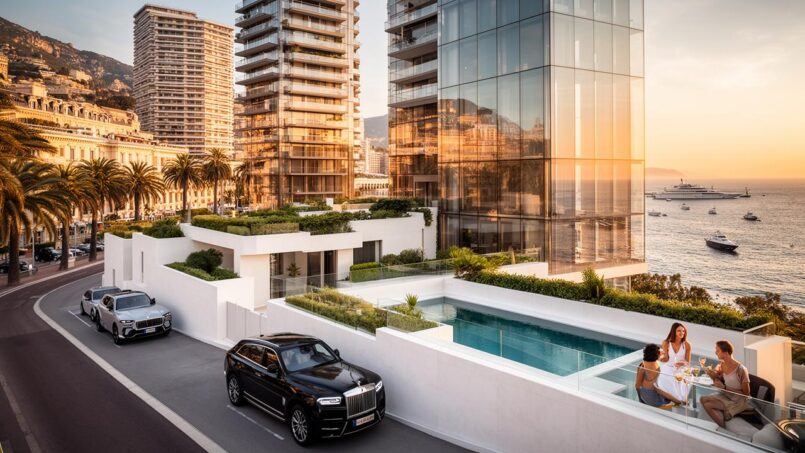
As the Monegasque real estate market approaches 2026, Monte-Carlo asserts itself more than ever as the beating heart of the Principality. The numbers are telling: nearly €5.9 billion in transactions in 2025, an average price hovering around €57,569 per square meter, and new home sales whose average price exceeds €40 million for the first time. In this context of records, investing in Monte-Carlo is no longer just about “buying in the city center,” but targeting micro‑zones, iconic buildings, and ultra‑specific segments of a territory of barely over 2 km².
In 2026, price growth in Monaco will be moderate (2 to 5%), with a very selective market. A strong polarization is observed between ultra‑prime assets, which remain in demand, and secondary properties, subject to more negotiation. To invest, it is crucial to precisely target locations within Monte‑Carlo and its surroundings.
An ultra‑prime market undergoing recomposition
Monte-Carlo operates in a totally atypical Monegasque environment: no possible overproduction, some of the strictest urban planning rules in the world, very favorable personal taxation (no income tax or local wealth tax, no property or land tax) and international demand driven by ultra‑high‑net‑worth individuals, major families, and long‑term patrimonial investors.
In 2025, the average price per square meter in Monaco is €57,569, making it the most expensive residential market in the world.
But behind these aggregates lies a much finer hierarchy. Two poles now dominate the map of Monegasque property capital: Larvotto and Monte-Carlo. Even within Monte-Carlo, micro‑zones like the Carré d’Or or the new “Billionaire’s Triangle” impose a microlocal reading grid essential for any serious investment.
Monte-Carlo: liquid heart and value pivot
Monte-Carlo remains the most prestigious and most liquid district in the Principality. It hosts the majority of prime apartments, around the Casino, the Hôtel de Paris, and the major residences of the 1980s and 1990s, now complemented by a series of ultra‑contemporary projects.
In 2024, Monte-Carlo posted an average price near €54,000/m², roughly the same magnitude as Fontvieille, but with a very different value profile. In 2025, the district crossed for the first time the symbolic threshold of €1 billion in resales, with about €1.1 billion and 164 transactions, nearly two out of five sales across the entire Principality. In other words, Monte-Carlo is not just prestigious; it is also where properties sell fastest and at the highest prices.
The real estate observatory notes a 4.8% increase in prices in Monte-Carlo, with a projected growth of 3 to 5% by 2026. This trend is driven by intense demand for luxury apartments near Place du Casino. The best‑located properties benefit from marked resale premiums, especially if they combine sea views, an iconic address, recent renovation, or integrated services.
The Carré d’Or, the most coveted micro‑district
Within Monte-Carlo, the Carré d’Or constitutes a micro‑zone apart. It is not an administrative sector but a very precise perimeter, historically defined by residences such as Monte‑Carlo Star, Park Palace, Georges V, or the Fairmont. On a few blocks around the Casino and the Jardins des Boulingrins, the most sought‑after addresses of the Monegasque market are concentrated.
Within this perimeter, values per square meter generally range from €60,000 to €120,000, with exceptional cases – on certain high floors with spectacular views – crossing the threshold of €100,000/m², or even more. Iconic buildings such as Le Mirabeau, Les Floralies, Park Palace, 26 Carré d’Or, or Petite Afrique can thus reach or exceed €100,000/m² for a few very specific units, according to industry professionals. Some properties are even listed at €110,000 or €120,000/m², though they do not always find buyers at these levels.
This segment is characterized by very low supply and solvent cash‑ready demand, with transactions often confidential between €100,000 and €115,000/m². For the investor, it is a patrimonial asset offering modest rental yield but maximum security, good resale liquidity, and strong resilience to economic corrections.
The “Billionaire’s Triangle,” new strategic hub
Since the delivery of Mareterra, a new geographical figure has emerged: the “Billionaire’s Triangle,” that strategic axis connecting the Monte‑Carlo Casino, the Métropole, and Mareterra, the sea extension attached to Larvotto. It is in this corridor that a major share of the Principality’s ultra‑prime capital is now concentrated.
The residences along this axis – One Monte‑Carlo, 26 Carré d’Or, Petite Afrique, the southern facades of buildings overlooking the Casino gardens, down to the new buildings of Mareterra – form the backbone of this ultra‑luxury segment. Sales over €50 million structure this sub‑market, with at least five transactions above €100 million in 2025.
For 2026, new supply within this perimeter is mechanically contracting: Mareterra is largely delivered, Bay House as well, and no project of comparable scale is announced in the short term. This expected “supply cliff” around 2027 further strengthens pricing power for remaining properties, whether new or resales in the most coveted buildings.
Larvotto and Mareterra: the new ultra‑prime frontier
While Monte-Carlo remains the nerve center, Larvotto has become, figures in hand, the most expensive district in Monaco. In 2024, IMSEE recorded an average resale price of €97,563/m² in Larvotto, an annual surge of over 48%, heavily boosted by the delivery of ultra‑prime units. In the price hierarchy by district, Larvotto crossed the €70,000/m² threshold for the first time, at €71,167/m², and took the top spot.
The resale value in Larvotto reached nearly €851.9 million for just 13 transactions, illustrating the extreme level of unit tickets. A standard 100 m² apartment there easily exceeds €7 million, while large surfaces, penthouses, and villas far surpass this level. Over five years, nominal performance is around 33.6%, a clear indicator of appreciation potential for the best‑positioned assets, especially those with direct sea views.
Mareterra, laboratory of the new ultra‑luxury
Mareterra, the seaside extension delivered at the end of 2024, accounts for most of this revaluation. This new district built on the sea adds about six hectares, including 130 apartments delivered in 2024 out of a total of approximately 110 apartments, 10 ultra‑luxury villas, and several townhouses, plus a 16‑berth port. Prices there are unprecedented: within this development, a level close to €100,000/m² is considered “standard,” with values that can reach up to €120,000/m², and even beyond according to some international reports citing an initial range of $85,000 to $130,000/m².
The average price of new home sales in Monaco exceeded €36.4 million in 2024, then €40.8 million in 2025.
Within this Monte‑Carlo / Larvotto pair, the sea view and waterfront play a structuring role. Historically, assets offering an unobstructed panorama of the Mediterranean, the port, or the Casino gardens resell faster, register higher price growth, and mechanically attract an international clientele willing to pay a significant premium. This is even truer since the health crisis and the rise in expectations for outdoor space, large terraces, and natural light.
According to market studies, well‑oriented three‑ and four‑room apartments with large terraces attract families and long‑term residents. These potential buyers often move from renting to owning due to the tightening rental market, which sustainably supports prices in buildings in Larvotto and Monte-Carlo.
Iconic buildings to watch closely
Within Monte-Carlo, not all buildings are equal. The district features great architectural diversity, from post‑war buildings to 1980s residences, and constructions from the current decade. The price difference between two neighboring buildings can reach €20,000/m², so marked are the gaps in quality, services, exposure, and views.
Among the buildings to prioritize in 2026 for a demanding investor, several categories stand out.
Icons of the Carré d’Or and the Billionaire’s Triangle
The residences directly positioned around Place du Casino and the Jardins des Boulingrins constitute the core of the most exclusive micro‑zone:
– Park Palace
– Les Floralies
– Sun Tower
– Le Mirabeau
– 26 Carré d’Or
– La Petite Afrique
– One Monte‑Carlo
The price per square meter can exceed €100,000 for high‑rise apartments with sea and garden views, particularly at Les Floralies.
One Monte‑Carlo also illustrates the extreme dynamics of the rental segment: a 527 m² duplex, six rooms, is offered there at €170,000 per month. On this type of product, the face yield may seem low relative to the capital tied up, but the target clientele, ultra‑wealthy and very captive to integrated services, secures an exceptionally stable cash‑flow profile on a Monaco scale.
New developments in and around Monte-Carlo
The accelerated modernization of the district is reflected in the emergence or renovation of several key projects:
Le Lido, whose exact characteristics remain still not widely disseminated, is part of the updating of Monaco’s built front. Moreover, programs carried or inspired by the SBM concern the Terrasses du Casino, the former Sporting d’Hiver (now One Monte-Carlo) and future operations near the Thermes Marins, which will strengthen the supply of very high‑end residences around Place du Casino by 2030.
The district is thus undergoing a gradual transformation toward a more contemporary architectural vocabulary, with the demolition or restructuring of older buildings such as the Palais Saint‑James, replaced by mixed‑use complexes (residential, offices, green spaces) in the area between Avenue Princesse‑Alice and Avenue de la Costa.
Greater Monte-Carlo: upscale residences in the second tier
Outside the ultra‑prime nucleus of the Carré d’Or, a certain number of upscale buildings in Monte-Carlo offer an interesting yield/security trade‑off, especially for properties to renovate or already modernized, benefiting from a good layout and easy access to amenities.
These buildings, sometimes less publicized than the Casino icons, can be negotiated at more moderate price levels (around or slightly above the district average of €54,000/m²), while still being in the most liquid zone of Monaco. Well targeted, they allow combining gradual appreciation with the possibility of decent rental income, particularly on two‑ and three‑room apartments highly sought after by permanent residents.
“Satellite” micro‑zones not to be overlooked
While the investor focused on Monte-Carlo naturally looks to Larvotto and the Carré d’Or, 2026 also brings to light a few neighboring micro‑zones, sometimes less spectacular in terms of price but very interesting from a risk/return perspective.
Fontvieille: relative value and revaluation potential
Fontvieille, built on the sea like Larvotto but on the opposite side of the Principality, was long perceived as the least prestigious district. However, recent data show a shift in perception among many investors.
The entry‑level is well below Monte-Carlo or Larvotto, providing a more accessible entry ticket for comfortable surface areas. Prices are cited around the median zone of €53,000/m², or even significantly less for the oldest buildings. Above all, a “renovation gap” estimated at about €15,000/m² has been identified: investors buy older units, rehabilitate them to contemporary standards, and capture a significant premium upon resale.
Fontvieille offers non‑financial advantages such as marinas, green spaces, proximity to the shopping center and heliport, and a family‑friendly environment. The district’s ecological urban requalification should lead to steady value progression, although prices remain below those of the Carré d’Or or Larvotto.
La Condamine: vibrant heart and rental yield
Another neighboring micro‑zone to watch is La Condamine, the district around Port Hercule, lively, commercial, and crossed every year by the Formula 1 Grand Prix circuit. Here, prices remain significantly lower than those of Monte-Carlo and Larvotto, with an indicative range around €38,000 to €58,000/m² depending on the building.
La Condamine stands out for strong rental demand due to its village atmosphere, market, shops, proximity to the port, and quick connections to other districts. This area attracts residents seeking to live Monaco daily. For investors, it offers sustained rents, near‑full occupancy, and lower acquisition prices than elsewhere, allowing higher gross yields.
Moneghetti, La Rousse, Jardin Exotique: value strategies
The hillside districts like Jardin Exotique and the areas of Moneghetti or La Rousse still constitute pockets of “relative value” in an overall extraordinary market. Prices there are often lower than in the center, in an approximate range of €35,000 to €55,000/m² for the best sectors, while offering:
– spectacular views of the sea, the Rock, and the port,
– a quieter residential setting,
– sometimes more generous surfaces for the same price.
New residences such as Villa Lucia (Moneghetti) or L’Exotique (Jardin Exotique) are helping to reposition these zones in the mental map of international buyers. These micro‑zones remain particularly attractive for families seeking space and for investors looking to diversify their exposure while staying in Monaco.
Yields, rents, and performance profile in 2026
In Monaco, and therefore in Monte-Carlo, real estate investment remains primarily a tool for capital preservation and growth. Average gross rental yields observed remain modest compared to asset values, around 3 to 4% depending on sources, with aggregate data mentioning a gross yield of about 3.26% at end‑2025 and 2.87% mid‑2025. Net, after charges and various fees, one typically finds between 2.5 and 3.5%, or even slightly less for the most expensive products in the Carré d’Or.
Nevertheless, several elements make this relative performance more attractive than it appears:
Residents pay no local income tax, no property tax, and no dwelling tax. Moreover, rental demand structurally exceeds supply for good products, leading to near‑zero vacancy.
Available data shows, for example, that an average studio in Monaco trades for around €1.79 million, with a monthly rent of about €3,300, yielding a gross return of just over 2.2%. A two‑room apartment around €3.5 million rents for approximately €6,500 (2.23% gross), while large apartments (four bedrooms and more) can post a gross yield above 6%, thanks to very high monthly rents, typically €150,000 for an asset worth around €29.5 million.
About 350 rental properties were listed at end‑2025 in a very tight rental market.
In this context, the strategy of many investors is evolving: beyond the sole logic of patrimonial conservation, the search for properties capable of generating significant rental income is becoming an arbitrage criterion again, particularly for medium and large surfaces suited to expatriates, executives, or families establishing their residence in Monaco long‑term.
2026: a more selective market, but still under tension
Forecasts converge: for 2026, price growth in Monaco should be around 2 to 5%, depending on the segment, following a period of strong acceleration linked to the massive deliveries of Mareterra and Bay House. The overall dynamic remains upward, but at a more measured pace, against a backdrop of scarcity of new programs and a territory of 2.08 km² that is almost saturated.
Several structuring trends emerge for the investor targeting Monte-Carlo and its micro‑zones:
Summary of key trends: price polarization, quality demands, scarcity of new builds, and sustained international demand.
Ultra‑prime assets (Carré d’Or, Larvotto, Mareterra, Billionaire’s Triangle) retain very high pricing power. Secondary properties without distinguishing features become more sensitive to negotiation.
The premium goes to products combining location, construction quality, services (concierge, spa, fitness, security), and energy efficiency. Buyers in 2026 favor sustainable materials, home automation, and energy performance.
After the peak of 2024 (159 apartments, including 130 for Mareterra), no program of comparable scale is planned. The leaner new supply in 2026 supports price firmness on remaining units.
Very wealthy buyers, relocating families, and long‑term investors purchase without heavy reliance on credit. Monaco’s removal from the FATF grey list enhances the country’s appeal.
In this setting, a scenario of generalized price declines seems highly unlikely in the short term. The key question for the investor therefore becomes: how to select the micro‑zones and buildings capable of outperforming in this phase of disciplined growth?
Comparison of key micro‑zones for an investor
To see more clearly, it is useful to summarize the main characteristics of the principal districts from a patrimonial investor’s perspective.
Prices and profile of the main districts
| District / micro‑zone | Approximate average price (€/m²) | Typical range (€/m²) | Primary positioning |
|---|---|---|---|
| Monte-Carlo (overall) | ≈ €54,000 | ~€50,000 – €80,000+ | Prestige, high liquidity |
| Carré d’Or (Monte-Carlo) | > €60,000 | €60,000 – €120,000 | Ultra‑prime, very tight market |
| Larvotto | €71,167 (2024 average) | €70,000 – €100,000+ | Waterfront, ultra‑prime |
| Mareterra (Larvotto) | ≈ €100,000 (standard) | €100,000 – €120,000+ | New eco‑luxury seaside district |
| Fontvieille | ≈ €53,000 | €28,000 – €42,000 (entry‑level) | Relative value, renovation potential |
| La Condamine | — | €38,000 – €58,000 | Rental yield, village atmosphere |
| Jardin Exotique / Revoires | — | €35,000 – €55,000 | Panoramic views, quiet, families |
These orders of magnitude show how Monte-Carlo and its satellites present different logics. The Carré d’Or and Larvotto are primarily aimed at capital preservation and social positioning strategies, while districts like Fontvieille or La Condamine allow for more yield‑oriented or value‑creation structures through renovation.
Investment types by ticket size
One can also summarize the main relevant strategies for 2026:
| Estimated investment level | Typical target | Preferred location | Primary objective |
|---|---|---|---|
| €2 – 5 M | 1‑2 rooms, possible renovation | Fontvieille, La Rousse, Moneghetti | Market entry, yield + appreciation |
| €5 – 15 M | 2‑3 room luxury, partial sea view | Monte-Carlo, La Condamine | Mix prestige / rental income |
| €15 – 40 M | Large apartment or penthouse with sea view | Carré d’Or, Larvotto | Capital preservation, trophy asset |
| €40 – 300 M+ | Villa, signature penthouse | Mareterra, Tour Odéon, ultra‑prime Triangle | Ultra‑luxury segment, wealth diversification |
These ranges remain indicative but reflect the very clear segmentation of the market: Monte-Carlo allows action at all levels, but the nature of the investment changes radically with the amount committed.
What an investor should concretely watch in 2026
For an actor wishing to position themselves specifically on Monte-Carlo and its surroundings, several signals deserve particular attention in the next 12 to 18 months.
First, the evolution of resales in already emblematic buildings of the Carré d’Or and Billionaire’s Triangle. Each transaction completed above €100,000/m² in these residences reinforces the market reference and consolidates the price trajectory. The scarcity of properties put up for sale in these buildings, often held long‑term or within sophisticated patrimonial structures, also means that every opportunity deserves study, even if it deviates by a few percent from theoretical levels.
The modernization of the district (urban park, green roofs, demolition/rebuilding) signals an upgrade. Identifying condominiums that will benefit from these renovations or a major overhaul can generate alpha relative to already well‑valued assets.
Finally, on the rental front, the tension remains such that products well calibrated for demand – family three‑ and four‑room apartments with terrace, in well‑located buildings in Monte-Carlo, Fontvieille, or La Condamine – should continue to enjoy near‑zero vacancy. In an environment of low but safe yields, these assets represent an appealing compromise between income and capital protection.
Conclusion: Monte-Carlo, a laboratory of organized scarcity
Investing in Monte-Carlo in 2026 is not just buying into a “chic neighborhood” of the Riviera. It is entering an ecosystem where every micro‑zone, every building, every façade orientation can vary the price by tens of thousands of euros per square meter. Between the Carré d’Or and Larvotto, between the Billionaire’s Triangle and new districts like Mareterra, the internal hierarchy of the market is sharpening and hardening.
The key to success lies in the fine analysis of micro‑zones, the rigorous selection of buildings and units, and the clear definition of the objective (yield, prestige, patrimonial protection, or a mix). Despite record prices, scarcity, sustained demand, and regulatory stability limit the risks of a generalized correction.
For the investor who accepts these price levels and envisions a long‑term horizon, Monte-Carlo – and within it the iconic buildings of the Carré d’Or, Larvotto, and the Billionaire’s Triangle – will remain in 2026 one of the most accomplished laboratories of organized scarcity in global residential real estate.
A patrimonial project or a question? Contact us now to speak with a wealth management expert.
Disclaimer: The information provided on this website is for informational purposes only and does not constitute financial, legal, or professional advice. We encourage you to consult qualified experts before making any investment, real estate, or expatriation decisions. Although we strive to maintain up-to-date and accurate information, we do not guarantee the completeness, accuracy, or timeliness of the proposed content. As investment and expatriation involve risks, we disclaim any liability for potential losses or damages arising from the use of this site. Your use of this site confirms your acceptance of these terms and your understanding of the associated risks.

Cyril Jarnias is an independent expert in international wealth management with over 20 years of experience. As an expatriate himself, he is dedicated to helping individuals and business leaders build, protect, and pass on their wealth with complete peace of mind.
On his website, cyriljarnias.com, he shares his expertise on international real estate, offshore company formation, and expatriation.
Thanks to his expertise, he offers sound advice to optimize his clients' wealth management. Cyril Jarnias is also recognized for his appearances in many prestigious media outlets such as BFM Business, les Français de l’étranger, Le Figaro, Les Echos, and Mieux vivre votre argent, where he shares his knowledge and know-how in wealth management.





