
 Published on and written by Cyril Jarnias
Oman has long lived in the shadow of its more media-savvy neighbors, like Dubai or Doha. However, the Sultanate is becoming one of the most interesting real estate markets in the Gulf. With a rapidly diversifying economy, a very light tax framework, strong rental yields, and a clear system for foreign investors, investing in real estate in Oman is no longer an exotic gamble.
This article covers all essential aspects of real estate investment: the economic context, purchasing rules for foreigners, available property types, key cities, potential returns, applicable taxation, risks to consider, and concrete strategies. Its goal is to transform a general idea into a realistic action plan.
A Country in Transformation Driven by Vision 2040
To understand why real estate is gaining such momentum, one must start with Vision 2040. This national program aims to reduce dependence on oil, develop non-oil sectors (tourism, logistics, industry, renewable energy), and reorganize cities on more sustainable foundations.
The economy is progressing in this direction. Nominal GDP rose from 40.7 to 41.1 billion OMR, with projections reaching 42.6 billion in 2025 and over 80 billion OMR around 2040, representing average annual growth of about 4.3%. The non-oil sector is growing faster than the rest of the economy, at +4.1% in 2024, and the contribution of non-hydrocarbon sectors already exceeds 35%.
The emirate’s population is 5.3 million inhabitants in 2024, with a projection of 7.7 million by 2040.
All this is set in an environment considered politically very stable, with balanced diplomacy and improving credit ratings. For example, Fitch raised the country’s rating to BB+ with a positive outlook, S&P to BBB-; currency stability also plays a key role: the Omani rial (OMR) is firmly pegged to the US dollar (1 OMR ≈ 2.6 USD), which limits exchange risk for the international investor.
The residential real estate market is valued at approximately 4.96 billion dollars in 2025.
Strong Structural Demand for Housing
The residential supply is expanding rapidly: about 1.1 million housing units in 2024 (723,000 villas/Arabic houses and 379,000 apartments), with an increase of 3.6% over the year. But this dynamic is not enough to absorb demographic pressure.
Authorities estimate that an additional 62,800 new housing units will be needed by 2030 and over 80,000 additional units by 2040 compared to the existing stock. To maintain a comfortable occupancy rate around 90% by 2040, there would even be a shortage of over 300,000 housing units compared to current plans. Simultaneously, over 500,000 housing applications are active nationwide, with 125,000 families considered poorly housed.
This is a clear sign: structural demand for housing is not about to dry up, and construction is still struggling to keep pace. For an investor, this moderate but persistent supply-demand tension is a driver of medium to long-term appreciation.
What the Market Actually Offers: Prices, Segments, and Outlook
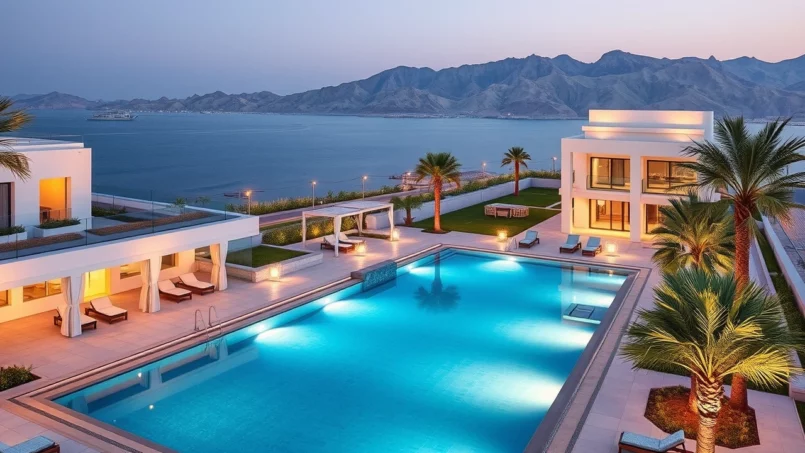
The Sultanate offers a very wide range of products, from apartments in integrated developments to luxury waterfront villas, including office buildings, commercial premises, logistics warehouses, or plots in special economic zones.
Price Range: From Entry-Level to Ultra High-End
The entry ticket can remain relatively accessible for a Gulf market, especially compared to neighbors.
Here is a synthesized overview of common price ranges for residential properties.
| Property Type / Segment | Indicative Price Range (OMR) | Comment |
|---|---|---|
| Studio (entry-level) | From 30,000 | Compact apartments, often on the outskirts or in secondary beach resorts |
| 1–2 Bedrooms (standard) | 50,000 – 100,000 | Core market for single expatriates or couples |
| 2–3 Bedrooms (mid-market) | 100,000 – 200,000 | Targets expatriate families and the Omani middle class |
| Large Apartments / Villas | 200,000 – 400,000 | Family products in sought-after neighborhoods / ITCs |
| Luxury Real Estate | 400,000 and above | Waterfront villas, penthouses, branded residences |
| High-End Villas | 200,000 – > 1,000,000 | Prime Muscat, golf/marina ITCs, waterfront |
In the most prominent areas of Muscat, the price per square meter for an apartment can be around 800 to 1,000 OMR (approximately 2,080 to 2,600 USD). Villas in these same neighborhoods generally start from 220,000 OMR and can far exceed one million for the best-located properties.
On the coast, a sea-view apartment can start around 150,000 dollars, while front-line villas are typically priced between 300,000 and over 600,000 dollars depending on location and associated brand (Trump, Marriott, Mandarin Oriental, etc.).
A Market in a Catch-Up Phase After a Long Correction
Between 2015 and 2021, the Omani real estate market went through a marked correction, with an approximate 30% drop in prices. The decline in oil revenues and bank caution had weighed on demand.
The overall real estate price index increased by more than 17% year-on-year at the end of the third quarter of 2025.
The most established Integrated Tourism Complexes (ITCs), like Al Mouj in Muscat, have seen their prices rise by about 10 to 12% per year on average over the past five years. New major urban projects like Sultan Haitham City, Yiti Sustainable City, or developments in Duqm and Salalah should extend this momentum.
Competitive Rental Yields in the Gulf
On the income side, Oman positions itself very well. The average gross yield on residential properties is around 7%, with an overall range of 5.6% to 8.3% depending on property type and location. In iconic ITCs like Al Mouj or Muscat Hills, gross yields of 6% to 8% for apartments and 4% to 6% for villas and townhouses are typical.
The breakdown by property type shows a clear advantage for smaller units.
| Property Type | Typical Gross Rental Yield |
|---|---|
| Studio | 7% – 8% |
| 1-Bedroom Apartment | 6.5% – 7.5% |
| 2-Bedroom Apartment | 5.5% – 7% |
| 3-Bedroom Apartment | 4.5% – 6% |
| Villa / Townhouse | 4% – 6% |
| Luxury Villa | 4% – 5.5% |
| Seasonal / Short-Term Rental | 8% – 12% (up to 12–13% in the best spots) |
In practice, net yields (after expenses, 3% municipal tax on rent, management, maintenance) are more likely between 5% and 7% for a well-managed property, which remains high for a stable, dollar-pegged market.
Short-term rentals (like Airbnb) in the most sought-after tourist neighborhoods and resorts (Al Mouj, Jebel Sifah, Hawana Salalah, Yiti) can achieve gross annual yields of 12% to 13%, especially when benefiting from seasonal peaks like winter in Muscat or the Salalah monsoon.
Combined with annual price appreciation that now frequently fluctuates between 3% and 7% (and more in some segments), the total five-year return, combining rental income and capital gains, can reasonably be projected in the range of 35% to 65% for a well-positioned investment.
How a Foreigner Can Invest: Legal Framework and Property Types
Investing in real estate in Oman as a non-resident does not mean buying land anywhere in the country. The right to property is governed by a system based on a fundamental rule: all land belongs to the State, and foreigners can only directly hold specific rights, within clearly defined zones.
ITCs, Usufruct, Economic Zones: The Three Main Channels
For a foreign investor, three main entry points dominate: Integrated Tourism Complexes, usufruct rights, and special economic zones or free zones.
Integrated Tourism Complexes are planned residential and tourist areas where non-Omanis can buy homes (apartments, villas, land plots) under a regime akin to freehold for the construction, legally based on long usufruct rights lasting up to 99 years and inheritable. Among the iconic ITCs are Al Mouj Muscat, Muscat Hills, Jebel Sifah, Muscat Bay, Hawana Salalah, Yiti, and AIDA.
Within residential complexes, foreigners benefit from the same property rights as nationals: they can acquire 100% of the property, rent it, resell it, or transfer it. However, for vacant plots, the law imposes a specific obligation: construction must begin within four years of purchase. If this condition is not met, the State can proceed with auctioning the land.
The extended usufruct outside ITCs stems from a 2020 decision that opened, under conditions, access for expatriates to apartments in buildings of four floors or more, located outside ITCs but within designated zones, mainly in Muscat. The investor obtains a right of use and enjoyment, transferable and renewable for up to 99 years, but it is a limited real right, not full ownership of the land. This formula targets expatriates already settled: the buyer must be at least 23 years old, have resided in Oman for at least two years, invest a minimum of 45,000 OMR in Muscat (35,000 in other governorates), occupy the property with their family for four years before being able to rent or resell, and respect quotas (maximum 40% of units owned by non-Omanis in a building, with a 20% cap for a single nationality).
Oman’s special economic zones and free zones, such as Duqm, Sohar, or Salalah Free Zone, offer advantageous regimes for foreign investors. These benefits include the possibility of 100% foreign ownership, very long-term land leases, extended tax exemptions (often 25 to 30 years), and customs facilities. For a real estate investor, the common model involves setting up a local company, owned by the foreign investor, which then owns and operates industrial, logistics, or commercial real estate assets within these privileged zones.
Restricted Areas and Geographical Limitations
Not all regions are open to non-Omanis. Several governorates or strategic zones are explicitly excluded: Musandam, Buraimi, Dhahirah, Wusta, certain islands like Masirah, mountains like Jabal Akhdar and Jabal Shams, sensitive coastal localities (Liwa, Shinas), not to mention the vicinity of military sites, archaeological sites, and certain agricultural lands.
In the Dhofar Governorate, access for foreigners is limited to the wilaya (province) of Salalah and must be through authorized Integrated Tourism Complexes (ITCs), like Hawana Salalah. It is crucial for an investor to precisely verify that the desired property is located in an eligible area by consulting the Ministry of Housing’s registers and the official ITC plans.
A Major Reform: The New Real Estate Regulation Law
The legal framework has just taken a leap in quality with the adoption of a new real estate regulation law, published in late 2025 and applicable in 2026. This law unifies several scattered texts, strengthens the role of the Ministry of Housing and Urban Planning as the sole regulator, strictly regulates real estate development (mandatory license for developers, mandatory dedicated escrow accounts, financial guarantees for project completion, reporting obligations), regulates real estate professions (brokerage, marketing), and generalizes the creation of homeowners’ associations for common area management.
For the investor, this law mainly moves towards more transparency and protection: all projects must be registered, off-plan sales payments are secured in escrow accounts released as construction progresses, developers are bound by contractual deadlines, and unlicensed or pseudo-agencies now face heavy penalties.
Purchase Process: From Property Selection to Title Acquisition
The typical journey of a foreign investor wishing to buy a property in an ITC or via usufruct follows a fairly standard international sequence, but with some specific steps.
The buyer starts by defining their objective (primary residence, pied-à-terre, pure long-term rental investment, short-term rental, short/medium-term resale project), their budget range, and the target city. Muscat accounts for about 47.9% of the country’s residential turnover and remains the most liquid and structured market for expatriates. Salalah offers a cheaper entry point, heavily focused on tourism, while Sohar and Duqm cater more to industry and logistics-oriented profiles.
After a pre-selection, it is crucial to collaborate with a licensed local real estate agent and a lawyer. Due diligence should examine: the reputation and track record of the builder, the precise details of the contract (area, specifications, schedule), the post-delivery management plan, the estimated amount of service charges and reserve fund, as well as any rental usage restrictions (like Airbnb or co-living).
Once the property is chosen, the seller or developer typically requests a reservation with a deposit (expression of interest), often around 5% to 10% of the price. Next comes the signing of the Sale and Purchase Agreement, which legally formalizes the transaction and specifies the payment schedule. For an off-plan property, the purchaser then makes payments linked either to time or construction milestones, depositing the money into a dedicated escrow account for the project.
The final phase of the acquisition takes place at the Ministry of Housing and Urban Planning. It includes document verification, issuance of a no-objection certificate, registration of the transfer, and issuance of the new property title or usufruct certificate. At this stage, the buyer must also pay the transfer fees, which typically amount to 3% of the property value for a foreign buyer.
Taxation and Costs: A Very Competitive Environment
One of the great strengths of investing in real estate in Oman is its tax simplicity, especially compared to many Western jurisdictions. There is no annual property ownership tax, no classic property tax, no capital gains tax for individuals, and no specific tax on gratuitous transfers or inheritance, although Islamic inheritance law may apply in the absence of a will.
On transactions, the State collects a registration/transfer fee, generally 3% for foreign buyers, payable at the time of property transfer. Omani citizens benefit from a reduced rate (1% since 2025), which does not directly concern a foreign investor, unless they invest through a local company majority-owned by Omanis.
Since 2021, Oman applies VAT at a standard rate of 5%. Sales of dwellings and residential rentals are generally exempt. However, VAT applies to certain ancillary real estate services like property management, maintenance, advisory services, and rents for purely commercial spaces.
Regarding rental income, rental revenue is subject to a 3% municipal tax calculated on the gross rent, paid by the owner. This replaces, in a way, part of what would be a property tax in other countries. Also noteworthy is the upcoming introduction of a personal income tax starting in 2028 for high-income earners (5% rate above a certain annual income threshold), which will include rental income in the taxable base: this element remains to be closely monitored for an investor planning to receive significant rental income personally.
Besides the purchase price, acquiring a property in Oman involves several fees: lawyer’s fees (0.75% to 2% of the price or a fixed fee), notary and translation fees, valuation fees for a loan, and agency commissions (2% to 3%, usually borne by the seller for resales). Connection fees to electricity, water, and telecommunications networks must also be anticipated.
Over time, homeowners’ association (HOA) and community charges in ITCs are an item not to be overlooked. They cover security, maintenance of gardens, pools, golf courses, marinas, clubhouses and can be, for a medium-sized apartment, around 500 to 1,500 OMR per year, plus contributions to the reserve fund for major works (often charged per built square meter). Building insurance, sometimes coupled with contents insurance, completes the equation, costing a hundred to a few hundred OMR per year depending on the insured value.
Financing Your Investment: Possibilities and Limits
The cash culture remains strong in the Omani market, and many transactions, especially for non-resident foreigners, are done without recourse to local credit. That said, Omani banks have gradually expanded their mortgage products to expatriates.
For a foreign resident with a valid residence permit and stable employment, several banks offer real estate loans, notably Bank Muscat, National Bank of Oman, Bank Dhofar, Sohar International, and subsidiaries like HSBC. The loan-to-value ratio, regulated by the Central Bank, is typically 70% to 80%, requiring a personal contribution of 20% to 30%. The maximum loan term is 20 to 25 years, with an obligation for full repayment before age 60-65. Interest rates, pegged to local interbank rates, are most often between 5% and 7%.
Obtaining this financing requires submitting a complete application (passport, residence permit, employment contract, salary certificates, bank statements for 6 to 12 months, employer’s no-objection certificates, documents for the desired property). Required minimum income thresholds vary but are often between 400 and 750 OMR per month depending on the bank and product.
For non-resident investors with no professional link to Oman, obtaining local credit is very restrictive. Banks generally require residency and local income, with rare exceptions for very high net worth individuals. International buyers therefore mostly opt for cash payment, credit in their home country, or developer payment plans.
Developer payment plans are very common for off-plan projects. A typical scheme might look like 10% upon reservation, 40% to 50% spread during construction, and the balance of 40% to 50% upon handover. Some launches offer post-delivery plans where part of the balance (e.g., 20% or 30%) is spread over two or three years after project completion, which amounts to an interest-free loan from the developer.
Where to Invest: Overview of Cities and Flagship Projects
The choice of location is arguably the most structuring decision. Oman is not just its capital, although Muscat still concentrates nearly half of the market volume. Each city has its typical investor profile and its own dynamic.
Muscat: Political, Economic, and Real Estate Heart
With about 1.7 million inhabitants, Muscat is three times more populous than any other city in the country. Over 60% of its residents are expatriates, making it the main pool of rental demand for executives in the oil, gas, financial, and administrative sectors. The capital is also very highly ranked in terms of safety: it ranks in the global top 10 of some urban safety indices.
In terms of real estate, Muscat clearly dominates the market: almost 48% of residential revenue is generated there. Rents are higher than elsewhere but remain significantly lower than in Dubai, with an overall cost of living estimated to be over twice as cheap as in the emirate.
Discover the most sought-after zones for real estate investment in Muscat, ranging from established neighborhoods to new development projects.
Waterfront and golf complex, renowned for its lifestyle and proximity to the airport.
Established and highly sought-after neighborhoods for their centrality and direct access to the waterfront.
Central and well-connected sectors, offering an established urban living environment.
Appreciated residential neighborhoods, combining tranquility, amenities, and panoramic views.
Promising new projects representing the next phases of growth and opportunity in the region.
In these areas, one- or two-bedroom apartments constitute the most liquid and profitable asset class. Studios and small units targeting expatriate professionals offer the best gross yields, often 7% to 9%, whereas high-end family villas position themselves more around 4% to 6% but with greater capital appreciation potential as the city upgrades.
Salalah: The Khareef Capital and a Booming Tourist Market
The country’s second-largest urban area, Salalah has about 460,000 inhabitants and enjoys a unique microclimate in the Arab region. Between June and September, the local monsoon (Khareef) transforms the surrounding mountains and valleys into green landscapes, attracting up to a million visitors during the season.
The integrated project Hawana Salalah, developed by Muriya, illustrates the impact of the Khareef on the real estate market. During this season, short-term rentals see strong growth, with high occupancy rates and premium rents, capitalizing on the site’s attractions like its artificial lagoons, marinas, beaches, hotels, and residences.
Prices remain generally lower than in Muscat. One can find villas from around 100,000 OMR and apartments at significantly lower prices per square meter. Estimated gross rental yields on classic residential properties are around 6% to 8% long-term, while products geared towards seasonal rentals in beach resorts can target 7% to 10% gross, or even more by combining the high Khareef season and winter tourism.
Sohar and Duqm: Bets on Industry and Logistics
Sohar, halfway between Muscat and Dubai, is a major industrial port and a key logistics gateway. The Sohar Free Zone offers 100% foreign ownership, long tax exemptions, and a pro-business framework for industrialists, particularly in chemicals, metallurgy, logistics. Real estate opportunities there are more oriented towards warehouses, industrial space, and offices, with yields that can reach 9.5–11% for well-positioned logistics assets.
The Duqm Special Economic Zone spans over 2,000 km², integrating a port, airport, and industrial projects.
Nizwa, Sur and Smaller Towns: Heritage and Retirement Niches
Nizwa, the former historical capital, is two hours from Muscat and attracts a different clientele: retirees seeking tranquility, families looking for cultural authenticity, investors in heritage tourism (guest houses, small boutique hotels). With its forts, traditional souks, and UNESCO-listed irrigation systems, the city has real niche potential.
Sur, a small coastal town of about 70,000 inhabitants, also enjoys a friendly reputation among some retirees, thanks to its peaceful pace of life and maritime heritage (traditional dhow building, sea turtle nesting sites).
In these segments, appreciation relies less on high rental yields than on a combination of quality of life, safety, and targeted tourism potential.
Residency by Investment Programs: Turning a Purchase into a “Long-Term Visa”
One of the strong points of real estate investment in Oman is the possibility of coupling acquisition with obtaining a long-term residence permit. The country has established residency by investment programs, sometimes called Gold or Golden Visas, for foreign investors.
Investing 500,000 OMR or more in real estate allows for obtaining a renewable ten-year residency visa in Oman.
In parallel, a new Golden Residency program launched in 2025 provides a ten-year visa for any investment of at least 200,000 OMR in one of the eligible streams, including real estate in ITCs. The major advantage of these statuses is the ability to sponsor family members, enjoy great flexibility regarding stay, and, in some cases, gain the right to acquire property outside ITCs under special conditions.
It is important to keep in mind, however, that these long-term residencies do not automatically lead to citizenship. They constitute a right of residence and work, renewable as long as the conditions (including maintaining the real estate investment) are met.
What Types of Properties to Choose: Apartments, Villas, Off-Plan, Branded Residences
The Omani market offers a wide variety of products, and not all follow the same profitability or risk logic.
Small to medium-sized apartments in Muscat’s ITCs constitute the core product for the rental investor. A studio or two-bedroom apartment in Al Mouj, Muscat Hills, or Yiti targets a broad audience of expatriate professionals, with relatively low vacancy and simplified management thanks to on-site property management services. This is the typical combination of attractive yield (often 6% to 8% gross) and decent liquidity on the secondary market.
These properties primarily target affluent Omani families and senior expatriates. They offer a lower gross yield but significant capital appreciation potential in developing neighborhoods like Muscat Bay, Sultan Haitham City, and Yiti. Their value is sensitive to economic cycles and their maintenance (air conditioning, gardens, pools) represents a high cost in this climate.
Off-plan properties constitute a separate category. Selling before construction completion allows developers to raise funds and buyers to enter the market with an initial discount of 15% to 20% compared to the value of a completed unit. This type of investment can generate substantial capital gains between off-plan purchase and resale upon delivery, provided the project is well chosen. The trade-off is the risk of delay, specification changes, or even project failure in the case of an unsound developer, although the generalization of escrow accounts and completion guarantees reduces these risks.
These residences (e.g., Trump International Oman, Mandarin Oriental Residences) target a regional or international clientele with very high purchasing power. Prices often exceed 1,300 to 2,600 OMR/m². The business model combines personal use, high-end seasonal rental, and brand-related asset appreciation. The liquidity of these investments depends on the brand’s positioning and the market depth in this specific segment.
Real Returns: Numerical Examples and Key Parameters
A good way to understand profitability is to examine a few typical cases based on available market data.
Let’s take a two-bedroom apartment in Al Mouj Muscat, purchased for 150,000 OMR. The observed average monthly rent for this type of property can be around 675 OMR to 1,200 OMR depending on view, floor, and furnishings. Taking 800 OMR/month as a median assumption, that represents 9,600 OMR in annual rent, or a gross yield of 6.4%.
Estimated net yield of a rental investment in Oman after deducting taxes, fees, and commissions.
On more compact and cheaper properties, like studios in Hawana Salalah or Jebel Sifah, yields can be higher. Reported cases mention studios purchased for around 45,000 to 70,000 OMR, rented on a short-term basis with gross yields nearing 8% to 12% thanks to high daily rates in peak season and good tourist traffic. The net yield remains well above 6% once expenses are factored in, especially in very energy-efficient projects like The Sustainable City Yiti, where electricity and water bills are reduced, mechanically increasing disposable income.
In the logistics and commercial segments, gross yields can reach 7% to 11% for assets like retail units, warehouses, or industrial premises, notably in areas like Sohar or Duqm. However, these investments require specific expertise due to long-term commercial leases, higher vacancy risks, and dependence on the financial health of tenant companies.
Comparative Advantages Over Neighboring Markets
Faced with Dubai’s media omnipresence, the question naturally arises: why invest in real estate in Oman rather than in the UAE or Qatar?
The price per square meter for prime ITCs in Muscat, Oman, is 800 to 1100 OMR, significantly lower than in other major Gulf cities.
Second point, the gross profitability is not lower, quite the opposite. The gross yields of 5% to 8% observed in Oman for apartments and 4% to 6% for villas are in the same range, or even slightly above some established neighborhoods in the UAE or Qatar. On a net scale, the absence of property tax and capital gains tax for individuals allows for keeping a larger share of the income.
The cost of living and rents in Oman is significantly lower than in neighboring metropolises. For an expatriate, this combines affordable rents, high safety, and a preserved natural setting (mountains, deserts, wild coasts), with a more temperate climate in winter, which is a strong argument for living and investing in the country.
Finally, Oman plays the card of stability and sobriety: its room for progression is still significant, particularly in tourism, but the market does not currently show the signs of speculative overheating that can be observed periodically elsewhere in the region.
Risks and Points of Vigilance for the Investor
Investing in real estate in Oman is not just about stacking advantages; risks and constraints exist, and ignoring them would be a mistake.
The first pitfall lies in the specific legal framework: foreigners cannot buy just anywhere. Outside of ITCs and specific usufruct schemes, land ownership remains reserved for Omani citizens. It is therefore imperative to verify that the targeted property is located in an authorized zone and that the ownership method is compliant (freehold in an ITC, authorized long-term usufruct, etc.), at the risk of facing a registration refusal at the ministry.
The market remains correlated to oil revenues (65-70% of state revenue). A prolonged drop in barrel prices could slow public projects, weigh on energy sector employment, and affect expatriate rental demand. Diversification reduces this risk but it persists.
Third issue, the climate. High temperatures and humidity can accelerate the wear and tear of buildings, air conditioning systems, and finishes. Older properties, poorly maintained, or built with lower-quality materials can generate significant maintenance costs and higher insurance premiums. Investing in modern, up-to-code projects, or even in sustainable communities designed to limit energy consumption (like The Sustainable City Yiti), helps reduce this exposure.
Number of vacant housing units recorded at one point in the capital, Muscat, contributing to a 10% to 25% price drop.
Finally, risks specific to off-plan projects exist, even though regulation through escrow accounts and completion guarantees reduces the extreme risk. Construction delays, changes in specifications, increases in HOA charges after delivery, or longer-than-expected rental vacancy at opening are phenomena to factor into financial modeling.
Concrete Strategies for Investing Smartly
Given the wealth of supply and market specificities, some guidelines emerge for the investor looking to position for the long term.
It is first essential to start with the objective: is one looking for a personal residence with partial rental possibility, a pure rental yield product, a bet on capital gains linked to a major urban project, or a mix of the three? An investor willing to spend several months per year in the country will not choose the same site as one targeting only short-term rentals.
The second step is to select a city and a neighborhood consistent with your investment goal. For a cautious profile, prioritize established Muscat ITCs (Al Mouj, Muscat Hills, Muscat Bay) to combine rental security and high liquidity. For an opportunistic profile, developing projects like Yiti or Sultan Haitham City offer better medium-term capital appreciation prospects, with higher risk. Finally, to target beach tourism and seasonal rentals, look towards Salalah, Hawana, or Jebel Sifah.
The choice of developer is another key factor. Betting on groups solidly established in the Gulf, with a track record of delivery in the Sultanate and neighboring countries, significantly reduces risk. Checking the contract structure, clarity of specifications, presence of penalty clauses for delays, payment terms linked to progress, are absolutely essential reflexes.
For financing, the simplest method is often to define a cash budget you are willing to commit, considering local bank credit as a possible bonus if you meet residency conditions. For an off-plan investment, a shortened payment plan offered by the developer (spread over 3 to 5 years) allows spreading the expense without paying interest. This option can prove more attractive than a traditional loan at around 6% interest.
From a management perspective, outsourcing rental and maintenance to a local professional company is often cost-effective, especially if living outside the country. Management commissions of 8% to 12% are amortized through better rent optimization, reduced vacancy, and smooth administrative follow-up (declarations, taxes, lease renewals).
Finally, considering the investment from the outset with a clear exit strategy is a sign of maturity: determining, for example, a target price or yield level at which to consider selling, or setting a holding horizon (e.g., two years after delivery for an off-plan property) helps avoid being at the mercy of the market.
Conclusion: Oman, an Under-the-Radar Yet Increasingly Strategic Market
Investing in real estate in Oman means betting on a country that has begun its transition away from oil with seriousness and method, without sacrificing political stability or a living environment highly appreciated by expatriates. The combination of favorable taxation, competitive rental yields, a dollar-pegged currency, an increasingly structured legal framework, and residential demand driven by demographics and tourism places the Sultanate in a unique position in the Gulf.
The market presents risks like hydrocarbon dependence, the complexity of land ownership rules for foreigners, off-plan project risks, and regional disparities. For an investor, the key is to understand the rules well: the geographical limits of foreign ownership, the distinction between freehold in ITCs and usufruct, and the specifics of residency by investment programs. With this knowledge, the Sultanate offers a very attractive risk/return profile.
Muscat, Salalah, Sohar, Duqm, Nizwa, or new hubs like Yiti and Sultan Haitham City outline as many strategic paths suited to different investor profiles. In all cases, the key remains the same: serious on-the-ground work, rigorous choice of developer and neighborhood, prudent modeling of rents and expenses, and a medium to long-term vision aligned with the Vision 2040 timeline.
To diversify one’s assets, investment in real estate in Oman is an option to consider, as the Gulf market is still in a catch-up phase.
Disclaimer: The information provided on this website is for informational purposes only and does not constitute financial, legal, or professional advice. We encourage you to consult qualified experts before making any investment, real estate, or expatriation decisions. Although we strive to maintain up-to-date and accurate information, we do not guarantee the completeness, accuracy, or timeliness of the proposed content. As investment and expatriation involve risks, we disclaim any liability for potential losses or damages arising from the use of this site. Your use of this site confirms your acceptance of these terms and your understanding of the associated risks.

Cyril Jarnias is an independent expert in international wealth management with over 20 years of experience. As an expatriate himself, he is dedicated to helping individuals and business leaders build, protect, and pass on their wealth with complete peace of mind.
On his website, cyriljarnias.com, he shares his expertise on international real estate, offshore company formation, and expatriation.
Thanks to his expertise, he offers sound advice to optimize his clients' wealth management. Cyril Jarnias is also recognized for his appearances in many prestigious media outlets such as BFM Business, les Français de l’étranger, Le Figaro, Les Echos, and Mieux vivre votre argent, where he shares his knowledge and know-how in wealth management.





