
 Published on and written by Cyril Jarnias
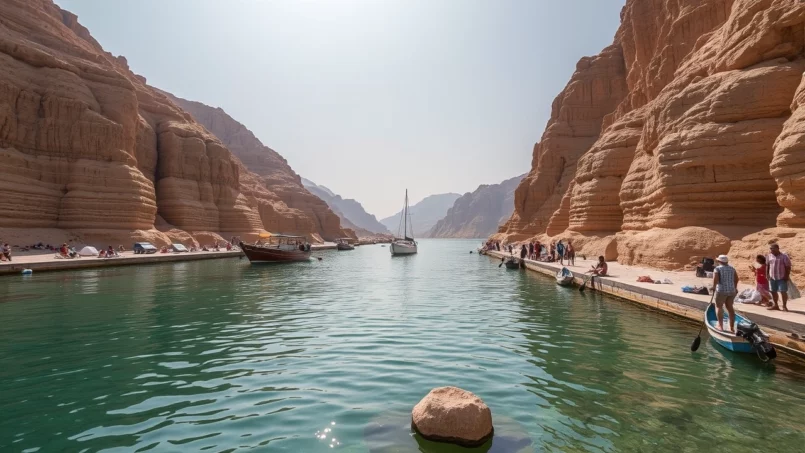
Set against a deep blue sea, steep mountains, and ocher deserts, Oman is quietly establishing itself as one of the new playgrounds for seasonal rental investors. Driven by an ambitious diversification strategy, a regulatory framework that is becoming clearer, and rapidly growing tourist demand, the country now offers returns that rival major Gulf metropolises, while remaining more affordable than Dubai or Doha.
This article provides a comprehensive analysis of the short-term rental market in Oman, based on the latest data, the local legal framework, and the specifics of tourist demand. It aims to offer a concrete, data-driven view of the real potential of this type of investment in the country.
A Real Estate Market in Full Expansion
Oman is no longer a strictly emerging market, but one in an acceleration phase. The residential sector is valued at approximately $4.78 billion in 2025 and is expected to reach $7.42 billion by 2030, with a compound annual growth rate of 9.19%. The entire real estate market, across all segments, is estimated at over $310 billion in 2025 and is projected to grow to nearly $358 billion by 2029.
In Muscat, apartment prices increased by about 17% in 2025.
In this context, seasonal rentals fit into an already tight rental market, driven by a growing population, an influx of expatriates, and ambitious tourism targets. Gross rental yields are, on average, between 5% and 8% for traditional residential properties, and can rise to 8–10%, or even more, for properties operated as short-term rentals in the best areas.
Solvent Demand Driven by Expatriates and Tourism
Demographic dynamics clearly favor investors. The total population exceeds 5 million inhabitants, of which 40 to 45% are foreigners. Between September 2022 and May 2023, the number of expatriates jumped by 33%, leading to an 8% increase in rental demand in 2024.
The Sultanate of Oman welcomed nearly 4 million tourist visitors in 2023.
This dual customer base — resident expatriates and international visitors — creates a solid foundation for seasonal rentals, particularly in well-served neighborhoods and within integrated tourism complexes.
An Increasingly Structured Legal Framework
Investing in seasonal rentals in Oman requires understanding a specific legal environment, but one that is tending to simplify and professionalize.
Key Laws and Integrated Tourism Complexes (ITCs)
Several texts govern property and rentals:
– Tourism Law and its executive regulations
– Foreign Capital Investment Law
– System of real estate ownership in Integrated Tourism Complexes (ITCs), established by Royal Decree 12/2006
– Regulation of property ownership by non-Omanis in certain areas (Royal Decree 29/2018 and its 2020 regulations)
– Ministerial Decision 357/2020 on the usufruct sale of housing to non-Omanis in multi-story buildings
Integrated Tourism Complexes — such as Al Mouj Muscat, Muscat Hills, Muscat Bay, AIDA, Jebel Sifah, Hawana Salalah, or Salalah Beach Resort — hold a central place. These are areas where foreigners can acquire properties with full freehold ownership. Purchasing in an ITC entitles the investor and their immediate family to residency, making it a cornerstone for seasonal rental strategies coupled with on-the-ground presence.
A 2022 ministerial decision expanded acquisition possibilities in Integrated Tourism Complexes (ITCs). Now, both Omani and non-Omani individuals and legal entities can purchase built units or land in these zones, whether for residence or investment. The only restriction applies to the Musandam Governorate, where non-Omanis can only acquire a 99-year usufruct right on built units.
In parallel, usufruct is authorized for up to 99 years in certain buildings outside ITCs, provided specific criteria are met (minimum 2 years of residence, purchase value of at least 45,000 OMR in Muscat, building with 4 floors or more, a cap of 40% foreign ownership per building). These provisions open the door to a seasonal rental supply in urban locations that are not strictly tourist-oriented but remain attractive.
Towards a Unification of Real Estate Law
A recent royal decree enacts the new Real Estate Regulation Law, which consolidates several previous texts (law on real estate brokerage, apartment and floor co-ownership system, escrow account system for development projects). This law strengthens the role of the Ministry of Housing and Urban Planning, granting it comprehensive supervisory power over the sector, including judicial police prerogatives.
Developers must now: respond to new market requirements.
Before launching any project, it is imperative to obtain a license. An escrow account must be opened per project to receive buyer payments, and funds are only released based on construction progress. The developer must provide financial completion guarantees, register all contracts with the real estate registry, and regularly communicate on project progress.
Real estate brokers and marketers must be licensed and registered in a national registry. Owners’ associations, with legal personality, become mandatory for managing common areas in multi-owner buildings and complexes.
For a seasonal rental investor, this means a more secure environment: fewer risks of unfinished projects, a more reliable land registry, better-managed common services, and increased transparency regarding intermediaries.
Taxation: An Attractive Framework for Rentals
On the tax front, Oman stands out in the region with a very favorable regime:
– No personal income tax, including rental income
– No annual property tax
– No capital gains tax on resale for individuals
– 5% VAT, but residential rentals are exempt
In return, several one-time or recurring costs should be anticipated:
| Cost Item | Approximate Amount / Rate |
|---|---|
| Registration fee upon purchase | 3% of the property price (borne by the buyer) |
| Legal fees | Approx. 1 to 2% of the property price |
| Municipal tax on rental income | Approx. 3% of rental income |
| Service charges (ITC) | 3–8 OMR/m²/year (often 2,000–4,000 OMR/year) |
| Property management (optional) | 8–12% of collected rent |
| Maintenance reserve | Approx. 1% of property value/year |
| Insurance | 200–500 OMR/year |
| Expected vacancy | 1 month’s rent/year (4–8% of annual rent) |
The combination of “high yields – light taxation – growing legal security” gives Oman a definite competitive advantage over many comparable markets.
Attractive Yields, Especially in Short-Term Rentals
The numbers confirm the appeal of seasonal rentals, provided you choose the right product and the right location.
Yields by Property Type and City
For traditional residential properties, observed gross yields generally range around 5 to 8%, with variations by type:
| Property Type | Average Gross Rental Yield |
|---|---|
| Studio | 7–8% |
| 1 bedroom | 6.5–7.5% |
| 2 bedrooms | 5.5–7% |
| 3 bedrooms | 4.5–6% |
| Townhouse / Villa | 4–6% |
| Luxury Villa | 4–5.5% |
Studios and small apartments are the top performers percentage-wise, as their entry price remains reasonable while benefiting from strong demand, particularly from young expatriates and tourists.
Geographically, Muscat dominates the market in volume and rental levels, but cities like Salalah and Sohar also offer good yield/price compromises.
| Location | Average Gross Yield (apartments) |
|---|---|
| Muscat (average) | 6–9% |
| Muscat – city center | up to 8.5% |
| Salalah, Sohar, other major cities | 5–7% |
For seasonal rentals, the figures are even more telling. In highly touristic areas like Hawana Salalah, gross yields for vacation rentals are often estimated between 8 and 12%, with occasional cases of investors reporting over 20% gross return on small, well-managed units.
The annual yields of optimized investment strategies in France can range from 8% to 13% in the short term.
Seasonal Rentals in Muscat: A Snapshot of the Airbnb Market
Data from Airbnb for the Muscat Governorate provides a concrete idea of performance:
| Key Indicator | Approximate Value (Muscat, 2025) |
|---|---|
| Active listings | 263 |
| Median annual revenue | $7,207 USD |
| Average occupancy rate | 36% |
| Average Daily Rate (ADR) | ~$80 USD (≈ 30 OMR) |
| Average monthly revenue (high season) | $1,350 USD |
| Average monthly revenue (low season) | $789 USD |
| Share of entire homes | 71.1% |
| Share of apartments/condos | 73.8% |
| Share of 1-bedroom homes | 41.1% |
The top 10% of listings generate over $2,273 USD per month, with occupancy rates above 79% and ADRs beyond $147 USD. Most bookings come from an international clientele (93%), dominated by visitors from the United States and the United Kingdom, with a very significant share of younger generations (approximately 50% of guests born after 2000).
It is also noted that 68% of listings accept stays with a one-night minimum, while a significant portion (nearly 17%) targets monthly stays (30 nights or more), which helps smooth out periods of low demand.
Examples of Concrete Cases
Several case studies help illustrate the mechanics of yields:
Three examples illustrate gross rental yields in Oman: a 2-bedroom apartment in Al Mouj, purchased for 150,000 OMR and rented for 675 OMR/month, yields approximately 5.4% gross. A 2-bedroom apartment in Muscat Hills, purchased for 120,000 OMR and rented for 1,235 OMR/month, reaches about 7%. Finally, a 1-bedroom apartment in Jebel Sifah, acquired for $115,000 USD and rented between $700 and $900 USD/month, also shows a gross yield of about 7%.
In the case of Al Mouj, if service charges, maintenance, and reasonable vacancy are taken into account, the net yield approaches 3.6%. With fine-tuned short-term management (nightly rates and high occupancy in peak season), this type of property can reach 8–10% gross, or even more, at the cost of more intensive management work.
Overall, combining rental income and capital appreciation, total return projections over 5 years range between 35 and 65% in the most dynamic areas.
Understanding Seasonality: When and Where Demand Concentrates
To succeed in seasonal rentals, one must factor in the strong seasonality of tourism in Oman, which varies by region.
Weather and Tourist Seasons
The classic high season runs from October to April, when temperatures are pleasant across most of the country. Cities like Muscat, Nizwa, or Sohar then benefit from an influx of visitors, and prices for accommodations and rental cars rise, sometimes by more than 30%. Festivals and cultural events — notably Muscat Nights, the Tour of Oman, winter festivals — contribute to tightening the market.
The low season generally corresponds to the months of May to September, a period of intense heat when tourist traffic dips. Owners then lower their prices, sometimes by up to 50% in some segments, to maintain acceptable occupancy rates.
The Dhofar region, particularly Salalah, experiences a climatic exception from July to September with the Khareef, a summer monsoon that transforms the landscape into a green and misty setting. This event attracted over one million visitors in 2024 (+9% year-on-year). During this period, demand for seasonal rentals in Salalah soars, completely reversing the tourist seasonality observed in the rest of the country.
Muscat: A Relatively Steady Market, but with Lulls
In Muscat, Airbnb analyses indicate a marked but less extreme seasonality than in Salalah. The best revenue months are generally December, January, and February, with average revenues around $1,350 USD and occupancy rates nearing 49%. The weakest month can be in May, with revenues around $766–789 USD and occupancy rates dropping to just over 30%.
Nightly rates remain relatively stable, around $80–85 USD on average, with slight variations by month. The trade-off is therefore primarily on the occupancy rate rather than on listed prices.
Salalah and Dahariz: The Power of the Summer High Season
The case of Salalah is particularly interesting for seasonal rentals. Data for this area indicates:
| Area (Dhofar) | Active Listings | Average ADR | Average Occupancy Rate | Average Monthly Revenue |
|---|---|---|---|---|
| Salalah (city) | 131 | ~$413.5 USD | 26% | $957 USD |
| Taqah | 24 | ~$147.16 USD | 30% | $477 USD |
| Dahariz (neighborhood) | 21 | variable | 44% in high season | median $765 USD |
In Dahariz, the top 10% of properties exceed $1,795 USD in monthly revenue, with a clientele that is 90% international. August is generally the absolute peak, reflecting the attraction of the Khareef, while May remains the most challenging month.
The message is clear: a well-located property in Salalah, suited for family or group stays, can generate considerable cash flow for a few months, at the cost of more modest occupancy rates for the rest of the year.
Where to Invest for Seasonal Rentals?
The choice of location is arguably the most determining factor. In Oman, three main families of areas stand out for short-term rentals: the Muscat ITCs, the Salalah region, and a constellation of secondary destinations with high potential.
Muscat and Its Integrated Complexes
Muscat concentrates both the majority of expatriates, the main infrastructure (international airport, opera, major shopping malls), and a large share of international tourists. For a seasonal rental investor, several sectors stand out.
Al Mouj Muscat is a prestigious coastal development with a marina, golf course, and restaurants, highly sought after by expatriates and high-end travelers. Rents are high there: a 1-bedroom apartment rents for between 350 and over 1,300 OMR/month on a long-term basis, and much more on a short-term basis (80-120 OMR/night in high season). Muscat Hills, a golf community, attracts professional expatriates; a 2-bedroom at ~1,235 OMR/month yields a gross return of 7% on a long-term basis, increased in seasonal rentals. Finally, complexes like Muscat Bay, AIDA, or Jebel Sifah, focused on beach or mountain tourism, explicitly allow short-term rentals. In Jebel Sifah, a 1-bedroom at ~$115,000 USD already produces a 7% gross yield in traditional rentals, providing a solid base for a vacation rental strategy.
Outside ITCs, neighborhoods like Mutrah, Qurum, Old Muscat, Al Khuwair, Seeb, Al Ghubrah, or Ruwi present strong short-term potential due to their proximity to corniches, souks, business districts, or shopping centers.
Salalah and Hawana Salalah: The Khareef Locomotive
Salalah is the country’s second major vacation rental destination, nearly on par with Muscat in terms of stay searches. Leading neighborhoods include Al Haffa, Al Saada, and, especially, Hawana Salalah, a huge beachfront complex developed by a major international group.
Hawana Salalah comprises about 260 contemporary residential units, with a growing number being offered as seasonal rentals. Rates start around 55 OMR for a studio, 70 OMR for a 1-bedroom apartment, and go up to 200 OMR per night for a 3-bedroom villa, depending on the period and the quality of the offering.
Yields there are often above the national average, with estimates:
– 7–10% gross annual yield on most properties
– 8–12% in the best cases of well-managed vacation rentals
Hawana Salalah Residence benefits from the presence of the professional manager Wateera Property Management. They handle marketing, guest reception, and property maintenance on behalf of owners, which is a major advantage for non-resident investors.
Secondary Cities and Niche Destinations
Beyond these obvious hubs, a constellation of localities is beginning to attract travelers seeking more authentic experiences: Nizwa for historical heritage, Sohar for the northern coast, Sur, Qurayyat, Barka, Bidiya, Masirah, Ras Madrakah, or Misfat Al Abriyeen for more rural and nature-based tourism.
In these areas, purchase prices are often lower than those in Muscat or Salalah, which can compensate for more modest rents. Gross yields of 5 to 7% remain common for traditional residential rentals. For short-term rentals, the key lies in emphasizing authenticity: traditional houses, rural lodgings, mountain chalets, or eco-lodges.
Platforms like Airbnb, Booking.com, Expedia, or Vrbo already list dozens of properties in these regions, with nightly rates ranging from $26 to over $500 USD for high-end beachfront villas.
Property Types and Tenant Expectations
To optimize a seasonal rental investment, it’s not just about location: the property type and its amenities are equally important.
Small Apartments, the Stars of the Platforms
Muscat data shows that nearly 74% of listings are apartments/condos, and one-bedroom homes account for over 40% of the market. The average capacity of properties is around 3 people, with a predominance of accommodations that can host 4 guests.
This “1 bedroom + sofa bed” format appears as the ideal balance: still affordable purchase price, ease of filling (couples, small families, business travelers), flexibility of use for the investor (possible personal pied-à-terre).
Studios offer the best gross yields percentage-wise, but their demand can be more volatile. Two-bedroom apartments, highly sought after by families and groups of friends, present a slightly lower gross yield percentage, but higher absolute profitability due to larger rents.
Villas and Houses: Niche Products to Position Well
Villas, especially large ones or very high-end ones, generally show lower yields (4 to 6% gross), but can become very competitive as seasonal rentals in the right places: large houses with pools in Hawana Salalah, beach villas in certain neighborhoods of Muscat, or mountain properties in places like Jabal Akhdar.
This segment works well for group rentals (large families, groups of friends, wellness retreats, etc.) and can justify very high nightly rates, especially during events or extended holidays.
Amenities and Services Expected
Travelers who choose a seasonal rental in Oman explicitly seek a mix of modern comfort and local hospitality. Amenities considered essential are:
Discover the amenities and services included to make your stay enjoyable and practical.
Enjoy an interior always at the ideal temperature, no matter the weather.
Reliable high-speed internet connection for work or leisure.
Secure, on-site parking at no additional cost.
Equipped with fridge, freezer, and oven/microwave to prepare your meals.
Guaranteed restful sleep with quality bedding.
Balcony, terrace, or garden to relax outdoors.
In high-end beach or urban complexes, the presence of a pool, gym, direct beach access, or spa is a real plus. Families also value play areas, security (gated communities), and proximity to services (supermarkets, restaurants, pharmacy).
Furthermore, respect for cultural norms remains an important point: it is recommended to clearly inform visitors about local rules regarding dress code, alcohol, public displays of affection, or behavior during Ramadan, to avoid misunderstandings.
Management and Professionalization: A Central Challenge
The seasonal rental market in Oman remains one with relatively light tourism regulation (outside property and visa-related constraints), but it is professionalizing rapidly. Several real estate management and property management companies operate, particularly in Muscat and Salalah, specifically targeting owners who wish to rent short-term without handling day-to-day operations.
Role of Management Companies
These players offer a range of services:
Discover the full range of key services offered for the professional and stress-free management of your seasonal rental property.
Advertising your property on major platforms (Airbnb, Booking.com, Expedia, Vrbo) to maximize its visibility and occupancy rate.
Implementation of dynamic pricing adjusted based on seasons, local demand, and special events.
Tenant screening and verification, secure collection of rent and security deposits.
Handling check-in/check-out, cleaning, laundry, and minor routine repairs.
Coordination with technicians for major interventions and management of relations with authorities (municipality, registration).
Provision of regular reports to the owner, typically via detailed online dashboards.
This type of service, typically charged between 8 and 12% of rental income, allows a foreign investor or expatriate living elsewhere in the Gulf to fully delegate seasonal operations. In complexes like Hawana Salalah, the existence of integrated management structures is an obvious asset.
Impact of the New Real Estate Law on Management
The new Real Estate Regulation Law also strengthens control over brokers and managers: licensing requirement, registration in a registry, financial penalties, and license revocation in case of violation. For an owner, this limits the risk of working with an opaque or unqualified intermediary.
For multi-unit buildings, the formation of an owners’ association is mandatory and improves the management of common areas (pool, gardens, parking, lobbies). Good management of these spaces directly influences traveler reviews and ratings on rental platforms, which is a determining factor for the performance of a seasonal rental.
Residency, Visas, and the “Golden Visa”: A Bonus for Investors
One of Oman’s differentiating advantages, compared to other destinations, is the possibility of linking real estate investment and residency rights in the medium or long term.
The Investor Residency Program
The Investor Residency Program, sometimes nicknamed the “golden visa,” allows foreigners to obtain a renewable 5 or 10-year residence permit in exchange for an investment:
– 5 years: starting from 250,000 OMR (approximately $650,000 USD)
– 10 years: starting from 500,000 OMR (approximately $1.3 million USD)
The investment can take several forms: real estate assets, company shares, government bonds, or long-term bank deposits. Purchase in an ITC (Integrated Tourism Complex) is also eligible, provided value criteria are met and a real transfer of ownership is carried out.
This program does not grant citizenship, but allows one to reside, work, and do business in the country without a local sponsor, while including the spouse and children. For those considering developing a substantial seasonal rental portfolio, it is a strategic tool.
Owner residency visa issuance fee for Integrated Tourism Complexes (ITCs) in Oman, in OMR.
Tourist Visas and Accessibility for Travelers
For clientele, the country remains relatively easy to access. Over one hundred nationalities can enter Oman visa-free for stays of 14 days, under certain conditions (valid passport, return ticket, insurance, proof of accommodation, sufficient funds). Others can obtain a 10 or 30-day e-visa, or a one-year multiple-entry visa, via the Royal Oman Police online platform.
This ease of entry, combined with increased air connections (new routes Muscat–Taif, Muscat–Port Sudan, gradual increase in international connections), directly supports the demand for vacation rentals.
Risks, Limitations, and Points of Caution
No market is without risk, even when yields seem attractive.
Among the identified risks:
Investment is exposed to oil price volatility, a risk of oversupply due to numerous construction projects, relative illiquidity upon resale, potential regulatory uncertainties, and requires rigorous operational management for seasonal rentals.
That said, several safeguards exist: escrow accounts for off-plan projects, increased supervision by the Ministry of Housing, a stable tax framework, a relatively conservative banking system.
How to Position Yourself Practically: Some Typical Scenarios
To conclude, it is useful to project into some concrete scenarios for investment in seasonal rentals in Oman.
Scenario 1: Small Apartment in a Muscat ITC
– Product: 1-bedroom apartment, 60–70 m² in Al Mouj or Muscat Hills
– Investment: 100,000–150,000 OMR
– Strategy: mixed rental (seasonal in high season, semi-long-term off-season)
– Revenue assumption:
– high season: 80–120 OMR/night, 60–70% occupancy over 5 months
– rest of the year: 40–60% occupancy at a slightly reduced rate, or a monthly lease at 600–700 OMR
– Expected result: 8–10% gross yield if management is responsive and the property is well-rated online, 5–7% net after charges and management fees.
Scenario 2: 2-Bedroom Apartment in Hawana Salalah
– Product: 2-bedroom apartment, 90–110 m² with pool and beach access
– Investment: around 90,000–130,000 OMR depending on view and phase
– Strategy: pure seasonal rental, heavily focused on Khareef + long weekends from the Gulf
– Revenue assumption:
– Khareef (3 months): 120–200 OMR/night, 70–80% occupancy
– rest of the year: 30–40% occupancy with adjusted rates or long-term deals (1–3 months)
– Expected result: 8–12% gross yield, with a very pronounced summer peak. Strong benefit from a local manager (like Wateera) to optimize the season.
Scenario 3: Traditional House or Lodge in a Historical Town
– Product: renovated house in Nizwa, Misfat Al Abriyeen, or in a mountain village
– Investment: highly variable, often lower than ITC ticket prices
– Strategy: positioning on cultural and nature tourism, strong differentiation through storytelling, experiences (local cuisine, guided hikes, etc.)
– Revenue assumption:
– high season (October–April): 60–120 OMR/night, occupancy dependent on promotion quality
– low season: lower activity, but possibility to offer retreats, seminars, or niche stays
– Expected result: gross yields of 6–9%, with higher risk but strong appreciation potential if the destination gains popularity.
Conclusion: An Underexploited Market, but Professionalizing Quickly
The opportunities for seasonal rentals in Oman rest on a rare combination: economic growth driven by a long-term national strategy, a real estate market catching up after several years of correction, a particularly advantageous tax framework, and a tourist influx on the rise.
For a successful rental investment in Oman, avoid speculative bets and favor a fundamentals-based approach. Target locations with structural demand like Muscat International Airport (ITC), Salalah, or central neighborhoods of major cities. Opt for property types suited to demand, such as well-equipped studios and 1 to 2-bedroom apartments. Entrust the management of your property to serious professionals and include from the outset in your calculations the parameters of seasonality, as well as all real costs (service charges, maintenance, vacancy periods).
With gross yields regularly between 8 and 10% for good seasonal rental operations, and a regulatory environment that is becoming clearer, Oman is establishing itself as a destination to seriously consider in a regional real estate diversification strategy — provided one enters with a fine understanding of its specifics and rhythms.
Disclaimer: The information provided on this website is for informational purposes only and does not constitute financial, legal, or professional advice. We encourage you to consult qualified experts before making any investment, real estate, or expatriation decisions. Although we strive to maintain up-to-date and accurate information, we do not guarantee the completeness, accuracy, or timeliness of the proposed content. As investment and expatriation involve risks, we disclaim any liability for potential losses or damages arising from the use of this site. Your use of this site confirms your acceptance of these terms and your understanding of the associated risks.

Cyril Jarnias is an independent expert in international wealth management with over 20 years of experience. As an expatriate himself, he is dedicated to helping individuals and business leaders build, protect, and pass on their wealth with complete peace of mind.
On his website, cyriljarnias.com, he shares his expertise on international real estate, offshore company formation, and expatriation.
Thanks to his expertise, he offers sound advice to optimize his clients' wealth management. Cyril Jarnias is also recognized for his appearances in many prestigious media outlets such as BFM Business, les Français de l’étranger, Le Figaro, Les Echos, and Mieux vivre votre argent, where he shares his knowledge and know-how in wealth management.





