
 Published on and written by Cyril Jarnias
Relocating to Turkmenistan, and particularly to Ashgabat, is far from an ordinary undertaking. The country remains one of the most closed in the world, with an authoritarian regime, an economy largely state-controlled, and extremely restricted internet access. At the same time, it boasts considerable natural resources, offers a surprisingly safe living environment in the capital, a rich culture, and attractive salaries for certain highly specialized profiles.
Expatriate life in Turkmenistan, especially in Ashgabat, presents a complex balance between opportunities and constraints. It requires thorough preparation on the country’s concrete realities: cost of living, strict legal framework, limited public freedoms, cultural offerings, healthcare system, security environment, job market, and often rigid administrative procedures.
A singular country, an extraordinary capital
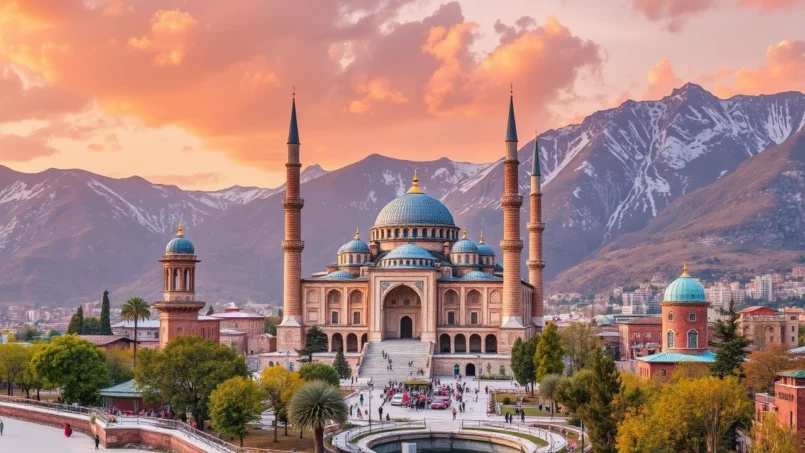
Turkmenistan is a Central Asian state, bordered by Iran, Afghanistan, Uzbekistan, Kazakhstan, and the Caspian Sea. Approximately 80% of its territory is covered by the Karakum Desert. The capital, Ashgabat, stands as an ultra-planned enclave: monumental avenues, impeccable parks, white marble facades, and golden statues. The city even holds a Guinness World Record for the density of buildings clad in white marble, as well as records for a gigantic fountain complex and a monumental Ferris wheel.
The climate is continental and desert-like, with very long, dry summers that can exceed 40°C, and generally mild winters, harsher in the north. Furthermore, the city being located in an active seismic zone necessitates earthquake preparedness and involves occasional power or telecommunications outages.
Out of approximately 6.6 million inhabitants in the country, 85% are Turkmen, with significant Uzbek and Russian minorities. Nearly 90% of the population is Muslim, the remainder mostly being Orthodox Christian. Turkmen and Russian are the dominant languages; English remains marginal, except within some expatriate circles and certain business milieus.
Cost of living in Ashgabat: a costly paradox
One of the great misconceptions about Turkmenistan concerns the cost of living. The country is sometimes presented as “inexpensive” on a regional scale, but as soon as one looks at international comparative data, Ashgabat appears as one of the most expensive capitals in the world, especially for foreigners.
A cost of living index higher than New York
Overall comparisons place Turkmenistan with a cost of living index of approximately 102.26, taking New York = 100. In other words, the general price level exceeds that of New York in certain categories. The country is ranked among the 25 most expensive countries in the world, with an average monthly cost of living around $1,793.
Estimated monthly cost for a single expatriate in Ashgabat when housing is provided by the employer.
These amounts clash with local salaries: an average net salary in Ashgabat is estimated at 2,500 manat, approximately $700–750, which doesn’t even cover a single month’s expenses for one person according to international estimates. For many residents, daily life therefore relies on subsidies, recourse to the informal market, and a more modest lifestyle than that of expatriates.
International comparisons
To get an idea, several rankings compare Ashgabat to other cities:
| Indicator | Approximate Value / Rank |
|---|---|
| World rank by cost of living | 23rd most expensive country |
| Ashgabat rank (cities, cost) | ~2595th out of 9294 (top quartile) |
| Comparison with Alicante (Spain) | Similar cost of living |
| Compared to León (Mexico) | 35% more expensive |
| Compared to Astana (Kazakhstan) | 90% more expensive |
| Compared to Marseille (France) | 14% cheaper |
| Compared to Brussels (Belgium) | 20% cheaper |
For an expatriate accustomed to neighboring Central Asia, Ashgabat is surprising for its relative expensiveness, especially for imported goods and real estate.
Housing: an expensive and non-transparent market
Housing represents the heaviest expense item, particularly for foreigners. The market is non-transparent, highly controlled, and prices are driven upward in the capital.
Average rents in Ashgabat
Available data shows a high level, expressed here in manat (m):
| Type of housing (Ashgabat) | Average Monthly Rent (m) | Range (m) |
|---|---|---|
| 1-bedroom apartment, city center | 3,950 | 3,000 – 7,000 |
| 1-bedroom apartment, outside center | 2,625 | 1,500 – 5,000 |
| 3-bedroom apartment, city center | 6,250 | 3,000 – 10,000 |
| 3-bedroom apartment, outside center | 5,625 | 4,500 – 9,000 |
Converted to dollars, these amounts quickly reach over $1,000 monthly for a small well-located apartment, which corresponds to the currency estimates mentioned in international studies.
Some assessments indicate that a one-bedroom apartment in the city center costs around $1,020, and a three-bedroom apartment exceeds $1,700. For an expatriate whose rent is not covered by their employer, this expense represents a significant financial burden, especially when the local average salary is well below that of their home country.
Property purchase and credit
For purchases, prices per square meter smack more of speculation than average purchasing power:
| Apartment Purchase | Average Price per ft² (m) | Range (m) |
|---|---|---|
| City center | 1,269.66 | 929.02 – 1,486.44 |
| Outside center | 975.47 | 789.67 – 1,114.83 |
In dollars, sources mention over $4,800/m² in the city center, nearly $3,000/m² in the outskirts. The incentive to buy for an expatriate remains limited because residential property is highly regulated for foreigners, with land belonging to the state and being granted as long-term usage rights.
Mortgage loans show rates around 8.67% for a typical period of 20 years, further increasing the cost of homeownership.
Daily consumption: food, leisure, transportation
The price structure says a lot about the advantages and disadvantages of daily life in Ashgabat. For an expatriate, some items will seem affordable (public transport, gasoline), others surprisingly expensive (imported products, internet, structured leisure).
Restaurants and food
Eating out remains relatively affordable, especially on a Western income, even if the value-for-money ratio can be surprising. In manat:
| Dining expense | Average Price (m) | Range (m) |
|---|---|---|
| Simple meal at an inexpensive restaurant | 121.25 | 50 – 200 |
| 3-course meal for two at a mid-range restaurant | 275 | 210 – 350 |
| Fast food combo meal | 42.50 | 40 – 45 |
| Local draft beer (glass) | 17.75 | 10 – 20 |
| Imported beer (bottle) | 50 | 30 – 60 |
| Cappuccino | 24.50 | 5 – 40 |
Relative to salaries, these prices are not insignificant for locals, but they remain reasonable for many expatriates.
On the other hand, grocery shopping is much more contrasted. Some local produce remains inexpensive, others – particularly imported products, cheese, or meat – reach levels on par with developed countries, or even higher. A few examples in manat:
| Basic products (markets / supermarkets) | Average Price (m) | Range (m) |
|---|---|---|
| Milk (1 gallon, approx. 3.8 L) | 53.60 | 37.85 – 75.71 |
| White bread (1 lb, approx. 0.45 kg) | 5.33 | 4.54 – 13.61 |
| White rice (1 lb) | 7.82 | 4.54 – 20.87 |
| Dozen eggs | 22.80 | 14 – 24 |
| Local cheese (1 lb) | 57 | 45.36 – 68.04 |
| Chicken breast fillets (1 lb) | 18.90 | 13.61 – 22.68 |
| Beef (1 lb) | 30.05 | 18.14 – 68.04 |
| Apples (1 lb) | 7.26 | 2.68 – 13.61 |
| Potatoes (1 lb) | 2.83 | 1.68 – 5.44 |
| 1.5 L water bottle | 3.88 | 3 – 5 |
| Mid-range wine (bottle) | 110 | 14 – 150 |
| Local beer 0.5 L (bottle) | 16.33 | 10 – 20 |
| Pack of Marlboro cigarettes | 100 | 90 – 100 |
International comparisons reveal another paradox: food products are, on average, significantly more expensive than in some developed countries. Thus, groceries in Turkmenistan are estimated to be about 86.5% more expensive than in the United States, and in Ashgabat more than twice as costly as in Houston (nearly +118%). In other words, filling one’s fridge can be very expensive, especially if one seeks imported products.
Transportation: very inexpensive, but uneven infrastructure
In contrast, getting around the capital is surprisingly inexpensive. Buses, taxis, and gasoline remain largely subsidized or controlled.
| Transport in Ashgabat | Average Price (m) | Details |
|---|---|---|
| Bus ticket (one way) | 0.50 | generally 0.50 – 1.00 |
| Monthly public transport pass | 30 | 30 – 40 |
| Taxi initial fare | 10 | 5 – 15 |
| Taxi per mile | 4.83 | |
| Taxi waiting (1 hour) | 30 | |
| Gasoline (1 gallon) | 5.68 | 4.92 – 5.68 |
International comparisons indicate that transportation is about 15.5% cheaper than in India on a national scale, and 33.8% cheaper than in Dubai for Ashgabat.
The low cost of taxis is an advantage, but it must be balanced against safety conditions. Outside the capital Ashgabat, roads are often degraded, lighting is insufficient, animals may cross the roadway, and local driving can be erratic, making nighttime travel inadvisable. Moreover, taxi service is rarely regulated outside the capital, vehicles frequently lack seat belts, and few drivers speak English.
Leisure infrastructure remains limited, but some services are charged at a high level relative to local salaries. In manat:
| Leisure and sports in Ashgabat | Average Price (m) | Range (m) |
|---|---|---|
| Monthly gym membership | 516.67 | 50 – 900 |
| Tennis court rental (1h weekend) | 156.67 | 120 – 200 |
| Movie ticket (international film) | 50 | 30 – 70 |
For an expatriate with an international salary, these rates may seem reasonable. But the offerings remain limited: few truly modern gyms, few cafes or meeting places “in the Western style,” an almost complete absence of credible co-working spaces for digital nomads. Evenings center on a few hotel bars, restaurants, and private gatherings among expatriates.
Services and connectivity: the invisible bill
Where daily life becomes frankly complicated is in the area of modern services, particularly mobile telephony and the internet. Prices in manat give an idea:
| Basic services (monthly) | Average Price (m) | Range (m) |
|---|---|---|
| Electricity, heating, water, garbage (approx. 85 m² apt) | 2,000 | — |
| Mobile plan with calls + ≥ 10 GB data | 200 | 100 – 230 |
| Fixed internet ≥ 60 Mbps, unlimited data | 360 | 280 – 500 |
Relative to the average salary, the internet subscription is a heavy burden. In dollars, a decent connection is estimated to cost between $50 and $70 per month, even though many subscriptions remain slow by international standards.
Major obstacles faced by remote workers and digital entrepreneurs due to massive censorship and service blocks.
Many sites are inaccessible: social networks, encrypted messaging apps, international media, and video platforms are systematically blocked.
The use of unauthorized VPNs is theoretically criminalized, exposing users to financial penalties and even prison sentences.
For a remote worker or digital entrepreneur, this control situation makes expatriation a near-impossible mission.
Public freedoms, legal framework, and control of daily life
This is likely the most decisive point for assessing the advantages and disadvantages of expatriation to Turkmenistan: the country is one of the most repressive states on the planet. Freedoms of expression, assembly, movement, and religion are severely regulated.
International rankings are unequivocal. Freedom House reports give the country an almost zero score for political and civil liberties. The press is entirely in the hands of the state, television and radio serve only official propaganda, and the law officially banning censorship is simply not applied.
Any criticism of the government, online or offline, can lead to judicial prosecution based on fabricated charges. Dozens of people arrested in the 1990s and 2000s remain “disappeared” in detention after their sentences expired, and exiled activists or journalists are often targeted by intimidation, deportation, or violence.
For an expatriate, this atmosphere concretely means that it is strongly discouraged to discuss politics with strangers, express public criticism of the country or its leaders, or publish sensitive content on social media from within the territory.
Freedom of movement: visas, registration, controls
Entering Turkmenistan almost always requires obtaining a visa, backed by a Letter of Invitation (LOI) issued by a local sponsor (employer, travel agency, institution). A transit visa can be obtained without a sponsor, but it only grants a few days’ stay. Work, business, or long-stay visas require a complex process, ranging from several weeks to several months, with investigation of the employer and the candidate.
Any foreigner staying more than three days must register with the State Migration Service. Failure to register can lead to fines, expulsion, and a ban on return for up to five years. Furthermore, some areas (borders, Caspian coast, sensitive regions) are off-limits without special permission, which sometimes must be requested ten working days in advance.
Turkmen citizens are also subject to many movement restrictions. Cases are documented where students or civil servants have had their passports confiscated to prevent any attempt to leave, while opponents abroad are denied passport renewal, forcing them to return to the country.
Individual rights, minorities, and private life
Several areas of private life are subject to tight control:
– Homosexual relations between men are penalized by the Criminal Code, with sentences up to two years in prison. The social environment is extremely hostile towards the LGBTQ+ community, and there are no known safe spaces.
– Women and girls face numerous restrictions: lack of laws against domestic violence, limited access to sexual and reproductive health, prohibition of abortion after five weeks of pregnancy, reports of “virginity tests” imposed on schoolgirls in some regions or in case of rape complaints.
– Religious freedom is severely regulated: only officially registered groups are tolerated, others face prison sentences. Minorities are monitored, and pressures exist for some non-Muslim communities to “return” to Islam as promoted by the state.
Digital life is also under high surveillance: communications may be tapped, messaging monitored, the use of VPNs tracked. Reports mention internet access cuts for households using VPNs too often, restored only after signing a commitment not to use these tools and having phones searched.
For an expatriate, this imposes a high level of self-censorship, awareness of being potentially monitored, and great caution in using digital tools.
Health, medical care, and sanitary conditions
Healthcare is a major point of attention for any expatriation project in Turkmenistan.
Healthcare system: under-equipped and very uneven
The healthcare system, under the authority of the Ministry of Health and Medical Industry, combines a public network theoretically free for citizens and a very small private sector, also largely state-controlled.
In practice, public hospitals are chronically underfunded, often overcrowded, with outdated equipment and frequent shortages of basic supplies (needles, anesthetics, antibiotics). The quality of local medications is considered variable, sometimes ineffective, and corruption remains omnipresent, with unofficial payments required to access certain care.
Expatriates generally do not have access to the public system and must use private clinics in Ashgabat. These clinics offer better comfort and shorter wait times than the public ones, sometimes with better-trained staff. However, the overall quality of care remains below Western European or North American standards. Most specialized care (such as major surgery, oncology, high-risk obstetrics, or intensive care) is considered insufficient locally.
Many Turkmen families and solvent expatriates go abroad for treatment, notably to Turkey, Russia, Uzbekistan, Iran, India, or Dubai.
Insurance, evacuations, and precautions
For an expatriate, the conclusion is clear: it is essential to have robust international health insurance including:
– coverage for care in the local private sector,
– coverage for care abroad,
– and most importantly, a clause for medical evacuation and repatriation.
Evacuation costs can easily exceed this amount in dollars, sometimes reaching $200,000 to $250,000.
On a daily basis, several precautions are strongly recommended:
– never drink tap water, opt for bottled, boiled, or filtered water,
– avoid raw or undercooked foods, especially from unregulated markets,
– get vaccinated beforehand (hepatitis A and B, typhoid, rabies, basic vaccines up to date),
– assemble a medical kit with trusted medications, especially for chronic conditions or treatments unavailable locally,
– inquire with your employer or embassy about recommended doctors or clinics in Ashgabat.
Emergency services exist but are limited: ambulances are poorly equipped, response times can be long, and the language barrier complicates care.
Security, crime, and daily risks
In terms of strict security, Ashgabat is paradoxically one of the country’s assets for an expatriate. The capital is generally described as very safe, with a low level of visible crime, clean streets, few noise nuisances, and a massive police presence.
Crime: low but to be qualified
The absence of official statistics makes analysis difficult, but feedback agrees on several points:
Violent crime is generally low, particularly in the capital. However, some neighborhoods in Ashgabat have a worse reputation, with risks of theft, burglary, and assaults linked to the underground economy and narcotics. Pickpocketing, scams, and break-ins exist, notably in bazaars, crowded public transport, and working-class neighborhoods. Incidents related to alcohol consumption, such as fights or drunk driving, are also frequent.
The police presence on the streets, road checkpoints, and widespread surveillance play a deterrent role. But it comes with a downside: frequent identity checks, vehicle or home inspections, pressure, and requests for bribes.
Expatriates may be perceived as wealthy and become targets for theft or extortion, especially outside the most monitored areas or at night.
Specific risks: borders, roads, earthquakes
Several non-criminal risks must also be taken into account:
The proximity to Afghanistan and Iran makes border areas sensitive (trafficking, terrorism, military presence), with sectors off-limits to foreigners. The road network outside Ashgabat is often degraded, poorly lit, and shared with animals, making nighttime travel inadvisable. The country is in an active seismic zone, requiring knowledge of first aid. Extreme summers (exceeding 45°C) expose people to serious health risks like dehydration and heatstroke.
For women traveling alone, the situation is more delicate, with an increased risk of harassment, especially outside the capital or at night. The legal framework, which offers little protection, and certain conservative social norms call for heightened vigilance.
Culture, society, and integration: a major asset… under constraints
One of the most appealing elements of expatriation to Turkmenistan lies in the richness of its culture and the importance of family, hospitality, and traditions. But this human capital coexists with strong societal closure and the fear, among locals, of associating too closely with foreigners.
Social values and daily life
Turkmen society is strongly marked by: cultural and historical heritage, nomadic traditions, the Islamic religion, and Soviet influence. These elements shape daily life, values, and behaviors of Turkmen people.
– the importance of the extended family, with multiple generations living together,
– a deep respect for elders and hierarchies,
– traditional gender roles (male breadwinner, female homemaker), though more flexible in urban areas and among the youth,
– a pronounced hospitality: being invited for tea or to share a meal is a sign of esteem, refusal is often perceived as impolite.
Social life is structured by typical meals (plov, kebabs, manty) and tea, which is omnipresent. Major gatherings occur during holidays like Nowruz, Muslim festivals (Eid), or Neutrality Day, marked by shows, dances, and banquets.
Time is perceived more flexibly than in Western Europe: punctuality is expected in a professional context, but in social life, delays are not uncommon. Relationships, more than the clock, structure the schedule.
Relations with expatriates: between curiosity and caution
For a foreigner, forging authentic ties with Turkmen people can be complicated. On one hand, hospitality and curiosity truly exist. On the other, the political context poses a risk for locals who get too close to foreigners: some fear being suspected of informing for outsiders or compromising themselves.
Many expatriates find that their social life concentrates mainly within the expatriate community (colleagues, diplomats, NGO or large company employees), through private dinners, evenings at certain restaurants, or events organized by embassies and networks like InterNations. Local initiatives, such as friend-finding apps and information platforms for expatriates, exist to help break this isolation.
Cultural misunderstandings are common: eye contact considered too direct or conversely insufficient, gestures perceived as offensive (showing the soles of feet, pointing with index finger), attire deemed immodest, use of the left hand in exchanges, overly frank discussions about politics or religion. To integrate, a minimum of codes must be mastered: dressing modestly, avoiding public displays of affection, using polite formulas, respecting taboos, and showing restraint on sensitive topics.
Work, salaries, and professional prospects
On a professional level, expatriation to Turkmenistan generally fits into specific frameworks: contract with an international organization, assignment in the energy or construction sector, diplomatic post, teacher at an international school. The local market remains dominated by the state and public enterprises.
Job market and salaries
The major industries in the country are natural gas, oil, and cotton. The state remains the major employer, while the private sector remains small, highly controlled, and not very open to foreign initiative.
Salary statistics show a very contrasted landscape:
The average annual salary in Azerbaijan is about 62,460 manat, with significant variations by sector, experience, and education level.
For qualified expatriates (energy engineers, project managers, IT experts, senior executives), remuneration can align with international standards, even including additional benefits (housing, school fees coverage, annual air tickets, health insurance, risk or hardship allowances).
But for a foreigner seeking local employment outside these channels, opportunities are rare and unattractive. The country is ranked among the least free economies in the world, the business environment is heavily regulated, the currency is not easily convertible, and access to financing stifles entrepreneurial initiative.
Work visas, permits, and administrative constraints
Working legally in Turkmenistan requires:
To obtain a work permit in many countries, a foreign national must generally meet several conditions. For example, they must have a local sponsor, which is an employer registered in the host country. Then, they must obtain an official work permit issued by the competent authorities. Finally, they must procure a specific work visa, which is often granted based on an invitation letter previously validated by the Migration Service of the country in question.
Quotas impose that foreigners not represent more than about 10% of a company’s workforce, except for sectoral exceptions. The employer must often prove the absence of equivalent local skills.
Document processing times range from one month to several months. Supporting documents (diplomas, criminal record, medical certificates) often need to be legalized and translated. Once in the country, registration with the migration services and compliance with renewal formalities are mandatory under penalty of sanctions.
Furthermore, legislation prohibits foreigners from owning land, limits their access to certain types of property, and subjects any economic activity to complex and non-transparent regulation. With the judiciary not being independent, the risk of arbitrary decisions in case of commercial disputes reinforces investor caution.
Advantages and profiles for which expatriation can make sense
Despite this very restrictive picture, certain expatriate profiles can benefit from an experience in Turkmenistan.
For experts in strategic sectors (energy, engineering, major infrastructure), a posting in Ashgabat can offer:
An expatriation in this region offers an attractive salary, often tax-free thanks to specific agreements or statuses. It includes material benefits like provided housing, a driver, and premium health insurance. It is a unique experience on a specific market, valued in certain international career paths. The urban environment is generally safe, clean, orderly, and with little visible crime.
For diplomats, members of international organizations or NGOs, Ashgabat also constitutes a strategic post for monitoring a pivotal region, at the crossroads of Russian, Chinese, Iranian, and Western interests, in a state rich in gas but politically isolated.
For enthusiasts of Central Asian cultures, the experience of immersion in a society still strongly marked by nomadic traditions, strong hospitality, and a millennia-old history (ancient sites of Merv, Nisa, etc.) can have a certain appeal—provided one accepts living in a highly monitored environment.
Major disadvantages and profiles for whom the country is not recommended
Conversely, Turkmenistan appears as an extremely unsuitable choice for:
Several groups face specific obstacles: digital nomads are hindered by censorship, slow networks, and controls; LGBT+ individuals face criminalization and social hostility; single women face restrictions on reproductive health and risks of harassment; families with specific medical needs confront a failing healthcare system and lack of accessibility; retirees are discouraged by administrative complexity, currency controls, and inadequate infrastructure.
The combination of a high cost of living (especially for housing, quality food, and internet), low local salaries, an authoritarian environment, and a fragile healthcare system makes this country unattractive for a “blind” relocation without a solid contractual framework.
Conclusion: a niche expatriation, to be prepared meticulously
Expatriating to Turkmenistan, and particularly to Ashgabat, is nothing like moving to another Asian capital. The country cumulates heavy handicaps for the typical expatriate: an ultra‑repressive political system, severely censored internet, uncertain legal environment, paradoxically high cost of living, sub‑standard international medical care, economic and social isolation.
For precise profiles, the environment offers distinct advantages: apparent safety in the capital, a very orderly living environment, high remuneration for energy sector experts or international civil servants, as well as a cultural and human richness carried by a society where family hospitality remains a fundamental value.
Ultimately, expatriation to Turkmenistan is a niche experience, justifiable only within a highly structured framework: comprehensive expatriate contract, solid legal and medical protections, reliable local sponsor, conscious acceptance of limits regarding freedom of expression and private life. For those seeking a more open, connected, and flexible expatriate life, other destinations in Central Asia or elsewhere will prove infinitely more suitable.
Disclaimer: The information provided on this website is for informational purposes only and does not constitute financial, legal, or professional advice. We encourage you to consult qualified experts before making any investment, real estate, or expatriation decisions. Although we strive to maintain up-to-date and accurate information, we do not guarantee the completeness, accuracy, or timeliness of the proposed content. As investment and expatriation involve risks, we disclaim any liability for potential losses or damages arising from the use of this site. Your use of this site confirms your acceptance of these terms and your understanding of the associated risks.

Cyril Jarnias is an independent expert in international wealth management with over 20 years of experience. As an expatriate himself, he is dedicated to helping individuals and business leaders build, protect, and pass on their wealth with complete peace of mind.
On his website, cyriljarnias.com, he shares his expertise on international real estate, offshore company formation, and expatriation.
Thanks to his expertise, he offers sound advice to optimize his clients' wealth management. Cyril Jarnias is also recognized for his appearances in many prestigious media outlets such as BFM Business, les Français de l’étranger, Le Figaro, Les Echos, and Mieux vivre votre argent, where he shares his knowledge and know-how in wealth management.





