
 Published on and written by Cyril Jarnias
Relocating to Bolivia as an expat means embracing a permanent balancing act: between the Andes and the Amazon, very low local salaries and a cost of living that is negligible for those with foreign income, overcrowded public hospitals and modern private clinics, administrative slowness and the dynamism of an economy still “under construction.” This guide provides a concrete overview of what to expect to help you prepare for a realistic, enjoyable… and secure project.
Understanding the Country Before Packing Your Bags
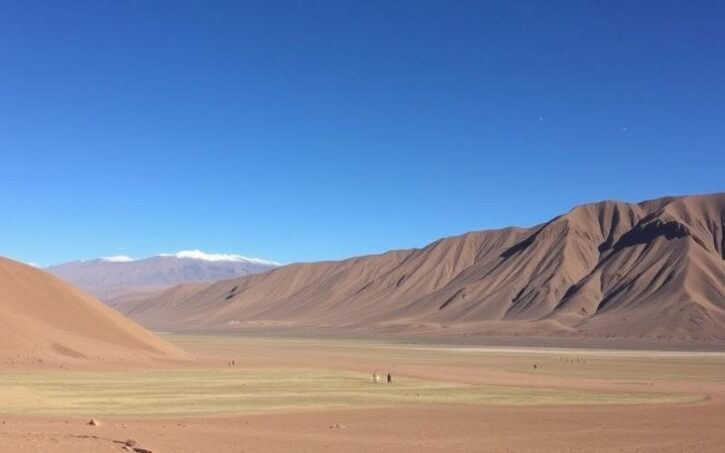
Bolivia is a landlocked state in the heart of South America, sandwiched between Peru, Chile, Brazil, Paraguay, and Argentina. The terrain is extreme: high Andean plateaus, temperate valleys, tropical lowlands, and fragments of Amazon rainforest. This territory concentrates an exceptional number of ecosystems, from the icy peaks of the Cordillera Real to the Uyuni salt desert, and down to the wetlands of the Amazon.
Politically, the country is an officially secular presidential republic. In practice, observers describe it as less than democratic, with a tense social climate, fragile institutions, and strong state intervention in the economy. Democracy exists, but periods of protests, blockades, and political conflict are frequent.
The local currency is the Boliviano (BOB), historically pegged to the dollar but with a parallel market due to currency scarcity. Payments are mostly made in cash, although cards and bank transfers are growing in major cities. The electrical current is 230 V / 50 Hz, with type C and A plugs.
A Predominantly Indigenous Society
Bolivia is the country in Latin America with the highest proportion of indigenous population. The major groups are the Quechuas and Aymaras, plus 34 other recognized peoples. In total, 36 official languages coexist, although Spanish remains dominant in administration, media, and business.
There is also a sizeable mestizo population, a minority of European descent (around 15%), some Afro-Bolivian communities, and a small number of Asian nationals. Catholicism remains the widely majority religion (about 80%), but syncretism is the rule: veneration of Pachamama (Mother Earth) or sacred mountains is part of daily life, even among practicing Catholics.
For an expat, life in Bolivia is punctuated by numerous religious and popular festivals (Carnaval de Oruro, Gran Poder, Viernes Santo, Marian celebrations…). Family is central and the concept of time is flexible. The “hora boliviana” implies that lateness is common, even in a semi-professional setting.
Key Economic Data
Bolivia remains one of the poorest countries in South America despite enormous potential in gas, oil, and minerals. GDP per capita is around $3,000 to $4,000 depending on the source. The average net salary is close to 2,900 BOB per month (about $360), which only covers half of the estimated average monthly cost of living.
For an expat with foreign income, the perspective is radically different: the cost of living here is lower than in 90% of the world’s countries. Comparisons rank Bolivia as the 2nd cheapest destination in Latin America and one of the least expensive on the planet. The flip side: limited infrastructure, fragile public health, dangerous roads, and omnipresent bureaucracy.
Where to Settle: Overview of Cities and Expat Neighborhoods
Expatriating to Bolivia is not a uniform experience. It all depends on the city, even the neighborhood. The majority of foreigners (about 150,000 total) are concentrated in a few large urban areas, often in very affluent enclaves set apart from the reality of the rest of the country.
Santa Cruz, Economic Capital and Expat Mecca
Santa Cruz de la Sierra is the country’s largest city and its true economic engine. Nestled in the eastern tropical plains, it attracts investors, executives, wealthy retirees, and entrepreneurs. It’s the most cosmopolitan city, where the expat presence is also the most visible.
The prime neighborhoods for foreigners are Equipetrol and, across the Piraí River, Urubo. Modern buildings stand alongside secure gated communities, malls like Ventura Mall and Las Brisas, international restaurants, and coworking spaces. The country’s largest Asian community, mainly Chinese, is also found here.
A Western lifestyle remains affordable with a foreign income of $1,500 to $2,000 per month for a single person.
La Paz, Administrative Capital Perched at 3,650 Meters
La Paz is the de facto capital, situated in an Andean bowl at over 3,600 m altitude, overlooked by the Altiplano and the twin city of El Alto. Its urban cable car (the Teleférico) has become the city’s icon. Temperatures are cool year-round, with significant day/night variations.
Most expats settle in the Zona Sur, which is lower in altitude, milder, and noticeably more affluent. The neighborhoods of Calacoto and San Miguel are particularly popular: bars, restaurants, offices, secure housing, international schools. Sopocachi, more central and bohemian, appeals more to students and young professionals.
The altitude requires an adaptation period (soroche) with headaches, shortness of breath, fatigue. Many expats prefer to come test it out for a few weeks before committing to a long-term move.
Cochabamba, the “City of Eternal Spring”
The country’s fourth-largest city, Cochabamba enjoys an almost ideal climate: mild year-round, semi-arid Mediterranean type, with average temperatures between 17 and 26 °C (63–79 °F). It’s nicknamed the “city of eternal spring.” It’s located in an Andean valley at about 2,570 m altitude, limiting hypoxic effects while offering very pleasant weather.
The city is a major hub, famous for its huge open-air market La Cancha and for its historical role in the 2000 ‘water war’ against privatization.
For an expat, the north of the city concentrates the best neighborhoods: Cala Cala (often described as the best area for foreigners), Queru Queru, La Recoleta, Sarco, Mayorazgo, Lomas de Aranjuez, and Las Brisas. The southern zones, poorer, are generally avoided by expats.
A few kilometers away, the village of Tiquipaya offers a more rural setting, large gardens, and spectacularly low rents for spacious houses.
Sucre and Tarija, Tranquil Charm
Sucre, the constitutional capital, is a white colonial city, a UNESCO World Heritage site, with a fairly mild temperate climate. Many foreign retirees settle here to enjoy a particularly low cost of living and a calm atmosphere. Expats mostly gather in the historic center and nearby residential neighborhoods like Barrio Petrolero.
In southern Bolivia, Tarija offers a human-scale living environment with a warm climate and a small-town vibe, notably known for its vineyards. According to expat accounts, it’s possible to live there on a total monthly budget of less than $1,000. This budget notably includes a rent of around $200 for a one-bedroom apartment.
Expat Distribution and Profiles
Available data suggests that the majority of foreigners come from other South American countries. Nationals from developed countries (USA, Canada, Europe) would represent barely 12,000 people, very concentrated in affluent neighborhoods. In certain exclusive sectors of major cities, over 95% of expats from wealthy countries reside in a few highly secured pockets.
The table below roughly summarizes the main expat hubs and their strengths:
| City | Strengths for Expats | Preferred Neighborhoods |
|---|---|---|
| Santa Cruz | Dynamic economy, warm climate, strong modern offerings | Equipetrol, Urubo |
| La Paz | Capital, cultural life, cable car, institutions | Calacoto, San Miguel, Sopocachi |
| Cochabamba | Ideal climate, reasonable cost, “California chic” vibe | Cala Cala, Queru Queru, La Recoleta |
| Sucre | Colonial city, very affordable, relaxed atmosphere | Historic center, Barrio Petrolero |
| Tarija | Wine region, small town, very low rents | Miraflores and residential neighborhoods |
Cost of Living: How Far Does “Cheap” Really Go?
International rankings place Bolivia low on the table in terms of cost of living: cheaper than 92% of the world’s countries. But it all depends on your lifestyle, the city, and the neighborhood.
Typical Expat Budgets
Aggregated studies and first-hand accounts converge on fairly stable ranges:
| Profile | Estimated Average Monthly Budget (USD) |
|---|---|
| Single person, “local” lifestyle | 410 – 830 |
| Single person, comfortable | 1,180 – 2,170 |
| Comfortable retired couple | 1,200 – 1,800 (or ~1,550 to live well) |
| Family of 4 (mid-range) | ~1,700 (excluding luxury and the most expensive schools) |
| Family of 5 in premium neighborhood | ~3,500 |
| “Luxury” lifestyle | 3,000 and up |
Many couples report budgets around $1,000 per month in cities like Sucre or Tarija, housing included. Conversely, a single person wanting a modern apartment in a very upscale neighborhood of Santa Cruz or La Paz, with frequent restaurants and outings, could easily spend $2,000 to $3,000.
Housing: From Almost Free Rural to Multi-Million Dollar Penthouses
The great strength of Bolivia for expats remains the moderation of rents, provided one accepts a local standard of comfort.
A few benchmarks, across all cities:
| Type of Housing | Typical Monthly Rent (USD) |
|---|---|
| Room in shared apartment / hostel in La Paz | 100 – 200 |
| Simple studio in the city | 200 – 400 |
| 1 bedroom downtown (standard) | 250 – 500 |
| 2-bedroom furnished, well-located | ~400 |
| 3 bedrooms downtown (standard) | 350 – 800 depending on city |
| 3 bedrooms in upscale neighborhood (Cochabamba, Santa Cruz) | 600 – 800 |
| 3-bedroom house in Tiquipaya (rural outskirts) | ~200 |
| Basic house in the countryside | From 50 |
Precise figures vary from one market to another, but several concrete examples recur in testimonials: a couple pays $200 for a three-bedroom house with a garden in Tiquipaya, another $200 for a nice one-bedroom apartment in Tarija, a thirty-something around $300 for an all-inclusive rental in Sucre’s historic center.
The median purchase price for a property in Bolivia is about $60,000.
An important point: foreigners can own land, which is not the case everywhere in Latin America.
Food, Outings, and Daily Life
Eating out in Bolivia is often cheaper than cooking in Europe or North America, especially at lunch. You can enjoy a daily set menu (soup + main course + drink) for the equivalent of $3 to $4 in a local establishment. Street snacks (empanadas, salteñas, cuñapé) are around $1 to $2.
This is the minimum cost per person for a meal at the most sophisticated restaurants in Santa Cruz or La Paz.
Local wine, especially from the Tarija region, is very affordable. A good locally produced bottle can be found for under $7 in supermarkets, and some accounts mention decent table wine under $3.
Leisure activities remain inexpensive: movie tickets between $4 and $8, national park entry $5 to $15, yoga class $5 to $10, monthly gym membership around $10 to $30. Bars and nightclubs have lower prices than in major regional capitals, even in trendy neighborhoods.
Internet, Phone, and Coworking
For a long time, the slowness of Bolivian internet was a major obstacle for digital nomads. Things are improving, but unevenly. In major cities, fiber-optic offers now reach comfortable speeds (60 Mb/s or more), but a real-world average of around 5 Mb/s remains common, especially in outlying neighborhoods.
Overview of the main mobile service providers and average rates for a plan with data.
The three main mobile phone operators in Bolivia.
A plan with 10 GB of data costs about $20 per month, sometimes less.
Faster mobile internet packages are available, mainly in major urban areas.
Coworking spaces are multiplying, especially in Santa Cruz and Cochabamba. A monthly hot desk can cost around $170 in the most reputable spaces, with coffee, fast internet, and a community of entrepreneurs.
Transport: Cheap Buses, Risky Roads
Urban transport is very affordable: a ride on a microbus or minibus rarely costs more than a dollar, often around $0.30. Taxis remain cheap: $2 to $5 for a short trip in the city. The La Paz cable car charges less than a dollar per segment.
For intercity travel, comfortable overnight buses between major cities like La Paz and Cochabamba run between $8 and $12, sometimes including meals and movies. Domestic flights can drop to $25–30 on promotion, operated by local airlines like Boliviana de Aviación (for international) or Amaszonas (for shorter connections).
Fuels are heavily subsidized, keeping the price of gasoline low, around a few bolivianos per liter. Owning a car remains relatively expensive in terms of investment (imported vehicles) and tricky regarding road safety: few roads are paved, maintenance and signage are often deficient.
Healthcare: Low Cost, High Disparities
Getting medical treatment in Bolivia costs significantly less than in North America or Europe, but quality varies enormously. The state has established a free public system (SUS, Sistema Único de Salud) for residents—including foreigners with legal status—but public hospitals often remain overwhelmed, under-equipped, and hit by drug shortages.
Public, Social Security, Private: A Three-Tier System
The healthcare system consists of three pillars:
– A public network (SUS), theoretically free for a very broad target population (uninsured people, children, the elderly, pregnant women, people with disabilities).
– Social security funds (CNS) for formal sector employees, funded by employer/employee contributions.
– A private sector, concentrated in major cities, favored by expats and the upper-middle classes.
In the urban centers of La Paz, Santa Cruz, and Cochabamba, some private clinics offer a perfectly acceptable level of service, sometimes with English-speaking doctors. A consultation with a general practitioner or specialist often costs between $10 and $60 depending on the facility, i.e., rates approximately 60 to 80% lower than in the United States.
Private Clinics in Bolivian Urban Centers
Hospitalization and surgery also cost much less, to the point that Bolivia attracts some medical tourism for procedures like orthopedic surgery or dentistry, with savings of up to 70–80% compared to North America.
Health Insurance: Public, Local, or International?
Foreign residents can join the SUS, but the reality of wait times, equipment, and drug availability strongly encourages taking out private insurance. Two approaches exist:
– Local private insurance: coverage limited to the country, very low premiums (often 60–80% cheaper than international plans), but with reimbursement caps and medical evacuation rarely included.
– International health insurance: worldwide coverage, including repatriation, but higher premiums (often $80 to $200 per month per person, depending on age, deductible, and coverage extent).
For a retired couple, some sample budgets include about $75 per month for health insurance, which remains very reasonable compared to standards in developed countries.
Specific Health Risks
Bolivia combines several risks that should not be underestimated:
The high altitude of many cities (La Paz, Potosí, Uyuni) can cause altitude sickness, requiring gradual acclimatization, good hydration, and possibly coca infusions. In the tropical lowlands (Amazon, Chapare, Yungas, Santa Cruz), vector-borne diseases like dengue, chikungunya, Zika, malaria, and yellow fever are present; the use of repellent, covering clothing, and mosquito nets is essential. Chagas disease, transmitted by insects, is endemic in regions like Cochabamba, Sucre, Tarija, and Santa Cruz, requiring heightened vigilance regarding housing quality, especially in rural areas. Tap water is not potable: opt for bottled or boiled water, even in major cities, and be cautious with raw foods sold at the market.
Recommended vaccines include routine boosters, hepatitis A and B, typhoid, sometimes rabies depending on lifestyle, and yellow fever for tropical areas. Some nationalities must present a yellow fever vaccination certificate upon entry.
Safety: Realities, Risks, and Areas to Avoid
International reports converge: Bolivia presents crime levels comparable to those of major North American cities, with strong variation by region. Some sectors are clearly more at risk, particularly Santa Cruz and some areas related to coca production or transit.
Common Crime and Violence
The most frequent crime remains pickpocketing, bag-snatching, and opportunistic assaults. Markets, overcrowded buses, transport terminals, central tourist neighborhoods, and some parks are the classic locations for theft of wallets, phones, and bags.
The city of Santa Cruz de la Sierra is regularly singled out as the country’s most dangerous, with an increase in crimes linked to the informal economy and drug trafficking. Affluent neighborhoods remain relatively protected by extensive private security, but nighttime travel or trips to the outskirts carry more risk.
Phenomena like “express kidnapping” (short-duration abduction to extort money via ATMs) have been reported, especially in major cities and on certain road routes. More serious assaults, including sexual ones, have also been documented.
High-Risk Areas
Several governments explicitly advise against all non-essential travel to certain areas, particularly:
Certain areas of the country pose specific risks for travelers. These include the Chapare region, a theater of tensions related to coca cultivation; some parts of the Yungas, where crime, violence, and dangerous roads persist; as well as isolated border regions with neighboring countries.
For an expat, these areas are generally not places to settle but may be visited for tourism. Caution is then required, with the support of reputable travel agencies.
Social Conflicts, Blockades, and Instability
Protests, strikes, and blockades (bloqueos) are part of the Bolivian political landscape. They can erupt without warning, sometimes escalating into violent clashes with the use of homemade dynamite, Molotov cocktails, or tear gas by security forces.
Access roads to entire cities can be cut off for several days, disrupting the circulation of goods, access to healthcare, and flights. Seeing Uyuni or some mining towns completely isolated by blockades is not exceptional in recent history.
For an expat, it is advisable to avoid planning travel on tight schedules, to regularly follow local news to anticipate social movements, and to maintain minimal stocks of food and medication at home to be self-sufficient for several days if necessary.
Practical Safety Advice
A few habits significantly reduce risks:
– Use official taxis or radio-taxi services and apps (Uber notably in La Paz and Santa Cruz), rather than hailing a random vehicle.
– Minimize the display of signs of wealth (jewelry, luxury watches, conspicuously large smartphones) in the street.
– Keep copies of important documents and leave passports and large sums of money in a secure place.
– Be wary of people presenting themselves as plainclothes police: Bolivian law requires a written warrant for a search, and a tourist should not get into an unmarked vehicle without valid reason.
– Avoid clandestine bars, poorly lit outlying neighborhoods at night, and areas known to be dangerous (cemeteries, isolated hills, surroundings of certain bus terminals).
Major cities have tourist police in areas frequented by foreigners, especially in La Paz. National emergency numbers are 110 for police, 119 for fire, 165 for ambulance.
Visas, Residency, and Administrative Aspects
Bolivia’s visa policy is quite complex, but many nationalities no longer need a visa for short tourist stays. To settle, work, or retire there, however, one must go through the residency process.
Short Stays: 90 Days Maximum
Many nationals can enter visa-free for tourism, usually for 30 days renewable up to 90 days per year. Others must obtain a paid tourist visa from a consulate or on arrival (certain nationalities, rules have evolved recently).
Standard conditions include:
– Passport valid for at least six months.
– Proof of exit from the territory (return or onward ticket).
– Accommodation reservation or letter of invitation.
– Sometimes, yellow fever vaccination certificate depending on country of origin and regions visited.
An additional administrative task exists: an online registration (SIGEMIG) that foreigners are supposed to complete upon entry and update.
Settling: Residence Visas and Permits
For an expatriation project, several types of visas are relevant:
Several visa types exist, each with specific conditions. The visa for a specific purpose (investment, work, study, family reunification) requires justifying the reason for the stay and financial solvency. The student visa is temporary and renewable for the duration of the program. Work visas require a local contract and a complete file (criminal record, medical certificates, proof of resources). Permanent or long-term residence is accessible under certain conditions, after a specific process.
Bureaucracy is reputed to be slow and nitpicky. Traditions of corruption and red tape are often mentioned in expat accounts. It’s common to use a local lawyer or a specialized “tramitador” to prepare applications, follow up with the General Directorate of Migration, and retrieve the foreigner ID card (cédula).
Once residency status is obtained, you gain several essential rights: full access to the public health system (SUS), the ability to open a bank account, sign long-term contracts, purchase real estate, and set up a local business.
Personal Taxation: A Territorial System
Bolivia applies a territorial tax regime for individuals: only income from Bolivian sources is taxable. The main income tax (RC-IVA) has a rate of 13%, after certain deductions, and applies mainly to employment income.
Income from abroad (pensions, dividends, salaries from a non-Bolivian employer paid abroad) is not taxed locally, even for a resident, as long as it’s not considered generated by activity performed in the territory. This makes Bolivia a potentially attractive destination for retirees or freelancers paid from abroad, provided the situation and any tax obligations in the country of origin are carefully analyzed.
Note: there is a wealth tax (IGF) for assets exceeding 30 million bolivianos, with progressive rates up to 2.4%. This will only concern a handful of very wealthy expats.
Working and Doing Business
Starting a professional project in Bolivia can be appealing at first glance: a market still not very competitive in certain segments, abundant natural resources, low labor costs, an officially “open” economy to new models. But the reality of business is rougher: the environment is classified as difficult for businesses, with unstable regulations, complex taxation, and well-entrenched informal practices.
Salaried Employment for Expats
The sectors where foreigners most often find work are:
– Education (private and international schools, universities, language teaching).
– NGOs and international organizations.
– Mining, hydrocarbons, and major infrastructure projects.
– Individual entrepreneurship (restaurants, cafes, specialized services, consulting).
To work legally, an appropriate visa and a proper contract are required. Local salaries, even for skilled positions, remain low compared to Western standards. Some expats therefore prefer to keep a remote job for a foreign employer and settle in Bolivia to benefit from the cost-of-living differential. From a legal and tax perspective, this situation must be examined case by case.
Starting a Business
Creating a company in Bolivia involves several steps: incorporation and registration with the commercial registry, obtaining a tax identification number (NIT), municipal operating license, opening a professional bank account, etc. The country has a corporate tax rate of 25% with specific sectors taxed more (mining, banks, insurance).
Bolivian law allows foreigners to own 100% of a local company’s capital but often requires a resident legal representative, sometimes of Bolivian nationality. Business practice relies heavily on personal relationships, trust, and respect for hierarchy. Decisions are generally made at the highest level, often after lengthy informal discussions.
Caution is advised regarding local partnerships, agricultural land ownership (subject to political debate), mining investments, and more generally any project involving natural resources.
Bank Accounts, Money, and Financial Practice
Opening a bank account in Bolivia is not possible as a mere tourist. You need at minimum a temporary resident status and a Bolivian foreigner ID document (cédula de extranjero). Banks do not accept a passport as the main document for a standard checking account.
Institutions typically require:
– The resident foreigner ID card (cédula), or failing that, a consular or diplomatic card.
– Passport.
– Proof of address (water, electricity bill, rental contract).
– Proof of local income (employment contract, tax return, pay stubs, business documents).
– An initial deposit, sometimes around $100, or more depending on the bank.
Major banks (Mercantil Santa Cruz, Banco Nacional de Bolivia, Banco BCP, Banco Unión, Banco BISA, etc.) are most likely to deal with foreign clients, but services are almost exclusively in Spanish. Interest rates on savings accounts remain modest.
Outgoing international transfers are taxed (financial transaction tax, bank fees, justification requirements above certain amounts). There is a regulatory limit on cash movement of foreign currency. In practice, many expats use a combination of foreign accounts, ATM withdrawals, transfers, and exchange at casas de cambio.
Education and Family Life
For expats with children, the Bolivian public education system is generally not an option, except for a voluntary choice of immersion and simplicity. Public schools suffer from lack of resources, high pedagogical heterogeneity, and high dropout rates, especially in rural areas.
Private and International Schools
Most foreign families choose private schools, often bilingual, sometimes truly international. They are found mainly in La Paz, Santa Cruz, Cochabamba, and Sucre. Many follow American, British, French, or German curricula, sometimes combined with the Bolivian baccalaureate.
Tuition fees remain high by local standards but often moderate compared to other countries:
– Ordinary private schools: $70 to $150 per month.
– American or very international schools: $300 per month and up for higher grades.
– Occasional registration fees and sometimes non-refundable membership fees.
Some schools award a dual diploma: Bolivian and American or European, facilitating study abroad. Limited spots and waiting lists of several months, even years, are common. It is advised to prepare for schooling well in advance.
Family Life and Social Environment
Culturally, Bolivia is very family-oriented. Children are very present in public spaces, and it’s common to see multiple generations living together. However, some rankings consider the country not particularly “family‑friendly” for foreigners, due to road safety, limited public pediatric care, or quality schools concentrated in a few urban centers.
Although Bolivians are generally welcoming and curious towards foreigners, the affluent urban milieu remains relatively closed off. To facilitate meetings and build a friendly network, it is recommended to go through expat associations, Facebook groups, or platforms like InterNations.
Daily Life, Culture, and Integration
Beyond numbers and procedures, expatriation plays out in daily life: language, social codes, ways of working, and the ability to accept a certain dose of chaos.
Languages: The Essential Spanish
Less than 5% of the population speaks English. Even in major cities, it’s unrealistic to rely on English to handle administrative procedures, healthcare, rentals, small services, or even most commercial interactions.
To integrate in Bolivia, knowledge of Spanish (Castilian) is essential. It is recommended to learn it before departure or upon arrival, as it is the most profitable investment for an expat. Although Quechua and Aymara are omnipresent in some rural regions or indigenous neighborhoods, Spanish remains the country’s lingua franca.
Social Codes: Patience, Politeness, Relationships
Greetings are important: a “buenos días” or “buenas tardes” is almost obligatory at the start of a conversation, and ignoring this politeness can be poorly received. Bolivians expect a minimum of formality, particularly respect for titles (Doctor, Ingeniero, Licenciado) in professional contexts.
Refusing coffee, a drink, or food offered at someone’s home can come across as disrespectful. The concept of time being flexible, visible impatience is frowned upon. For business, personal trust often prevails over written contracts, even though the latter remain legally essential.
Bolivians are generally warm and open to foreigners, though they may seem reserved during initial encounters. Building strong bonds requires time and opportunities for sharing, such as meals, parties, joint projects, or participation in community life.
LGBTI+, Discrimination, and Diversity
Accounts mention an overall tolerant, even favorable environment in major cities and educated circles, notably for LGBTI+ individuals. The constitution explicitly prohibits discrimination based on sexual orientation. In rural areas and Altiplano towns, mindsets remain more conservative.
Many expats report an experience almost devoid of direct racism. This doesn’t mean an absence of social tensions, but foreigners, especially Westerners, are often treated with a certain benevolent curiosity.
Conclusion: For Which Profiles is Bolivia a Good Idea?
Relocating to Bolivia as an expat can be an excellent decision for some profiles and a source of frustration for others.
The country will suit particularly: nature lovers, history enthusiasts, and those in search of new cultural experiences.
Bolivia attracts specific profiles, ready to adapt to its challenges to enjoy its unique advantages.
With a stable foreign income, wanting to radically reduce their expenses while living in a culturally rich environment.
Able to navigate a difficult administrative framework to take advantage of an unsaturated market and very low costs.
Ready to live in a country offering salt flats, lagoons, forests, valleys, and mountains within bus reach.
Motivated by deep immersion, who are not afraid to face language barriers, administrative delays, and unexpected events.
It will be more challenging for:
A look at the profiles who will find happiness or, conversely, face challenges in Bolivia.
Families looking for a very secure environment, North American-level infrastructure, and a robust public school system. (Note: This suggests Bolivia is *not* ideal for such families).
Not recommended for people very sensitive to political instability, road blockades, and sometimes sudden rule changes.
To be considered with caution by digital nomads needing ultra-fast and reliable internet at all times, as the country is progressing but remains imperfect.
In summary, Bolivia offers a unique equation: a very affordable daily life, a fascinating socio-cultural environment, and a sense of “economic wiggle room” for anyone earning their living in hard currency, at the cost of certain structural inconveniences. Those who accept this compromise, learn Spanish, and arm themselves with patience can build an surprisingly rich and serene life there—knowing that, in this country, nothing will ever go quite as planned.
Disclaimer: The information provided on this website is for informational purposes only and does not constitute financial, legal, or professional advice. We encourage you to consult qualified experts before making any investment, real estate, or expatriation decisions. Although we strive to maintain up-to-date and accurate information, we do not guarantee the completeness, accuracy, or timeliness of the proposed content. As investment and expatriation involve risks, we disclaim any liability for potential losses or damages arising from the use of this site. Your use of this site confirms your acceptance of these terms and your understanding of the associated risks.

Cyril Jarnias is an independent expert in international wealth management with over 20 years of experience. As an expatriate himself, he is dedicated to helping individuals and business leaders build, protect, and pass on their wealth with complete peace of mind.
On his website, cyriljarnias.com, he shares his expertise on international real estate, offshore company formation, and expatriation.
Thanks to his expertise, he offers sound advice to optimize his clients' wealth management. Cyril Jarnias is also recognized for his appearances in many prestigious media outlets such as BFM Business, les Français de l’étranger, Le Figaro, Les Echos, and Mieux vivre votre argent, where he shares his knowledge and know-how in wealth management.





