
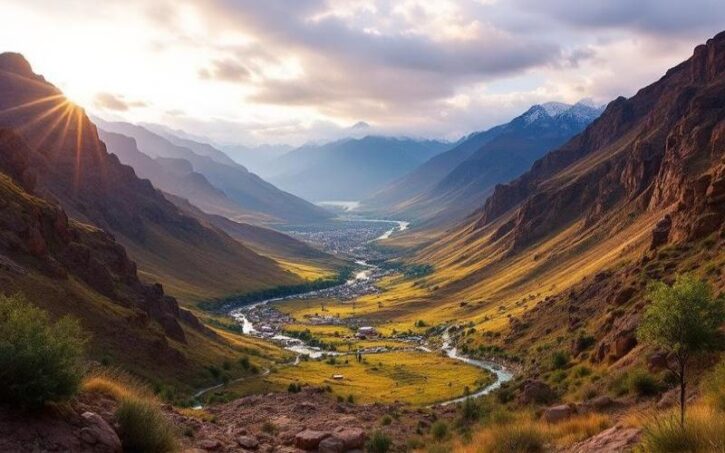
 Published on and written by Cyril Jarnias
Choosing to pursue higher education abroad in Bolivia means betting on a country still relatively unknown on the international academic landscape, but one that boasts several advantages rarely found together elsewhere: a very low cost of living, a booming higher education sector, strong demand for graduates, and exceptional cultural and geographical wealth. For a student ready to go off the beaten path, Bolivia can become a real career accelerator, provided you understand the system, its strengths, and its limitations.
This article covers all the essential aspects for preparing a study stay in Bolivia. It discusses choosing universities and their reputation, job placement prospects, a detailed breakdown of costs, as well as visa procedures. It also provides information on daily life, health, and safety on the ground. Finally, it presents exchange programs and shares concrete feedback from students.
An Expanding Higher Education System
Higher education in Bolivia is in full growth. The country has between 50 and 52 recognized higher education institutions according to rankings (UNIRANKS, uniRank, EduRank). The main university cities are La Paz, Cochabamba, Santa Cruz de la Sierra, Sucre, Oruro, Potosí, Trinidad, and Tarija.
Outbound mobility figures show that Bolivian families are investing more and more in education: between 2003 and 2013, the number of Bolivians going abroad for higher education surged by over 250%, reaching just over 9,100 students. This trend reflects a dual movement: a rise in the level of education in the country and a gradual internationalization of career paths.
A Poor Country, a Dynamic University System
Bolivia remains one of the poorest countries in South America, but its economic indicators have significantly improved: a 25% reduction in poverty since 2001, average incomes more than tripled, sustained growth driven by natural gas exports. This evolution has allowed for broader access to university and an increase in the number of graduates entering the job market.
The sector has developed around historic public universities like those of San Andrés, San Simón, or Saint Francis Xavier, and a dense network of private universities. Some of the latter, such as the Simón Bolívar Andean University, UNIDAD University, or the Bolivian Private University, are very highly rated by students.
A Diverse University Landscape
International rankings confirm that Bolivia is not an “academic desert”. Bolivian universities appear in several global or regional rankings (QS, Scimago, Webometrics, Nature Index, EduRank, QS Latin America & The Caribbean).
You can get a quick idea via a few indicators:
| Indicator | Data for Bolivia |
|---|---|
| Number of verified institutions (UNIRANKS 2025/2026) | 50 |
| Universities featured in major rankings (at least 1) | 20 out of 45 |
| Universities present in QS Latin America & Caribbean 2024 | 8 |
| Universities present in Webometrics 2024 | 13 |
| Universities analyzed by EduRank | 53 |
From a reputational standpoint, some institutions stand out. The Higher University of San Andrés (UMSA, La Paz) is considered the most prestigious public university in the country, with a strong research tradition and a wide range of faculties (natural sciences, social sciences, law, engineering, health, etc.). In a QS subject ranking for Business & Management, the University of San Andrés even appears around the 151st rank worldwide, while Scimago places it within the top 3,000-some institutions in terms of research and impact.
The University of Saint Francis Xavier in Sucre, founded in 1624, has nearly 60,000 students.
On the private side, institutions like Universidad Privada Boliviana (UPB), Bolivian Private University (Cochabamba), Private University of Santa Cruz de la Sierra, Simón Bolívar Andean University, or Domingo Savio Private University show good levels of student satisfaction (often above 4/5).
University Reputation and Employability: A Central Issue
A crucial point, especially for a foreign student, is understanding the impact of the university’s “name” on job prospects, both in Bolivia and elsewhere. A research paper published by the Inter-American Development Bank specifically looked into this topic, focusing on Bolivia.
A Real-World Experiment in the Job Market
The researchers conducted a large-scale “correspondence” experiment: 2,848 fictitious CVs of students, all seeking an unpaid internship, were sent to 1,424 formal companies in the three largest cities in the country (La Paz, Cochabamba, Santa Cruz). The profiles were similar, but the university of origin varied, allowing measurement of the specific effect of reputation.
are conclusive
The results
| Indicator | Observed Result |
|---|---|
| Base probability of a positive response | 7.87 % |
| Additional probability for a “well-perceived university” | +2.25 percentage points |
| Relative gain | +40% chance of a favorable response |
| Ratio of positive responses (well-perceived university vs others) | 1.4 times higher |
In other words, with equivalent CVs, mentioning a university highly regarded by recruiters increases the probability of getting a positive response for an internship by about 40%, even if it’s unpaid. A degree therefore appears necessary, but far from sufficient: the identity of the institution plays a strong signaling role in a context where recruiters have limited information about the real quality of candidates.
What This Means for a Foreign Student
For a student considering pursuing higher education in Bolivia, these results must be taken seriously. They suggest that:
In Bolivia, the choice of institution (public/private, old/recent, ranking) directly influences internship and job opportunities, locally and in the region. Furthermore, universities that invest in their links with the professional world, through curriculum adaptation, structured internships, and alumni tracking, strengthen their reputation and increase the value of their degrees.
A foreign student should therefore aim, as a priority, for institutions recognized by major rankings or with good student feedback, and inquire about their career placement services (internships, career offices, alumni networks).
Major Universities to Consider
International rankings and student evaluations help identify some major players in the Bolivian landscape.
The Public Heavyweights
Several historic public universities combine size, history, research, and territorial roots.
| University | Main City | Founded in | Latin America Rank (EduRank) | World Rank (EduRank) |
|---|---|---|---|---|
| Higher University of San Andrés (UMSA) | La Paz | 1830 | ≈162 | ≈2677 |
| University of Saint Francis Xavier (USFX) | Sucre | 1624 | 401 | 6157 |
| Higher University of San Simón (UMSS) | Cochabamba | 1832 | 507 | 7842 |
| Gabriel René Moreno Autonomous University (UAGRM) | Santa Cruz | 1879 | 357 | 5236 |
| Technical University of Oruro (UTO) | Oruro | 1892 | 420 | 6442 |
These institutions generally cover all major disciplines: medicine, law, social sciences, engineering, agriculture, etc. They are often located in the heart of historic cities and offer many extracurricular activities.
The Rising Private Universities
Private universities are distinguished by more modest sizes, professional programs, and often a closer link with the private sector. Some receive excellent feedback from students:
| Private University | Main City | Founded in | Student Satisfaction (out of 5) |
|---|---|---|---|
| Simón Bolívar Andean University | La Paz | 1985 | 4.9 |
| UNIDAD University | Santa Cruz | 2003 | 4.8 |
| Bolivian Private University (Cochabamba) | Cochabamba | 1993 | 4.4 |
| Domingo Savio Private University | Several cities | 2000 | 4.4 |
| Latinamerican University | Santa Cruz | 2002 | 4.4 |
| San Francisco de Asís University | La Paz | 1998 | 4.4 |
These scores reflect students’ overall appreciation of academic quality, campus environment, administrative support, services. For an international student, this type of indicator provides a first qualitative reference point, complementary to research rankings.
The Special Case of Universidad Privada Boliviana (UPB)
Among private universities, Universidad Privada Boliviana (UPB) holds a unique place. Founded by the Bolivian business community, it is regularly cited as one of the best institutions in the country, particularly in economics, management, and engineering. It is ranked in the top 10 in Latin America on some academic criteria and in the top 25 for business/economics fields, with a 7th place for its business school in Latin America.
The Bolivian Private University (UPB) operates across three distinct sites, each offering a unique study environment.
Located in the heart of Bordeaux, this historic campus houses the Faculties of Law and Political Science, close to institutions.
Dedicated to Science and Technology, this modern campus has state-of-the-art laboratories and extensive sports facilities.
This international-facing center of excellence hosts the Schools of Business and Management, within the new business district.
– La Paz (Campus Fernando Illanes de la Riva)
– Cochabamba (Campus Julio León Prado)
– Santa Cruz (more recent campus, under progressive expansion)
The course offerings are structured around two main schools:
The institution offers two major schools covering a wide range of disciplines. The School of Economic and Legal Sciences trains students for careers in administration, law, economics, communication, marketing and logistics, organizational psychology, international and business relations, as well as graphic design. The School of Engineering and Architecture, on the other hand, provides training in architecture, civil engineering, electromechanical engineering, telecommunications, industrial systems, oil and gas, as well as environment and alternative energies.
For international students, UPB is particularly attractive because it offers two fully English-taught semester programs:
– the LEAP (Latin American Young Leadership Program), dedicated to leadership, regional development, and intercultural exchange, with a five-week corporate internship and a Spanish language certificate;
– the Laureate Research Semester (Latin American Undergraduate Research Semester), intended for engineering and architecture students, combining courses and immersion in the university’s research centers, in English or Spanish.
UPB operates on a modular system (four modules per semester, about one month each) with, generally, two courses per module, totaling 5 to 8 courses per semester for a workload of about 20 class hours per week.
Cost of Living and Student Budget in Bolivia
One of Bolivia’s main assets for a foreign student is the cost of living. International comparisons show that living in Bolivia is overall cheaper than in 92% of studied countries, and the country ranks among the two most economical nations in Latin America.
Monthly Budget: What to Expect
Estimates vary based on the comfort level desired, but a general range emerges for a student:
| Profile | Estimated Monthly Budget (USD, housing included) |
|---|---|
| Very frugal student | 400 – 600 |
| “Standard” student | 600 – 900 |
| Comfortable lifestyle | 1,000 – 1,500+ |
A survey among students indicates an average monthly expense of 4,200 BOB (about 600 USD), with strong variations (from 640 BOB to 46,000 BOB depending on lifestyle). The typical distribution of expenses is instructive:
| Expense Item | Average Share of Student Budget | Average Amount (BOB/month) |
|---|---|---|
| Housing | 19 % | ≈ 1,000 (150 – 11,000) |
| Water/electricity/gas | 6 % | ≈ 170 (25 – 1,900) |
| Groceries & household products | 22 % | ≈ 830 (130 – 9,300) |
| Study costs (tuition fees, materials) | 19 % | ≈ 790 (120 – 8,800) |
These figures confirm that with good management, Bolivia allows one to live and study on a budget much lower than in most traditional student destinations.
Student housing options are varied and cover all price ranges.
| Type of Housing | Monthly Rent Range |
|---|---|
| University dormitory (basic) | 80 – 200 USD |
| Shared room in the city | 150 – 300 USD |
| Studio in the city | 710 – 2,900 BOB |
| 1-bedroom apartment | 1,100 – 4,300 BOB |
| 3-bedroom apartment | 1,700 – 7,800 BOB |
| Townhouse (average) | ≈ 4,300 BOB |
| High-end villa | 4,300 – 17,000 BOB |
Rents can be up to three times higher in urban areas than in rural zones, and some cities like Santa Cruz, the tourist Altiplano (Uyuni), or remote regions are more expensive than the classic Andean axis (La Paz, Cochabamba, Sucre, Oruro).
Concrete Examples of Living Costs
A few prices in Bolivianos (BOB) give an idea of daily life:
The cost of a short medical consultation at a private clinic in Bolivia is about 202 BOB.
With an average salary around 725 USD per month in major cities, local purchasing power remains modest, but for a foreign student with resources in hard currency, the cost/quality of life ratio is very favorable.
Climate, Cities, and Quality of Life
Studying in Bolivia also means choosing a very particular geographical and climatic environment. The country has three major climatic zones: tropical lowlands in the east, temperate valleys in the center, Andean highlands in the west. This division significantly impacts a student’s daily life.
Three Major Climatic Zones
| Zone | Share of Territory | Climate | Main Cities |
|---|---|---|---|
| Tropical Lowlands | ≈ 59 % | Hot, humid, significant rainfall | Santa Cruz, Beni, Pando, Gran Chaco |
| Temperate Valleys | ≈ 13 % | Spring-like year-round | Cochabamba, Sucre, Tarija |
| Andean Highlands | — | Cool to cold, dry air, high altitude | La Paz, El Alto, Oruro, Potosí, Uyuni |
For a foreign student, the choice of university city will strongly condition the daily experience.
La Paz and El Alto: Altitude, Dynamism, and Moderate Cost
La Paz, the administrative capital perched around 3,600 m, is one of the highest cities in the world. El Alto Airport sits at over 4,000 m. The air is dry, nights are cold, sunlight is strong with very high UV. The city, however, is considered one of the most economical capitals in South America, with intense cultural life, a strong indigenous presence, and a striking mix of tradition and modernity.
The high altitude requires an acclimatization phase, particularly important for people who have never lived in the mountains.
Cochabamba and Sucre: Quality of Life and Student Atmosphere
Cochabamba, often called the “city of eternal spring”, is located at about 2,500 m and enjoys remarkably stable weather: days around 26–30 °C, cooler nights, a long dry season, making it an excellent choice for those who fear cold or excessive humidity.
Sucre, the constitutional capital at 2,800 m, combines a temperate climate, a historic center listed as a UNESCO World Heritage site, a strong university tradition (Universidad San Francisco Xavier), and a reputation as a hub for Spanish language schools. It is a top destination for exchange programs and students who want to combine studies and cultural immersion.
Santa Cruz de la Sierra: Tropical Economic Powerhouse
In the tropical lowlands, at only 400 m altitude, Santa Cruz is the largest city in the country and its economic engine. The climate is hot and humid, with episodes of cold southern winds (surazos) that can cause a sudden drop in temperature. The city combines large shopping malls, modern business districts, and quick access to ecotourism areas. It’s an interesting base for students oriented towards business, agribusiness, environment, or energy.
Other Cities: Oruro, Tarija, Uyuni, Potosí…
– Oruro: over 3,700 m altitude, known for its UNESCO-listed Carnival, cold and dry climate, low cost of living.
– Tarija: in the south, around 1,900 m, a wine region nicknamed the “Bolivian Andalusia,” mild climate and city considered one of the safest in the country.
– Uyuni and Potosí: cold and dry highlands, extreme climate in Uyuni, but spectacular environment (Salar, mines, colonial history).
Student Visas and Formalities: What You Need to Know
A higher education project in Bolivia requires rigorous administrative preparation. The country has several types of visas for foreign students.
Types of Study Visas
There are mainly three categories of study visas:
– “Classic” student visa (for primary, secondary, and higher education lasting one to three years);
– Exchange visa with a State agreement (180 days, free);
– Exchange visa without a State agreement (180 days, paid).
The standard student visa is an entry visa. Once in the country, the student has a period (generally up to 60 days) to apply for temporary residence with the Dirección General de Migración. This residence can be granted for up to three years and renewed according to the duration of studies.
The exchange visa is valid for a maximum of 180 days. It is designed for semester or short-term academic programs, such as a semester at UPB, SIT Study Abroad, or Global Service Learning.
Documents and Main Requirements
Requirements may vary slightly between consulates, but there is a common core:
To obtain a student visa for Bolivia, prepare especially a passport valid for at least six months after your stay, a letter of admission from a recognized institution, proof of financial resources, and a medical certificate. A yellow fever vaccine is required for stays in the tropical zone.
Documents not written in Spanish must be translated and legalized. Processing can take from 2 to 8 weeks, hence the need to plan well in advance.
Temporary Residence and On-Site Obligations
After entering Bolivia with the student visa, obtaining temporary residence is mandatory for long stays. This step is done with the Dirección General de Migración and again involves a complete file.
Students must:
– respect Bolivian laws;
– maintain regular enrollment at the institution;
– report any change of address or situation;
– renew their visa/residence before expiration.
Exceeding the legal stay duration can lead to fines, or even difficulties in future visa applications.
Health and Insurance: Plan Ahead to Avoid Bad Surprises
Bolivia has a public health system under reform (SUS – Sistema Único de Salud), complemented by a social security network and many private clinics in major cities.
Public and Private Health
The public system offers basic services, often free or heavily subsidized for citizens and regular residents. However, the quality and availability of services vary greatly between major cities (La Paz, Santa Cruz, Cochabamba, Sucre) and rural areas where infrastructure is limited and wait times long.
The cost in USD for a specialist consultation in a private clinic, lower than Western rates.
Among notable private institutions, we can mention:
– Clinica Foianini, Clinica Alemana (Santa Cruz);
– Hospital Quirúrgico Boliviano Belga, Clinica del Sur (La Paz);
– Centro Médico de Cochabamba, CEMES, etc.
Health Insurance for Foreign Students
Even if the law does not systematically require it upon entry, almost all universities and embassies require valid health coverage to issue the student visa. Options are multiple:
Different types of health insurance contracts adapted to the needs and budget of international students.
Cheaper, but with coverage limited to the national territory and sometimes only to basic care.
Worldwide coverage, including medical evacuation and coverage in the best clinics.
Specific insurance offered or recommended by certain educational institutions.
Price ranges are as follows:
| Type of Coverage | Indicative Cost |
|---|---|
| Basic university plan | ≈ 100 – 200 USD/year |
| International student insurance | ≈ 300 – 600 USD/year |
| Local private health insurance (resident) | ≈ 30 – 100 USD/month |
| Comprehensive expatriate plan | 150 – 400+ USD/month |
For a one or two semester stay, an international student insurance offering repatriation, hospital care, civil liability, and COVID/major illness coverage is generally the most prudent choice.
Specificities: Altitude and Tropical Diseases
Two particular health issues must be taken into account:
– altitude in the Andes (La Paz, Oruro, Potosí, Uyuni, Titicaca…) with risk of acute mountain sickness (headaches, shortness of breath, insomnia, sometimes more severe disorders);
– vector-borne diseases (dengue, malaria) in the tropical lowlands (Beni, Pando, Santa Cruz, Amazon).
Standard advice applies: gradual ascent, hydration, rest upon arrival at altitude, mosquito repellent, covering clothing, prior consultation at a travel vaccination center.
Daily Life, Culture, and Safety: Adapting to a New World
Studying in Bolivia also means diving into a singular cultural environment, marked by a strong indigenous presence, linguistic multiplicity (38 official languages including Quechua, Aymara, Guarani), and social norms sometimes very different from those of foreign students’ home countries.
Social Codes and Life in a Host Family
Exchange programs (UPB via ISEP, SIT Study Abroad, Global Health Programs) frequently use host family housing. This implies respecting a few implicit rules:
For harmonious integration, it is essential to always greet each person when entering or leaving a room (e.g., with ‘buenos días/tardes/noches’), to adopt neat and appropriate attire avoiding ripped or overly revealing clothing (especially in the more conservative Andean regions), not to eat alone without offering to others, and to avoid flaunting one’s material comfort. Also, always ask for permission before photographing people, especially in indigenous communities, and limit public displays of affection, as they can be poorly perceived in some contexts.
Host families have no obligation to host the student’s friends and should be considered as partners, not hotel service providers.
Safety: Vigilance, Not Paranoia
Crime exists, notably pickpocketing in city centers, markets, crowded buses, and bus terminals. Foreigners are sometimes seen as prime targets. The recommendations are those for any large Latin American city:
For your safety, keep your documents and money in a discreet belt or pouch, especially at night. Avoid moving alone late, particularly in unfamiliar neighborhoods. Do not show signs of wealth (jewelry, luxury watches, high-end phones) in public. Prefer official taxis or reliable transport platforms, and refuse unmarked vehicles. Beware of individuals posing as police officers or offering overly insistent assistance.
More serious forms of crime exist (express kidnappings, sexual assaults in certain nightlife spots, tourist scams), hence the importance of staying in groups and following the safety guidelines of the host program.
Political Context and Social Movements
Bolivian political life is very active, and protests, roadblocks (bloqueos), and strikes are frequent. These events can paralyze entire regions, cause temporary shortages of fuel or food products, and sometimes escalate into clashes.
For a foreign student, the rule is simple: do not participate in demonstrations, avoid gathering places, follow the recommendations of the university or embassy, and adjust travel accordingly. Blockades can notably disrupt intercity travel (long-distance buses) and transfers to airports.
International Programs and Field Experiences
Bolivia is attracting more and more exchange and study programs of short or medium duration, often focused on themes like development, inequality, public health, human rights, or project management.
Service-Learning and Consulting Programs
Several North American universities organize stays in Bolivia for their students:
Several international programs offer study and volunteer experiences in Bolivia. A Global Service Learning program combines a credited course with an intensive mission during spring break at CEOLI, a school for children and young people with disabilities in Cochabamba, focused on project management in the non-profit sector. The School for International Training (SIT) offers a full semester dedicated to the country’s social, political, and economic issues, including intensive Spanish courses, homestay accommodation, field seminars, regional travel, and a final research or artistic project. Finally, global health programs, often in partnership with the NGO CIES and universities, allow for clinical immersions of a few weeks in cities like Sucre, Potosí, or Tarija, combined with medical Spanish classes and observation placements.
Testimonials from former participants highlight gains both professional (project management, consulting, intercultural teamwork) and personal (perspective on one’s career, questioning of one’s privileges, deep understanding of local social realities).
Field Projects and Academic Vocations
Extended field experiences can even shape an academic career. A student in Latin American and Spanish studies, who came to work for three months on water access inequalities in Cochabamba, explains thus having helped raise funds for dry toilets in a disadvantaged neighborhood, discovered the workings of local NGOs, and decided following this immersion to prepare a PhD in economic geography, focused on social movements and resource inequalities.
Bolivia is particularly suited to this type of project, with its emblematic conflicts around water, privatization, mining, gas, or indigenous peoples’ rights.
Studying in Bolivia: For Whom and For What?
Faced with “classic” destinations like Spain, France, the United States, or Canada, Bolivia may seem a bold choice. Yet, for certain student profiles, it is a very coherent bet.
Profiles and Goals for Which Bolivia Makes Sense
– Students in social sciences, political science, international relations, development, human rights, political economy: an ideal laboratory to study globalization, multiculturalism, socio-environmental conflicts, extractivist policies.
– Students in health, public health, medicine, or paramedical fields: a prime ground for understanding issues of health systems in transition, community health, maternal and child health, infectious diseases.
– Students in engineering, natural resources, energy, environment: a very rich context to work on hydrocarbons, energy transition, alternative energies, water management, natural hazards.
– Students in business, management, entrepreneurship: an emerging market where the informal economy, local SMEs, and large commodity-linked groups coexist, with business schools like UPB or very dynamic public universities.
– Students wanting to learn or improve Spanish in an environment still not very touristy, while benefiting from very low costs.
Comparative Advantages Over Other Destinations
– Extremely lower study and living costs compared to most Western countries;
– deep cultural immersion, far from saturated university exchange circuits (like Erasmus in Europe);
– easier access to internships, field projects, NGO missions where one can truly take on responsibilities;
– possibility to stand out on a CV with a South American experience off the beaten path.
Bolivia offers an excellent cost/benefit ratio and a strong field experience, but has limitations: absence of world-renowned universities like in Chile or Brazil, sometimes uneven infrastructure, bureaucracy, and occasional social instability. It is not suitable for those seeking prestigious international labels, but is a relevant choice for an immersive and economical academic experience.
How to Concretely Prepare Your Study Project in Bolivia
To turn the desire into a concrete project, a few key steps are essential.
1. Clarify Your Academic and Professional Goal
Before choosing a university, it is essential to define:
– your main discipline (and possibly a secondary field);
– the intended duration (one semester, one year, the entire degree);
– the type of degree sought (exchange, bachelor’s, master’s, doctorate, certificate, short program).
Bolivia is particularly relevant for an exchange of 1 or 2 semesters, a master’s, or an applied research internship, rather than for a full 4 or 5-year degree if one aims for a job market in Europe or North America. This is less true for profiles who want to work long-term in Latin America, for whom a local degree can be entirely coherent.
2. Choose the City and University
The choice of study location must integrate multiple criteria:
Key factors to consider when selecting your study destination in Latin America, beyond the university itself.
Climate varies greatly: high altitude (cool), temperate valleys (mild), or tropical zones (hot and humid). A choice impacting daily life and adaptation.
The city’s size directly influences cultural offerings, leisure, and general atmosphere, from the lively metropolis to the quieter town.
Assess the university’s overall reputation and, especially, its specific excellence in your intended field of study.
Check for programs taught in English, crucial if Spanish proficiency is not yet sufficient to follow a degree.
In practice:
– for studies in social sciences, law, economics, international relations: La Paz (UMSA, UCB), Cochabamba (UMSS, UPB), Sucre (USFX) are strong options;
– for engineering, applied sciences, mining issues: Oruro (UTO), Cochabamba (UMSS, UPB), Potosí, Llallagua (UNSXX);
– for business and management with a strong international component: UPB (La Paz, Cochabamba, Santa Cruz), Bolivian Private University, UPSA in Santa Cruz.
3. Work on Your Spanish
Even though some programs are offered entirely in English, Spanish remains the language of daily life and of the majority of courses, internships, and relations with the population. Many universities require a level equivalent to B1 to take courses in Spanish, certified by a test or internal evaluation.
Bolivia being a country where few professionals speak fluent English (with the exception of some doctors or executives in international companies), investing in Spanish before and during the stay is almost indispensable, both for integration and for safety and the quality of the experience.
4. Prepare Your Academic and Financial File
Depending on the country of origin, it is possible to combine several funding sources:
Several schemes exist to finance studies or projects in Bolivia. For Bolivian students wishing to go abroad, there are national scholarships like Fulbright or Chevening-type programs, as well as cooperation programs. Conversely, scholarships are also available for international students wanting to study in Bolivia. Some universities or schools offer co-funding for mobility to Bolivia via programs such as SIT or ISEP. Finally, foundations or NGOs can provide financial support for projects related to development, health, or the environment in the country.
Even when tuition fees are low, it is prudent to plan a safety cushion to cover unexpected expenses, internal travel, or uncovered medical costs.
5. Anticipate Practical Aspects
Finally, one must think about:
– checking vaccination requirements (yellow fever notably);
– preparing a minimal health kit (personal medications, prescriptions, spare glasses);
– scanning and saving all important documents (passport, visa, letter of admission, insurance);
– inquiring about rent and bill payment methods (cash, bank transfer, banking limitations);
– getting informed about areas to avoid in the host city, the safest means of transport, emergency procedures (police, ambulance, fire department numbers).
Conclusion: Bolivia, a High-Value Destination for Curious Students
Pursuing higher education abroad in Bolivia is by no means a “default” choice. For those willing to step off the well-trodden path, the country offers a rarely matched combination: very low cost, diverse universities, real internship opportunities in companies or NGOs, deep cultural immersion, unique study grounds on issues of development, natural resources, public health, indigenous rights.
Research indicates that the choice of university has a significant impact on employability, notably due to its reputation among recruiters. To select your institution, it is advisable to consider benchmarks like international rankings, student satisfaction rates, and the strength of alumni networks.
Bolivia is not an “easy” country: altitude, inequalities, sometimes cumbersome administrative system, opportunistic crime, occasional social instability require maturity and a sense of responsibility. But for students seeking an intense academic and human experience, with a lasting impact on their personal and professional trajectory, Bolivia can become a fantastic learning laboratory – far beyond what a traditional classroom can offer.
Disclaimer: The information provided on this website is for informational purposes only and does not constitute financial, legal, or professional advice. We encourage you to consult qualified experts before making any investment, real estate, or expatriation decisions. Although we strive to maintain up-to-date and accurate information, we do not guarantee the completeness, accuracy, or timeliness of the proposed content. As investment and expatriation involve risks, we disclaim any liability for potential losses or damages arising from the use of this site. Your use of this site confirms your acceptance of these terms and your understanding of the associated risks.

Cyril Jarnias is an independent expert in international wealth management with over 20 years of experience. As an expatriate himself, he is dedicated to helping individuals and business leaders build, protect, and pass on their wealth with complete peace of mind.
On his website, cyriljarnias.com, he shares his expertise on international real estate, offshore company formation, and expatriation.
Thanks to his expertise, he offers sound advice to optimize his clients' wealth management. Cyril Jarnias is also recognized for his appearances in many prestigious media outlets such as BFM Business, les Français de l’étranger, Le Figaro, Les Echos, and Mieux vivre votre argent, where he shares his knowledge and know-how in wealth management.





