
 Published on and written by Cyril Jarnias
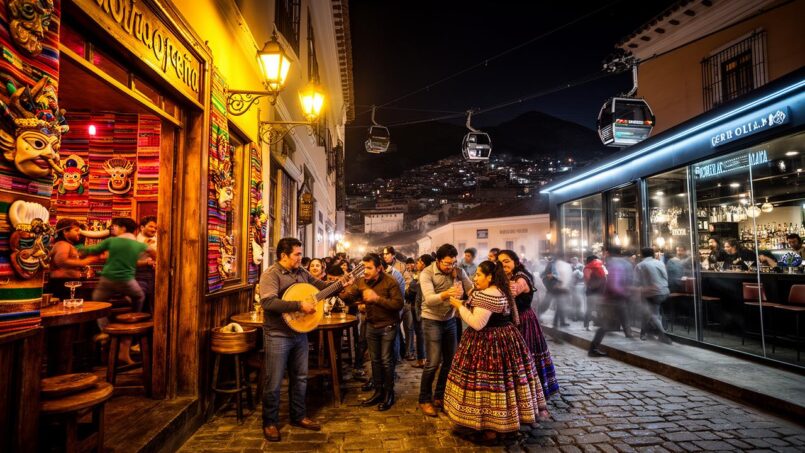
As soon as night falls, Bolivia changes its face. The country often associated with Andean peaks, indigenous markets, and salt deserts reveals another side: trendy bars, folk peñas, panoramic rooftops, electro clubs, village chicherías, and unique outings like the night cable car or astronomy tours on the salt flat. Nightlife in Bolivia: where to go out in the evening is largely a question of style and vibe, given the vast and contrasted offerings between La Paz, Santa Cruz, Cochabamba, Sucre, mining towns, and rural areas.
This guide details the major cities and their standout nightlife experiences, while also addressing essential safety questions for outings after dark.
La Paz After Sunset
Perched in an Andean basin, La Paz is officially the highest administrative capital in the world. By day, the heavy traffic, markets, and architectural contrasts can be dizzying. At night, the city becomes a vast luminous patchwork connected by the Mi Teleférico cable car network, and its liveliest neighborhoods fill with night owls.
The Main Neighborhoods for Going Out
La Paz is not experienced the same way whether you stay in the historic center, head up to the popular heights of El Alto, or go down to the sophisticated Zona Sur. To plan your evenings, a few zones serve as references.
The center and the streets around Plaza San Francisco and Plaza Murillo concentrate cafes, traveler-friendly bars, and some clubs, notably around Linares, Tarija, or Murillo streets. You’ll find places like The English Pub or The Irishman Pub, frequented by tourists, open late, and convenient for a beer or cocktail before heading out to dance.
Sopocachi, the quintessential bohemian neighborhood, is the heart of Paceña nightlife. Around Plaza Avaroa, on Avenida 20 de Octubre or Belisario Salinas street, cocktail bars, cultural cafes, rock clubs, and peñas follow one another. This is also where a good portion of the most festive hostels are located, like Selina and Wild Rover, which have their own bars.
Further south, the Zona Sur, with areas like Calacoto, Irpavi, or San Miguel, offers a more subdued ambiance, with high-end restaurants, lounges, and chic clubs frequented by a well-to-do clientele.
A first table provides an overview of the main nightlife zones in La Paz and their general vibe.
| Zone / Neighborhood | General Profile | Dominant Type of Venue |
|---|---|---|
| Center (San Francisco, Murillo, Linares, Tarija) | Very busy, touristy, lively early evening | Traveler bars, pubs, cafes, some clubs |
| Sopocachi (Plaza Avaroa, Av. 20 de Octubre, Belisario Salinas) | Bohemian, cosmopolitan, heart of Paceña nightlife | Bars, peñas, rock clubs, party hostels |
| Zona Sur (Calacoto, Irpavi, San Miguel) | Affluent residential, sophisticated | Lounges, chic clubs, fine dining restaurants |
| El Prado, Av. Montenegro, Calle 21 | Major urban arteries, mix of locals / expats | Bars, commercial clubs, restaurants |
Fridays are the most intense nights, but Saturdays can remain very lively until late morning. Most bars start filling up around 10 PM, with a peak between midnight and 2 AM. Clubs often stay open until 3 AM, sometimes later unofficially.
Iconic Bars, Peñas, and Clubs
La Paz offers a surprisingly diverse range of venues for an Andean city. The general music scene isn’t the most “cutting-edge” in Latin America: many clubs focus on a mix of Latin pop, rock, cumbia, salsa, and 80s-90s hits. But by looking a little, you can find very specific spots, from intimate jazz to basement reggae.
In Sopocachi, Diesel Nacional, on Avenida 20 de Octubre, stands out for its industrial decor with furniture made from recycled vehicle parts, and offers cocktails and food served late. Nearby, Costilla de Adán (also called La Costilla de Adán or Dan’s Rib) operates as a secret bar and museum, with over 19,000 antique objects on display. You gain access by knocking on the door, and the ambiance evokes cabinets of curiosities.
In the same area, places like Abbey Road (a Beatles-inspired bar), Café MagicK, or more discreet bars like Mecanica Bar attract a mixed crowd of locals, expats, and travelers. Los Honguitos, a late-night institution in Sopocachi, serves small portions of meat and choripanes to line stomachs before heading home to sleep.
For fans of panoramic views, Euro Lounge, perched on the top floor of the Hotel Europa, and +591 Bar, on the 7th floor of the Atix Hotel in Calacoto, stand out. Signature cocktails inspired by Bolivian products, views of the illuminated city, and a chic clientele make them perfect spots for a calmer start or end to the evening.
The musical dimension is essential in Paceña nightlife. Thelonius Club (often spelled Thelonious or Thelonius) is a reference for listening to jazz and world music. Equinoccio, a historic rock bar for over twenty-five years, highlights local and national bands. Ttkos, a basement bar with a cave-like ambiance, schedules themed nights: classic rock, ska, documentaries, and a famous “Reggae Tuesday.” They serve a house cocktail, the Tutuma, made with papaya and singani, presented in a gourd.
Discover the institutions and new trends of Paceña nightlife, from historic clubs to the most current vibes.
An institution in Sopocachi where generations of Paceños have come to party on weekends.
A mix of restaurant, bar, and large dance floor, known for its nights with live bands and DJs playing Latino and international sets.
In San Pedro, plays the retro card with a program from disco to 70s-80s techno. Free entry and a large dance floor.
In Calacoto in the Zona Sur, attracts with its themed nights, a “ladies’ night” on Thursday, and two-for-one cocktail promotions.
On Avenida Montenegro, a major rock venue, also programming reggaeton and hip-hop.
A second table summarizes some iconic venues, their type, and their main feature.
| City / Neighborhood | Venue | Type | Main Particularity |
|---|---|---|---|
| La Paz / Sopocachi | Diesel Nacional | Bar-restaurant | Industrial decor with recycled vehicle parts, late-night cocktails |
| La Paz / Sopocachi | Costilla de Adán | Secret bar-museum | 19,000 antique objects, entry by ringing a bell |
| La Paz / Sopocachi | Equinoccio | Rock bar | Over 25 years of local rock concerts |
| La Paz / Sopocachi | Ttkos | Basement bar | Themed nights, Reggae Tuesday, Tutuma cocktail |
| La Paz / Sopocachi | Mongo’s | Bar/club | Large dance floor, live bands and DJs, very international vibe |
| La Paz / Sopocachi | Forum | Nightclub | Iconic multi-generational nightclub |
| La Paz / Zona Sur | Senses Club | Nightclub | Themed nights, promotions, chic crowd |
| La Paz / Center | The Irishman Pub | Irish pub | Proclaimed highest Irish pub in the world |
| La Paz / Irpavi | The Dubliner | Irish pub | Concerts and monthly promotions |
In this landscape, party hostels play their role. Wild Rover, often described as the city’s “ultimate party haven,” attracts an international crowd with cocktails and lively nights. Selina, in Sopocachi, combines stylish accommodation, a design bar, and a basement club programmed until dawn on certain nights.
Nighttime Experiences Beyond Bars
Limiting yourself to bars and clubs would be reductive. La Paz offers several nighttime experiences unique to South America.
The Mi Teleférico cable car network, for example, allows you to observe the city from above at night. The cabins connect La Paz to El Alto via a dozen colored lines (red, yellow, blue, green, purple, silver, etc.) and over thirty stations. Some connections reduce a 45-minute road trip to 10 minutes. From the cabins, the lights of the urban basin and the silhouette of Mount Illimani compose a spectacular tableau. Many travelers film this nocturnal panorama, although authorities recommend remaining vigilant: it’s better to avoid late hours on the most isolated lines and not to linger in El Alto after nightfall, as crime rates are higher there.
The Cholitas Wrestling shows, organized in El Alto, constitute another memorable outing. In a packed hall, Aymara women in full skirts and bowler hats face off in a ring, in a mix of show and combat, amidst crowd cheers. Organized tours generally include transport from the center (e.g., from the Coca Museum), which is preferable for safety.
The city’s cultural life is also expressed in public spaces with street musicians playing Andean instruments, as well as through unusual activities like cooking classes, traditional dinners, or even rappelling from a high-rise hotel (Urban Rush).
Drinking Local: Chicha, Singani, and Other Classics
Going out at night in Bolivia also means discovering a drinking culture deeply rooted in Andean history. Chicha, a fermented corn drink, is its emblem. Considered one of the country’s most typical refreshments, it is very popular in the Cochabamba valley but is also consumed in La Paz, Oruro, and Chuquisaca. Once used in Inca rituals, it is prepared from sprouted corn, boiled then fermented for three to seven days, for a moderate alcohol degree, often between 3 and 5%. It is served at room temperature in large clay pots, and drunk from dried gourds or calabashes called tutuma, sometimes after spilling a few drops on the ground for Pachamama (Mother Earth).
Some Bolivian variants use specific corns, like wilkaparu or a purple corn for festivals, while other variations, like aloja made from small cactus fruits, spices, and citrus, play on more complex flavors. Traditional chicherías, recognizable by a white flag or a red star above the door, are places for socialization, political discussion, and relaxation, although purists sometimes criticize urban versions deemed too sweet or cut with hard liquor.
Alongside chicha, the other star of Bolivian counters is singani, a grape brandy distilled in the Tarija region for over five centuries. It is drunk straight or in cocktails, the most famous being the chuflay, a mix of singani, ginger ale, lime, and ice. Té con té, a robust alliance of black tea, singani, sugar, and cinnamon, is a formidable weapon against the cold in high-altitude cities. National beers like Paceña or Huari, as well as more specialized labels like Niebla, Macabra, or Matraca, round out the classic drinks.
Today, local creativity is found in initiatives like Andean Culture Distillery in La Paz, which produces a corn whiskey called Killa (referencing the Quechua word for moon), made from fermentations inspired by chicha. Some traditional non-alcoholic drinks, like mocochinchi (a decoction of dried peach), are sometimes mixed with a dash of rum or singani to compose original blends.
Santa Cruz de la Sierra: Tropical Nights and Clubs in Abundance
In contrast to the Andean chill of La Paz, Santa Cruz de la Sierra, the large eastern metropolis, offers a much more tropical atmosphere. The city spreads out flat between highway rings (primer anillo, cuarto anillo, etc.) and densifies its nightlife around neighborhoods like Equipetrol, the San Martín sector, or the expanding Urubó zone.
Rooftops, Bars, and Clubs
Among recent places that embody this upscaling of Cruceña nightlife, SBC Rooftop, also called Rooftop by Santa Cruz Beer Company, stands as a symbol. Located on the 7th floor of the Smart Nomad building, at the corner of Calle 6 Oeste and Enrique Finot, in municipal district 1, this panoramic bistro serves brunch, sharing plates, fish, seafood, modern and classic cocktails, juices, and coffee. Open all day until midnight or 1 AM depending on the source, it attracts both locals and visitors seeking sunset and illuminated skyline views.
The Santa Cruz nightlife scene is very lively, with a great variety of establishments. For bars, notable ones include Maroon on Calle 24 de Septiembre, Duda Pop Pub, Pallet Bar on Republiquetas, and Urubo Yerovia in the Urubó zone. On the club and discotheque side, the list is long: UP Club Bolivia, FIZZ on Avenida Noel Kempff Mercado, Club Viernes, Club Paradise, KAPRICHOOS NIGHT CLUB, and InSide Club. The city also offers karaoke spots like Nuvo Lounge, private clubs such as Belmond and La Miel, as well as adult-only venues.
The diversity of the offering is reflected in the types of bars listed: wine bars, sports bars, LGBT bars, cigar lounges, beer gardens, breweries, thematic venues, and “baladas”, these general discotheques with DJs or live music. Most are concentrated on a few major arteries, facilitating bar-hopping.
A table allows you to visualize the profile of some Santa Cruz venues.
| Venue | Type | Neighborhood / Reference | Main Feature |
|---|---|---|---|
| SBC Rooftop | Rooftop bar – bistro | San Martín / Calle 6 Oeste | Panoramic view, full menu day & night |
| Maroon | Bar / club | Calle 24 de Septiembre | Central location, young clientele |
| Duda Pop Pub | Pub / bar | Calle Florida | Pop ambiance, ideal before hitting a club |
| FIZZ | Club / bar | Av. Noel Kempff Mercado | Nightlife venue on a major artery |
| UP Club Bolivia | Nightclub | Av. Suárez Arana and Mandiore | Urban club with commercial programming |
| Club Viernes | Nightclub | Zone 6RVF+PR5 | Busy on weekends, dance-oriented |
Salsa, Bachata, and Dance Schools
Santa Cruz isn’t the only one making Latin dance enthusiasts vibrate. The salsa/bachata scene is particularly structured around clubs like Club de Salsa Caribe, located in Santa Cruz de la Sierra. This venue presents itself as a haven for dance enthusiasts: salsa and bachata classes on weekdays, club nights on weekends, warm ambiance, attentive staff, and dance shows. According to posted hours, on Fridays and Saturdays, the club operates as a specialized discotheque, usually open from 10 PM to 4 AM, with a modest cover charge. Customer reviews mention a sometimes slippery floor or sound system that could be improved, but generally praise the friendly atmosphere and value for money.
Nighttime in Bolivia offers opportunities to learn salsa and bachata. In La Paz, “Noches de Salsa y Bachata” events are organized. In Cochabamba, schools like Calypso Dance School offer a very regular weekly schedule, with classes almost daily focused on musicality, body movement, and structured progression.
Cochabamba: Unofficial Capital of “Latin” Nights
Known for its mild climate and gastronomy, Cochabamba is also a city for going out, particularly in areas like the Zona Norte, the Centro Histórico, Cala Cala, or El Prado. The presence of numerous universities and a large youth population fuels an intense nightlife, but one that is cheaper and more relaxed than in the continent’s economic capitals.
Zones and Vibes
The Zona Norte concentrates more modern bars and lounges, like Casa Anata or El Mirador, sometimes with elevated terraces. The Centro Histórico, around central squares and old streets, gathers a string of bars, taverns, and small discotheques: La Boheme Lounge, Boliche La Ronda, El Ayacha, Ruta 5, Taberna El Encuentro, or peñas like El Mesón del Cantor. Cala Cala hosts more residential bars, like Bar Coin, while Avenida Pando and El Prado are dotted with addresses oriented towards after-work and weekend outings.
The city heavily relies on live events: some venues like FlowM are known for their drink offers, often two-for-one, while others like Mandarina Lounge or Studio Club Cochabamba adopt programming very focused on electronic music, reggaeton, or rock.
Cover charges generally remain moderate: some clubs are free, others ask for just a few euros. Neighborhood bars or peñas allow for an evening out on a very reasonable budget, with beers, simple dishes, and live music.
Dance Schools and Themed Nights
Cochabamba is one of the most active Bolivian cities for salsa and bachata. Calypso Dance School, located on Calle Pedro Blanco, offers classes from Monday to Saturday, with varying schedules depending on levels and seasons. The focus is on clear fundamentals, musicality, body technique, within a proper “dance studio” setting. Added to this are events in bars like Coco Bongo Tropical Bar, which hosts “Noches Latinas” nights.
Nighttime in Cochabamba is a space for practice for dancers and a succession of bars, peñas, and clubs to discover. The atmosphere is particularly intense during major events like the Feicobol fair or the Fiesta de la Virgen de Urkupiña, which give rise to prolonged nights of celebration.
Sucre: White City, Student Nights
Sucre, the constitutional capital and white city at a moderate altitude, surprises with the energy of its nightlife, driven by a large student population. The ambiance is both cheap, friendly, and relatively safe compared to La Paz, with a fairly compact historic center where everything can be done on foot.
Three Zones for Going Out
Nightlife is mainly concentrated around three complementary sectors.
This is the average cost, in Bolivianos, per person at a very popular Irish pub in the historic center of La Paz.
The university zone, near the Universidad San Francisco Xavier, comes alive especially on weekends, on streets like Potosí and Chuquisaca. The ambiance is more relaxed, sometimes raw, but prices are even lower.
Finally, the Prado sector, on José Arce Boulevard and Calle Mercaderes, houses more modern venues, between design bars and clubs, which nicely complement the downtown offering.
A table allows for comparing some references in Sucre.
| Venue / Zone | Type | Price Range (approx.) | Music / Specificity |
|---|---|---|---|
| Irish pub (Calle Bolívar 140, center) | Irish pub | 30–50 Bs p.p. | Rock, pop, international folk |
| La Candelaria Café Bar (Calle Jaén 134, center) | Cafe-bar | 25–40 Bs p.p. | Folklore, jazz, chill-out |
| Cervecería Bolívar (Calle Bolívar 110, center) | Brewery / beer bar | 40–60 Bs p.p. | Indie, rock, alternative |
| Salón Club Pachamama (Av. Villarroel 212, El Prado) | Discotheque | 30–50 Bs p.p. | Reggaeton, pop, light electro |
| El Mesón de los Artistas (Calle Jaén 112, center) | Bar / music room | 30–50 Bs p.p. | Jazz, indie, experimental |
Party Hostels, Craft Beer, and Clubs
In a few years, Sucre has become a small capital of craft beer. Microbreweries like Goblin Bar offer several house ales (blonde, amber, stout-type), while places like Brewcraft rely on aggressive happy hours (two pints for about thirty bolivianos). In a more oenological register, La Vieja Bodega highlights a wide selection of Bolivian wines, served in a decor of barrels and dark wood.
Several Berlin-style hostels are hubs of nocturnal animation. KulturBerlin, which is both a hostel and a discotheque, regularly organizes electronic parties, themed parties, contests, and dance shows, attracting up to over a thousand people for New Year’s Eve. Joy Ride Café, a daytime cafe, transforms into an animated bar-club in the evening, especially on its second floor. Imaynalla Hostel & Resto Bar illustrates the trend of hybrid accommodations, quiet by day and festive once night falls.
For those seeking longer nights, Mito Discotheque, Stigma Lounge Disco, Platinum Club, or Jarana Disco offer large dance floors, powerful sound systems, and programming ranging from reggaeton to global hits. Bars like El Fortin, focused on karaoke, complete the landscape. Despite this effervescence, most evenings end around 3 AM, making it quite manageable for travelers who want to follow up with daytime sightseeing.
Uyuni: When Night is Contemplated in the Stars
Nightlife in Bolivia isn’t limited to cities. It takes on an almost mystical dimension in the Salar de Uyuni, this salt desert of over 10,000 km², renowned for its lunar landscapes by day and its skies of rare purity at night.
From the town of Uyuni or the surrounding salt hotels (Palacio de Sal, Luna Salada, Kachi Lodge, etc.), many agencies organize nighttime outings: “Sunset & Starlight” tours, stargazing, sunset + astronomy combos, or dawn excursions to see sunrise after a night spent photographing the sky.
The excursions start early evening or in the middle of the night in private 4x4s or small groups. The journey lasts 45 to 70 minutes before arriving on the salt expanse. In the absence of light pollution, the night sky reveals remarkable celestial phenomena like the Milky Way, the Southern Cross, the Magellanic Clouds, as well as nebulae and galaxies, offering a true natural planetarium.
Seasons play a crucial role. During the dry season (approximately April to November), the sky is often very clear, ideal for stargazing, but without the mirror effect of salt covered in water. In the rainy season (December to March, sometimes extended), a thin layer of water can transform the salar into a giant mirror, reflecting the night sky and stars – a spectacle particularly sought after by photographers, but dependent on water levels and access to passable areas.
Agencies specify that clear sky visibility is never guaranteed. Outings may include wine, snacks, boots, oxygen, and bilingual guides. They are not recommended for people with heart problems or severe acute mountain sickness. For those who tolerate the altitude and cold, it’s a spectacular nighttime experience.
Peñas, Chicherías, and Traditional Festivals
Beyond the big cities and deserts, Bolivian evenings are also lived in more intimate venues deeply rooted in local culture.
Peñas are cafe-restaurants offering evenings of folkloric music, a blend of Inca heritage and Spanish influences. You listen to musical ensembles with zampoña, quena, and guitars, accompanying dances in traditional costume, sung stories, and typical dishes. In La Paz, addresses like Jamuy Peña, Peña Marka Tambo (Calle Jaén) or Boca y Sapo (Calle Indaburo) organize these evenings, sometimes several times a week. Some, like Puerto del Sol, have become very popular folkloric clubs on festive nights.
Chicherías, especially popular in the Cochabamba region (Tarata, Punata, Totora, Cliza, Tiquipaya, Quillacollo), extend ancient community practices. You drink chicha in large glasses or by the liter, often in exchange for work or during dedicated days (in Punata, carpenters traditionally dedicate Monday to chicha rather than work). These places, signaled by flags or red stars, are also spaces for political discussion and rural relaxation. The quality of the drink varies, and valley inhabitants claim the superiority of their recipes over those of big cities, sometimes accused of using too much sugar or raw alcohol.
Major festivals like El Señor del Gran Poder in La Paz or the Virgen de Urkupiña in Cochabamba transform nights into marathons of dance, music, and processions. Folkloric groups, sometimes numbering several thousand dancers, invade the streets until late. These events, although focused on Catholic faith, incorporate a strong indigenous and community dimension.
Safety: Enjoying the Night Without Taking Unnecessary Risks
Authorities and experienced travelers agree on one point: Bolivia offers a vibrant nightlife, but caution is essential. Risks generally increase after 9 PM in large cities, especially in La Paz and Santa Cruz.
The most frequent crimes are pickpocketing and bag snatching in tourist areas, public transport, bus terminals, and crowded streets. More serious assaults can occur, notably “express kidnappings,” short-duration kidnappings aimed at emptying bank cards and cash. Gangs sometimes pose as police officers, with fake IDs, uniforms, or even fake police stations. Real police officers are not supposed to search or arrest someone on the street without a written order from the prosecutor.
Taxis, especially late at night, can be associated with risks of theft or kidnapping, notably in La Paz and Santa Cruz. For your safety, use exclusively “radio taxis” or ride-hailing services booked by phone/app (Uber, EasyTaxi…), check the license on the windshield, refuse cars already occupied, and agree on the price in advance if the taxi doesn’t have a meter. Recommended hotels and restaurants can often call trusted taxis.
Drugs slipped into drinks constitute another risk, reported in bars, clubs, and sometimes even on buses. Leaving a drink unattended or accepting drinks from strangers without seeing them prepared is not advised. Sexual assaults have been reported in clubs and hostels, hence the importance of going out in a group, watching your friends, and setting a return plan before drinking too much.
In several Bolivian cities, it is recommended to avoid certain neighborhoods in the evening or at night for safety reasons. This includes Coronilla in Cochabamba, the peripheral neighborhoods of Santa Cruz (Plan 3 Mil, Hamacas, La Pampa, Iropampa), the areas around bus terminals in La Paz (Avenida Perú, zones near the cemetery, Minasa terminal in Villa Fátima), as well as sectors in El Alto or San Pedro. Authorities also advise against finding yourself alone in El Alto at night, including when using the cable car.
Finally, an element often overlooked but which can impact outings: stray dogs. In several cities and especially in small towns like Tupiza, Isla del Sol, or Samaipata, dogs become noticeably more territorial after nightfall. Walking on busy routes, avoiding deserted alleys, giving wide berth to packs, and, in case of attack, pretending to throw stones are classic tricks to limit trouble.
A few simple principles, summarized in the table below, allow you to enjoy nightlife in Bolivia with managed risk.
| Situation | Recommended Behavior |
|---|---|
| Getting around at night | Use radio taxis / ride-hailing services, ordered by hotel or app |
| Choosing a neighborhood to go out | Prioritize lively zones (Sopocachi, Equipetrol, center) |
| Managing personal belongings | Closed crossbody bag, no flashy watches or jewelry |
| Drinking in bars / clubs | Never leave your drink unattended |
| Returning to accommodation | Plan the taxi before drinking too much, avoid walking back alone |
| Faced with a robbery | Cooperate, do not resist to avoid violence |
Conclusion: A Plural Bolivian Night
Nightlife in Bolivia: where to go out in the evening? The answer depends as much on altitude as on personal taste. In La Paz, you can chain a night cable car ride, a folkloric peña, a reggae basement bar, and a heated club, all within a few cable car stations or minutes by taxi. In Santa Cruz, the party stretches across design rooftops, tropical clubs, and a constellation of neighborhood bars. Cochabamba offers a blend of warm peñas, Latin dance schools, and bars with inventive programming. Sucre provides a cheap student scene, where party hostels, pubs, and clubs interact around a harmonious colonial center. And far from neon lights, Uyuni reminds us that in Bolivia, the most magical night is perhaps contemplated far from any city, under a sky saturated with stars reflected on an infinite salt desert.
Nighttime in Bolivia offers a unique blend of Andean traditions, urban modernity, and partying, reflecting the country’s diversity. Experiences like chicha in a tutuma, chuflay in a pub, or bachata in a club allow you to feel this energy. To fully enjoy it, respecting certain safety rules is essential.
Disclaimer: The information provided on this website is for informational purposes only and does not constitute financial, legal, or professional advice. We encourage you to consult qualified experts before making any investment, real estate, or expatriation decisions. Although we strive to maintain up-to-date and accurate information, we do not guarantee the completeness, accuracy, or timeliness of the proposed content. As investment and expatriation involve risks, we disclaim any liability for potential losses or damages arising from the use of this site. Your use of this site confirms your acceptance of these terms and your understanding of the associated risks.

Cyril Jarnias is an independent expert in international wealth management with over 20 years of experience. As an expatriate himself, he is dedicated to helping individuals and business leaders build, protect, and pass on their wealth with complete peace of mind.
On his website, cyriljarnias.com, he shares his expertise on international real estate, offshore company formation, and expatriation.
Thanks to his expertise, he offers sound advice to optimize his clients' wealth management. Cyril Jarnias is also recognized for his appearances in many prestigious media outlets such as BFM Business, les Français de l’étranger, Le Figaro, Les Echos, and Mieux vivre votre argent, where he shares his knowledge and know-how in wealth management.





